2027 Online BA in Psychology - General Psychology After an Education Transfer Curriculum: Compare Transfer Credit and Remaining Coursework
Audited and Verified:
Our Editorial and Data Verification Process
Research.com uses government datasets, official education statistics and primary institutional information to support its career and degree guides. Our review process checks factual accuracy, occupational definitions, source dates and the requirements associated with the credentials discussed.
How This Article Was Fact-Checked
Our editorial team verifies salary estimates, employment projections, education requirements and program information against original data providers and official organizations. Salary figures are checked against the relevant occupational definitions and reporting periods. Information about licensure, accreditation and required in-person training is reviewed separately.
Fact-checked and verified on:

Co-Founder and Chief Data Scientist
Education coursework can give you a head start on an online psychology BA - but a school may accept a course without counting it toward the psychology major. That difference can change your remaining classes, graduation date, and cost.
This guide is for transfer and returning students comparing a general psychology degree after an education curriculum. You'll learn how to read a transfer evaluation, estimate the work left, and identify the approvals to get before enrolling. The goal is to compare actual paths to graduation, not advertised transfer-credit totals.
Key Things You Should Know
- Compare credits applied to the degree, not just credits accepted by the university; education courses may fill general education or electives while psychology requirements remain.
- A remaining-credit estimate needs a written degree audit showing major courses, prerequisites, upper-level credits, and institutional residency. A 120-credit example below illustrates the calculation, not a universal requirement.
- Ask each school for a term-by-term course plan and total remaining cost before committing. Online delivery does not guarantee that required courses are available every term.
What Is an Online BA in General Psychology After an Education Transfer Curriculum?
It is a bachelor of arts in psychology completed partly with credits earned in an earlier education program. "Education transfer curriculum" could mean an associate-degree pathway, teacher-preparation courses, or unfinished education-major coursework. The destination school - not the title of the earlier program - decides how each course applies.
General psychology usually emphasizes psychological science across areas such as development, cognition, social behavior, and research. Education courses in child development or learning may overlap with those subjects, but overlap alone does not establish equivalence to a psychology-major course. A BA may also have language or humanities requirements that differ from a BS; compare the actual degree audits rather than assuming one designation transfers better.
This route fits a student who wants broad psychology preparation while retaining useful education credits. If the goal is teacher licensure, however, changing majors may interrupt a state-approved preparation sequence. If the goal is a specific support-services job, compare the BA with finishing the education credential or taking targeted coursework. When screening distance learning psychology degree options, start with each school's transfer and graduation rules, not its online label.
How Do Education Transfer Credits Apply to an Online Psychology Bachelor's Degree?
Transfer evaluation has distinct stages: the university decides whether it accepts a course, assigns its credit value, and determines whether it satisfies a particular requirement. The psychology department may separately decide major equivalencies. Admission to the university or major does not resolve those decisions or establish graduation eligibility.
The table shows why the same education transcript can produce different completion plans. These are possible classifications, not promises that a school will award credit.
| Prior coursework | Possible application | Decision to verify |
| Writing, mathematics, or natural science | General education | Does it satisfy the BA's specific category? |
| Child development or learning | Psychology major, general education, or elective | Has the psychology department approved a course equivalency? |
| Education research or statistics | Methods prerequisite, quantitative requirement, or elective | Does the content meet the major's statistics or methods standard? |
| Teaching methods or classroom management | Elective credit, if accepted | Is there room for electives under the degree's credit limits? |
Obtain official transcripts and save syllabi for potentially equivalent courses, especially statistics, research, and development. Ask the registrar or transfer-credit office for the initial evaluation, the psychology department for major substitutions, and an academic advisor for an updated degree audit. If a ruling seems inconsistent with course content, ask about the school's documented appeal process. The psychology transfer credit acceptance guide can help frame comparisons, but the receiving institution has final authority.
Check whether quarter credits require conversion, older coursework needs review, an applied associate degree receives different treatment, or military or international learning requires separate documentation. None of these categories should be assumed to count toward the psychology major.
How Many Psychology Credits Remain After Transferring an Education Curriculum?
There is no reliable answer from the number of credits on your old transcript alone. You need two figures from each prospective school: total credits still needed for the BA and psychology-major credits still needed. Upper-level, residency, and prerequisite requirements can limit which courses satisfy both figures.
For example, consider an illustrative 120-credit degree. Suppose a school accepts 75 transfer credits but applies only 63 toward its degree requirements. The student would still need 57 applicable credits, not 45. If 21 applied credits meet a hypothetical 39-credit psychology major, 18 major credits remain; the other 39 remaining credits meet other degree requirements. These figures are a calculation example, not a description of any particular program.
Next, check where the remaining requirements overlap. A required upper-level psychology course may also count toward institutional residency, so those minimums should not automatically be added to the total. Conversely, an education course awarded elective credit cannot replace an unfulfilled research-methods requirement. Ask for a written, term-by-term audit that identifies the first course you can take and every prerequisite before the capstone, if one is required.
If most education courses land in elective space, a more directly related bachelor's pathway may preserve more of their value. Compare the audited completion plan - not just the transfer limit - with the financial value of addiction counseling bachelor's study only if that different curriculum serves your intended work. Its coursework and any state credential rules must be evaluated separately.
Requirements vary, but a general psychology major commonly builds from introductory psychology into statistics, research methods, substantive psychology courses, and advanced electives. Some programs add a seminar, capstone, or experiential option. Check the catalog for the entry term you would actually attend; a sample course list is not a degree audit.
For an education transfer student, the pivotal comparison is often content and sequence. A lifespan-development course may satisfy a psychology requirement if its approved equivalency matches; a child-focused education course might instead count only as an elective. Education research coursework may be valuable preparation yet still lack the statistical analysis or research-design content required by the major. Verify whether methods must follow statistics and whether required advanced courses are offered often enough to support your planned pace.
Use electives to address a real gap: research experience for future graduate applications, organizational behavior for workplace roles, or relevant development coursework for education-adjacent work. An elective about addiction or mental health does not create a clinical qualification. If that subject is central to your goal, compare the depth and graduation requirements of academic preparation through an addiction psychology bachelor's rather than treating a single course as an equivalent specialization.
Check that the degree-awarding institution holds recognized institutional accreditation and that the accreditation covers the institution and period relevant to your enrollment. Verify its status directly with the accreditor or the U.S. Department of Education's accreditation records. Accreditation matters for evaluating the institution, but it does not tell you how your education credits will apply.
Do not reject a general psychology BA because it lacks American Psychological Association program accreditation: APA accreditation applies to specified professional psychology doctoral programs, internships, and postdoctoral residencies, not general undergraduate psychology majors. Nor does institutional accreditation by itself establish eligibility for a counseling or other professional license.
If you compare general psychology with a named specialty, verify whether the specialty is a degree, formal concentration, or collection of electives. The same distinction matters when reviewing accredited online pathways in forensic psychology: confirm the institution's accreditation, the exact credential awarded, and the requirements that apply to that credential. For transfer decisions, request the applicable catalog and written audit as well.
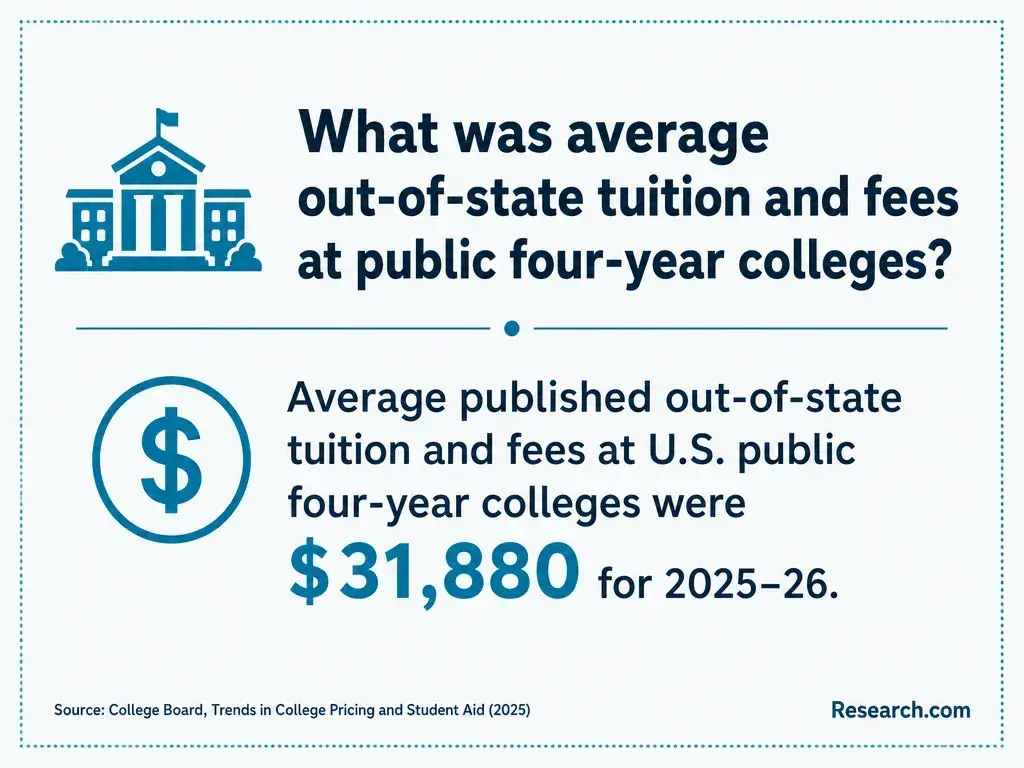
Most transfer applicants should expect to document prior college study, but minimum transferable credits, GPA rules, deadlines, and any separate psychology-major admission rules are institution-specific. Some schools initially admit a student to the university while major eligibility or course equivalencies remain unresolved. Ask which decisions are final before registration and which can change after official transcripts arrive.
Prepare official transcripts from every prior college, a record of any completed associate degree, and syllabi for education courses you want considered as psychology equivalents. If you have military learning or international coursework, ask whether additional records or a credential evaluation are required. Identify any outstanding introductory psychology, writing, or quantitative prerequisite rather than assuming an education background fulfills it.
Students considering graduate study later should also preserve evidence of statistics and research-methods preparation. A fast undergraduate completion plan is less useful if it omits prerequisites for the next program. Listings of psychology master's programs with intensive pacing may help identify future options, but their admission standards must be checked individually; admission to a psychology BA does not establish graduate eligibility.
Completion time depends on applicable remaining credits, prerequisite order, course availability, and the number of courses you can sustain each term. Cost depends on the school's tuition structure, mandatory fees, books or software, and any travel or unpaid experience requirements. A school that accepts more credits is not necessarily cheaper if fewer of those credits satisfy requirements or its remaining courses cost more.
For a useful comparison, request each school's audit and a course schedule covering your anticipated enrollment terms. Then obtain an itemized estimate for the courses that audit requires. If you work or provide care, ask when live sessions, group meetings, and any approved placement would occur. Check financial-aid eligibility and satisfactory-academic-progress rules with the aid office; transfer acceptance alone does not settle either issue.
Keep possible graduate costs separate from the BA comparison. If your eventual goal requires a counseling credential, mental health counseling program charges beyond tuition illustrate why a future professional degree needs its own budget. Do not add an assumed graduate-school bill to every psychology BA plan; include it only when the target occupation requires that pathway.
Online and campus-based degrees can cover similar academic material, but access and scheduling differ. An asynchronous lecture may fit around work; a required live discussion, group research meeting, proctored assessment, or placement may not. Campus study may make in-person faculty contact and research-team participation easier, while an online program may avoid relocation or a regular commute. Neither format guarantees an internship or research opportunity.
For an education transfer student, compare formats using the same approved degree audit. Ask whether transferred prerequisites let you enter required online courses immediately, whether upper-level courses run in the terms you need, and whether remote students can obtain faculty supervision for a project. Also verify any campus visits before treating "online" as fully remote.
If your longer-term objective is licensed counseling, delivery format becomes a separate decision at the qualifying graduate-program stage. Resources on shorter accredited clinical mental health counseling study plans can help you investigate that later timeline, but an online psychology BA does not replace graduate clinical training or supervised practice.
A general psychology BA may support applications for nonclinical roles such as human-services assistant, program coordinator, research support worker, or training assistant, depending on the employer's requirements and your experience. Prior education coursework and classroom experience can be particularly relevant to youth programs, educational services, and training support. None of these positions is automatically available to every psychology graduate.
Salary comparisons must use a named occupation and location, not a broad claim about what psychology majors earn. The U.S. Bureau of Labor Statistics publishes occupation-wide wage data; those medians include workers with differing experience and qualifications and are not starting salaries or outcomes for a particular BA. Compare current local job postings' pay ranges and required credentials with the duties you want. For example, research support may call for data-handling experience, while service coordination may prioritize documentation, referrals, and knowledge of community resources.
Graduate credentials should not be used to inflate a bachelor's-level estimate. Information about earning potential after a master's in forensic psychology concerns a different educational decision; neither a general psychology BA nor a forensic course qualifies someone for licensed forensic assessment. The best near-term return on the BA may be completing a missing bachelor's credential while building demonstrable, role-specific experience.
Does a Psychology Bachelor's Degree Require Licensure or Graduate School?
Completing a general psychology BA does not itself require a psychology practice license. It also does not authorize psychotherapy, diagnosis, independent psychological assessment, or use of a protected professional title. Whether you need graduate education, supervision, an examination, or a license depends on the occupation and jurisdiction you choose - not on the BA's name.
For nonclinical program, research-support, or organizational work, graduate school may be unnecessary; examine actual job requirements first. For a licensed psychologist or counselor role, identify the relevant state board and qualifying professional program before choosing undergraduate electives. A general psychology master's or a specialty such as forensic psychology is not automatically a licensure route. Even a shorter forensic psychology graduate pathway should be judged against its actual curriculum and your target role, not its advertised speed.
Before enrolling, compare written degree audits from your shortlisted schools, confirm the unresolved equivalencies with the appropriate departments, and price the courses each audit leaves. Choose the plan that preserves useful credit and delivers the preparation your next step requires.
Other Things You Should Know About Psychology
The prior credential usually remains on the issuing school's record. Ask the receiving school how it displays transferred courses and credits, and how the new BA's major will appear on its transcript.
Possibly. Obtain advance written approval for the course's equivalency and confirm that taking it elsewhere will not conflict with residency, upper-level, or financial-aid rules.
Do not assume so. Ask whether the university offers a documented prior-learning assessment process and whether the psychology department permits that credit to satisfy the specific requirement.
Request the school's deposit, registration, and withdrawal policies before committing. Keep copies of each transfer evaluation so you can compare another offer without relying on a verbal estimate.
- .08 Number of Credits Accepted for Transfer. | Library of Maryland Regulations https://regs.maryland.gov/us/md/exec/comar/13B.06.02.08
- Definitions | Transfer Credit Ohio https://transfercredit.ohio.gov/educational-partners/educational-partner-initiatives/articulation-transfer-policy-policy/articulation-transfer-policy-definitions
- Requirements | Department of Psychology https://psychology.uchicago.edu/undergraduate-major/requirements
- How to Read a College Degree Plan Before You Enroll | Florida National University (FNU) https://www.fnu.edu/how-to-read-college-degree-plan/
- Psychology, BS | Dietrich School of Arts & Sciences Undergraduate Studies https://www.asundergrad.pitt.edu/academics/majors/psychology-bs
- Transfer Credit and Credit for Prior Learning | University of the District of Columbia https://www.udc.edu/admissions/transfer-students/transfer-credit-policy
- Evaluation of Transfer Credit | Cal Poly Academic Catalog https://catalog.calpoly.edu/academic-standards-policies/evaluation-transfer-credit/
- UNC Policy 400.1.5.3[R] | northcarolina.edu https://www.northcarolina.edu/apps/policy/doc.php
- Transfer Credit | University of Maryland Catalog https://academiccatalog.umd.edu/undergraduate/registration-academic-requirements-regulations/transfer-credit/
- UNF: Psychology (Bachelor of Science) https://www.unf.edu/catalog/programs/ug/coas/COAS-BSAPSY.html