2027 Online MS in Psychology - Forensic Psychology: Choosing a Master's to Build a Doctoral Writing Sample
Audited and Verified:
Our Editorial and Data Verification Process
Research.com uses government datasets, official education statistics and primary institutional information to support its career and degree guides. Our review process checks factual accuracy, occupational definitions, source dates and the requirements associated with the credentials discussed.
How This Article Was Fact-Checked
Our editorial team verifies salary estimates, employment projections, education requirements and program information against original data providers and official organizations. Salary figures are checked against the relevant occupational definitions and reporting periods. Information about licensure, accreditation and required in-person training is reviewed separately.
Fact-checked and verified on:

Co-Founder and Chief Data Scientist
An online forensic psychology master's can give you time and guidance to produce a doctoral writing sample - but only if its research opportunities match the work doctoral programs want to see. This guide is for prospective MS students weighing that investment against a thesis, research assistantship, or targeted coursework.
You'll learn how to evaluate supervision, build an ethical and persuasive sample, and check whether the degree advances your doctoral goal. Those checks matter before you commit to tuition or assume that a forensic concentration provides research access.
Key Things You Should Know
- Choose for supervised research and substantial revision, not the forensic label alone; ask whether you can retain and submit your final paper.
- A strong sample demonstrates a focused question, critical use of evidence, sound methods, and honest limitations. A thesis can help, but doctoral programs do not universally require one - or a master's degree.
- Compare the full cost against narrower options, such as research assistant work or methods courses. A nonclinical forensic psychology MS does not itself qualify you for psychologist licensure or forensic evaluation.
What Is an Online MS in Psychology - Forensic Psychology?
It is a psychology master's degree that applies psychological science to legal and justice-related questions. Coursework may examine eyewitness memory, violence research, victimization, corrections, or how psychological evidence is used in legal settings. "Forensic psychology" might be an official concentration or simply a group of electives; confirm the credential that will appear on your transcript.
Online describes course delivery, not necessarily the entire research experience. A program may have asynchronous lectures but scheduled seminars, live advisor meetings, campus visits, or locally arranged projects. For applicants comparing broader online psychology programs and academic pathways, the decisive distinction here is whether the master's gives you sustained opportunities to write and revise research - not just forensic subject matter.
Can an Online Forensic Psychology Master's Prepare You for Doctoral Study?
Yes, if it helps you remedy a specific gap in your doctoral application: limited methods training, little supervised research, an underdeveloped scholarly interest, or no substantial academic paper. Doctoral admissions committees may also consider research experience, faculty fit, recommendations, and preparation for the proposed field. An MS can strengthen those elements, but it does not guarantee admission, and many doctoral programs accept applicants directly from a bachelor's degree.
For a writing-sample goal, the culminating project matters more than its title. The comparison below shows what each common option might let you demonstrate; actual requirements vary by program.
| Opportunity | Potential value for a writing sample | Limit to check |
| Supervised thesis | Develops a sustained research argument through multiple drafts | Advisor availability, data access, approval, and time to completion |
| Research-focused capstone | May produce a literature review, proposal, or analysis suitable for revision | Whether the assignment permits enough depth and individual authorship |
| Methods seminar paper | Can demonstrate design and evidence appraisal without collecting data | Whether feedback and revision extend beyond one course |
| Research assistantship | Builds research judgment and may support a recommendation | Whether you can produce a paper of your own and disclose your contribution |
If your goal is licensed clinical practice rather than primarily research, investigate doctoral training requirements and whether a qualifying counseling or social-work route better fits the job you want. For example, accredited clinical mental health counseling completion pathways address a different professional objective; neither route should be selected solely because its courses mention forensic settings.
How Can You Build a Strong Doctoral Writing Sample in Forensic Psychology?
Start with the intended doctoral programs' sample instructions: accepted genres, length, individual-authorship rules, and whether a proposed study is acceptable. Then select a question narrow enough to answer responsibly. For example, a paper might compare how studies measure eyewitness confidence and accuracy rather than claim to resolve whether eyewitnesses are reliable.
The following sequence turns a course assignment or supervised project into a defensible sample:
- Define a specific psychological question, intended audience, and claim the available evidence could support.
- Agree with a faculty mentor on the paper's scope, feedback schedule, and whether a literature review, research proposal, or completed analysis is feasible.
- Build an evidence table documenting each study's design, sample, measures, findings, and limitations; use it to synthesize rather than summarize studies one by one.
- Explain your methods or evaluation criteria, distinguish association from causation, and address alternative explanations and limits on generalization.
- Revise for argument, accuracy, citations, and clarity; identify any coauthors' contributions and follow each doctoral program's submission rules.
Do not assume that access to justice-involved people, case files, or an agency dataset comes with enrollment. Recruitment, restricted records, and secondary data use may require institutional authorization, data-use permission, consent, and an institutional review board determination.
A rigorous proposal or critical review is preferable to an unapproved study. Before choosing an accelerated option, consider forensic psychology one-year program value considerations: a shorter calendar leaves less room for mentorship and revision unless those opportunities are built into the program.
Check the institution's current accreditation and its scope with the accreditor, then separately check what the specific degree is designed to do. Institutional accreditation does not establish that a nonclinical MS meets a state's psychologist, counselor, or other professional licensing requirements. The American Psychological Association does not accredit general psychology master's programs as a route to psychologist licensure.
A forensic psychology MS may provide academic and research preparation without qualifying you to diagnose, deliver psychotherapy, conduct independent forensic evaluations, or use a protected psychologist title. If your doctoral plan ultimately involves licensed practice, verify the intended doctoral program's recognition, training requirements, and the rules in the jurisdiction where you hope to practice. If counseling is the actual goal, compare the educational and supervised-practice obligations of qualifying programs - not just the advertised pace of shorter graduate counseling programs by cost and duration.
Programs differ, but relevant study may combine graduate statistics, research design, psychological measurement, ethics, and scientific writing with topics such as psychology and law, memory, violence, or victim services. For a doctoral writing sample, check whether methods courses lead into a supervised seminar, thesis, or capstone. A course about assessment does not confer authority to administer restricted tests.
Read the course sequence rather than relying on a catalog's list of electives: a desired methods course may not run before your project deadline. If you are still choosing undergraduate preparation, distance learning bachelor's degrees in addiction psychology illustrate why a subject-area focus should be evaluated alongside statistics, research methods, and writing preparation. An earlier specialization need not match forensic psychology for your research skills to transfer.
Requirements are program-specific. Review the current admissions page for accepted bachelor's degrees, GPA policy, psychology and statistics prerequisites, recommendations, a statement of purpose, and any writing-sample or test requirement. A criminal justice, health, sociology, or other non-psychology major may be eligible, but applicants should distinguish formal prerequisites from coursework the program merely recommends.
For this goal, use your statement to explain the research question you want to investigate and the preparation you already have. Ask whether a missing statistics or methods course can be completed before enrollment and whether faculty with relevant interests supervise online students. If you have not finished a bachelor's degree, complete that requirement before budgeting for graduate study; low-cost online psychology degrees may be worth comparing, but an entire second bachelor's is not automatically necessary to fill a narrow prerequisite gap.
Time depends on required credits, course availability, enrollment pace, and whether the project requires approvals or multiple rounds of revision. A published minimum completion time may not reflect how long it takes to produce a competitive writing sample. Ask for the course rotation, project milestones, leave policy, and realistic completion paths for part-time students.
Calculate cost from the credits you would actually need at the applicable tuition rate, then add mandatory fees, software, research expenses, and any residency travel. Confirm whether tuition changes by term or enrollment status and whether aid is available at your planned pace. The online psychology master's affordability guide can help frame comparisons, but request a program-specific estimate before deciding. Compare that total with the cost of targeted methods courses or research experience if the writing sample - not the credential - is your only objective.
Depending on prior experience and an employer's requirements, graduates may pursue nonclinical research support, program evaluation, victim-services coordination, corrections program support, or justice-related administrative work. Duties can include reviewing evidence, coordinating services, documenting program activity, and handling data appropriately. The MS does not itself grant investigative authority, legal-practice privileges, or eligibility to work as a licensed forensic psychologist.
Match the degree to the work you want: an applicant seeking a research career should favor methods and supervised writing, while someone seeking direct substance-use services may need a different credential and practical training. Cost-conscious substance use counseling undergraduate options are an alternative to investigate if that is the target role, subject to state credential rules - not a substitute for forensic doctoral preparation.
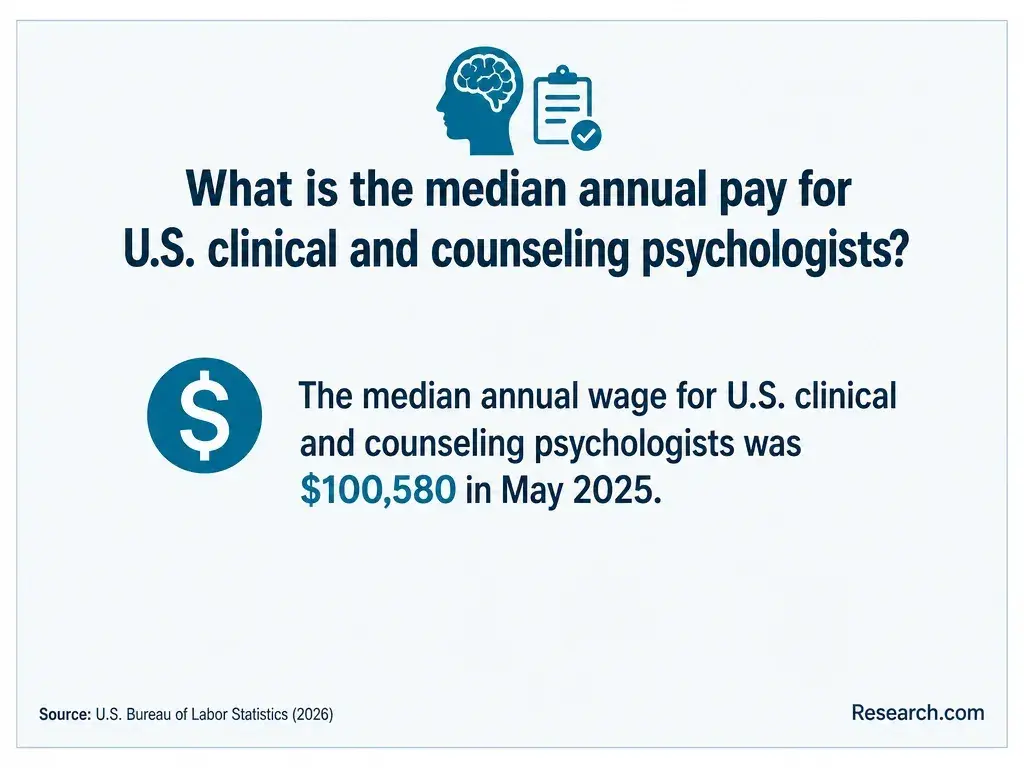
There is no single salary or job-growth rate for "forensic psychology MS graduates." Pay depends on the actual occupation, location, employer, experience, and any required license. The U.S. Bureau of Labor Statistics reports wages and projections for occupations, not for this degree concentration; its psychologist figures should not be presented as the earnings of unlicensed MS graduates.
For a useful comparison, identify a realistic job title, read local postings for its education and experience requirements, and compare that occupation's Bureau of Labor Statistics wage and outlook information with your likely debt and foregone earnings. A guide to comparing forensic psychology master's career earnings can suggest roles to investigate, but verify that you could meet each role's hiring and licensing conditions. If doctoral study is the main goal, judge the MS chiefly by its research value rather than an assumed salary increase.
How Should You Choose an Online Forensic Psychology Master's Program?
Shortlist programs against the doctoral applications you intend to submit. Ask each program for the current project handbook and course schedule, not just a description of the concentration. Your comparison should establish whether you can produce an individually attributable paper, receive substantive feedback, and submit the work under the next program's rules.
Before enrolling, get clear answers to these decision-critical questions:
- Who supervises online students' research, and how are advisors assigned?
- What substantial papers have recent students been permitted to develop, and what are the rules for retaining or sharing them?
- Which methods courses are required, when do they run, and how often can a project be revised?
- Are live meetings, campus visits, placements, or external data access required?
- What is the total estimated cost at your pace, and what happens if the project extends into another term?
Choose the MS if those answers show that it closes a meaningful research-preparation gap at an acceptable cost. Otherwise, a supervised research role or focused coursework may be more direct. If you are earlier in your education and comparing aid for a different, service-oriented pathway, online substance use counseling bachelor's aid resources belong in that separate undergraduate decision; they should not be mistaken for funding terms for a forensic MS.
Other Things You Should Know About Psychology
Often, if the doctoral program accepts earlier work. Follow its rules and choose the paper that best demonstrates your current reasoning; revise it if permitted.
Some programs allow it, but others require individual work. Check the instructions and clearly state your contribution when coauthored work is accepted.
Follow the course and doctoral program's disclosure rules. Verify every citation and claim yourself, protect confidential material, and ensure the submitted argument and writing represent your own work.
Ask whether an excerpt is allowed. If it is, select a coherent portion and briefly identify what was omitted; otherwise, prepare a shorter paper that meets the stated limit.
- Admission requirements for a master's in psychology | Capella University https://www.capella.edu/blog/psychology/requirements-for-masters-in-psychology/
- Master's in Psychology Requirements | louisiana.edu https://psychology.louisiana.edu/programs/masters/requirements
- Writing Sample | uchicago.edu https://socialsciences.uchicago.edu/admissions/application-materials/writing-sample
- Apply to Pepperdine's Online Master's in Psychology https://onlinegrad.pepperdine.edu/psychology/online-masters-psychology/
- APA-Accredited Programs https://accreditation.apa.org/accredited-programs
- Evidence - The Writing Center https://writingcenter.unc.edu/tips-and-tools/evidence/
- Writing Samples - Arts and Sciences https://graduateschool.camden.rutgers.edu/writing-samples/
- Do I Need a Degree in Psychology to Apply to Graduate School? | William James College https://www.williamjames.edu/news/do-i-need-a-degree-in-psychology-to-apply.html
- What Makes a Good Academic Writing Sample? | CIIS https://www.ciis.edu/news/application-support-what-makes-good-academic-writing-sample
- Choosing the Best Writing Sample for Grad School | Kent State Online https://onlinedegrees.kent.edu/blog/choosing-the-best-writing-sample-for-grad-school