
2027 Population Health Management Careers: Skills, Education, Salary & Job Outlook

Co-Founder and Chief Data Scientist
Choosing a career in population health management means choosing work at the intersection of healthcare, data, policy, prevention, and community impact. Instead of focusing only on one patient at a time, population health professionals look at groups of people—patients with chronic conditions, residents in underserved communities, employees in a health plan, or older adults in a regional care network—and identify ways to improve outcomes at scale.
The path can feel demanding because the field draws from epidemiology, healthcare administration, analytics, health equity, care coordination, and health information technology. Many roles also favor candidates with graduate education, applied experience, or specialized credentials. Still, that complexity is part of why the field is growing: organizations need professionals who can turn health data into practical programs, reduce avoidable costs, improve access, and support value-based care.
For readers weighing whether this career is realistic and worthwhile, the outlook is encouraging. Employment in this sector is growing 23% through 2034, and median salaries are around $110,000. This guide explains what population health management professionals do, the skills and education they need, how much they may earn, where they work, and how to decide whether this career fits your goals.
Key Things You Should Know About Population Health Management Career
- The typical earning potential for population health managers aligns with medical and health services managers, with a median annual salary of about $117,960 as of May 2024.
- This field is very stable and growing rapidly, with employment for medical and health services managers expected to increase by 23% between 2024 and 2034.
- A bachelor's degree in health administration, public health, nursing, or a related field is generally required to start, though some roles may demand a master's degree or specialized certification.
- Success depends on strong skills in data analysis, healthcare quality improvement, project management, knowledge of healthcare regulations, communication, leadership, and teamwork across clinical and administrative areas.
- Career advancement often moves from entry-level roles like population health coordinator or analyst to manager, and then to senior leadership positions such as director or chief population health officer, with growth supported by experience, education, and leadership achievements.
What do Population Health Management Professionals do?
Population Health Management professionals use data, care coordination, and public health strategy to improve outcomes for defined groups of people. Their work may focus on reducing hospital readmissions, improving chronic disease management, increasing preventive care use, addressing health disparities, or helping organizations meet value-based care goals.
Unlike a clinician whose primary responsibility is direct care for individual patients, a population health professional looks for patterns across a population. They ask questions such as: Which patients are missing preventive screenings? Why are emergency department visits rising in one community? Which social factors are preventing people from following a treatment plan? What intervention would improve outcomes without wasting resources?
A day in the life of Population Health Management Professionals
A typical day often combines analysis, planning, communication, and follow-through. A professional might review claims data in the morning, meet with clinical leaders about high-risk patients, coordinate with community organizations in the afternoon, and prepare a report showing whether a care management program is reducing avoidable utilization.
The role is usually collaborative. Population health professionals work with physicians, nurses, social workers, health plans, public agencies, analysts, executives, and community partners. Some projects move quickly, especially when a health system must respond to urgent trends. Others require months of planning, stakeholder buy-in, pilot testing, and outcome measurement.
The best fit is someone who wants measurable impact but is comfortable working behind the scenes. Success often shows up through better screening rates, fewer preventable complications, stronger patient engagement, improved access to services, and more efficient use of healthcare resources.
What are the key responsibilities of Population Health Management Professionals?
Population Health Management professionals are responsible for turning population-level health needs into organized, measurable action. The work varies by employer, but most roles combine analytics, program design, stakeholder coordination, and performance monitoring.
- Analyze health data: Review clinical, claims, demographic, and community data to identify risk patterns, service gaps, and priority populations.
- Design and improve programs: Develop interventions such as chronic disease management, preventive screening campaigns, care transition programs, or outreach initiatives.
- Coordinate care across teams: Help clinical and nonclinical teams align services so patients receive timely, appropriate, and continuous support.
- Engage communities: Work with local organizations, agencies, and community members to understand barriers and improve awareness of available services.
- Manage operations: Track budgets, timelines, staffing, compliance requirements, and program outcomes.
- Build partnerships: Connect healthcare providers, payers, nonprofits, government agencies, and social service organizations to expand access and reduce duplication.
- Lead multidisciplinary teams: Support clinicians, analysts, care coordinators, health educators, and administrators working toward shared population health goals.
The most challenging vs. the most rewarding tasks
The hardest part is often addressing health disparities that are rooted in factors outside the clinic, such as transportation, housing, food access, income instability, language barriers, and limited trust in healthcare institutions. Data can reveal the problem, but solving it usually requires cross-sector cooperation and long-term persistence.
The most rewarding work happens when a program produces clear improvement. For example, a successful initiative may lower emergency room visits, increase follow-up care after hospitalization, or help more patients manage chronic conditions. These outcomes make the work meaningful because the results can affect entire communities, not just one department or organization.
For working adults still building academic credentials, an accelerated online bachelor's degree for working adults may help shorten the time needed to qualify for entry-level health administration, public health, or analytics-related roles.
What are the key skills for Population Health Management Professionals?
Population health management requires both technical competence and the ability to influence people across departments and organizations. Employers typically look for candidates who can interpret data, understand healthcare systems, communicate clearly, and manage complex projects without losing sight of patient and community needs.
Hard skills
- Data analytics and assessment: Ability to work with health data, identify trends, interpret dashboards, and translate findings into action.
- Population risk stratification: Understanding how to identify high-risk groups and prioritize interventions based on need and potential impact.
- Program management: Skill in planning, implementing, monitoring, and improving health programs within budget and regulatory limits.
- Health policy knowledge: Familiarity with policies, reimbursement models, compliance expectations, and value-based care incentives.
- Health equity analysis: Ability to evaluate whether services are accessible, fair, culturally appropriate, and effective for different populations.
- Healthcare systems knowledge: Understanding how hospitals, clinics, insurers, public health agencies, and community organizations interact.
Soft skills
- Communication: Explaining data and recommendations clearly to clinicians, executives, community partners, and patients.
- Critical thinking: Sorting through incomplete information and making practical decisions in complex settings.
- Collaboration: Working across disciplines and organizations where priorities may differ.
- Leadership: Guiding teams, gaining buy-in, and keeping projects aligned with measurable goals.
- Adaptability: Adjusting programs when community needs, funding, regulations, or organizational priorities change.
The one overlooked skill that separates the good from the great
Systems thinking is one of the most important skills in this field. Strong population health professionals do not look at health outcomes in isolation. They examine how clinical workflows, insurance rules, community resources, patient behavior, technology, staffing, policy, and social conditions affect one another.
For example, low clinic attendance may look like a patient engagement problem. A systems thinker may discover that transportation routes, appointment availability, language access, and referral processes are all contributing to missed visits. That broader view leads to better interventions than simply sending more reminders.
For students who are just beginning their education, exploring the easiest way to get an associate's degree can be a practical first step before transferring into a bachelor's program in public health, healthcare administration, nursing, health sciences, or a related field.
Population Health Management Careers: A Step-by-Step Guide to Getting Started
Starting a career in population health management is easier to plan when you separate the path into stages. Not every role requires the same degree or credential, but most candidates progress through education, applied experience, technical skill-building, and specialization.
- Build a relevant academic foundation. Start with coursework in public health, healthcare administration, health sciences, nursing, data analytics, social sciences, or a related field. Focus on classes that cover epidemiology, statistics, healthcare systems, policy, and health equity.
- Gain practical experience early. Look for internships, practicums, volunteer roles, research assistantships, care coordination jobs, community health work, or entry-level analyst positions. Employers value candidates who understand real healthcare operations, not just theory.
- Develop analytics and reporting skills. Learn to work with spreadsheets, dashboards, databases, quality metrics, and health outcome reports. Even non-technical roles increasingly require comfort with data.
- Consider graduate education for advancement. A master's degree may be useful for leadership, analytics-heavy, policy, or director-level roles. It is not always required for entry-level work, so weigh timing, cost, and career goals carefully.
- Add credentials when they match your target role. Certifications or certificates can strengthen credibility, especially if they show population health, analytics, care management, or program management expertise.
- Choose a focus area. Common paths include chronic disease management, health informatics, community health, quality improvement, health equity, payer strategy, epidemiology, or value-based care.
- Move into leadership through measurable results. Advancement often depends on showing that your programs improved outcomes, reduced avoidable utilization, increased access, or helped an organization meet quality goals.
The most common mistake is waiting until after graduation to gain experience. Population health employers often prefer candidates who can show applied work with data, patients, communities, or healthcare operations.
What education, training, or certifications are required?
Population health management roles commonly require at least a bachelor's degree, although the preferred major depends on the employer and job function. Common options include a Bachelor of Science degree in Public Health (BSPH), Health Administration (BSHA), Population Health, or Nursing (BSN) with relevant electives. A bachelor's degree in a health-related or social sciences field is also often accepted for entry-level roles.
Important coursework may include epidemiology, biostatistics, healthcare systems, health policy, health law, health informatics, program evaluation, community health, behavioral health, and social determinants of health. Candidates targeting analytics roles should also prioritize statistics, database tools, and data visualization. Candidates targeting program or leadership roles should add budgeting, operations, quality improvement, and project management experience.
Relevant credentials include the Certified Population Health Program Manager (CPHPM), issued by the American Institute of Business and Management, and the Population Health Management Certificate offered by universities such as Johns Hopkins and Rutgers. These credentials can help demonstrate focused preparation, but they do not replace the need for job-relevant experience.
Training is often built through internships, practicums, capstone projects, entry-level healthcare roles, or employer onboarding. Many organizations provide structured training in analytics platforms, care coordination processes, reporting expectations, compliance, and stakeholder communication. There is no standard residency or supervised-hour requirement across the field, although some certificate programs include project-based or capstone coursework.
Are advanced degrees or niche certifications worth the investment?
Advanced degrees can be worthwhile when they support a clear career goal. A Master of Science in Population Health Management or a Master of Public Health with a population health concentration may improve access to leadership roles, specialized analytics positions, policy work, and higher-responsibility program management jobs.
The decision should be financial as well as professional. Master's programs can cost between $20,000 and $70,000-plus and may take 1.5-3 years to complete. Entry-level roles often do not require these credentials, and relevant work experience can sometimes substitute, especially for candidates who already have healthcare, data, nursing, community health, or administrative experience.
A practical approach is to compare the credential with the job postings you actually want. If most postings for your target role request a master's degree, graduate study may be a strong investment. If they emphasize experience with dashboards, care coordination, quality measures, or program outcomes, you may get more short-term value from applied work and targeted certificates.
For readers considering doctoral-level study, exploring what PhD does not require a dissertation may help clarify alternative routes to advanced academic or professional expertise.
What is the earning potential for Population Health Management Professionals?
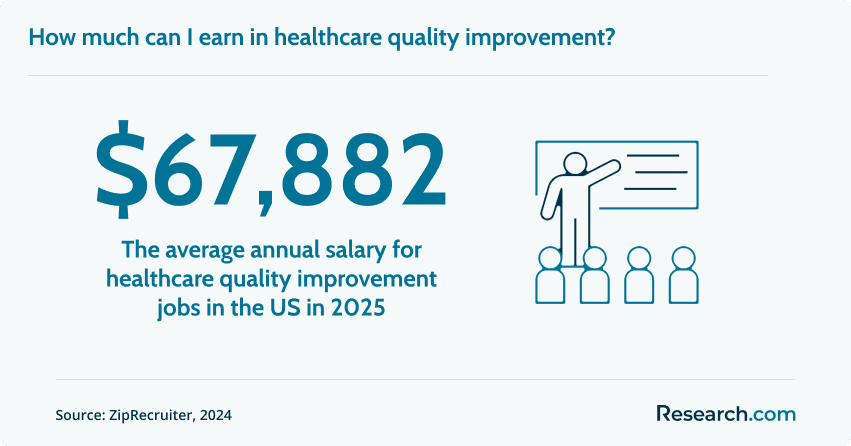
Earning potential in population health management depends on the role, employer, location, education level, technical skills, and years of experience. Entry-level salaries can start as low as $24,500 or around $42,000, with some new professionals earning close to $49,435 in their first year. Senior-level earnings can rise to $100,000 to $134,000, while similar roles in health services management can exceed $216,750 at the 90th percentile.
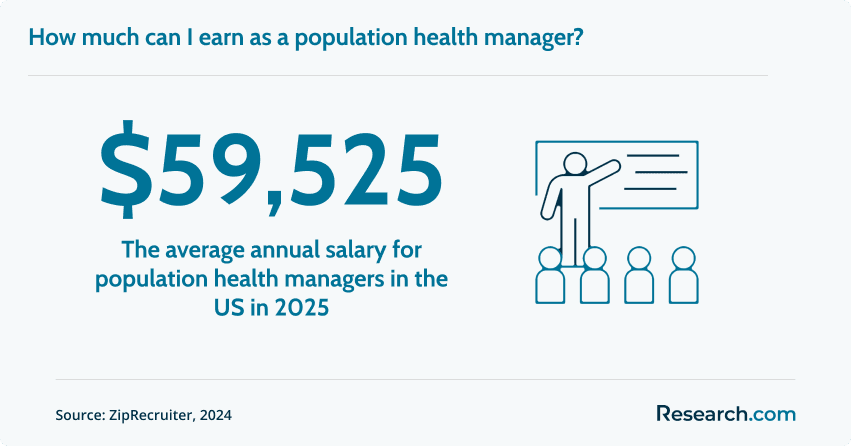
The average population health manager salary 2025 is $94,167[1]. This is a useful benchmark, but it should not be treated as a guarantee. A population health analyst, coordinator, nurse manager, director, health plan strategist, or public agency program lead may each fall into a different pay range.
Several factors can move compensation up or down:
- Location: California tends to offer higher wages, but cost of living should be considered alongside salary.
- Employer type: Health systems, insurers, consulting firms, government agencies, and nonprofits may pay differently for similar work.
- Technical depth: Candidates with analytics, informatics, quality reporting, or value-based care experience may qualify for higher-paying roles.
- Education and credentials: Graduate degrees and specialized certificates can help, especially for leadership or technical positions.
- Management scope: Supervising teams, budgets, and multi-site initiatives usually increases earning potential.
When comparing offers, look beyond base salary. Benefits, tuition support, remote or hybrid options, retirement contributions, workload, and advancement potential can meaningfully affect the total value of a position.
What is the job outlook for Population Health Management Professionals?
The job outlook for population health management professionals is strong, with projected growth rates between 12.7% and 16.55% CAGR over the next decade. That is much faster than the average growth rate of 0.5% annually for all U.S. occupations. The field is also relatively resilient because population health skills apply across hospitals, health systems, insurers, government agencies, nonprofits, consulting firms, and technology-enabled healthcare organizations.
The key factors shaping the future outlook
Several forces are increasing demand for professionals who can manage health outcomes across defined populations:
- Value-based care: Providers and payers need staff who can improve quality, reduce avoidable utilization, and track performance metrics.
- Chronic disease burden: Managing conditions such as diabetes, heart disease, and behavioral health needs at scale requires coordinated programs.
- Aging populations: Older adults often need more complex care coordination, preventive support, and community-based resources.
- Technology adoption: AI, machine learning, telehealth, predictive analytics, and remote monitoring are changing how organizations identify and manage risk.
- Health equity priorities: Employers increasingly need professionals who can identify disparities and design interventions that improve access and outcomes.
The outlook is not risk-free. Public funding changes, reimbursement shifts, and organizational budget constraints can affect hiring. However, the core need for professionals who can connect data, care delivery, and community health is likely to remain strong.
Students comparing education options should prioritize accredited programs with relevant coursework and employer-recognized credentials. Flexible options such as accredited non profit online colleges may be useful for working adults who need to build skills while staying employed.
What is the typical work environment for Population Health Management Professionals?
Population health management professionals typically work in office-based, hybrid, or healthcare facility settings. Common employers include hospitals, integrated health systems, insurance companies, accountable care organizations, government agencies, public health departments, nonprofits, consulting firms, and community health organizations.
The schedule often follows standard business hours, which can support a stable work-life balance. However, some flexibility may be needed for community events, stakeholder meetings, grant deadlines, public health initiatives, or urgent organizational priorities. Evenings and weekends are not usually the norm, but they can occur depending on the project and employer.
The work environment is highly collaborative. A population health manager may interact daily with clinicians, analysts, case managers, executives, community partners, social service agencies, and patients or community representatives. Some roles are data-heavy and mostly desk-based. Others involve site visits, outreach events, coalition meetings, or public presentations.
Remote or hybrid options may be available, especially for roles focused on analytics, reporting, program coordination, or health plan operations. Positions involving community engagement, clinical team leadership, or direct stakeholder facilitation may require more in-person work.
What are the pros and cons of Population Health Management Professional careers?
Population health management can be meaningful, stable, and intellectually engaging, but it is not a simple career path. The work requires patience, coordination, and comfort with problems that rarely have quick fixes.
Pros
- Meaningful population-level impact: Your work can improve outcomes for entire patient groups or communities rather than only one person at a time.
- Strong connection to health equity: Many roles directly address access gaps, disparities, and social determinants of health.
- Career versatility: Skills transfer across healthcare providers, insurers, government, nonprofits, consulting, and health technology.
- Varied daily work: The role may include data analysis, strategy, meetings, program design, outreach, and performance improvement.
- Leadership potential: Experienced professionals can move into manager, director, clinical leadership, policy, or system-level strategy roles.
Cons
- Complex systems: Healthcare organizations, funding streams, policies, and community resources can be fragmented and difficult to align.
- Slow results: Improving population health outcomes can take time, especially when social and economic barriers are involved.
- Stakeholder resistance: Clinicians, administrators, partners, or community members may not immediately support new workflows or interventions.
- Administrative burden: Reporting, compliance, budget tracking, and documentation can take time away from program innovation.
- Emotional strain: Working with vulnerable populations and persistent disparities can be difficult, particularly when resources are limited.
This career is best suited for people who can combine empathy with discipline. You need to care about outcomes, but you also need the patience to work through data problems, bureaucracy, competing priorities, and long implementation cycles.
Students who want a broad academic base may consider whether undergraduate dual degree programs could help them combine public health, analytics, business, policy, nursing, or social science preparation.
What are the opportunities for advancement for Population Health Management Professionals?
Advancement in population health management can happen through promotion, specialization, or movement into a different employer type. Professionals who can show measurable results—such as improved quality metrics, reduced avoidable utilization, stronger patient engagement, or successful program implementation—are often better positioned for leadership roles.
Career advancement ladders
- Entry-level roles: Population Health Coordinator, Population Health Analyst, Program Specialist, Care Coordination Assistant, Community Health Specialist, or Quality Improvement Assistant. These roles often focus on data support, outreach, reporting, scheduling, and program operations.
- Mid-level roles: Population Health Manager, Program Manager, Quality Improvement Manager, Care Management Supervisor, or Health Plan Program Lead. These positions typically involve managing projects, supervising staff, coordinating stakeholders, and monitoring outcomes.
- Senior roles: Director of Population Health, Clinical Director, Healthcare System Director, Senior Director of Quality, Public Health Program Director, or executive-level strategy roles. These jobs usually involve budget ownership, strategic planning, cross-functional leadership, and organization-wide accountability.
Specialization areas to explore
- Health informatics and data analytics: Roles such as Health Information Manager and Clinical Data Analyst focus on using data systems to guide decisions.
- Health policy and administration: Policy analysts and administrators influence system design, compliance, funding, and organizational strategy.
- Community health education and promotion: These professionals design outreach, prevention, and behavior-change programs.
- Epidemiology and disease prevention: Specialists study health patterns, monitor risks, and support prevention strategies.
- Value-based care and quality improvement: Professionals in this area help organizations meet quality benchmarks and improve cost-effective care delivery.
Promotion paths in population health management may also connect to related roles such as health educators, public health advisors, and biostatisticians. The best route depends on whether you prefer people leadership, data analysis, policy, clinical operations, community engagement, or system-level strategy.
What other careers should you consider?
If population health management appeals to you, but you are still comparing options, consider related careers that use similar skills in public health, healthcare administration, program leadership, and community impact. These alternatives may be a better fit depending on whether you prefer education, analytics, policy, aging services, or direct program oversight.
- Health Educator: Focuses on public health awareness, prevention, and behavior change through community education and outreach.
- Wellness Program Administrator: Plans and manages health and wellness initiatives for employers, communities, or healthcare organizations.
- Gerontologist: Works with aging populations and supports programs, services, or research related to older adults.
- Public Health Advisor: Supports policy, risk assessment, program evaluation, and public health planning for agencies or organizations.
- Health Program Director: Leads the design, implementation, staffing, budgeting, and evaluation of health services or community programs.
To choose among these paths, compare the daily work rather than the job title alone. If you enjoy data and systems, population health analytics or informatics may fit well. If you prefer direct community engagement, health education or community health may be stronger. If you want to influence rules, funding, and strategy, public health policy or administration may be a better direction.
The right career is the one that matches your strengths, values, preferred work environment, and tolerance for complexity. Population health management is especially fitting for people who want to connect evidence, operations, and equity to improve health outcomes at scale.
Here's What Professionals Say About Their Population Health Management Careers
- Jamie: "I genuinely enjoy collaborating with my colleagues who share my commitment to compassion and humility just as much as professional skill. Every day, I see how our efforts make a tangible difference in the lives of the people we serve, which keeps me motivated and grounded. It's refreshing to work in a place where values are not just talked about but deeply respected. The balance between caring and competence creates an uplifting environment that fuels my dedication. I find myself proud to be part of this community."
- Anne: "Working in population health management as a clinician has opened my eyes to the broader impact I can have beyond individual patient care. This role challenges me to address the health of entire communities through active collaboration and policy work. Staying adaptable is crucial because the field's complexity means every strategy requires tailoring to ever-changing community needs. Though it can be tough, the satisfaction of advancing communal health outcomes drives my passion daily. I truly value the chance to influence systemic improvements on such a scale."
- Emily: "The constantly evolving nature of population health demands sharp organizational skills and a strong willingness to collaborate across sectors. Facing these challenges head-on has strengthened my resilience and made me appreciate the collective effort required to keep populations healthy. I thrive on working with diverse teams where every member's role contributes to our shared success. Even though it's demanding, the rewards come from knowing that our coordinated work positively affects countless lives. This field truly teaches the importance of teamwork and persistence."
Other Things You Should Know About Population Health Management
Population health management professionals are hired by hospitals, health systems, insurers, public health agencies, accountable care organizations, and consulting firms. Many roles also appear in large physician groups and value-based care organizations that track quality measures, reduce avoidable costs, and manage chronic disease across defined patient populations.
The job growth for population health management professionals is projected to increase by 18% by 2027, according to the Bureau of Labor Statistics. This growth is driven by the rising demand for healthcare services and the need for effective management of population health initiatives.
References
- Navigating the Future of Public Health: Adapting to an Evolving Job Market https://medicine.tufts.edu/news-events/news/navigating-future-public-health-adapting-evolving-job-market
- What is Population Health Management? https://www.snhu.edu/about-us/newsroom/health/what-is-population-health-management
- NHS England » Population health management https://www.england.nhs.uk/long-read/population-health-management/
- 10 Emerging Public Health Careers | BestColleges https://www.bestcolleges.com/blog/emerging-public-health-careers/
- Population Health Programme Director https://www.jobs.nhs.uk/candidate/jobadvert/C9196-24-2650
- Job Outlook and Salaries for Population Health Management | CUNE https://www.cune.edu/news/population-health-jobs
- Population Health Management: A Healthcare Administration Perspective https://publichealth.tulane.edu/blog/population-health-management/
- Healthcare Occupations https://www.bls.gov/ooh/healthcare/
- Population Health Management Certificate Program | Johns Hopkins Bloomberg School of Public Health https://publichealth.jhu.edu/academics/population-health-management-certificate-program
- The Future of Population Health Management https://www.rolandberger.com/en/Insights/Publications/The-future-of-population-health-management.html


