2027 Paying for an Online BA in Psychology - Mental Health: Portfolio Assessment Fees Versus Additional Tuition
Audited and Verified:
Our Editorial and Data Verification Process
Research.com uses government datasets, official education statistics and primary institutional information to support its career and degree guides. Our review process checks factual accuracy, occupational definitions, source dates and the requirements associated with the credentials discussed.
How This Article Was Fact-Checked
Our editorial team verifies salary estimates, employment projections, education requirements and program information against original data providers and official organizations. Salary figures are checked against the relevant occupational definitions and reporting periods. Information about licensure, accreditation and required in-person training is reviewed separately.
Fact-checked and verified on:

Co-Founder and Chief Data Scientist
A portfolio assessment may let you earn college credit for prior learning instead of paying to repeat coursework. But its fee is worthwhile only if the resulting credit reduces the tuition or time you actually need to finish an online psychology-mental health BA.
This guide is for returning students comparing those costs. It explains how portfolio credit is evaluated, where the savings can disappear, and what to request from a school before paying a fee or enrolling in another course.
Key Things You Should Know
- Compare the assessment fee and preparation costs with the tuition and required fees for courses the portfolio would actually replace - not with the number of credits requested.
- Accepted credit saves money only if it applies to your degree requirements and does not conflict with major, residency, or financial-aid rules.
- Get a written degree audit and fee policy before paying; an unsuccessful assessment can leave you owing both the fee and the tuition for the original course.
What Is an Online BA in Psychology-Mental Health?
It is a bachelor of arts degree in psychology with mental-health-related study, which may be an official concentration, a group of electives, or part of a differently named major. The exact designation matters: a course in mental health does not necessarily appear as a concentration on your transcript. Online delivery also does not establish whether classes are asynchronous or whether an internship, exam, or other activity requires scheduled attendance.
For a returning student, the key question is whether previous learning satisfies this particular degree's requirements. A portfolio assessment is one possible form of credit for prior learning: you submit evidence of college-level learning gained through work, training, or other experience for faculty evaluation. Experience alone is not credit. If you are still comparing degree structures, review online psychology programs and academic pathways before assuming their portfolio policies are alike.
How Do Portfolio Assessment Fees Compare With Additional Tuition?
The break-even test is whether the total cost of seeking portfolio credit is lower than the cost of the coursework it will remove from your remaining degree plan. An assessment fee might be charged per portfolio, course, or credit evaluated; a school might also charge for a required portfolio-development course. Ask how each charge works before comparing it with per-credit, per-course, or flat-term tuition.
The comparison below separates the possible outcomes. It assumes only that the school permits portfolio assessment; it does not assume an award of credit.
| Outcome | Costs to compare | Effect on the decision |
| Credit satisfies a required course | Assessment and preparation costs versus avoided tuition and course fees | Potential savings, provided the credit also fits residency and aid rules |
| Credit counts only as an elective | Assessment costs versus any elective tuition actually avoided | Little or no savings if required psychology courses remain |
| No credit is awarded | Nonrefundable assessment costs plus tuition for the course still needed | Portfolio submission costs more than taking the course directly |
| Credit is awarded during flat-term enrollment | Assessment costs versus any term charges or enrollment time avoided | Fewer credits may not lower the current term's bill |
Build two remaining-degree estimates: one using approved portfolio credit and one using coursework. Include required fees and any additional term that course sequencing would create. Then check whether reducing your enrolled credits changes aid eligibility or whether your employer reimburses courses but not assessment fees. A school's written evaluation - not its maximum transfer-credit allowance - determines the useful result. If you also hold college coursework, compare the separate rules for applying associate-level credits to psychology study; transcript transfer and portfolio assessment are not interchangeable.
How Much Does an Online Psychology-Mental Health Bachelor's Degree Cost?
There is no reliable single price for this degree type. Your cost depends on the school's billing method, the credits left after evaluation, how many terms you need, and whether prior-learning assessment replaces billable coursework. Compare remaining cost to graduate, not advertised tuition for a full degree or a best-case transfer scenario.
Use these cost categories to request comparable estimates from each school. The final category is especially important when a portfolio does not replace a required course.
| Cost category | What to obtain from the school |
| Tuition | Current per-credit, per-course, or per-term rate and the credits or terms remaining after evaluation |
| Mandatory charges | Technology, student-service, graduation, and course-specific fees that apply to online students |
| Prior-learning assessment | Portfolio-development and assessment charges, refund rules, and any charge for posting awarded credit |
| Completion expenses | Required materials, approved placement costs if applicable, and extra terms caused by course availability |
Request an itemized estimate for both the portfolio and coursework routes, based on the same degree audit and enrollment pace. Confirm separately which charges financial aid or employer benefits can cover. If the comparison points toward taking courses rather than submitting a portfolio, economical online psychology program choices can help identify schools to price using your actual remaining requirements.
Check whether the institution holds recognized accreditation and whether that status applies to the campus or online unit awarding your degree. Verify it through the institution's accreditor and the U.S. Department of Education's accreditation database, then ask the school how its credit-for-prior-learning policy applies to this specific BA.
Do not look for APA accreditation as a condition of a general psychology BA: APA program accreditation covers specified professional training programs, not ordinary undergraduate psychology majors. Likewise, institutional accreditation does not guarantee that another college will accept portfolio credit or that a licensing board will count it toward a future professional requirement. When comparing related bachelor's options, a bachelor's-level addiction psychology program guide can help you distinguish an academic focus from a professional credential.
Expect the school to distinguish general education, psychology foundations, major requirements, and mental-health-focused courses. Common subjects include introductory psychology, statistics, research methods, development, social psychology, and the academic study of psychological disorders. A program may add electives on substance use, community services, or health psychology, but its catalog determines the actual sequence.
This distinction controls the portfolio decision. Evidence that you coordinated referrals at work may support learning in a human-services elective without establishing equivalence to a statistics or research-methods course. Ask the department which learning outcomes must be demonstrated for each proposed course and whether any requirements are excluded from portfolio assessment. If your longer-term interests shift toward legal settings, faster routes through forensic psychology graduate coursework are a separate decision; they do not change what this BA requires you to complete.
Admission rules vary by institution and by whether you enter as a first-time or transfer student. A school may request prior transcripts and proof of secondary-school completion; admission to the university does not mean prior courses or portfolio learning have been approved for the psychology major. Ask when a degree audit becomes available and whether you must enroll before requesting portfolio assessment.
Submit transcripts and descriptions of potentially relevant training early. For a portfolio, ask for the course outcomes, evidence standards, evaluator, submission deadline, and appeal policy. Keep future plans separate from current admission: if you intend to pursue licensed counseling later, compare that graduate program's prerequisites and tuition assistance for mental health counseling study before assuming the lowest-cost BA credit strategy also serves your next degree.
Completion time depends on approved credits, courses left in sequence, enrollment pace, and when required classes are offered. Portfolio credit can remove a course yet save no calendar time if you must still wait for a required capstone or meet an in-residence credit minimum. Conversely, avoiding a prerequisite that blocks later courses could make a meaningful difference.
Ask an advisor for a term-by-term plan under both portfolio outcomes, including the earliest realistic graduation term. Confirm live-session, group-work, and placement schedules rather than treating "online" as automatically self-paced. If the BA is preparation for counseling, compare its finish date separately from accredited counseling degree completion times; an accelerated bachelor's plan does not shorten graduate requirements by itself.
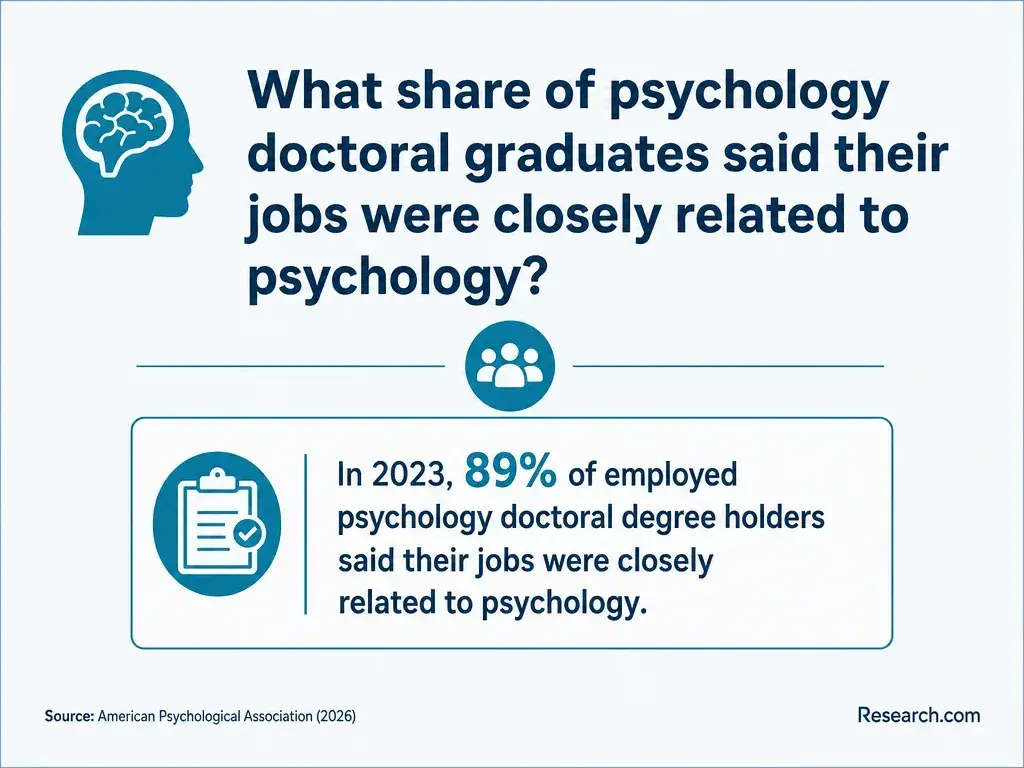
A psychology BA can support applications for nonclinical roles such as human-services assistant, behavioral-health program assistant, intake or referral coordinator, victim-services assistant, or research-support staff. Hiring depends on the employer's requirements and your demonstrated skills. Existing work in documentation, communication, service coordination, or data handling may matter more than whether you earned one elective through a portfolio.
Use the job you want to test whether a particular course is worth keeping. For example, supervised research work may provide stronger evidence for a research-support application than portfolio credit alone, even if taking the course costs more. Do not confuse these bachelor's-level possibilities with forensic psychology master's career progression options, which involve a different credential and may have different experience requirements.
Not by itself. Studying mental health - or earning portfolio credit for related experience - does not authorize psychotherapy, diagnosis, independent psychological assessment, or use of a protected professional title. Licensure requirements depend on the occupation and state and commonly involve an appropriate graduate professional program plus supervised experience and examination.
If clinical counseling is your goal, check the intended state board's education rules before choosing the BA courses you hope to replace. A graduate program may value or require particular preparation even when the undergraduate school would award elective portfolio credit instead. Online clinical counseling graduate completion options are worth evaluating as a distinct next step, not as an automatic continuation of a mental-health BA.
What Are the Salary and Job Outlook for Psychology Graduates?
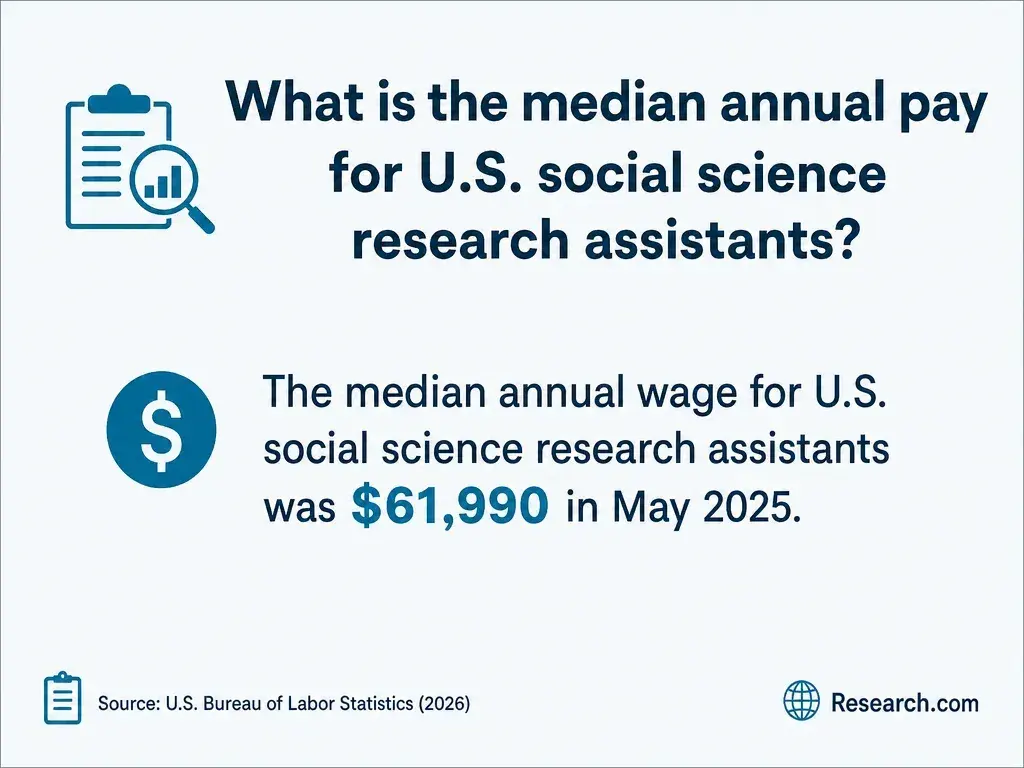
There is no single salary or growth rate for psychology BA graduates: occupational data describe jobs, not everyone holding a degree. For a meaningful estimate, identify a specific target occupation, check its most recently published U.S. Bureau of Labor Statistics Occupational Outlook Handbook wage and projection figures, and compare its typical entry requirements with your experience. An occupation-wide median is not an entry-level offer or a forecast of your earnings.
For this article's financial decision, treat potential wages as context rather than a presumed return on a portfolio fee. If both routes lead to the same degree and qualifications, the immediate comparison is their documented cost and completion time. If your goal requires graduate counseling education, the cost and length of shorter counseling master's programs belong in a separate, longer-term budget - not in a claim that the BA alone qualifies you for counselor wages.
Other Things You Should Know About Psychology
Do not assume so. Ask for the written refund policy before submitting or paying; policies can differ for a withdrawn portfolio and an evaluated portfolio that earns no credit.
Only if you have permission to use them and can protect confidential information. Ask the school about acceptable alternatives, such as supervisor-verified duties or a reflection on your learning that contains no client details.
Possibly, but tuition benefits may exclude assessment fees. Request written confirmation of eligible charges, reimbursement conditions, and whether payment depends on credit being awarded.
That depends on school policy. Check whether revision, resubmission, or appeal is allowed, what new evidence is required, and whether another fee applies.
- TNReconnect | Prior Learning Assessment Information https://tnreconnect.gov/Choose-a-Degree-College-Path/Prior-Learning-Assessment-Information
- Rule 3358:5-7-12 | Prior learning assessment policy. https://codes.ohio.gov/ohio-administrative-code/rule-3358:5-7-12
- Employer-offered educational assistance programs can help pay for college | Internal Revenue Service https://www.irs.gov/newsroom/employer-offered-educational-assistance-programs-can-help-pay-for-college
- Credit for What You Know | Online https://cps.unh.edu/online/apply-register/transfer-credit-evaluation/credit-what-you-know
- Credit For Prior Learning - York College - CUNY https://www.york.cuny.edu/osas/credit-for-prior-learning
- College Credit for Work and Life Experience | Purdue Global https://www.purdueglobal.edu/transfer-students/work-life-experience/
- Credit by Portfolio Evaluation | Northern Essex CC https://necc.edu/academics/beyond-the-classroom/credit-prior-learning/credit-portfolio-evaluation/
- Prior Learning Assessment | Mission University https://mission.edu/prior-learning-assessment/
- Academic Portfolio Assessment - Credit for Prior Learning https://umaine.edu/creditforpriorlearning/academic-portfolio-assessment/
- Prior Learning Assessment, Opportunities for Earning Penn State Credit | Penn State https://bulletins.psu.edu/undergraduate/general-information/academic-information/registration-academic-records/prior-learning-assessment/