2027 Online MS in Psychology - Forensic Psychology vs. a Graduate Certificate in Threat Assessment: Compare Curriculum, Cost, and Career Fit
Audited and Verified:
Our Editorial and Data Verification Process
Research.com uses government datasets, official education statistics and primary institutional information to support its career and degree guides. Our review process checks factual accuracy, occupational definitions, source dates and the requirements associated with the credentials discussed.
How This Article Was Fact-Checked
Our editorial team verifies salary estimates, employment projections, education requirements and program information against original data providers and official organizations. Salary figures are checked against the relevant occupational definitions and reporting periods. Information about licensure, accreditation and required in-person training is reviewed separately.
Fact-checked and verified on:

Co-Founder and Chief Data Scientist
If you work in a school, agency, or justice setting, an online forensic psychology master's and a threat assessment certificate may both look relevant to safety work - but they prepare you for different responsibilities. The distinction matters when your employer needs a team member who can assess concerning behavior, rather than someone with broad knowledge of psychology and the legal system.
This guide compares coursework, admissions, scheduling, cost, and career boundaries so you can choose training that fits your current role or planned transition without paying for a credential you do not need.
Key Things You Should Know
- Choose a forensic psychology MS for broader graduate study of psychological science in legal and justice contexts; choose a threat assessment certificate for narrower preparation in structured, team-based prevention work.
- A certificate is generally the shorter commitment, but neither credential alone authorizes clinical diagnosis, independent psychological evaluation, or practice as a licensed psychologist.
- Compare the complete tuition and fee quote, required live or in-person activities, and actual job qualifications before enrolling; a program's title cannot establish its career value.
What Is the Difference Between Forensic Psychology and Threat Assessment?
Forensic psychology applies psychological science to legal and justice-related questions. Graduate study may examine behavior in courts and corrections, victimization, research methods, and the limits of psychological evidence. Academic study of these subjects is not the same as qualification to conduct court-ordered evaluations or give expert opinions.
Threat assessment is a structured process for identifying, evaluating, and managing a concerning situation before harm occurs. In schools and other organizations, it typically relies on a multidisciplinary team that considers behavior and context, seeks corroborating information, documents decisions, and coordinates proportionate support or safety measures. It is not a diagnosis, a prediction that someone will commit violence, or an investigative power granted by a certificate.
The work also differs from treatment or ongoing recovery services. Someone weighing safety work against a support-services career may find comparing recovery support occupations useful for clarifying the responsibilities they actually want.
Which Program Fits Your Career Goals: A Master's or Graduate Certificate?
Start with your present job and the position you want next. An educator, campus administrator, or agency employee who already serves on a safety team may need focused training and supervised practice applying a local protocol. A career changer seeking broader research and justice-system knowledge may get more from the MS - but should check whether target employers also expect direct agency experience.
The comparison below addresses the credentials' likely educational purpose, not a promise that either will satisfy a particular job posting.
| Decision factor | Forensic psychology MS | Threat assessment certificate |
| Best fit | Broad graduate specialization or preparation for further research study | Focused development for an existing or clearly identified safety-related role |
| Main limitation | May offer little practice with a specific organization's assessment protocol | May not supply the psychology foundation or degree employers require |
| Experience that still matters | Research, justice-system, victim-services, or agency experience relevant to the job | Team participation, supervision, documentation, and knowledge of local procedures |
If your goal is psychotherapy rather than either form of nonclinical work, investigate a qualifying counseling pathway instead. Planning an accelerated clinical counseling master's involves different coursework, supervised training, and state requirements.
What Does an Online MS in Forensic Psychology Curriculum Include?
An MS commonly combines graduate psychology coursework with legal-system applications. Depending on the program, students may study research design and statistics, psychopathology as academic subject matter, psychology and law, victim or offender issues, ethics, and interpretation of research evidence. A thesis, capstone, or internship is program-specific; do not assume an online MS includes any one of them.
For this decision, examine the depth behind course titles. A research-oriented program should let you evaluate study quality and communicate uncertainty. A career-oriented program should show how students practice nonclinical analysis and documentation without implying authority to administer restricted tests or make clinical findings. Ask for recent syllabi and the exact requirements for an applied project.
If you still need undergraduate preparation, compare graduate prerequisites against your existing coursework rather than assuming a particular concentration is required. For example, online colleges for addiction-focused psychology study address a different specialty; relevant statistics or methods courses matter more here than the concentration's label.
A useful certificate should teach more than a checklist for labeling people as dangerous. Look for instruction in behavioral threat assessment frameworks, interviewing and information gathering within the student's authority, distinguishing observations from assumptions, multidisciplinary case discussion, documentation, management planning, and reassessment. Coverage of bias, disability, cultural context, privacy, and escalation procedures is especially important when decisions may affect students or employees.
Ask who teaches the courses, whether students work through realistic cases, and whether feedback addresses both safety and unnecessary punitive responses. A course that discusses a screening tool should explain its limitations; no tool can make an individual outcome certain. Graduates must still follow their employer's procedures and applicable rules for accessing and sharing records.
Do not confuse this training with counseling preparation. Substance abuse counseling bachelor's fees and career prospects concern a different educational and employment decision, even when both fields involve referrals to support services.
Online delivery can eliminate a regular commute, but it does not guarantee self-paced study. A program may require live case discussions, group exercises, scheduled exams, a campus visit, or an approved local experience. Campus study may make in-person collaboration easier, while either format can teach careful analysis if faculty feedback and practice opportunities are strong.
For working public-sector professionals, request a sample weekly schedule before applying. Check the time zone for live meetings, whether confidential workplace cases are prohibited in coursework, and whether an applied assignment can use a fictional case or appropriately authorized material. A current job is not automatically an approved placement.
If an undergraduate degree must come first, inexpensive distance learning psychology options can inform that earlier decision. Do not use undergraduate tuition or scheduling claims as proxies for a graduate program's costs or obligations.
Both options generally target applicants who already hold a bachelor's degree, but eligibility is set by the individual institution. An MS may ask for evidence of psychology, statistics, research-methods, or related preparation; a certificate may prioritize relevant professional experience. Neither an unrelated major nor extensive field experience automatically settles admission.
Compare the published requirements for the entry term you want: accepted prior degrees, prerequisite courses, minimum academic standards, statements, references, and any employer or agency eligibility restrictions. If you lack a prerequisite, ask admissions whether a specific course can satisfy it before paying to enroll. Applicants completing a bachelor's first should also distinguish accepted credits from credits applied to graduation requirements; psychology program transfer policies are decided by the receiving school.
A graduate certificate usually requires fewer courses than a master's, so it can cost less and finish sooner. That comparison can reverse if the certificate charges a higher rate, requires travel, or fails to meet the employer's degree requirement. Program lengths and prices change; obtain a written estimate based on your intended enrollment pace rather than relying on an advertised fastest finish.
Use the same cost categories for each program so an apparently cheaper option does not hide a substantial obligation.
| Cost or time component | What to confirm |
| Tuition | Required credits, rate per credit or term, and any residency-based rate |
| Additional charges | Mandatory fees, course materials, technology, travel, and project costs |
| Completion time | Course rotation, prerequisites, maximum course load, and leave rules |
| Funding | Employer assistance and whether the specific credential and enrollment pattern qualify for aid |
Compare the certificate with the total MS expense, not just one term's bill. One-year forensic psychology graduate tuition comparisons can provide programs to investigate, but an accelerated schedule is valuable only if you can sustain its workload and meet every requirement.
Verify the institution's recognized accreditation and confirm that it covers the school awarding the exact credential. Then separately check any recognition required by your target occupation. Institutional accreditation does not mean a forensic psychology MS has APA program accreditation, and a threat assessment certificate is not a professional license.
Neither credential alone authorizes independent diagnosis, psychotherapy, restricted psychological testing, or practice under a protected psychologist title. Licensed forensic assessment requires a qualifying professional pathway and compliance with the relevant jurisdiction's rules. Likewise, organizations - not certificate titles alone - determine who may serve on a threat assessment team and what information that person may access.
If clinical counseling is your goal, accelerated counseling study and accreditation requirements provide a more relevant comparison. Confirm eligibility with the state licensing board before treating any program's claims as sufficient.
Career fit depends on the job's duties and your prior experience. A forensic psychology MS may support applications for nonclinical research, victim-services, corrections-support, or justice-program roles when its skills match the posting. A threat assessment certificate may be more immediately relevant to an existing school, campus, workplace, or agency employee assigned to a multidisciplinary safety process. Neither credential creates police authority or guarantees promotion.
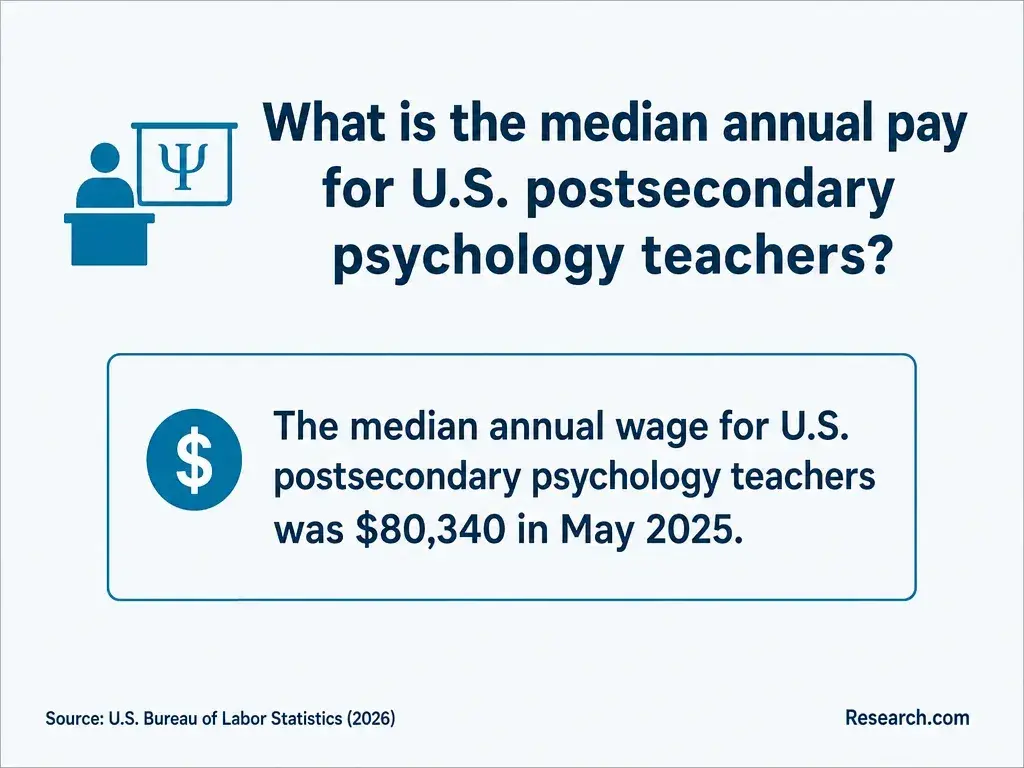
There is no reliable single salary for "forensic psychology MS graduates" or "threat assessment certificate holders": those labels span different occupations and public-sector pay systems. For a realistic comparison, identify the exact job title, location, employer pay band, and required credentials. Use US Bureau of Labor Statistics occupational wage and outlook figures only when the occupation's defined duties match that job; occupation-wide medians are not graduate starting salaries.
For a cost-versus-role comparison, affordable MA and MS psychology programs online may help you identify other programs to price. Compare their actual coursework with the job specification before treating lower tuition as better value.
How Can You Choose a Reputable Program for Your Career Path?
Use a current job posting or your employer's written role description as the benchmark. A strong program can show exactly what students learn, how they receive feedback, and which requirements must be completed - not merely advertise a forensic or safety-related title.
Before paying an application fee or deposit, resolve these questions with the program and, where appropriate, your employer:
- Which required courses directly address the tasks in the target role, and can I review recent syllabi?
- What live meetings, campus visits, placements, or supervised projects are mandatory at my planned pace?
- Who approves an applied site and access to case information, and what alternatives exist if access is denied?
- What is my complete estimated cost, and does my employer recognize this exact credential for the role?
Request written answers when a requirement affects your budget or schedule. Online psychology master's completion planning can help frame questions about accelerated study, but the individual program's course rotation and policies control your actual timeline.
Other Things You Should Know About Psychology
Possibly, but only if the receiving program accepts those graduate credits under its transfer or stacking policy. Get a written evaluation before relying on the credits.
Not without required organizational and course approval. Even removing names may leave a case identifiable; ask whether a fictional or authorized case is acceptable.
Not automatically. Programs decide whether prior courses meet prerequisites or permit a waiver; graduate core requirements may still apply.
No. Check whether training is credit-bearing, who awards it, and what your employer requires. A workshop may still be the more direct choice if you need one specific skill rather than another academic credential.
- Threat Assessment Teams: Workplace and School Violence Prevention - LEB https://leb.fbi.gov/articles/featured-articles/threat-assessment-teams-workplace-and-school-violence-prevention
- How to become a forensic psychologist: steps and skills | Capella University https://www.capella.edu/blog/psychology/how-to-become-a-forensic-psychologist-steps-and-skills/
- M.S. in Forensic Psychology Curriculum | Nova Southeastern University https://psychology.nova.edu/degrees/masters/forensic-psychology/curriculum.html
- Accelerated Online Master's in Threat Assessment & Management | Graduate Degree Program | Bellevue University https://www.bellevue.edu/programs/masters-degrees/threat-assessment-and-management/online-accelerated/
- Online Forensic Psychology Concentration | SNHU https://www.snhu.edu/online-degrees/masters/ms-in-psychology/forensic-psychology
- Threat Assessment and Management in School | PennWest Global Online https://online.pennwest.edu/programs/threat-assessment/index.php
- Master of Science in Forensic Psychology (MSFP) | National University https://www.nu.edu/degrees/jfk-psychology/programs/master-of-science-in-forensic-psychology/
- A Career in Forensic and Public Service Psychology | apa.org https://www.apa.org/education-career/guide/subfields/forensic/education-training
- Forensic Threat Assessment and Management | okstate.edu https://osuonline.okstate.edu/programs/certificates/forensic-threat-assessment-management
- Threat Assessment and Management Courses | University of Illinois Chicago https://ready.uic.edu/planning/violence-prevention/threat-assessment-and-management-courses/