
2027 Online MS in Psychology - Forensic Psychology for Refugee Resettlement Staff: Compare Transferable Skills and Degree Requirements
Audited and Verified:
Our Editorial and Data Verification Process
Research.com uses government datasets, official education statistics and primary institutional information to support its career and degree guides. Our review process checks factual accuracy, occupational definitions, source dates and the requirements associated with the credentials discussed.
How This Article Was Fact-Checked
Our editorial team verifies salary estimates, employment projections, education requirements and program information against original data providers and official organizations. Salary figures are checked against the relevant occupational definitions and reporting periods. Information about licensure, accreditation and required in-person training is reviewed separately.
Fact-checked and verified on:

Co-Founder and Chief Data Scientist
Refugee resettlement staff already navigate sensitive interviews, service systems, and decisions with serious consequences for clients. An online MS in forensic psychology may deepen their understanding of behavior in legal settings, but its value depends on the job they want - not the degree's title. This guide compares transferable skills with academic requirements, online study demands, costs, and career boundaries. It will help caseworkers, advocates, and program staff decide whether a forensic psychology master's fills a real skills gap or whether targeted training or a different professional degree is more direct.
Key Things You Should Know
- Resettlement experience can support forensic psychology study through interviewing, documentation, cultural responsiveness, and referrals; it does not substitute for graduate research-methods training or confer clinical authority.
- Compare programs by their actual courses, research or capstone requirements, scheduling, total charges, and any placement rules - not by the "forensic" label alone.
- A nonclinical forensic psychology MS does not by itself license a psychologist or therapist. For counseling or clinical assessment, verify a separate qualifying education and supervised-practice pathway before enrolling.
What is forensic psychology's role in refugee resettlement work?
Forensic psychology applies psychological science to legal questions and settings. For resettlement staff, the useful overlap is usually nonclinical: understanding how stress, memory, communication, and institutional procedures can affect interviews, referrals, and access to services. Staff may coordinate with attorneys, victim-service providers, schools, or behavioral-health professionals, but those partnerships do not turn a caseworker into a forensic evaluator or legal representative.
For example, training in interviewing research can help a staff member avoid leading questions and document a client's own account accurately. It does not qualify that person to judge whether an account is truthful, diagnose trauma, prepare an expert psychological opinion, or make an immigration-law determination. Those tasks have distinct professional and legal requirements. Readers comparing the broader field can use this guide to accredited forensic psychology study and career preparation, then check whether a specific program teaches the nonclinical skills their agency needs.
Which transferable skills connect refugee resettlement experience to forensic psychology?
The strongest connection is not prior exposure to trauma; it is evidence of careful, bounded work with people and institutions. This comparison separates skills an experienced staff member may already demonstrate from the graduate-level preparation they may still need.
| Resettlement experience | Relevant forensic psychology skill | Gap to assess |
| Client interviews and interpretation coordination | Clear, culturally responsive communication | Research on interviewing, memory, and interpreter-mediated communication |
| Case notes and interagency referrals | Accurate documentation and role boundaries | Legal-setting ethics, evidence limitations, and data governance |
| Service tracking and grant reporting | Applied questions about program outcomes | Statistics, research design, and evaluation methods |
| Partnerships with advocates and providers | Cross-system coordination | Understanding what each licensed or legally authorized professional may do |
Document these strengths with permissible examples: a redacted workflow, training materials you were authorized to develop, or a description of a service-improvement task. Never submit identifiable client accounts as application or portfolio material. If your intended move is into recovery support rather than legal-system research or administration, compare career choices across recovery service settings before assuming forensic study is the closest fit.
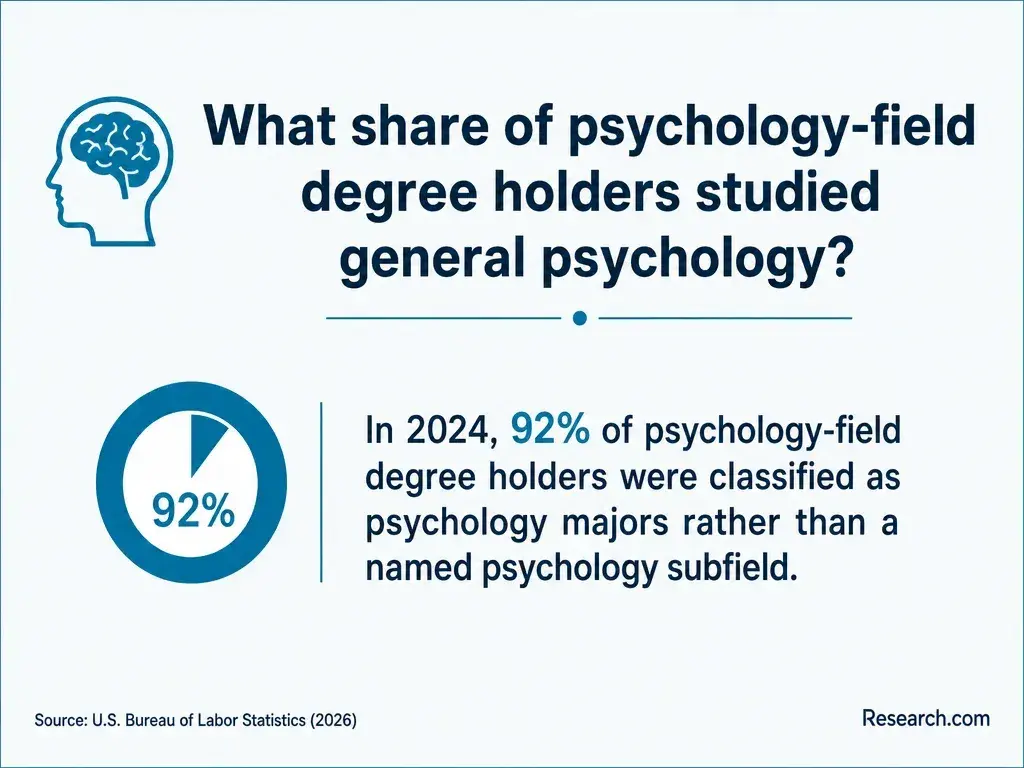
What degree requirements apply to online forensic psychology master's programs?
A typical nonclinical MS combines graduate psychology coursework with research methods and a culminating requirement such as a capstone, thesis, or applied project. The exact credit total, required courses, minimum grades, and completion rules belong to the individual university's catalog. "Online" describes delivery; it does not establish that fieldwork is optional or that a current resettlement job will count toward it.
Ask for a degree plan showing which courses are mandatory, whether a thesis or placement is available or required, who approves a workplace-based project, and whether the project can use agency information. Employer permission, university approval, privacy safeguards, and any required research review are separate questions. If the desired qualification is substance-use counseling rather than nonclinical forensic work, an addiction counseling degree comparison resource is a more relevant starting point; the applicable state credential rules must still be checked.
Delivery format matters most when coursework must coexist with agency hours and access to supervised work. Neither format guarantees a useful placement or close faculty mentorship. The practical differences to verify are summarized below.
| Decision factor | Online program | Campus-based program |
| Class schedule | May use recorded lessons, live sessions, or both; check required meeting times | Scheduled travel and classroom attendance are usually more prominent |
| Applied opportunities | Local sites may be possible, subject to program approval and supervision | Nearby institutional partnerships may be easier to access, but are not guaranteed |
| Research contact | Check faculty availability, remote meetings, and access to data or projects | Check whether relevant research teams actually accept master's students |
| Additional obligations | Possible residencies, synchronous presentations, or local placement travel | Commuting and campus attendance alongside any fieldwork |
A resettlement employee with fixed daytime appointments should request a sample term calendar, not rely on an "asynchronous" description. For a baseline on how online psychology programs describe admissions and coursework, see psychology program admissions and curriculum comparisons; confirm all graduate-specific obligations directly with the master's program.
Look for a combination of psychological science, statistics or research methods, ethics, and courses examining behavior in legal contexts. Depending on the program, electives may address victimization, corrections, violence research, developmental issues, or assessment as an academic subject. A course on psychological testing does not authorize a graduate to administer restricted instruments or issue clinical opinions.
For resettlement work, prioritize courses that strengthen evidence appraisal, culturally responsive interviewing, and evaluation of referral or support programs. Compare syllabi rather than course titles: a "trauma" elective may focus on theory, clinical practice, or legal evidence, with very different relevance to a nonclinical agency role. If you have not yet completed a bachelor's degree and are considering a different service specialty, distance learning bachelor's degrees in addiction psychology represent an earlier academic step - not a substitute for graduate forensic coursework.
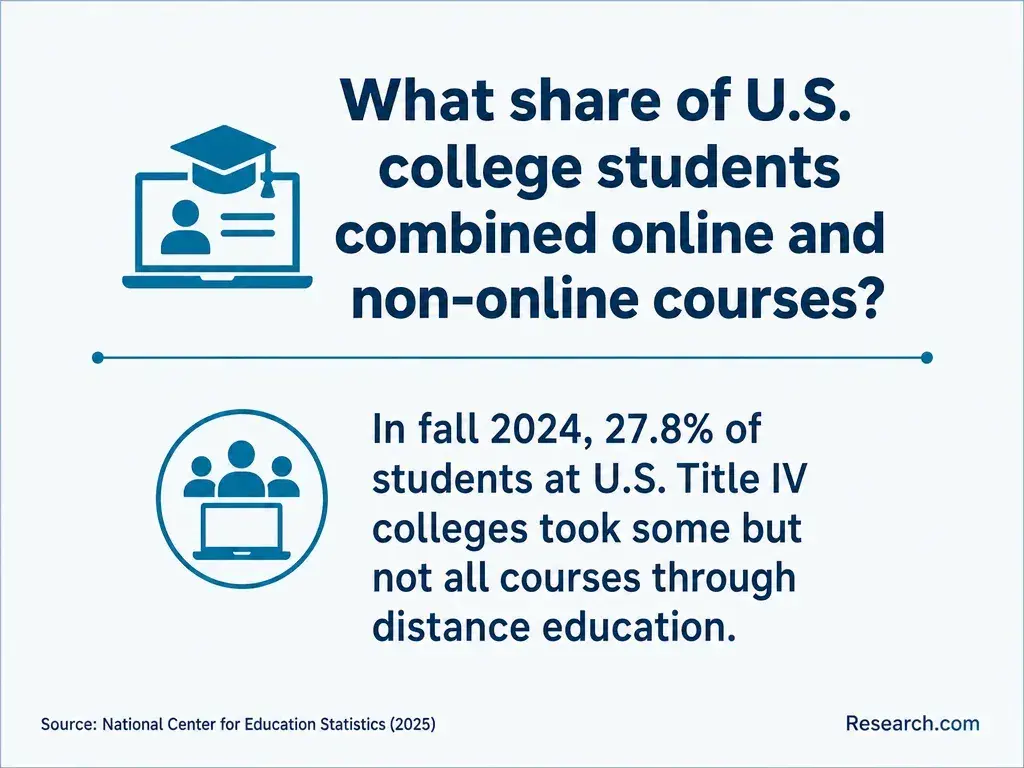
Applicants generally need an eligible bachelor's degree, but programs differ on accepted majors, GPA policies, prerequisite courses, tests, recommendations, and statements of purpose. A social work, sociology, public health, criminal justice, or other non-psychology background is not automatically disqualifying. The decisive question is whether the particular program requires prior psychology, statistics, or research-methods coursework - or permits it to be completed before or during enrollment.
Resettlement staff should present a focused application: describe the target nonclinical role, show how casework raised a question that research training could address, and identify any quantitative or writing preparation. Ask admissions to distinguish a required prerequisite from recommended preparation and to confirm whether a proposed course will satisfy it. Applicants still choosing an undergraduate route can compare budget-friendly substance abuse counseling bachelor's study only if that alternative matches their career goal; its courses should not be assumed to meet a forensic MS program's prerequisites.
Duration depends on required credits, course availability, enrollment pace, and the time needed for a thesis, capstone, or approved site experience. A part-time schedule may protect employment income but extend tuition exposure and delay any career benefit. Published per-credit tuition alone is not a total-price comparison.
Request a written estimate based on your intended pace that includes required credits, mandatory fees, technology or course charges, books or software, and any travel or placement costs. Then ask what happens financially if a project or course sequence runs into another term. Check employer tuition assistance and graduate aid eligibility without assuming either will cover the bill. Resources on FAFSA for online substance use counseling undergraduates address a different degree level; use your prospective graduate school's aid office for the rules and award terms that apply to you.
Not by itself. A nonclinical forensic psychology MS does not automatically meet the education requirements to become a licensed psychologist, counselor, or clinical social worker. Licensure depends on the occupation and state, including a qualifying program, supervised experience, examinations, and other board rules. "Forensic psychologist" should not be treated as an entry-level title conferred by a master's concentration.
If your goal is psychotherapy with displaced clients, start with the state license and work backward to an eligible professional program. Planning an accelerated clinical counseling master's can help frame a different route, but speed matters less than verified state eligibility and feasible supervised training. For psychological evaluation or expert forensic practice, investigate the psychologist licensing pathway in the jurisdiction where you intend to work.
For an experienced resettlement professional, plausible targets include victim-services coordination, legal-system program support, community-service management, justice-related research assistance, and program evaluation. Some may accept a bachelor's degree plus relevant experience; others require specialized methods skills, a particular credential, or substantial management experience. A forensic MS can improve preparation, but it does not create a new job classification or guarantee advancement within a grant-funded agency.
Use the U.S. Bureau of Labor Statistics Occupational Outlook Handbook to compare wages for the actual occupation you are targeting, such as social and human service assistant or social and community service manager, and then check local postings. An occupation-wide median is not an expected salary for forensic psychology graduates: it combines workers with different duties, education, locations, and experience. Compare prospective pay and openings with tuition, lost work time, and your employer's promotion rules. If you still need an undergraduate credential, comparing affordable psychology colleges online may be more relevant than pricing a master's first.
How can you choose an accredited forensic psychology master's program?
First verify the institution's accreditation through the U.S. Department of Education's recognized-accreditor information and the accreditor's own directory. Then examine the specific degree: its official name, curriculum, faculty expertise, online requirements, project supervision, completion rules, and any reported outcomes. Institution-level accreditation is important, but it does not prove that a nonclinical MS qualifies graduates for licensure. APA accreditation should not be assumed to apply to a general or forensic psychology master's program.
Shortlist programs only after you can connect required courses and an achievable project to a named next role. Ask who supervises applied work, whether an existing agency job can be proposed as a project setting, what approvals are needed, and how the program handles restricted client information. Compare the full cost and a realistic part-time completion plan alongside fast-track graduate psychology programs; a shorter advertised timeline is useful only if its course load and research expectations are workable. If no program fills a demonstrated gap, ask your employer whether targeted methods training, mentorship, or an approved evaluation project would better serve the goal.
Other Things You Should Know About Psychology
Describe your responsibilities and learning without identifying clients or disclosing protected case details. Follow your agency's confidentiality rules, including restrictions that still apply when names are removed.
It can demonstrate relevant communication experience. Explain the work you performed and your proficiency accurately; language ability alone does not establish interpreter certification or clinical competence.
Possibly. Ask human resources whether tuition assistance covers this specific program, what grades or continued employment it requires, and whether reimbursement arrives after you pay tuition.
It may be. Compare a focused, evidence-based interviewing course and supervised feedback with the broader research training of an MS. Use your duties and employer's requirements to decide how much education is necessary.
- Beyond job placement: careers for refugees - PMC - NIH https://pmc.ncbi.nlm.nih.gov/articles/PMC10062278/
- Refugee Economic Self-Sufficiency: An Exploratory Study... - HHS ASPE https://aspe.hhs.gov/reports/refugee-economic-self-sufficiency-exploratory-study-approaches-used-office-refugee-resettlement-0
- Special considerations when conducting forensic psychological evaluations for immigration court | PubMed https://pubmed.ncbi.nlm.nih.gov/31506953/
- Understanding the mental health and help-seeking behaviours of refugees | Australian Institute of Family Studies https://aifs.gov.au/resources/short-articles/understanding-mental-health-and-help-seeking-behaviours-refugees
- Master of Social Work vs. Master's in Counseling | Palo Alto University https://paloaltou.edu/resources/blog/master-social-work-vs-masters-counseling-choosing-right-path-your-career-helping-professions
- Become a Social Worker in Georgia - online MSW program | Florida State University College of Social Work https://onlinemsw.fsu.edu/become-social-worker-georgia
- MS in Forensic Psychology | Neumann University https://www.neumann.edu/academics/grad/masters-degree-in-forensic-psychology
- About APA Accreditation https://accreditation.apa.org/about
- Global Social Work and Practice with Immigrants and Refugees | cuny.edu https://sssw.hunter.cuny.edu/studentservices/field-practice-specialization/global-social-work-and-practice-with-immigrants-and-refugees-2/
- How to Become a Forensic Psychologist in California (2026) | Touro University Worldwide https://www.tuw.edu/psychology/how-to-become-a-forensic-psychologist-in-california/


