2027 Online BA in Psychology - Mental Health for Patient Navigators: Choosing a Program Without Leaving Your Job
Audited and Verified:
Our Editorial and Data Verification Process
Research.com uses government datasets, official education statistics and primary institutional information to support its career and degree guides. Our review process checks factual accuracy, occupational definitions, source dates and the requirements associated with the credentials discussed.
How This Article Was Fact-Checked
Our editorial team verifies salary estimates, employment projections, education requirements and program information against original data providers and official organizations. Salary figures are checked against the relevant occupational definitions and reporting periods. Information about licensure, accreditation and required in-person training is reviewed separately.
Fact-checked and verified on:

Co-Founder and Chief Data Scientist
If you already help people find care, an online BA in psychology may deepen your understanding of mental health without requiring you to leave your job. But a program advertised as "flexible" can still demand daytime meetings or an internship your employer cannot accommodate.
This guide is for working patient navigators and people moving into the role. It explains what the degree can—and cannot—prepare you to do, then shows how to compare schedules, applied learning, transfer credits, costs, and career value before enrolling.
Key Things You Should Know
- A psychology BA can strengthen mental health literacy and referral work, but it does not authorize diagnosis, therapy, or independent clinical assessment.
- Compare actual weekly schedules, required placements, and a written transfer-credit evaluation—not just an "online" or "accelerated" label.
- The U.S. Bureau of Labor Statistics reported a May 2024 median wage of $51,030 for community health workers, a related occupation; it is not a patient navigator or psychology graduate salary.
What Is an Online BA in Psychology for Patient Navigators?
An online Bachelor of Arts in psychology is an undergraduate degree covering behavior, development, research, and related subjects. A mental health emphasis may be an official concentration or simply a set of electives; check the transcript designation rather than assuming the names mean the same thing. The degree is not usually a dedicated patient navigation qualification.
Patient navigators help people understand service options, overcome access barriers, arrange referrals, and follow up across care teams. In mental health settings, that may involve explaining how to contact a provider or locate community resources—not deciding on a diagnosis or treatment. When reviewing psychology degree options for distance learners, prioritize a program that lets you connect coursework to those existing responsibilities.
Can a Psychology Bachelor's Degree Prepare You for Patient Navigation?
Yes, as academic preparation alongside supervised work experience. A navigator who already communicates with patients, documents barriers, and coordinates referrals brings valuable practical skills; psychology can add a stronger grasp of behavior, development, stigma, and how to evaluate evidence. It will not replace employer training in local referral systems, privacy practices, crisis escalation, or insurance workflows.
Judge the degree against your next job, not the broad appeal of the major. If local postings ask mainly for outreach experience, a specific language, or training in a health record system, targeted training may be more direct. If they require a bachelor's degree for advancement, completing one may remove a hiring barrier. For a closer look at adjacent roles, compare career options in recovery services; credential requirements and permitted duties can differ from patient navigation.
What Accreditation Should an Online Psychology Program Have?
Confirm that the institution holds recognized institutional accreditation and that it covers the institution offering the online degree. Use the U.S. Department of Education's accreditation database and the accreditor's own listing, then check the school's catalog for the exact degree and any advertised concentration.
Do not look for APA accreditation as a seal of approval for a general psychology BA: APA's professional accreditation does not cover these bachelor's programs. Nor does an accredited institution guarantee that a particular course will satisfy a future graduate program's prerequisites. This distinction matters across specialties, including when comparing accredited forensic psychology degree programs: verify the credential level and the accreditor's scope before drawing conclusions about professional eligibility.
Online does not necessarily mean asynchronous. Recorded lessons may coexist with fixed-time exams, group meetings, supervised activities, or an internship during business hours. An accelerated term can reduce calendar time while increasing the work due each week.
Before accepting an offer, ask an advisor for a term-by-term plan at the course load you can sustain. Confirm when required courses run, whether exams have narrow windows, whether campus visits are required, and how a leave of absence affects your sequence. If you hope to use your current job for applied credit, obtain the academic coordinator's approval before counting on it; ordinary job duties do not automatically meet placement requirements. Compare these constraints when considering a fast-track bachelor's study in psychology.
Requirements depend on whether you are entering college, transferring, or seeking a second bachelor's degree. Schools may request prior transcripts and evidence of secondary-school completion; admission to the university does not always mean immediate admission to every major course. Ask which prior credits count toward general education, psychology requirements, and graduation—not merely how many are accepted.
Send transcripts for an official degree audit and request written clarification on statistics and research-methods equivalencies, minimum credits completed at the institution, and remaining required courses. If you already hold a bachelor's degree, first ask whether the target navigation job calls for another BA at all. Shorter online psychology master's timelines offer a different academic option, but a nonclinical psychology master's is not automatically a navigation credential or a route to therapy licensure.
A bachelor's degree commonly totals about 120 semester credits, but your remaining time depends on the school's requirements, usable transfer credits, course availability, and the load you can manage while employed. Do not calculate a finish date from accepted credits alone: a required course offered infrequently can extend the schedule.
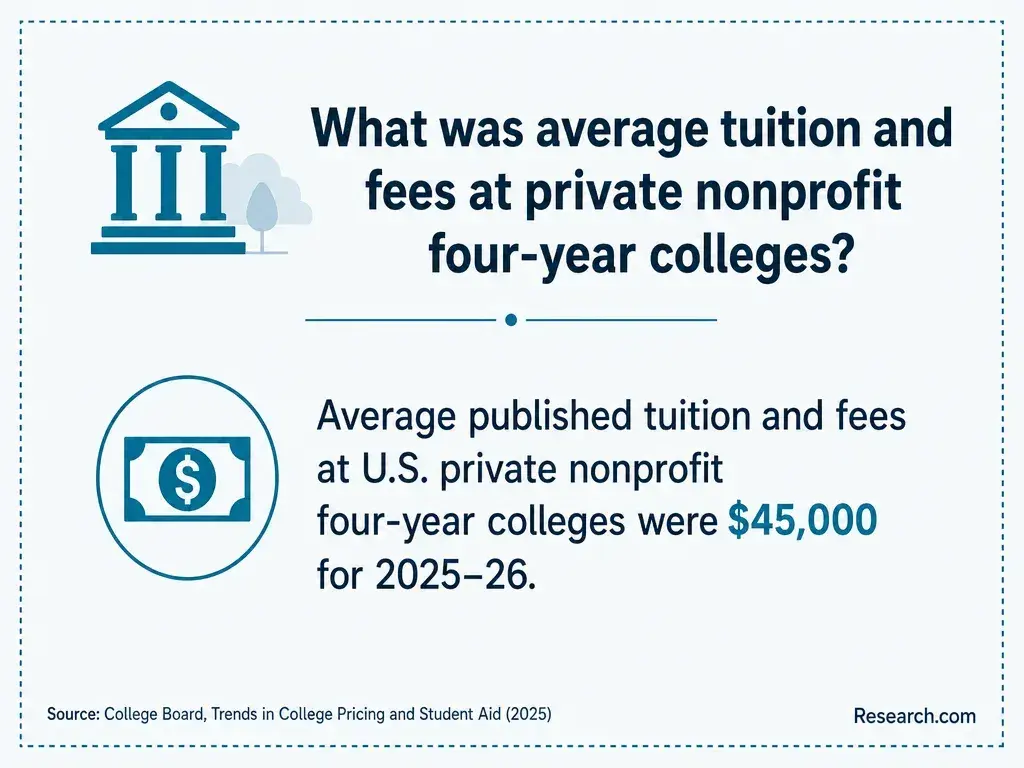
Request a personalized estimate covering tuition, mandatory fees, books or software, any placement-related costs, and the number of terms in your degree plan. Check employer education benefits and financial-aid eligibility against your intended enrollment load. Compare that total with the advancement actually available to you. If your long-term goal is licensed practice, mental health counseling tuition, fees, and financial aid belong in a separate, longer-range budget; a psychology BA alone does not complete that pathway.
Depending on the employer and your experience, relevant nonclinical openings may include patient navigator, behavioral-health outreach worker, intake coordinator, referral coordinator, or community services assistant. Read the duties rather than relying on the title: one "navigator" role may focus on scheduling, while another expects extensive knowledge of benefits, housing resources, or crisis-response procedures.
Your strongest application evidence may combine the BA with documented service coordination, respectful communication, accurate records, and experience working within referral and escalation boundaries. If you want to provide psychotherapy instead, research a qualifying professional degree and state requirements rather than treating navigation as a clinical shortcut. Clinical counseling master's time-to-degree and salary outlook concerns that are distinct career decisions, not a promotion automatically available to BA graduates.
Does Patient Navigation Require Licensure or Certification?
Patient navigation is generally a nonclinical function, not a license to practice psychology. A particular employer or program may nevertheless require job-specific training or a credential; peer-support and substance-use positions can have separate state rules. Verify the exact job posting, state requirements, and employer policies before assuming either that certification is mandatory or that a psychology BA substitutes for it.
Keep the scope boundary clear at work: a navigator can help connect someone to appropriate services and follow an employer's escalation protocol but cannot use the BA to diagnose, deliver psychotherapy, or independently interpret restricted psychological tests. If counseling is your actual goal, comparing condensed accredited counseling study routes is more relevant than adding a mental health elective to a nonclinical BA.
Other Things You Should Know About Psychology
Often, but confirm that the school enrolls students in your state and that any required in-person activity is accessible from where you live.
Enrollment is not generally an automatic workplace notification. If you seek tuition assistance or a work-based project, expect to discuss the relevant details with your employer.
Compare the actual courses and remaining requirements. Neither label alone establishes better preparation for navigation; a BS may require more science or quantitative coursework at some schools.
Use only information your employer and instructor permit. Remove identifying details, follow workplace privacy rules, and ask for approval before using records or evaluating a live service process.
- Accreditation in the U.S. | ed.gov http://www.ed.gov/laws-and-policy/higher-education-laws-and-policy/college-accreditation/accreditation-in-the-us
- Credit for Prior Learning | Kansas Board of Regents https://kansasregents.gov/students/credit-for-prior-learning
- Cost of Attendance (Budget) | 2025-2026 Federal Student Aid Handbook https://fsapartners.ed.gov/knowledge-center/fsa-handbook/2025-2026/vol3/ch2-cost-attendance-budget
- Student Intern Program: Frequently Asked Questions | ny.gov https://dos.ny.gov/student-intern-program-frequently-asked-questions
- Psychology careers guide | apa.org https://www.apa.org/education-career/guide/careers
- Credit for Prior Learning | Friends University https://www.friends.edu/admissions/costs-financial-aid/prior-learning-credit/
- Discover Psychology Career Paths That Lead to Professional Success | Mount saint vincent https://online.mountsaintvincent.edu/degrees/undergraduate/bachelor-psychology/careers-for-professional-success/
- Credit for Prior Learning | wichita.edu https://www.wichita.edu/priorlearning
- What are Asynchronous Classes? | University of Bridgeport https://www.bridgeport.edu/news/what-are-asynchronous-classes/
- Employer Tuition Reimbursement: How It Works and How to Pay for College | Winston-Salem State University https://ramsonline.wssu.edu/blog/employer-education-benefits/