
2027 Online BA in Psychology - Addictions Admissions with Foreign Transcripts Requiring Evaluation: What to Ask Before Applying
Audited and Verified:
Our Editorial and Data Verification Process
Research.com uses government datasets, official education statistics and primary institutional information to support its career and degree guides. Our review process checks factual accuracy, occupational definitions, source dates and the requirements associated with the credentials discussed.
How This Article Was Fact-Checked
Our editorial team verifies salary estimates, employment projections, education requirements and program information against original data providers and official organizations. Salary figures are checked against the relevant occupational definitions and reporting periods. Information about licensure, accreditation and required in-person training is reviewed separately.
Fact-checked and verified on:

Co-Founder and Chief Data Scientist
A foreign transcript can establish that you studied psychology without telling a US university which credits satisfy its BA requirements. That distinction matters when you are considering an online psychology degree with an addictions focus: an evaluation may be required for admission, while a separate academic review determines your remaining courses, time, and cost. This guide is for international applicants and students bringing overseas coursework into a US program. It explains what to ask admissions, the registrar, and the psychology department before you order an evaluation or apply.
Key Things You Should Know
- Ask whether the school requires a course-by-course foreign credential evaluation for admission or transfer credit; a document-level equivalency report may not provide enough detail.
- Keep three decisions separate: admission to the university, acceptance of foreign credits, and application of those credits to the psychology major and graduation requirements.
- Before paying an evaluator or application fee, confirm overseas enrollment eligibility, English-language rules, remaining-credit estimates, and whether the degree supports your intended career jurisdiction.
What Is an Online BA in Psychology With an Addictions Focus?
It is a bachelor of arts degree in psychology that includes study of substance use, prevention, recovery, or related behavioral-health topics. "Addictions focus" could mean an official concentration recorded by the university, a set of electives, or simply courses highlighted in its marketing. Ask which description applies and whether the focus appears on the transcript.
Core psychology study generally includes research methods, statistics, development, and behavior alongside any addiction-related courses. When comparing online psychology degree curricula, check the published degree requirements rather than the concentration name alone. Studying addiction does not authorize a graduate to diagnose or treat substance use disorders.
Is an Online Psychology Bachelor's Degree Accredited?
Accreditation belongs first to the institution, not automatically to every concentration it advertises. Verify the university's current institutional accreditation, that it covers the institution awarding the degree, and that the online BA is an authorized offering. Ask the school how it documents authorization to enroll a student in your location.
Do not expect APA accreditation for a general psychology BA; APA accreditation applies to specified professional psychology training programs, not undergraduate psychology majors. Likewise, accreditation or recognition of a counseling program would not automatically extend to a psychology BA. The same distinction matters when evaluating forensic psychology degree admissions: a specialization label is not evidence of a professional credential pathway.
If your goal is graduate admission or professional recognition outside the United States, ask the receiving university or regulator whether it recognizes this specific US degree. Institutional accreditation alone cannot answer that separate question.
What Foreign Transcript Evaluation Does Admission Require?
A foreign credential evaluation interprets overseas academic records for a US institution. A document-level report may describe the US equivalency of a completed credential; a course-by-course evaluation usually adds subjects, credits, and grade conversions. The university decides which report it accepts, which evaluation providers qualify, whether the report must be sent directly, and whether official transcripts or certified translations are also required.
The evaluator's report is not a transfer-credit award. The registrar may accept a course as elective credit while the psychology department declines to count it toward statistics or research methods. When moving existing credits into psychology study, the decisive document is the school's degree audit showing where each accepted course applies.
Before ordering a report, send the admissions office your country of study, institution, credential, and whether you seek first-year or transfer admission. Request written answers to these questions:
- Which evaluation type and providers are accepted, and must the report include all attempted postsecondary courses?
- Who sends transcripts and translations, and are original documents ever required?
- Can admissions review unofficial copies first, and when is the final report due?
- Who rules on psychology, statistics, laboratory, and general-education equivalencies, and what syllabi are needed?
- When will you receive a degree audit, and how can you appeal a course decision?
Gather transcripts, degree certificates if applicable, grading-scale information, and detailed syllabi before requesting equivalencies. If records are difficult to obtain, ask about the school's alternative-document policy before paying for an evaluation it may not accept.
Requirements vary by university and entry route. Confirm the school's minimum prior education, application documents, accepted credential evaluation, and English-language policy. English proficiency may be demonstrated through a test or an approved exemption, but prior study in English does not guarantee a waiver. A transfer applicant should also ask whether the psychology major has separate entry requirements.
International eligibility has a second meaning for online students: the university must permit enrollment from where you will physically study. Ask about country restrictions, examination arrangements, live-session time zones, and payment methods. Enrollment in an online US degree does not itself provide a US student visa or work authorization.
If your objective is a regulated addiction-counseling role rather than broad undergraduate psychology study, compare the BA's requirements with substance use counseling program pathways. Confirm credential rules in the jurisdiction where you intend to work before choosing either route.
Online and campus versions may award the same degree, but the learning and practical obligations can differ. Online study can avoid relocation; it does not necessarily eliminate scheduled meetings, proctored assessments, group work, or placement travel. Campus study may offer easier access to local faculty projects and agencies, but those opportunities still require eligibility and available places.
The comparison below concerns delivery, not academic quality. Ask each school for requirements applicable to your entry term.
| Decision factor | Online BA | Campus BA |
| Location | May permit study abroad, subject to university restrictions | Requires attendance at the campus location |
| Scheduled participation | May combine asynchronous work with live meetings | Usually follows scheduled on-campus classes |
| Applied experience | May require approval of a local or remote site | May offer nearby sites, subject to placement availability |
Degree level matters too. Do not use the format of accelerated forensic psychology graduate completion routes to infer the schedule or fieldwork rules of an undergraduate addictions focus. Obtain the BA's own course schedule and placement policy.
Expect the university's general-education and psychology-major requirements plus whatever courses formally constitute its addictions focus. Relevant offerings may examine substance use, abnormal psychology, health behavior, development, research methods, statistics, prevention, and community services. The exact mix - and whether an internship is required - must come from the current catalog.
For foreign transfer work, course titles alone are weak evidence of equivalency. A syllabus showing research design, statistical work, or assessed learning outcomes can help the department decide whether prior study satisfies a major requirement. Ask which prerequisites must be completed before upper-level addiction courses and how often those courses run.
Academic coverage of counseling techniques is not the same as qualifying clinical training. If your eventual goal is therapy, compare the BA with the educational and supervised-practice requirements of the target profession; accredited mental health counseling education by program pace concerns a distinct, later professional pathway.
Your completion time depends less on the amount of foreign study you have completed than on where accepted credits fit. General electives may transfer while major prerequisites remain outstanding. Course sequencing, minimum credits taken at the awarding university, and part-time enrollment can extend the timeline.
Request a written degree audit and a term-by-term plan before treating any completion estimate as reliable. For cost, ask for the tuition rate applicable to a student studying from your location, mandatory fees, evaluator and translation charges, and any placement or examination expenses. An advertised per-credit rate is not a total degree price; calculate the estimate using your remaining required credits, then account for fees and courses that may need to be repeated.
Use economical online psychology program choices as a starting point, not a substitute for individualized audits. A lower tuition rate can cost more overall if fewer of your credits meet degree requirements.
Depending on location, experience, and employer requirements, graduates may seek nonclinical roles in recovery-service outreach, program support, referral coordination, community education, or research assistance. These roles can involve communication, documentation, and service navigation - not independent diagnosis or psychotherapy. An addictions focus can supply useful subject knowledge, but an employer may also require local language skills, safeguarding training, or supervised experience.
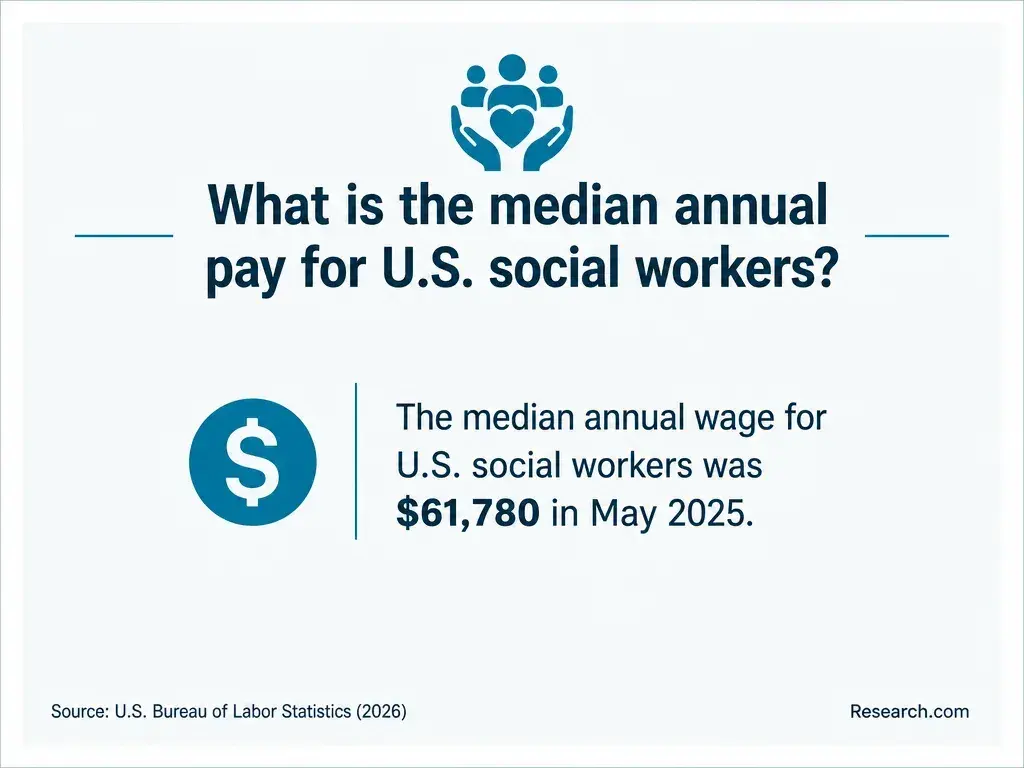
For someone studying outside the United States, the relevant labor market may be where they already have permission to work. US employment depends on separate work authorization; a US online BA does not supply it. Explore work in addiction recovery services by comparing actual job duties and credentials, then check those requirements with employers in your intended location. Do not treat occupation-wide salary figures as a forecast for holders of this BA.
There is no single credential attached to an addictions-focused psychology BA. In the United States, addiction-counselor titles and permitted duties depend on state rules; education, approved training, supervised experience, and examinations may be required. Peer-support credentials and licensed counseling professions follow different rules. Outside the United States, consult the regulator where you plan to work rather than assuming US coursework meets local standards.
Before enrolling, name the job title and jurisdiction you are targeting, then ask its licensing board or certifying body whether this specific degree and coursework count. If you need education designed around addiction-counseling credential requirements, compare that route and its financing separately; aid eligibility for online substance use counseling study cannot be assumed for every international applicant. Neither a concentration nor an internship automatically confers a license.
What Should You Ask Before Choosing an Online Psychology Program?
Get answers tied to your records, study location, and intended career - not just a general admissions brochure. The following sequence helps you avoid paying for an evaluation before you know whether the program is viable:
- Ask admissions which foreign evaluation, translations, English-language evidence, and official records your application requires.
- Ask the registrar for a preliminary transfer review and the psychology department which prior courses can meet major requirements.
- Ask an advisor for a written degree audit, course rotation, residency-credit rule, and realistic study plan.
- Ask the online-learning or placement office about country eligibility, live sessions, approved sites, and any in-person obligations.
- Ask for an individualized cost estimate and check degree recognition with the graduate program, employer, or regulator relevant to your goal.
If speed is important, compare accelerated online psychology degrees only after these checks. A shorter published schedule will not help if evaluation delays, unavailable prerequisites, or a rejected placement prevent you from following it.
Other Things You Should Know About Psychology
Ask admissions what proof of the name change it accepts, such as an official civil record. Use the same identifying information when requesting records and an evaluation.
Do not assume so. Ask whether the university requires a certified translation, whether the evaluator provides one, and who must send it.
The receiving university decides. Check its provider, report-type, and validity policies before ordering a replacement.
Contact admissions before applying. Ask whether records held by an education authority or another official custodian are acceptable, and obtain that decision in writing.
- Evaluation of Foreign Degrees - United States Department of State https://www.state.gov/global-community-liaison-office/family-member-employment/family-member-employment-in-the-d-c-area/evaluation-of-foreign-degrees
- International Graduate Academic Requirements | University of South Florida https://www.usf.edu/admissions/international/admission-information/graduate/academic-requirements.aspx
- International Admissions Requirements | Mississippi University for Women https://www.muw.edu/admissions/international/requirements/
- Distance Education Disclosures | umich.edu https://ai.umich.edu/distance-education-disclosures/
- International Applicants | How to Apply | Admission & Aid | Columbia University https://www.tc.columbia.edu/admission/how-to-apply/international-applicants/
- Submitting credentials | UIC Admissions https://admissions.uic.edu/undergraduate/application-process/submitting-credentials
- Bachelor of Arts in Psychology - Texas State's online programs https://online.txst.edu/degrees/undergraduate/ba-psychology/
- Applied Psychology: Addictions Studies, B.S. - CPS, CPSO | University of New Hampshire https://www.unh.edu/program/bachelor-science/applied-psychology-addictions-studies
- Online Bachelor's Degree in Psychology in Addictions | Purdue Global https://www.purdueglobal.edu/degree-programs/psychology/bachelor-psychology-addictions/
- Distance Learning Authorization and Licensure - UK Online https://online.uky.edu/authorization-licensure


