2027 Online BA in Psychology - Mental Health After an AAS in Paralegal Studies: Compare Transfer Credit and Remaining Coursework
Audited and Verified:
Our Editorial and Data Verification Process
Research.com uses government datasets, official education statistics and primary institutional information to support its career and degree guides. Our review process checks factual accuracy, occupational definitions, source dates and the requirements associated with the credentials discussed.
How This Article Was Fact-Checked
Our editorial team verifies salary estimates, employment projections, education requirements and program information against original data providers and official organizations. Salary figures are checked against the relevant occupational definitions and reporting periods. Information about licensure, accreditation and required in-person training is reviewed separately.
Fact-checked and verified on:

Co-Founder and Chief Data Scientist
An AAS in paralegal studies may put you partway toward a psychology BA - or leave you with more general education and major courses than expected. The difference matters when you are paying for another degree while working and considering a move into mental health services. This guide shows how to compare transfer evaluations, map the remaining coursework, and assess whether an online BA fits your intended role. You will leave with a way to request comparable degree audits before committing to a program.
Key Things You Should Know
- Accepted credit is not the same as completed requirements: Compare how each school applies AAS courses to general education, psychology prerequisites, electives, and residency rules.
- Use the degree audit, not the associate degree alone, to estimate time: In an illustrative 120-credit BA, 60 applicable transfer credits leave at least 60 credits to complete, subject to the program's requirements.
- A mental-health focus is academic preparation, not a counseling license: A BA may support nonclinical service roles, while independent counseling generally requires a qualifying graduate pathway and state licensure.
How Does an Online Psychology BA Build on an AAS in Paralegal Studies?
Your paralegal education may provide a useful starting point in legal research, careful documentation, interviewing, and handling sensitive information. Those skills can transfer to nonclinical work such as victim-services coordination or behavioral-health intake. They do not replace psychology training in research methods, development, or mental-health service boundaries.
An Associate of Applied Science (AAS) is commonly designed for occupational preparation, so its legal-specialty courses may not match the general education in a transfer-oriented associate degree. If your longer-term interest is the intersection of law and behavior, compare undergraduate coursework with the cost and qualifications associated with later study; forensic psychology one-year program value considerations are particularly relevant if you are contemplating a master's. Neither legal experience nor a forensic course grants clinical or investigative authority.
How Much Transfer Credit Can You Apply Toward an Online Psychology Bachelor's Degree?
There is no dependable AAS-to-BA credit total without an evaluation from the receiving university. A school may accept a course but apply it only as a free elective; another may use it to fulfill a writing or social-science requirement. The second outcome can save substantially more time, even if both schools report the same number of accepted credits.
This comparison shows where paralegal coursework might land. It is a planning aid, not a prediction of any university's decision.
| Prior course type | Possible application | What could limit its value |
| Composition or mathematics | General education | Different course level or learning outcomes |
| Introductory psychology or statistics | Major prerequisite, general education, or elective | Major-specific equivalency or recency rules |
| Legal research, ethics, or interviewing | Elective or, less commonly, an approved requirement | No direct psychology equivalent |
| Paralegal practicum | Possible elective | Psychology placement and supervision requirements |
Request a written, program-specific degree audit from each university's transfer-credit or registrar's office, with psychology-department review where required. Submit official transcripts and retain syllabi for courses you want reconsidered. Ask which credits satisfy requirements, which count only as electives, whether a transfer cap or university residency rule applies, and how to appeal an equivalency. When selecting an online psychology bachelor's program, compare the credits left to earn, not just the credits advertised as transferable.
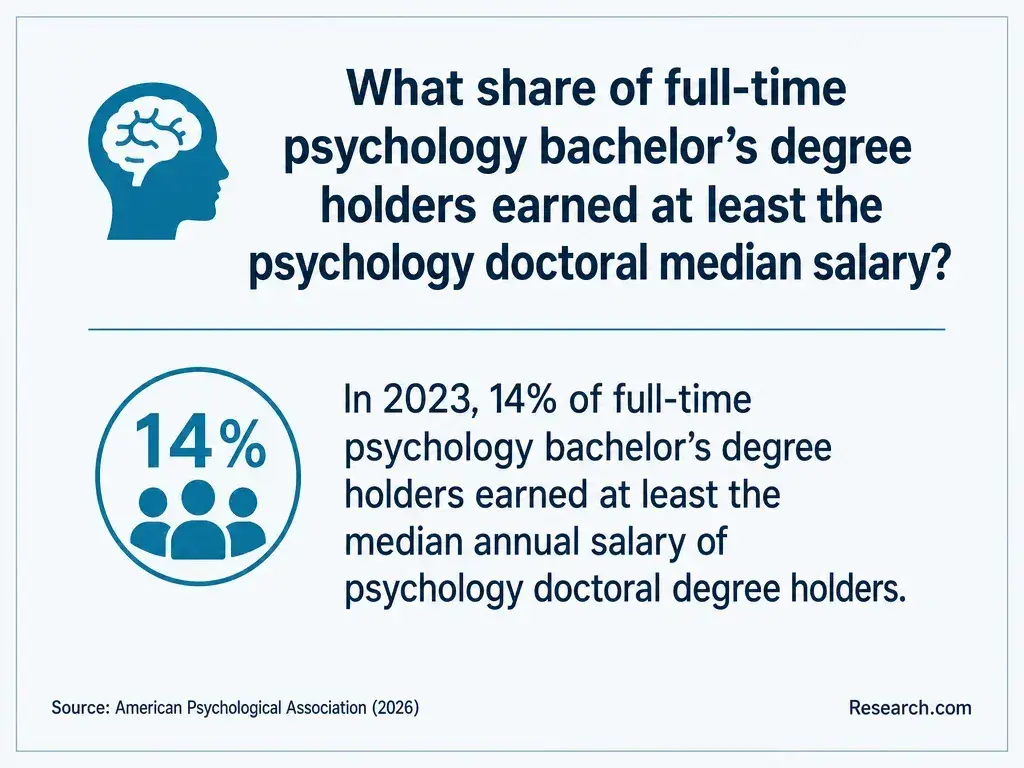
What Coursework Remains After Transferring a Paralegal Studies AAS?
Expect the audit to separate remaining general education, psychology major requirements, electives, and credits that must be earned at the university. Depending on your transcript, the psychology sequence may include introductory psychology, statistics, research methods, developmental and social psychology, biological or cognitive foundations, and an upper-level seminar or capstone. A mental-health emphasis might add abnormal psychology, addiction, or service-systems coursework. Course names and formal concentration requirements vary.
Sequencing matters more than the course count alone. Statistics may precede research methods, which may precede a capstone. A legal-research course can demonstrate valuable writing ability without necessarily substituting for psychological research design or statistical analysis. Ask a major adviser to show prerequisites and the terms in which required courses are offered.
If your specific goal is substance-use counseling rather than broad psychology preparation, compare the BA's remaining courses with a state-aligned counseling route. An addiction counseling program selection guide can help frame that comparison, but your state's credentialing authority determines which coursework and supervised experience count.
Verify that the institution holds recognized institutional accreditation and that the credential awarded is the BA you intend to earn. Online delivery does not, by itself, make a degree less valid for graduate applications. Graduate programs make their own decisions about prerequisite courses, grades, research preparation, and admission.
Do not look for APA accreditation of a general undergraduate psychology BA: APA accreditation applies to specified professional psychology training programs, not ordinary BA majors. More importantly, neither institutional accreditation nor a mental-health concentration makes the BA a counseling license. If counseling is the end goal, investigate qualifying graduate programs and your intended state's rules; accredited counseling study with accelerated schedules is a separate decision from choosing a transferable undergraduate major.
Schools may review your AAS transcript, prior college GPA, and general admission application before separately confirming eligibility for the psychology major or a degree-completion track. Some tracks require a minimum amount of prior college work; others admit students earlier and have them finish introductory requirements first. An AAS does not automatically satisfy either admission or major-entry rules.
Before applying, obtain official transcripts from every college attended and gather syllabi for psychology, statistics, and writing courses that may need individual review. Ask admissions whether prerequisite gaps can be completed after enrollment, and ask the psychology department when those courses become available. If affordability affects where you apply, investigate aid separately from admission: bachelor's-level substance use counseling scholarship planning offers a related funding perspective, though awards and eligibility must be checked for your actual program.
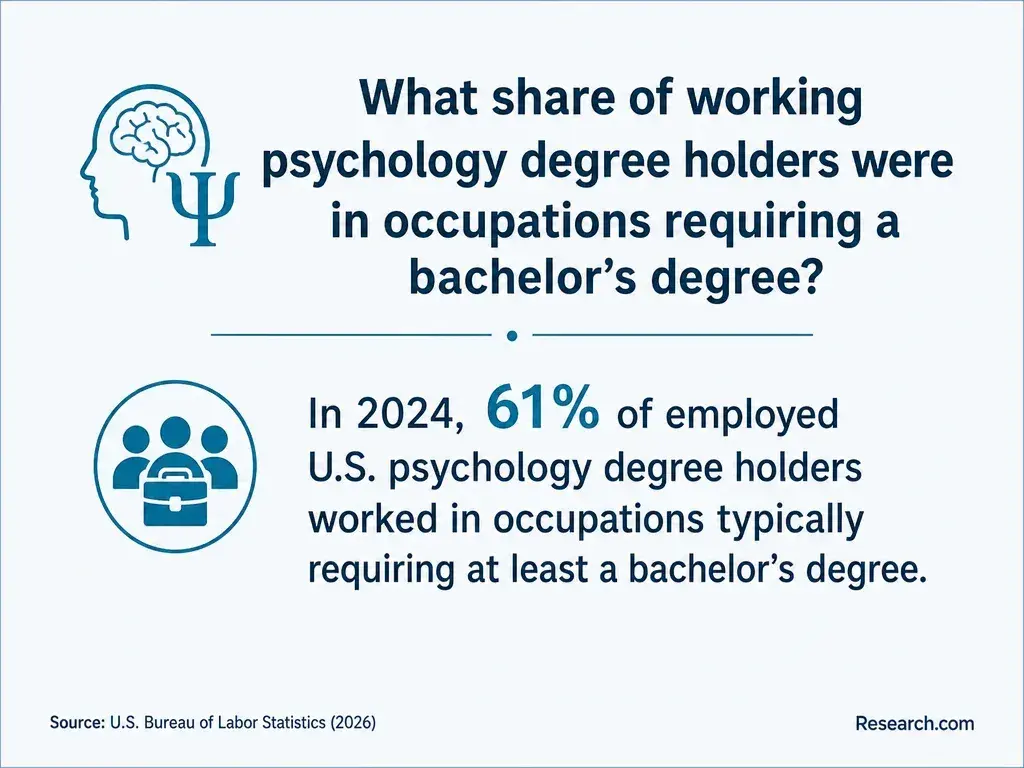
The best estimate comes from a term-by-term plan built on an approved audit. For illustration, a 120-credit degree with 60 credits applied toward graduation leaves 60 credits. That arithmetic is not a completion-time promise: part-time enrollment, prerequisite chains, infrequently offered courses, and residency rules can change the schedule.
Ask an adviser to map the remaining courses at the pace you can sustain while working, including any required internship or capstone. Confirm whether summer terms help and whether an accelerated calendar changes weekly workload rather than reducing requirements. If your legal background draws you toward forensic electives, forensic psychology undergraduate graduation timelines provide another schedule to compare - but use your own transfer audit to judge feasibility.
An online BA can reduce commuting, but it may still require live discussions, scheduled exams, group research meetings, or an approved in-person experience. A campus program may make faculty contact and local placements easier, while creating a less workable commute. Compare the obligations of the specific courses you have left, not the programs' general descriptions of flexibility.
For each option, check weekly deadlines, live-session times, placement support, access to research mentoring, and policies for pausing enrollment. Then compare total remaining tuition and fees, travel, and any earnings you would forgo. When choosing an accelerated psychology degree route, a shorter calendar is worthwhile only if its workload and course sequence fit your actual schedule.
A psychology BA may help a former paralegal compete for nonclinical positions involving intake, referrals, case coordination, victim advocacy, community outreach, or research support. Employers may value your recordkeeping and confidentiality experience, but they may also expect direct-service experience, specific software skills, or training for work with vulnerable populations.
Consider a supervised volunteer role, approved internship, or entry-level position that lets you demonstrate respectful client communication and appropriate referrals without performing therapy. In addiction services, roles in community recovery organizations differ substantially in duties and credential rules. Read local job descriptions closely: a title that sounds similar to another role may require a different degree, certification, or scope of practice.
For independent mental health counseling, generally yes: a psychology BA, including one with a mental-health focus, is not sufficient. The path ordinarily involves a qualifying graduate degree, supervised clinical experience, examination, and a state-issued license. The precise degree, accreditation considerations, supervision, and permitted duties depend on the jurisdiction and license sought.
Decide whether you want to provide psychotherapy or instead work in nonclinical support and coordination. If therapy is the goal, compare prospective BA courses against the prerequisites of qualifying counseling or social-work graduate programs, then budget for the entire pathway. Evaluating the net cost of counseling education matters more than judging the BA's price in isolation. If you prefer service coordination, targeted training plus relevant experience may be more direct than a clinical graduate degree.
What Are the Salary and Job Outlook for Psychology Graduates?
There is no single salary or job-growth rate for psychology BA graduates. The U.S. Bureau of Labor Statistics reports wages and projections by occupation, not by undergraduate major. A case-support job, a substance-use counseling position, and a licensed counselor position have different duties and entry requirements; the latter occupations' published wages should not be treated as an offer to a new BA graduate.
For a useful financial comparison, identify jobs you could realistically seek after the BA in your area, review their current postings and the matching BLS occupational profile, and compare likely earnings with your remaining education cost. Include later graduate expenses only if they are part of your goal. If you are considering further psychology study, comparing prices for online psychology master's degrees can inform the budget, but a general psychology master's should not be priced as though it automatically qualifies you for counseling licensure.
Other Things You Should Know About Psychology
No. A paralegal program's approval or recognition does not require a psychology BA program to award particular equivalencies. The receiving university evaluates its own transfer and degree requirements.
Possibly, if the university has a prior-learning assessment policy. Ask what evidence, assessment, fees, and credit limits apply; employment alone does not award credit.
Perhaps, if the work meets the program's learning objectives and the school approves the site, duties, and supervisor in advance. Existing employment does not automatically qualify.
That depends on its renewal cost and your career plan. Keeping it may preserve legal-work options while you test a move into mental-health support, but it does not substitute for a mental-health credential.
- Frequently Asked Questions for Mental Health Counselors | nysed.gov https://www.op.nysed.gov/professions/mental-health-counselors/faqs-education-requirements
- Pell Grant Enrollment Intensity and Cost of Attendance | ed.gov https://fsapartners.ed.gov/knowledge-center/fsa-handbook/2025-2026/vol7/ch3-pell-grant-enrollment-intensity-and-cost-attendance
- Advice for Psychology Majors | Evelyn L. Spiro School of Nursing https://wagner.edu/psychology/major/psychmajor/advice/
- Program: Paralegal Studies, A.A.S. | nscc.edu https://catalog.nscc.edu/preview_program.php
- Program: Psychology - (B.A.) - University of Memphis https://catalog.memphis.edu/preview_program.php
- Transfer Credits from Other Institutions | psu.edu https://priorlearning.psu.edu/transfer-credits-other-institutions
- Paralegal Studies AAS Degree | Lone Star College https://www.lonestar.edu/programs-of-study/paralegal-aas.htm
- Paralegal Associate in Applied Science | Greenville Technical College Student Handbook and Catalog https://catalog.gvltec.edu/school-engineering-technology-professional-studies/paralegal/paralegal-aas/
- Psychology Requirements | Rutgers University https://psych.rutgers.edu/academics/undergraduate/major
- Major/Minor Requirements - Psychological & Brain Sciences https://psych.washu.edu/majorminor-requirements