2027 Paying for an Online BA in Psychology - Addictions: A Scholarship Restricted to Public Safety Employees
Audited and Verified:
Our Editorial and Data Verification Process
Research.com uses government datasets, official education statistics and primary institutional information to support its career and degree guides. Our review process checks factual accuracy, occupational definitions, source dates and the requirements associated with the credentials discussed.
How This Article Was Fact-Checked
Our editorial team verifies salary estimates, employment projections, education requirements and program information against original data providers and official organizations. Salary figures are checked against the relevant occupational definitions and reporting periods. Information about licensure, accreditation and required in-person training is reviewed separately.
Fact-checked and verified on:

Co-Founder and Chief Data Scientist
If you work in law enforcement, fire services, emergency medical services, dispatch, or corrections, a scholarship restricted to public safety employees could change the cost of an online psychology degree. But the advertised award matters only if you qualify, it applies to your chosen program, and the remaining cost fits your budget. This guide explains how to verify those conditions for a BA with an addictions concentration - and how to decide whether the degree advances your work in recovery services or another public-sector role.
Key Things You Should Know
- No named public-safety-employee scholarship can be confirmed from the program information available here; obtain the current award terms from the school before counting it as funding.
- Compare the scholarship against your remaining degree requirements, not an advertised maximum award: an online bachelor's degree is commonly built around 120 credits, but transferred credits may not satisfy the major.
- An addictions concentration can support nonclinical work, but a psychology BA alone does not qualify you to diagnose or treat substance use disorders.
What Is an Online BA in Psychology With an Addictions Concentration?
An online BA in psychology with an addictions concentration is a bachelor's degree combining broad psychology study with focused coursework on substance use, prevention, and recovery. The concentration may appear on the transcript, but its status and required courses depend on the institution. It is not the same credential as a degree specifically designed to meet a state's addiction-counselor requirements.
For a public safety employee, the strongest reason to choose this route is a defined goal: moving toward recovery-service coordination, prevention work, or further study while building on experience with people in crisis. Compare actual concentration requirements when reviewing addiction psychology degree options for undergraduate students; a program title alone cannot establish how much addiction-focused study it includes.
How Much Does an Online BA in Psychology With Addictions Cost?
The useful price is your net cost to finish, not the school's annual tuition or the scholarship's advertised value. Request a degree audit and a written aid estimate for your intended enrollment pace. Build the comparison from these charges and credits:
- Tuition: remaining billable credits multiplied by the applicable per-credit price, or the published term price if the school charges by term.
- Required fees and materials: technology, course, textbook, and any placement-related expenses.
- Funding: confirmed scholarship awards, grants, and employer assistance, subject to their stacking and renewal rules.
- Opportunity costs: unpaid fieldwork, schedule changes, or reduced work hours, if applicable.
Do not subtract a scholarship until the school confirms its amount and how it interacts with other aid. Compare the resulting balance with a substance abuse counseling undergraduate education investment if your goal is a state-recognized counseling pathway rather than a broad psychology education.
Which Scholarships Are Restricted to Public Safety Employees?
No specific scholarship restricted to public safety employees can be identified or verified here. Do not assume that a general first-responder discount, an employer tuition benefit, and a restricted scholarship are the same award. Ask each school's financial aid office for the current scholarship name and written eligibility terms.
Confirm which jobs count - such as sworn law enforcement, civilian dispatch, fire service, EMS, or corrections - and whether employment must be full-time, current, or with an approved agency. Then check the eligible degree and start term, award amount, application deadline, documentation, minimum enrollment, renewal requirements, and whether employer reimbursement reduces the award. A pay stub or agency verification may be needed; a job title alone may not suffice.
If the award is limited to particular institutions, first confirm that those schools meet your academic needs. Use the same questions you would when selecting an online psychology bachelor's program, rather than letting a conditional discount decide for you.
Check institutional accreditation for the specific university awarding the BA through the U.S. Department of Education's recognized-accreditor information or the accreditor's directory. Confirm that the online degree and concentration are currently offered by that institution. Institutional accreditation does not establish that a concentration meets addiction-counselor licensing rules.
The American Psychological Association does not accredit general psychology bachelor's programs. If your public safety career goal is instead justice-focused study, compare the actual degree and credential implications of online forensic psychology tuition admissions and outcomes; neither a forensic nor an addictions concentration grants clinical or investigative authority.
Expect to check the catalog for psychology foundations, research methods, statistics, and the specific addictions requirements. Relevant courses may examine substance use across the lifespan, biological and social influences, prevention, recovery systems, and ethics. Course names and availability vary, so ask which are required, which are electives, and whether any must be taken in a particular sequence.
For someone already working in public safety, methods and ethics courses can be as valuable as topical electives: they help with evaluating prevention claims, protecting sensitive information, and understanding the limits of screening or referral. If your intended work is forensic rather than addiction-related, investigate choosing a one-year forensic psychology master's pathway only if you already have a bachelor's degree and the graduate curriculum matches that goal.
Undergraduate applicants generally need to satisfy the university's admission rules and submit prior transcripts. Transfer applicants should also request a formal evaluation showing which credits satisfy general education, psychology, concentration, and residency requirements. Admission and acceptance of a course for transfer do not mean that course fulfills a major requirement.
If you already hold a bachelor's degree, ask whether a second BA adds anything your target role requires before applying. Depending on your goal, targeted coursework, a state-recognized credential, or economical routes to graduate psychology study may be more direct. A general psychology master's, however, is not automatically a counseling license pathway.
Many bachelor's degrees require about 120 semester credits, but your time to completion depends on the school's accepted credits, the courses still required for the major, course availability, and how many classes you can take while working. An accelerated calendar does not eliminate prerequisites or residency rules.
Ask for a term-by-term completion plan that accounts for shift rotations, live sessions, exams, and any approved field experience. Compare that plan with shorter undergraduate psychology study pathways only after receiving your individual degree audit. If you already have a BA and are weighing a graduate alternative, a short advertised timeline for planning a forensic psychology master's in less than two years addresses a different qualification and should not be treated as interchangeable with this addictions BA.
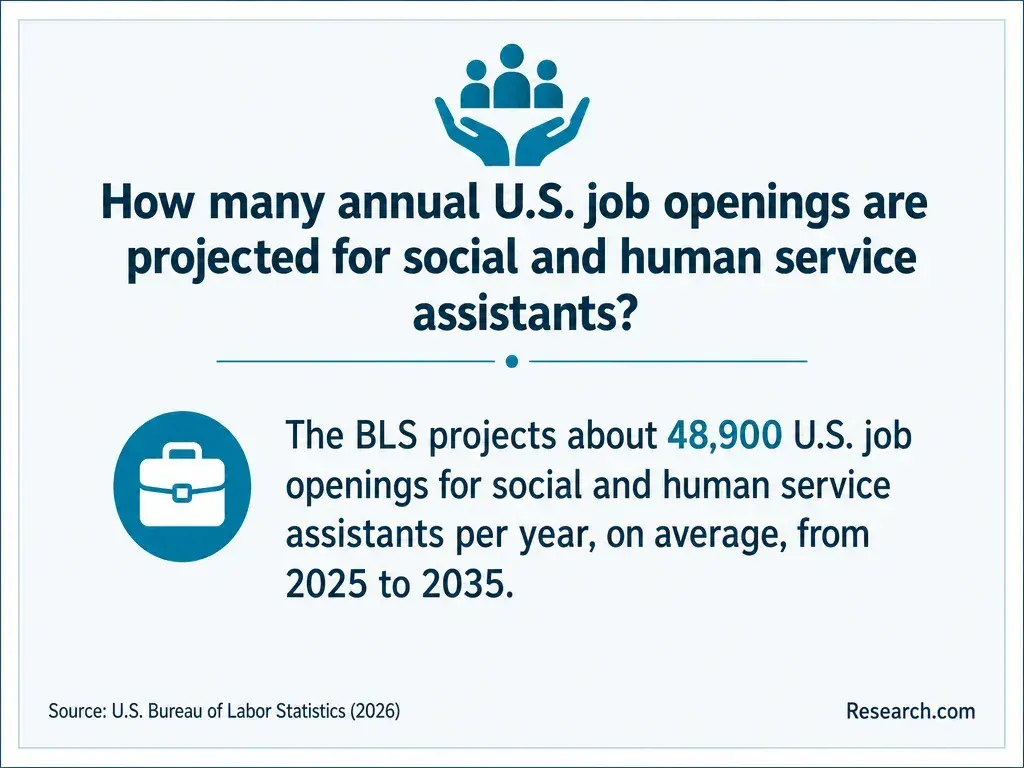
Public safety experience can be useful in nonclinical roles involving outreach, referral, documentation, or coordination with community services. Potential job titles include recovery-support worker, prevention-program assistant, and human-services or case-coordination staff. Employers may also require relevant experience, background checks, or a separate credential.
Assess the work itself before paying for a degree: supporting a referral is different from providing counseling, and existing agency training may be enough for some internal responsibilities. Explore career options in recovery services, then compare local job postings with the BA's curriculum and your current qualifications.
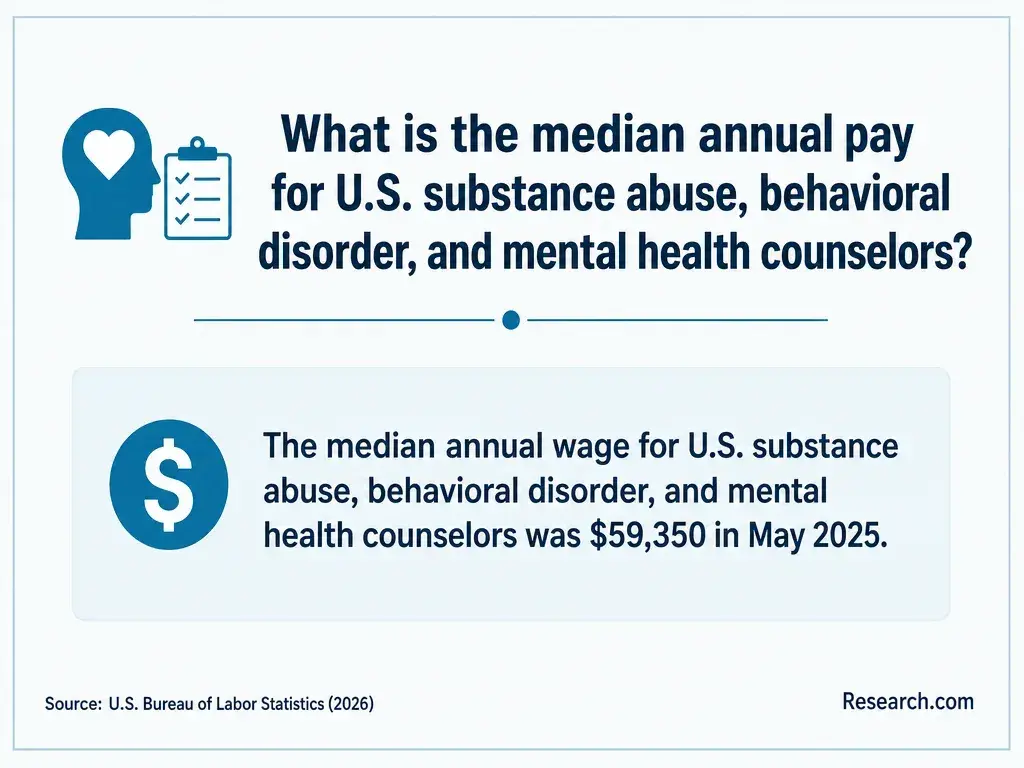
There is no single salary for an "addictions psychology degree." Pay depends on the occupation, location, employer, experience, and required credential. The U.S. Bureau of Labor Statistics reported a May 2024 median annual wage of $59,190 for substance abuse, behavioral disorder, and mental health counselors. That is an occupation-wide figure, not an expected salary for BA graduates; counselor positions may require additional education, supervised experience, or licensure.
For a public employee, compare posted pay grades for attainable roles with your current compensation and the net cost of study. Include pension, benefits, and any pay differential your agency actually authorizes. If counseling is the goal, comparing counseling master's tuition with completion time is more informative than treating a bachelor's-level scholarship as the full cost of entry.
What Licenses and Certifications Do Addiction Professionals Need?
Addiction-counselor titles and permitted duties are governed by state rules, not by a concentration name. A state may specify qualifying coursework, supervised hours, examinations, and background requirements. Peer-support credentials can have different requirements and do not authorize psychotherapy. Licensed professional counseling and clinical social work follow their own educational and licensing pathways.
Before enrolling, identify your intended job title and state of practice. Ask the relevant state licensing or certification authority whether this exact degree and its courses satisfy any educational requirements, and get the school's answer in writing too. If the degree does not advance the required credential, weigh a qualifying program or targeted training instead.
Other Things You Should Know About Psychology
Only if that award's written rules include volunteers. Ask the financial aid office what service documentation it accepts.
Disbursement depends on the award terms and school policy. Ask when it posts and whether any remaining balance is refundable.
Yes, an employer may impose a service commitment or repayment condition. Review your agency's agreement separately from the school's scholarship rules.
Do not use identifiable agency, patient, or client information without authorization. Ask your instructor and agency about approved, privacy-safe alternatives.
- Finding and Applying for Scholarships | studentaid.gov https://studentaid.gov/understand-aid/types/scholarships
- Counselor Certification - DHCS - CA.gov https://www.dhcs.ca.gov/providers-partners/counselor-certification/
- Tuition Assistance Program (TAP) - HESC - NY. Gov https://hesc.ny.gov/find-aid/nys-grants-scholarships/tuition-assistance-program-tap
- School-Determined Requirements - FSA Partner Connect https://fsapartners.ed.gov/knowledge-center/fsa-handbook/2025-2026/vol1/ch1-school-determined-requirements
- Employer-offered educational assistance programs can help pay for college | Internal Revenue Service https://www.irs.gov/newsroom/employer-offered-educational-assistance-programs-can-help-pay-for-college
- Bright Futures Renewal Eligibility | UNF Catalog https://www.unf.edu/financialaid/bright-futures/renewal-eligibility.html
- Institutional Scholarship Renewal Requirements | WVU Hub https://hub.wvu.edu/types-of-aid/scholarships/renewal-reqs
- Tuition & Fees | National University https://www.nu.edu/admissions/tuition/
- Online Bachelor's Degree in Psychology in Addictions | Purdue Global https://www.purdueglobal.edu/degree-programs/psychology/bachelor-psychology-addictions/
- LIFE Scholarship Renewal Requirements - Financial Aid and Scholarships | University of South Carolina https://sc.edu/about/offices_and_divisions/financial_aid/scholarships/scholarships_for_sc_residents/life_scholarship/renewal_requirements/