2027 Online BA in Psychology - Mental Health for Supported Employment in Behavioral Health: Which Courses Should You Look For?

Co-Founder and Chief Data Scientist
If you want to help people receiving behavioral-health services find and keep work, a course on mental disorders is not enough. Supported employment also calls for knowledge of employment services, respectful client choice, job development, benefits, and professional boundaries.
This guide is for prospective online psychology BA students comparing curricula for that specific goal. It identifies the courses and applied experiences worth prioritizing, explains what the degree can - and cannot - qualify you to do, and shows what to verify before committing your time and tuition.
Key Things You Should Know
- Prioritize abnormal psychology, research methods, disability and rehabilitation content, and coursework that addresses employment services - not a "mental health" label alone.
- Look for supervised practice in job development, employer communication, documentation, and client-directed support; an online classroom cannot substitute for every workplace skill.
- A psychology BA may support applications for nonclinical employment-specialist roles, but employer requirements vary and the degree does not authorize diagnosis or therapy.
What Is an Online Bachelor's Degree in Psychology for Behavioral Health?
It is an undergraduate psychology degree delivered partly or wholly online whose courses can be applied to work in behavioral-health services. "Mental health" may describe an official concentration, a set of electives, or simply the program's marketing. Check the degree plan to see which it is. An online psychology programs and academic pathways comparison can help you identify options, but the required courses and access to applied experience matter more than the label.
Supported employment helps people pursue work that fits their preferences while coordinating practical support. One established approach, Individual Placement and Support (IPS), emphasizes client choice, competitive integrated employment, timely job search, employer engagement, and continuing support coordinated with mental-health services. Not every agency uses IPS, so ask which model a prospective employer or placement site follows. The employment specialist supports work goals; clinicians remain responsible for clinical care.
Can a Psychology Bachelor's Degree Lead to Mental Health Careers?
Yes, particularly in nonclinical service roles, but a BA is preparation rather than a job credential. Employers may consider psychology graduates for employment-specialist, program-assistant, outreach, or service-coordination positions alongside applicants with rehabilitation, social work, human services, or relevant work experience. Some roles require a driver's license, community travel, background checks, particular training, or experience with the population served.
For supported employment, experience helping someone navigate a workplace or community service can be more persuasive than extra coursework with no applied component. If your goal is psychotherapy instead, investigate a qualifying graduate pathway and its state-specific requirements; online clinical counseling graduate completion options address a different professional goal. A psychology BA alone does not qualify you to diagnose or treat a mental disorder.
What Courses Should an Online Psychology Program Include?
Start with psychological science, then seek coursework that connects it to the actual tasks of supported employment. The table separates useful subject matter from what you should expect to demonstrate on the job; course titles and coverage differ by school.
| Course area | Relevance to supported employment | Important limit |
| Abnormal psychology or mental-health systems | Builds literacy about mental-health conditions, recovery, and service settings. | Academic knowledge is not clinical training. |
| Social psychology and cultural psychology | Informs respectful communication, workplace inclusion, and awareness of stigma. | Concepts must be adapted to each person and setting. |
| Developmental psychology | Provides context for supporting people at different career and life stages. | It does not replace individualized planning. |
| Research methods and statistics | Helps graduates read evidence, understand service measures, and avoid unsupported claims. | Employment outcomes alone do not prove a service caused them. |
| Rehabilitation, disability studies, or psychiatric rehabilitation | Addresses accessibility, community participation, and employment-support models. | Availability varies; these subjects may sit outside the psychology department. |
| Ethics, interviewing, or human-services practice | Supports consent, confidentiality, documentation, referrals, and role boundaries. | A classroom exercise is not supervised clinical practice. |
For this goal, a course or placement covering vocational assessment as nonclinical career exploration, job development, employer relationships, workplace accommodations, and ongoing job support may be more valuable than another broad mental-health elective. Learn when to refer benefits questions to a qualified benefits planner rather than guessing how earnings affect an individual's benefits. Students also interested in recovery services can explore addiction recovery workforce opportunities, while checking the training and credential rules for any particular role.
Request recent syllabi and ask whether the program offers a supervised, nonclinical placement with an employment-services provider. Confirm who approves sites, what students may do, and whether a placement can fit your schedule. An elective about counseling techniques does not grant permission to counsel clients.
Compare access to practice, not just lecture delivery. An online student may complete readings and discussions asynchronously yet still need scheduled group work, live supervision, or an in-person placement. A campus student may have easier access to local agency partnerships, but that advantage depends on the institution and its location.
Ask both types of program whether they help students locate approved sites, how field supervisors are assessed, and whether an internship is optional or required. If you work or provide care at home, check actual meeting hours and travel expectations before treating "online" as flexible. Professional counseling education may have substantially different supervised-training obligations; accelerated accredited clinical mental health counseling programs should not be treated as interchangeable with an online BA.
Yes. Verify that the university has institutional accreditation recognized by the U.S. Department of Education, and confirm that it covers the institution awarding the degree. Institutional accreditation is relevant to academic standing and can affect aid and later credit or graduate applications; it does not certify that this BA prepares graduates for a particular job or license.
Do not require "APA accreditation" of a psychology BA: APA accreditation applies to specified professional psychology training programs, not general undergraduate psychology majors. Accreditation rules differ across fields, as forensic psychology degree accreditation comparisons illustrate. For supported employment, verify the institution's status, then examine course content and the agency experience you can actually obtain.
Requirements depend on whether you enter as a first-year or transfer student. Schools commonly request prior transcripts, while some set separate standards for entry to the major or particular upper-level courses. Ask admissions for entry requirements and the psychology department for the course sequence; acceptance to the university does not necessarily mean every desired elective is immediately available.
If you have previous study, request a degree audit showing which credits satisfy general education, statistics, research methods, the psychology major, and any residency requirement. Accepted transfer credit does not automatically replace a required course. If graduate study is part of your longer-term plan, compare its prerequisites separately: intensive online graduate psychology study is not an automatic next step or a substitute for checking the requirements of your intended profession.
Completion depends on accepted credits, enrollment pace, prerequisite order, and when courses are offered. An advertised accelerated schedule may not help if the rehabilitation elective you need runs infrequently or an approved placement takes time to arrange. Ask for a term-by-term plan based on your evaluated transcript, including any fieldwork and limits on summer enrollment.
Do not choose speed at the expense of relevant practice. The same caution applies to later study: forensic psychology one-year program value considerations show why a short advertised timeline should be weighed against curriculum and outcomes, not assumed to improve eligibility for a behavioral-health role.
Compare the cost of the remaining degree, not tuition alone: include required credits, mandatory fees, books, technology, travel to a placement, and any earnings you would give up for unpaid fieldwork. Request a written estimate based on your degree audit and expected enrollment pace. Confirm financial-aid eligibility and any conditions before counting grants, scholarships, or employer assistance.
If your target position requires a specific addiction-services credential rather than a psychology BA, compare that alternative's training and cost. Guidance on reducing undergraduate substance abuse counseling tuition through aid may inform the comparison, but funding and credential eligibility must be checked for your school and state. For supported employment, a less expensive program with approved local experience may offer better preparation than a costly concentration with no employment-services content.
Possible nonclinical targets include supported-employment specialist, job coach, vocational-services assistant, behavioral-health program assistant, and service coordinator. Titles are inconsistent: read the posting for actual duties, required experience, travel, supervision, and credentials. An employment specialist might learn a client's work preferences, contact employers with appropriate consent, help arrange supports, document progress, and coordinate with a service team. That is distinct from providing therapy or making a diagnosis.
Build evidence of readiness through approved agency work, accessible communication, careful records, and employer-facing practice. If you are comparing other psychology-adjacent careers, exploring better-paid roles related to forensic psychology concerns a different educational and occupational pathway; its job titles should not be mistaken for supported-employment outcomes.
What Salary and Job Outlook Can Psychology Graduates Expect?
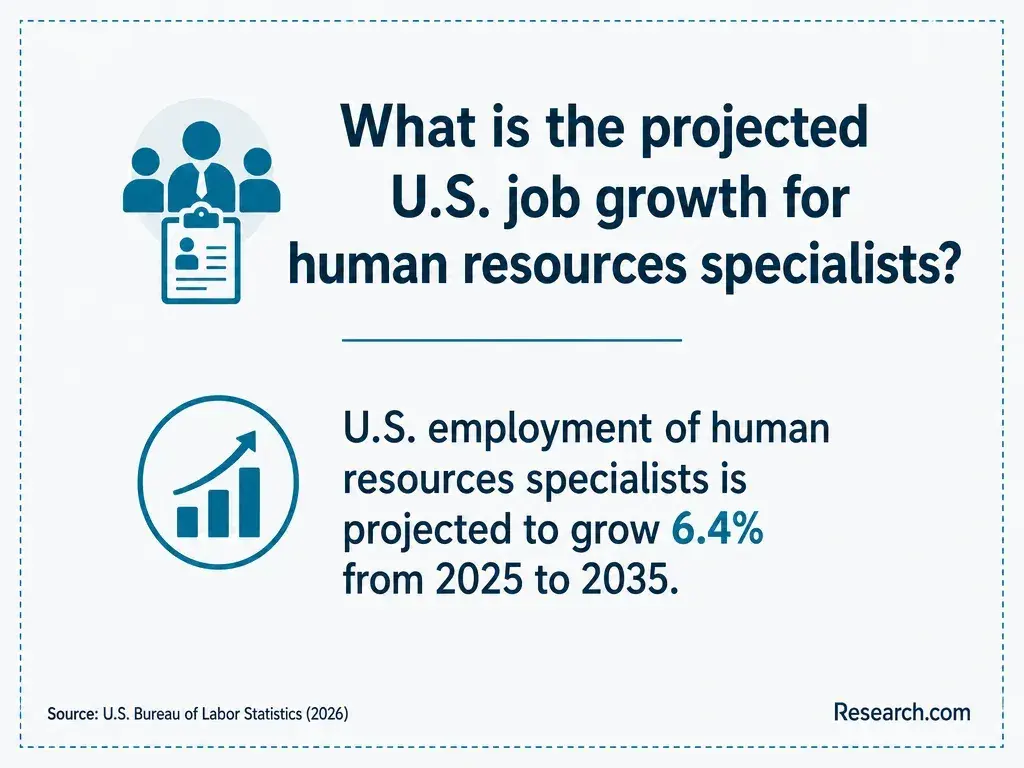
There is no single supported-employment salary - or job-growth rate - for psychology BA graduates. Employment-specialist postings can fall under different occupational categories, and pay varies with employer, location, responsibilities, and experience. The U.S. Bureau of Labor Statistics' social and human service assistants occupation offers one broad comparison for some support duties, but its occupation-wide wages and projections are not predictions for a psychology graduate or a specific employment-specialist job.
For a useful estimate, compare local postings with similar duties and ask prospective employers about travel reimbursement, supervision, and advancement requirements. If you are considering a later clinical degree for different work, compare its additional cost as well as its possible earnings; mental health counseling fees and financial support address that separate investment. Choose the BA for the supported-employment preparation it provides, not an assumed clinical salary.
Other Things You Should Know About Psychology
Not necessarily. Compare required courses and approved experience first. A general psychology BA with relevant rehabilitation electives may fit your goal better than a concentration without employment-services content.
Possibly, but obtain approval before relying on it. The program may require distinct learning objectives, an eligible supervisor, documented hours, or duties beyond your regular job.
Not for routine supported-employment work. Learn to understand the limits of screening and assessment information, and leave restricted test administration and interpretation to qualified professionals.
Ask which employment-support model it uses, what students may do, who supervises them, and how it protects client choice and confidentiality. Confirm the site and duties with your academic program before starting.
- Evidence-Based Practices Resource Center | samhsa.gov https://www.samhsa.gov/libraries/evidence-based-practices-resource-center
- Accredited or Approved Programs | az.gov https://bbhe.az.gov/applying-licensure/accredited-or-approved-programs
- Guide to Disability Rights Laws | ADA.gov https://www.ada.gov/resources/disability-rights-guide/
- Case Management - StatPearls - NCBI Bookshelf https://www.ncbi.nlm.nih.gov/books/NBK562214/
- Learn about student intern program | Behavioral Health Services https://bhsd.santaclaracounty.gov/behavioral-health/learn-about-student-intern-program
- An update on supported employment for people with severe mental illness - PMC https://pmc.ncbi.nlm.nih.gov/articles/PMC5846108/
- Individual Placement and Support (IPS) | wisconsin.gov https://www.dhs.wisconsin.gov/ips/index.htm
- The ADA: Your Responsibilities as an Employer | U.S. Equal Employment Opportunity Commission https://www.eeoc.gov/publications/ada-your-responsibilities-employer
- Certification Procedures for Title IV of the HEA | ed.gov http://www.ed.gov/laws-and-policy/higher-education-laws-and-policy/higher-education-policy/ope-guidance-documents/frequently-asked-questions-certification-procedures-title-iv-of-hea
- Co-Occurring Disorders Treatment | University of Maryland School of Medicine https://ebpcenter.umaryland.edu/training-topics/co-occurring-disorders-treatment/