2027 Online MS in Psychology - Forensic Psychology vs. an MS in Investigative Psychology: Compare Curriculum, Cost, and Career Fit
Audited and Verified:
Our Editorial and Data Verification Process
Research.com uses government datasets, official education statistics and primary institutional information to support its career and degree guides. Our review process checks factual accuracy, occupational definitions, source dates and the requirements associated with the credentials discussed.
How This Article Was Fact-Checked
Our editorial team verifies salary estimates, employment projections, education requirements and program information against original data providers and official organizations. Salary figures are checked against the relevant occupational definitions and reporting periods. Information about licensure, accreditation and required in-person training is reviewed separately.
Fact-checked and verified on:

Co-Founder and Chief Data Scientist
An online master's labeled "forensic psychology" may prepare you for different work than one labeled "investigative psychology," even when both cover crime and behavior. That distinction matters if you are paying for a degree to move into victim services, justice-system research, or investigative support.
This comparison explains what the subjects usually emphasize, how to compare actual courses and total costs, and which career claims deserve scrutiny. It is designed to help prospective graduate students and justice-system professionals choose a program - or decide that a more direct credential or experience pathway makes better sense.
Key Things You Should Know
- Choose by intended work, not the degree title: Forensic psychology generally spans psychology in legal settings; investigative psychology concentrates more narrowly on behavior relevant to investigations. Actual curricula vary.
- Neither online master's normally makes you a licensed forensic psychologist: In most U.S. jurisdictions, psychologist licensure requires doctoral-level preparation and additional state-specified steps.
- Compare the full bill and the evidence of career fit: Verify required credits, tuition and fees, any travel or placement costs, and whether projects build skills used in your target job. The Bureau of Labor Statistics' occupation-wide psychologist salary is not an earnings forecast for either master's degree.
What is the difference between forensic psychology and investigative psychology?
Forensic psychology applies psychological science to legal and justice contexts. A nonclinical master's might examine eyewitness memory, victimization, courts, corrections, or the interpretation of behavioral evidence. Investigative psychology is a narrower application concerned with questions that arise during investigations, such as interviewing, decision-making, behavioral patterns, and the quality of inferences drawn from evidence.
These are academic emphases, not standardized U.S. credentials. A course on offender behavior does not confer police authority; a course on forensic assessment does not qualify a student to perform independent evaluations. Review course descriptions rather than assuming two similarly named degrees teach the same methods.
If you have not yet completed a bachelor's degree, forensic psychology bachelor's study with accelerated pacing is an earlier-stage option to investigate, not a substitute for graduate specialization or professional licensure.
Which online psychology master's degree best fits your career goals?
Start with the duties in three jobs you would actually apply for. A justice-agency employee seeking broader knowledge of courts, corrections, and victim services may find a forensic psychology MS more useful. Someone aiming to evaluate interview practices or research investigative decisions may prefer an investigative focus - provided the program teaches research design, statistics, and evidence evaluation in sufficient depth.
The comparison below separates the likely benefit of each path from the condition that could change your choice. These are decision criteria, not promises about every program bearing either name.
| Goal | Potentially stronger fit | What to verify |
| Broader justice-system support or research | Forensic psychology | Relevant electives, agency-facing projects, and faculty expertise |
| Research on interviewing or investigative decisions | Investigative psychology | Substantial methods training and access to suitable supervision or data |
| Licensed therapy or psychological evaluation | Neither degree by title alone | The specific qualifying degree and state licensing-board requirements |
If your objective is psychotherapy rather than justice-system research, compare qualifying counseling programs directly. Fast-track mental health counseling master's planning addresses a different professional route; a shorter schedule does not remove clinical training or state requirements.
What careers can you pursue with an online master's in forensic or investigative psychology?
Possible nonclinical targets include victim-services coordinator, corrections program specialist, justice-related research assistant, program evaluator, and investigative-support analyst. Duties can involve referrals, service documentation, literature review, data analysis, or training support. Employers may instead prioritize criminal justice experience, analytical tools, agency hiring standards, or a different degree; neither MS automatically establishes eligibility.
For a career changer, existing experience is the starting point. A victim advocate might use graduate research training to evaluate services, while an experienced investigator might apply psychology coursework to interview-policy analysis. Someone without agency or research experience may benefit more immediately from an entry-level role, a supervised project, or targeted methods coursework than from enrolling first.
For further examples of roles to investigate - not guaranteed outcomes - see forensic psychology master's education and job earning prospects. Check each posting's actual duties and credential requirements before treating it as a realistic destination.
Both paths may include psychological theory, research methods, statistics, ethics, and a final project. Forensic offerings often range across law-related settings; investigative offerings may devote more time to interviewing, memory, behavioral evidence, and inference. No title guarantees a particular course, thesis, internship, or supervised experience.
For research and analyst roles, examine the work students produce: Can you design a defensible study, assess the reliability of a measure, distinguish correlation from causal claims, and explain uncertainty to a nontechnical audience? Ask whether a thesis or capstone permits an appropriately supervised, nonclinical project. Access to agency records, identifiable case material, or interview participants requires the applicable permissions and ethical review; online enrollment provides none automatically.
Specialization also matters when the desired population changes. If your aim is substance-use prevention rather than justice-system investigation, compare that subject's foundations first; online addiction psychology bachelor's admissions and coursework covers an undergraduate route, not an interchangeable forensic MS.
Programs commonly consider an accredited bachelor's degree, transcripts, a statement of purpose, and recommendations, but prerequisites and application policies differ. A psychology major is not universally required. Applicants from criminal justice, sociology, education, health, or quantitative fields should ask whether introductory psychology, statistics, or research methods are mandatory before enrollment or merely recommended preparation.
Match your application to your intended work: describe a specific justice-related question, document relevant agency or research experience, and show that you can evaluate evidence responsibly. If you need undergraduate coursework first, finding psychology colleges that consider prior credits may help you investigate completion options; only the admitting school can determine whether prior courses satisfy its prerequisites.
Completion depends on required credits, course rotation, enrollment pace, and the length of a thesis or capstone. An advertised accelerated option may demand a substantially heavier weekly workload than a part-time plan. Compare published course sequences, not just the shortest advertised completion time.
Ask about live sessions, group work, campus visits, project supervision, and whether a relevant agency experience must be arranged locally. These requirements can determine feasibility for employed students even when lectures are asynchronous. Forensic psychology master's intensive study options offer a starting point for checking fast schedules against their actual obligations.
Total cost is more useful than a headline tuition rate. Calculate required credits multiplied by the charge per credit, then add mandatory fees, books or software, possible travel, and any additional terms needed to finish a project. Request a written estimate for your intended enrollment pace; no single price applies to all online forensic or investigative psychology programs.
For a consistent comparison, obtain these charges from each institution before accepting an offer:
- Tuition: The published per-credit or per-term price and the number of credits required for your degree.
- Mandatory charges: Technology, graduation, or other fees that apply to online graduate students.
- Conditional expenses: Travel, placement-related costs, software, and tuition for any extra term needed to complete a thesis or capstone.
Ask your employer about education assistance, but do not assume approval. If you still need a bachelor's degree or missing prerequisites, compare that expense separately; affordable online psychology degree programs concern an undergraduate alternative, not the price of either MS. For a return-on-investment check, compare the full expected cost with the qualifications in local job postings - not an occupation-wide salary figure.
Check whether the institution holds accreditation recognized by the U.S. Department of Education, and confirm that the advertised online master's is offered by that institution. Then determine whether any separate programmatic recognition is relevant to your goal. The American Psychological Association does not accredit general, nonclinical psychology master's degrees simply because they cover forensic topics; institutional accreditation alone does not establish licensure eligibility.
Verify accreditation status with the accreditor and ask the school which policies apply to your entry term. This check is important across degree levels: listings of psychology degree options for distance learners can help identify schools to examine, but should not replace confirmation of the specific program and credential pathway.
In most U.S. jurisdictions, licensure as a psychologist requires a qualifying doctoral degree, supervised experience, examinations, and approval by the state board. "Forensic psychologist" is not a status conferred by the name of a forensic or investigative psychology MS. State rules and protected titles must be checked where you intend to work.
Do not confuse three separate goals: studying behavior in legal settings, providing licensed counseling, and conducting independent forensic psychological evaluations. If counseling is your goal, investigate a degree designed to meet the relevant state's counselor education requirements. Shorter accredited clinical mental health counseling study plans address that distinct pathway; they do not by themselves qualify someone for forensic psychologist licensure.
What salaries and job outlook can graduates expect in these fields?
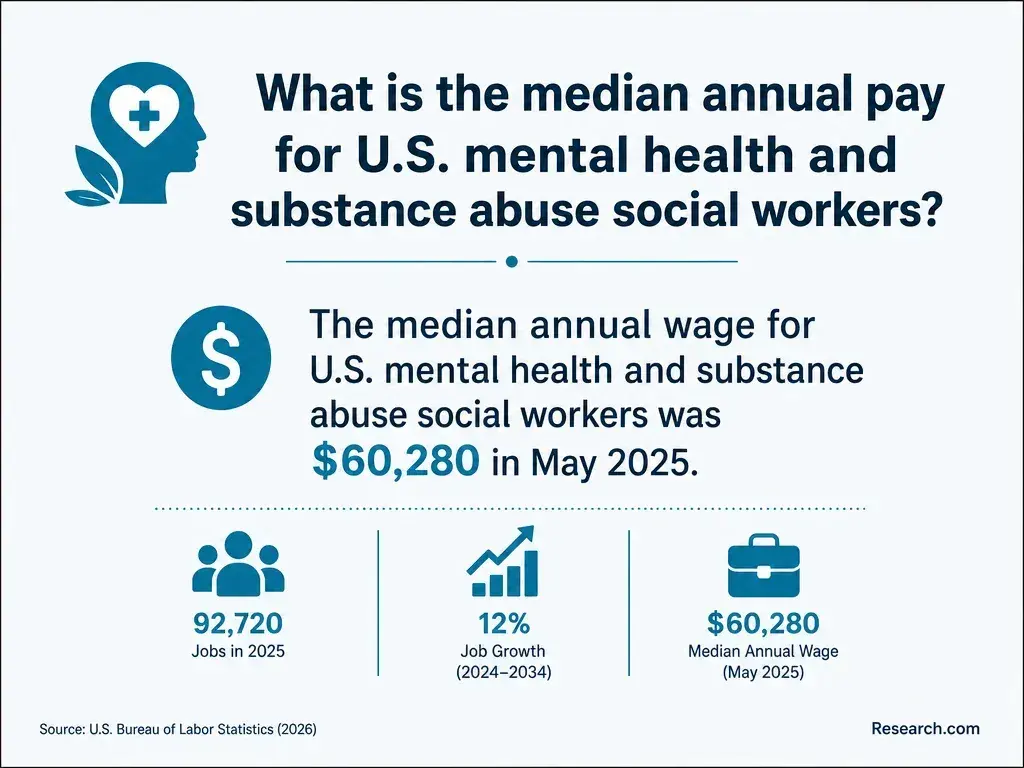
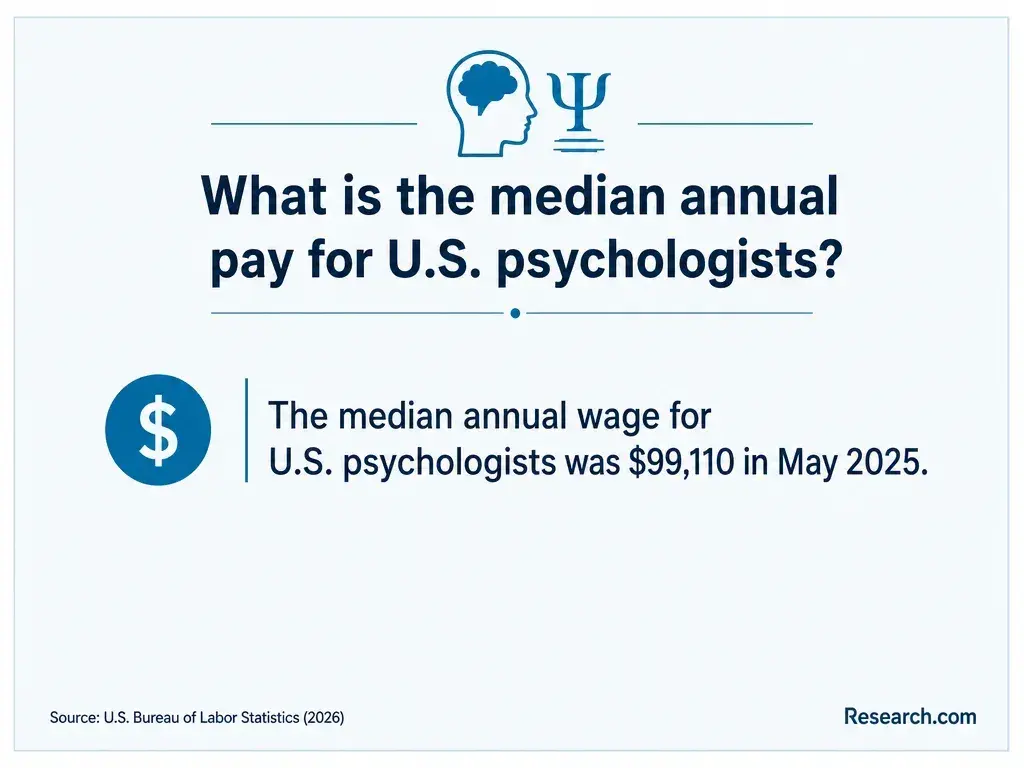
There is no single U.S. salary series for graduates of these two master's programs. Pay depends on the occupation, employer, location, experience, and required credentials. The U.S. Bureau of Labor Statistics reports a May 2024 median annual wage of $94,310 for psychologists. That is an occupation-wide figure, not a reasonable starting-salary estimate for an unlicensed MS graduate or evidence that either degree leads to a psychologist job.
For a useful comparison, collect local postings for the particular nonclinical role you want and note their pay ranges, required experience, and whether the master's is required, preferred, or unmentioned. If your real goal is substance-use support rather than investigative work, comparing undergraduate substance use counseling costs and outcomes may reveal a more relevant route; check state credential rules before pursuing counseling duties.
Other Things You Should Know About Psychology
No. Profiling is one possible topic, while investigative psychology can also examine interviewing, memory, decision-making, and the strength of behavioral inferences. Ask what a program actually teaches and how it evaluates those skills.
Not necessarily. Some projects can use published research or appropriately available data. If a proposed project requires agency records or participants, confirm access, supervision, privacy rules, and required approvals before enrolling.
Possibly, but employment alone is not project approval. Obtain faculty and employer permission, agree on a feasible question, and establish what information may be used or shared.
It may be if your target employer values law, procedure, or agency operations more than psychological research. Compare required courses and local job postings before paying for either graduate degree.
- Frequently Asked Questions - California Board of Psychology https://www.psychology.ca.gov/licensees/faq.shtml
- Frequently Asked Questions for LP | ks.gov https://www.ksbsrb.ks.gov/professions/psychologists/faqs
- A Career in Forensic and Public Service Psychology | apa.org https://www.apa.org/education-career/guide/subfields/forensic/education-training
- Costs - Office of Scholarships and Student Aid https://studentaid.unc.edu/current/costs/
- Tuition and Fees - Niner Central - UNC Charlotte https://ninercentral.charlotte.edu/billing-payments-refunds/tuition-and-fees
- Program Requirements | John Jay College of Criminal Justice https://www.jjay.cuny.edu/academics/graduate-programs/ma-forensic-psychology/program-requirements
- Admission Information - Graduate Academic Requirements | University of South Florida https://www.usf.edu/admissions/graduate/admission-information/academic-requirements.aspx