2027 Choosing an Online BA in Psychology - General Psychology for a Future Career in Behavioral Research: Prerequisites to Compare
Audited and Verified:
Our Editorial and Data Verification Process
Research.com uses government datasets, official education statistics and primary institutional information to support its career and degree guides. Our review process checks factual accuracy, occupational definitions, source dates and the requirements associated with the credentials discussed.
How This Article Was Fact-Checked
Our editorial team verifies salary estimates, employment projections, education requirements and program information against original data providers and official organizations. Salary figures are checked against the relevant occupational definitions and reporting periods. Information about licensure, accreditation and required in-person training is reviewed separately.
Fact-checked and verified on:

Co-Founder and Chief Data Scientist
An online BA in general psychology can introduce you to behavioral research, but the degree title alone cannot tell you whether you will learn to design studies, analyze data, or work with a research team. For prospective students and career changers, the decision is less about online versus campus branding than about prerequisites, course sequencing, and access to supervised experience.
This guide shows you what to compare before enrolling, what an undergraduate degree can prepare you to do, and when a different or additional qualification may be the better investment.
Key Things You Should Know
- Prioritize statistics, research methods, and opportunities to complete supervised work; a general psychology BA does not guarantee all three.
- A typical bachelor's degree requires about 120 semester credits and takes roughly four years of full-time study, but transferred credits count toward graduation only as the receiving school applies them.
- Check institutional accreditation, the actual online research experience, and the qualifications for your target job; a psychology BA does not qualify you to practice as a psychologist.
What Is an Online BA in General Psychology for Behavioral Research?
A general psychology BA is a broad undergraduate degree covering behavior and mental processes. Behavioral research investigates questions such as how people make decisions, learn, interact, or respond to their environments. A BA may provide that foundation through psychology courses and electives, but "general psychology" is not necessarily a formal research concentration.
The best fit depends on what the catalog lets you do, not just what topics it lists. A program suited to future research work should let you progress from introductory psychology to statistics and methods, then apply those skills in a supervised project, research assistantship, or substantial capstone. When comparing online psychology study and degree choices, check the current degree requirements rather than assuming every BA has the same research depth.
What Accreditation Should an Online Psychology Bachelor's Program Have?
Start with institutional accreditation recognized by the U.S. Department of Education. Confirm the institution's status in the Department's accreditation database and check that the accreditation covers the school awarding the degree. This matters for federal aid eligibility and can affect how other institutions evaluate credits, although accreditation never guarantees transfer or graduate admission.
Do not reject a general psychology BA because it lacks American Psychological Association program accreditation. APA accreditation applies to specified professional psychology training programs, not general undergraduate psychology majors. If your longer-term aim is licensed counseling instead of research, that is a different program-selection decision: compare the relevant professional training and state requirements alongside tuition-conscious mental health counseling degree choices.
What Education Is Required for a Career in Behavioral Research?
There is no single degree requirement for every behavioral research job. Some support roles accept a bachelor's degree plus demonstrated data, recruiting, or fieldwork skills. Roles that independently design studies, lead advanced analyses, or pursue academic research often expect graduate training; requirements depend on the employer and the work.
For an undergraduate aiming at a research assistant role, the immediate goal is evidence of competence: accurately following a protocol, maintaining records, protecting participant information, and explaining an analysis without overstating its conclusions. A later master's or doctorate may be useful for a specific research agenda, but it is not a universal prerequisite for getting involved in research. If your interests shift toward legal settings, graduate-level forensic psychology career research can help distinguish research-related possibilities from regulated forensic practice. Neither a BA nor a nonclinical master's degree alone authorizes psychological diagnosis, therapy, or independent assessment.
Course delivery affects how easily you can participate in research, particularly if you work or have caregiving responsibilities. The following comparison highlights access questions to verify with each department; it does not assume either format is inherently stronger.
| Decision factor | Online program | Campus program |
| Course schedule | May use asynchronous lessons, scheduled meetings, or both | Usually requires attendance at set class times |
| Research contact | May offer remote teams, local projects, or faculty meetings online | May make on-site labs and informal faculty contact easier to access |
| Data and participant work | May depend on approved remote tools, datasets, or local sites | May offer on-site facilities and participant pools |
| Travel obligations | May still require visits, placements, or local supervision | Usually requires regular travel to campus |
Ask whether online students can join the same kinds of supervised research as campus students, how projects are assigned, and when meetings occur. Do not equate "online" with "self-paced." This distinction remains important if you later consider psychology graduate programs with compressed schedules, where faster coursework may increase weekly demands rather than improve flexibility.
The most useful prerequisite sequence connects subject knowledge to evidence. Introductory psychology establishes basic concepts; statistics should come before - or alongside - research methods when the catalog requires it; methods should precede advanced projects. Confirm the sequence because a required course offered infrequently can delay a capstone even when most credits are complete.
Compare catalogs for statistics, experimental or research methods, scientific writing, and opportunities to study measurement and research ethics. Social, cognitive, developmental, and biological psychology can supply substantive questions for a project. Useful electives depend on your goal: a student studying workplace decisions might benefit from organizational psychology and additional quantitative work, while someone studying substance-use behavior might choose relevant developmental or health courses.
Academic coverage of addiction is not professional preparation to counsel people with substance-use disorders. If treatment work rather than behavioral research is the goal, compare addiction counseling programs and education requirements against the credential rules in the state where you intend to work.
First-year applicants commonly submit prior school records and meet the university's general admission rules. Transfer applicants may need transcripts from every college attended. A school can admit you to the university while applying separate rules to the psychology major or its upper-level courses, so check each stage in the current catalog.
Prior experience in another field does not ordinarily bar entry to an undergraduate psychology major. For transfer or returning students, the more consequential question is whether previous statistics, psychology, and general education courses satisfy specific requirements. Request a written degree audit and ask which prerequisites remain, whether any courses require substitutions, and how many credits must be completed at the awarding institution. If your actual goal is direct preparation for substance-use counseling, weigh those requirements against substance use counseling undergraduate tuition versus salary outlook before choosing a general psychology major.
A typical U.S. bachelor's degree requires about 120 semester credits and takes roughly four years of full-time study. Your remaining time depends on the school's approved evaluation of prior credits, required course order, term offerings, and enrollment pace. A shortened calendar does not help if a necessary methods course or supervised project is unavailable when you need it.
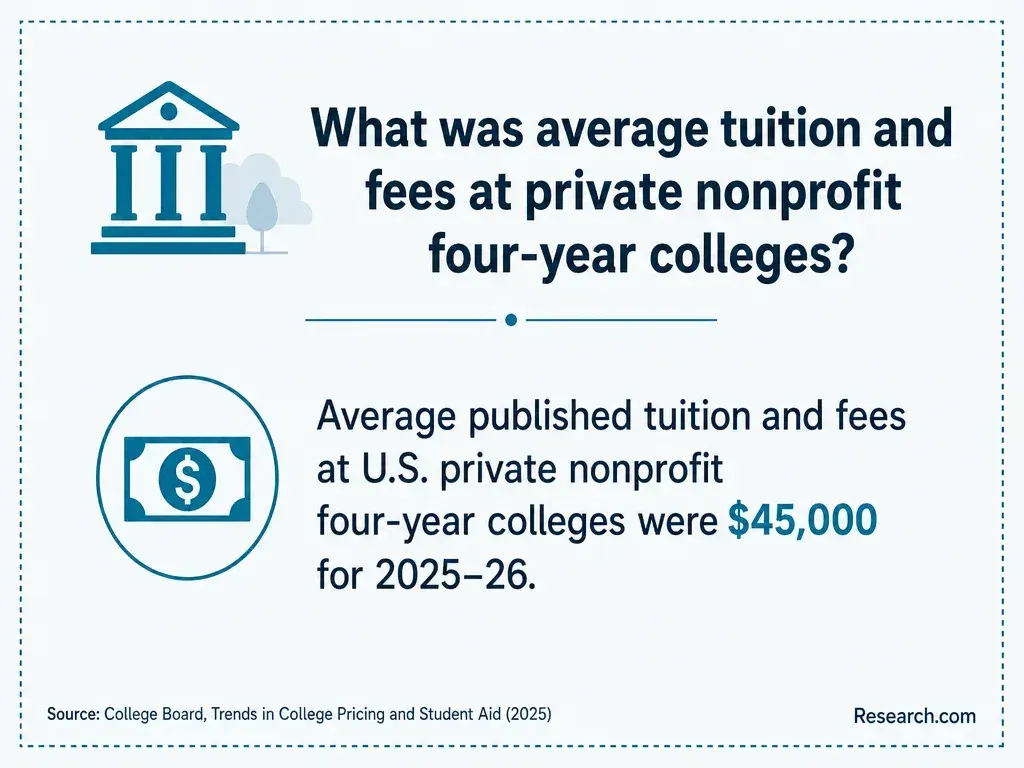
For cost, compare the price to finish, not the advertised price of one course. Request an estimate showing remaining required credits, tuition, mandatory online fees, materials or software, and any travel or unpaid research obligations. Then check aid eligibility at your planned enrollment pace and account for time away from paid work. If graduate study is likely, keep that potential expense separate from the BA: faster routes through forensic psychology graduate coursework, for example, would not remove the need to evaluate the bachelor's degree's own cost and research preparation.
A bachelor's graduate may qualify to apply for research assistant, participant recruitment, survey operations, program evaluation support, or other entry-level roles, depending on the employer. Tasks can include scheduling participants, administering approved research procedures, cleaning data, documenting methods, and preparing summaries under supervision. A course project helps, but employers may also want experience with a team, dataset, community organization, or research protocol.
Job titles can hide different duties. A community organization may hire someone to track program outcomes rather than run experiments; a health research team may impose stricter privacy and training requirements. Experience in behavioral-health support does not itself authorize research access or clinical duties. If you are also considering service-oriented work, review addiction recovery occupations and education separately: support and counseling positions have different duties and may have state-specific credential requirements.
There is no reliable single salary or growth rate for "psychology research graduates." A research assistant, a market research analyst, and a licensed psychologist are different occupations with different entry requirements. For a job you would actually pursue, compare its duties and qualifications with the closest U.S. Bureau of Labor Statistics occupation, then check the latest published wage reference year and employment projection period. An occupation-wide median is not an entry-level offer or a degree-specific outcome.
Market research can be one adjacent route for graduates with strong survey and analysis skills, but its pay data should not be presented as the expected return on a psychology BA. Licensed counseling is a separate educational and labor-market comparison. If that is your alternative goal, examine mental health counseling graduate study costs versus earnings alongside the qualifying degree and supervision requirements, rather than comparing salaries without accounting for further training.
How Do You Choose a Reputable Online Psychology Program?
Use the same evidence request for every school on your shortlist. A program is a stronger research choice when its published requirements and staff can explain not only what you must take, but how online students obtain feedback and supervised research experience.
Before enrolling, ask each program for the following details and compare the answers with its current catalog:
- Confirm institutional accreditation, the exact BA requirements, and a written evaluation of any transfer credits.
- Map statistics, methods, and project courses by prerequisite and term offered; ask what happens if a course is unavailable.
- Ask how online students find research supervisors, obtain project approval, meet with teams, and access appropriate data.
- Identify live sessions, campus visits, local site requirements, and the full estimated cost to finish at your intended pace.
- Request clearly defined outcomes for online students, including which graduates were counted and when the results were collected.
If you might pursue a specialized graduate degree, check its prerequisites before choosing undergraduate electives. The same scrutiny applies later when evaluating twelve-month forensic psychology master's routes: advertised speed is less useful than verified methods training, supervision, and fit with the job you want.
Other Things You Should Know About Psychology
Usually not for entry to a BA, but check the course descriptions. Learning to choose an appropriate analysis, inspect data, and explain uncertainty matters more than familiarity with one package.
Often, if you have permission to share it. Show your question, methods, and your own contribution; remove confidential information and do not present a proposed study as completed research.
No single rule covers every classroom exercise. Before recruiting people or using restricted data, ask your instructor or institution which review, consent, and data-access rules apply.
Not universally. Programs set their own expectations. A well-documented project, strong methods preparation, and a recommendation from someone who knows your research work may provide useful evidence of readiness.
- DAPIP | Homepage - Office of Postsecondary Education (OPE) https://ope.ed.gov/dapip/
- Data Analysis | The Office of Research Integrity https://ori.hhs.gov/education/products/n_illinois_u/datamanagement/datopic.html
- Training | Prevention Research Methods | ODP https://prevention.nih.gov/education-training/training-prevention-research-methods
- Online and Remote Research Opportunities | University of Arizona https://ur.arizona.edu/find-research/online-and-remote-research-opportunities
- Bachelor of Arts in Psychology - Degree Completion | Notre Dame de Namur University https://www.ndnu.edu/psychology/ba-completion-psychology.html
- Do I Need a Degree in Psychology to Apply to Graduate School? | William James College https://www.williamjames.edu/news/do-i-need-a-degree-in-psychology-to-apply.html
- Preparing for Graduate School - Psychology | Bemidji State University https://www.bemidjistate.edu/academics/psychology/resources/graduate-school/
- Admission Requirements | Department Of Psychology and Neuroscience https://psychology.unc.edu/admission-requirements/
- Admission requirements for a master's in psychology | Capella University https://www.capella.edu/blog/psychology/requirements-for-masters-in-psychology/
- How to Prepare for Doctoral Study in Quantitative Psychology | apa.org https://www.apa.org/science/leadership/bsa/quantitative/doctoral-study