2027 Online BA in Psychology - Mental Health for Qualitative Interviews in Community Research: Which Courses Should You Look For?
Audited and Verified:
Our Editorial and Data Verification Process
Research.com uses government datasets, official education statistics and primary institutional information to support its career and degree guides. Our review process checks factual accuracy, occupational definitions, source dates and the requirements associated with the credentials discussed.
How This Article Was Fact-Checked
Our editorial team verifies salary estimates, employment projections, education requirements and program information against original data providers and official organizations. Salary figures are checked against the relevant occupational definitions and reporting periods. Information about licensure, accreditation and required in-person training is reviewed separately.
Fact-checked and verified on:

Co-Founder and Chief Data Scientist
If you want to interview community members about mental-health experiences, a psychology BA can provide useful preparation - but a mental-health elective alone will not teach you to design, conduct, and interpret ethical interviews. This guide is for prospective students and community-service professionals comparing online programs. It identifies the courses and supervised experiences worth seeking, explains what an online format may make harder, and separates research support from clinical practice. You can use it to inspect a course catalog before committing to a degree that may not offer the training you need.
Key Things You Should Know
- Prioritize qualitative methods, research design, ethics, and community-focused coursework; ask whether you can practice interviewing and receive feedback.
- A typical US bachelor's degree requires about 120 credits, but transfer evaluations and course availability - not the advertised format alone - determine your remaining time and cost.
- A psychology BA can support entry-level, supervised research or service roles; it does not qualify you to diagnose, provide therapy, or independently conduct clinical assessments.
What is an online BA in psychology for mental-health community research?
It is usually a general psychology bachelor of arts degree whose required courses and electives can be directed toward a nonclinical research goal. "Mental health" may describe an elective, a formal concentration, or simply the subject of a student project; check the catalog rather than assuming it is a separately awarded credential.
In community research, qualitative interviews gather people's accounts of experiences such as finding services, navigating referrals, or encountering barriers to care. The researcher studies patterns in those accounts; the interview is not a counseling session or a diagnostic assessment. For a community-organization employee, this distinction matters when deciding whether to pursue a full BA or narrower methods training. When comparing psychology degree schools and online formats, look past the program title to the actual methods electives and access to supervised projects.
Which courses prepare students for qualitative mental-health interviews?
The strongest course combination teaches both how to ask and how to interpret. A mental-health survey course provides context, but qualitative-methods practice develops the interview skill itself. Catalog titles vary, so compare descriptions and assignments rather than searching for one exact course name.
This comparison shows what each course contributes to a community interview project and where a course alone may leave a gap.
| Course area | Relevant learning | Limit to check |
| Qualitative methods or interviewing | Open-ended questions, probing, sampling, transcripts, coding, and reflexivity | May be offered outside psychology or only intermittently |
| Psychology research methods | Research questions, study design, evidence quality, and interpretation | Some versions emphasize experiments over interviews |
| Community psychology or public health | Community partnerships, service context, and whose perspectives are represented | May not include hands-on data collection |
| Abnormal psychology or mental-health systems | Terminology, stigma awareness, and service-system context | Does not confer clinical interviewing competence |
| Cultural psychology, sociology, or anthropology | Attention to language, power, identity, and context | Needs to be paired with research-methods training |
Ask whether an assignment requires a practice interview, revised interview guide, coding memo, and instructor feedback. Those provide more evidence of readiness than an elective title. If your goal is substance-use treatment rather than research about access or recovery experiences, evaluating online addiction counseling programs is a different decision: check the relevant state credential rules first.
Is accreditation important for an online psychology bachelor's degree?
Yes. Verify the institution's recognized institutional accreditation and confirm that it covers the school awarding the online degree. Accreditation matters for matters such as federal-aid eligibility and how other institutions may evaluate a degree, but it does not prove that a particular qualitative elective, research mentor, or interview placement exists.
Do not reject a general psychology BA because it lacks APA accreditation: APA accreditation applies to specified professional psychology training programs, not ordinary psychology bachelor's degrees. Likewise, accreditation or recognition relevant to a counseling program should be evaluated for that distinct credential pathway. If counseling is the actual goal, comparisons of affordable accredited mental health counseling study options require different questions from those used to select a research-oriented BA.
An online BA may make lectures and readings easier to fit around work or community-service responsibilities. It does not necessarily make interview practice flexible: live methods classes, research-team meetings, group coding, or an approved local placement may have fixed times. Campus programs may offer easier access to labs and local partners, while online programs may allow a student to investigate questions relevant to their own community - if the school permits and supervises that work.
Ask each program whether qualitative methods is available online, how often it runs, who gives feedback on interviews, and whether fieldwork or campus visits are required. Compare the full schedule and budget, including travel and any unpaid project time, rather than assuming online study costs less. A list of comparing affordable psychology colleges online can start a tuition comparison, but the course schedule and remaining degree requirements determine its value for this particular goal.
Take introductory statistics and research methods even if you expect to use interviews rather than surveys. They help you judge sampling claims, compare qualitative and quantitative evidence, and avoid treating a few interviews as proof that an approach works. Add a qualitative course that addresses purposeful sampling, interview-guide design, coding, contradictory accounts, and reflexivity - examining how the researcher's position shapes questions and interpretation.
Ethics training should cover voluntary participation, consent, confidentiality limits, secure handling of recordings and transcripts, distress-response planning, and fair representation of participants' words. Course credit does not itself authorize recruitment. A faculty supervisor and any partner organization must determine whether permissions, institutional review board review, or other oversight apply; service evaluation and human-subjects research are not automatically governed in the same way.
A workable sequence is methods and statistics first, qualitative practice next, then a supervised proposal or project. If graduate research is a later goal, examine its prerequisites before prioritizing speed: fast-track graduate psychology programs may differ substantially in methods depth and research opportunities.
Requirements depend on whether you enter as a first-year or transfer student. Schools commonly request prior academic records and may set separate rules for admission to the institution and declaration of the psychology major. A prior psychology course is not universally required for first-year entry.
For returning students, the consequential question is not merely how many credits are accepted. Request a written degree audit showing whether previous statistics, psychology, writing, and research courses satisfy specific requirements, and whether prerequisites or residency rules delay the methods courses you need. The awarding institution makes the final equivalency decision. Guides to psychology programs that accept transfer credits can help form a shortlist, but cannot replace that evaluation.
A typical US bachelor's degree is built around 120 credits; your remaining credits, study pace, prerequisite order, and the frequency of qualitative electives determine your actual completion time. A transfer student could have few credits left yet still wait for an infrequently offered course or approved project opportunity.
Compare each school's current per-credit or per-term tuition, mandatory online fees, remaining required credits, books or software, and any travel or placement expenses. Ask for a term-by-term plan and a personalized cost estimate before treating a published tuition rate as the degree's total price. Financial aid and employer support depend on eligibility and policy; resources on funding an online bachelor's in substance abuse counseling may suggest aid questions to ask, but its program-specific costs and aid arrangements should not be assumed to apply to a psychology BA.
Relevant possibilities include supervised research assistant, community-program assistant, outreach coordinator, and research or evaluation support roles. Actual duties might include scheduling participants, preparing approved materials, maintaining records, coding transcripts, and summarizing findings. Employers may require prior community experience, data skills, language skills, or training beyond the BA.
Community-service workers may be able to build on existing partnerships, but should not assume their employer will authorize interviews or access to client information. Seek a faculty-supervised project or research-assistant role that produces a permissible work sample, such as a fictional practice guide or a proposal without identifiable records. If your interest is legal-system research rather than community mental-health services, faster online forensic psychology master's completion addresses another academic route - not a shortcut to forensic evaluation authority.
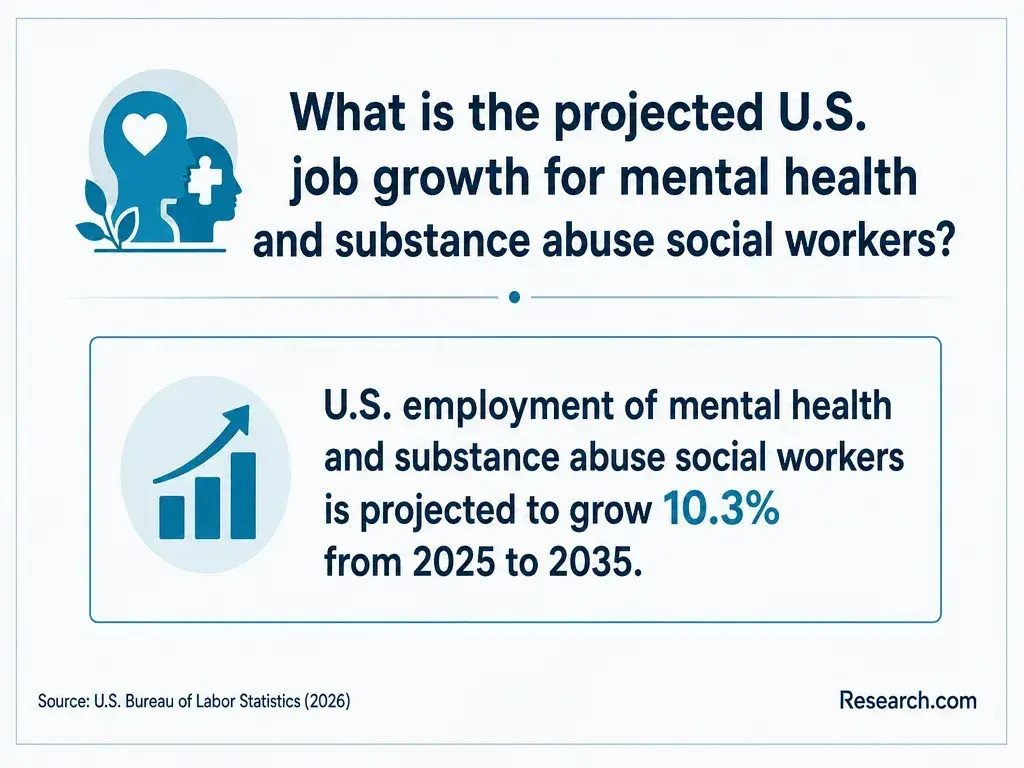
There is no single reliable salary or job-growth figure for "psychology BA graduates doing qualitative interviews." Jobs with similar-sounding titles can involve substantially different tasks and qualifications. The US Bureau of Labor Statistics reports wages and projections by occupation, not by undergraduate major or interviewing skill; an occupation-wide median should not be presented as an offer to a new graduate.
For a useful comparison, collect local postings for the specific role you want, separate research duties from service-delivery duties, and compare their stated pay, experience requirements, and advancement paths. If you are weighing research against a treatment-oriented career, substance abuse counseling bachelor's program value comparisons address a different occupation and potentially different credential requirements. Do not transfer its earnings assumptions to entry-level interview work.
Does this degree qualify graduates for mental-health licensure or certification?
No. A psychology BA - including one with mental-health courses or interview practice - does not itself qualify someone to practice as a psychologist, diagnose conditions, provide psychotherapy, or independently administer restricted clinical assessments. Interviewing people for an approved study is a different activity from a clinical intake or therapy session.
Some nonclinical support or peer roles have their own employer or state-specific training and certification rules. If your intended work is counseling, identify the state and license first, then check its required qualifying graduate education, supervised experience, and examinations. Faster clinical mental health counseling graduate pathways are worth considering only after verifying that a particular program fits the jurisdiction where you intend to practice.
Other Things You Should Know About Psychology
Potentially, if your supervisor and project approvals permit it. Plan for accurate translation, consent in an understandable language, and how translation choices may affect interpretation.
Do not promise compensation independently. Ask the supervising team or partner organization whether its approved plan permits incentives and how they will be described and documented.
Usually, a sample interview guide or fictional practice transcript is safer. Do not share real transcripts without the required permissions; removing names alone may not protect identities.
Ask whether an approved course in sociology, public health, or anthropology can count, and whether supervised research is available. Obtain written confirmation before relying on either option.
- Summer Internship Program (SIP) | nih.gov https://www.training.nih.gov/research-training/pb/sip/
- Semistructured interviewing in primary care research - PMC https://pmc.ncbi.nlm.nih.gov/articles/PMC6910737/
- From isolation to inclusion: community-based mental health care | who.int https://www.who.int/news-room/commentaries/detail/from-isolation-to-inclusion---community-based-mental-health-care
- Read the Belmont Report | hhs.gov https://www.hhs.gov/ohrp/regulations-and-policy/belmont-report/read-the-belmont-report/index.html
- How to do trauma-informed research and evaluation | aifs.gov.au https://aifs.gov.au/resources/practice-guides/how-do-trauma-informed-research-and-evaluation
- Participant Recruitment for Research | AHRQ https://digital.ahrq.gov/participant-recruitment-research
- Bachelor of Arts in Psychology - Online Program | CSULB CPaCE https://www.cpace.csulb.edu/courses/bachelor-of-arts-in-psychology
- 6. Conducting Focus Groups and Interviews | ufl.edu https://assessment.ufsa.ufl.edu/resource-guide/module-6/
- Guidance on Conducting Research Involving Mental Health Topics | Committee on the Use of Humans as Experimental Subjects https://couhes.mit.edu/guidelines/guidance-conducting-research-involving-mental-health-topics