2027 Online MS in Psychology - Forensic Psychology vs. a Master's in Conflict Resolution: Compare Curriculum, Cost, and Career Fit
Audited and Verified:
Our Editorial and Data Verification Process
Research.com uses government datasets, official education statistics and primary institutional information to support its career and degree guides. Our review process checks factual accuracy, occupational definitions, source dates and the requirements associated with the credentials discussed.
How This Article Was Fact-Checked
Our editorial team verifies salary estimates, employment projections, education requirements and program information against original data providers and official organizations. Salary figures are checked against the relevant occupational definitions and reporting periods. Information about licensure, accreditation and required in-person training is reviewed separately.
Fact-checked and verified on:

Co-Founder and Chief Data Scientist
An online MS in forensic psychology and a master's in conflict resolution can both lead toward work involving difficult human situations, but they teach different skills and rarely qualify graduates for the same jobs. The distinction matters if you are weighing a degree against a faster route into justice-system support, mediation, or advancement in your current organization.
This comparison examines coursework, scheduling, total cost, accreditation, and realistic career outcomes so you can choose the option that fits your target role or decide that targeted training would serve you better.
Key Things You Should Know
- Forensic psychology emphasizes psychological science in legal settings; conflict resolution emphasizes negotiation, mediation, and managing disputes across settings.
- A forensic psychology MS does not itself qualify someone to practice as a forensic psychologist, and a conflict resolution degree does not automatically confer a mediator credential.
- Compare total cost, not advertised tuition. Required credits, fees, travel, and any unpaid applied experience can change the value of either online program.
What Is the Difference Between Forensic Psychology and Conflict Resolution?
Forensic psychology applies psychological research and concepts to legal and justice-related questions. A nonclinical MS might examine eyewitness memory, offending behavior, victimization, or how courts and correctional systems use behavioral evidence.
Conflict resolution studies how people and organizations address disputes through processes such as negotiation, facilitation, and mediation. It may draw on psychology, but its center of gravity is the dispute-resolution process rather than psychological science.
The comparison matters because overlapping settings do not imply interchangeable preparation. A court-connected mediation office may value dispute-process training; a corrections research team may value research methods and knowledge of justice-involved populations.
If you are still deciding whether graduate study is necessary, psychology degree planning for prospective online students offers a starting point for distinguishing broad psychology education from later specialization.
Which Degree Has Better Career Fit: Forensic Psychology or Conflict Resolution?
The better fit depends on the tasks you want to perform and the experience you already have. Neither credential is a general-purpose entry ticket to courts, government agencies, or mental-health practice.
This comparison maps each degree to its strongest use and its principal limitation. Use it to test whether a program's required courses match the job descriptions you are seeing.
| Decision factor | Forensic psychology MS | Conflict resolution master's |
| Best-aligned work | Justice-related research, program support, victim services, or corrections-related analysis | Mediation, workplace or community disputes, facilitation, and conflict-management programs |
| Key evidence to build | Research, careful documentation, ethical data handling, and knowledge of legal settings | Facilitated practice, negotiation, process design, and impartial communication |
| Major limitation | Does not authorize independent forensic assessment or psychological practice | Does not automatically satisfy a court roster's or employer's mediator requirements |
A victim-services employee seeking research or program-evaluation duties may benefit more from forensic coursework than from mediation training. A human-resources manager handling recurring workplace disputes may find the reverse.
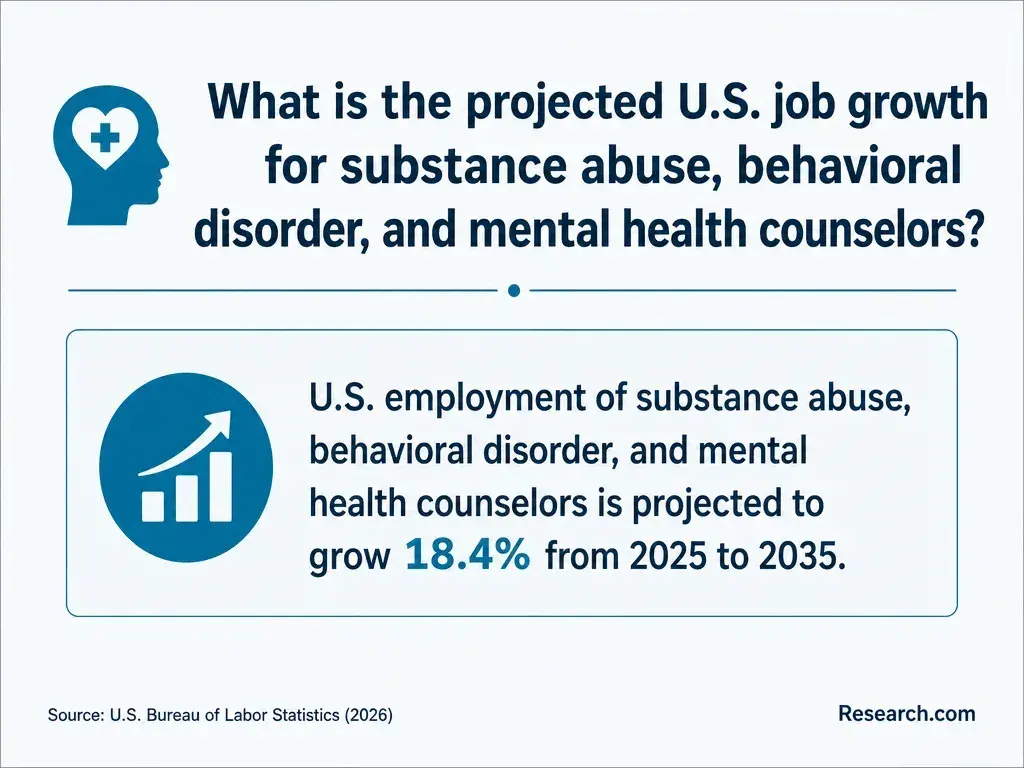
For a goal centered on substance-use recovery support rather than either specialty, examine actual career options in recovery services before committing to a master's degree.
What Courses Are Included in Each Master's Degree?
Forensic psychology curricula commonly combine research methods or statistics with subjects such as psychology and law, criminal behavior, victimology, ethics, and psychological assessment as a topic of study.
Conflict resolution curricula tend to emphasize negotiation theory, mediation, facilitation, conflict analysis, intercultural communication, and process design. Either program may offer a capstone, internship, or thesis, but those features are not universal.
Look beyond course titles. Ask whether forensic students analyze evidence and evaluate research, and whether conflict resolution students receive observed practice and feedback rather than only reading about mediation.
Someone planning to support people affected by substance use should also compare these degrees with online study options for addiction counseling; counseling credentials have different educational and state requirements.
Online delivery does not determine accreditation. First verify that the institution holds recognized institutional accreditation and that it covers the school awarding the degree.
Then check whether any program-specific recognition is relevant to your intended credential. The American Psychological Association does not accredit general or nonclinical forensic psychology master's programs simply because they teach psychology.
Accreditation alone does not establish eligibility for a state license, a court mediator roster, or a particular employer's position. Confirm the exact degree title, program format, and credential implications with the university and the authority governing your target role.
When comparing schools, forensic psychology degree accreditation comparisons can help organize questions, but verify each school's current status directly with its accreditor.
Both types of program typically expect an accredited bachelor's degree and an application demonstrating readiness for graduate work. Schools may request transcripts, a statement of purpose, recommendations, a résumé, or an interview.
A forensic psychology program may prefer prior psychology, statistics, or research-methods coursework; a conflict resolution program may welcome applicants from law, education, business, public service, or other fields. Requirements and prerequisite waivers belong to the individual program.
If your bachelor's is unfinished, admission planning starts with completing that credential, not assuming graduate study will replace it. Check how prior courses apply to graduation requirements when considering psychology programs that accept transfer credits.
Applicants who already hold a non-psychology bachelor's should instead ask each graduate program which, if any, psychology or methods courses they must take before enrollment.
Completion time depends on required credits, course sequencing, enrollment pace, and whether the program requires a thesis or applied project. An accelerated calendar is useful only if its weekly workload and scheduled obligations fit your life. "Online" may still include live classes, group mediation exercises, research meetings, or an approved local placement.
Request a term-by-term plan for both full-time and part-time study, including when required courses actually run. If speed is a priority, compare accelerated forensic psychology master's costs and outcomes against the time you would need to gain relevant experience alongside a slower program.
Finishing sooner has limited value if the schedule prevents you from completing required practice or building a credible work sample.
There is no reliable field-wide online price for either degree. Compare written, program-specific estimates using the same assumptions about enrollment pace and required credits. A useful starting calculation is required credits × tuition per credit + mandatory fees; then account for books, technology, travel, and any unpaid applied experience. Ask whether a longer part-time schedule creates additional term-based charges.
Price matters in relation to the job you want. If your goal actually requires a licensure-oriented counseling degree, compare the cost of that qualifying route rather than buying a cheaper nonclinical master's first.
The same budgeting discipline used for mental health counseling program charges beyond tuition applies here: request an itemized estimate and confirm aid or employer reimbursement eligibility before accepting an offer.
Forensic psychology graduates may pursue justice-related research support, victim-services coordination, correctional program support, or policy and program-analysis roles when their experience meets employer requirements.
Conflict resolution graduates may pursue mediation-program coordination, community dispute resolution, workplace conflict-management, or facilitation roles. Employers may value previous agency, legal, human-resources, or community experience more than the degree title alone.
For entry-level recovery or support work in a justice setting, a full master's may be more education than the position requires. Compare job postings with cost-conscious substance use counseling undergraduate options if that is the service area you actually want.
Whatever route you choose, seek supervised experience that demonstrates the target tasks; coursework about clients or disputes is not the same as authorization to assess, treat, or represent them.
The degrees themselves are academic awards; the job determines whether a license, certification, roster approval, or other qualification is needed. Independent psychological assessment and practice as a licensed psychologist require a separate jurisdiction-specific pathway.
A nonclinical forensic psychology MS does not confer that authority. Mediator requirements vary by court, state, program, and case type; a conflict resolution degree alone may not satisfy required training or experience.
Before enrolling, take a target job description to the relevant licensing board, court program, or employer and ask whether this exact degree meets any requirement. If the goal is psychotherapy rather than research or mediation, evaluate a qualifying counseling pathway and its applicable recognition; accreditation checks for accelerated counseling programs address a different credential decision than either degree compared here.
What Are the Salary and Job Outlook Differences?
Neither degree has a single defensible salary or job-growth figure: graduates enter different occupations, and published wages describe workers in an occupation, not graduates of a program.
The U.S. Bureau of Labor Statistics tracks arbitrators, mediators, and conciliators as an occupation relevant to some conflict resolution graduates. Its psychologist category is not an appropriate earnings proxy for holders of a nonclinical forensic psychology MS who are not licensed psychologists.
For a meaningful comparison, identify several jobs you could realistically obtain, then compare their current local pay ranges, required credentials, and advancement routes with each program's total cost. Factor in earnings you might forgo while studying.
If advancement mainly requires a master's credential plus existing experience, choosing a fast-track psychology master's program may be worth exploring; if the job requires mediation practice or a professional license, speed alone should not decide the degree.
Other Things You Should Know About Psychology Programs
Yes, but the degree will not erase skill gaps. A forensic psychology graduate may need observed mediation practice; a conflict resolution graduate may need psychology research coursework for a justice-related research role.
It depends on the target job. A thesis can demonstrate research ability; an approved, well-supervised placement can demonstrate applied skills. Ask what work you may document and share with employers.
Possibly, if the program approves the site, supervisor, tasks, and learning objectives. Existing employment does not automatically meet a placement requirement.
Not automatically. Check the doctoral program's prerequisites and research expectations first. Relevant coursework and research experience may be more useful than an additional degree that does not address a specific gap.
- How to Become a Forensic Psychologist in California (2026) | Touro University Worldwide https://www.tuw.edu/psychology/how-to-become-a-forensic-psychologist-in-california/
- Frequently Asked Questions - California Board of Psychology https://www.psychology.ca.gov/licensees/faq.shtml
- An Overview of Accreditation of Higher Education in the United States | Congress.gov | Library of Congress https://www.congress.gov/crs-product/R43826
- Accreditation in the U.S. | ed.gov http://www.ed.gov/laws-and-policy/higher-education-laws-and-policy/college-accreditation/accreditation-in-the-us
- Frequently Asked Questions for Students - School of Social Work | Boise State Online https://www.boisestate.edu/socialwork/fieldwork/student-faqs/
- How Many Credits Do You Need to Graduate College? | snhu.edu https://www.snhu.edu/about-us/newsroom/education/how-many-credits-to-graduate-college
- Practicums, Internships and Projects What's the Difference? | Oregon State University https://health.oregonstate.edu/internships/types-of-experiential-learning
- Can I specialize in conflict resolution with a legal master's degree? | ASU | Sandra Day O'Connor College of Law https://law.asu.edu/asu-law-talks/conflict-resolution-legal-masters-specialize
- Master's Degree in Criminal Justice or Forensic Psychology? | ASU Online https://asuonline.asu.edu/newsroom/asu-online-news/masters-of-criminal-justice-or-forensic-psychology/