2027 Online BA in Psychology - Addictions for Activity Coordinators: Compare Transferable Skills and Degree Requirements

Co-Founder and Chief Data Scientist
Activity coordinators already know how to plan engaging programs, adapt activities to participants, and work with service teams. An online psychology BA with an addictions concentration could deepen that work in recovery-oriented settings - but it may not be the most direct way to advance.
This guide maps your existing skills to relevant coursework, explains what the degree does and does not qualify you to do, and shows how to compare programs against shorter training options. The goal is to help you choose education that fits the job you actually want.
Key Things You Should Know
- An addictions-focused psychology BA can strengthen activity planning, communication, and program evaluation, but it does not authorize addiction counseling or psychotherapy.
- Compare the degree against your target employer's requirements: a bachelor's program commonly requires about 120 credits, while a certificate or employer-supported training may address a narrower skills gap.
- For online programs, verify which transfer credits satisfy degree requirements and whether fieldwork, live meetings, or campus visits fit your work schedule.
What Is an Online Bachelor's Degree in Psychology With an Addictions Concentration?
It is an undergraduate psychology degree combining broad study of behavior and research with focused coursework on substance use, prevention, recovery, and service systems. A school may call the focus a concentration, track, emphasis, or set of electives; these labels are not interchangeable. Check the catalog and transcript policy to see whether the specialization is formally awarded.
The degree studies addiction; it does not itself prepare someone to independently diagnose or treat substance use disorders. If your intended job is substance use counseling rather than activity coordination, compare the curriculum and state credential requirements with an addiction counseling degree comparison resource. Counseling-focused programs may align more closely with that goal, but eligibility still depends on the relevant state's rules.
How Can Addictions Psychology Skills Transfer to Activity Coordinator Careers?
Activity coordinators organize group and individual activities in settings such as senior living communities, community organizations, and behavioral-health programs. Your experience with schedules, accessibility, participant feedback, and team communication is the starting point. Addictions coursework is most useful when activities take place in a recovery-oriented setting or serve people affected by substance use.
The comparison below separates skills you may already use from knowledge the degree could add. It also identifies evidence an employer can assess more directly than a concentration name.
| Activity coordinator task | Relevant psychology learning | Useful evidence of readiness |
| Adapt activities to participants | Development, motivation, and accessibility | Adapted activity plans and supervisor feedback |
| Support a recovery-oriented group | Stigma-aware communication and recovery concepts | Approved, nonclinical group plans and observed facilitation |
| Coordinate with service staff | Ethics, confidentiality, and referral boundaries | Accurate documentation and demonstrated escalation procedures |
| Improve a program | Research methods and basic data interpretation | An authorized, privacy-conscious evaluation summary |
Those skills do not turn an activity session into treatment. If a participant discloses a safety concern or asks for clinical advice, follow the organization's referral and safeguarding procedures rather than acting as a counselor. The same distinction matters in justice-involved settings: forensic psychology degree program quality checks address a different specialization, not authority to provide clinical or legal services.
What Degree Requirements Prepare Graduates for Activity Coordinator Roles?
The most valuable requirements combine psychology foundations with work you can apply responsibly. Look for developmental psychology, social psychology, statistics, research methods, ethics, and addictions coursework. For an activity coordinator, a supervised community project or nonclinical internship can be especially useful if it involves accessible programming, group facilitation, or evaluation.
Ask how each requirement is assessed. A course on addiction treatment can provide service-system knowledge without teaching you to deliver treatment. Likewise, an internship at a behavioral-health organization does not automatically count as clinical training or qualify you for a counseling credential.
If your longer-term goal is to provide therapy, compare qualifying professional degrees and state requirements before committing to this BA. Guidance on accelerated counseling study and accreditation requirements can help frame that separate decision; speed alone should not determine program fit.
Online delivery can support rigorous coursework, but effectiveness depends on instruction, feedback, access to faculty, and opportunities to practice - not the delivery label alone. For a working activity coordinator, the decisive issue may be whether the program allows you to complete applied learning without abandoning your job.
Check whether classes are asynchronous, require scheduled discussions, or include live group work. Ask whether an internship can take place at your current organization, who must supervise it, and whether the school must approve the site before work begins. Employment or volunteering does not automatically satisfy a placement requirement.
When comparing schools for an online psychology major, request sample course schedules and placement rules alongside curriculum information. A flexible-looking course list is less useful if its required meetings or fieldwork conflict with your shifts.
Course titles and requirements vary, but the strongest fit for activity coordination is a combination of behavioral science and practical, nonclinical application. Introductory psychology and developmental psychology help explain differences across participants; social psychology and learning address group participation and motivation. Statistics and research methods help you judge whether a program change is supported by evidence.
Addictions-focused options may cover substance use, prevention, recovery, co-occurring concerns, and community services. Compare syllabi rather than titles: a course about counseling approaches may explain what clinicians do without training undergraduates to perform counseling. Accessibility, group facilitation, public health, or program evaluation electives may be more directly useful in your current role than an additional narrowly specialized course.
Keep the eventual job in view when comparing concentrations. A shorter forensic psychology graduate pathway, for example, addresses different academic and career interests; its subject matter is not a substitute for preparation to run recovery-oriented activities.
First-year and transfer applicants usually follow different admission processes. Schools may request prior transcripts, evidence of secondary education, and other institution-specific materials. Admission to a university is not always the same as admission to its psychology major, so confirm both policies.
If you have college credit, the consequential question is not just how much the school accepts. Ask which courses satisfy general education, psychology prerequisites, concentration requirements, and credits that must be completed at the awarding institution. For statistics or research methods, request a written equivalency decision rather than assuming a similarly named course will count.
Before applying, gather transcripts and course descriptions and request a degree audit from each prospective school. Psychology programs that accept transfer credits can provide comparison starting points, but only the receiving institution can determine how your coursework applies to its degree.
A bachelor's degree commonly totals about 120 credits, but your remaining time depends on approved transfer work, course sequencing, enrollment pace, and required field experience. A returning student with many accepted credits may still need several terms if prerequisites must be taken in order or advanced courses are offered infrequently.
Compare a written estimate of remaining requirements, not an advertised completion time. Ask each school for tuition and mandatory fees for the credits you still need, plus likely expenses for books, travel, technology, and any unpaid placement. Check financial-aid eligibility and employer tuition assistance before calculating what you would pay yourself. Shorter forensic psychology BA and BS timelines should not be treated as a promise for an addictions-focused degree: the required courses and your usable transfer credits may differ.
The closest opportunities are activity coordinator and recreation-program roles in organizations whose services include behavioral-health or recovery support. Depending on the employer and your experience, related nonclinical possibilities include program assistant, outreach worker, intake support staff, or service coordinator. Job titles alone do not establish duties or eligibility; read postings for required experience, credentials, and supervision.
For a career move, identify the gap between your current work and the target posting. If it primarily asks for better group programming, documentation, and referral knowledge, targeted training plus supervised experience may be more efficient than another degree. If it consistently requires a bachelor's degree and broader program responsibilities, the BA may have a stronger case.
Do not assume the concentration qualifies you as an addiction counselor, therapist, or psychologist. Those roles can require different education, supervised experience, and state authorization. If counseling is the goal, investigate its credential pathway before choosing electives for an activity-coordination job. If speed is important, examine shorter routes to an online psychology major against your degree audit.
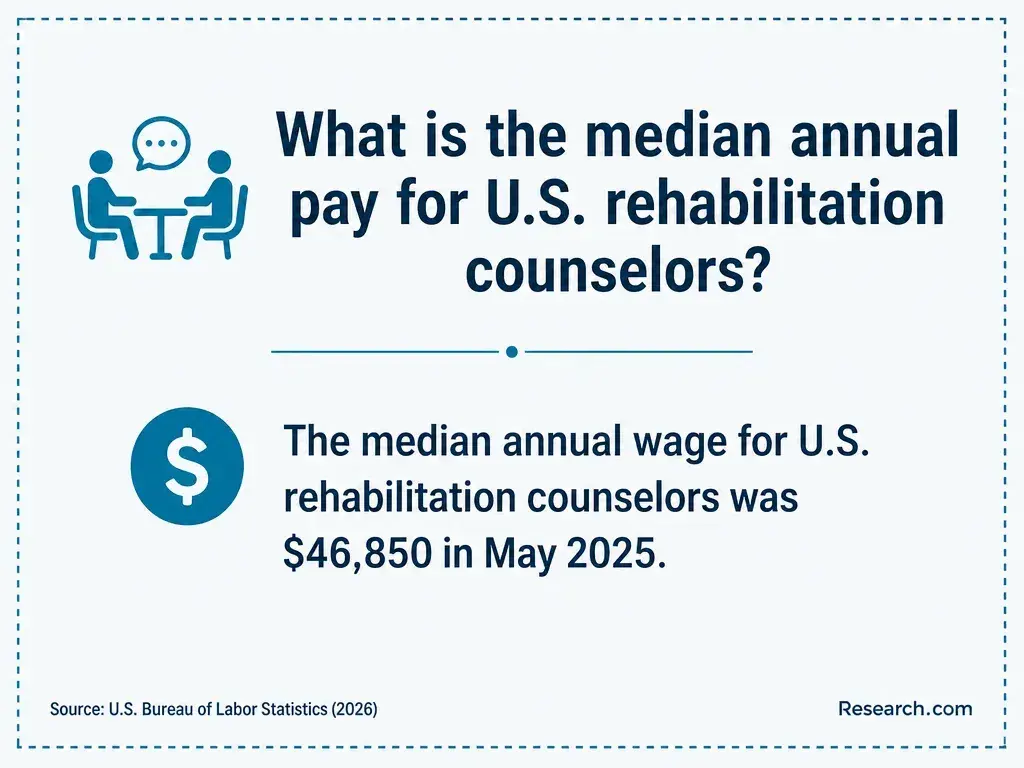
"Activity coordinator" is an employer job title, not a single federal occupational category. Depending on duties and setting, a position may resemble a recreation worker, a recreational therapist, or another community-service occupation. Those categories should not be combined: recreational therapist roles have distinct responsibilities and may require different education or credentials.
For a meaningful salary comparison, match the posting's duties to the appropriate U.S. Bureau of Labor Statistics occupation, then check its published wage year, projected employment period, and local pay information. An occupation-wide median is not the expected wage for someone with an addictions concentration. Your employer type, location, experience, and responsibilities may matter more to an immediate raise than the degree title.
Compare likely openings and pay against the total cost of completing the degree, including time away from paid work. If you are considering a counseling credential instead, investigate undergraduate substance abuse counseling education funding alongside that pathway's actual educational and licensing requirements.
How Do You Choose an Accredited Online Psychology Program?
Start by checking that the institution holds recognized institutional accreditation and that the online BA and addictions concentration appear in its current catalog. Do not look for APA accreditation as a general test of undergraduate psychology quality: APA accreditation applies to specified professional psychology training, not ordinary psychology BA programs.
Next, request a degree audit, course rotation, full cost estimate, and written fieldwork policies. Ask what services are available to online students, how applied work is supervised, and whether the school reports outcomes relevant to your goal. A concentration name matters less than courses you can take and experience you can document.
Use budget-conscious psychology program comparisons as a starting point, then price your own remaining credits and requirements. Choose the full degree when it meets a verified career or advancement need; choose targeted training when the job requires a specific skill rather than another credential.
Other Things You Should Know About Psychology
Possibly. Ask the program whether paid work is eligible, which new learning activities are required, who may supervise you, and when site approval must occur. Do not assume your existing duties count automatically.
Only with the necessary organizational and course approvals. Check privacy rules, consent expectations, and whether the project requires institutional research review. Avoid including identifiable participant information in coursework or a public portfolio without authorization.
Not necessarily. Employers may prioritize relevant experience, safe group facilitation, and required workplace training. Compare actual job postings before paying for a specialization.
A BA may make sense if target roles require a bachelor's degree or broader psychology and research preparation. A focused certificate or employer training may be better if you already meet degree requirements and need one specific skill.
- Colorado Transfer https://cdhe.colorado.gov/students/attending-college/colorado-transfer
- Curricular Elements in Substance Use Disorders Training | samhsa.gov https://www.samhsa.gov/substance-use/treatment/resources/mat-act/training-requirements/curricular-elements-training
- Cost of Attendance (Budget) | 2025-2026 Federal Student Aid Handbook https://fsapartners.ed.gov/knowledge-center/fsa-handbook/2025-2026/vol3/ch2-cost-attendance-budget
- Section 2. Developing Facilitation Skills - Community Tool Box https://ctb.ku.edu/en/table-of-contents/leadership/group-facilitation/facilitation-skills/main
- Transfer credit policies - Office of Admissions https://admit.washington.edu/apply/transfer/policies/
- Alcohol and Drug Abuse Counseling Certificate Program | UCLA Extension https://www.uclaextension.edu/health-care-counseling/health-care-counseling-general/certificate/alcohol-and-drug-abuse-counseling
- Online Learning | ccp.edu https://www.ccp.edu/degrees-programs/all-academic-offerings/online-learning