2027 Paying for an Online BA in Psychology - Addictions: A Scholarship Restricted to Returning Adults

Co-Founder and Chief Data Scientist
A scholarship restricted to returning adults could make an online psychology BA affordable - but only if your school participates, your study gap meets the rules, and the award applies to your remaining credits. If you are returning to college while working or caring for family, the bigger decision is whether the scholarship, transfer evaluation, and program schedule work together.
This guide explains where to look for reentry funding, how to estimate the cost you would actually pay, and when an addictions-focused psychology degree fits your career goal.
Key Things You Should Know
- Ask about the Osher Reentry Scholarship and other adult-returner awards, but verify your school's participation, eligibility rules, online-program coverage, and award amount before counting on funding.
- Compare the cost of credits still required, not published tuition alone; accepted transfer credits do not necessarily satisfy psychology-major requirements.
- An addictions-focused psychology BA can support nonclinical recovery-service work, but it does not by itself qualify you for independent counseling or psychotherapy.
What is an online bachelor's degree in psychology focused on addictions?
It is an undergraduate psychology degree that combines core study of behavior and research with coursework on substance use, prevention, recovery, or behavioral health. Schools may call the focus a concentration, track, minor, or set of electives. Those labels matter: confirm what appears on the transcript and whether the advertised addictions courses are available online when you need them.
For a returning adult, the strongest fit depends on both prior credits and the intended job. An addiction psychology bachelor's degree planning comparison is a starting point, not a substitute for a school-issued degree audit. If your goal is recovery-service coordination, examine applied coursework and local work opportunities; if it is licensed treatment, work backward from your state's credential rules before choosing a major.
How much does an online psychology bachelor's degree cost?
There is no dependable single price for an online psychology BA. Tuition may be charged by credit or term, and online fees, books, technology, and any placement-related travel can change the total. Most importantly, a returning student pays for the requirements remaining after transfer evaluation - not for a hypothetical full degree.
The components below explain why the cheapest advertised tuition may not produce the lowest completion cost. Request an itemized estimate for your entry term from each school on your shortlist.
| Cost component | What to verify | Why it changes the comparison |
| Tuition and required fees | Charge per credit or term; online and course-specific fees | A different pace can change term-based costs. |
| Credits still needed | General education, major, electives, and residency credits on an official audit | Accepted credits may not fulfill required courses. |
| Learning and field costs | Books, software, travel, and any unpaid placement | Online classes do not eliminate every outside expense. |
| Financing | Grants, scholarships, employer assistance, and borrowing | An award may cover only certain charges or terms. |
Use required remaining credits × applicable tuition rate + mandatory fees and other required costs − confirmed gift aid as a comparison framework, adjusting it if the school charges by term. Compare like-for-like estimates when reviewing online bachelor's program choices in psychology. Do not treat an unapproved transfer estimate or a potential scholarship as money already saved.
What scholarships help returning adults pay for an online psychology degree?
The most directly relevant named option to investigate is the Osher Reentry Scholarship, offered through participating institutions for eligible students returning after a substantial break in education. It is not a universal online-psychology scholarship: participation, selection, award terms, and whether your online program qualifies must be confirmed with the college. The Executive Women International Adult Students in Scholastic Transition (ASIST) program is another reentry-focused opportunity to check; local availability and criteria may differ.
Search your prospective college's scholarship office for "reentry," "adult learner," and "degree completion." Ask whether an award requires admission to a specific campus, a minimum course load, financial need, a documented education gap, or a particular graduation timeframe. Request the renewal conditions in writing. An award restricted to returning adults is useful only if it remains available during the terms in which you must take your remaining psychology courses.
File the Free Application for Federal Student Aid (FAFSA) and compare any resulting grants with institutional awards before considering loans. For a closer look at comparing grants for undergraduate addiction counseling study, keep the distinction between an academic psychology degree and a credential-oriented counseling program in mind. Also ask your employer about tuition assistance and whether it requires continued employment after payment.
Yes - check that the institution holds recognized accreditation and that the accreditation covers the school offering the online degree. The older term "regional accreditation" is still common, but it is not a stand-alone guarantee that credits will transfer, a scholarship will apply, or a graduate program will accept every course. Obtain answers from the receiving institution before relying on any of those outcomes.
The American Psychological Association does not accredit general psychology bachelor's programs. Nor does institutional accreditation establish eligibility for an addiction-counselor credential. If you are comparing concentrations, apply the same accreditation and credit-evaluation checks to tuition and eligibility for forensic psychology programs rather than assuming that a specialized title changes the institution's status.
Expect a foundation in psychological science, statistics, and research methods alongside courses that may cover abnormal psychology, learning, health psychology, substance use, prevention, and recovery systems. Offerings differ by school. A course about diagnosis or treatment teaches students about those subjects; it does not authorize them to diagnose or treat clients.
For cost and timing, inspect the sequence rather than just the course titles. Ask whether statistics is required before research methods, whether addictions electives rotate infrequently, and whether an internship or capstone can be completed near home under approved supervision. If later graduate study is the goal, check its prerequisites directly. A lower-priced low-cost master's degree in psychology is not necessarily a licensure-qualifying alternative to counseling training.
Typically, schools request an application and official transcripts from prior colleges; rules for GPA, past academic standing, and transfer admission vary. Admission to the university, acceptance into the psychology major, and application of prior courses to degree requirements are separate decisions. An associate degree or work experience should not be assumed to satisfy statistics, research methods, or upper-division psychology requirements.
Before paying an enrollment deposit, send transcripts and course descriptions where equivalencies are uncertain, then request a written degree audit. Ask the registrar or transfer office to review credit acceptance and the psychology department to resolve major substitutions. Include residency requirements and course availability in your completion plan. Those checks matter especially when assessing online psychology programs with faster pacing: shorter terms cannot speed up a course that is unavailable or a prerequisite that remains unresolved.
Your timeline depends on the credits that fulfill requirements, prerequisite order, course frequency, and the pace you can sustain. An asynchronous class may still have weekly deadlines, group work, or scheduled meetings; an applied experience may require fixed hours. Returning adults balancing employment or caregiving should ask for a term-by-term plan at their realistic course load, plus the school's leave and scholarship-renewal policies.
Keep bachelor's completion separate from the time needed for a later profession. Online clinical counseling graduate completion options concern a different degree and may include supervised in-person training. Likewise, accelerated forensic psychology master's costs and outcomes should not be used to estimate how quickly prior undergraduate credits will satisfy a psychology BA.
Depending on experience, employer requirements, and state rules, graduates may pursue nonclinical roles in recovery-service coordination, outreach, prevention programming, intake support, or human services. Duties can include explaining services, making referrals, documenting contacts, and helping evaluate a program - not independently providing psychotherapy. Prior community-service or administrative work may be as important as the concentration when applying.
Compare actual job postings with your current skills before committing to tuition. Some roles call for a state-recognized peer-support or addiction credential, supervised experience, or an adjacent human-services qualification. Reviewing addiction recovery job families can help you identify which target jobs warrant a full BA and which may have a more direct training route.
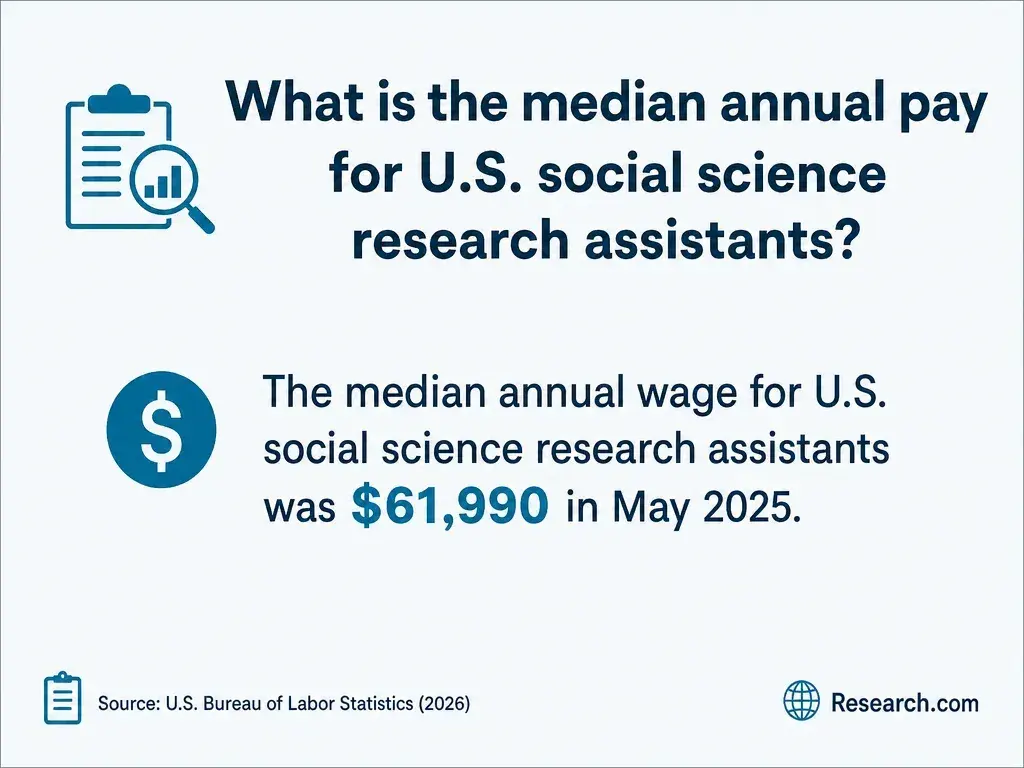
There is no reliable occupation-wide salary for "addictions psychology BA graduates." The U.S. Bureau of Labor Statistics reports wages and employment projections by occupation, not by undergraduate concentration. Its category for substance abuse, behavioral disorder, and mental health counselors includes positions with different education and credential requirements; its median wage should not be read as an expected starting salary for an unlicensed BA graduate.
For a meaningful return-on-investment estimate, identify an attainable local job title, check current postings for its credential and pay requirements, and compare the likely change from your present earnings with the cost and work hours of completing the degree. If advancement would require graduate education, include that additional cost—evaluating metrics like accelerated forensic psychology master's costs and outcomes can help you gauge whether specialized fast-track programs deliver a solid financial return. Ultimately, comparing low-cost master's degrees in psychology is useful only after confirming that a nonclinical master's meets the requirements of the job you want.
Does an addictions psychology bachelor's degree lead to counseling licensure?
No, not by itself. Studying addiction within a psychology BA does not qualify someone for independent counseling, psychotherapy, diagnosis, or use of a protected professional title. Requirements for addiction-counselor credentials vary by state and credential level; they may involve specified education, supervised experience, and examinations. Licensed mental health counseling generally requires a qualifying graduate pathway and additional state requirements.
Before enrolling, find the rules for your intended job in the state where you plan to work and ask the program which requirements, if any, its courses satisfy. If independent counseling is your goal, compare the clinical counseling master's time-to-degree and salary outlook with the full undergraduate-to-licensure pathway. If your goal is nonclinical recovery support, a qualifying degree plus relevant experience - or a shorter, state-recognized credential - may be the better financial choice.
Other Things You Should Know About Psychology
Check the award's application rules first. Institution-administered awards may require admission or enrollment at a participating school, so build a shortlist before relying on one.
It can. Report outside awards to your financial-aid office and request an updated aid offer showing what changes, if anything, before accepting loans.
Possibly, but only if the program approves the site, duties, supervision, and learning objectives. Employment alone does not establish internship credit.
No. Tax treatment depends on how funds are used and the applicable rules. Keep award and expense records, and consult qualified tax guidance for your circumstances.
- Eligibility Requirements | Federal Student Aid https://studentaid.gov/understand-aid/eligibility/requirements
- Adult Students - Financial Aid Toolkit - Department of Education https://financialaidtoolkit.ed.gov/tk/outreach/target/adults
- School-Determined Requirements | 2024-2025 Federal Student Aid Handbook https://fsapartners.ed.gov/knowledge-center/fsa-handbook/2024-2025/vol1/ch1-school-determined-requirements
- Adult/Returning Students | HESC - NY.gov https://hesc.ny.gov/adultreturning-students
- Online Bachelor's Degree in Psychology in Addictions | Purdue Global https://www.purdueglobal.edu/degree-programs/psychology/bachelor-psychology-addictions/
- Frequently Asked Questions on SUNY Reconnect https://www.suny.edu/reconnect/faq/
- Can I Apply for Financial Aid If I Attended College Before but Didn't Finish? | Campus.edu https://campus.edu/blog/financial-aid/can-i-apply-for-financial-aid-if-i-attended-college-before-but-didnt-finish
- B.S. Human Services/Substance Abuse and Addiction | Columbia Southern University https://www.columbiasouthern.edu/online-degree/view-all-programs/bachelors/bs-human-services-substance-abuse-and-addiction
- Can You Get Financial Aid for a Second Bachelor's Degree? | University of the People https://www.uopeople.edu/blog/can-you-get-financial-aid-for-a-second-bachelors-degree/
- Undergraduate Scholarships Policies - Affording UA https://afford.ua.edu/scholarships/policies/