
2027 Online BA in Psychology - Addictions After DSST Substance Abuse Credit: Compare Transfer Credit and Remaining Coursework

Co-Founder and Chief Data Scientist
Passing the DSST Substance Abuse exam could shorten an online psychology BA - but only if a college awards the credit and applies it to a requirement you still need. For transfer and returning students interested in addictions, that distinction affects course planning, tuition, and graduation time.
This guide explains where the credit might fit, how to compare remaining coursework across schools, and what to get in writing before choosing a program. It also separates addictions coursework from the credentials required for addiction counseling.
Key Things You Should Know
- DSST Substance Abuse credit may count as an addictions elective, a general elective, or nothing; acceptance alone does not mean it satisfies a psychology major requirement.
- Calculate remaining work from each school's degree audit, including prerequisites, transfer limits, and credits that must be earned there - not simply from your total accepted credits.
- An addictions-focused psychology BA can prepare you for nonclinical support work or further study, but the exam and degree do not independently qualify you to provide addiction counseling.
How does DSST Substance Abuse credit apply toward an online psychology bachelor's degree?
DSST Substance Abuse is a credit-by-exam option: a college may award academic credit for a qualifying exam result instead of requiring a classroom course. The receiving college decides whether to accept the result, how much credit to award, and where that credit fits in its online BA in psychology. An addictions focus may be an official concentration, a group of electives, or simply a student's course choices; the label matters when determining what the exam can replace.
The possible outcomes differ in their value to a transfer student. This table shows why a credit award and progress toward graduation are not the same thing.
| Evaluation outcome | Effect on the degree |
| Approved major or addictions requirement | May replace a required course, subject to the program's substitution and residency rules. |
| General elective | Helps only if open elective credits remain in the degree plan. |
| Credit accepted but excess to requirements | Appears on the record without reducing remaining coursework. |
| Credit not awarded | Does not change the degree plan. |
Ask whether the exam is treated as introductory or upper-division credit and whether it can satisfy a prerequisite. A course covering substance use at one college is not automatically equivalent to another college's psychology elective. For a broader explanation of transferring college credits into a psychology degree, keep the distinction between credit acceptance and requirement satisfaction in view.
How many courses remain after transferring DSST Substance Abuse credit?
There is no reliable course count without an individual degree audit. Start with the credits required for the BA, subtract credits that actually apply, then identify any unmet requirements that cannot be filled by additional exam or transfer credit. A DSST award reduces the remaining count only if it fills an available slot; it might replace an elective while leaving statistics, research methods, and the addictions coursework you wanted untouched.
Request an audit that separates general education, psychology core, addictions requirements, free electives, and credits that must be completed at the institution. Check whether the same prior course has already filled the proposed DSST slot, whether your associate degree changes general-education requirements, and whether a required course is offered every term. If you are planning an intensive online psychology degree, course availability and prerequisite order may determine your finish date more than one additional exam credit award.
For comparison, record both credits remaining and required courses remaining for each school. The first informs tuition estimates; the second exposes sequencing delays. Do not assume that a favorable preliminary transfer estimate is a final graduation audit.
Which online psychology bachelor's programs accept DSST Substance Abuse credit?
No school should be treated as a confirmed match solely because it advertises DSST acceptance or offers an addictions-related psychology program. The relevant combination is more specific: the college must accept this exam at your score, award credit under the policy for your entry term, and apply it to your particular BA requirements. A general DSST policy does not establish that its Substance Abuse exam replaces an addictions course.
Compare addiction psychology BA and BS degree options by their published curricula, then ask each school for an exam-specific evaluation. Give preference to the program that documents a useful requirement match and offers the remaining courses on a workable schedule - not automatically the one advertising the largest overall transfer allowance. If a school offers only general psychology electives rather than a formal addictions concentration, make sure that structure still serves your goal.
Check the college's institutional accreditation through its accreditor or the U.S. Department of Education's accreditation records, then obtain a written, student-specific credit evaluation. Institutional accreditation matters for the legitimacy of the degree; it does not obligate a college to accept a particular exam. APA accreditation is not the appropriate test for a general undergraduate psychology BA.
Send the following materials and questions to transfer admissions or the registrar, then ask the psychology department or degree-audit office to approve the requirement match:
- Provide the official DSST score report and any available exam identification details; ask which score threshold and credit policy apply to your intended entry term.
- Submit transcripts for all previous college work so the evaluator can identify duplicate credit, prerequisites already met, and remaining elective space.
- Request the exact course equivalency, credit level, degree requirement satisfied, transfer-credit limit, and institutional residency requirement in writing.
- Ask how to seek a psychology-department substitution or appeal if the credit is accepted only as a general elective.
Retain the written evaluation and compare it with your official degree audit after admission. When exploring online college pathways for psychology majors, check that published transfer policies apply to the particular campus, online program, and entry term you would use.
A psychology BA generally combines general education with a psychology core and electives. Common core subjects include introductory psychology, statistics, research methods, development, and social or biological aspects of behavior. An addictions-focused plan may add courses on substance use, prevention, recovery, and service systems. The institution's catalog determines the actual requirements and whether the focus is formally recorded on the degree.
DSST Substance Abuse is most plausibly evaluated against subject-area or elective coursework, not automatically against statistics, research methods, a supervised experience, or a capstone. Check prerequisites before selecting later courses: losing a methods course to an incorrect presumed equivalency could delay a required research sequence. If graduate study is a possibility, retain enough coursework to build research and quantitative skills rather than maximizing exam credit alone. Even psychology graduate programs with compressed schedules may expect preparation that an addictions exam does not demonstrate.
Admission to the college, entry into the psychology major, and approval of transfer credit are separate decisions. Colleges commonly request prior transcripts and an application; policies for GPA, completed college credits, high school records, and major entry vary. A passing DSST result is not a substitute for admission requirements.
Before applying, ask whether the school evaluates exam credit before or after admission, whether you need to complete introductory psychology or statistics before entering upper-level courses, and whether the online program has live sessions, campus visits, or placement obligations. Students considering later counseling training should also distinguish BA admission from graduate professional-program admission. Guidance on accreditation checks for accelerated counseling programs concerns a different degree and credential pathway; it does not establish a psychology BA's transfer policy.
Your timeline depends on the audit, course sequence, term lengths, and the number of courses you can complete alongside work or other obligations. Online delivery does not guarantee asynchronous classes or flexible placements. A DSST award may save the tuition for a course it replaces, but it may not shorten enrollment if that course was not on the critical path to graduation.
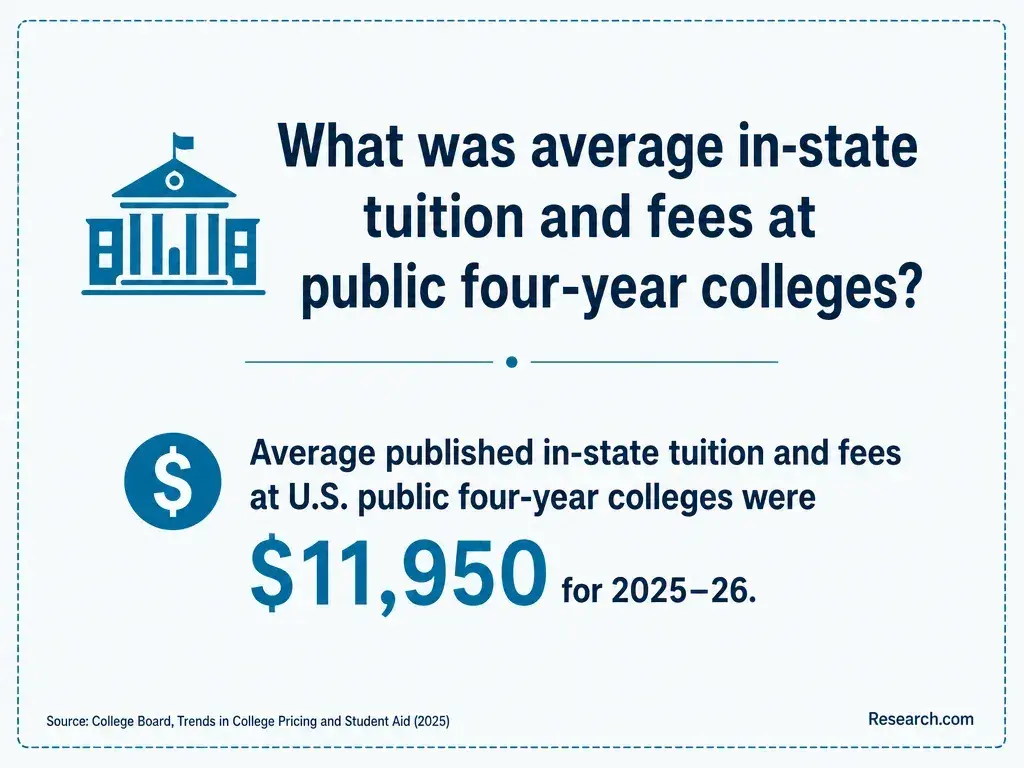
For a usable cost comparison, ask each college for the tuition charged on remaining credits, required fees, materials, any travel or placement expenses, and the effect of your enrollment pace on financial aid. Compare the projected total with lower-cost online psychology study pathways, but use your own evaluated course plan rather than an advertised per-credit price alone. Confirm aid eligibility with the financial-aid office before relying on an exam, a transfer award, or a reduced course load to lower out-of-pocket cost.
An addictions-focused psychology BA can support applications for nonclinical roles such as recovery-service support, outreach, intake coordination, referrals, and program assistance. Employers may also value previous human-services, military, community, or administrative experience. Job duties and hiring standards vary, so review actual postings rather than assuming a concentration qualifies you for a named position.
Look for opportunities to demonstrate respectful communication, accurate documentation, knowledge of referral boundaries, and basic evaluation or research skills. An undergraduate placement may provide relevant experience if the school and site approve it, but it is not a clinical practicum. If your intended work is psychotherapy or independently provided addiction treatment, investigate qualifying professional education instead; intensive graduate study in clinical mental health counseling is one distinct route, subject to program and state requirements.
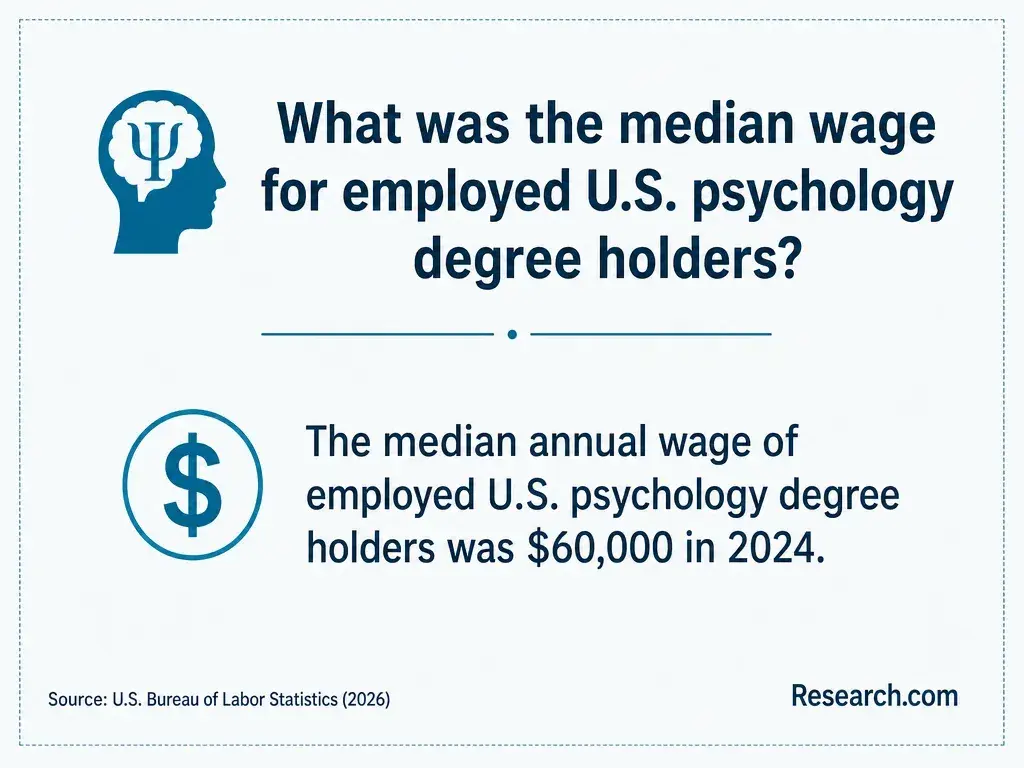
There is no single salary or job-growth figure for graduates of an online psychology BA. The U.S. Bureau of Labor Statistics reports wages and projections by occupation, not by psychology major or DSST credit. Its substance abuse, behavioral disorder, and mental health counselors category can inform research into counseling work, but it includes roles with education and credential requirements that a BA alone may not meet.
For a realistic estimate, identify jobs you could qualify for now, check local postings for their pay and required credentials, and compare those roles with the appropriate BLS occupation - not with "psychology graduate" averages. Include the cost of any further education in that comparison. For example, affordable distance learning in graduate psychology may have a different cost and occupational purpose from a licensure-oriented counseling program; neither should be added to your plan on the assumption of a guaranteed pay increase.
What licensing and certifications are required for addiction-related careers?
Requirements depend on the state, job title, and work performed. Some recovery-support or peer roles use state-recognized credentials or employer training; substance-use-disorder counseling roles may require specified education, supervised experience, an examination, or a license or certification. A DSST exam, an addictions elective, and a psychology BA do not by themselves authorize diagnosis, psychotherapy, or independent counseling.
Before choosing a degree for a particular job, identify the state regulator or credentialing body and request its current education and supervision rules. Ask whether the proposed BA courses count toward those rules and whether the role requires a different qualifying degree. If a counseling-oriented bachelor's is the better academic fit, investigate its credential alignment and financial aid for substance abuse counseling bachelor's degrees separately; financial aid availability does not establish licensure eligibility.
Other Things You Should Know About Psychology
Ask the receiving college. Exam providers and colleges may have different record-retention and credit-evaluation policies, so confirm that an official score report is available and acceptable for your entry term.
Usually, colleges review overlapping learning for duplicate credit. Provide both records and ask which award, if any, can apply to a remaining requirement.
Do not assume it will. Ask the exam administrator about payment options and the college's financial-aid office how exam costs are treated under your circumstances.
Only if the receiving college's documentation policy permits it. Send the military transcript for evaluation, but ask whether the college also requires a score report sent directly through the exam provider.
- College Credit by Examination (DSST) | dantes.mil https://www.dantes.mil/dsst/
- School-Determined Requirements - FSA Partner Connect https://fsapartners.ed.gov/knowledge-center/fsa-handbook/2025-2026/vol1/ch1-school-determined-requirements
- Psychology Degree Requirements | University of Bridgeport https://www.bridgeport.edu/news/psychology-education-requirements/
- DSST Exams | Eastern Florida State College https://www.easternflorida.edu/registrar/credit-evaluation/leap/dsst-exams.php
- Transfer Credit Evaluation - TXST Admissions https://www.admissions.txst.edu/future-students/transfer-credit-evaluation.html
- Transfer Credit • Office of the Provost and Academic Affairs | SUNY Purchase https://www.purchase.edu/live/blurbs/2159-transfer-credit
- Academic Policies and Procedures | Utah Tech University Catalog https://catalog.utahtech.edu/academicpoliciesandprocedures/
- Major in Psychology | towson.edu https://catalog.towson.edu/undergraduate/liberal-arts/psychology/psychology/
- Psychology Requirements | Rutgers University https://psych.rutgers.edu/academics/undergraduate/major
- Psychology (BS) - UT Dallas 2024 Undergraduate Catalog https://catalog.utdallas.edu/2024/undergraduate/programs/bbs/psychology


