2027 Online BA in Psychology - Mental Health for Probation Support Staff: Choosing a Program Without Leaving Your Job
Audited and Verified:
Our Editorial and Data Verification Process
Research.com uses government datasets, official education statistics and primary institutional information to support its career and degree guides. Our review process checks factual accuracy, occupational definitions, source dates and the requirements associated with the credentials discussed.
How This Article Was Fact-Checked
Our editorial team verifies salary estimates, employment projections, education requirements and program information against original data providers and official organizations. Salary figures are checked against the relevant occupational definitions and reporting periods. Information about licensure, accreditation and required in-person training is reviewed separately.
Fact-checked and verified on:

Co-Founder and Chief Data Scientist
If you work in probation support, you may already coordinate referrals, document client contacts, and see how mental health needs affect supervision. An online BA in psychology could strengthen that work, but the wrong schedule, credit policy, or curriculum could make finishing difficult without leaving your job. This guide shows you how to compare programs around your agency duties, evaluate the time and cost of completion, and distinguish useful mental health knowledge from qualifications for clinical work.
Key Things You Should Know
- Choose for schedule fit first: confirm live meetings, exam times, course availability, and any fieldwork before assuming an online BA will work around probation shifts.
- A psychology BA can strengthen nonclinical support and referral skills, but neither the degree nor a mental health or forensic focus authorizes diagnosis or therapy.
- Many bachelor's degrees require about 120 semester credits; your remaining credits, not the advertised program length, determine your likely time and cost.
What Is an Online BA in Psychology for Probation Support Staff?
It is an undergraduate psychology degree delivered primarily online, not a standardized credential designed specifically for probation employees. A BA generally combines psychology courses with general education and electives. Depending on the school, you may be able to study mental health, substance use, or behavior in legal settings through electives or a formally named concentration. Check which designation actually appears on the transcript.
For probation support staff, the value lies in understanding behavior and research while applying that knowledge within agency policy. Studying symptoms does not qualify you to identify a client's disorder; it can help you communicate concerns accurately to an authorized professional. If substance use is your main interest, compare the available courses with distance learning bachelor's degrees in addiction psychology rather than assuming every general BA offers the same depth.
Can an Online Psychology Bachelor's Degree Help You Work in Probation Services?
Yes, when the degree fills a documented gap in the work you want to do. Psychology can improve your ability to read evidence, communicate without stigma, recognize when a referral may be appropriate, and understand why service engagement varies. Your existing experience with case records, court deadlines, and interagency coordination may be just as important to an employer.
A BA does not automatically qualify you for a probation officer position or promotion. State, county, and federal employers set different degree, examination, experience, and background requirements. Compare actual postings and internal job classifications with your transcript before enrolling. If you are considering a justice-focused major, online forensic psychology tuition, admissions, and outcomes offer a useful comparison - but a forensic label does not grant investigative or clinical authority.
How Do You Choose an Accredited Online Psychology Bachelor's Program?
Start by confirming that the institution holds accreditation recognized by the U.S. Department of Education or the Council for Higher Education Accreditation. Then evaluate the particular BA: institutional accreditation alone does not establish its schedule, transfer-credit treatment, or career outcomes. APA accreditation is not the standard for a general psychology bachelor's degree.
Request the catalog and a written degree audit for your intended entry term. Compare schools on the requirements that can determine whether you finish while employed:
- Delivery: Which courses have required live sessions, proctored exams, campus visits, or fixed group meetings?
- Progression: How often are required statistics, research methods, and upper-level courses offered, and what happens if you pause enrollment?
- Credit application: Which prior courses satisfy major or general education requirements, and how many credits must be earned at the school?
- Support: Can advising, tutoring, accessibility services, and technical help accommodate your work hours?
If you later consider clinical training, evaluate it separately. This guide to counseling degree affordability and accreditation concerns a different educational pathway; its professional accreditation questions should not be applied automatically to a psychology BA.
Prioritize courses that connect to duties you can actually perform. Abnormal psychology can build literacy about mental health conditions; developmental and social psychology can clarify context and behavior; statistics and research methods can help you judge claims about programs or interventions. Courses on substance use, trauma, cultural psychology, or psychology and law may add relevant context if offered. None substitutes for agency training on referrals, safety, confidentiality, or mandated procedures.
Look beyond course titles. An assignment that critically reviews evidence on service engagement may be more useful than an elective that only surveys forensic terminology. Ask whether the program permits a nonclinical capstone or internship relevant to your work. Your agency and school must approve any workplace-based activity; routine access to case files is not permission to use client information for coursework.
If recovery services are a possible career direction, compare your intended duties with those described in working in substance use recovery support. A course about addiction does not replace a state-required support credential or counseling qualification.
Often, yes - but online does not necessarily mean self-paced. Asynchronous lectures may still come with weekly deadlines, scheduled exams, group work, or a supervised placement during business hours. Probation employees should plan around court calendars, rotating coverage, and periods when caseload demands rise.
Before committing to a course load, ask for a sample syllabus from a required methods course and the schedule for the next several terms. Identify which obligations can be completed after work and which require leave or a shift adjustment. Starting with a manageable load may protect your progress better than enrolling at a pace you cannot sustain. Confirm how a reduced load or leave affects tuition assistance and financial aid.
A future counseling degree may involve substantially different live-session and placement demands. If that is your longer-term aim, review accredited clinical counseling timelines for working students before assuming the flexibility of an undergraduate BA will carry over.
Requirements vary by school and by whether you enter as a first-year or transfer student. Schools commonly request prior academic transcripts; some set separate conditions for admission to the psychology major. Relevant probation experience may strengthen your application or inform a portfolio review where one is offered, but it does not automatically earn college credit.
If you have completed college courses, submit every required transcript and obtain an official evaluation. Ask specifically whether prior statistics or psychology coursework satisfies major requirements, not merely whether the credits transfer. Check prerequisites and course sequencing before choosing an accelerated schedule. Advice on accelerating a forensic psychology bachelor's degree may help you frame these questions, but only your prospective school can confirm your completion plan.
Many bachelor's programs are built around roughly 120 semester credits, but the relevant figure is how many applicable credits remain after your school evaluates prior study. Required course availability and your sustainable enrollment pace then determine the timeline. A shorter advertised term length will not help if a prerequisite is offered infrequently.
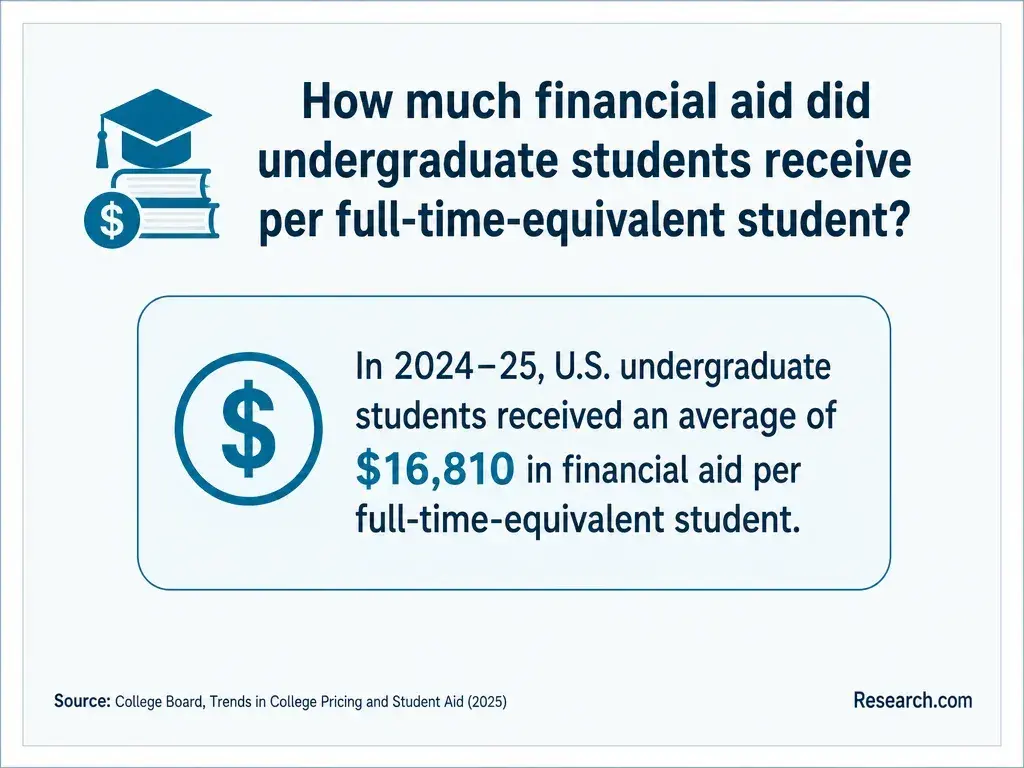
For a useful cost comparison, ask each school for a term-by-term estimate based on the same expected course load. Include tuition, mandatory fees, books, technology and exam charges, and any travel or unpaid fieldwork. Compare that amount with confirmed employer education assistance, your own available funds, and aid eligibility; do not count reimbursement until you know its grade, service, and repayment conditions.
If substance use counseling is the actual target, review paying for a substance abuse counseling bachelor's degree as a separate funding comparison. Its cost and aid discussion cannot substitute for an individualized psychology BA estimate.
With relevant experience, a psychology BA may support applications for probation support, human services intake, referral coordination, victim services support, or community program roles. The degree is most persuasive when you can also show accurate documentation, respectful client communication, knowledge of local referral processes, and sound judgment about when to escalate a concern.
Job titles conceal important differences. One agency's case coordinator may handle scheduling and referrals; another may require a specific credential or extensive case-management experience. Read the duties and minimum qualifications rather than relying on the title. If your goal is a specialized substance use role, compare psychology with lower-tuition bachelor's pathways in substance use counseling and verify the credential rules in the state where you intend to work.
There is no single salary or growth rate for psychology BA graduates in probation services. Pay depends on the occupation, agency, location, pay grade, and experience. For a broad point of reference, the U.S. Bureau of Labor Statistics reported a $45,120 median annual wage in May 2024 for social and human service assistants. That occupation includes varied support settings; its median is neither a probation-agency pay scale nor a prediction of what a degree holder will earn.
For a realistic decision, compare your agency's published pay grades and promotion requirements with local postings for your target job. Consult the BLS occupational outlook for that specific role when assessing growth, rather than applying a broad psychology figure to it. Likewise, career earnings research for forensic psychology master's students describes a different degree-level question and should not be treated as the expected return on a BA.
Does a Psychology Bachelor's Degree Lead to Mental Health Licensure?
No. A psychology BA, including one with mental health, addictions, or forensic coursework, does not by itself authorize psychotherapy, diagnosis, independent psychological assessment, or use of a protected clinical title. Probation support staff can learn to document observations, follow agency procedures, and connect people with authorized services without stepping outside their role.
If your goal is to provide treatment, identify the exact occupation and state first. Counseling, clinical social work, psychology, and some addiction counseling pathways have different education, supervised-experience, examination, and licensing rules. A BA may serve as preparation for further study, but it is not a substitute for a qualifying professional program. Compare shorter graduate counseling programs by cost and duration only after checking whether a specific program meets the educational rules where you plan to practice.
Other Things You Should Know About Psychology
Do not assume you can. Ask your agency and instructor what data use is permitted before accessing, describing, or sharing client information. A public dataset or hypothetical case may be safer.
Possibly, but only if the school accepts the site, duties, supervision, and learning objectives and your employer approves the arrangement. Regular employment alone is not an approved placement.
Yes. Request the written policy, including eligible programs, approval deadlines, reimbursement limits, grade requirements, and any obligation to remain employed afterward.
Not necessarily. If the target job does not require a bachelor's degree, agency training, supervised experience, or a focused course may be a more direct investment. Check the qualifications for the role you want before enrolling.
- Cost of Attendance (Budget) | 2025-2026 Federal Student Aid Handbook https://fsapartners.ed.gov/knowledge-center/fsa-handbook/2025-2026/vol3/ch2-cost-attendance-budget
- DAPIP | Homepage - Office of Postsecondary Education (OPE) https://ope.ed.gov/dapip/
- Fact Sheet #71: Internship Programs Under The Fair Labor Standards Act | U.S. Department of Labor https://www.dol.gov/agencies/whd/fact-sheets/71-flsa-internships
- Chapter 3: Mental Health Treatment (Probation and Supervised Release Conditions) | United States Courts https://www.uscourts.gov/about-federal-courts/probation-and-pretrial-services/post-conviction-supervision/overview-probation-and-supervised-release-conditions/chapter-3-mental-health-treatment-probation-and-supervised-release
- Common Course Scheduling - Policy Library https://www.umkc.edu/provost/policies-and-resources/policies/common-course-scheduling.php
- Course Delivery Methods - Ways to Learn | Riverland https://www.riverland.edu/academics/course-delivery-methods-ways-to-learn/
- Attendance Policy for Online Synchronous Courses | Wilmington College Undergraduate Catalog https://handbook.wilmington.edu/attendance-policy-for-online-synchronous-courses
- Online Student Support Services | ASU Online https://asuonline.asu.edu/students/services/
- Transfer credit practices - UC Admissions https://admission.universityofcalifornia.edu/counselors/preparing-transfer-students/transfer-credit-practice.html
- Prior Learning Policy | Claremont Lincoln https://claremontlincoln.edu/prior-learning-policy/