2027 Choosing an Online MS in Psychology - Forensic Psychology Around A Required Campus Visit on a Working Weekend
Audited and Verified:
Our Editorial and Data Verification Process
Research.com uses government datasets, official education statistics and primary institutional information to support its career and degree guides. Our review process checks factual accuracy, occupational definitions, source dates and the requirements associated with the credentials discussed.
How This Article Was Fact-Checked
Our editorial team verifies salary estimates, employment projections, education requirements and program information against original data providers and official organizations. Salary figures are checked against the relevant occupational definitions and reporting periods. Information about licensure, accreditation and required in-person training is reviewed separately.
Fact-checked and verified on:

Co-Founder and Chief Data Scientist
An online forensic psychology master's can look workable until a required campus visit falls on a weekend you are scheduled to work. For employees with limited leave, the visit's timing, attendance rules, and travel costs may determine whether the degree is feasible.
This guide explains how to evaluate those obligations alongside accreditation, coursework, career outcomes, and cost. It is designed to help you get written answers before enrolling, not discover after paying a deposit that "online" still means missing an essential shift.
Key Things You Should Know
- A required campus visit is a scheduling requirement, not a minor feature of online delivery. Confirm its dates, full-day hours, and attendance policy before accepting a place.
- Compare the complete visit burden, travel, lodging, caregiving, and missed wages, not tuition alone; even one mandatory trip can change which program is affordable.
- A forensic psychology MS can support research and justice-related nonclinical work, but it does not by itself qualify you for psychologist licensure or forensic evaluations.
What is an online MS in forensic psychology?
An online Master of Science in forensic psychology is graduate study of psychological science in legal and justice settings. Depending on the program, students may examine research on memory and eyewitness evidence, behavior in correctional settings, victim services, and the ethical limits of psychological evidence. "Online" describes how coursework is delivered; it does not establish that every requirement can be completed remotely.
For a working applicant, the useful distinction is between an online program with no required campus attendance and one with a mandatory residency, intensive, or orientation. Confirm whether the visit carries credit, involves assessed work, or is a condition of graduation.
If your goal is entry into support work rather than graduate specialization, compare the MS with experience and relevant undergraduate preparation first. Addiction psychology bachelor's degree planning illustrates a different undergraduate route for someone whose interests center on recovery services rather than legal settings; it is not a substitute for checking the qualifications of your target job.
Is an online forensic psychology master's degree accredited?
Accreditation depends on the institution and the particular program, not on whether classes are online or require a campus visit. Check the school's institutional accreditation through the accreditor and the U.S. Department of Education's accreditation database, then confirm that it applies to the institution awarding the degree. Ask the school to identify any separate programmatic accreditation it claims and its exact scope.
Do not reject an otherwise suitable nonclinical MS simply because it lacks APA accreditation: APA accreditation applies to specified professional psychology training programs, not to every forensic psychology master's.
Conversely, institutional accreditation does not establish that an MS meets a state's psychologist-licensing requirements. Use a forensic psychology program review before enrollment as a comparison aid, then verify accreditation and visit policies directly for your intended entry term.
Can an online MS in forensic psychology lead to licensure?
Generally, a nonclinical forensic psychology MS alone does not qualify its holder for independent psychologist licensure, forensic psychological assessment, diagnosis, or psychotherapy.
Psychologist licensure typically requires qualifying doctoral education and additional jurisdiction-specific steps. Rules for other licensed professions differ, so the program's name or a course on assessment is not evidence of eligibility.
If your actual goal is to provide therapy, compare programs explicitly designed around the educational requirements for your intended counseling or social-work license.
Accelerated online master's preparation in mental health counseling may be more relevant than a forensic MS, but speed does not replace checking program recognition, supervised training, and your state board's rules. A campus visit in any of these programs is not itself license-supervised clinical experience.
The strongest fit is often an existing or prospective nonclinical role where understanding psychological research in justice settings adds value: victim-service coordination, corrections program support, research assistance, policy analysis, or program evaluation.
Duties and hiring standards vary by employer. A justice-agency employee may be able to apply new skills in an established role; a career changer may first need direct service, data, or agency experience.
These paths should not be confused with criminal investigation authority, legal practice, or employment as a licensed forensic psychologist. For example, a victim-services worker might coordinate referrals and document service needs while referring clinical questions to qualified professionals.
If your target is substance-use support, recovery services employment pathways may offer a more direct way to identify the credentials and experience local employers request.
Coursework varies, but relevant offerings may include research methods, statistics, psychology and law, criminal behavior, victimology, ethics, and the evaluation of evidence. Some programs add a thesis, capstone, or supervised nonclinical experience.
Compare required courses, not just an elective list, against the skills you want to use at work. For a research-oriented goal, access to methods training, a suitable project, and faculty feedback may matter more than a broad set of forensic topics.
Ask whether any "online" course requires live meetings, group work at fixed hours, or an in-person presentation during the campus visit. Review a fast-paced master's study in psychology option only if its course sequence leaves room for your job and any required project.
Studying psychological tests academically does not authorize a student to administer restricted assessments professionally.
A required visit may be an orientation, skills-intensive session, research presentation, or residency. Schools set their own dates, locations, assessment rules, and alternatives. A visit advertised as a "weekend" may include Friday travel or sessions that conflict with both Saturday and Sunday shifts. A recorded lecture is not necessarily an approved substitute for attendance.
The following format distinctions help identify the scheduling risk before you request leave or pay a deposit.
| Published format | Potential conflict for a weekend worker | Information still needed |
| Fixed-date campus intensive | May overlap scheduled shifts and require travel on adjacent days | Full agenda, location, attendance rule, and make-up policy |
| Choice of visit dates | Options may still fall during busy work periods | Whether a place on a preferred date is guaranteed |
| Remote or approved alternative | Live participation may still require time away from work | Eligibility, approval deadline, and equivalent work required |
Request the complete schedule in writing, including check-in and departure times, and ask what happens if your employer changes your shift. Confirm whether a missed visit delays a course or graduation, whether the visit repeats, and whether approved accommodations or alternatives are available.
If the school cannot provide dates before enrollment, treat that uncertainty as a real scheduling cost. When evaluating twelve-month forensic psychology master's routes, check the visit especially carefully: an intensive schedule may leave little room to make up a missed requirement.
Programs commonly ask for a completed bachelor's degree and academic records; specific GPA standards, prerequisite courses, recommendations, statements, and tests differ. A criminal justice, social science, or other non-psychology major is not automatically disqualifying.
Ask admissions which psychology, statistics, or research-methods courses are required, which are recommended, and whether outstanding preparation can be completed before or after admission.
If you have not finished a bachelor's degree, compare completion options and obtain a school-approved degree audit before budgeting for the MS. Lower-tuition undergraduate psychology options may be worth examining, but changing majors or schools is useful only if accepted credits actually satisfy remaining requirements.
For admission to a particular MS, rely on that program's written requirements rather than a general application checklist.
Completion time depends on required credits, course availability, enrollment pace, and whether a missed campus visit postpones a required milestone. Published tuition rarely captures the full cost for a weekend worker. Request a term-by-term plan and an itemized estimate before comparing programs.
Your estimate should account for tuition and mandatory fees, travel and lodging, local transportation, caregiving, missed wages, and any capstone or continuation charges. Check whether employer education assistance covers fees or travel rather than assuming it does.
Lower-tuition psychology master's options provide a useful starting comparison, but the less expensive published tuition may not be the less expensive workable degree once visits and schedule changes are included.
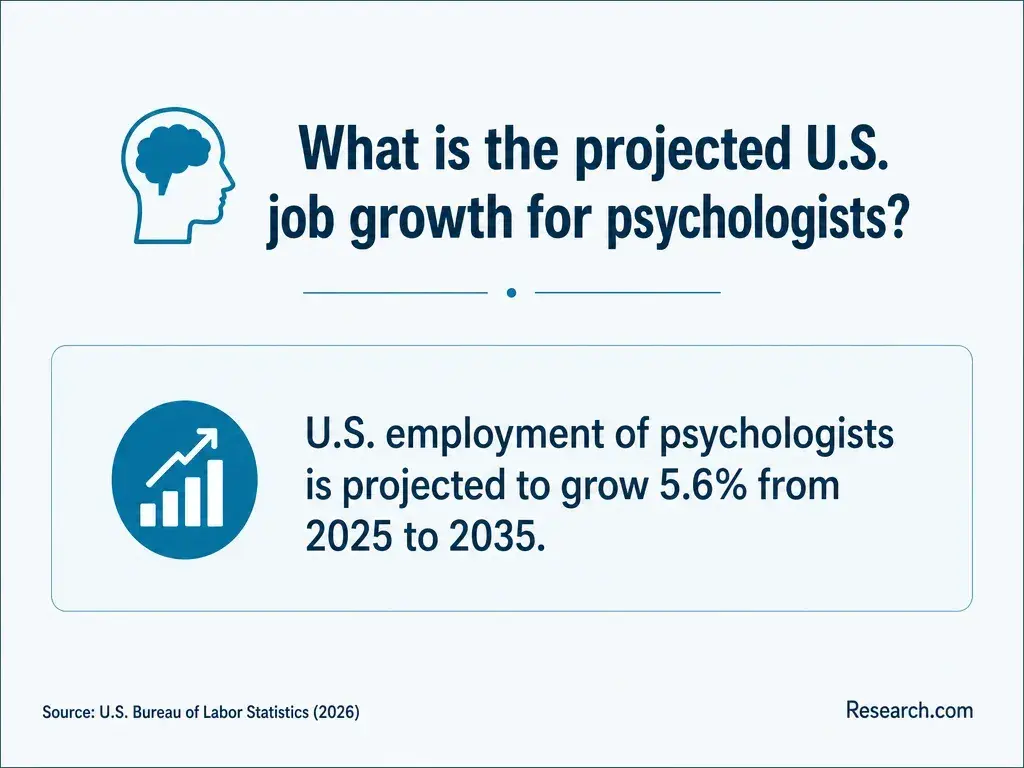
There is no dependable single salary for "forensic psychology MS graduates." Pay follows the actual occupation, employer, location, experience, and where relevant license. U.S. Bureau of Labor Statistics wage information for psychologists describes an occupation with qualifications that a nonclinical MS alone does not confer; it should not be presented as the expected pay for this degree.
For a useful return-on-investment comparison, identify local openings you could realistically qualify for, note their posted pay and required experience, and compare those with your current earnings and total study costs. Forensic psychology master's career progression options can suggest roles to investigate, but a higher-paying title is not an attainable outcome solely because its subject matter overlaps with the MS.
What is the job outlook for forensic psychology careers?
"Forensic psychology" spans several occupations, so no single employment projection describes the prospects of every MS graduate.
U.S. Bureau of Labor Statistics projections are more useful after you identify a specific occupation, such as a social and human service assistant or a psychologist, and confirm that its typical entry requirements match your intended pathway. Growth in an occupation does not establish that a particular degree is preferred by local employers.
Look at recent postings from the agencies where you would seek work: distinguish openings that request research skills or justice-system experience from those requiring clinical licensure.
If your longer-term aim is licensed counseling rather than nonclinical justice work, comparing accredited counseling degree completion times is more decision-relevant than treating forensic job growth as a reason to enroll in the wrong credential. Choose the forensic MS only when its actual requirements, including the campus visit, support a career path you can pursue.
Other Things You Should Know About Psychology Programs
Do not assume so. Ask the program whether children may enter instructional spaces and whether the campus offers childcare; arrange backup care before committing to travel.
Contact the school's accessibility office early about travel-related and on-campus access needs. Request a written explanation of the accommodation process rather than assuming a visit will be waived.
Ask for the school's cancellation, late-arrival, and make-up policies. Consider refundable bookings when dates or weather create substantial risk.
Only your employer can decide. Give your supervisor the agenda and learning objectives, then get any paid-leave or reimbursement approval in writing before booking.
- Understanding College Costs | studentaid.gov https://studentaid.gov/resources/prepare-for-college/students/choosing-schools/consider-costs
- Frequently Asked Questions - California Board of Psychology https://www.psychology.ca.gov/licensees/faq.shtml
- How to Become a Licensed Psychologist | Texas Behavioral Health Executive Council https://bhec.texas.gov/texas-state-board-of-examiners-of-psychologists/applying-for-a-psychology-license/how-to-become-a-licensed-psychologist/
- Top Careers in Forensic Psychology | marymount.edu https://marymount.edu/blog/top-careers-in-forensic-psychology/
- Careers With a Forensic Psychology Master's Degree | The Chicago School https://www.thechicagoschool.edu/insight/career-development/career-options-masters-degree-forensic-psychology/
- Online MS in Forensic Psychology | Walden University https://www.waldenu.edu/online-masters-programs/ms-in-forensic-psychology
- Career Options for Forensic Psychology Students | LSU Online https://online.lsu.edu/newsroom/articles/what-can-you-do-forensic-psychology-degree/
- Specialty guidelines for forensic psychology | apa.org https://www.apa.org/practice/guidelines/forensic-psychology
- Career Pathways with a Master's in Forensic Psychology | Neumann https://learn.neumann.edu/neuperspectives/careers-with-a-masters-degree-in-forensic-psychology
- Clinical and Forensic Evaluations: What's the Difference? | Palo Alto University https://paloaltou.edu/resources/translating-research-into-practice-blog/whats-the-difference-between-clinical-evaluations-and-forensic-evaluations/