2027 Online BA in Psychology - General Psychology: Degree Options for Nonprofit Jobs That Accept Social Science Majors
Audited and Verified:
Our Editorial and Data Verification Process
Research.com uses government datasets, official education statistics and primary institutional information to support its career and degree guides. Our review process checks factual accuracy, occupational definitions, source dates and the requirements associated with the credentials discussed.
How This Article Was Fact-Checked
Our editorial team verifies salary estimates, employment projections, education requirements and program information against original data providers and official organizations. Salary figures are checked against the relevant occupational definitions and reporting periods. Information about licensure, accreditation and required in-person training is reviewed separately.
Fact-checked and verified on:

Co-Founder and Chief Data Scientist
Many nonprofit job postings welcome social science majors, so an online BA in general psychology can be useful without being the only route in. If you want to move into outreach, service coordination, advocacy, or program support, the decision is whether the degree adds skills and opportunities you cannot gain more directly.
This guide connects psychology coursework to nonprofit tasks, explains what employers may still expect, and shows how to compare online programs, costs, and career outcomes before enrolling.
Key Things You Should Know
- An online general psychology BA can support nonprofit work in outreach, coordination, advocacy, and evaluation, but relevant experience often matters as much as the major.
- A psychology bachelor's degree does not authorize therapy, diagnosis, or independent psychological assessment; check the duties and credentials attached to each job posting.
- Compare the credits you still need, total cost, scheduling, and access to supervised nonclinical experience before choosing a program - or a shorter training route.
What Is an Online BA in General Psychology?
An online BA in general psychology is an undergraduate degree covering human behavior and psychological research across several subfields. "General" usually signals breadth rather than a formal clinical or nonprofit specialization. A BA may leave room for electives in sociology, public health, writing, or nonprofit management, although the actual requirements depend on the institution.
For nonprofit work, its value lies less in the degree label than in what you can demonstrate: interpreting evidence, communicating with varied communities, understanding development and social behavior, and working within ethical boundaries. If you already hold a bachelor's degree, a second BA may be less efficient than relevant experience or targeted courses. If finishing an undergraduate degree is your goal, accelerated online psychology degrees are worth comparing - but confirm that their course pace leaves time for work and applied experience.
What Nonprofit Jobs Can You Get With a Psychology Bachelor's Degree?
Nonprofits may accept psychology alongside sociology, public health, human services, and other social science majors. Job titles are not standardized, so read the responsibilities and minimum qualifications rather than assuming that a familiar title has the same scope everywhere.
The comparison below shows where a psychology BA can contribute and what additional evidence an applicant may need. These are potential job pathways, not positions conferred by the degree.
| Potential role | Typical nonclinical work | Evidence to bring to an application |
| Outreach or program coordinator | Organizes events, communicates with participants, and tracks activities | Community engagement, scheduling, accessible communication |
| Intake or service coordinator | Documents needs, explains services, and arranges referrals under agency procedures | Documentation, confidentiality training, knowledge of local resources |
| Victim advocate | Explains options and connects people with support services | Trauma-informed communication, safety procedures, role-specific training |
| Program or evaluation assistant | Maintains records, summarizes survey data, and supports reporting | Spreadsheet skills, research methods, careful data handling |
Experience with community members, grant reporting, another language, or a particular service system may outweigh an elective concentration. If your target is specifically substance-use counseling rather than general nonprofit support, compare the state's credential rules and undergraduate substance use counseling degree choices before assuming a general psychology BA is the most direct route.
Is an Online Psychology Degree Accredited and Respected by Employers?
An online BA can be a legitimate degree when the awarding institution holds recognized institutional accreditation. Accreditation applies to the institution or a defined program - not to "online" study as a separate credential. Check the school and accreditor in the U.S. Department of Education's accreditation database, then verify that the specific psychology BA is offered in the advertised format.
The American Psychological Association does not accredit general undergraduate psychology degrees. An employer may instead care about the institution's legitimacy and whether you can do the work. Ask career services for evidence relevant to your goal, such as nonprofit recruiting relationships and opportunities to complete community-based projects; avoid treating broad graduate-employment claims as proof of placement into nonprofit jobs.
Do not confuse this check with selecting a professional counseling program. If therapy is the goal, program recognition and state licensure eligibility require a separate review, alongside the cost of an online mental health counseling degree.
Online study can reduce commuting and widen the choice of institutions. It does not necessarily make classes self-paced: live meetings, group assignments, examination rules, and fixed deadlines may still affect someone working nonprofit hours. Campus study may offer easier access to faculty research teams and local organizations, but an online student may be able to develop relevant experience through an approved project at a nearby nonprofit.
Ask each program whether research participation, internships, or a capstone are required; whether you must find your own site; and whether visits to campus are compulsory. Get the answers for the specific entry term. An undergraduate nonprofit placement is different from the supervised clinical training required in a qualifying counseling program. Readers considering that later professional route should compare fast-track mental health counseling master's formats on their placement and live-attendance obligations, not just their online course delivery.
Common components include introductory psychology, statistics, research methods, and coursework in development, social behavior, cognition, and biological or behavioral foundations. Schools differ in their science, language, writing, laboratory, and capstone requirements; an elective in abnormal psychology does not make a graduate a clinician.
For nonprofit work, choose courses that connect to a task you want to perform. Statistics and methods support survey interpretation and grant reporting; developmental and social psychology can inform outreach across communities; writing and public-health electives may strengthen communication and prevention work. Seek a supervised project with an appropriate, shareable deliverable rather than assuming classroom knowledge alone proves job readiness.
Elective choices can also affect graduation speed. For example, students drawn to forensic topics should distinguish an available elective from a required sequence when comparing forensic psychology undergraduate graduation timelines. A forensic course does not confer investigative or clinical authority.
First-year applicants typically submit secondary-school records under the institution's admissions policy. Transfer applicants usually provide transcripts from every prior college; schools may have separate rules for admission to the university, entry to the major, and graduation. Requirements for tests, prior coursework, and minimum grades vary, so use the current program catalog rather than a generic checklist.
For a returning student, the decisive document is a written degree audit. An accepted course may count as an elective without satisfying statistics, research methods, or another major requirement. Send syllabi for ambiguous courses and ask the registrar or psychology department who can approve an equivalency. A guide to transfer credit reviews for psychology applicants can help you organize that discussion, but the receiving institution makes the decision.
A full-time bachelor's pathway commonly spans several academic years; a transfer student's remaining time depends on how prior credits apply to the degree, required course sequencing, and how often courses run. Part-time study can make employment more manageable while extending the time before graduation. An "accelerated" calendar is not a guarantee that required classes or approved experiences will fit your schedule.
Compare schools using a written estimate of remaining required credits multiplied by the applicable tuition rate, then add mandatory fees, books, technology, and any placement-related travel or lost work hours. Ask about the program's residency-credit requirement and the enrollment level needed for your particular financial aid. Federal aid eligibility depends on the student and institution, not merely on a degree being online.
If substance-use counseling is an alternative you are pricing, information about FAFSA for online substance use counseling undergraduates may help frame aid questions. Confirm the aid and total remaining cost for each actual school before comparing it with a general psychology BA.
There is no single "psychology graduate salary" for nonprofit work. Pay depends on the occupation, location, funding, employer size, and experience. For a national benchmark, the U.S. Bureau of Labor Statistics Occupational Outlook Handbook reports occupation-wide pay for social and human service assistants, a category that can include support work in community organizations. Its median is not an expected starting offer for a psychology BA graduate, and it does not isolate nonprofit employers.
Use that occupation only when its described duties match the job. An evaluation assistant, advocate, and fundraising employee may belong to different occupational categories. For a practical comparison, collect local postings with matching responsibilities and note their stated pay, benefits, required experience, and advancement paths. Then weigh those offers against your remaining education expense. Comparing economical online psychology program choices is most useful after you know which credits you still need - not simply which school advertises the lowest rate.
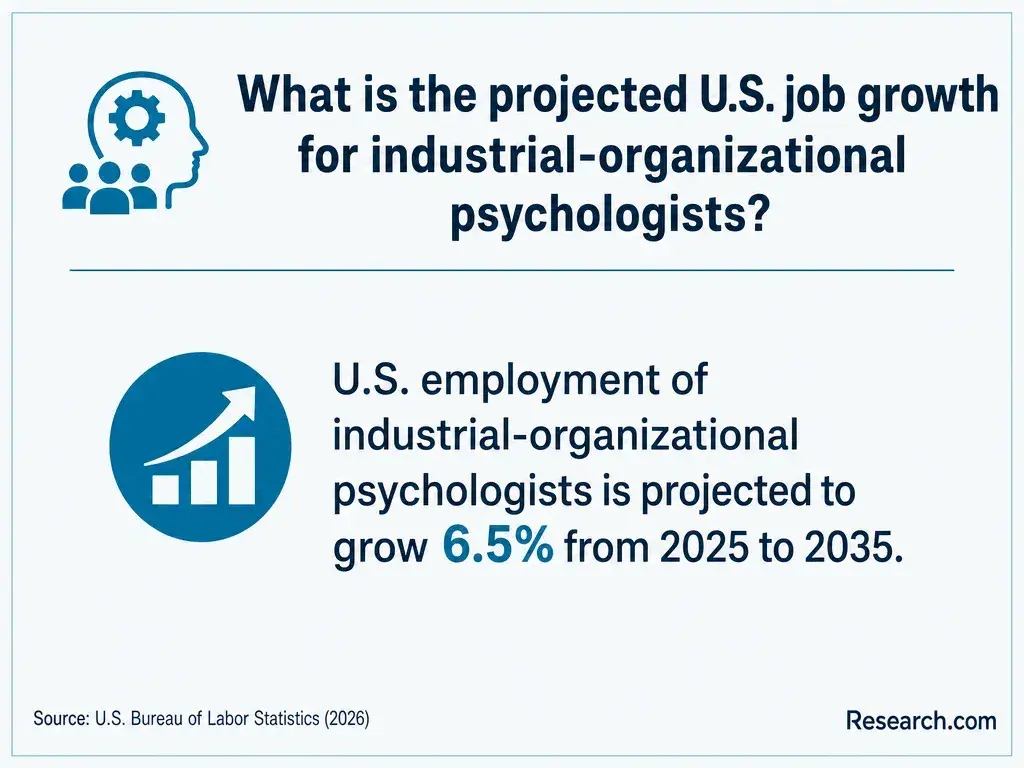
There is no single BLS projection for "nonprofit psychology jobs." National projections are organized by occupation and include workers across employer types. The BLS outlook for social and human service assistants can provide context for support roles, while a program-evaluation position may require a different comparison. Neither projection establishes how many openings a particular nonprofit will have.
Check current postings in the community where you intend to work. Repeated requirements for a driver's license, bilingual communication, database experience, or direct-service experience may be more useful to your next decision than a broad national growth figure. If you are considering a forensic psychology master's in less than two years to pursue justice-related nonprofit work, first identify postings that actually require that degree; the specialization does not by itself create a distinct hiring market.
Does a Psychology Bachelor's Degree Require Licensure or Certification?
No license is required simply to earn a psychology BA or apply for many nonclinical nonprofit positions. The degree does not authorize psychotherapy, diagnosis, independent assessment, or use of a protected professional title. Specific jobs can nevertheless require training, background checks, mandated-reporter preparation, a state-recognized peer credential, or another qualification.
Check the posted duties and the relevant state regulator or credentialing body before enrolling for a regulated goal. Ask employers whether an entry-level position includes supervised training and which tasks remain with licensed staff. Additional academic study alone does not resolve that boundary: when evaluating intensive forensic psychology graduate degree timelines, verify separately whether the intended occupation requires a qualifying professional program and supervised practice.
Other Things You Should Know About Psychology
Often, yes. If a posting accepts social science majors, compare its actual tasks with your coursework and experience rather than assuming psychology has an advantage.
Yes, especially when you can describe specific responsibilities, training, and results without disclosing client information. Volunteering is not a substitute for a credential a position requires.
A research brief, literature review, or sample evaluation plan can demonstrate relevant skills. Obtain permission before sharing agency work, and remove confidential or identifying information.
Usually, first test whether targeted methods training, nonprofit experience, or an employer-recognized credential fills the gap. A second BA makes more sense when its specific coursework or degree requirement is necessary for your goal.
- CUNY Online - The City University of New York https://www.cuny.edu/admissions/online/
- Nonprofit Careers: When Mission Matters | University of New Hampshire https://www.unh.edu/news/nonprofit-careers-when-mission-matters
- Career Paths in Psychology to Help You Get Started | snhu.edu https://www.snhu.edu/about-us/newsroom/social-sciences/psychology-entry-level-jobs-to-start-your-career
- Psychology Bachelor's Degree Online | UAGC https://www.uagc.edu/online-degrees/bachelors/psychology
- 18 Nonprofit Job Titles & 6 Career Paths to Follow | University of San Diego Online Degrees https://onlinedegrees.sandiego.edu/nonprofit-jobs/
- Transferable Skills: Examples for Psychology Graduates | East Carolina University https://onlineprograms.ecu.edu/blog/transferable-skills-examples/
- APA-Accredited Programs https://accreditation.apa.org/accredited-programs