2027 Online BA in Psychology - General Psychology: Choosing a Program When Your Employer Will Not Guarantee a Promotion
Audited and Verified:
Our Editorial and Data Verification Process
Research.com uses government datasets, official education statistics and primary institutional information to support its career and degree guides. Our review process checks factual accuracy, occupational definitions, source dates and the requirements associated with the credentials discussed.
How This Article Was Fact-Checked
Our editorial team verifies salary estimates, employment projections, education requirements and program information against original data providers and official organizations. Salary figures are checked against the relevant occupational definitions and reporting periods. Information about licensure, accreditation and required in-person training is reviewed separately.
Fact-checked and verified on:

Co-Founder and Chief Data Scientist
Your employer may support further education without promising a promotion afterward. That distinction matters before you commit to an online BA in general psychology: the degree could strengthen your skills or meet a hiring requirement, but it may not change your position or pay. This guide is for working adults deciding whether to enroll, finish an existing bachelor's degree, or pursue a more direct qualification. It explains how to test the degree against your employer's actual criteria, compare program costs and demands, and make a plan that still has value if you stay in the same job.
Key Things You Should Know
- No promotion guarantee means the degree needs a second payoff. Look for a documented job requirement, portable skills, or access to roles beyond your current employer - not a verbal expectation of advancement.
- Compare remaining cost, not advertised tuition alone. Your accepted credits, required courses, fees, employer-aid conditions, and time away from work determine the financial risk.
- A general psychology BA is broad preparation, not a clinical credential. It can support nonclinical work, but therapy, diagnosis, and licensed psychologist roles require other qualifications.
What Is an Online Bachelor's Degree in General Psychology?
An online BA in general psychology is an undergraduate degree centered on the scientific study of behavior and mental processes. "General" usually means breadth across psychology rather than a formal specialization in an area such as addiction or organizational psychology.
A BA may also leave room for electives outside the major, but requirements vary by school; a BS is not automatically more valuable to an employer.
For a working adult, the useful question is what the degree adds to existing experience. Someone already coordinating services might use research methods to evaluate a program; someone supervising staff might apply evidence about learning and motivation.
Neither application makes promotion automatic. When comparing psychology major options at online colleges, check the actual course schedule, transfer evaluation, and opportunities to produce work you can discuss with employers.
Is an Online Psychology Bachelor's Degree Accredited?
Accreditation attaches to a recognized institution or, where applicable, a particular professional program - not to online delivery by itself. Verify the college's current institutional accreditation with its accreditor and confirm that it covers the institution awarding the degree. Then ask whether the online psychology major has the same stated degree requirements and academic oversight as its campus counterpart, if one exists.
Do not reject a general psychology BA because it lacks American Psychological Association program accreditation: APA accreditation is not the standard for broad undergraduate psychology majors. Conversely, institutional accreditation does not establish eligibility for a counseling license.
If counseling is your intended destination, examine the specific graduate program and state rules; listings of short-duration clinical counseling graduate program options are starting points for that separate check, not evidence that the BA qualifies you to practice.
Can a Psychology Bachelor's Degree Lead to a Promotion?
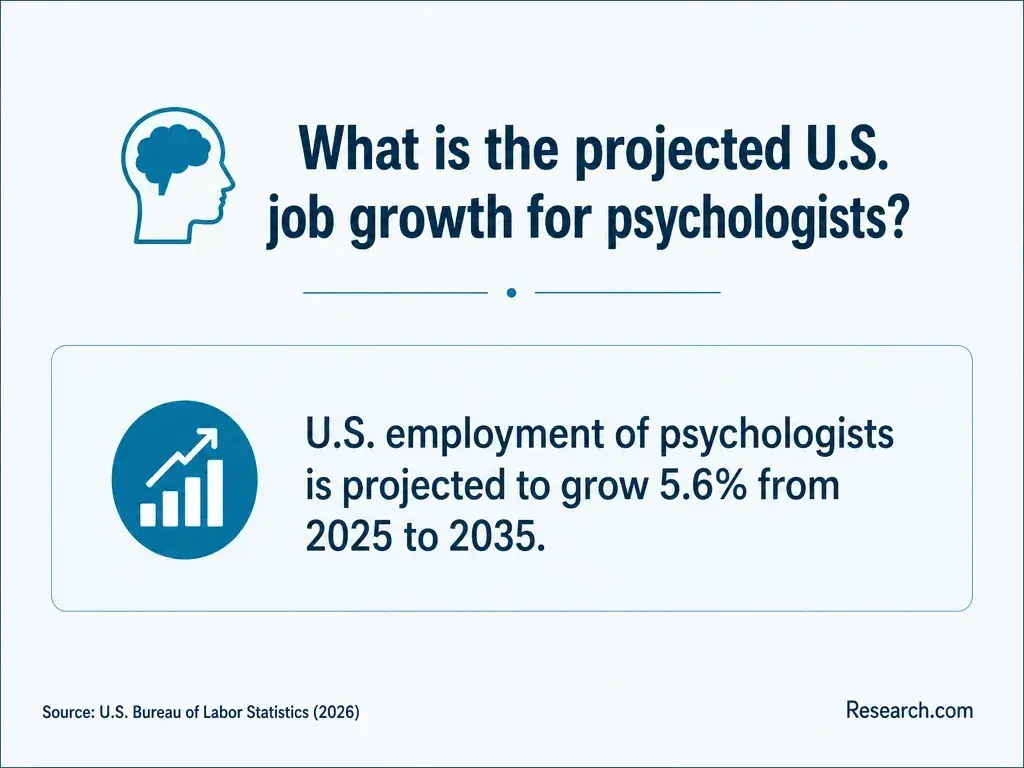
Yes, but only if the degree helps you meet a real advancement criterion and you can compete for an available position. A manager's encouragement is not the same as an approved opening, a changed job classification, or a pay commitment.
Ask human resources for the written requirements of the role you want, then compare them with your current qualifications. In public agencies and other structured workplaces, classification and hiring rules may matter more than a supervisor's preference.
The distinction between eligibility and selection is central to this decision. The following comparison shows what each employer response establishes - and what remains uncertain.
| Employer response | What it establishes | Remaining uncertainty |
| A bachelor's degree is required for the target job | Finishing a degree may remove an eligibility barrier | Whether psychology is accepted and whether you will be selected |
| A degree is preferred | It may strengthen an application | How much experience, performance, or competition matters |
| Education is encouraged, with no identified opening | The employer values development | Whether any promotion or pay change will follow |
If any bachelor's degree satisfies the requirement, compare the fastest credible route to completion rather than assuming psychology is essential. If the target job calls for a specific credential, software skill, supervisory experience, or graduate education, a general BA may be an indirect and expensive route.
Compare that possibility with graduate psychology tuition and program value only if you already hold a bachelor's degree and the target role genuinely benefits from graduate study.
Before enrolling, request a written description of the target role, its pay band or classification, required qualifications, and how vacancies are filled. Ask your manager which responsibilities you could take on now to demonstrate readiness. If the answer remains vague, choose a program only if its cost is acceptable without a promotion and its skills remain useful outside this employer.
Programs commonly cover psychological research methods and statistics alongside subjects such as development, social behavior, cognition, biological foundations, and individual differences. General education and electives may account for a substantial part of the degree. Requirements and course availability differ, so inspect the catalog for your intended entry term rather than relying on a sample course list.
For an employer-facing goal, research design, statistics, and clear writing can be especially useful: they help you distinguish a plausible explanation from evidence that an initiative worked. An elective on workplace behavior or substance use may add relevant knowledge, but it does not create a formal specialization unless the school awards one.
If your target job specifically involves substance-use services, compare general psychology coursework with undergraduate substance use counseling costs and outcomes and check your state's rules for the duties you hope to perform.
Ask whether the program offers a capstone, research collaboration, or an approved nonclinical workplace project. Such work may give you concrete evidence of analytical or communication skills, but participation, supervision, and permission to use employer information must be confirmed in advance.
The answer depends primarily on credits that apply to requirements, the courses still needed, and how often those courses run. Admission with transfer credit does not mean every credit satisfies the psychology major. Statistics or research methods may have prerequisites, while a capstone may be available only after other courses are complete.
Request a program-specific degree audit and a term-by-term completion estimate for a schedule you can maintain while working. Check whether classes are asynchronous, whether live meetings occur, and whether group work, exams, internships, or campus visits create fixed obligations. A faster advertised format is not faster for you if a required course is unavailable when you need it.
If you already have a bachelor's degree, earning another one may be unnecessary. Depending on the job requirement, targeted courses or accelerated psychology master's study for working adults may deserve comparison - but only after confirming that the alternative meets your objective and fits your schedule.
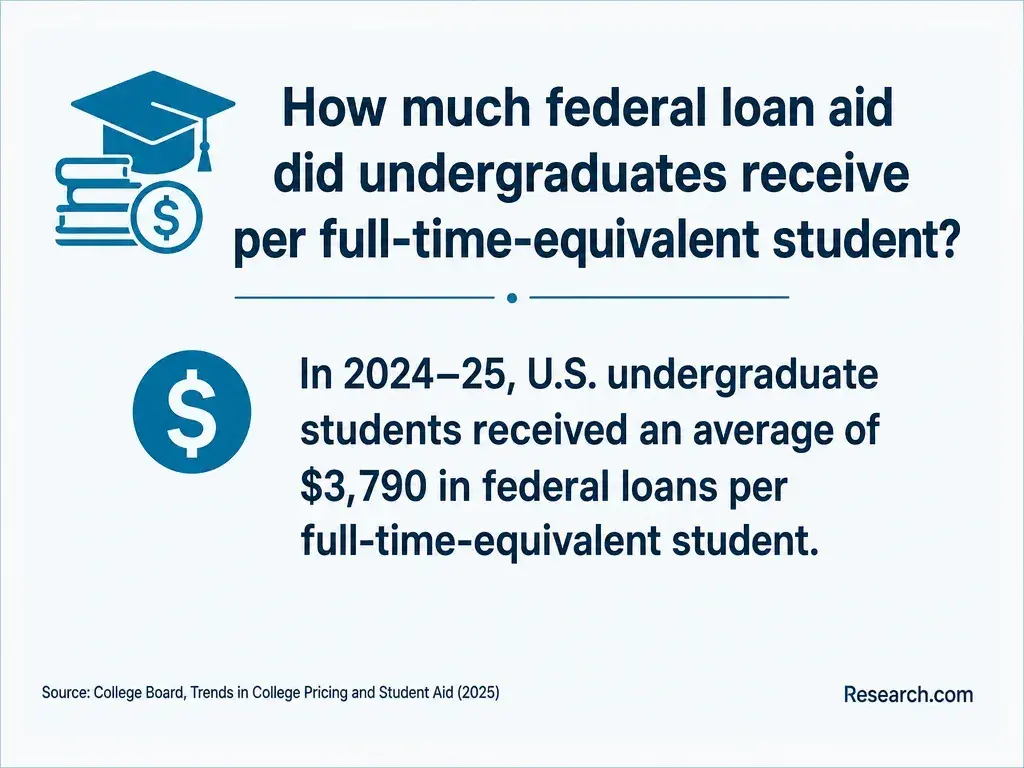
There is no responsible single price for an unspecified program. The relevant figure is your projected remaining cost to graduate: required credits at the tuition rate that applies to you, plus mandatory fees, materials, any travel or placement costs, and the effect of taking fewer work hours. A lower per-credit price can still produce a higher total if fewer of your previous courses satisfy degree requirements.
Compare schools using written degree audits and itemized charges. Subtract employer assistance only after checking eligibility, grade requirements, annual limits, payment timing, and any repayment obligation if you leave. Also confirm financial-aid eligibility and how your intended enrollment pace affects it. These details matter more when the promotion - and therefore any hoped-for return - is uncertain.
If your goal ultimately requires a counseling qualification, account for that later education rather than pricing the BA as the entire pathway. Resources on financial planning for accredited counseling degrees can help frame the separate graduate-cost comparison; the applicable accreditation and licensure requirements still need program- and state-specific verification.
Requirements vary by institution and by whether you enter as a first-year or transfer student. Schools may request prior school transcripts and evidence that you meet their general admission standards. Entry to the institution, entry to the psychology major, and approval of transfer courses can be separate decisions.
Returning students should submit records from every prior college and ask for an official evaluation showing where each accepted course applies: general education, psychology requirements, electives, or no degree requirement.
When applying associate-level credits to psychology study, pay particular attention to statistics, research-methods equivalencies, upper-level requirements, and credits that must be completed at the new institution. Obtain the school's degree audit before treating a projected finish date or savings estimate as firm.
A general psychology BA can support applications for nonclinical roles such as research assistant, service coordinator, human-services staff member, or training and program-support employee. Whether you qualify depends on the job description, relevant experience, technical skills, and any employer or state requirements - not the major alone. Your existing workplace experience may be more persuasive than the degree for a supervisory opening.
Match your target job's tasks to evidence you can build: careful documentation for coordination roles, ethical data handling for research support, or evaluation and communication for program work. An employer-approved project can help, but access to client or employee data requires appropriate permission and confidentiality safeguards.
If your intended job is providing counseling rather than supporting services, the route is different. Compare shorter graduate counseling programs by cost and duration only after checking whether their training meets the requirements of the state where you intend to practice.
A psychology bachelor's degree has no single associated salary. Pay follows the occupation, location, employer, experience, and job level. An occupation-wide wage reported by the U.S. Bureau of Labor Statistics is not a forecast of what psychology graduates - or you after a promotion - will earn. For an internal move, your employer's posted pay band and classification rules are more directly relevant.
Build a conservative comparison around your current compensation and the posted range for roles you could credibly pursue, both inside and outside your organization. Do not count a raise that has not been offered.
If considering a specialized graduate route, such as the roles discussed in forensic psychology master's career progression options, distinguish attainable nonclinical jobs from positions that require licensure, other credentials, or extensive experience. A higher occupational wage does not by itself justify the added education cost.
Do You Need Graduate School or Licensure After a Psychology Bachelor's?
If you want a nonclinical support, research, or organizational role, the immediate gap may be experience, a technical skill, or an employer-required bachelor's degree rather than graduate school.
If you want to diagnose conditions, provide psychotherapy, conduct independent clinical assessments, or use a protected professional title, a general psychology BA is not sufficient. The required degree, supervised experience, examinations, and license depend on the profession and state.
Decide on the occupation before choosing the next credential. A general psychology master's degree is not interchangeable with a licensure-oriented counseling program, and the shortest advertised schedule may exclude essential placement or supervision time.
When reviewing accelerated clinical counseling program formats, verify the applicable program recognition, in-person obligations, and state educational requirements directly with the program and licensing board.
For a promotion with no guarantee, the soundest enrollment decision is one you can defend without assuming a new title: a verified qualification gap, an affordable completion plan, and skills or credentials that remain valuable if you change employers.
Other Things You Should Know About Psychology
Possibly, if the instructor approves the scope and your employer authorizes the work and data use. Remove confidential information from anything submitted or shared, and check whether research review or participant permission is needed.
That is your choice unless an education-benefit policy requires disclosure. If you do, describe the work skills you are developing and ask about opportunities to demonstrate them; avoid implying that enrollment creates a promotion agreement.
Use published job postings, classification descriptions, and HR policies as your evidence. Treat an undocumented prediction about future advancement as uncertain when deciding how much to spend.
Usually you can change jobs, but your benefit agreement may require repayment under specified conditions. Read the written policy and ask the benefits administrator how leaving affects approved and pending payments.
- Nondegree Work Credentials and Work Experience Programs | ed.gov https://nces.ed.gov/programs/coe/indicator/sae/nondegree-work-credentials
- Cost of Attendance (Budget) | 2025-2026 Federal Student Aid Handbook https://fsapartners.ed.gov/knowledge-center/fsa-handbook/2025-2026/vol3/ch2-cost-attendance-budget
- Frequently Asked Questions (FAQs) - Transfer Credit Ohio https://transfercredit.ohio.gov/help-center/faqs/faqs
- Frequently asked questions about educational assistance programs | Internal Revenue Service https://www.irs.gov/newsroom/frequently-asked-questions-about-educational-assistance-programs
- Accreditation in the U.S. | ed.gov http://www.ed.gov/laws-and-policy/higher-education-laws-and-policy/college-accreditation/accreditation-in-the-us
- Psychology Curriculum | randolphcollege.edu https://www.randolphcollege.edu/psychology/curriculum/
- Psychology careers guide | apa.org https://www.apa.org/education-career/guide/careers
- General Psychology | Online Bachelor's Degree | Capella University https://www.capella.edu/online-psychology-degrees/bs-psychology-program/bachelors-general-psychology/
- Online Bachelor's in Psychology | University of Kansas https://online.ku.edu/undergraduate-programs/online-bachelors-psychology
- 4 Types of Psychology Degrees: Picking the Right Program | Bouvé College of Health Sciences https://bouve.northeastern.edu/news/4-types-of-psychology-degrees-picking-the-right-program/