2027 Choosing an Online BA in Psychology - General Psychology Around One Course at a Time Until You Build Confidence
Audited and Verified:
Our Editorial and Data Verification Process
Research.com uses government datasets, official education statistics and primary institutional information to support its career and degree guides. Our review process checks factual accuracy, occupational definitions, source dates and the requirements associated with the credentials discussed.
How This Article Was Fact-Checked
Our editorial team verifies salary estimates, employment projections, education requirements and program information against original data providers and official organizations. Salary figures are checked against the relevant occupational definitions and reporting periods. Information about licensure, accreditation and required in-person training is reviewed separately.
Fact-checked and verified on:

Co-Founder and Chief Data Scientist
Taking one psychology course at a time can make a bachelor's degree feel manageable, especially if you are returning to school while working or caring for family. But a school's claim of "flexibility" does not tell you whether courses run when you need them, how slowly you may enroll, or what the pace will cost.
This guide shows you how to test those details while comparing online general psychology BA programs. You will leave with a way to choose a manageable starting schedule without losing sight of graduation and career goals.
Key Things You Should Know
- Choose a program that permits one course per session without delaying required psychology courses or jeopardizing financial aid eligibility.
- Ask for a degree audit and a term-by-term course schedule: accepted transfer credits, major requirements, and course availability determine your actual finish date.
- An accredited general psychology BA can build research and communication skills, but it does not by itself qualify you to diagnose conditions, provide therapy, or practice as a psychologist.
What Is an Online BA in General Psychology?
An online BA in general psychology is a bachelor's degree covering psychological science across several areas rather than training for one clinical occupation. Depending on the school, the BA may include more room for humanities, social sciences, or electives than its BS counterpart. The degree label alone does not tell you how much statistics, laboratory work, or research experience the curriculum includes.
"One course at a time" can mean several things: taking one class during a full-length term, taking one class in each shorter session, or following a prescribed sequence in which classes never overlap. These arrangements have different weekly workloads and graduation timelines. Ask which arrangement the school actually offers and whether you can change pace after you enroll.
A general major is useful if you want to explore several areas before selecting electives. If you already know that addiction services is your focus, compare the required courses and applied opportunities with online colleges for addiction-focused psychology study; a general BA with one relevant elective is not necessarily the same preparation as a defined focus.
Is an Online Psychology Bachelor's Degree Accredited?
Accreditation usually applies to the institution offering the online BA. Before applying, check the school's current status with its recognized institutional accreditor and confirm that the online psychology degree is awarded by that institution. Also check whether its accreditation and degree meet the requirements of any employer or graduate program you have in mind.
Do not mistake institutional accreditation for a promise of clinical eligibility. The American Psychological Association does not accredit general psychology bachelor's programs. Professional programs that prepare students for regulated roles may have different accreditation and state-approval considerations. If counseling is your eventual goal, affordability checks for online counseling study should be paired with a separate check of whether a prospective graduate program meets the rules where you intend to practice.
What Can You Do With a Bachelor's in General Psychology?
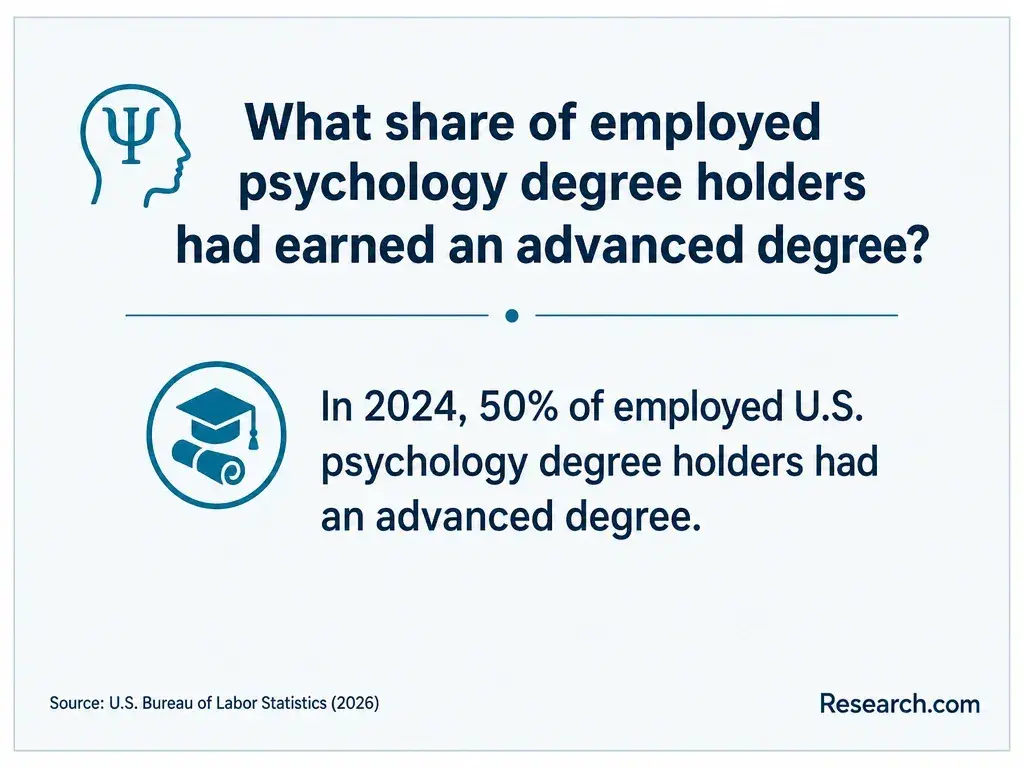
A general psychology BA can support applications for nonclinical roles in human services, community programs, research support, recruiting, and education-related services. Employers may also require relevant experience, software skills, background checks, or a particular credential. A graduate starting in service coordination, for example, might help people navigate resources and document referrals - not provide psychotherapy.
If you are already employed, identify the duties you want to add before choosing electives. A community-program worker may benefit more from research methods and program evaluation; someone interested in personnel work may need data and workplace experience. For recovery-support interests, explore addiction recovery workforce opportunities alongside your state's rules for the specific job title. A BA alone does not establish addiction-counselor eligibility.
If your target job requires only a narrow skill, such as analyzing surveys, a course and supervised project may be more direct than completing another bachelor's degree. If it requires a bachelor's credential, request a written assessment of how your existing education would apply.
Expect a general psychology curriculum to combine introductory study with courses on development, social behavior, cognition, biological influences, and research. Statistics and research methods deserve special attention: they teach you to assess evidence rather than rely on appealing claims about behavior. Requirements and electives differ, so compare actual catalogs rather than assuming every BA has the same course list.
For a one-course-at-a-time student, sequence matters more than the number of interesting electives. Ask whether statistics must precede research methods, whether either is offered every session, and when a capstone must be taken. If you hope to pursue specialized graduate study - for example, forensic psychology master's intensive study options - check prospective programs' prerequisites before using your elective space. An undergraduate forensic elective is academic exposure, not a professional qualification.
Your completion time depends on the credits the school applies to your degree, the number of courses you take each year, and whether required courses are available in the right order. Taking one course in each short session may move you forward faster than taking one course in each full-length term, even though both schedules are advertised as "one course at a time." Summer enrollment, breaks, and a course that runs only occasionally can change the result.
Request a personalized, term-by-term graduation plan showing every remaining general education, major, elective, and residency requirement. Have an adviser mark any course that is offered infrequently. Compare the assumptions behind advertised accelerated schedules - including those for shorter forensic psychology BA and BS timelines - with the pace you can actually sustain. A schedule built around overlapping classes may not suit your goal of building confidence gradually.
There is no reliable single price for an online psychology BA. Schools charge differently, and the cheapest advertised tuition may not produce the lowest cost for you if fewer transfer courses apply or a required class delays graduation. Ask for an estimate based on your degree audit and intended enrollment pace, not a sample full-time schedule.
The estimate should separate the following costs so you can compare schools on the same basis:
- Tuition for the credits you still need, including any residency requirement.
- Mandatory technology, course, graduation, and other fees.
- Books or materials, equipment, and any required travel or placement expenses.
Check financial aid eligibility before committing to one course per session: aid rules can depend on your credit load across a school's defined enrollment period, satisfactory academic progress, and other conditions. Employer tuition assistance may also have minimum-grade or repayment terms. If graduate study is likely, preserve room in your education budget; psychology graduate study on a budget is a separate cost decision, not a reason to assume the BA will pay for itself.
Online BA applicants commonly need evidence of prior schooling, but admission rules vary by institution and by whether you apply as a first-year or transfer student. Ask whether entry to the university also grants entry to the psychology major, and whether any courses must be completed before upper-level psychology study.
Returning students should send transcripts for a formal evaluation and request a degree audit. Accepted credit is not the same as a requirement fulfilled: a statistics course might transfer as an elective without satisfying the psychology major. Ask the registrar or transfer office about equivalencies, then ask the psychology department to approve any major-course substitution in writing. When comparing psychology transfer credit limits, include residency and upper-level requirements; a generous acceptance policy alone cannot establish your finish date.
Online study is better if it gives you the access and schedule you need without removing the academic support or experience required for your goals. Campus study may make in-person research teams and local networking easier. Online study can reduce commuting, but an asynchronous lecture does not guarantee flexible deadlines, independent group work, or remote internships.
Before enrolling, ask for a sample course calendar and clarify live meetings, exam windows, group projects, faculty access, research opportunities, and any campus visits. If you are testing your capacity, one demanding methods course may be a better trial than an easy introductory elective. The same caution applies when comparing the fastest psychology master's formats: short or online classes can concentrate, rather than remove, weekly work.
A general psychology bachelor's degree is not, by itself, a license to practice psychology, diagnose conditions, administer restricted clinical assessments, or provide psychotherapy. It can provide academic preparation for further study, but licensed roles have additional education, supervised-practice, examination, and jurisdiction-specific requirements.
If your aim is counseling, investigate programs designed for that profession and check the licensing board in the state where you plan to work. While comparing clinical counseling master's completion times, verify eligibility and placement obligations before prioritizing speed. You can begin a BA at a manageable pace while planning for a later credential, but do not assume that every psychology elective will satisfy that credential's prerequisites.
How Much Can You Earn With a General Psychology Degree?
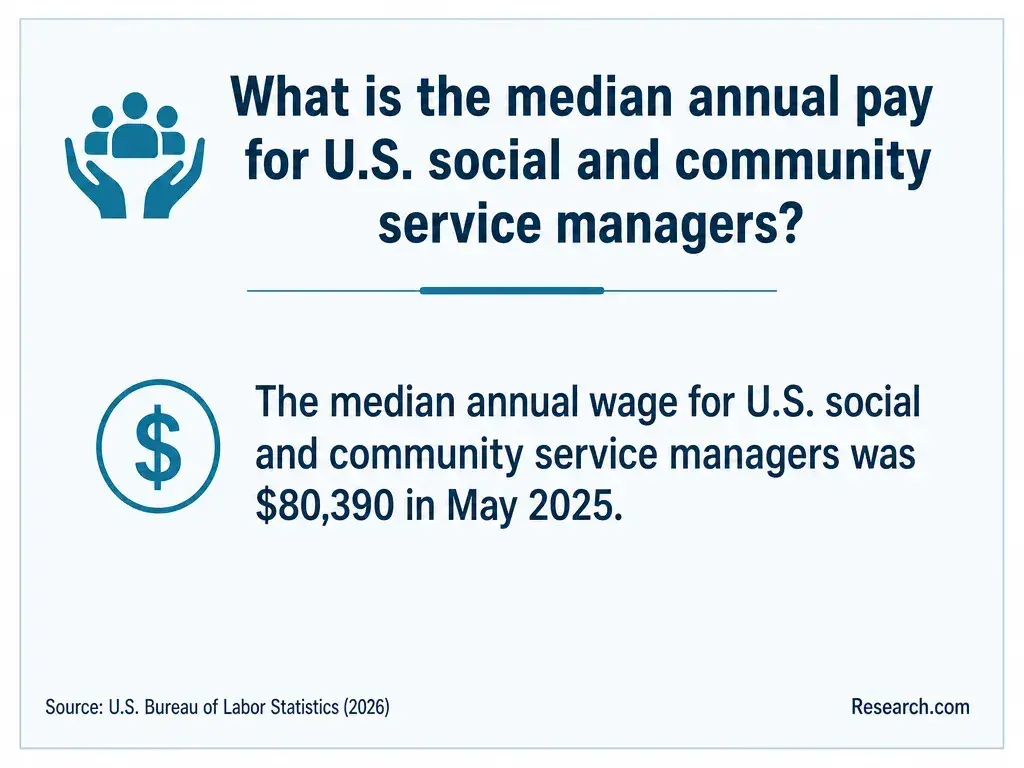
A general psychology degree has no single salary attached to it. Pay depends on the occupation, location, employer, experience, and credentials required for the actual job. For a useful comparison, identify a target position and review its current U.S. Bureau of Labor Statistics occupational profile alongside local job postings. An occupation-wide median is not a prediction of what a new BA graduate will earn.
Compare the likely pay for jobs you could realistically pursue after graduation with your remaining education cost and the income you may forgo while studying. If your goal instead requires a licensed counseling degree, mental health counseling master's investment and pay outlook concerns a different qualification and should not be treated as a BA outcome. The strongest case for starting one course at a time is a plan you can sustain while building demonstrable skills - not an assumed salary increase.
Other Things You Should Know About Psychology
Often, but ask whether the school permits nondegree enrollment and whether the course would later count toward the BA. Get the answer in writing before paying.
Usually not automatically, but read the school's leave, readmission, catalog, and financial-aid policies. A long break could change which degree requirements apply when you return.
Request a sample syllabus showing weekly reading, assignments, and deadlines. Compare that workload with your busiest work or caregiving week, not your easiest one.
Opportunities vary. Ask whether remote students can join research teams, what the selection process is, and whether meetings or project work require fixed hours.
- Cost of Attendance (Budget) | 2025-2026 Federal Student Aid Handbook https://fsapartners.ed.gov/knowledge-center/fsa-handbook/2025-2026/vol3/ch2-cost-attendance-budget
- Answers to Questions Transfer Students Ask | pa.gov https://collegetransfer.pa.gov/Student/Common-Questions
- Types of Financial Aid: Grants, Work-Study, and Loans | studentaid.gov https://studentaid.gov/understand-aid/types
- What's the Difference Between Asynchronous and Synchronous Learning? | Ohio State Online https://online.osu.edu/content-hub/blogs/whats-the-difference-between-asynchronous-and-synchronous-learning/
- How Do Transfer Credits Work When You Go Back to School? | Whitworth Online https://online.whitworth.edu/news-articles/how-do-transfer-credits-work-when-you-go-back-to-school/
- Undergraduate and Graduate Tuition and Fees | Purdue Global https://www.purdueglobal.edu/tuition-financial-aid/undergraduate-graduate-tuition-and-fees/
- Cost of Attendance - Financial Aid and Scholarships | The University of Utah https://financialaid.utah.edu/tuition-and-fees/cost-of-attendance.php
- How Does Online Learning Work at CSU? | colostate.edu https://online.colostate.edu/faqs/online-learning.dot
- Asynchronous Online Courses - Academic Affairs | Coles College of Business https://campus.kennesaw.edu/faculty-staff/academic-affairs/curriculum-instruction-assessment/digital-learning-innovations/faculty-learning-scientists/course-facilitation/asynchronous-online-courses.php
- Transfer Credits - Undergraduate - Policies - Campus Offices https://campus.collegeforcreativestudies.edu/policy/transfer-credits-undergraduate/