2027 Online MS in Psychology - Forensic Psychology for Work in Family Court Support Organizations: Compare Degree Fit and Hiring Requirements
Audited and Verified:
Our Editorial and Data Verification Process
Research.com uses government datasets, official education statistics and primary institutional information to support its career and degree guides. Our review process checks factual accuracy, occupational definitions, source dates and the requirements associated with the credentials discussed.
How This Article Was Fact-Checked
Our editorial team verifies salary estimates, employment projections, education requirements and program information against original data providers and official organizations. Salary figures are checked against the relevant occupational definitions and reporting periods. Information about licensure, accreditation and required in-person training is reviewed separately.
Fact-checked and verified on:

Co-Founder and Chief Data Scientist
If you want to support families involved with the court, the right qualification depends on the work you hope to do. Coordinating referrals, assisting advocates, providing therapy, and conducting custody evaluations are different jobs with different requirements.
This guide is for prospective students and justice- or community-service professionals considering an online MS in psychology with a forensic specialization. It explains where that degree can help, where it cannot substitute for a professional credential, and how to compare programs against actual family court support job postings before committing time and money.
Key Things You Should Know
- A forensic psychology MS can strengthen research, documentation, and service-coordination skills, but it does not by itself qualify you to provide therapy or conduct custody evaluations.
- Compare the degree with local job postings first: some family court support positions accept a bachelor's degree plus relevant experience, while regulated roles require a specific professional pathway.
- For an online program, verify institutional accreditation, total cost, scheduling, and access to approved applied experience near you - not just the forensic specialization's name.
What is an online MS in Psychology with a forensic psychology specialization?
It is a graduate psychology degree that applies psychological research and theory to legal settings. Depending on the school, forensic study may be an officially designated concentration or a group of electives within a general MS. Online describes how coursework is delivered; it does not establish that every activity, meeting, or placement can be completed remotely.
For family court support work, the useful academic focus is typically child and family development, trauma-informed service systems, research methods, ethics, and communication across agencies. Criminal profiling or corrections coursework may be less relevant. Compare the actual degree title and required courses - not just the concentration label - when reviewing forensic psychology academic pathways and tuition.
Can a forensic psychology master's degree prepare you for family court support work?
Yes, for some nonclinical work - if the program develops skills the employer needs and you can demonstrate relevant experience. A graduate might help a family-service organization review research, improve referral procedures, document services, or evaluate whether clients can access support. Knowledge of child development and the effects of family conflict can inform respectful communication, but it does not authorize an employee to determine a child's best interests or interpret a clinical assessment.
The strongest preparation connects coursework to supervised, nonclinical tasks. Ask whether a program can approve a placement or capstone with a court-connected nonprofit, victim-service agency, or family resource organization. The site must agree to supervision and data access; enrollment alone does not grant access to confidential case files. Work involving minors also calls for careful attention to safeguarding, consent, confidentiality, and applicable reporting duties.
If your intended work is primarily substance-use counseling rather than court-support coordination, compare the state's credential requirements and addiction counseling degree comparison resource before choosing a forensic psychology MS. Overlapping subject matter does not make the degrees interchangeable.
What jobs can you get in family court support organizations with this degree?
Job titles vary by employer. The comparison below focuses on duties rather than assuming that an MS is required - or sufficient - for a particular title.
| Role or setting | Potential work | What to check in postings |
| Family-service or case coordinator | Arrange referrals, track service participation, communicate with partner agencies | Required degree, casework experience, background checks, and boundaries on client advice |
| Victim or family advocate | Explain available resources, accompany clients through processes, coordinate safety-related referrals | Advocacy training, language skills, on-call expectations, and employer protocols |
| Program or research assistant | Maintain approved records, summarize evidence, support service evaluation | Data skills, privacy training, and permission to use restricted information |
| Licensed clinician or custody evaluator | Provide services or assessments within a regulated professional scope | Required professional degree, license, supervised experience, and court-specific qualifications |
A bachelor's degree and strong advocacy or casework experience may be a more direct route into an entry-level support position than a master's degree. If you are still choosing undergraduate study, fast-track bachelor's study in forensic psychology is one option to compare with human services or social work - but confirm which qualification your target employers actually request.
There is no single "family court psychology" credential covering every role. Employers set qualifications for nonclinical coordination and advocacy jobs, subject to applicable law and contracts. Licensed mental-health professionals must meet their state board's requirements for their profession. Independent psychological assessment and use of the protected psychologist title generally require psychologist licensure; custody-evaluation appointments may involve additional court rules, training, or experience.
Before selecting a degree, compare several local postings for the exact tasks you want. Separate required credentials from preferred education, then check the relevant state board and court rules for regulated work. A forensic MS is not a substitute for a qualifying counseling, social work, marriage and family therapy, or psychology professional pathway.
This distinction also matters when a job involves families affected by substance use. If it calls for a substance-use counselor credential, review the applicable state rules and comparing counseling master's tuition with completion time as part of evaluating a qualifying professional route; do not assume forensic psychology coursework meets its educational requirements.
First, confirm that the institution is accredited by an accreditor recognized by the U.S. Department of Education. Check the school's official listing and whether the accreditation applies to the institution awarding the degree. Then verify the program's exact name, level, and location or online status with the school.
Do not treat institutional accreditation as evidence that a nonclinical MS qualifies for licensure. APA accreditation applies to covered professional psychology programs and training, not generally to a forensic psychology MS. If you are comparing a separate counseling or social work route, investigate the recognition relevant to that profession and the state where you expect to work. The same distinction applies when reviewing addiction psychology degree options for undergraduate students: an accredited institution and a degree concentration do not, by themselves, confer a practice credential.
Curricula differ, so compare required courses rather than assuming every program teaches family court practice. Particularly relevant subjects include developmental and social psychology, forensic ethics, research design, statistics, psychological measurement and its limits, trauma-informed systems, and the interaction of families with courts and community services. A methods course can help you assess service evidence; it does not train you to administer restricted tests independently.
Look closely at applied work. A supervised project on referral access or an appropriately authorized review of aggregate service information may be more useful for a support role than an unrelated forensic elective. Ask who approves the project, what information you may use, and whether findings can be shared without exposing clients.
If your goal is entry-level family support rather than graduate research, compare the MS curriculum and cost with targeted undergraduate preparation or training. For example, inexpensive undergraduate substance use counseling degree choices may be worth examining when substance-use services - not forensic research - are central to the jobs you want. Check credential fit separately.
Online study can reduce commuting, but flexibility depends on the timetable. Live seminars, group work, faculty meetings, and locally arranged placements may still conflict with employment or caregiving. Campus programs may make in-person collaboration and local agency contacts easier, but those advantages are not guaranteed.
Request a sample term schedule from each school. Ask whether required sessions are synchronous, whether campus visits occur, who finds and approves placement sites, and what happens if a site cannot accommodate your hours. When comparing the fastest psychology master's formats, test the advertised pace against these obligations: a shorter academic calendar is not necessarily a workable schedule for someone employed in court or nonprofit services.
Schools commonly ask for a completed bachelor's degree, transcripts, and an application explaining academic or career goals. Psychology, statistics, or research-methods prerequisites; recommendations; minimum grades; and tests vary by program. A criminal justice, social work, education, or other background may provide relevant preparation without automatically satisfying every prerequisite.
Ask admissions to identify required courses versus recommended preparation and to review your transcript before you plan a start date. If you lack a bachelor's degree, compare the full route to eligibility - including the time needed to finish undergraduate requirements. Accelerated undergraduate psychology program choices can inform that earlier decision, but only the graduate program can confirm whether specific prior coursework meets its admission rules.
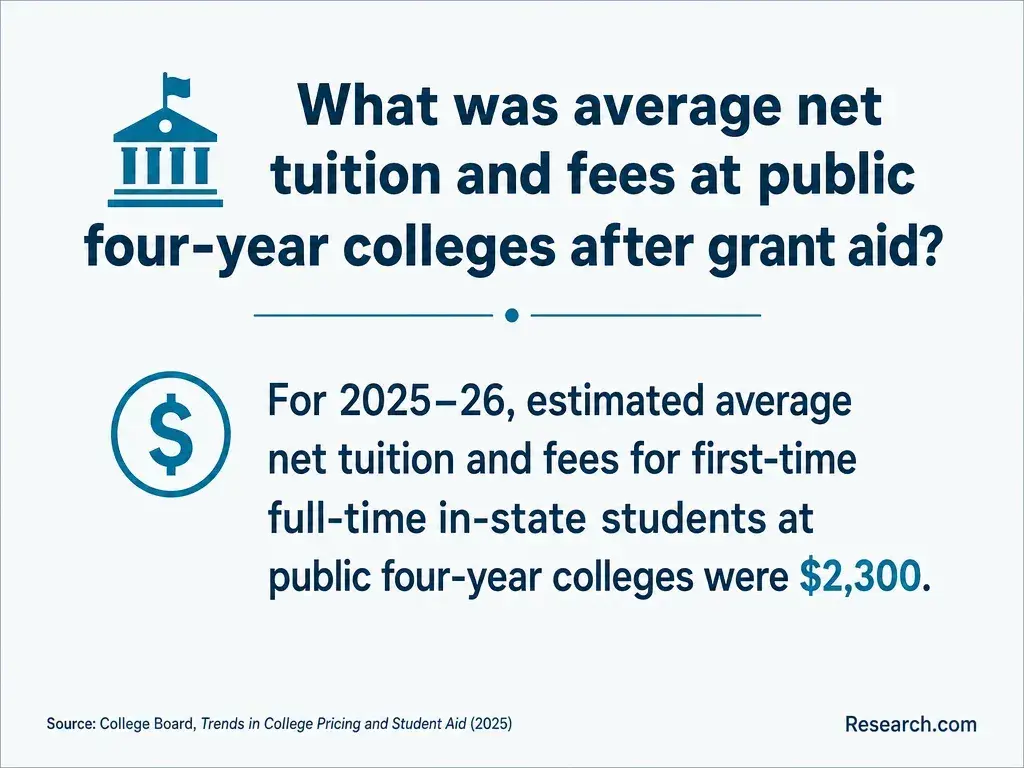
Completion time depends on required credits, course availability, enrollment pace, and any thesis, capstone, or placement. Published tuition alone will not show the full cost. Request a term-by-term plan and an estimate covering mandatory fees, books or software, travel, placement expenses, and any additional terms needed to finish.
Compare that total with the qualifications in your target postings. If a support role accepts your existing degree and experience, a graduate credential may not produce a corresponding hiring advantage. If you need a licensure-qualifying degree instead, compare that distinct route's total cost and available aid; comparing tuition assistance for mental health counseling study can help frame the questions to ask, but verify eligibility and current charges directly with each school.
What salaries and job outlook can forensic psychology graduates expect?
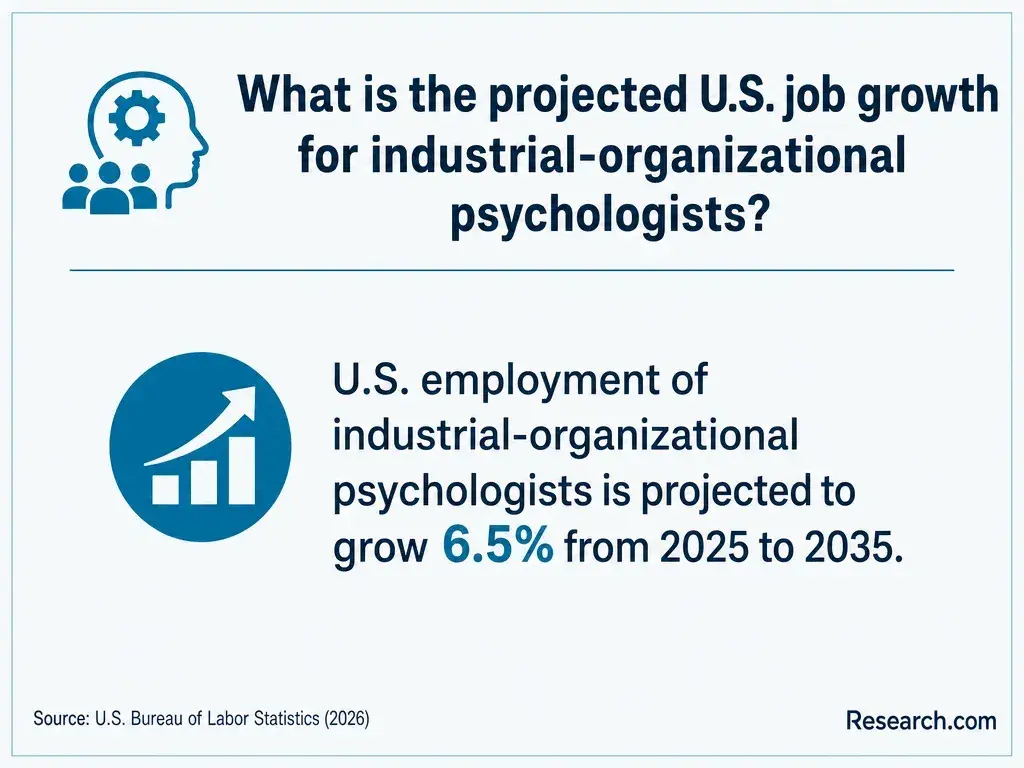
There is no reliable occupation-wide salary or growth figure for "forensic psychology MS graduates working in family court support organizations." Pay depends on the actual job, employer, location, experience, and credentials. For a nonclinical support opening, compare its posted range with U.S. Bureau of Labor Statistics data for the closest matching occupation, such as social and human service assistants - not with psychologist pay. An occupation-wide median is not a predicted starting salary or a return on this degree.
For a useful return-on-investment check, compare local pay ranges for jobs you could pursue now with those requiring the proposed MS. Add the degree's full cost and any reduced earnings while studying, then consider whether supervised experience could close the hiring gap more directly. If your alternative is undergraduate preparation for substance-use support, distinguish aid you do not repay from borrowing; grants versus loans for substance abuse counseling bachelor's students addresses that financial distinction, though aid eligibility must be confirmed for your own program.
Other Things You Should Know About Psychology
Possibly. The program must approve the site, supervision, duties, and learning goals. Your existing job or volunteer hours do not automatically qualify.
Only with appropriate agency permission and required institutional review. Client confidentiality, court restrictions, and data-use rules still apply if names are removed.
No. Community organizations may provide advocacy, referrals, and practical support. Their responsibilities and access to court information differ from those of court employees.
Bring a target job posting and a brief account of your relevant experience. Ask which duties require credentials, which skills new hires lack, and whether the organization offers supervised entry-level opportunities.
- Rule 5.225. Appointment requirements for child custody evaluators | Judicial Branch of California https://courts.ca.gov/cms/rules/index/five/rule5_225
- How Can I, as a Forensic Psychologist, Learn How to Become a Child Custody Evaluator? | Palo Alto University https://paloaltou.edu/resources/business-of-practice-blog/how-can-i-as-a-forensic-psychologist-learn-how-to-become-a-child-custody-evaluator
- M.A. Forensic Psychology | thechicagoschool.edu https://catalog.thechicagoschool.edu/preview_degree_planner.php
- A Career in Forensic and Public Service Psychology | apa.org https://www.apa.org/education-career/guide/subfields/forensic/education-training
- Agency Based Education - Howard School of Social Work https://socialwork.howard.edu/academics/agency-based-education
- MS in Forensic Psychology | Neumann University https://www.neumann.edu/academics/grad/masters-degree-in-forensic-psychology
- How to Become a Victim Advocate in California: Steps and Pay | Touro University Worldwide https://www.tuw.edu/psychology/how-to-become-a-victim-advocate/
- Master's Degree in Criminal Justice or Forensic Psychology? | ASU Online https://asuonline.asu.edu/newsroom/asu-online-news/masters-of-criminal-justice-or-forensic-psychology/
- Choosing a Program - APA Accreditation https://accreditation.apa.org/choosing-a-program
- Post-Master's Forensic Psychology Jobs: Roles & Next Steps | counselingpsychology.org https://www.counselingpsychology.org/articles/forensic-psychology-post-master-s-jobs/