2027 Choosing an Online MS in Psychology - Forensic Psychology Around An Upcoming Overseas Deployment
Audited and Verified:
Our Editorial and Data Verification Process
Research.com uses government datasets, official education statistics and primary institutional information to support its career and degree guides. Our review process checks factual accuracy, occupational definitions, source dates and the requirements associated with the credentials discussed.
How This Article Was Fact-Checked
Our editorial team verifies salary estimates, employment projections, education requirements and program information against original data providers and official organizations. Salary figures are checked against the relevant occupational definitions and reporting periods. Information about licensure, accreditation and required in-person training is reviewed separately.
Fact-checked and verified on:

Co-Founder and Chief Data Scientist
An upcoming overseas deployment changes what "online" needs to mean. A forensic psychology master's program may let you study from abroad, but live classes, restricted course materials, fieldwork, and military leave rules can make enrollment impractical.
This guide is for service members deciding whether to start before deployment, continue while deployed, or wait until returning. It explains how to test a program against your orders and career goal, so you can avoid paying for coursework you cannot complete - or a degree that does not qualify you for the work you want.
Key Things You Should Know
Key Things You Should Know
- Get written confirmation that the program permits enrollment from your deployment location and offers a workable plan for live sessions, deadlines, exams, and interruptions.
- An online MS in forensic psychology generally supports research and nonclinical justice-related work; it does not, by itself, qualify you as a licensed psychologist or forensic evaluator.
- Compare starting now, taking a reduced course load, and deferring against your expected connectivity, total program cost, and the specific job or next degree you want.
What Is an Online MS in Forensic Psychology?
It is a graduate degree studying psychological science in legal and justice contexts. Depending on the program, students may examine eyewitness memory, decision-making, violence research, victimization, corrections, or research methods. "Online" describes course delivery, not necessarily an absence of scheduled meetings, campus visits, or approved field experiences.
For a deploying student, the first distinction is between learning about forensic practice and training to perform it. A nonclinical MS may strengthen your preparation for policy, program support, research, or a later degree. It does not confer investigative authority, permission to conduct psychological evaluations, or a clinical credential.
If your goal is substance-use recovery work rather than justice-focused research or services, compare the MS with undergraduate psychology programs with an addictions focus and the credentials required for your target role. More graduate coursework is not automatically the more direct route.
Can an Online Forensic Psychology Master's Lead to Licensure?
Do not assume it does. Licensure depends on the occupation and jurisdiction, not the forensic label or online format. Becoming a licensed psychologist generally requires qualifying doctoral education and additional supervised experience and examinations under state rules. Counselor and clinical social worker licenses follow different, specified degree pathways.
Before enrolling, name the license and state where you expect to work after service. Ask the relevant licensing board what educational standards apply, then ask the university to identify - course by course - which, if any, its program meets. A school's general statement that graduates work in behavioral health is not an eligibility determination.
If psychotherapy is your objective, compare the forensic MS with a qualifying counseling or social work program. A clinical mental health counseling master's pacing guide can help frame the scheduling trade-off, but confirm accreditation, placements, and your state's licensing rules for any program you consider.
How Does an Online Forensic Psychology Degree Prepare You for Deployment?
The degree does not prepare you operationally for deployment. It may let you continue an educational plan while away, provided the program and your duties are compatible. Treat deployment as a scheduling and access test rather than assuming asynchronous coursework can be completed whenever you are off duty.
Request written answers from the program's military-student contact and academic adviser on these points before accepting an offer:
- Whether students may log in and submit work from the anticipated country and network, including any restrictions on course platforms or research databases.
- Which activities have fixed attendance times, proctored exams, group deadlines, or required travel.
- How deployment orders affect deferral, withdrawal, incompletes, tuition charges, and reentry into courses offered infrequently.
- Whether an internship or capstone can be completed later without delaying other required courses.
Compare those answers with your unit's expectations; no university can guarantee connectivity or protected study time during a mission. If you are still considering the degree level itself, psychology degree planning for prospective online students offers broader options. For this decision, however, the decisive evidence is the specific MS program's written policy for your circumstances.
Curricula vary, but commonly relevant subjects include psychology and law, research design and statistics, ethics, and the study of behavior in corrections or other legal settings. Some programs offer a thesis or applied capstone; others emphasize coursework. A class covering assessment or psychopathology teaches concepts - it does not authorize a student to diagnose or administer restricted tests professionally.
For deployment planning, examine the sequence, not just course titles. A methods course that must precede a capstone, a seminar offered only at fixed times, or a project requiring agency access can determine whether a proposed start date works. Ask for the current catalog and a term-by-term plan covering your likely absence.
An addiction-related elective may be useful if it fits your intended work, but it should not be mistaken for a counseling credential. If that is your main interest, compare the full MS cost and purpose with inexpensive undergraduate substance use counseling degree choices, then check the credential rules where you intend to work.
Expect to document a completed bachelor's degree and submit the materials specified by each school, which may include transcripts, a statement of purpose, recommendations, or evidence of prior statistics and psychology coursework. Requirements for GPA, prerequisites, tests, and work experience differ. Military leadership or justice-related work can support an application, but it does not automatically replace a stated academic prerequisite.
If deployment could interrupt your application, ask admissions when official transcripts and recommendations must arrive, whether a later entry term is available, and when prerequisite coursework must be finished. Applicants who have not completed a bachelor's degree should resolve that first; guidance on psychology major credit portability can inform questions, but only the receiving institution can determine how prior credits apply to its degree.
Completion time depends on required credits, course availability, enrollment pace, and any thesis, capstone, or placement. A school's advertised minimum may assume uninterrupted study and a course load that is unrealistic during deployment.
Ask an adviser for two dated degree plans: one beginning before deployment with a reduced or paused load, and one beginning after return. Identify courses that are prerequisites for later work and the earliest term in which you could resume after a leave. Fast-paced master's study in psychology can provide a comparison point, but speed is an advantage only if the schedule remains workable when orders or connectivity change.
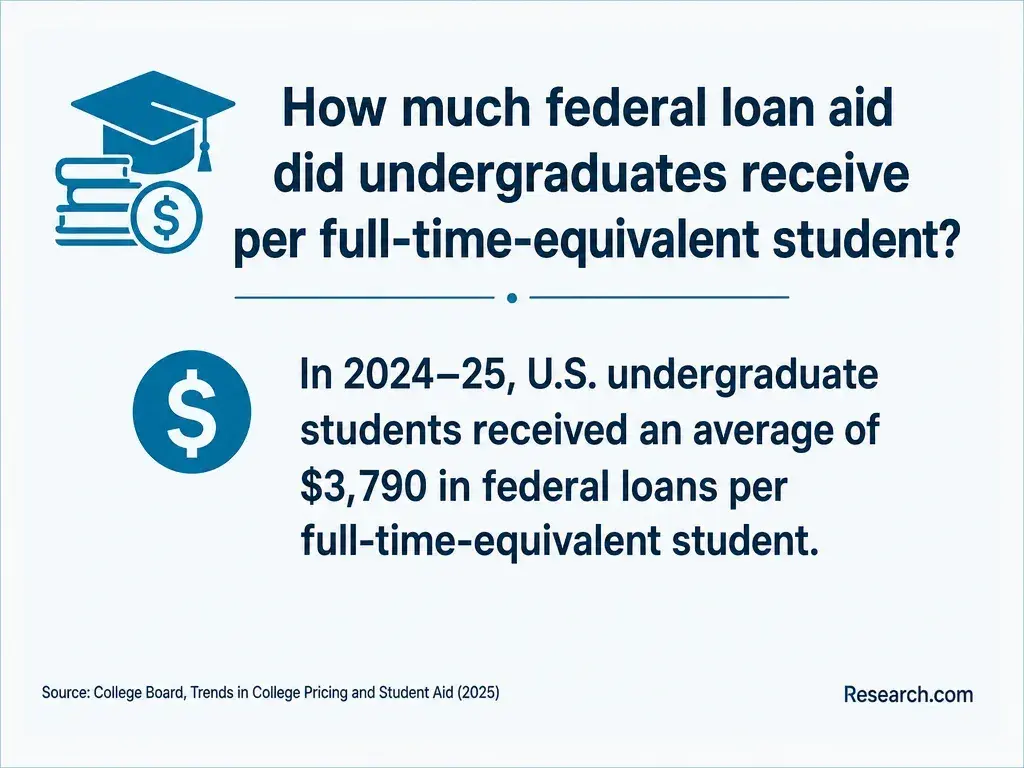
Calculate cost from the program's current per-credit or per-term tuition and required credit load, then add mandatory fees, books, technology, possible travel, and any placement expenses. Request an estimate for both your planned enrollment pace and a deployment-related interruption; withdrawal deadlines and repeated courses can change what you ultimately pay.
Military Tuition Assistance, VA education benefits, scholarships, and employer support have separate eligibility and payment rules. Do not assume you qualify for a benefit or that it covers every fee. Have the school's military-benefits office explain how a reduced load, withdrawal, or change of orders would affect billing and benefits before you register.
If a lower-cost credential could meet your goal, compare it with finding an affordable psychology degree route rather than judging the MS on tuition alone.
Potential nonclinical directions include victim-services coordination, corrections program support, justice-related research assistance, and agency program analysis. Employers may value military experience in documentation, training, security procedures, personnel support, or data work. Each opening still has its own requirements, and the degree alone does not establish eligibility for a particular job.
Read actual job postings for your intended duty station or post-service location. Compare required credentials and experience with the MS curriculum, then seek a supervised project or appropriate work assignment that demonstrates a missing skill.
Victim advocacy and recovery services also have distinct duties; career choices across recovery service settings may help if your interest lies there rather than in forensic research. Licensed assessment, therapy, expert evaluation, and law-enforcement powers require qualifications or authority beyond this degree.
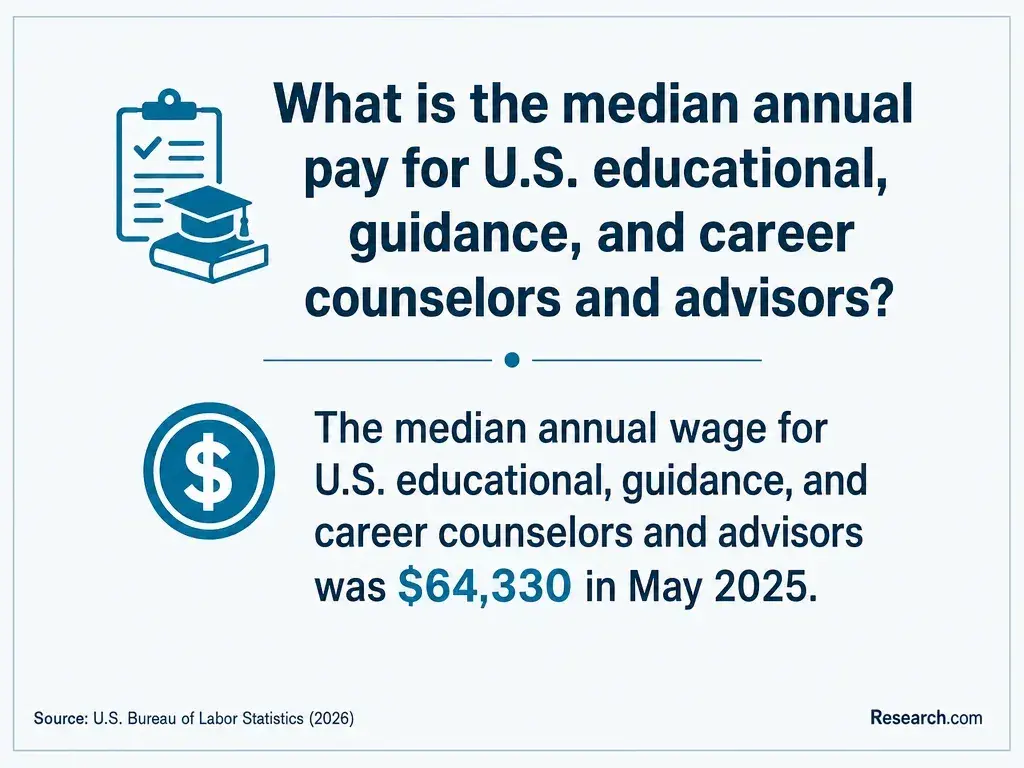
There is no dependable single salary or growth rate for "forensic psychology MS graduates." Pay depends on the occupation, employer, location, experience, and any required credential. For example, a justice-agency support role should not be benchmarked against psychologist wages: psychologist is a separately regulated occupation with different entry requirements.
Use the U.S. Bureau of Labor Statistics Occupational Outlook Handbook for the specific occupation you are targeting, noting the wage reference year, projection period, and typical entry education. Then compare current local postings and public-sector pay grades with the degree's full cost and the experience you already have.
A discussion of forensic psychology master's education and job earning prospects is a starting point for identifying roles, not evidence that an MS qualifies you for every listed position or its reported pay.
How Do You Choose an Accredited Online Forensic Psychology Program?
First, confirm the university's institutional accreditation through its accreditor and the U.S. Department of Education's recognized-accreditor information. Then verify the exact degree title and whether "forensic" is the awarded degree, a concentration, or a set of electives. Do not expect APA accreditation for a general, nonclinical MS; institutional accreditation also does not establish licensure eligibility.
For this deployment-specific choice, compare finalists on documented overseas access, fixed-time obligations, fieldwork location rules, leave and refund policies, course sequencing, total cost, and evidence of outcomes for the jobs you seek. Ask for policies applying to your entry term, not a general assurance that the school is "military friendly."
Forensic psychology study choices and employment preparation can help build a shortlist; your final decision should rest on written answers from each program.
Bottom line: Start before deployment only if a realistic course plan survives foreseeable disruptions. Otherwise, deferring admission - or pursuing a more directly relevant credential after return - may protect both your progress and your education budget.
Other Things You Should Know About Psychology
Some readings may be downloadable, but quizzes, library resources, discussion boards, and submission systems may require access. Ask instructors what can be used offline; do not rely on unofficial copies of restricted materials.
Send sensitive documents only through the university's approved process when requested. Ask the military-student office what documentation it needs for a deferral or accommodation and how it protects that information.
Only with appropriate authorization. Do not include classified, operationally sensitive, or identifiable personnel information. Agree on a permissible topic and data source with your academic supervisor before collecting material.
They can help you track deadlines, but access to your education records or account may require your explicit authorization under university policy. Arrange permissions before departure rather than sharing your login.
- GI Bill And Other Education Benefit Eligibility | Veterans Affairs https://www.va.gov/education/eligibility/
- Accreditation in the U.S. | ed.gov http://www.ed.gov/laws-and-policy/higher-education-laws-and-policy/college-accreditation/accreditation-in-the-us
- State Authorization & Licensure Information | Palo Alto University https://paloaltou.edu/state-authorizations
- Education Benefits and Financial Aid for Military Members and Spouses | Purdue Global https://www.purdueglobal.edu/military/education-benefits-financial-aid/
- State Authorization FAQs | nebraska.edu https://nebraska.edu/offices/provosts-office/resources-regulations/nu-online/state-authorization-faq
- Deployment Policy | University of Mary Online https://online.umary.edu/student-support/military-veteran-support/deployment-policy
- Being Deployed? | morainepark.edu https://www.morainepark.edu/pay-for-college/veteran-benefits/being-deployed/
- State Authorization | Eastern Kentucky University Academic Catalog https://catalogs.eku.edu/undergraduate/state-authorization/
- Distance Learning and Modes of Instruction - Brightpoint https://catalog.brightpoint.edu/content.php
- Institutional Policies for Military Leave of Absence | University of the Incarnate Word https://www.uiw.edu/policy/academics/undergraduate-catalog/institutional-policies-for-military-leave-of-absence.html