2027 Online BA in Psychology - General Psychology: Understanding the Difference Between a BA and an Applied Bachelor's
Audited and Verified:
Our Editorial and Data Verification Process
Research.com uses government datasets, official education statistics and primary institutional information to support its career and degree guides. Our review process checks factual accuracy, occupational definitions, source dates and the requirements associated with the credentials discussed.
How This Article Was Fact-Checked
Our editorial team verifies salary estimates, employment projections, education requirements and program information against original data providers and official organizations. Salary figures are checked against the relevant occupational definitions and reporting periods. Information about licensure, accreditation and required in-person training is reviewed separately.
Fact-checked and verified on:

Co-Founder and Chief Data Scientist
"General" and "applied" can describe very different psychology bachelor's programs - or nearly identical degrees with different electives. That distinction matters if you are choosing an online program to build research skills, qualify for psychology-adjacent work, or prepare for graduate study.
This guide explains what each route typically emphasizes, where program labels can mislead, and which requirements to check before enrolling. The goal is to help you choose the curriculum and experience that fit your next step, rather than relying on the degree name alone.
Key Things You Should Know
- A general psychology BA usually emphasizes breadth and research foundations; an applied bachelor's may emphasize workplace or community projects, but the catalog - not the label - establishes the difference.
- Neither degree alone qualifies you to practice as a licensed psychologist. For graduate-school preparation, check the specific program's statistics, research methods, and prerequisite courses.
- Compare the credits you still need, total charges, online scheduling, and access to supervised projects before assuming an applied route is faster or more career-ready.
What Is the Difference Between a General Psychology BA and an Applied Bachelor's?
A general psychology BA is a bachelor of arts degree that surveys psychological science across multiple areas. An applied bachelor's may be a psychology degree with an applied concentration, an applied psychology major, or a bachelor of applied science. These are not interchangeable labels: schools set their own degree requirements and decide how much theory, research, and practical work each includes.
The comparison below shows what to look for in the catalog, not a rule that applies to every institution.
| Decision point | General psychology BA | Applied bachelor's route |
| Typical emphasis | Broad psychological theory and research literacy | Use of behavioral knowledge in a specified setting or function |
| Choice of subjects | Often offers room for electives across subfields | May prescribe a concentration or sequence of practice-oriented courses |
| Experience to verify | Faculty research, independent study, or optional internship | Project, internship, or workplace assignment; approval and supervision may be required |
| Potential limitation | Breadth may not demonstrate job-specific experience | Specialized courses may leave less room for a future program's prerequisites |
Choose based on the next requirement you need to meet. A general BA can be a strong fit if you want to explore fields or prepare for research-oriented study, provided you can take substantive methods courses. An applied route can be useful if its projects match a target nonclinical role and you can actually access the required site or supervisor. For a narrowly defined justice-related goal, compare undergraduate preparation with later specialization rather than assuming you need it immediately; one-year online forensic psychology master's options illustrate a different educational stage, not an equivalent bachelor's choice.
Is an Online BA in Psychology Accredited and Recognized?
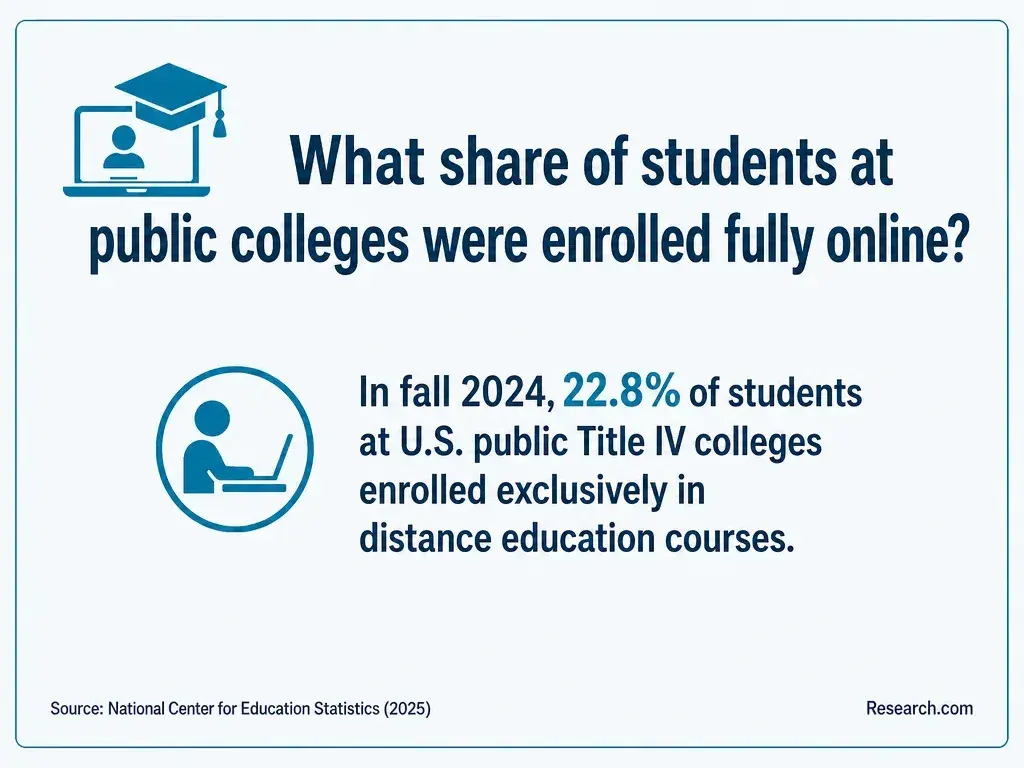
An online psychology BA can be awarded by an institution with recognized institutional accreditation. Check the school and its accreditor through the U.S. Department of Education's accreditation database, then confirm that the online degree is offered by that institution and that its authorization covers your location. Employers and graduate schools may also examine the coursework you completed.
Do not look for American Psychological Association accreditation as a test of a general BA: APA accreditation applies to specified professional psychology training programs, not general undergraduate majors. Institutional accreditation also does not establish eligibility for a clinical license or prove that a particular internship meets another school's requirements. If an advertised specialization sounds professionally qualifying, check its actual credential level and the relevant regulator's rules. This distinction matters when comparing forensic psychology academic pathways and tuition, where the word "accredited" should be tied to a clearly identified institution or applicable program.
What Can You Do With an Online BA in General Psychology?
A general psychology BA can support applications for nonclinical work in human services, community programs, research support, recruiting, training, and program administration. Possible duties include coordinating referrals, documenting services, assisting with participant recruitment under supervision, or summarizing program data. Hiring depends on the employer's requirements and on your experience - not simply on whether the diploma says "general" or "applied."
Build evidence for the work you want: a supervised research project for research support, accessible outreach materials for community work, or an ethically handled evaluation brief for program operations. An applied degree may make such experience easier to obtain if a genuine project is built into the curriculum; a general BA student can also seek it independently. Neither route authorizes diagnosis, psychotherapy, or independent psychological testing. If justice-system work interests you, distinguish support and research jobs from licensed forensic practice; distance learning bachelor's degrees in addiction psychology offer a separate example of how a focused undergraduate curriculum can align with support work without becoming a treatment license.
Both routes may include introductory psychology, statistics, research methods, developmental psychology, social psychology, biological or cognitive psychology, and coursework on psychological disorders. A general BA may leave more elective space to investigate several subfields. An applied curriculum may add courses in program evaluation, organizational behavior, community services, or a particular population, followed by a project or internship. The actual required courses vary by school.
For graduate study, examine depth and sequence, not course titles alone: Does statistics lead into research design? Can you practice analyzing data and writing a research report? Will the required electives leave room for the next program's prerequisites? For employment, ask what deliverable an applied course produces and who reviews it. A course on addiction, for example, is not counseling training. Students considering that field should compare the curriculum with lower-cost addiction counseling bachelor's career preparation and separately check their state's credential rules.
A general or applied psychology bachelor's degree does not, by itself, qualify someone for psychologist licensure. Requirements are set by the licensing jurisdiction and typically involve advanced professional education, supervised experience, and examinations. Studying psychopathology, interviewing, or psychological testing as an undergraduate does not grant permission to diagnose or treat clients.
If your goal is therapy rather than the psychologist title specifically, investigate the distinct educational routes for professional counseling, clinical social work, or marriage and family therapy. They have their own program and state requirements; a general psychology master's is not automatically a substitute. A shorter clinical mental health counseling master's cost guide can help frame the time-and-cost comparison, but confirm any prospective program's eligibility with the licensing board where you intend to work before enrolling.
Requirements depend on whether you apply as a first-year or transfer student and whether the psychology major has separate entry rules. Schools commonly request prior academic records; transfer applicants may also need course descriptions or syllabi to establish equivalencies. Some programs admit students directly to the major, while others require prerequisite courses or a later declaration.
If you are returning to college, request a written degree audit that separates credits accepted from requirements satisfied. Ask which prior statistics and psychology courses meet major requirements, what must be taken at the awarding institution, and whether an applied project has prerequisites. The receiving school makes the final determination. Guidance on psychology major credit portability can help you prepare questions, but it cannot replace that school's evaluation.
A traditional full-time bachelor's plan is commonly described as a four-year path, but your completion date depends on accepted credits, the courses still required for the major, enrollment pace, and course availability. Online delivery does not necessarily remove fixed meeting times or in-person obligations. An applied route can take longer if a required project or internship is offered infrequently or needs advance site approval.
Ask each school for a term-by-term plan based on your evaluated transcript. Check when statistics and research methods run, whether an internship can be completed near home, and how a part-time schedule affects financial aid. Advertised acceleration in a specialized degree, including forensic psychology undergraduate graduation timelines, is not a personal completion estimate until the school has reviewed your credits and remaining requirements.
There is no reliable single price for either route. Compare each school's published tuition and mandatory fees against the credits you would still have to complete, not against its advertised per-credit rate alone. Include materials, technology charges, and any travel or reduced work hours associated with required applied experience. An inexpensive course sequence may cost more overall if fewer of your previous credits fulfill degree requirements.
Request a personalized cost estimate alongside the degree audit, and ask the financial aid office how your enrollment pace and remaining eligibility affect aid. Grants, scholarships, employer assistance, and borrowing depend on individual circumstances; do not assume a focused curriculum receives special funding. The questions in this financial aid for substance abuse counseling bachelor's degrees resource may be useful for comparing a related applied route, but confirm awards and conditions with your own school.
No occupation-wide wage figure describes what graduates of a general psychology BA or applied bachelor's will earn. Pay attaches to a job, location, employer, and level of experience. A research-support role, a community-services position, and a recruiting job can have different duties and entry requirements even when applicants hold the same degree.
For a useful estimate, identify a specific target occupation, consult its latest U.S. Bureau of Labor Statistics Occupational Outlook Handbook wage data, and compare local postings that match your qualifications. An occupational median includes workers with varied experience and education; it is not an entry-level offer or a school outcome. Be especially cautious when comparing undergraduate opportunities with understanding pay and entry requirements in forensic psychology careers: a job's pay does not mean a psychology degree alone meets its hiring or licensing conditions.
How Strong Is the Job Outlook for Psychology Bachelor's Graduates?
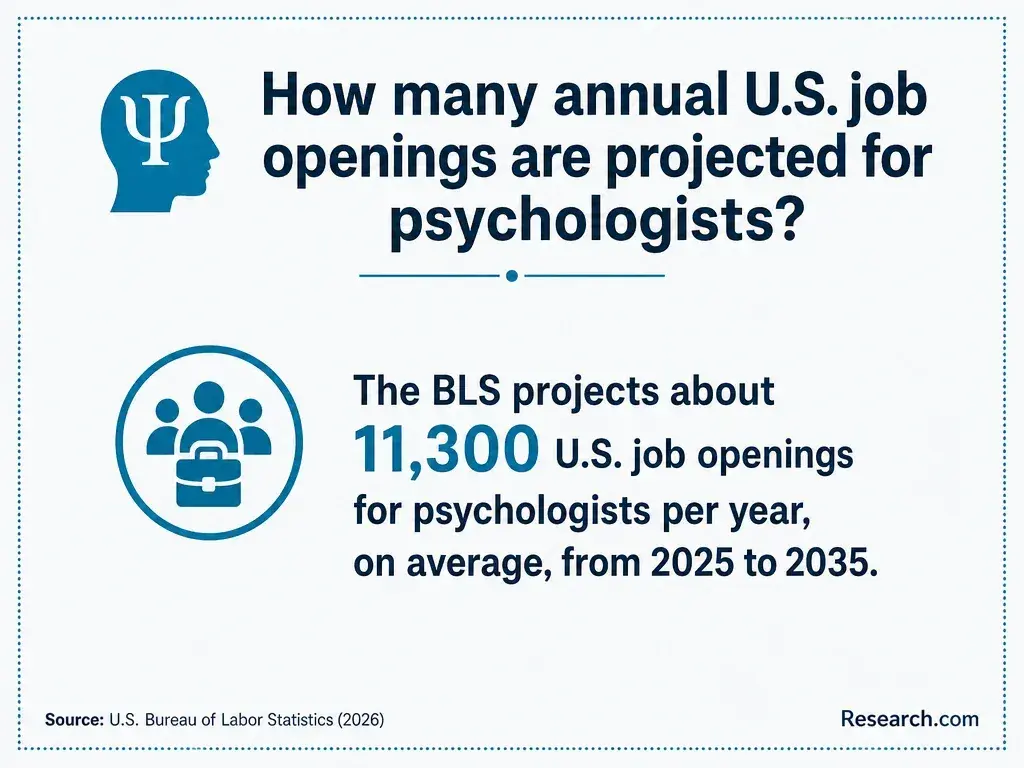
There is no single job-growth projection for "psychology bachelor's graduates." The outlook depends on the occupation you pursue. Use the Bureau of Labor Statistics projection for a defined role, then read its typical entry requirements and duties. A growing occupation may still require a credential, specialized experience, or a different degree that neither undergraduate route supplies.
Test the value of an applied curriculum against openings you would realistically seek: do employers request its specific skills, and can the program help you demonstrate them? If the target job requires graduate preparation, compare that additional commitment before selecting a bachelor's concentration. Even shorter master's study plans in forensic psychology should be judged against actual job requirements, not treated as evidence that a specialized title guarantees demand.
Other Things You Should Know About Psychology
No. "Applied" may name a concentration, a major, or a bachelor of applied science degree. Check the exact credential awarded and its catalog requirements.
Possibly, but the school must confirm how completed courses would apply to the new requirements. Request an updated degree audit before switching.
Only if the program approves the work, learning objectives, supervision, and any required site agreement. Employment alone does not establish academic credit.
That depends on the institution. Ask whether the concentration appears on the diploma, transcript, both, or neither before relying on it as a stated credential.
- Remote and In-Person Learning: Utility Versus Social... - PMC https://pmc.ncbi.nlm.nih.gov/articles/PMC9769479/
- License Requirements for Psychology - Office of the Professions https://www.op.nysed.gov/professions/psychology/license-requirements
- Understanding U.S. Accreditation | EducationUSA https://educationusa.state.gov/understanding-us-accreditation
- Your financial path to graduation | consumerfinance.gov https://www.consumerfinance.gov/paying-for-college/your-financial-path-to-graduation/
- Chapter 3 - Courses and Enrollment, Full Course of Study, and Reduced Course Load | USCIS https://www.uscis.gov/policy-manual/volume-2-part-f-chapter-3
- Psychology careers guide | apa.org https://www.apa.org/education-career/guide/careers
- Undergraduate and Graduate Tuition and Fees | Purdue Global https://www.purdueglobal.edu/tuition-financial-aid/undergraduate-graduate-tuition-and-fees/
- Careers in Applied Psychology | rutgers.edu https://psychology.camden.rutgers.edu/undergraduate/preparation/careers-in-applied-psychology/
- Transfer Credits for Online Programs | Simmons University https://www.simmons.edu/academics/undergraduate-studies/online/transfer-credits
- What Can You Do with a bachelor's in Psychology? | UMass Global https://www.umassglobal.edu/blog-news/can-you-do-a-bachelors-psychology-top-careers-skills-build-your-future