
2027 Choosing an Online MS in Psychology - Forensic Psychology Around Anxiety About Live Class Presentations
Audited and Verified:
Our Editorial and Data Verification Process
Research.com uses government datasets, official education statistics and primary institutional information to support its career and degree guides. Our review process checks factual accuracy, occupational definitions, source dates and the requirements associated with the credentials discussed.
How This Article Was Fact-Checked
Our editorial team verifies salary estimates, employment projections, education requirements and program information against original data providers and official organizations. Salary figures are checked against the relevant occupational definitions and reporting periods. Information about licensure, accreditation and required in-person training is reviewed separately.
Fact-checked and verified on:

Co-Founder and Chief Data Scientist
An online forensic psychology master's may fit your interests and schedule, yet live class presentations can make enrollment feel risky. "Online" does not necessarily mean self-paced: a program may require video presentations, group meetings, or a live capstone defense. This guide is for prospective students who want to assess those demands without letting presentation anxiety make the decision for them. You'll learn what to verify, which supports to request, and whether the degree advances your intended career before committing tuition and time.
Key Things You Should Know
- Ask for syllabi and the assessment policy: asynchronous lectures do not rule out graded live presentations, group work, or a synchronous capstone.
- Presentation anxiety may be manageable through preparation, instructor-approved format options, and disability accommodations where applicable; no program should be assumed presentation-free.
- A forensic psychology master's is generally a nonclinical degree, not a psychologist license. Compare its total cost and actual job relevance before enrolling.
What is an online master's in forensic psychology?
An online master's in forensic psychology studies psychological science in legal and justice-related contexts. Depending on the program, students may examine eyewitness memory, violence research, victimization, correctional settings, or the interpretation of behavioral evidence. Coursework is delivered primarily online, but its schedule and assessment methods vary.
Start with your intended work rather than the degree's name. Someone interested in research or justice-system program support may benefit from a forensic curriculum; someone seeking substance-use treatment work needs to check a different credential pathway. Even the substance abuse counseling bachelor's affordability and duration question concerns a distinct educational route, not a cheaper substitute for forensic graduate training.
Can an online forensic psychology master's lead to psychologist licensure?
Not by itself. In the United States, psychologist licensure generally requires qualifying doctoral education, supervised experience, examinations, and satisfaction of the relevant state board's rules. A forensic psychology master's can provide academic preparation, but its title does not authorize independent forensic evaluations, diagnosis, psychotherapy, or use of a protected psychologist title.
If your goal is therapy rather than forensic research or nonclinical justice work, compare programs explicitly designed around the applicable counseling or social-work license. A short-duration counseling master's return on investment comparison is useful only after confirming that a particular program meets your state's educational and supervised-training requirements. Faster completion alone does not establish license eligibility.
How can you manage anxiety about live presentations in online classes?
First, establish what "live" means in the courses you would actually take. A recorded lecture is different from a graded presentation to classmates; a small-group discussion is different again. Request recent syllabi or written guidance for core courses, electives, and the capstone, and ask whether presentation requirements can change by instructor.
Once you know the format, use a plan matched to the demand rather than assuming you must either avoid speaking or tolerate it without support:
- Identify the specific trigger - camera use, unexpected questions, a large audience, or presenting sensitive material - and ask the instructor what the assignment requires.
- Practice in stages, moving from a timed recording to a trusted listener and then a live rehearsal with the same technology and time limit.
- Ask early about permitted supports, such as notes, advance access to prompts, a smaller audience, or an equivalent format; obtain approval before relying on any alternative.
- If anxiety substantially limits your participation, contact the school's disability-services office about its documentation and accommodation process. For persistent distress, consider support from a qualified mental-health professional.
An accommodation may change how learning is demonstrated, but it need not remove an essential academic requirement. If you do not yet hold a bachelor's degree, comparing affordable online psychology degree programs can help you plan an earlier step; apply the same live-assessment questions there rather than assuming undergraduate online courses are presentation-free.
Online delivery alone does not determine credibility. Check the institution's recognized accreditation, the rigor and relevance of its curriculum, access to faculty and research supervision, and whether employers or a future doctoral program value the work students actually complete. Institutional accreditation speaks to the institution; it does not prove that this master's meets psychologist-licensing requirements. APA accreditation should not be assumed for a general, nonclinical forensic psychology master's.
Presentation format is part of academic quality, too. A program can teach evidence-based communication through recorded briefs, live discussions, or both. Ask how students receive feedback and whether required live activities are published in advance. Price is a separate consideration: cost-conscious options for a psychology master's still need the same checks for academic fit, support, and outcomes.
Course lists vary, but relevant study may combine psychology research methods and statistics with psychology-and-law topics, ethics, developmental or social psychology, and justice-system applications. A thesis, research project, or applied capstone may require presenting findings. Ask whether that final assessment is recorded, live, individual, or conducted before a committee.
Read course descriptions for what students learn to do, not just compelling titles. A course discussing risk assessment or mental disorders does not qualify a graduate to administer restricted tests or make clinical judgments independently. If your target is addiction counseling, compare that field's required training rather than treating overlapping subject matter as equivalent; substance abuse counseling bachelor's affordability and duration is a separate starting-point comparison, not evidence that either curriculum grants a license.
Programs commonly evaluate an earned bachelor's degree, transcripts, academic preparation, and a statement of purpose, but prerequisites, GPA policies, recommendations, and tests are set by each school. A non-psychology major is not automatically disqualifying. Ask admissions to distinguish required prior courses from recommended preparation in introductory psychology, statistics, and research methods.
Your application can also explain relevant justice, research, advocacy, or human-services experience without portraying it as clinical training. If you are still selecting an undergraduate route, addiction psychology BA and BS degree options illustrate how subject focus can differ; neither label substitutes for checking a forensic master's specific prerequisites. Applicants without a completed bachelor's should confirm degree eligibility before planning graduate coursework.
Completion time depends on required credits, course availability, enrollment pace, and the thesis or capstone schedule. An advertised fast track may also presume continuous enrollment or a heavier weekly workload. For a student anxious about presentations, taking fewer courses at once may create more rehearsal time, even if it extends enrollment.
Compare a written, program-specific estimate rather than tuition alone. Include required fees, technology, any travel or site expenses, and charges associated with taking extra time to finish a project. Ask whether financial aid or employer assistance depends on enrollment intensity or satisfactory academic progress. Under-two-year forensic psychology graduate program options are worth examining only alongside their course sequence, live commitments, and full expected cost.
Potential nonclinical directions include victim-services coordination, correctional or community-program support, research assistance, and evaluation or administrative work in justice-related organizations. Duties and hiring standards differ: a course on interviewing does not confer investigative authority, and victim advocacy is not psychotherapy. Prior employment, supervised projects, writing, data skills, and local hiring rules often matter alongside the degree.
Review actual postings for your target job before enrolling. If they prioritize experience or a different credential, a placement, employer training, or a more direct qualification may be better value. For example, addiction recovery career paths involve role-specific requirements that a forensic specialization does not automatically satisfy.
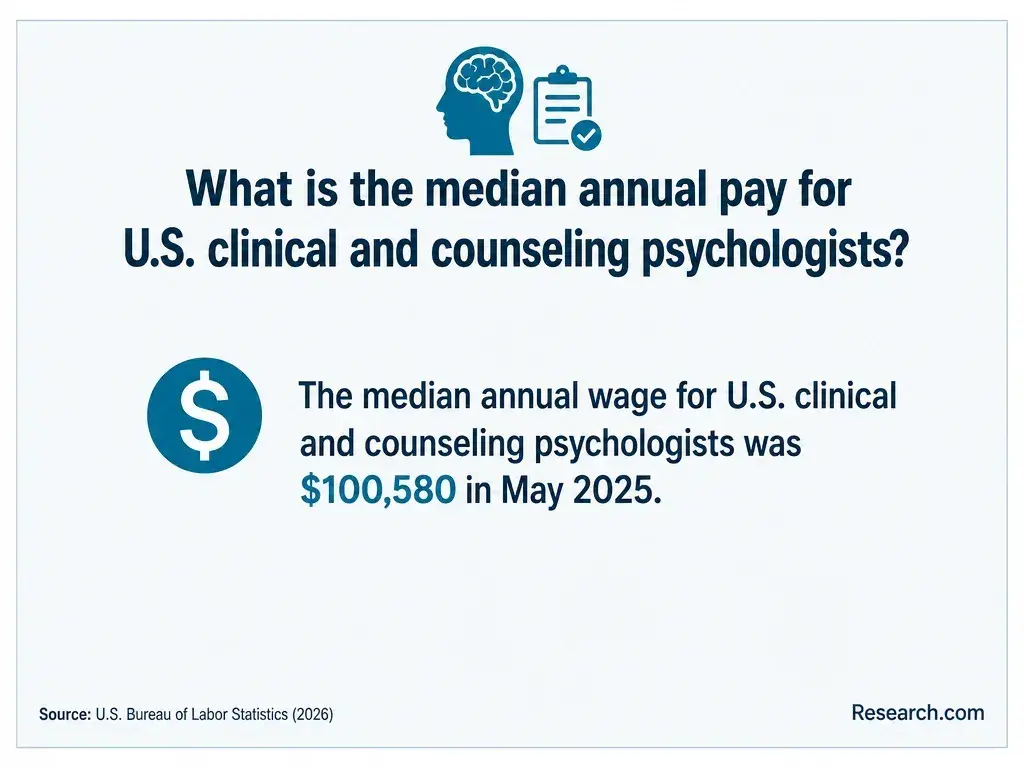
There is no dependable single salary for holders of this degree. Pay follows the job, employer, location, experience, and any required credential - not the concentration printed on a diploma. In particular, a published wage for psychologists should not be treated as the expected earnings of graduates from a nonclinical master's program.
For a useful comparison, identify several jobs you could realistically qualify for, then compare their posted pay ranges and the corresponding U.S. Bureau of Labor Statistics occupation data. Account for whether positions are public-sector roles with fixed pay grades, whether advancement requires experience or licensure, and how much you would need to borrow. Use forensic psychology master's degree career return considerations as a starting point for questions, not as a promise of a high-paying job.
How do you choose an accredited online forensic psychology program?
Shortlist programs only after defining your career goal and the amount of live participation you can realistically manage. Verify institutional accreditation through the accreditor and school, then ask the program for current, entry-term-specific answers about required synchronous sessions, presentations, group projects, capstone format, placement expectations, and student support. Get significant policy answers in writing.
Compare the offers on four points: relevant coursework and supervised learning; predictable scheduling; accessible presentation support and fair assessment; and total cost against plausible career benefits. Ask what graduates actually do and how the school collected that information. If your goal instead requires counseling licensure, examine that program type's applicable recognition and state rules; evaluating the net cost of counseling education then becomes a more relevant financial exercise. Choose the forensic program only if both its academic purpose and its real presentation demands fit.
Other Things You Should Know About Psychology
Recording and sharing rules depend on the course and institution. Ask who can access a recording, how long it is retained, and whether students may download or redistribute it.
Usually, you should arrange approved accommodations through the school's designated process rather than disclose a diagnosis to classmates. Ask the disability-services office how group-work arrangements are communicated.
Do not assume you can. Check your employer's confidentiality rules and the instructor's requirements; use a permitted public or fictional example if you lack authorization.
It is one factor, not the whole decision. Compare the program's actual requirements with available support and your career goal. If anxiety is significantly affecting daily life, qualified professional support may help beyond this enrollment decision.
- MS in Forensic Psychology | Online Master's Degree | Capella University https://www.capella.edu/online-psychology-degrees/ms-clinical-psychology-program/masters-forensic-psychology/
- Talking to Students | Office of Disability and Access https://www.ursinus.edu/offices/disability-and-access/faculty-resources/talking-to-students/
- Online Forensic Psychology Master's Degree | ASU Online https://asuonline.asu.edu/online-degree-programs/graduate/master-science-forensic-psychology/
- Clinical Forensic Psychology MA | Fairleigh Dickinson University https://www.fdu.edu/program/ma-forensic-psychology/
- Online Master's Degree in Forensic Psychology | Monroe University https://www.monroeu.edu/academics/king-graduate-school/online-masters-degree-forensic-psychology
- Student Presentations - Office of the Provost and EVP | SCU https://www.scu.edu/provost/faculty-development/cetl/digital-resources-for-teaching-drt/assessment/student-presentations/
- A Career in Forensic and Public Service Psychology | apa.org https://www.apa.org/education-career/guide/subfields/forensic/education-training
- Oral Assessments: Oral Exams, Student Presentations, and Video or Audio Assignments | Center for Teaching Innovation https://teaching.cornell.edu/teaching-resources/assessing-student-learning/oral-assessments-oral-exams-student-presentations-and
- Class Participation Accommodations | stanford.edu https://oae.stanford.edu/students%23academic-accommodations-services-button/class-participation-accommodations
- Careers With a Forensic Psychology Master's Degree | The Chicago School https://www.thechicagoschool.edu/insight/career-development/career-options-masters-degree-forensic-psychology/


