2027 Online BA in Psychology - General Psychology for Psychology of Brand Perception: Which Courses Should You Look For?
Audited and Verified:
Our Editorial and Data Verification Process
Research.com uses government datasets, official education statistics and primary institutional information to support its career and degree guides. Our review process checks factual accuracy, occupational definitions, source dates and the requirements associated with the credentials discussed.
How This Article Was Fact-Checked
Our editorial team verifies salary estimates, employment projections, education requirements and program information against original data providers and official organizations. Salary figures are checked against the relevant occupational definitions and reporting periods. Information about licensure, accreditation and required in-person training is reviewed separately.
Fact-checked and verified on:

Co-Founder and Chief Data Scientist
An online BA in general psychology can help you understand why people notice, remember, trust, or reject brands - but the degree title alone tells you little about preparation for consumer research. For prospective students and career changers, the important choice is whether a program combines psychological theory with research methods, statistics, and opportunities to study real decisions ethically.
This guide identifies the courses to prioritize, explains what each contributes, and shows how to evaluate a program before committing time and tuition.
Key Things You Should Know
- Prioritize social psychology, cognitive psychology, statistics, and research methods; together, they connect brand-related questions to testable evidence.
- Look beyond course titles for survey design, measurement, data analysis, and a supervised project or internship you can discuss with employers.
- A general psychology BA can support entry into nonclinical consumer-research work, but it is neither a brand-specialist credential nor a guarantee of an analyst job.
What Is an Online BA in General Psychology for Brand Perception?
Brand perception is the collection of associations, impressions, and expectations people hold about a brand. A general psychology BA offers a way to study the attention, memory, social influence, learning, and decision-making behind those impressions. "For brand perception" describes how you use the degree - not necessarily an official concentration. Check the institution's catalog before assuming a marketing elective appears on your transcript as a specialization.
This route fits someone who wants broad psychological-science training and the freedom to add consumer-focused electives or projects. If your goal is primarily campaign production, a marketing or communications degree may be more direct. If you already have a bachelor's degree, targeted methods coursework and relevant work experience may be more efficient than earning another BA. Compare distance learning psychology degree options by their actual curricula rather than by a program label alone.
How Does General Psychology Explain Brand Perception and Consumer Behavior?
Psychology supplies explanations; research determines whether they apply to a particular audience. Cognitive psychology helps explain which brand cues attract attention and remain memorable. Social psychology examines norms, identity, and the influence of other people's opinions. Learning and motivation help students consider how previous experiences and desired outcomes shape expectations.
Those concepts should lead to precise questions. For example, a student might ask whether people who encounter a brand through a friend describe it differently from people who encounter an advertisement. A survey or interview could explore that question, but it would not, by itself, prove that the source of exposure caused the difference: the groups may differ in prior familiarity. That distinction between an interesting explanation and defensible evidence is central to useful brand research.
More advanced independent research may call for graduate-level methods training, but speed is not a substitute for fit. When considering choosing a fast-track psychology master's program, examine whether it actually offers measurement, experimental design, and faculty guidance relevant to consumer questions.
Which Courses Should You Look For in a Brand Perception Psychology Program?
Start with methods and statistics, then add courses that explain the behavior you want to study. The table separates foundational coursework from useful electives; availability and course names vary by school.
| Course area | Contribution to brand-perception work | What to check in the syllabus |
| Statistics and research methods | Evaluating surveys, experiments, sampling, and uncertainty | Hands-on analysis, research design, and interpretation rather than software instruction alone |
| Cognitive psychology | Understanding attention, perception, memory, and judgment | Application of theory to how people process information |
| Social psychology | Studying identity, norms, persuasion, and group influence | Critical examination of context and generalizability |
| Psychological measurement | Assessing whether questions capture constructs such as trust or familiarity | Reliability, validity, response bias, and scale construction |
| Consumer behavior or marketing research | Connecting psychological questions to business decisions | Access through the major, electives, a minor, or approved cross-registration |
A feasible sequence is introductory psychology before advanced theory, followed by statistics and research methods before a capstone or applied project. If consumer behavior is unavailable, social cognition, decision-making, cultural psychology, or a business-school research elective may fill part of the gap. Confirm prerequisites and whether the course is offered online during the terms you can attend.
For a capstone, a proposed comparison of brand-trust survey questions can demonstrate measurement reasoning without claiming to have conducted a study. Collecting responses from people may require instructor approval, consent procedures, privacy safeguards, and an institutional determination about research review. An elective or project adds evidence of skill; it does not award a separate credential. Graduate study, including options discussed in planning the cost of a psychology master's, is worth considering only if the next role requires deeper research training than coursework and experience can provide.
Verify the institution's recognized accreditation through the school and the U.S. Department of Education or the Council for Higher Education Accreditation. Institutional accreditation matters for academic credibility and may affect federal aid and credit transfer; it does not establish that a particular brand-research course, internship, or career outcome exists. APA accreditation does not apply to general psychology bachelor's programs.
Then ask for the current degree requirements and a sample course rotation. Check whether statistics and methods are required, whether relevant electives are reliably available online, who supervises research projects, and whether students may take approved marketing courses outside the major. Request a written degree audit if transferring: accepted credit may count only as an elective rather than satisfying a psychology requirement. The discussion of psychology program transfer policies can help frame questions, but the receiving school makes the applicable evaluation.
Finally, compare access to faculty, research support, career advising, and any reported outcomes. Ask what population an outcomes figure covers before treating it as evidence that graduates enter consumer research.
Requirements depend on whether you apply as a first-year student, a transfer student, or a returning student. Schools commonly request prior transcripts and may set separate rules for admission to the institution and entry into the psychology major. A previous psychology major is not inherently necessary for undergraduate admission.
If you have college credit, send transcripts early and request an evaluation showing how each course applies to general education, psychology prerequisites, electives, and remaining graduation requirements. Ask specifically about statistics equivalencies and the order in which you can take methods courses. Admission, accepted credit, and a shorter time to graduation are different outcomes; none should be inferred from another.
Some applicants consider accelerated online psychology degrees to finish sooner. Before applying, check admission rules alongside course sequencing and term availability: a faster calendar is useful only if the courses you need can be completed in that order.
Completion time depends on accepted credits that apply to requirements, the school's course schedule, your enrollment pace, and prerequisites for research methods or a capstone. Online delivery does not eliminate those requirements. Ask for a term-by-term plan based on your evaluated record, not an advertised fastest completion time.
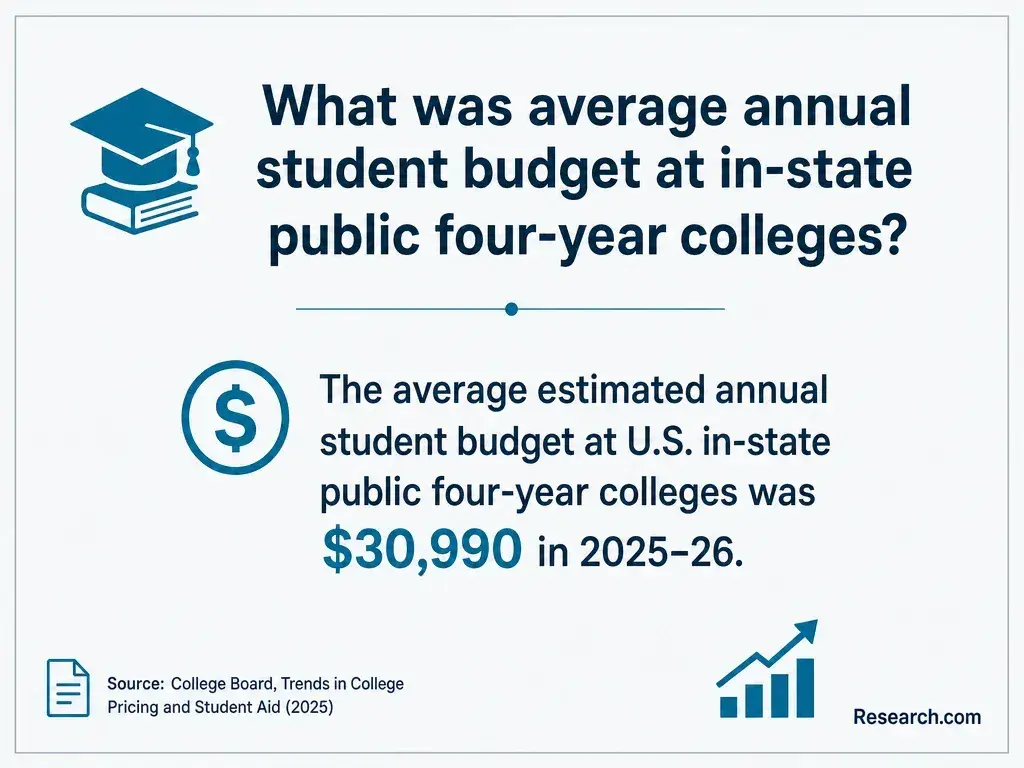
For a useful cost comparison, request tuition per credit or term, required fees, the number of credits remaining, and any charges for software, materials, or in-person activities. Include the cost of a slower pace or time away from paid work. Compare that total with the less expensive possibility of taking only the psychology or analytics courses missing from your existing background. Cost-focused comparisons of psychology degrees can identify candidates, but an individualized aid offer and degree audit are needed to estimate your expense.
Either format can teach the same psychological concepts. The practical difference for this goal is access: can you obtain feedback on research design, collaborate on a project, and reach faculty or employers who work with consumer data? An online program may suit an employed student, but asynchronous lectures do not guarantee asynchronous group work, research meetings, or internships.
A campus program may offer easier access to in-person labs and local recruiting, while an online program may let you keep relevant employment and use it to identify nonconfidential research questions. Ask both programs how remote students participate in projects, what attendance is mandatory, and whether career services connect students to research roles. Comparisons with accelerated offerings in another specialty, such as online forensic psychology bachelor's programs in three years or less, should not be taken as evidence that brand-relevant electives or projects are available on the same schedule.
Potential nonclinical starting points include market research assistant, consumer insights coordinator, survey research support worker, and junior marketing analyst. Duties may involve drafting questionnaires, organizing interviews, cleaning data, summarizing patterns, or presenting findings. Employers may also expect spreadsheet or statistical skills, business context, and examples of completed work; a psychology BA alone does not establish readiness for every analyst posting.
Translate coursework into evidence. A well-documented, approved class project can show the question you investigated, how you selected a measure, what limitations you identified, and how you communicated the result. Do not put identifiable participant responses or employer-confidential material in a portfolio without permission. For career changers, existing marketing, customer-service, design, or data experience may be more valuable when paired with targeted psychology coursework than with a second bachelor's degree.
Choose further study by the work you want to do, not by the appeal of a specialty name. For instance, one-year forensic psychology study and career outcomes address a substantially different field; a forensic credential is not a shortcut into brand-perception research.
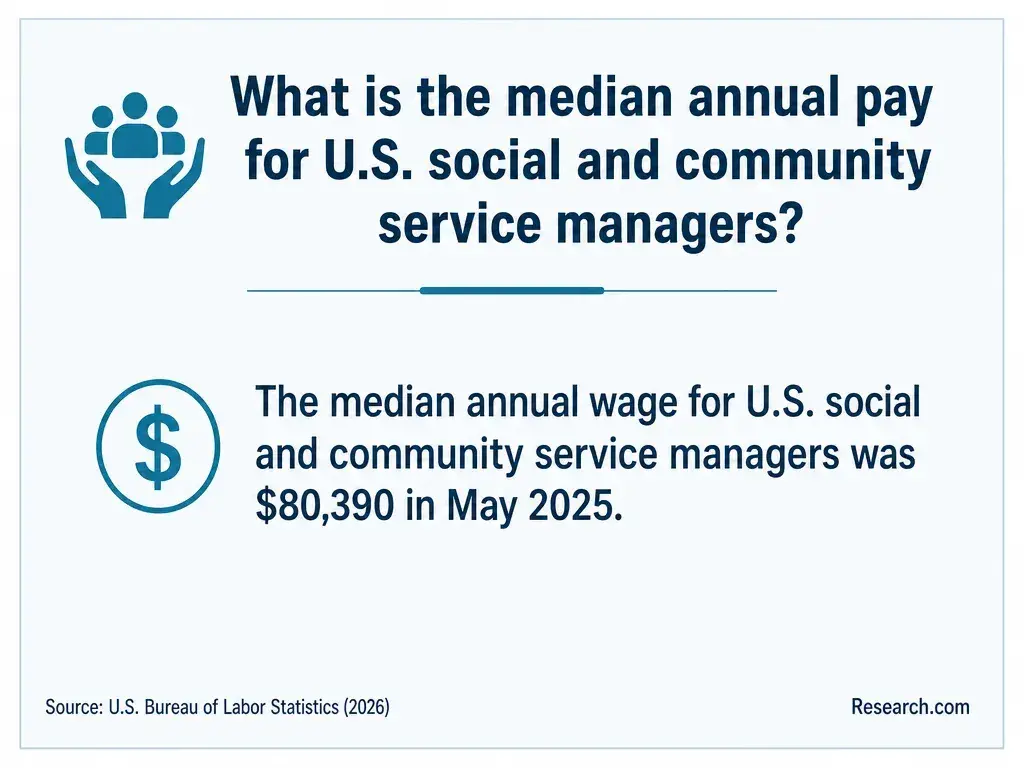
The U.S. Bureau of Labor Statistics' Market Research Analysts occupation is a useful labor-market reference because it includes studying consumer preferences and business conditions. Its published median pay and employment projections describe the occupation as a whole, however - not starting pay, job placement, or projected earnings for general psychology BA graduates. Employers' job titles and required skills also differ.
Before using an occupational figure to justify tuition, check the latest BLS wage reference year and projection period, then compare local postings for the specific roles you could plausibly enter. Separate entry-level research support positions from analyst jobs requesting substantial experience. If a graduate degree appears necessary for your target positions, weigh its price and lost work time against evidence from those postings; planning the cost of a psychology master's is one part of that decision, not proof of a salary return.
Does a Psychology Bachelor's Qualify You for Licensure or Professional Certification?
No psychology BA, online or campus-based, independently qualifies its holder to practice as a licensed psychologist, diagnose conditions, or provide psychotherapy. Brand-perception research is generally nonclinical, so clinical licensure is not the usual goal. A course in psychological measurement also does not confer authority to administer restricted clinical tests.
Optional research, analytics, or marketing certifications may help demonstrate a specific technical skill, but their value depends on the jobs you seek; check employer requirements before paying for one. If your goal changes to counseling, investigate the relevant state board and a qualifying professional degree rather than assuming the BA is sufficient. Clinical counseling degree formats and completion estimates concern that distinct pathway, including requirements a brand-research-focused BA does not replace.
Other Things You Should Know About Psychology
Compare required courses rather than the letters. A BS may require more science or quantitative coursework, but either degree can work if it offers strong methods training and relevant electives.
Not necessarily. A minor may provide useful business context, but a few well-chosen courses and a credible research project can be more relevant if the minor would delay graduation.
Yes. A literature review, analysis of appropriately accessible existing data, or critique of survey measures can build skills. Confirm your instructor's rules and any data-use restrictions.
Read the syllabus. Look for research articles, explicit methods, assessed analysis, and discussion of bias - not just examples of advertising campaigns.
- Dynamics of social influence on consumption choices - PMC https://pmc.ncbi.nlm.nih.gov/articles/PMC10300328/
- Research Methods & Statistics Courses | columbia.edu https://psychology.columbia.edu/content/research-methods-statistics-courses
- General Psychology | Online Bachelor's Degree | Capella University https://www.capella.edu/online-psychology-degrees/bs-psychology-program/bachelors-general-psychology/
- Course Descriptions - FSU Department of Psychology https://psychology.fsu.edu/undergraduate/programs/course-descriptions
- Chapter 2 - Consumer Behavior - Marketing Principles From The River City | VCU Libraries https://pressbooks.library.vcu.edu/marketingprinciples/chapter/chapter-2-consumer-behavior/
- Bachelor of Arts in Psychology - Texas State's online programs https://online.txst.edu/degrees/undergraduate/ba-psychology/
- Beyond Profit: Ethical Research on Consumer Data | CEGA https://cega.berkeley.edu/article/beyond-profit-ethical-research-consumer-data/
- Consumer Psychology - Arts & Science - New York University https://as.nyu.edu/departments/psychology/graduate/ma-psychology/social-and-consumer-psychology.html
- What's the Difference Between a B.A. & B.S. in Psychology? | The Chicago School https://www.thechicagoschool.edu/insight/career-development/difference-between-ba-and-bs-in-psychology/
- How to Be a Wise Consumer of Psychological Research | apa.org https://www.apa.org/topics/research/consumer-psychological-research