2027 Online BA in Psychology - General Psychology for Work in Patient Experience Departments: Compare Degree Fit and Hiring Requirements
Audited and Verified:
Our Editorial and Data Verification Process
Research.com uses government datasets, official education statistics and primary institutional information to support its career and degree guides. Our review process checks factual accuracy, occupational definitions, source dates and the requirements associated with the credentials discussed.
How This Article Was Fact-Checked
Our editorial team verifies salary estimates, employment projections, education requirements and program information against original data providers and official organizations. Salary figures are checked against the relevant occupational definitions and reporting periods. Information about licensure, accreditation and required in-person training is reviewed separately.
Fact-checked and verified on:

Co-Founder and Chief Data Scientist
If you want to work in a hospital patient experience department, an online BA in general psychology may strengthen your understanding of behavior, communication, and research - but it may not be the most direct route into the job. Patient experience teams also value healthcare service experience, complaint resolution, and the ability to turn feedback into improvements.
This guide is for prospective students and career changers comparing a degree with a faster experience-based path. It explains which jobs a psychology BA can support, what employers may require, and what to check before committing time and money.
Key Things You Should Know
- A general psychology BA can support nonclinical patient experience work, but hiring usually depends on the specific job's education requirements and evidence of service, healthcare, or data skills.
- A bachelor's degree commonly requires about 120 semester credits; an online format does not remove any required live classes, approved placements, or workplace experience.
- Before enrolling, compare local job postings with your existing qualifications. If you already meet their degree requirements, targeted healthcare experience or training may be a shorter route than another BA.
What Is an Online BA in Psychology for Patient Experience Careers?
An online BA in general psychology is a broad undergraduate degree in psychological science, usually delivered primarily through remote coursework. It is not a patient experience credential or a clinical qualification. Its relevance lies in understanding how people perceive interactions, communicate concerns, make decisions, and respond to stressful situations.
Patient experience departments work on how patients and families encounter a healthcare organization. Depending on the employer, staff may address complaints, help people navigate services, collect feedback, report recurring problems, or coordinate improvement efforts. A psychology graduate can contribute, but must also learn the organization's service procedures, privacy rules, and reporting systems.
Choose general psychology for its breadth if you want flexibility across service, research-support, and organizational roles. A specialized graduate program is a different investment: even forensic psychology graduate study in an intensive format addresses a different occupational goal, not a shortcut into patient experience work.
Can a General Psychology Degree Qualify You for Patient Experience Jobs?
Yes, for some nonclinical openings - but the BA alone does not establish eligibility for every patient experience position. A coordinator posting may accept a range of bachelor's majors and emphasize communication and complaint handling. An analyst position may prioritize survey methods and reporting tools. A manager opening may require substantial healthcare and supervisory experience regardless of major.
Compare the degree with your starting point. If you already have a bachelor's degree and have handled escalated customer concerns, managed a service desk, or analyzed feedback, you may be competitive without a second BA. If you lack a degree required by your target employers, psychology can be a reasonable choice when its coursework and applied opportunities fit the work. If your goal is treatment rather than service improvement, investigate a qualifying professional pathway instead; online addiction counseling coursework and admissions, for example, concerns a distinct career path with requirements that must be checked by jurisdiction.
Neither a psychology BA nor a patient experience job authorizes psychotherapy, diagnosis, or independent psychological assessment.
What Education and Hiring Requirements Do Patient Experience Departments Expect?
There is no single national education requirement for patient experience departments. Employers set qualifications by position, and job titles are not standardized. To judge degree fit, compare the required qualifications in several local postings with their listed duties - not just the title.
The distinctions below help separate entry routes from advancement requirements. They describe common hiring patterns, not guarantees for a particular employer.
| Type of work | Qualifications to check in postings | Useful evidence beyond a degree |
| Patient relations or experience coordination | Education threshold, service experience, complaint handling, healthcare familiarity | Documented escalation, follow-up, and communication work |
| Feedback or experience analysis | Survey, spreadsheet, reporting, and data-interpretation skills | A privacy-safe analysis or process-improvement example |
| Department leadership | Healthcare experience, supervision, improvement projects, and often a degree | Results from leading teams or changes in service processes |
Read requirements for electronic health record access, confidentiality training, background screening, and work schedules as carefully as education requirements. Patient experience may overlap with advocacy or referrals, but it is not interchangeable with recovery-support work; roles in community recovery organizations can have different duties and credential expectations.
The better format is the one that lets you complete the coursework and build credible evidence for the job. Online study may fit employment, while campus study may make it easier to join a research team or find a local placement. Neither format automatically provides healthcare contacts.
These differences matter most when you need applied experience while studying.
| Decision factor | Online BA | Campus-based BA |
| Schedule | May offer asynchronous classes; live sessions and deadlines can still apply | Scheduled classes and travel are generally more prominent |
| Applied opportunities | May require the student to arrange an approved local site | May offer nearby organizations, subject to availability |
| Networking | Requires deliberate contact with faculty, peers, and local employers | May allow more routine in-person contact |
Ask how students obtain nonclinical placements, whether employed students can use their workplace with approval, and whether any campus visits are mandatory. Do not infer scheduling flexibility from "online" or "accelerated": even comparing forensic psychology master's programs by study length illustrates why pace must be checked separately from delivery format.
For patient experience work, prioritize courses that help you understand interactions and evaluate whether a proposed improvement is supported by evidence. Social and health psychology can inform communication; developmental and cultural perspectives can improve the questions you ask about accessibility and differing needs. Statistics and research methods help you interpret surveys without mistaking a nonrepresentative response group for all patients.
Writing, qualitative interviewing, organizational behavior, and health-services electives can add practical value when available. A supervised, nonclinical project - such as a literature-based recommendation or an approved analysis of appropriately accessible feedback - may provide better hiring evidence than an elective title alone. Never assume a student may access patient records or publish workplace data without institutional permission.
Choose electives against the duties in your target postings, not the appeal of a specialty name. For instance, forensic psychology study choices and employment preparation address a different employment setting; a forensic elective is unlikely to replace healthcare service or survey experience.
First, confirm that the institution holds recognized institutional accreditation and that the advertised credential is an online BA in psychology with the general curriculum you want. APA accreditation is not a standard accreditation designation for a general undergraduate psychology BA; do not treat its absence as evidence that an otherwise accredited BA is unrecognized.
Then inspect the current catalog and ask the program to document course availability, live-session requirements, transfer and residency rules, career support, and any internship or capstone approval process. Ask whether students can develop projects relevant to healthcare service improvement, and whether the program reports outcomes for this degree specifically. Published institutional outcomes do not prove placement into patient experience jobs.
Use a shortlist to compare verified requirements and total remaining costs rather than relying on a "best" label. Comparing schools for an online psychology major can help you identify options, but the current catalog and an individualized degree audit should settle what you would actually study.
Requirements vary by institution and by whether you apply as a first-year or transfer student. Schools may request a high school record or prior college transcripts, and some have separate rules for entering the psychology major. Admission to the university does not mean every previous course will satisfy a major or graduation requirement.
If you have college credit, request a written evaluation showing which courses apply to general education, psychology, statistics, research methods, electives, and remaining residency requirements. This matters especially if your fastest route to patient experience work depends on finishing an existing degree rather than starting over. For a closer look at psychology major credit portability, compare transfer-friendly policies, then obtain the receiving school's own decision before budgeting around accepted credits.
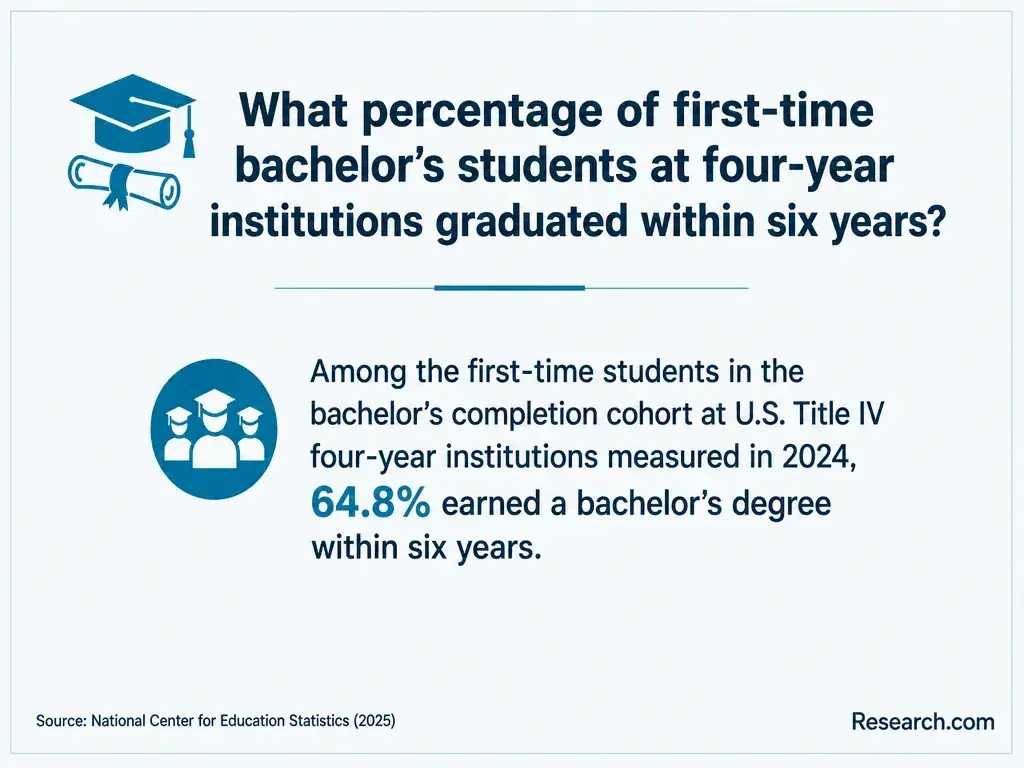
A bachelor's degree commonly totals about 120 semester credits, but your remaining time depends on accepted credits that apply to requirements, course sequencing, enrollment pace, and any residency or applied-learning rules. Online delivery alone does not shorten the degree.
For a usable cost comparison, request a degree audit and price the credits still needed, mandatory fees, books or software, and any placement-related travel. Ask when required courses run and whether part-time enrollment affects aid. No single tuition figure reliably represents all online psychology BAs, and an advertised per-credit price is not your total cost.
If a later master's degree is part of your plan, budget for it separately rather than assuming the BA is the final expense. Comparing affordable graduate psychology programs may help frame that later decision, but a general psychology master's is not normally required just to pursue an entry-level patient experience opening.
Depending on the posting and your experience, plausible nonclinical targets include patient experience coordinator, patient relations representative, service recovery specialist, and patient feedback or experience analyst. The first three may involve listening to concerns, documenting them, coordinating responses, and identifying issues to escalate. Analyst roles may involve organizing survey results and explaining patterns while respecting data-access limits.
A practical entry strategy is to match one target posting to evidence you can show: an example of resolving a complex concern, a clearly explained feedback analysis, or an approved service-improvement project. Applicants without healthcare experience can also consider hospital customer service, scheduling, or other service roles that build familiarity with care operations. Leadership roles generally require more than a new degree.
If you actually want to counsel patients, compare the education and supervision required for that separate profession. Planning the time and cost of a counseling master's is more relevant to that goal than treating a patient experience position as a route to clinical authority.
What Salaries and Job Outlook Can Psychology Graduates Expect?
There is no reliable national salary figure for "online psychology BA graduates in patient experience departments." Employers use different titles, and occupation-wide wage data may combine jobs with substantially different duties and qualifications. Your likely pay is better assessed from local postings for the exact role, location, employer type, and experience level you can meet.
The same limitation applies to outlook: broad healthcare or social-service growth projections do not measure demand for patient experience coordinators specifically. Check whether nearby health systems are advertising entry-level or experienced openings, and compare the pay range and advancement requirements with your remaining degree cost. Do not use a psychologist's wage or outlook as a proxy; a BA does not qualify you to work as a licensed psychologist.
If your intended alternative is licensed counseling, its education costs and occupation-specific wages require a separate comparison. Information on mental health counseling tuition, fees, and financial aid should not be treated as the price of preparing for a nonclinical patient experience job.
Other Things You Should Know About Psychology
Yes, it can demonstrate communication and problem-solving. Show how you handled sensitive concerns and documented resolutions, while acknowledging that you still need to learn healthcare procedures.
Do not assume so. Check the specific posting for required or preferred certifications, then determine whether your employer would support one after hiring.
Only with the organization's and instructor's required approvals. Follow applicable privacy and data-use rules; employment access does not automatically grant permission for academic use.
Compare the actual courses and remaining credits. A BA or BS label matters less for patient experience hiring than relevant methods skills, service experience, and completion of the employer's stated degree requirement.
- Qualifications and Skills Required for Patient Experience Positions - PMC https://pmc.ncbi.nlm.nih.gov/articles/PMC7786781/
- What can you do with a bachelor's degree in psychology? | University of the Pacific https://www.pacific.edu/blog/2025/02/26/what-can-you-do-with-a-bachelors-degree-in-psychology/
- General Psychology | Online Bachelor's Degree | Capella University https://www.capella.edu/online-psychology-degrees/bs-psychology-program/bachelors-general-psychology/
- Skills of a Psychology Major | Evelyn L. Spiro School of Nursing https://wagner.edu/psychology/skills/
- Online Bachelor's in Psychology | University of Kansas https://online.ku.edu/undergraduate-programs/online-bachelors-psychology
- How to Become a Patient Experience Manager | Western Governors University https://www.wgu.edu/career-guide/healthcare/patient-experience-manager-career.html
- Transferable Skills: Examples for Psychology Graduates | East Carolina University https://onlineprograms.ecu.edu/blog/transferable-skills-examples/
- Pursuing a Career in Health Psychology | apa.org https://www.apa.org/education-career/guide/subfields/health/education-training
- Pursuing a Clinical Psychology Degree: A Comprehensive Guide | Pepperdine University https://gsep.pepperdine.edu/blog/posts/pursuing-a-clinical-psychology-degree-a-comprehensive-guide.htm
- A Guide to Entry-Level Healthcare Jobs | University of Phoenix https://www.phoenix.edu/articles/healthcare/a-guide-to-entry-level-healthcare-jobs.html