2027 Online BA in Psychology - General Psychology for Work in State Public Service Agencies: Compare Degree Fit and Hiring Requirements
Audited and Verified:
Our Editorial and Data Verification Process
Research.com uses government datasets, official education statistics and primary institutional information to support its career and degree guides. Our review process checks factual accuracy, occupational definitions, source dates and the requirements associated with the credentials discussed.
How This Article Was Fact-Checked
Our editorial team verifies salary estimates, employment projections, education requirements and program information against original data providers and official organizations. Salary figures are checked against the relevant occupational definitions and reporting periods. Information about licensure, accreditation and required in-person training is reviewed separately.
Fact-checked and verified on:

Co-Founder and Chief Data Scientist
State agencies hire for specific duties, not simply for an interest in psychology. An online BA in general psychology may qualify you for some human-services and administrative openings, but a posting may also require a particular major, experience, a background check, or a professional credential.
This guide is for prospective students and public-sector workers deciding whether the degree fits a target state job. It explains how to read hiring requirements, compare education routes, and avoid paying for coursework that will not move you closer to the role you want.
Key Things You Should Know
- An online general psychology BA can fit some bachelor's-level state agency roles, but the job classification, not the degree title, determines whether psychology is an accepted major.
- A bachelor's degree commonly requires about 120 semester credits; transferred credits reduce the remaining work only if the university applies them to your degree requirements.
- Institutional accreditation matters for degree recognition, while clinical licenses, specialized certifications, and state civil-service qualifications require separate checks.
What is an online general psychology bachelor's degree for state public service work?
An online general psychology BA is an undergraduate degree covering behavior, development, social processes, and psychological research. "General" usually means broad study rather than a formally designated clinical, forensic, or addictions concentration. Online describes how instruction is delivered; it does not change a state agency's minimum qualifications.
Its strongest public-service fit is work that combines communication, documentation, evidence interpretation, and interaction with people or communities.
For example, a graduate might help coordinate service referrals or summarize program data under agency procedures. The degree is less direct when an agency specifies social work, nursing, accounting, information technology, or a license.
Compare online psychology degree program comparisons by required courses and opportunities for applied experience, not by the word "psychology" alone. A useful starting point is to collect several postings from your target state and mark which majors they actually accept.
What public service jobs can you get with a general psychology bachelor's degree?
Possible openings include human-services specialist, benefits or eligibility worker, program assistant, victim-services coordinator, workforce-services staff member, and research or evaluation assistant. Titles and qualifying majors differ across states.
Some positions accept a bachelor's degree in any field; others require specified social-science credits, direct-service experience, or a different credential.
The table distinguishes plausible duties from qualifications that a psychology BA does not automatically supply. Use it to identify a role worth checking in your state's classification specifications:
| Role area | Typical nonclinical work | Requirement to check |
| Human services and benefits | Explain programs, document applications, coordinate referrals | Accepted majors, eligibility-policy knowledge, caseload experience |
| Victim or community services | Provide information, advocacy, and connections to services | Training, screening, safeguarding, and on-call duties |
| Program research or evaluation | Maintain data, summarize findings, assist with surveys | Statistics, software, writing samples, and data-access rules |
| Recovery-service support | Assist with outreach, navigation, and referrals | Any required peer or addiction-service credential and permitted duties |
For recovery-related work, explore career options in recovery services while separating support jobs from counseling positions. A psychology BA can help you understand behavior and service systems; it does not authorize treatment.
What hiring requirements do state public service agencies typically have?
State hiring usually turns on a position's official classification and the specific vacancy announcement. Check both: a classification states minimum qualifications, while an announcement may identify preferred skills, location, schedule, and application documents.
Do not assume that a recruiter can waive a statutory credential or that an accepted degree substitutes for required experience.
Read requirements in this order so you can decide whether to apply before investing in another degree:
- Identify the exact job classification, agency, grade, and minimum education or experience requirement.
- Check whether psychology is named as an acceptable major and whether required credits must be in particular subjects.
- Separate minimum qualifications from preferences such as case-management experience, language skills, or data software.
- Confirm any examination, eligibility list, driving requirement, background investigation, or credential requirement.
- Ask the state human-resources office how it evaluates an online degree, transfer coursework, and equivalent experience when the posting is unclear.
Work involving minors, protected client information, corrections settings, or vulnerable adults can carry additional screening and confidentiality obligations.
State employment may also involve fixed pay grades and internal promotion rules. An accelerated graduate credential is not a shortcut around them: twelve-month forensic psychology graduate study pathways, for example, do not independently establish eligibility for investigative or licensed clinical duties.
An online BA can be a recognized degree if the awarding institution holds accreditation from an accreditor recognized by the U.S. Department of Education. Verify the institution, its current accreditation status, and the degree-granting school before enrolling.
Then check the state posting: some classifications address accreditation or specify how foreign or nontraditional coursework is evaluated.
Do not look for American Psychological Association accreditation as a test of an ordinary psychology BA; APA's professional accreditation does not generally cover general undergraduate majors.
Nor does institutional accreditation establish eligibility for a regulated counseling role. If counseling is your goal, comparing degrees in addiction counseling requires a separate review of the relevant state credential rules and each program's intended pathway.
Employer respect also depends on evidence of readiness. A degree audit, substantive methods coursework, an agency-approved experience, and a clear description of the work you performed tell a hiring panel more than delivery mode alone.
Expect introductory psychology, statistics, research methods, and upper-level study of subjects such as development, social behavior, cognition, and biological or abnormal psychology.
Programs differ in general education, laboratory, writing, and capstone requirements. A course about disorders teaches academic concepts; it is not training to diagnose people.
For state agency work, prioritize a sequence that produces usable evidence of skill: statistics before an evaluation project; research methods before assessing whether a program claim is supported; and electives related to the population or service system you hope to work with.
Practice writing a short, privacy-safe summary of published research or publicly available program data. Never use identifiable agency client records for coursework without authorization.
If your target is substance-use outreach, addiction-focused undergraduate psychology degrees may offer relevant electives. Compare their actual requirements with a general BA plus work experience; an addictions focus does not itself confer a counseling credential.
A bachelor's degree commonly totals about 120 semester credits and takes roughly four years of full-time study from a new start. Transfer students and part-time students need an individual degree audit: accepted credits may count as electives without satisfying psychology, statistics, residency, or general education requirements. Course availability can also extend the schedule.
There is no reliable single price for an "online psychology BA." Compare the published tuition rate against the credits you must actually complete, then add mandatory fees, books, technology, any travel, and the cost of reduced work hours.
For online psychology education on a budget, compare estimated remaining cost rather than advertised per-credit price alone.
If you already work for a state agency, ask whether education assistance covers this program and whether reimbursement requires a minimum grade, continued employment, or advance approval. A less expensive targeted course may be the better purchase if your current degree already meets a promotion's education requirement.
First-year applicants generally submit prior school records and meet the university's undergraduate admission rules. Transfer applicants submit college transcripts and may face separate major-entry or prerequisite rules.
Requirements for GPA, tests, application dates, and prior psychology courses vary; confirm them with the specific institution rather than treating a typical admissions checklist as universal.
For a returning student, admission and degree completion are different decisions. Request a written evaluation showing accepted credits, how each credit applies, remaining major courses, and required credits at the awarding university.
Psychology transfer eligibility and degree planning is particularly useful when earlier coursework includes statistics, an associate degree, or credits earned through another format.
Before accepting an offer, ask when required methods courses run and whether any internship or capstone has prerequisites. Those answers can matter more to your graduation date than the number of credits initially accepted.
Online study can reduce commuting and widen the choice of institutions, but asynchronous lectures do not guarantee an entirely self-paced degree. Live discussions, group work, proctored assessments, research meetings, or an approved placement may still occur at fixed times.
Campus study may make in-person faculty contact and local agency networking easier; either format can be effective if it offers the support and experience your target job requires.
Ask each program whether it can help you arrange agency-relevant nonclinical experience near home, whether a placement requires weekday hours, and whether current state employees can propose a project at their workplace. Employer and university approval are separate; access to agency records is not implied by enrollment.
Financial-aid eligibility should be checked separately from delivery mode. Guidance on FAFSA for online substance use counseling undergraduates illustrates the questions to ask about institutional eligibility and enrollment status, even if you ultimately choose general psychology. Confirm your own program's aid terms with its financial-aid office.
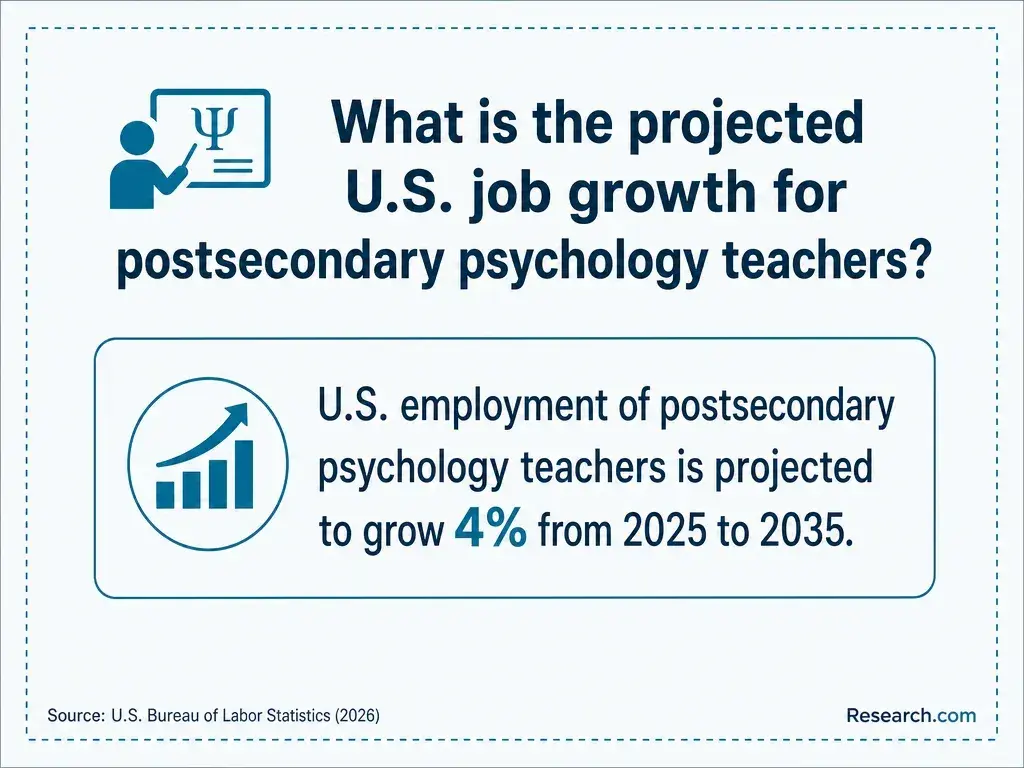
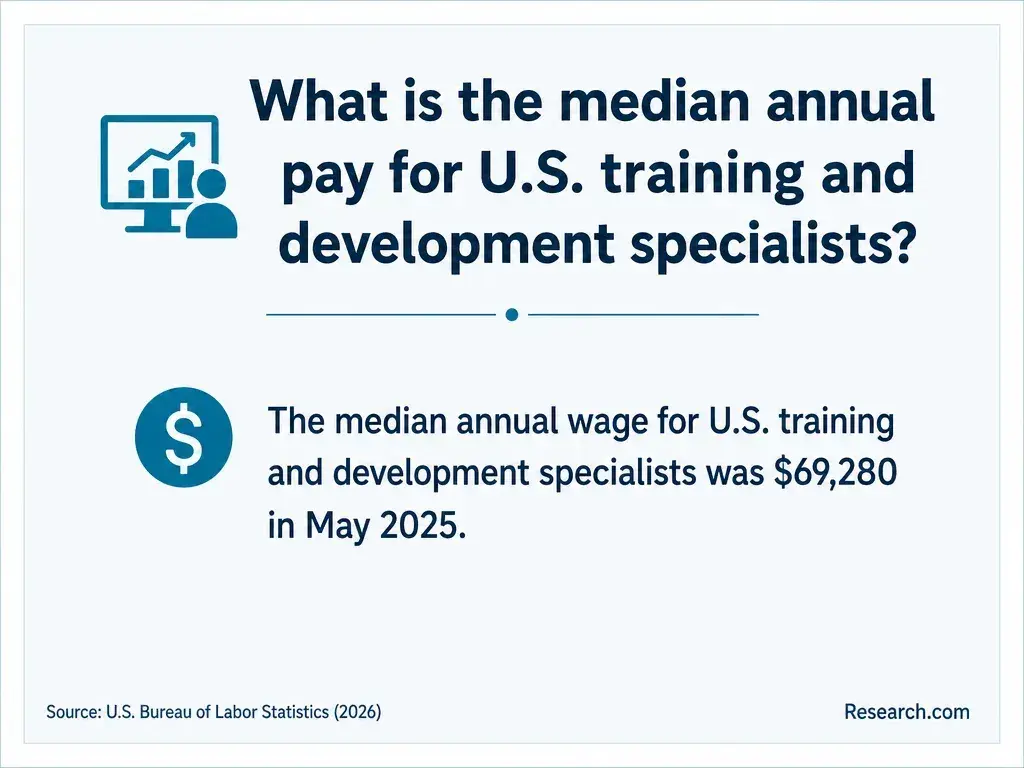
There is no single salary or growth rate for a psychology BA holder in state service. Pay is attached to the occupation, state classification, grade, location, and experience, not to the major alone. State postings and pay schedules are the most direct sources for the job you intend to pursue.
For a broader labor-market comparison, match the duties to the correct occupation in the U.S. Bureau of Labor Statistics Occupational Outlook Handbook, then check its stated wage year and projection period.
Do not use a psychologist's wage as the expected pay for a human-services applicant with a BA. Likewise, salary outlook for forensic psychology master's graduates concerns a different education and job mix; it cannot predict a state agency's entry-level offer. An occupation-wide median also combines employers and experience levels, so compare it with the agency's posted pay range before estimating the return on your degree.
Does a psychology bachelor's degree lead to licensure or professional certification?
A general psychology BA does not, by itself, license someone to practice psychology, provide psychotherapy, diagnose conditions, or independently administer restricted clinical assessments.
Some state support positions are unlicensed; others require a separate credential, training, supervised experience, or examination. Requirements depend on the state and the precise duties, not just the job title.
If your intended role is licensed counseling or social work, check that profession's state board and qualifying degree rules before choosing an undergraduate major. A later general psychology master's degree is not automatically a qualifying clinical degree either. Compare low-cost master's degrees in psychology only after confirming that a master's is needed for your goal and that the specific program serves it.
For many agency support roles, the practical next step is narrower: find an open classification, confirm that your education meets its minimum requirements, and build evidence of the documentation, service coordination, or data skills it requests.
Other Things You Should Know About Psychology
Yes, if it demonstrates duties named in the posting. Describe your responsibilities and hours accurately; ask the hiring office whether volunteer experience counts toward any required years of experience.
Usually, yes. Preferred qualifications can affect competitiveness, but they are not necessarily application barriers. Address your strongest matching experience directly.
Possibly, with university and agency approval. Confirm supervision, permitted data use, confidentiality, and whether the proposed work meets academic requirements before starting.
Not always. If your existing degree meets the classification's education rule, relevant experience or targeted training may be more useful. Check the new classification before committing to another degree.
- NYS Mental Health Practitioners: FAQ Education Requirements | nysed.gov https://www.op.nysed.gov/professions/marriage-and-family-therapists/faqs-education-requirements
- General Schedule Qualification Policies | U.S. Office of Personnel Management https://www.opm.gov/policy-data-oversight/classification-qualifications/general-schedule-qualification-policies/
- 104 Admin Guidelines - County Executive Office https://oce.saccounty.gov/content/oce/us/en/policies/employment/pre-employment-reviews/employment-background-checks/104-admin-guidelines.html
- Apply for a job with the City of Philadelphia | Services https://www.phila.gov/services/working-jobs/city-jobs-and-internships/apply-for-a-job-with-the-city-of-philadelphia/
- DHS Jobs | Department of Human Services https://www.pa.gov/agencies/dhs/about/dhs-jobs
- Classification | NC Office of Human Resources https://oshr.nc.gov/state-employee-resources/classification-compensation/classification
- Professional Licensure Disclosures | rutgers.edu https://gsapp.rutgers.edu/professional-licensure-disclosures
- HR99 Background Verification Requirements | Penn State Policies https://policy.psu.edu/policies/hr99