2027 Best Accredited Online Marine Science Degree Programs: Compare Tuition, Admissions, and Career Outcomes

Co-Founder and Chief Data Scientist
Choosing an online marine science degree is difficult because truly marine-focused online programs are limited, costs vary widely, and field experience still matters. NOAA's latest ocean economy figures show the U. S. ocean sector supports about 2.4 million jobs and contributes $476 billion to GDP, making coastal, conservation, fisheries, and environmental expertise increasingly valuable. This guide is for working adults, transfer students, and first-time students comparing accredited online options. You'll learn how to weigh tuition, admissions, accreditation, flexibility, and career outcomes so you can choose a program that fits your budget and long-term goals.
Key Things You Should Know
- Fully online marine science degrees are uncommon, so the best-value choices often include accredited marine biology, fisheries, conservation, environmental science, coastal studies, or ocean-focused programs with online coursework and optional or required field components.
- Recent published online undergraduate tuition examples commonly range from about $330 to $470 per credit, while some public university online science programs can cost more depending on residency, fees, lab courses, and transfer-credit limits.
- BLS May 2024 wage data places the median salary at $80,060 for environmental scientists and specialists and $72,860 for zoologists and wildlife biologists, but outcomes depend heavily on internships, GIS/data skills, graduate study, and location.
Which Accredited Online Marine Science Degree Programs Offer the Best Overall Value?
The best overall value is not always the lowest tuition. For marine science, value usually means a credible accredited institution, enough biology and chemistry depth for graduate school, access to field or research experiences, flexible online delivery, and a realistic total cost after transfer credits and aid.
Because fully online degrees titled exactly "marine science" are rare, students should compare marine-focused programs and marine-adjacent programs that prepare them for coastal, fisheries, conservation, aquaculture, environmental monitoring, or graduate marine science pathways.
The table below summarizes common program types that online students are likely to encounter and how to judge their value.
| Program type | Best fit | Typical online value strength | Potential drawback | Value verdict |
| Online marine biology or marine biology and sustainable aquaculture | Students seeking the closest match to marine organism, aquaculture, and ocean-life study | Strong subject alignment and clearer marine identity | May require labs, fieldwork, or travel for hands-on requirements | Best if you want a marine-specific curriculum and can complete experiential requirements |
| Online fisheries, wildlife, and conservation sciences | Students interested in aquatic ecosystems, habitat management, fisheries, and conservation careers | Often strong science foundation with practical conservation applications | May be broader than marine science and include terrestrial ecology | Best for students open to freshwater, coastal, and wildlife roles as well as marine-related work |
| Online environmental science with coastal, water, or natural resources electives | Working adults who want broad employability in environmental consulting, regulation, or monitoring | Transfer-friendly and applicable to many environmental jobs | Marine science content may be limited unless electives are chosen carefully | Best for ROI-focused students who want wider job flexibility |
| Online oceanography, coastal studies, or blue-economy certificates paired with a science degree | Students who already have credits or a degree and need specialization | Can add marine focus without restarting a full degree | May not substitute for a full science bachelor's degree | Best for career changers or graduates strengthening a specific niche |
For most students, the strongest combination is an accredited environmental, fisheries, conservation, or marine biology program with transparent tuition, generous transfer-credit review, required science labs, and some access to field learning.
Paying more can make sense when the program offers stronger research access, recognizable faculty expertise, or a pathway into graduate study; it makes less sense if the curriculum is mostly general education with only a few marine electives.
A common mistake is choosing based on the word "marine" in the degree title alone. Review the course list: a strong program should include biology, ecology, chemistry, statistics or data analysis, conservation policy, and methods courses that help you interpret real environmental data.
What Accreditation Should Students Look for in an Online Marine Science Degree Program?
Accreditation confirms that a college meets recognized standards for academic quality, student services, financial practices, and degree validity. For online marine science students, the first requirement is institutional accreditation from an accreditor recognized by the U.S. Department of Education or the Council for Higher Education Accreditation.
Marine science does not usually have one required national programmatic accreditor in the same way nursing, dietetics, engineering, or teacher education may. That means students should verify institutional accreditation first, then examine whether the program has discipline-specific quality signals such as faculty research, lab requirements, field partnerships, GIS coursework, undergraduate research opportunities, or alignment with graduate prerequisites.
The accreditation checklist below helps students avoid unrecognized schools and weak science programs.
- Search the institution in the U.S. Department of Education's Database of Accredited Postsecondary Institutions and Programs or CHEA's directory.
- Confirm that the online campus, extension division, or distance-learning unit is covered by the same institutional accreditation as the main university.
- Ask whether online science labs, field courses, or internships appear on the transcript differently from campus-based courses.
- Review whether credits are transferable to public universities or graduate programs in biology, marine science, environmental science, or natural resources.
- Check whether the program prepares students for optional credentials or employer-valued skills such as GIS, R, Python, data visualization, boating safety, or scientific diving where relevant.
Red flags include vague accreditation claims, "international accreditation" that is not recognized in the U.S., pressure to enroll before receiving a degree plan, unclear lab requirements, or refusal to provide a full cost estimate. If a school cannot clearly explain its accreditation and science requirements, keep comparing.
How Do Tuition Costs Compare Across Accredited Online Marine Science Degree Programs?
Tuition comparisons should focus on total program cost, not just the per-credit rate. Marine science and environmental science programs may include lab fees, field-course travel, software, equipment, textbooks, proctored exams, transcript fees, and internship expenses.
For context, College Board's 2024 pricing data reported average published tuition and fees of $11,610 for in-state students at public four-year institutions and $43,350 at private nonprofit four-year institutions. Online programs can fall above or below those benchmarks, so students should compare published online rates, not assume that online automatically costs less.
The table below shows how common online tuition models affect total cost. Amounts are examples based on frequently published undergraduate online pricing structures and should be verified with each school before applying.
| Tuition model | Example per-credit range | Estimated 120-credit tuition | Best for | Cost caution |
| Lower-cost private or nonprofit online undergraduate rate | About $330 to $350 | About $39,600 to $42,000 | Students prioritizing affordability and transfer credits | Marine-specific coursework may be limited if the program is broadly environmental |
| Marine-focused private online science program | About $450 to $470 | About $54,000 to $56,400 | Students who want a clearly marine-oriented degree title or aquaculture emphasis | Compare fieldwork costs and whether labs require travel |
| Public university online science program | Varies by institution and credit system | Often depends on quarter versus semester credits, fees, and residency rules | Students who value public research university recognition | Out-of-state online rates and science fees can raise total cost |
| Degree-completion pathway after community college | Lower division credits completed at community college, upper division online | Often lower than completing all credits at a university | Transfer students with general education and introductory science credits | Some lab sciences may not transfer if syllabi do not match |
The lowest advertised tuition may not be the best investment if the school accepts few transfer credits or lacks career support. Ask each program for a written degree audit before enrolling, especially if you already completed biology, chemistry, statistics, or general education courses.
Students comparing science-heavy online degrees should also consider pace. Accelerated formats can reduce time out of the workforce, but they may be intense for lab science courses; similar cost-timing trade-offs appear in programs such as an accelerated healthcare administration degree, where speed is useful only if the workload fits your schedule.
How Competitive Is Admission to Accredited Online Marine Science Degree Programs?
Admissions competitiveness varies more by institution than by the marine science label. Some online bachelor's programs are open to students with a high school diploma or GED, while others require minimum GPAs, prior college credits, science prerequisites, or transfer standing.
Marine science is science-intensive, so admissions flexibility should not be confused with academic ease. A program may admit many applicants but still expect college algebra, biology, chemistry, statistics, lab writing, and field-based problem-solving once coursework begins.
The table below shows admissions factors that matter most when comparing accredited online options.
| Admissions factor | Less selective online pathway | More selective online pathway | What students should verify |
| Prior credits | May accept first-time students | May prefer transfer students with general education completed | Whether introductory biology and chemistry can be taken online |
| GPA | Minimum may be modest or evaluated holistically | Higher GPA may be expected for upper-division science entry | Whether probationary or conditional admission is available |
| Science prerequisites | May allow students to complete prerequisites after admission | May require completed lab sciences before advanced courses | Whether online labs meet degree and graduate-school expectations |
| Application materials | Usually transcripts and application form | May include statement, resume, or faculty review | Whether work, military, or field experience strengthens the application |
Applicants with weak science preparation should not automatically avoid marine science, but they should choose a program with tutoring, math placement support, and a clear sequence for prerequisites. Applicants with strong GPAs and research interests may benefit from a more selective public or research-oriented program if it improves access to faculty projects or graduate preparation.
A useful comparison point is that "easy admission" and "easy completion" are different ideas across online education. Guides to the easiest RN to BSN program make the same distinction: flexible entry can help adults enroll, but academic fit, support, and workload determine whether students finish.
Which Learning Formats Offer the Greatest Flexibility in Online Marine Science Degree Programs?
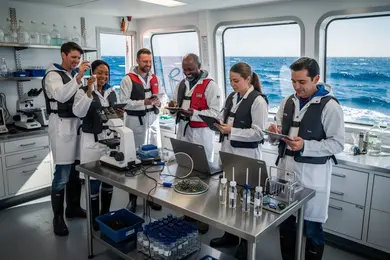
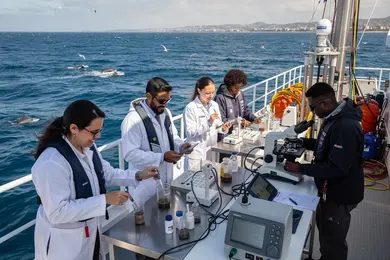
The most flexible online marine science programs separate lecture-based coursework from hands-on requirements. Students may complete theory courses asynchronously while completing labs through home kits, virtual simulations, local partner sites, short campus residencies, or approved field experiences.
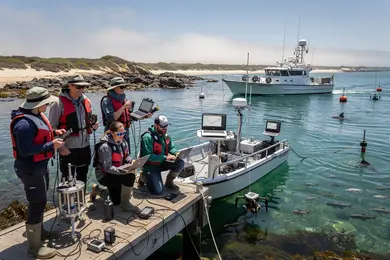
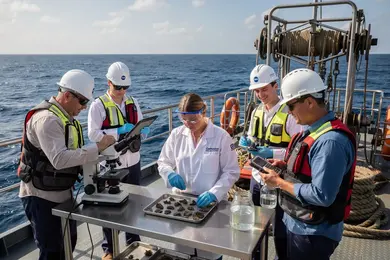
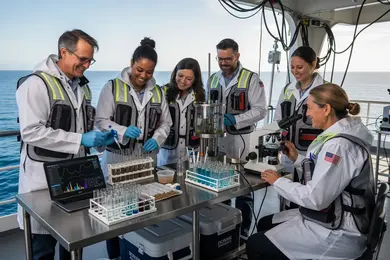
Flexibility matters because marine science is not purely screen-based. Employers and graduate programs often value evidence that students can collect samples, interpret ecological data, use field equipment, and communicate scientific findings.
The comparison below shows common delivery formats and who they serve best.
| Learning format | Flexibility level | Best for | Trade-off |
| Asynchronous online courses | Highest | Working adults and students in different time zones | Requires strong self-management and may offer less live discussion |
| Synchronous online courses | Moderate | Students who want live faculty interaction | Set meeting times can conflict with work schedules |
| Hybrid field or lab intensives | Moderate to low | Students who want stronger hands-on preparation | Travel, lodging, and time off work may add cost |
| Local internship or practicum model | Variable | Students near aquariums, agencies, labs, parks, or coastal organizations | Placement quality depends on location and school support |
| Self-paced or competency-based courses | High when available | Motivated students with prior college experience | Less common for upper-division lab sciences |
Students who need maximum schedule control should look for asynchronous courses and generous transfer policies. Students targeting graduate marine science programs should be cautious about choosing convenience over lab rigor, because missing lab or field preparation can make later applications weaker.
If schedule flexibility is your top priority, compare marine science options with broader lists of self paced degrees to understand which online formats support independent progress and which still require fixed labs or field sessions.
What Student Support Services Improve Success in Online Marine Science Degree Programs?
Student support is especially important in online marine science because students must navigate science prerequisites, labs, fieldwork, internships, and career planning from a distance. A low-cost program without strong support can become expensive if students repeat chemistry, lose transfer credits, or struggle to find required field placements.
Before enrolling, students should ask whether the program offers the following support services and whether they are available to online learners, not just campus students.
- Science tutoring for biology, chemistry, math, statistics, and scientific writing.
- Dedicated online academic advising with degree maps for full-time, part-time, and transfer students.
- Career services familiar with environmental agencies, consulting firms, aquariums, fisheries organizations, parks, and graduate-school applications.
- Internship or field-placement guidance, including help identifying local options for students who do not live near the coast.
- Library access to scientific journals, citation tools, GIS resources, and research databases.
- Faculty mentoring for undergraduate research, capstone projects, and graduate-school preparation.
The biggest red flag is a program that advertises field experience but leaves students entirely on their own to arrange it. If an internship, practicum, or capstone is required, ask for examples of recent placement sites and whether remote students outside the school's state have successfully completed the requirement.
Online programs in other fields face similar questions when hands-on learning is removed, reduced, or replaced. For example, students comparing online RN to BSN programs without clinical requirements still need to examine advising, evidence-based practice projects, and employer relevance rather than assuming convenience alone equals value.
Which Financial Aid Options Are Available for Accredited Online Marine Science Degree Students?
Accredited online marine science students may qualify for many of the same financial aid options as campus students, including federal grants, federal loans, state grants, institutional scholarships, employer tuition assistance, military education benefits, and private scholarships. Eligibility depends on accreditation, enrollment status, satisfactory academic progress, and the student's financial profile.
The most important first step is completing the FAFSA and comparing net price after grants and scholarships, not just published tuition. A school with higher tuition may be cheaper for you if it offers stronger grant aid or accepts more transfer credits.
Use the sequence below to compare aid offers in a practical way.
- Submit the FAFSA as early as possible and list every school you are seriously considering.
- Ask each school for a written estimate of tuition, fees, books, field-course costs, and remaining credits required.
- Separate gift aid, such as grants and scholarships, from loans that must be repaid.
- Confirm whether scholarships are renewable and what GPA or credit-load rules apply.
- Ask whether field courses, travel, lab kits, software, or internship costs can be covered by aid.
- Calculate the cost to finish, not the cost for the first term only.
Common mistakes include borrowing up to the maximum loan amount without building a completion budget, ignoring summer field-course costs, and assuming employer tuition assistance applies to all science courses. If you work full time, also ask whether part-time enrollment changes grant eligibility or delays course sequencing.
Students comparing online degrees across disciplines should use the same net-price mindset. Whether evaluating marine science, business, healthcare, or dietetics programs, the best financial decision depends on accredited status, aid eligibility, required hands-on experiences, and the cost to complete.
Which Career Outcomes Are Associated With Accredited Online Marine Science Degree Programs?
Online marine science programs can lead to roles in environmental science, fisheries, conservation, aquaculture, environmental education, coastal planning support, laboratory work, and regulatory compliance. However, many marine scientist, research biologist, oceanographer, and university research roles prefer or require graduate education.
BLS May 2024 data places the median annual wage for environmental scientists and specialists at $80,060 and for zoologists and wildlife biologists at $72,860. These figures are useful benchmarks, but they include workers across many industries and education levels, so students should treat them as labor-market context rather than a promise of starting pay.
The table below connects common marine science interests with likely education expectations and skills that can improve employability.
| Career direction | Typical entry credential | Useful skills | Graduate study advantage |
| Environmental scientist or specialist | Bachelor's degree in environmental science, biology, marine science, or related field | Sampling methods, GIS, statistics, environmental regulations, technical writing | Helpful for senior consulting, policy, or specialized analysis roles |
| Fisheries or wildlife technician | Associate or bachelor's degree, depending on employer | Field sampling, species identification, data entry, boating safety, habitat assessment | Helpful for advancement into biologist or manager roles |
| Aquaculture technician or specialist | Bachelor's degree or targeted technical experience | Water quality, animal husbandry, disease monitoring, production systems, data tracking | Helpful for research, management, or system design roles |
| Marine educator or outreach coordinator | Bachelor's degree plus communication experience | Public speaking, curriculum design, interpretation, conservation communication | Helpful for museum, aquarium, or program leadership roles |
| Research assistant or lab technician | Bachelor's degree with lab experience | Molecular methods, microscopy, data analysis, scientific writing, quality control | Often important for independent research roles |
Students who want the strongest career outcomes should build a portfolio, not just complete courses. Good evidence includes a capstone project, GIS map, data analysis notebook, internship evaluation, research poster, field log, or technical writing sample.
Employer expectations are also shifting toward data fluency. AI and automation can speed up image classification, environmental modeling, and data cleaning, but marine science professionals still need scientific judgment to design studies, validate outputs, and explain findings to agencies, communities, or clients.
How Do Online and Campus-Based Marine Science Degree Programs Compare?
Online and campus-based marine science programs can both be academically credible when properly accredited, but they serve different students. The main difference is not whether online learning is legitimate; it is how the program handles labs, field experience, mentoring, and access to marine environments.
The table below compares the practical differences students should weigh before choosing online or campus-based study.
| Factor | Online marine science program | Campus-based marine science program | Best choice depends on |
| Schedule | More flexible, especially with asynchronous courses | More fixed class and lab times | Work, caregiving, military service, and time-zone needs |
| Field access | May rely on short residencies, local placements, or virtual preparation | Often easier access to boats, labs, coastal stations, and faculty projects | Whether hands-on marine fieldwork is essential to your goal |
| Cost | Can reduce relocation and commuting costs | May offer more campus employment, lab assistant roles, or state-resident pricing | Total net price, not delivery mode alone |
| Networking | Requires intentional effort through internships, online faculty contact, and professional groups | More spontaneous interaction with faculty, peers, and research teams | Your comfort initiating relationships remotely |
| Graduate preparation | Strong if labs, research, and recommendations are built into the program | Often stronger for students seeking wet-lab or field-station research experience | Whether you need research references and advanced lab exposure |
Online study is often best for working adults, transfer students, military-connected students, and learners who cannot relocate to a coastal campus. Campus study may be better for traditional students who want daily lab access, boat-based fieldwork, residential research communities, or direct pathways to faculty-led marine research.
The mistake to avoid is assuming one format is automatically superior. Instead, compare the specific curriculum, faculty access, field requirements, and graduate-school preparation in each program.
How Should Students Choose the Best Accredited Online Marine Science Degree Program?
The best accredited online marine science degree program is the one that matches your career target, learning style, science preparation, and budget. A student seeking environmental consulting may benefit from a broad environmental science degree with GIS and regulation coursework, while a student aiming for aquaculture or marine organism work may need a more marine-specific curriculum.
Use the following decision process to narrow your options before applying.
- Define your target outcome: job after bachelor's, graduate school, career change, aquaculture, conservation, education, or environmental compliance.
- Verify institutional accreditation and confirm that the online program is covered.
- Compare curriculum depth in biology, chemistry, ecology, statistics, GIS, field methods, and technical writing.
- Request a transfer-credit evaluation before committing, especially for lab sciences.
- Calculate total cost to finish, including fees, books, lab kits, software, travel, and lost work time.
- Ask how online students complete labs, internships, field courses, and capstones.
- Review career services, faculty mentoring, graduate-school preparation, and examples of student projects.
- Compare financial aid offers by net price and loan amount, not scholarship size alone.
- Talk with an admissions counselor and ask what types of students tend to succeed in the program.
- Choose the program that offers the strongest combination of credibility, affordability, flexibility, and career relevance for your specific goal.
Students should consider a different path if they dislike biology or chemistry, cannot complete any field or lab work, need a guaranteed high starting salary, or want a role that clearly requires a different credential. Marine science can be rewarding, but it is most valuable when paired with practical skills, experience, and a realistic plan for the job market or graduate school.
A final red flag is relying only on rankings. Rankings can be a starting point, but your best program is the one that lets you finish affordably, build credible science skills, and document experience that employers or graduate programs can evaluate.
Other Things You Should Know About Marine Science
In 2027, online marine science programs offer specializations such as Marine Biology, Oceanography, Marine Conservation, and Marine Policy. These tracks allow students to focus their studies on specific areas while ensuring a broad understanding of marine environments and their management.
Most marine science degree programs, including online ones, do not require scuba diving certification. However, certification may be beneficial for specific fieldwork or research opportunities. Be sure to check the specific requirements of each program you're interested in.
Online marine science programs in 2027 typically require a stable internet connection, a computer with updated software, and possibly specific hardware for virtual labs. Some courses may also require specific applications or platforms for interactive learning and assessments.
Usually not. Many bachelor's programs use a capstone, internship, research project, or senior seminar instead of a thesis, though thesis-style research can help students preparing for graduate school.
References
- Marine Biology Field Research Training Course - Oceans Research https://www.oceans-research.com/oceans-field-research-program/
- So you want to become a Marine Biologist? | National Marine Aquarium https://www.national-aquarium.co.uk/learning-at-the-aquarium/marine-biologist/
- Home https://www.husson.edu/online/online-degrees/bachelor-of-science-in-marine-biology-and-conservation
- Marine Biology Degree Programs in the U.S. | MarineBio Conservation Society https://www.marinebio.org/careers/us-schools/
- Best Marine Sciences Institutions in the US, Ranked by Graduate Earnings https://clema.ai/programs/marine-sciences
- Master of Science in Biological Sciences and Marine Sciences Costs https://www.une.edu/sfs/graduate/costs/master-science-biological-sciences-and-marine-sciences-costs
- Oceanography.com | An oceanographic learning and research community https://www.oceanography.com/details/df7851b6-1fef-4006-b415-48fd856705a9
- Stockton University https://stockton.edu/sciences-math/marine-science.html
- Information for Prospective Students https://www.vims.edu/academics/graduate/admissions/
- Study Marine Science - Experience, Job Opportunities, Salary + Survey https://jobtensor.com/uk/Studies/Marine-Science