2027 Cheapest Accredited Online Marine Science Degree Programs That Accept FAFSA

Co-Founder and Chief Data Scientist
Finding an affordable online marine science degree is harder than it looks because many marine programs require labs, fieldwork, or coastal residencies. It matters because the maximum Federal Pell Grant remains $7,395 for eligible students, which can substantially reduce annual out-of-pocket cost but rarely covers a full degree by itself.
This guide is for students comparing FAFSA-eligible online marine science, marine biology, fisheries, ocean science, and coastal science programs. You will learn how to compare real net cost, accreditation, transfer value, aid options, and career return before enrolling.
Key Things You Should Know
- The cheapest FAFSA-eligible online marine science paths are often marine-focused biology, fisheries, conservation, ocean science, or aquaculture programs rather than fully online degrees titled exactly "Marine Science."
- FAFSA participation means a school can process federal aid, but your actual grant, loan, and work-study eligibility depends on enrollment level, financial need, dependency status, satisfactory academic progress, and annual federal limits.
- For eligible undergraduates, the Federal Pell Grant can provide up to $7,395 for the aid year, so the best value is usually the program with the lowest net price after grants, scholarships, transfer credit, and required fees-not just the lowest advertised tuition.
Which Are the Cheapest Accredited Online Marine Science Degree Programs That Accept FAFSA?
The direct answer is that fully online, accredited, FAFSA-eligible degrees using the exact label "marine science" are limited. Students usually find the lowest-cost online options by widening the search to marine biology, fisheries, ocean science, aquaculture, coastal ecology, environmental science, and conservation programs with marine-related coursework.
The table below summarizes lower-cost or commonly considered FAFSA-eligible online options in the U.S. marine science pathway. Because tuition and distance-learning fees change by term, use this as a decision shortlist and verify the current cost with each school's student accounts and financial aid office before applying:
| School | Online or low-residency program fit | Degree level | Why it may be affordable | Accreditation and FAFSA relevance |
| Unity Environmental University | Marine Biology and Sustainable Aquaculture | Bachelor's | Career-focused online format with marine biology and aquaculture emphasis; good for students who need a direct marine-related bachelor's path | Institutionally accredited; students should confirm federal aid eligibility for their specific program and enrollment status |
| University of Alaska Fairbanks | Fisheries, marine systems, or ocean-related online coursework depending on degree plan | Bachelor's or graduate pathway | Strong marine and fisheries identity; may be cost-effective for students who can use transfer credits or qualify for resident-rate options | Institutionally accredited; FAFSA participation should be confirmed by program and delivery format |
| Oregon State University Ecampus | Fisheries, Wildlife, and Conservation Sciences or related natural resources pathways with marine-relevant electives | Bachelor's | Established public university online division; good for students seeking broad conservation credentials with possible marine applications | Institutionally accredited; federal aid generally applies to eligible degree-seeking students |
| Texas A&M University-Corpus Christi | Fisheries, mariculture, coastal, or marine-related graduate study depending on current online availability | Master's pathway | Public coastal university with marine and fisheries relevance; may offer better value for students seeking graduate-level specialization | Institutionally accredited; confirm whether the online or hybrid version qualifies for federal aid |
| American Public University System | Environmental science or fish and wildlife management pathways that may support marine conservation goals | Bachelor's | Often considered by working adults because of online delivery and transfer-friendly policies | Institutionally accredited; federal aid participation applies to eligible students and programs |
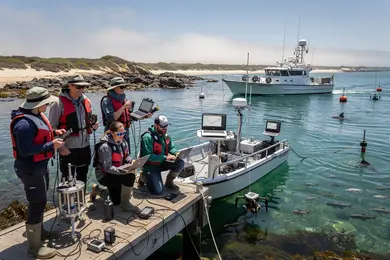
These programs are not interchangeable. A student who wants marine mammal field research may need a program with coastal field experiences, while a working adult interested in aquaculture operations or conservation policy may get better value from an online fisheries, environmental science, or marine-adjacent degree.
How Does FAFSA Eligibility Work for Online Marine Science Degree Programs?
FAFSA eligibility starts with the institution, but it does not end there. A school must participate in federal student aid programs, the student must be admitted into an eligible degree or certificate program, and the student must meet federal requirements such as citizenship or eligible noncitizen status, valid enrollment, and satisfactory academic progress.
For online marine science students, the key detail is program eligibility. An accredited university may accept FAFSA for many programs, but a non-degree certificate, continuing education option, short course, or special professional track may not qualify for federal aid.
Use this sequence before you rely on FAFSA to pay for any online marine science program:
- Search the school in the federal school code list or ask the financial aid office for its federal school code.
- Confirm that the exact online marine science, marine biology, fisheries, aquaculture, or environmental science program is Title IV-eligible.
- Ask whether online students receive the same institutional grants, scholarships, and federal aid packaging as campus students.
- Verify the minimum credits required each term for grants, loans, and in-school deferment.
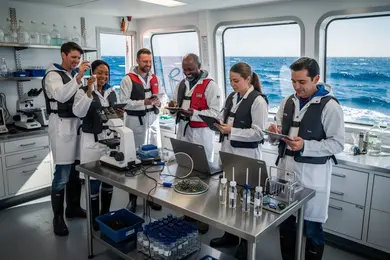
- Ask whether any field courses, labs, internships, boats, diving requirements, or travel residencies have separate costs not covered in base tuition.
A common mistake is assuming "FAFSA accepted" means "free." FAFSA is the application used to determine aid eligibility; it is not a scholarship by itself. Your award may include grants, loans, work-study, or no need-based grant aid depending on your circumstances.
How Much Does an Online Marine Science Degree Cost After Financial Aid?
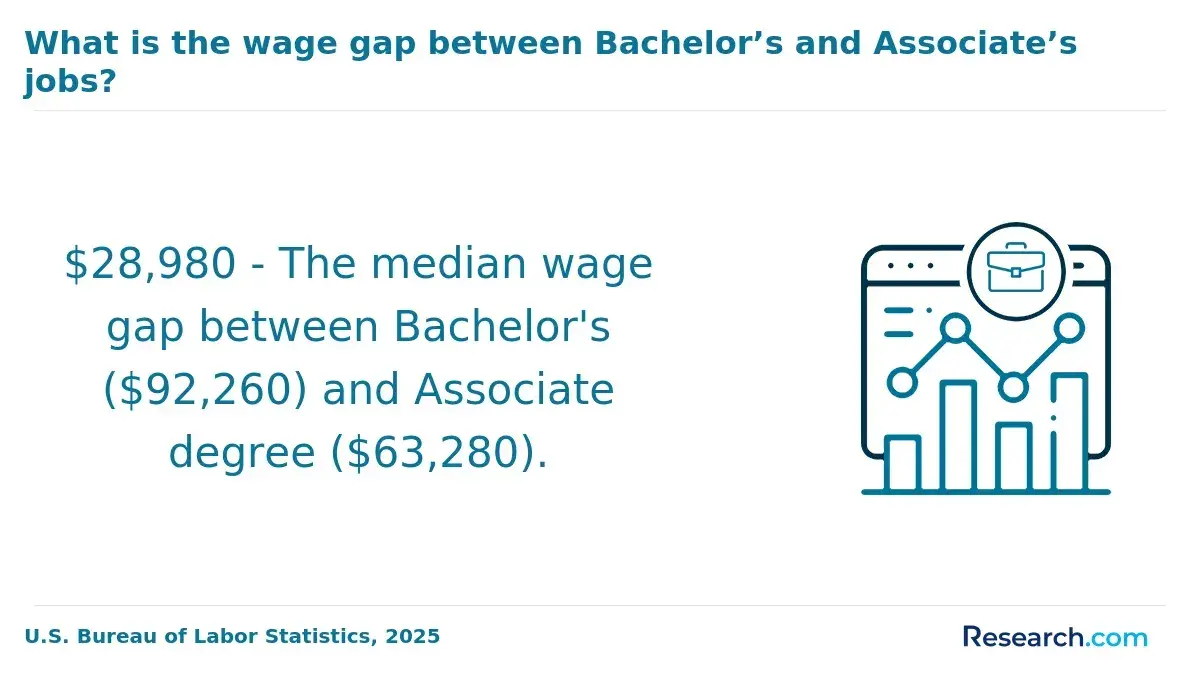
The cost after financial aid depends on published tuition, fees, transfer credits, enrollment intensity, grants, scholarships, and borrowing. The most useful number is net price: the amount left after gift aid such as grants and scholarships, before optional loans are counted.
The table below shows how different aid scenarios can change the cost of an online bachelor's program. These examples are planning illustrations, not promises, because each school calculates tuition and aid differently:
| Cost factor | Lower-cost scenario | Higher-cost scenario | What it means for the student |
| Tuition model | Public online program, resident-rate or flat online tuition | Private nonprofit or higher per-credit tuition | The lowest sticker price often comes from public or transfer-friendly programs, but scholarships can change the comparison |
| Federal grant aid | Eligible student receives Pell Grant funding up to the annual maximum | Student receives little or no grant aid based on FAFSA results | Two students in the same program can have very different net costs |
| Fees and materials | Mostly online courses with limited lab fees | Field courses, lab kits, travel, or residency requirements | Marine-related programs may include expenses not obvious in tuition tables |
| Transfer credit | Student transfers general education and science prerequisites | Student starts with no accepted credits | Accepted credits can reduce both tuition and time to completion |
| Borrowing | Grants, scholarships, savings, or employer aid cover most remaining cost | Student relies heavily on federal loans | Affordability should include likely repayment burden, not only enrollment cost |
Students who need maximum schedule flexibility should also compare marine science options with broader self paced degrees, especially if finishing faster or pausing during seasonal work would reduce lost income. Flexibility can be a real cost factor when a program's pacing affects whether you can remain employed.
Which Affordable Online Marine Science Degree Programs Offer the Best Value?
The best value is not always the cheapest tuition. A slightly more expensive program may be worth it if it accepts more transfer credit, offers marine-specific faculty mentoring, includes field learning, has stronger internship connections, or provides better institutional aid.
Use the comparison below to separate "cheap" from "good value." The strongest choice is usually the program that gives you the most relevant credential for the lowest total net cost and debt load:
| Program value factor | Why it matters | Best-fit student |
| Direct marine curriculum | Marine biology, ocean systems, aquaculture, or fisheries courses align better with marine careers than a generic science degree | Students seeking marine lab, aquaculture, conservation, or coastal roles |
| Transfer-friendly degree plan | Accepted credits reduce remaining tuition and shorten time to completion | Community college transfers and adults returning to college |
| Field or lab access | Marine employers and graduate programs may value applied experience | Students planning research, wildlife, lab, or graduate school paths |
| Federal and institutional aid | Gift aid can make a higher sticker-price school less expensive in practice | Students with financial need or strong academic records |
| Career alignment | The degree should support the student's intended role, not just sound interesting | Students comparing conservation, fisheries, environmental compliance, and aquaculture careers |
Students interested in science but unsure about marine careers may also compare adjacent health and nutrition pathways, such as dietetics programs, where professional credentialing and career requirements are more standardized. That comparison can help clarify whether marine science's field-based and research-oriented path is the right investment.
Are the Cheapest Online Marine Science Degree Programs Properly Accredited?
Accreditation is essential because it affects federal aid eligibility, transfer credit, graduate school admission, and employer trust. For FAFSA purposes, the school must be institutionally accredited by an agency recognized by the U.S. Department of Education and approved to participate in Title IV federal student aid programs.
Marine science programs usually do not have a universal programmatic accreditor in the same way nursing, engineering, or dietetics programs may. That makes institutional accreditation, faculty qualifications, curriculum quality, lab expectations, and field-learning opportunities especially important.
Before enrolling, check the following accreditation and legitimacy points:
- Confirm institutional accreditation through the U.S. Department of Education's recognized accreditation database or directly with the accreditor.
- Verify that the exact online degree is offered by the accredited institution, not by an unrelated third-party training provider.
- Ask whether credits from the program have transferred to graduate schools or public universities in the past.
- Review whether the degree title appears on the official transcript exactly as advertised.
- Be cautious if a school avoids clear answers about accreditation, federal aid eligibility, tuition, or graduation requirements.
A red flag is a program that markets itself as "accredited" without naming the recognized institutional accreditor. Another red flag is a marine science certificate that sounds like a degree but does not qualify for federal aid or transfer credit.
What FAFSA Grants and Federal Aid Can Pay for an Online Marine Science Degree?
FAFSA can connect eligible students with several types of federal aid, but the mix varies by undergraduate or graduate status. Grants reduce cost most directly because they usually do not need to be repaid, while loans can make enrollment possible but increase long-term cost.
The major federal aid categories for eligible online marine science students include the following:
- Federal Pell Grant: Need-based undergraduate grant funding, with a maximum award of $7,395 for eligible students in the current aid cycle.
- Federal Supplemental Educational Opportunity Grant: Additional campus-based aid for undergraduates with exceptional financial need, available only at participating schools with limited funds.
- Federal Direct Subsidized Loan: Need-based undergraduate loan where the government pays interest during qualifying in-school and deferment periods.
- Federal Direct Unsubsidized Loan: Available to eligible undergraduate and graduate students, but interest begins accruing after disbursement.
- Federal Work-Study: Part-time employment funding at participating schools, though online students should ask whether remote or local placements are available.
- Graduate PLUS Loan or Parent PLUS Loan: Credit-based federal borrowing options that can cover remaining cost but should be used carefully because repayment obligations can be substantial.
Students comparing marine science with healthcare pathways should note that aid rules can vary by program type and credential level. For example, someone looking at an accelerated healthcare administration degree may face different tuition pacing, employer reimbursement options, and career timelines than a student pursuing marine fieldwork or graduate research preparation.
How Do Transfer Credits Lower the Cost of an Online Marine Science Degree?
Transfer credits can be one of the biggest cost reducers in an online marine science degree. General education courses, introductory biology, chemistry, statistics, environmental science, and electives from a community college may reduce the number of credits you must pay for at the four-year institution.
The financial impact is greatest when the receiving school accepts credits toward major requirements rather than only free electives. A program with higher per-credit tuition can sometimes be cheaper overall if it accepts more applicable transfer credit than a lower-tuition competitor.
Use these steps to estimate transfer savings before enrolling:
- Request an unofficial transfer evaluation before committing, not after the first term starts.
- Ask how many credits apply to the major, general education, electives, and upper-division requirements.
- Confirm the maximum transfer limit and whether there is a minimum number of credits that must be completed at the school.
- Check whether older science credits expire or require department review.
- Compare remaining credits, not total degree credits, when calculating final cost.
This same logic matters in other adult-completion programs, including online RN to BSN programs without clinical requirements, where transfer credit and prior professional coursework can significantly affect time and cost. Marine science students should be just as aggressive about getting credits evaluated early.
Which Students Benefit Most From a Low-Cost Online Marine Science Degree With FAFSA?
A low-cost online marine science degree with FAFSA is a strong fit for students who need flexibility but still want a science-based pathway into marine, fisheries, conservation, aquaculture, environmental education, or coastal resource work. It can also serve students planning for graduate study if the curriculum includes the science prerequisites and research preparation expected by target programs.
The best-fit students usually share several traits. They are comfortable with online science coursework, willing to seek local field or lab experiences, and realistic about the fact that some marine careers require graduate education, seasonal work, geographic mobility, or hands-on experience near coastal or aquatic environments.
These students are likely to benefit most:
- Community college transfers who can bring in lower-cost general education and science credits.
- Working adults who need asynchronous courses and cannot relocate to a coastal campus.
- Students interested in aquaculture, fisheries management, environmental compliance, conservation outreach, or marine education.
- Military-affiliated students who can combine FAFSA with military education benefits if allowed by the school.
- Students who already live near marine, freshwater, fisheries, or environmental organizations where they can pursue internships locally.
Students should avoid choosing the cheapest program if their goal requires intensive lab work, diving experience, vessel time, or a specific graduate-school prerequisite sequence that the online program does not provide.
By contrast, career changers in licensed healthcare may prefer a clearer completion route such as the easiest RN to BSN program if they already hold nursing credentials and want a faster advancement pathway.
How Does the Cost of an Online Marine Science Degree Affect Career ROI?
ROI depends on total cost, total borrowing, completion time, and the type of role the student pursues after graduation. Marine science careers can be meaningful and mission-driven, but entry-level opportunities may be competitive, seasonal, or dependent on location and field experience.
For salary context, the U.S. Bureau of Labor Statistics reports a May 2024 median annual wage of $70,600 for zoologists and wildlife biologists, a category that can include some marine biology-related roles. This figure is not a guaranteed marine science outcome; it is a labor-market benchmark that helps students compare potential earnings with expected debt.
The table below shows how degree cost can affect ROI thinking. The point is not to choose only the cheapest program, but to avoid debt that is out of proportion to the career path you are targeting:
| Career goal | Degree value considerations | Cost caution |
| Marine biology or research assistant | Relevant science coursework, lab skills, statistics, and field experience matter | A low-cost degree without research preparation may limit competitiveness |
| Aquaculture or fisheries technician | Applied coursework, internships, and local employer connections can be valuable | Travel or residency requirements may raise total cost |
| Environmental compliance or conservation | Broad environmental science, GIS, policy, and data skills may be useful | A marine-specific degree is not always necessary if a cheaper environmental science degree meets job requirements |
| Graduate school preparation | Prerequisites, faculty mentorship, research methods, and recommendations matter | Minimizing undergraduate debt can preserve borrowing capacity for graduate study |
| Education, outreach, or nonprofit roles | Communication skills and practical experience can matter as much as the degree title | Expected pay may not justify high private-school borrowing |
Students should compare debt against realistic first jobs, not dream titles. A more expensive program may be worth it when it provides essential field access or graduate preparation, but it is risky if the added cost only buys a more attractive program name without better outcomes.
How Should Students Choose the Cheapest FAFSA-Eligible Online Marine Science Degree?
Choose the cheapest FAFSA-eligible online marine science degree by comparing the total educational investment, not just tuition. The right program should be accredited, aid-eligible, affordable after grants and scholarships, transfer-friendly, and aligned with your intended career or graduate-school path.
Ask each school the same questions so you can compare answers directly:
- Is the exact online program eligible for federal student aid through FAFSA?
- What is the estimated total cost to finish after my transfer credits are evaluated?
- Which fees, lab kits, field courses, travel, software, or residency costs are not included in tuition?
- What grants, scholarships, assistantships, employer partnerships, or payment plans are available to online students?
- How many students in this program complete internships, research projects, field experiences, or capstones?
- Will the curriculum satisfy prerequisites for the graduate programs or jobs I am considering?
- What is the typical time to completion for students who enroll part time?
- What happens to my aid if I drop below half-time enrollment or fail to meet satisfactory academic progress?
The best decision rule is simple: pick the lowest net-cost accredited program that still gives you the coursework, experiences, transfer value, and career alignment you need. If a non-marine program leads more directly to your goal, compare it honestly rather than paying extra for a marine label.
Other Things You Should Know About Marine Science
Sometimes, but many marine science programs include labs, fieldwork, internships, or short residencies. Fully online options are more common in marine-adjacent fields such as fisheries, environmental science, conservation, aquaculture, or natural resources.
Not always. Scuba is usually required only for programs or courses involving underwater research, scientific diving, or certain field experiences. Ask whether scuba, boating safety, swim tests, or field travel are required before enrolling.
A bachelor's degree may qualify students for technician, education, conservation, aquaculture, or entry-level environmental roles. Research scientist, faculty, and advanced specialist roles often require a master's or doctoral degree.
Choose marine biology if you want a life-science-heavy curriculum focused on marine organisms and ecosystems. Choose environmental science if you want broader options in conservation, compliance, sustainability, GIS, water quality, or environmental policy.
References
- Your guide to Marine Science internships in Greece | Intern Abroad HQ https://www.internhq.com/blog/guide-to-marine-science-internships-greece/
- Master of Science in Biological Sciences and Marine Sciences Costs https://www.une.edu/sfs/graduate/costs/master-science-biological-sciences-and-marine-sciences-costs
- How to become a marine biologist? | Conservation Careers https://www.conservation-careers.com/how-to-become-a-marine-biologist/
- Marine Biology Degree Programs in the U.S. | MarineBio Conservation Society https://www.marinebio.org/careers/us-schools/
- Career Resources » Marine Conservation Institute https://marine-conservation.org/career-resources/
- 2025 Most Affordable Online Environmental Science Degrees https://www.onlineu.com/most-affordable-colleges/environmental-science-degrees
- Undergraduate Marine Biology Programs Compared https://www.road2college.com/best-marine-biology-colleges/