2027 Accredited Online Marine Science Degree Programs That Accept the Most Transfer Credits

Co-Founder and Chief Data Scientist
Choosing an online marine science degree often comes down to one question: how much of your prior college work will actually count? That matters because the College Board reported average published tuition and fees of $11,610 for in-state public four-year students in 2024-25, before books, technology, and living costs.
This guide is for transfer students, associate degree holders, military learners, and working adults who want a faster path into marine biology, fisheries, conservation, or environmental science. You will learn how transfer limits, residency rules, lab requirements, and degree fit affect time, cost, and career value.
Key Things You Should Know
- The most transfer-friendly online marine science and aquatic science bachelor's pathways commonly advertise transfer limits near 90 semester credits, but the credits must still match degree requirements to reduce graduation time.
- A 120-credit bachelor's degree with 90 accepted credits may leave about 30 credits to complete, while quarter-credit programs may use different totals and residency rules.
- Marine science career paths often overlap with environmental science, fisheries, wildlife biology, GIS, aquaculture, and coastal conservation; the BLS reported a May 2024 median wage of $80,060 for environmental scientists and specialists.
Which Accredited Online Marine Science Degree Programs Accept the Most Transfer Credits?
The most transfer-friendly choice is not always the school with the largest advertised maximum. For marine science students, the better question is whether previous biology, chemistry, math, field science, and general education credits will apply to the major rather than becoming excess electives.
The table below summarizes accredited online or primarily online programs that are relevant to marine science, marine biology, fisheries, aquatic conservation, or environmental science pathways. Because fully online marine science bachelor's programs are limited, students should verify delivery format, lab expectations, and transfer evaluations directly with each institution before enrolling.
| Program | Institutional Accreditation | Degree Focus | Published or Common Maximum Transfer Potential | Best Fit | Transfer Caution |
| BS in Marine Biology and Sustainable Aquaculture | New England Commission of Higher Education | Marine biology, aquaculture, sustainability, aquatic systems | Up to 90 semester credits may be considered under transfer-friendly bachelor's policies | Students with prior biology, environmental science, chemistry, or associate-level science coursework | Major lab and upper-division requirements may limit how many credits reduce the remaining degree plan |
| BS in Fisheries, Wildlife, and Conservation Sciences | Northwest Commission on Colleges and Universities | Fisheries, conservation, ecology, wildlife and aquatic resource management | Transfer capacity depends on quarter-credit degree structure and institutional residency requirements | Students interested in fisheries, habitat management, conservation agencies, or graduate study preparation | Quarter credits do not convert one-for-one with semester credits, so students need an official audit |
| BS in Environmental Science with aquatic, fish, wildlife, or conservation electives | Regional institutional accreditation varies by school | Environmental systems, ecology, resource management, field methods, policy | Many online bachelor's programs in this category allow up to 90 semester transfer credits | Students whose prior credits are broad science or general education rather than specialized marine coursework | The degree title may not say "marine science," which can matter for some graduate programs or specialized employers |
| Online degree-completion programs in environmental studies or sustainability with coastal coursework | Regional institutional accreditation varies by school | Coastal policy, sustainability, environmental planning, conservation communication | Often designed for students entering with substantial prior college credit | Adult learners, associate degree holders, and students seeking policy, education, or management roles | May be less suitable for students who need intensive wet-lab preparation for marine biology graduate study |
A realistic transfer-friendly shortlist should include regionally accredited schools that offer marine biology, fisheries, aquatic conservation, environmental science, or coastal sustainability coursework online. Students who need a very specific credential, such as "marine biology" on the diploma, should be more selective than students seeking broader environmental or conservation roles.
The main red flag is choosing a school only because it advertises "up to 90 transfer credits." A student with 90 prior credits in business, humanities, or unrelated electives may still need many science prerequisites, while a student with fewer credits in biology, chemistry, statistics, and ecology may be closer to graduation.
How Do Online Marine Science Degree Programs Evaluate Transfer Credits?
Online marine science programs evaluate transfer credits by comparing your completed courses with their curriculum, accreditation standards, minimum grade rules, and residency requirements. The evaluation usually happens in two layers: first, whether a course is transferable at all; second, whether it satisfies a specific requirement in the degree.
Most schools review several factors before applying transfer credits to a marine science or aquatic science plan. These details matter because a credit accepted as a free elective may not shorten the science sequence you still need to finish.
- Institutional accreditation: Credits from regionally accredited colleges usually transfer more easily than credits from unaccredited or non-collegiate providers.
- Course equivalency: General biology, chemistry, calculus, statistics, ecology, oceanography, and environmental science courses are more likely to match degree requirements when syllabi and lab descriptions are available.
- Minimum grade: Many programs require a C or higher for transfer, and some major courses may require stronger grades.
- Course age: Older science, technology, or statistics courses may be reviewed more closely because methods, software, and lab standards change.
- Credit level: Lower-division courses may satisfy general education or introductory science requirements, but upper-division marine biology or research methods courses often must be completed at the degree-granting school.
Students comparing online transfer rules across fields can learn from other degree-completion models, including online RN to BSN programs without clinical requirements, because these programs also distinguish between credits that merely transfer and credits that actually satisfy graduation requirements.
The best practice is to request a written, program-level transfer evaluation before committing. Admissions estimates can be useful, but the official degree audit is what shows remaining general education, major, lab, upper-division, and residency requirements.
How Can Transfer Credits Shorten an Online Marine Science Degree?
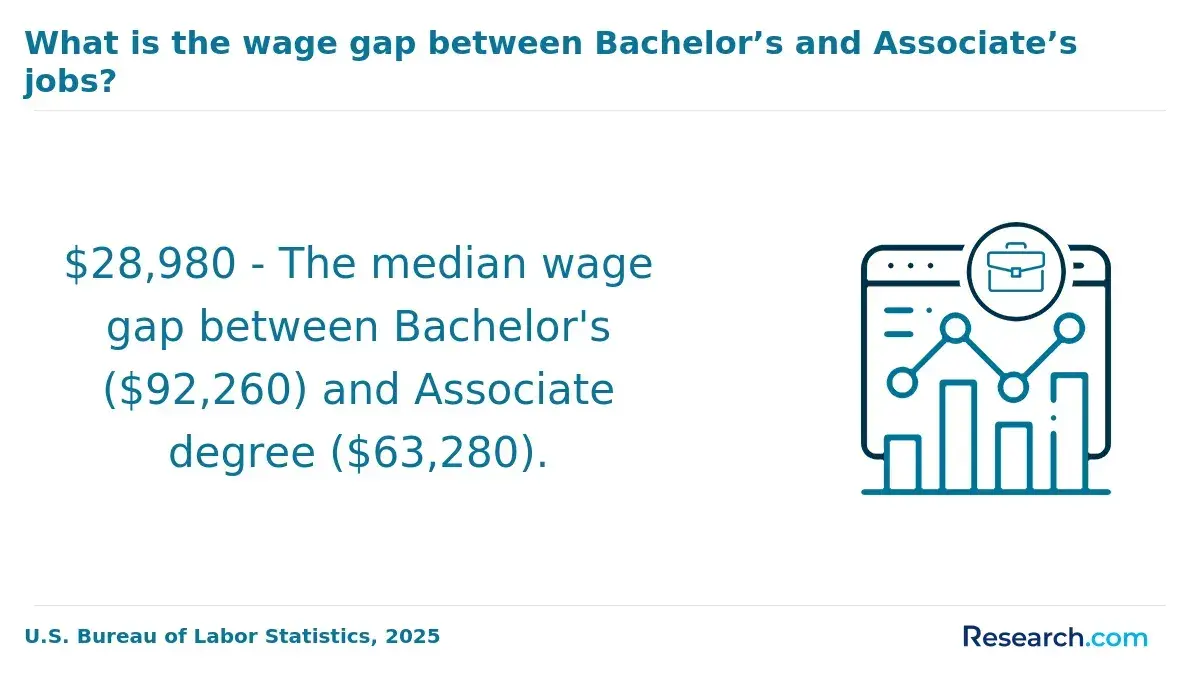
Transfer credits shorten an online marine science degree only when they replace required courses. A 120-credit bachelor's degree may sound almost finished if a school accepts 90 credits, but the remaining 30 credits may still include sequenced upper-division science classes that cannot all be taken in one term.
The table below shows how transfer credits can affect completion time in a typical 120-credit semester-based bachelor's program. It is a planning model, not a guarantee, because course sequencing, lab availability, prerequisites, and term formats vary by school.
| Accepted Transfer Credits | Approximate Credits Remaining | Possible Completion Pattern | What Could Slow Completion |
| 30 credits | 90 credits | About three academic years at full-time pace | Missing first-year biology, chemistry, math, or writing requirements |
| 60 credits | 60 credits | About two academic years at full-time pace | Associate degree credits may not align with science prerequisites |
| 75 credits | 45 credits | Roughly one and a half years if courses are offered frequently | Upper-division marine science courses may be offered in limited terms |
| 90 credits | 30 credits | About one academic year in a highly efficient plan | Residency minimums, capstone requirements, labs, or field components |
Course sequence is especially important in marine science because biology, chemistry, ecology, oceanography, statistics, GIS, and research methods may build on one another. A student may have enough credits numerically but still need prerequisite chains that take multiple terms.
If speed is the top priority, students should compare term length, asynchronous access, start dates, and whether courses are offered year-round. Learners considering flexible pacing in other majors can also review self paced degrees to understand how pacing models can affect degree completion, even though marine science programs may have more fixed lab and field requirements.
How Much Can Transfer Credits Reduce the Cost of an Online Marine Science Degree?
Transfer credits can reduce cost by lowering the number of credits you must pay for at the new institution. The savings are most meaningful when accepted credits replace required courses, not when they sit outside the degree plan as unused electives.
The table below uses a simple tuition-only illustration so students can see the relationship between remaining credits and cost. Actual costs may include technology fees, lab kits, books, field experiences, proctoring, and differential tuition.
| Per-Credit Tuition Example | Credits Remaining After Transfer | Tuition for Remaining Credits | Planning Meaning |
| $350 | 60 | $21,000 | A moderate-cost path if the student enters with about half the degree completed |
| $350 | 30 | $10,500 | A stronger degree-completion scenario if the remaining credits are available on schedule |
| $550 | 60 | $33,000 | A higher per-credit school may still be reasonable if it accepts more major-applicable credits |
| $550 | 30 | $16,500 | A higher sticker price can sometimes cost less overall when transfer efficiency is high |
Use published tuition carefully. The College Board's 2024-25 average in-state tuition and fees figure helps show why credit reduction matters, but online learners may pay separate online rates, flat-rate tuition, or per-credit tuition that differs from campus pricing.
Cost comparisons should also include opportunity cost. Finishing two terms sooner may help a student move into internships, technician roles, agency work, or graduate school applications earlier, but that benefit depends on local hiring conditions and the student's experience.
Students comparing transfer-driven ROI in other practical online fields may find the cost logic similar to an accelerated healthcare administration degree: the fastest option is not automatically the best one unless the remaining curriculum still supports the career goal.
Can Military, Professional, or Prior Learning Credits Transfer to an Online Marine Science Degree?
Military, professional, exam-based, and prior learning credits may transfer, but marine science programs often apply them more cautiously than general education programs. The reason is simple: specialized science degrees require verifiable preparation in lab science, quantitative reasoning, research methods, and discipline-specific content.
Students with nontraditional learning should ask how each type of credit is evaluated before assuming it will reduce the major. These categories are commonly reviewed differently.
- Military credits: Schools may use Joint Services Transcript recommendations, but military credits often apply to electives unless they match science, leadership, technical, or environmental training requirements.
- CLEP, AP, and IB credits: These may satisfy general education, math, writing, or introductory science requirements when scores meet institutional thresholds.
- Professional certifications: Credits may be awarded for documented training in GIS, emergency management, diving safety, environmental compliance, or aquaculture, but policies vary widely.
- Portfolio or prior learning assessment: Some adult-focused programs allow students to document college-level learning, though upper-level marine science lab courses are less likely to be waived.
A common mistake is assuming all prior learning credits carry the same value. In practice, 12 credits of military or professional learning may help with electives but still leave biology, chemistry, oceanography, and statistics untouched.
This distinction is also visible in other applied programs, such as dietetics programs, where practical experience can be valuable but does not automatically replace accredited coursework, supervised requirements, or science prerequisites.
Which Types of Previous College Credits Transfer Best to Online Marine Science Degrees?
The best transfer credits for online marine science degrees are usually recent, graded, college-level courses from accredited institutions that match the receiving school's curriculum. Science and math credits are especially valuable because they can unlock upper-division coursework sooner.
The table below ranks common prior credits by their likely usefulness in a marine science, aquatic biology, fisheries, or environmental science degree. The goal is to help students predict which credits may create real progress toward graduation.
| Previous Credit Type | Transfer Strength | Why It Helps | What to Verify |
| General biology with lab | High | Often required before ecology, marine biology, genetics, or physiology | Lab hours, course level, and whether both semesters are needed |
| General chemistry with lab | High | Supports ocean chemistry, environmental chemistry, and biological science requirements | Whether online or virtual labs are accepted by the receiving program |
| Statistics or calculus | High | Useful for research methods, population modeling, GIS, and data analysis | Course age and whether the degree requires a specific math track |
| Oceanography, ecology, environmental science | High to moderate | May directly support the major if content aligns | Whether the course counts as lower-division, upper-division, or elective credit |
| English composition and communication | Moderate | Usually satisfies general education and scientific communication requirements | Minimum grade and institutional writing requirements |
| Unrelated electives | Low to moderate | Can help reach total credit minimums | Whether the degree has room for free electives after major requirements |
Students should collect syllabi for science courses, not just transcripts. A syllabus can show lab contact hours, learning outcomes, textbook content, and fieldwork components that a transcript title does not capture.
One red flag is a transfer evaluation that lists many credits as "elective science" without showing how they apply. Elective credit may raise your total earned credits, but it may not reduce the exact courses needed for the marine science major.
How Do Transfer Agreements Affect Online Marine Science Degree Completion?
Transfer agreements can make online marine science degree completion more predictable by pre-mapping courses between institutions. These agreements are especially useful for students moving from a community college associate degree into a bachelor's program.
There are several agreement types students may encounter. Understanding the difference helps avoid overestimating how much time an associate degree will save.
- Articulation agreements: These identify specific community college courses that satisfy specific bachelor's degree requirements.
- Transfer pathways: These provide a recommended course sequence for students planning to transfer into a science major.
- General education waivers: These may allow an associate degree to satisfy lower-division general education, while major science courses are reviewed separately.
- Guaranteed admission agreements: These may secure admission if GPA and course requirements are met, but they do not always guarantee major admission or full credit applicability.
The strongest agreements are course-by-course pathways for biology, chemistry, math, environmental science, and communication requirements. A broad "associate degree accepted" policy can still leave gaps if the student did not complete the right lab sciences.
Students should ask whether the agreement is current. Science curricula change, and a transfer guide that has not been updated may not reflect current lab, statistics, GIS, or upper-division preparation expectations.
What Transfer Policies Should Students Compare Before Choosing an Online Marine Science Degree?
Before choosing an online marine science degree, students should compare the policies that determine actual transfer efficiency. The advertised maximum is only one part of the decision.
The questions below help students separate a genuinely transfer-friendly program from one that accepts credits on paper but still leaves a long path to graduation.
- What is the maximum number of transfer credits allowed, and does that maximum include exam, military, or prior learning credits?
- What is the minimum number of credits that must be completed through the institution awarding the degree?
- Will transfer credits satisfy major requirements, or will most count only as general electives?
- Are there minimum grades for science, math, lab, or upper-division courses?
- Do biology, chemistry, statistics, computer science, or GIS courses expire after a certain number of years?
- Are online labs, virtual labs, hybrid labs, or prior lab courses accepted for the major?
- How often are required upper-division marine science or aquatic science courses offered online?
- Can the school provide a written degree audit before enrollment or before the deposit deadline?
- Does the program require field experiences, internships, capstones, or research projects that affect scheduling?
- Is the institution regionally accredited, and does the degree align with graduate school or employer expectations in the student's target field?
Common mistakes include applying before gathering all transcripts, assuming an associate degree completes every lower-division requirement, ignoring residency rules, and failing to ask whether transferred courses count toward the major. A careful student asks for a degree map showing remaining courses by term, not just a total number of accepted credits.
A stricter program may be worth choosing if it has stronger lab preparation, faculty expertise, research opportunities, GIS coursework, internship support, or graduate school alignment. Transfer friendliness matters, but it should not replace academic fit.
Which Students Benefit Most From Transfer-Friendly Online Marine Science Degree Programs?
Transfer-friendly online marine science programs are most useful for students who already have meaningful college credit and a clear goal. They are less useful for students whose previous coursework does not align with science-heavy degree requirements.
The table below shows which student profiles are most likely to benefit from high-transfer policies and where caution is needed.
| Student Profile | Likely Benefit | Why Transfer Credits May Help | Best Next Step |
| Associate degree holder in biology, environmental science, natural resources, or general science | High | Many lower-division science and general education courses may align | Request a course-by-course major audit |
| Community college student planning transfer early | High | Can choose biology, chemistry, math, and ecology courses that match the bachelor's plan | Use transfer guides before registering for remaining community college courses |
| Working adult with mixed prior credits | Moderate | General education may transfer, but science gaps can remain | Identify missing prerequisites before selecting a program |
| Military learner with technical or environmental training | Moderate | Some training may support electives or applied requirements | Submit Joint Services Transcript and ask how credits apply to the major |
| Student seeking marine biology graduate study | Variable | Transfer credits can help, but graduate prerequisites may require specific lab science depth | Compare bachelor's coursework with target graduate program prerequisites |
| Student with mostly unrelated credits | Low to moderate | Credits may fill electives but not core science requirements | Prioritize curriculum fit over maximum transfer limit |
Students who mainly want the fastest possible bachelor's degree should be cautious. Marine science is a science-based field, and skipping foundational coursework can make upper-level courses, internships, and graduate applications harder.
Transfer-focused students in licensed or structured fields often face similar issues. For example, someone researching the easiest RN to BSN program still has to verify accreditation, degree requirements, and career fit; marine science students should use the same level of caution rather than choosing only by speed.
How Should Students Choose an Online Marine Science Degree Based on Transfer Efficiency?
Students should choose an online marine science degree based on transfer efficiency, degree relevance, and career alignment together. The best program is the one that turns the largest number of useful prior credits into the shortest credible path to a degree that supports the student's next step.
A practical selection process starts with documents, not marketing claims. Follow these steps before enrolling.
- List your target outcome, such as marine biology graduate school, fisheries technician work, aquaculture, environmental consulting, GIS, coastal conservation, education, or policy.
- Collect official transcripts, unofficial transcripts, syllabi for science courses, AP or CLEP score reports, military records, and professional training documentation.
- Shortlist only regionally accredited institutions with online coursework that matches your target outcome.
- Ask each school for a written transfer evaluation showing credits accepted into general education, major requirements, electives, and upper-division requirements.
- Compare remaining courses by term, including prerequisites, labs, fieldwork, internships, and capstones.
- Calculate remaining tuition using the school's current per-credit rate and required fees, not only the number of credits accepted.
- Check whether the program provides career-relevant tools such as GIS, statistics, research design, data analysis, scientific writing, and field or internship options.
- Choose the program with the best combination of accepted major-applicable credits, realistic schedule, total cost, accreditation, and career relevance.
Technology trends also matter. Marine science and conservation employers increasingly value data skills, including GIS, remote sensing, statistical software, environmental monitoring systems, and AI-assisted analysis of large ecological datasets. A program that accepts fewer credits but adds stronger quantitative or geospatial training may offer better long-term value than a faster program with a weaker technical curriculum.
The final decision should answer three questions: how many credits apply to the degree, how many terms remain, and whether the remaining curriculum supports the job or graduate pathway you actually want. If a school cannot provide those answers clearly, keep comparing options.
Other Things You Should Know About Marine Science
They can be, especially when the institution is regionally accredited and the curriculum includes solid science, data, lab, field, or applied conservation training. Employers usually care more about skills, experience, internships, and degree relevance than whether every course was completed online.
Some do. Requirements vary by school and may include virtual labs, local field assignments, short residencies, internships, or campus-based intensives. Students should confirm these requirements before enrolling, especially if travel is difficult.
Not exactly. Marine biology focuses on living organisms and ecosystems, while marine science can also include oceanography, chemistry, geology, climate, policy, fisheries, and coastal management. Degree titles vary, so students should compare course lists carefully.
Yes, but preparation matters. Students interested in graduate school should complete the biology, chemistry, statistics, research methods, and lab or field experiences expected by target master's or doctoral programs.
References
- Most Popular Online Courses https://www.straighterline.com/online-college-courses/most-popular/
- College Credit for Military Training & Experiences https://www.dantes.mil/credit4training/
- Top Online Schools That Accept Transfer Credits https://www.edvisorly.com/student-guides/online-schools-that-accept-transfer-credits
- Marine Biology Degree Programs in the U.S. | MarineBio Conservation Society https://www.marinebio.org/careers/us-schools/
- Transfer Credit Policy https://sunyniagara.edu/registration-records/transfer-credit-policy/
- 7 Classes That All Aspiring Marine Biologists Should Take https://www.seamester.com/blog/7-high-school-classes-that-all-aspiring-marine-biologists-should-take/
- Transferology https://www.transferology.com/
- How to become a marine biologist? | Conservation Careers https://www.conservation-careers.com/how-to-become-a-marine-biologist/
- Home https://www.husson.edu/online/online-degrees/bachelor-of-science-in-marine-biology-and-conservation
- Search icon https://waldorf.edu/online/academics/online-transfer-friendly-institutions/