
2027 Substitute Teaching License & Requirements in Georgia

Co-Founder and Chief Data Scientist
Substitute teaching in Georgia is often the fastest way to enter a classroom, earn income with a flexible schedule, and test whether a longer-term education career is right for you. The path is not the same in every district, however. Georgia school systems set many of the hiring steps, pay rates, assignment procedures, and training expectations, so applicants need to understand both state-level expectations and local district rules before applying.
This guide explains how to become a substitute teacher in Georgia, what credentials and background checks are typically required, how assignments work, how much substitutes can earn, and when substitute teaching can help you move toward full-time teaching, private school roles, or additional education credentials.
Quick Answer: How Do You Become a Substitute Teacher in Georgia?
To become a substitute teacher in Georgia, you generally need at least a high school diploma or GED, proof of employment eligibility, a criminal background check with fingerprinting, and any required district substitute training. Applicants usually work through a local school district or approved hiring partner, and requirements may be higher for long-term assignments, certified substitute roles, or positions in specialized classrooms.
Key Points About Becoming a Substitute Teacher in Georgia
- Georgia substitute teacher applicants must usually have at least a high school diploma or GED, complete district hiring requirements, and meet background check and training expectations tied to Georgia Professional Standards Commission rules.
- Demand for substitutes remains steady across Georgia because schools need coverage for teacher absences, vacancies, professional development days, and long-term leave.
- Typical substitute teacher pay in Georgia is often reported in the $75 to $110 per day range, though district, certification status, location, and assignment length can change the rate significantly.
- What are the requirements to become a substitute teacher in Georgia?
- What are the different types of substitute teaching permits in Georgia?
- How do substitute teachers renew their teaching permit in Georgia?
- How do substitute teachers receive assignments in Georgia districts?
- Can substitute teaching lead to a full-time teaching job in Georgia?
- How much do substitute teachers make in Georgia?
- What is the job outlook for substitute teachers in Georgia?
- How can substitute teachers access ongoing professional development in Georgia?
- How can substitute teachers in Georgia build professional support networks?
- What ethical standards do substitute teachers adhere to in Georgia?
- Can substitute teaching reduce the required education timeline for full certification?
- What are the benefits received by substitute teachers in Georgia?
- What are the common challenges for substitute teachers in Georgia?
- How can substitute teaching pave the way to private school teaching opportunities in Georgia?
- What online opportunities can further elevate a substitute teacher’s career in Georgia?
What are the requirements to become a substitute teacher in Georgia?
Georgia does not treat substitute teaching as a single statewide job application. Most candidates apply through a local school district, and that district verifies education, identity, background clearance, training completion, and assignment eligibility. The baseline is accessible, but long-term substitute roles and preferred substitute lists often require stronger credentials.
| Requirement | What it means for applicants | Why it matters |
| Minimum education | You generally need at least a high school diploma or GED. Some districts may prefer college credits, an associate degree, a bachelor’s degree, or teacher certification. | Education level can affect which classrooms you may cover and whether you qualify for longer assignments. |
| Background check and fingerprinting | Applicants must complete criminal background screening and fingerprinting, commonly involving GCIC and FBI checks through the district or an approved process. | Schools must verify that adults working with students meet safety and employment standards. |
| Substitute training | New substitutes without a valid or expired Georgia teaching certificate must complete at least four hours of training covering topics such as classroom management, student safety, and mandated reporting. | Training helps substitutes respond appropriately when they enter unfamiliar classrooms. |
| Employment eligibility | Candidates must provide documentation showing legal authorization to work in the United States, typically through I-9 verification. | Districts cannot place applicants in schools until employment eligibility is confirmed. |
| Assignment limits | Substitutes with only a high school diploma or GED may not work more than 10 consecutive days in the same classroom. | This limit helps districts distinguish short-term coverage from positions that need stronger instructional qualifications. |
| District-specific screening | Local systems may require interviews, reference checks, orientation, technology training, or additional forms. | Hiring timelines and eligibility rules can differ from one Georgia district to another. |
The best first step is to choose the district where you want to work, review its substitute teacher application page, and confirm whether it hires directly or through a staffing partner. If you plan to use substitute teaching as a bridge into certified teaching, degree planning matters. Programs such as one-year online master’s in education options may be useful for candidates who already hold a bachelor’s degree and want a faster graduate route.
What are the different types of substitute teaching permits in Georgia?
Georgia substitute roles can differ by education level, certification status, and district need. Before applying, confirm the exact credential terminology used by the district and the Georgia Professional Standards Commission because local hiring pages may describe substitute categories differently.
| Permit or role type | Who it typically fits | Typical use | Important limitation |
| Standard Substitute Permit | Applicants with at least 60 college credit hours who do not hold full teacher certification | Daily or short-term substitute teaching across grade levels or subjects | It is described as valid for three years, but district rules may affect placement options. |
| Temporary Teaching Permit | Candidates with a bachelor’s degree who are working toward full teacher certification | Substitute work while completing certification requirements | It is described as valid for one year with possible renewal. |
| Emergency Substitute Permit | Applicants used during urgent staffing shortages who may not meet the usual credit-hour expectations | Short-term coverage when a district has immediate vacancies or absences | Scope is limited and depends heavily on district need. |
| Professional Substitute Permit | Educators who already hold a valid Georgia professional teaching certificate and want substitute-only work | Preferred or higher-qualified substitute assignments, including some longer-term roles | Certified substitutes may have access to better-paying or more specialized assignments, but availability is not guaranteed. |
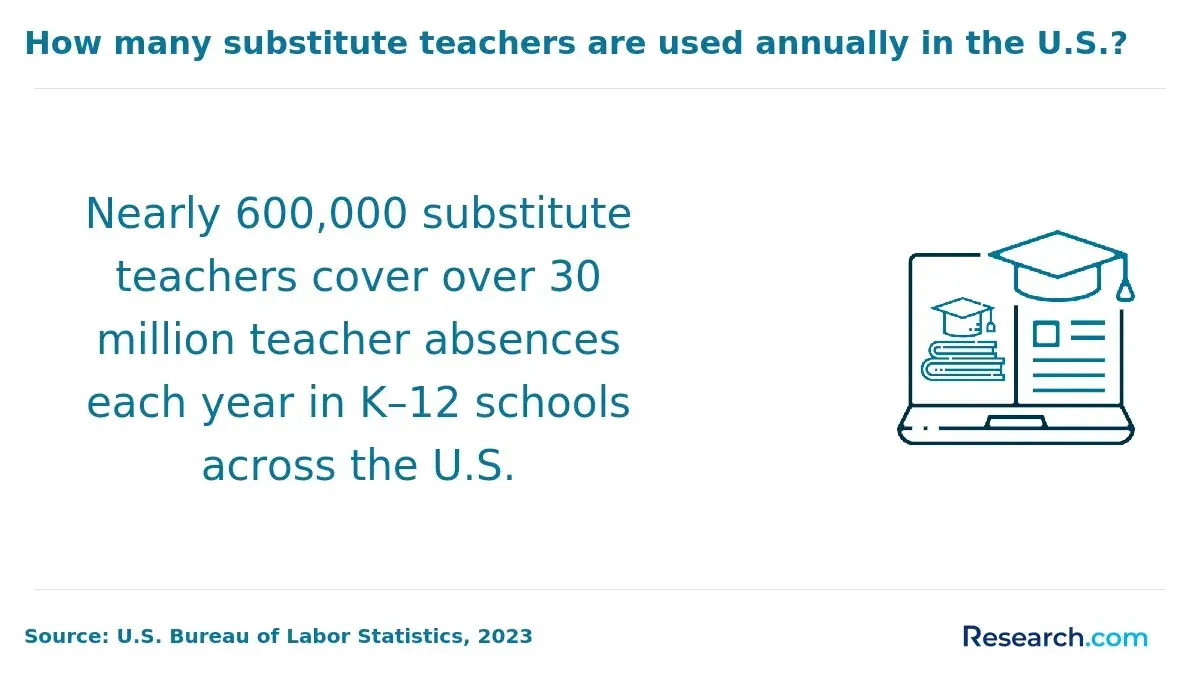
The practical question is not only “Which permit can I get?” but also “Which assignments will this credential allow me to accept?” A daily elementary assignment, a high school math vacancy, a special education classroom, and a long-term leave replacement may have different expectations. This distinction matters because U.S. schools have reported understaffing across multiple subjects, as shown below.
How do substitute teachers renew their teaching permit in Georgia?
Renewal keeps a substitute eligible for future assignments and gives districts updated confirmation of professional learning and background clearance. Substitutes should start checking renewal requirements well before the expiration date because transcripts, training records, and background checks can take time to process.
- Validity period: Substitute teaching permits in Georgia are described as lasting five years and must be renewed to remain active.
- Continuing learning: Renewal may require six semester hours of college coursework, 10 Georgia Professional Learning Units, or equivalent continuing education credit.
- Development plan: Substitutes currently working for a district may need an individual professional development plan coordinated and verified locally.
- Updated screening: A new state criminal background check is required every five years. If the FBI fingerprint check was not completed earlier, it may need to be completed during renewal.
- Application route: Employed substitutes often renew through their district, while others may need to send a paper application, official transcripts, documentation, and fees to the Georgia PSC Certification Section.
- Recordkeeping: Keep copies of training certificates, transcripts, district notices, and clearance confirmations so renewal is not delayed by missing documentation.
If renewal requirements push you toward additional coursework, compare programs by accreditation, transfer policies, cost, and relevance to your teaching goals. A candidate interested in inclusive classrooms, for example, may want to review online bachelor’s degrees in special education before choosing random credits that may not support a long-term plan.
How do substitute teachers receive assignments in Georgia districts?
Once hired, most Georgia substitutes do not wait for a single school to call every morning. Districts usually use a mix of online absence-management systems, automated alerts, preferred substitute lists, and direct requests from teachers or administrators.
- Online assignment platforms: Many districts use systems such as Aesop, also known as Frontline Absence Management, or local portals where approved substitutes can view open jobs and accept assignments.
- Text, phone, and email alerts: Automated notifications help substitutes respond quickly when teachers enter absences.
- Preferred substitute pools: Schools may give priority to reliable substitutes, certified educators, or candidates who have performed well in previous assignments.
- Direct teacher requests: Teachers may request a specific substitute for planned absences, especially when they want continuity for a class, grade level, or subject area.
- District size differences: Large districts such as Fulton County often rely heavily on digital systems, while smaller or rural districts may use more direct communication.
- Long-term placement rules: Longer assignments may require stronger credentials, a valid Georgia teaching certificate, or additional approval.
| If you want... | What to do | Why it helps |
| More frequent daily jobs | Accept assignments promptly, keep your availability updated, and work across multiple schools if allowed. | District systems often reward responsiveness and flexibility. |
| Better school relationships | Arrive early, follow the lesson plan, leave clear notes, and introduce yourself professionally to office staff. | Teachers and administrators remember substitutes who make the day run smoothly. |
| Long-term assignments | Build a track record, complete training, and pursue certification if required for extended placements. | Schools are more cautious when placing substitutes in the same classroom for many days. |
| Specialized assignments | Gain experience in special education, STEM, early childhood, or English learner support when possible. | Specialized classrooms often need substitutes who can follow detailed plans and student supports. |
Can substitute teaching lead to a full-time teaching job in Georgia?
Yes, substitute teaching can help you move toward a full-time teaching job in Georgia, but it does not automatically qualify you for one. The biggest advantage is visibility. Principals, department chairs, and teachers can see how you manage students, follow plans, communicate, and handle pressure in real classrooms.
- You gain classroom evidence: Daily assignments help you learn grade-level routines, school culture, behavior systems, and instructional expectations.
- You build references: Administrators and teachers who trust your work may become strong references when you apply for permanent openings.
- You test different settings: Working in elementary, middle, high school, special education, and elective classrooms can clarify the age group or subject you want to pursue.
- You identify credential gaps: Substitute teaching can show whether you need a bachelor’s degree, an educator preparation program, testing, or a professional teaching certificate from the Georgia Professional Standards Commission.
- You demonstrate reliability: Schools value substitutes who are punctual, calm, prepared, ethical, and willing to return to challenging classrooms.
-
: "
One Georgia substitute described the move toward a full-time role as demanding but worthwhile. He said the uncertainty of daily assignments was difficult, but consistent professionalism helped him stand out. “I learned that substituting was not just covering a class. It was a chance to show I could lead a room, support students, and be part of the school.”
"
The most effective strategy is to treat every substitute assignment like an informal interview. Leave concise notes for the teacher, follow district policies, ask for feedback when appropriate, and track the schools where you performed well.
How much do substitute teachers make in Georgia?
Substitute teacher pay in Georgia varies widely by district, credential level, assignment length, and location. The statewide average hourly pay has been reported around $12.64. In the Atlanta area, hourly wages have been reported near $19.30, with an average annual salary of about $40,141. Daily pay may be lower in rural districts and higher in large metro districts or long-term assignments.
| Pay factor | How it affects earnings | Example from Georgia districts |
| Certification status | Certified substitutes often earn more than non-certified substitutes. | DeKalb County Schools pays $25 per hour for certified substitutes and $22.50 for non-certified substitutes. |
| Length of assignment | Long-term placements may pay more because they involve more responsibility and continuity. | Long-term substitutes in DeKalb earn $28.13 per hour. |
| District pay schedule | Each school system sets its own rates, so nearby districts may pay differently. | Atlanta Public Schools offers $220 per day for certified substitutes, while DeKalb County pays $200 per day for similar roles. |
| Location | Urban and suburban districts may offer higher rates than some rural areas, though cost of living may also be higher. | Atlanta-area rates are generally stronger than many non-metro rates. |
When comparing pay, ask whether the listed rate is hourly or daily, whether taxes are withheld, whether the district pays more after a certain number of consecutive days, and whether training days are paid. If your long-term goal is higher-level educational leadership, you may eventually compare options such as affordable online EdD programs, but that investment only makes sense after you understand your certification and career goals. The chart below provides additional context on gender pay gaps among substitute teachers.
What is the job outlook for substitute teachers in Georgia?
The outlook for substitute teachers in Georgia is favorable for applicants who are flexible, reliable, and willing to work in districts with persistent staffing needs. Demand is strongest where enrollment growth, teacher absences, vacancies, and limited applicant pools create frequent coverage gaps.
- Metro Atlanta and surrounding suburbs: Districts such as Gwinnett, Cobb, and DeKalb counties often need substitutes because of large student populations, teacher turnover, and daily absences.
- Rural and low-income districts: These systems may face smaller hiring pools, lower pay scales, and harder-to-fill vacancies, which can create steady substitute opportunities.
- Majority Black and minority communities: Some communities face overlapping staffing challenges, including unfilled positions and fewer certified substitute applicants.
- North Georgia and college towns: Areas such as Rome and Gainesville have reported substitute needs, with paraprofessionals and college students sometimes filling gaps.
- Statewide staffing pressure: Teacher retention below 90% statewide and fewer qualified applicants have pushed districts to rely more on substitute placements and staffing firms.
For job seekers, the best opportunities may not always be in the highest-paying district. A district with frequent assignments, supportive school leaders, and a realistic path to certification can be more valuable than a district with a slightly higher daily rate but fewer openings. Candidates interested in future leadership roles can also explore affordable online master’s degrees in educational leadership as part of a longer-term plan.
How can substitute teachers access ongoing professional development in Georgia?
Professional development helps substitutes move from “available adult in the room” to confident classroom support. In Georgia, substitutes may find training through district onboarding, Regional Educational Service Agencies, online modules, workshops, and school-based orientation sessions. Useful topics include classroom management, emergency procedures, mandated reporting, technology platforms, lesson-plan execution, and supporting students with disabilities.
Choose professional development based on your goals. If you want more daily assignments, focus on classroom management and district technology. If you want long-term substitute work, prioritize lesson delivery, assessment procedures, and subject-area support. If you want a full-time teaching career, compare training with the teacher certification types and requirements in Georgia so your effort supports the credential you eventually need.
How can substitute teachers in Georgia build professional support networks?
Substitute teaching can feel isolating because you may work in a different building each week. Building a support network makes the role more sustainable and can also improve your chances of receiving preferred assignments.
- Connect with school office staff: They often know which classrooms need reliable substitutes and which procedures matter most in that building.
- Ask experienced substitutes for practical advice: They can explain assignment systems, high-demand schools, and district-specific expectations.
- Join educator associations or online groups: These spaces can help with classroom management tips, policy updates, and job leads.
- Find a mentor teacher: A supportive teacher can review your notes, explain routines, and recommend you for future assignments.
- Track your strongest placements: Keep a list of schools where you worked well, then prioritize those when accepting new assignments.
If you are still at the beginning of the process, a step-by-step overview of how to become a substitute teacher in Georgia can help you connect networking efforts with the correct application and training steps.
What ethical standards do substitute teachers adhere to in Georgia?
Substitute teachers in Georgia are expected to follow professional and ethical standards that protect students, preserve trust, and support orderly school operations. Because substitutes may enter many classrooms, consistency matters: the rules apply even when the assignment is short.
| Ethical responsibility | What substitutes should do | What to avoid |
| Student confidentiality | Protect student records, grades, health information, discipline details, and family information. | Do not discuss students publicly, post about assignments online, or share private details with unauthorized people. |
| Student safety | Follow supervision rules, emergency procedures, and mandated reporting requirements. | Do not ignore suspected abuse, unsafe behavior, bullying, or medical concerns. |
| Professional conduct | Use respectful language, maintain boundaries, and model appropriate behavior. | Do not use sarcasm, favoritism, intimidation, or overly personal communication with students. |
| Fair treatment | Apply classroom rules consistently and respect student backgrounds and identities. | Do not discriminate or treat students differently based on personal bias. |
| Policy compliance | Follow district rules on attendance, discipline, testing, dress, technology, and reporting. | Do not create your own discipline system or ignore the teacher’s written instructions. |
| Assessment integrity | Administer tests according to the provided directions. | Do not coach students, change procedures, or leave testing materials unsecured. |
| Conflict avoidance | Keep decisions professional and student-centered. | Do not use the position for personal gain, favoritism, or inappropriate relationships. |
| Reporting concerns | Report suspected ethical violations through the appropriate school or district channels. | Do not conceal serious misconduct because it is uncomfortable to report. |
Georgia substitute teachers are covered by the state’s Code of Ethics for Educators, and violations can affect substitute eligibility, including possible suspension or loss of eligibility through GaPSC oversight.
-
: "
A Georgia substitute teacher explained that confidentiality and fairness shape every assignment. She noted that reporting concerns can feel uncomfortable, but it is part of protecting students and maintaining the integrity of the school environment.
"
Can substitute teaching reduce the required education timeline for full certification?
No. Substitute teaching experience can strengthen your confidence and help you understand classrooms, but it does not replace the formal education, testing, or certification requirements for full teacher licensure in Georgia. It can, however, help you make smarter decisions about your certification route.
For example, after substitute teaching, you may realize that you prefer middle grades over elementary education, special education over general education, or a private school environment over a public school system. Those insights can prevent wasted coursework and help you choose the right preparation program. If your goal is full certification, compare your current education level with the timeline explained in how long it takes to become a teacher in Georgia.
What are the benefits received by substitute teachers in Georgia?
The biggest benefits of substitute teaching in Georgia are flexibility, classroom experience, and a low-barrier entry point into education. Traditional employee benefits are less predictable. Health insurance, retirement access, paid leave, and bonuses depend on district policy, hours worked, employment classification, and assignment type.
| Benefit or incentive | What substitutes may receive | What to verify before accepting work |
| Daily pay | Substitutes in Georgia commonly see rates between $70 and $150 per day, with higher rates in some metro or certified roles. | Ask whether pay changes for certified, non-certified, retired teacher, and long-term substitute categories. |
| Higher certified rates | Certified substitutes can sometimes earn up to $219.98 daily. | Confirm what credential the district requires to qualify for the higher rate. |
| Flexible scheduling | Substitutes can often choose available days, schools, and assignments. | Ask whether declining jobs affects future assignment access. |
| Training access | Districts may provide required onboarding, online courses, or professional development. | Check whether training is paid, required before hiring, or required before certain placements. |
| Health or retirement eligibility | Some districts may offer benefits to substitutes who qualify as full-time employees, and retired Georgia teachers may be able to return as substitutes without jeopardizing retirement benefits. | Get benefits rules in writing from the district or benefits office. |
| Local incentives | Some districts offer supplements or bonuses, such as Henry County Schools providing a $170 bonus for specific teaching roles. | Ask whether incentives are temporary, role-specific, or tied to a minimum number of days. |
If you want substitute teaching to become a stepping stone rather than a side job, plan your education carefully. Reviewing the easiest education degree program options can help you understand which paths may fit your background, schedule, and certification goals.
What are the common challenges for substitute teachers in Georgia?
Substitute teaching can be rewarding, but the role is not easy. The hardest parts usually involve uncertainty, limited preparation time, classroom management, uneven district support, and income instability.
| Common challenge | Why it happens | Better way to handle it |
| Unpredictable schedule | Assignments can change daily and may depend on teacher absences. | Keep an updated calendar, accept jobs early, and apply to more than one district if allowed. |
| Uneven training | Some districts provide minimal orientation before placing substitutes. | Build your own toolkit: seating chart templates, behavior scripts, emergency questions, and note forms. |
| Classroom management issues | Students may test boundaries when their regular teacher is absent. | Start class with clear expectations, follow the teacher’s plan, and ask nearby staff for support early. |
| Low or inconsistent pay | Rates vary by district and assignments are not guaranteed. | Compare pay schedules, long-term rates, and assignment frequency rather than looking only at the daily rate. |
| Little planning time | Substitutes often receive lesson plans shortly before students arrive. | Arrive early, review emergency procedures, and identify the most important tasks for the day. |
| Limited benefits | Many substitutes are not treated as full-time employees. | Ask about health insurance, retirement, paid training, and eligibility thresholds before relying on the job as primary income. |
| Different hiring standards | Requirements range from a high school diploma to preferred college experience or certification. | Read each district’s requirements carefully instead of assuming one application applies statewide. |
| Special education responsibilities | Substitutes may enter classrooms with IEPs, behavior plans, or medical needs they do not fully understand. | Ask for essential student supports, follow written plans, and request help from special education staff when needed. |
| Interrupted student learning | Frequent teacher absences can disrupt instruction, especially when plans are incomplete. | Focus on completing the teacher’s highest-priority tasks and leaving clear notes about what was finished. |
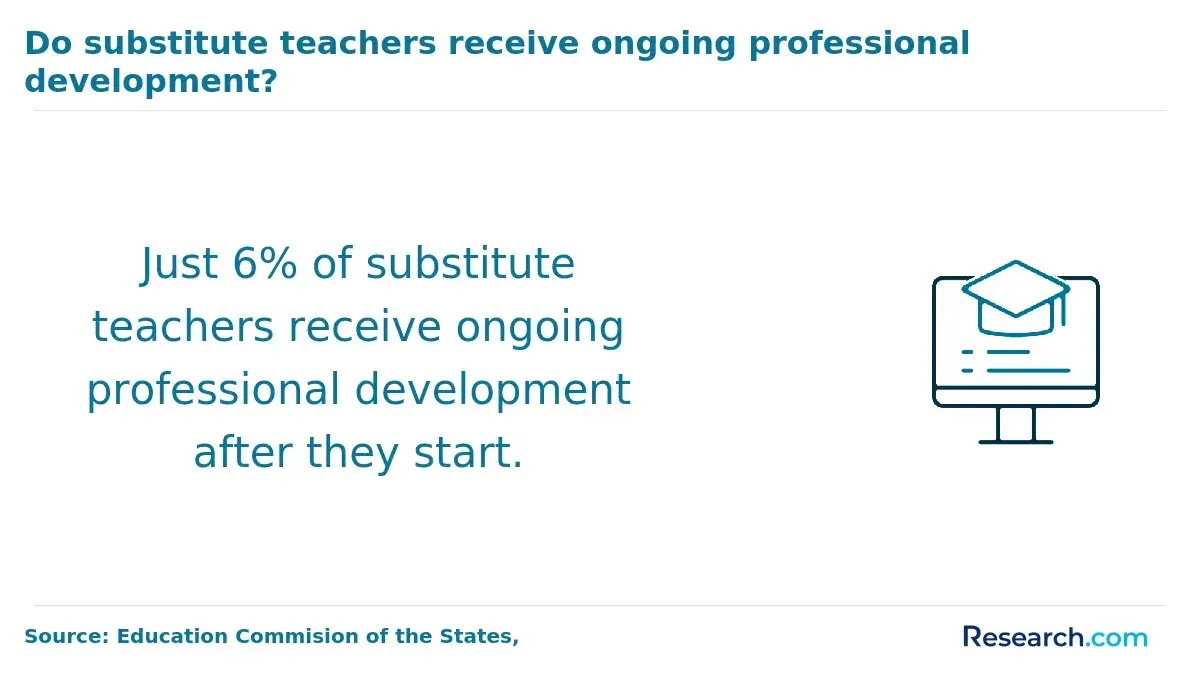
These challenges help explain why professional development access is important for substitute teachers, as shown in the image below.
What Substitute Teachers in Georgia Say About Their Careers
- Substitute teaching in Georgia lets me work around my family responsibilities while still staying connected to education. I like being able to choose days that fit my life, and the daily rate makes the flexibility worthwhile. – Belle
- I started substituting because I wanted classroom experience, but it became much more than that. The relationships I built in schools helped me see a real path toward full-time teaching and future leadership roles. – Sophia
- The training opportunities have made a major difference for me. Workshops and online courses help me walk into unfamiliar classrooms with more confidence and better strategies. – Jett
How can substitute teaching pave the way to private school teaching opportunities in Georgia?
Substitute teaching can help candidates prepare for private school roles by building classroom confidence, behavior management skills, and adaptability across grade levels. Private schools may value educators who can personalize instruction, communicate well with families, and contribute to a close-knit school culture. Requirements can differ from public school certification rules, so candidates should research each school carefully.
If private education is your goal, use substitute assignments to collect strong references, document successful classroom experiences, and identify the age group or subject you want to teach. You can also review how to become a private school teacher in Georgia to compare public and private school expectations.
What online opportunities can further elevate a substitute teacher’s career in Georgia?
Online learning can help Georgia substitutes improve classroom readiness without giving up work availability. Useful options include mandated reporter training, classroom management courses, instructional technology modules, special education foundations, subject-area refreshers, and degree or certification programs that align with Georgia teaching requirements.
Before enrolling, verify accreditation, cost, transfer credit rules, field experience requirements, and whether the program supports Georgia certification goals. Online study can be convenient, but not every online program leads to the credential you need. For a broader overview, review how to become a teacher online in Georgia.
Common Mistakes to Avoid Before Applying
- Assuming every Georgia district has the same rules: Requirements, pay, onboarding, and assignment systems vary locally.
- Looking only at the daily rate: A higher-paying district may offer fewer assignments, while a lower-paying district may provide steadier work.
- Ignoring long-term substitute requirements: Extended placements may require certification or additional approval.
- Skipping professional development: Training can make the difference between occasional assignments and becoming a preferred substitute.
- Failing to document experience: Keep a record of schools, grades, subjects, dates worked, and administrators who can provide references.
- Assuming substitute work replaces certification: Classroom experience is valuable, but it does not remove formal education or licensure requirements for full-time public school teaching.
- Not asking about benefits: Health, retirement, bonuses, and paid training depend on district policy and employment classification.
Questions to Ask a Georgia School District Before You Apply
- What is the minimum education requirement for daily substitute teaching?
- Do you require college credits, a bachelor’s degree, or certification for long-term assignments?
- What background check and fingerprinting process do I need to complete?
- Is substitute training required, and is it paid?
- Which assignment system do you use, and how quickly can new substitutes access it?
- What are the daily, hourly, certified, non-certified, and long-term pay rates?
- Are substitutes eligible for bonuses, benefits, retirement participation, or paid professional development?
- Can I work in multiple districts at the same time?
- How do schools select preferred substitutes?
- What should I do if I am placed in a classroom without lesson plans or adequate support?
Related Articles for Nearby States
- 2027 Substitute Teaching License & Requirements in South Carolina
- 2027 Substitute Teaching License & Requirements in Florida
- 2027 Substitute Teaching License & Requirements in Alabama
- 2027 Substitute Teaching License & Requirements in Tennessee
- 2027 Substitute Teaching License & Requirements in North Carolina
- 2027 Substitute Teaching License & Requirements in Mississippi
- 2027 Substitute Teaching License & Requirements in Kentucky
- 2027 Substitute Teaching License & Requirements in Virginia
- 2027 Substitute Teaching License & Requirements in Louisiana
- 2027 Substitute Teaching License & Requirements in West Virginia
References:
- AllEducationSchools.com. (n.d.). Georgia teacher certification overview. AllEducationSchools.com
- Bulloch County Schools. (n.d.). Substitute employment information. BCS
- Fulton County Schools. (n.d.). Substitute services and hiring details. FCS
- Gwinnett County Public Schools. (n.d.). Substitute teaching opportunities. GCPS
- Heart of Georgia RESA. (n.d.). Substitute teacher training information. HGRESA
- Justia. (2022). Georgia Code Title 20, Chapter 2, Elementary and Secondary Education. Justia
- National Education Association. (2022). Educator shortage report. NEA
- TeachingCertification.com. (n.d.). Georgia substitute teaching license guidance. TeachingCertification.com
- Zippia. (2025). Substitute teacher demographics. Zippia
Key Insights
- Georgia substitute teaching is district-driven: start with the district where you want to work and verify its education, background check, training, and pay rules.
- The minimum entry point is often a high school diploma or GED, but college credits, a bachelor’s degree, or teacher certification can improve access to better assignments and higher pay.
- Substitute teaching can support a full-time teaching goal by giving you classroom experience, references, and school connections, but it does not replace Georgia’s formal certification requirements.
- Pay varies substantially. Compare certified and non-certified rates, long-term rates, assignment frequency, and benefits eligibility before choosing a district.
- The substitutes who get called back are usually reliable, prepared, ethical, calm under pressure, and easy for teachers and administrators to trust.
Other Things You Need to Know About Becoming a Substitute Teacher in Georgia
Yes, you can substitute teach in Georgia without a teacher certification in 2027. However, you must have a minimum of a high school diploma or its equivalent. Some districts may require additional qualifications, such as a college degree or completion of a substitute training program. Availability of positions can vary based on district-specific needs.
Georgia requires a fingerprint-based criminal history record check through the Georgia Crime Information Center and the FBI before a substitute teacher can work. School systems also review any disqualifying offenses under state law and local hiring rules before issuing a substitute assignment or permit.


