2027 Teacher Certification Types & Requirements in Georgia

Co-Founder and Chief Data Scientist
Becoming a public school teacher in Georgia requires more than choosing a subject and applying for classroom jobs. You need the right certificate from the Georgia Professional Standards Commission (GaPSC), an approved preparation pathway, required assessments, field experience, and a plan for renewal once you are employed.
This guide is for future teachers, career changers, out-of-state educators, and current Georgia teachers who want to understand the certification process without getting lost in agency terminology. You will learn which Georgia teaching certificate fits your situation, what education and testing requirements apply, how much certification may cost, how long the process can take, and what mistakes to avoid before committing to a program.
Quick Answer: Georgia Teacher Certification at a Glance
- Georgia teacher certification is administered by the Georgia Professional Standards Commission and includes several credential types, such as Initial, Induction, Professional, Advanced/Lead Professional, Provisional, and specialized endorsements.
- Most first-time candidates need a bachelor’s degree, completion of a GaPSC-approved educator preparation program, supervised field experience, the Georgia Educator Ethics Assessment, and the relevant GACE content assessment.
- Alternative routes, including GaTAPP, can help career changers begin teaching while completing certification requirements, but they are still rigorous and require testing, mentoring, and classroom performance evaluation.
- The job outlook for certified teachers in Georgia is positive, supported by population growth and education initiatives. The average salary is approximately $25,327 annually, though actual pay varies by district, credential level, subject area, and experience.
- Before enrolling in any pathway, confirm GaPSC approval, total costs, student teaching requirements, transfer-credit rules, and whether the program leads to the certificate field you want.
- Georgia teaching certificate types explained
- Education requirements for Georgia teacher certification
- Required Georgia teacher certification tests
- Georgia certification programs to consider
- Alternative routes for career changers
- Cost of becoming certified in Georgia
- Typical certification timeline
- Advanced certification and professional growth
- Music teacher certification in Georgia
- Common certification challenges
- Georgia teacher job market outlook
- Physical education teacher certification
- Renewing a Georgia teaching certificate
- Transferring Georgia certification to another state
- Benefits of Georgia teacher certification
Georgia Teaching Certificate Types Explained
Georgia does not use a single one-size-fits-all teaching credential. The certificate you need depends on your preparation route, experience level, employment status, subject area, and whether you are entering teaching for the first time or advancing in the profession.
The table below summarizes the main certification options and when each one is typically used.
| Certificate or Permit Type | Who It Is For | What to Know Before Choosing This Route |
| Standard Professional Certificate | Educators who completed an approved preparation program and met GaPSC competency requirements. | This is the long-term credential many teachers work toward after satisfying education, testing, and experience requirements. |
| Provisional Certificate | Individuals hired by Georgia schools who still need to complete one or more certification requirements. | It can allow you to teach while finishing requirements, but it is generally non-renewable and should not be treated as a permanent solution. |
| Induction Certificate | New teachers with less than three years of experience who completed preparation requirements and required assessments. | This credential supports early-career teachers as they build classroom experience. |
| Performance-Based Professional Certificate | Teachers who demonstrate effectiveness through classroom performance and student achievement measures. | It recognizes educators who meet or exceed professional standards through demonstrated practice. |
| Advanced/Lead Professional Certificate | Experienced educators with at least five to ten years of service and additional leadership or expertise qualifications. | This credential is most relevant for teachers pursuing leadership, mentoring, coaching, or advanced professional roles. |
| Emergency and Substitute Permits | Schools filling short-term staffing needs or substitute roles. | These permits are non-renewable and are intended for temporary coverage, not a standard long-term teaching pathway. |
| Alternative Route Certification | Career changers and bachelor’s degree holders who did not complete a traditional teacher education program. | Candidates usually teach under supervision while completing coursework, assessment, mentoring, and performance expectations. |
| Subject-Specific and Special Education Endorsements | Certified educators adding areas such as Special Education, ESOL, or Computer Science. | Endorsements can expand the grade levels, subjects, or student populations you are authorized to serve. |
| Other Specialized Certificates | Educators in leadership, support, or nontraditional school-based roles. | Requirements vary widely, so candidates should check GaPSC rules for the exact field and role. |
If you are at the beginning of your education pathway and want a lower-division starting point before a bachelor’s program, reviewing the best online associate degree in education options can help you compare early academic routes into the field.
Education Requirements for Georgia Teacher Certification
For most first-time teachers in Georgia, the core academic requirement is a bachelor’s degree plus completion of a GaPSC-approved educator preparation program. The degree may be earned as part of an undergraduate education major, or the preparation component may be completed later through a post-baccalaureate, graduate, or alternative certification route.
Georgia candidates should confirm that their program is approved for the exact certificate field they want. A general education degree is not always enough if it does not align with the intended grade band, subject area, or special education category.
- GaPSC-approved educator preparation: Candidates must complete a state-recognized program that combines teaching methods, classroom management, assessment, child development, and subject-area preparation.
- Student teaching or supervised practicum: Most traditional routes require a full semester of supervised student teaching in a Georgia school, where candidates practice instruction under the guidance of certified educators and university supervisors.
- Pre-Service Certificate before fieldwork: Candidates must obtain a Pre-Service Certificate before student teaching. This requires enrollment in an approved preparation program, a background check, and completion of the GACE Program Entry Ethics Assessment. The certificate remains valid for up to five years.
- Special education and literacy preparation: Georgia preparation programs include coursework addressing literacy instruction and support for students with disabilities, reflecting state-specific expectations for classroom readiness.
Students comparing flexible program formats may want to review the best online teaching degree programs to identify options that fit work schedules, transfer needs, and long-term certification goals.
The chart below shows the breakdown of teacher educational attainment in the U.S.:
Required Georgia Teacher Certification Tests
Georgia uses assessments to verify that teacher candidates understand professional ethics, have foundational academic skills, and possess the content knowledge needed for their certificate field. The specific exams you need depend on your route and intended subject area.
| Assessment | When It Is Used | Why It Matters |
| GACE Program Admission Assessment | Before admission to a state-approved educator preparation program, unless the candidate submits qualifying SAT, ACT, or GRE scores. | It measures basic skills in reading, mathematics, and writing. |
| Georgia Educator Ethics Assessment | Before fieldwork or student teaching and as part of Pre-Service Certificate requirements. | It evaluates understanding of professional responsibilities, ethical conduct, and educator decision-making. |
| GACE Content Assessment | Required for the intended teaching subject and grade level. | It confirms subject-matter knowledge. Passing scores are now recognized at the Professional performance level. |
| Performance-Based Assessments | Common in alternative pathways such as GaTAPP. | They use observations, evaluations, and classroom evidence to show that the candidate can teach effectively. |
| Specialized GACE Assessments | Required for certain non-classroom or advanced roles, such as school counseling or educational leadership. | They confirm readiness for specialized responsibilities beyond standard classroom teaching. |
A common mistake is waiting until the end of a program to think about testing. A better approach is to map exam dates, study time, score-reporting windows, and retake policies before student teaching or alternative-route placement begins.
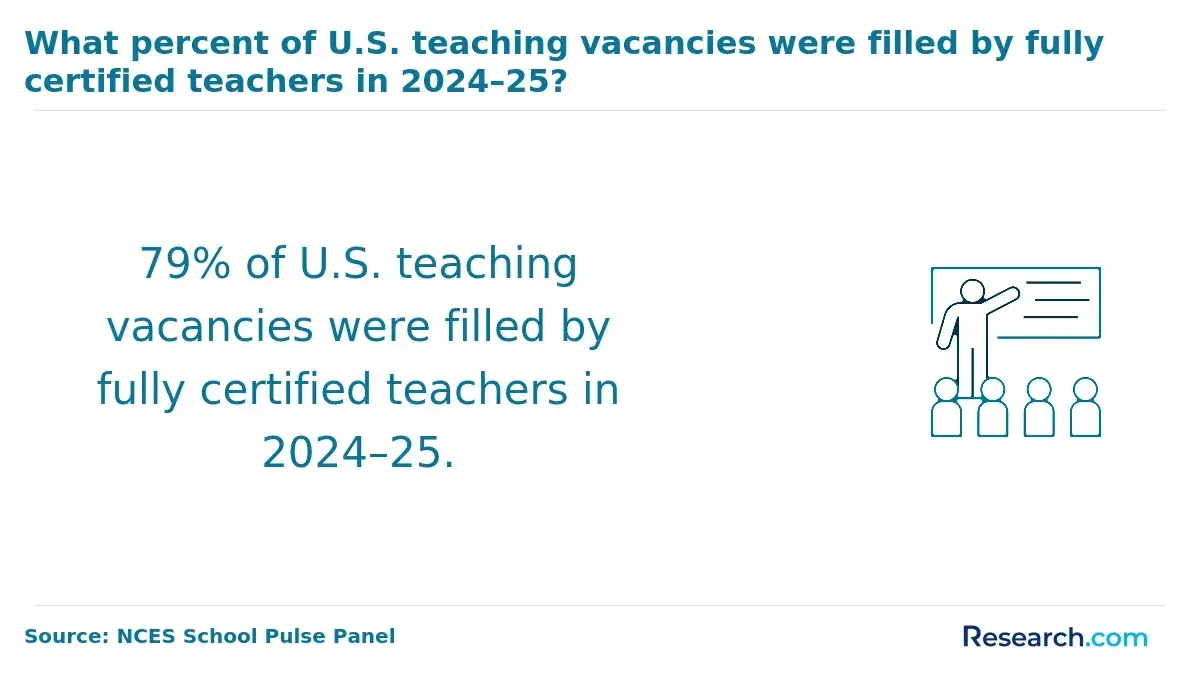
These assessments not only support statewide teaching standards but also help certified educators qualify for classroom openings across Georgia. The image below illustrates this broader staffing context.
Georgia Certification Programs to Consider
The best Georgia teacher certification program is the one that is approved for your intended certificate field, fits your schedule and budget, provides strong clinical placement support, and prepares you for the required GACE assessments. Reputation matters, but approval status and alignment with your license goal matter more.
- Georgia College & State University, John H. Lounsbury College of Education: This institution offers state-approved initial certification options in areas such as Special Education, Early Childhood, and Middle Grades Education at the undergraduate level, leading to a three-year Induction Certificate (Level 4). Graduate candidates may pursue a Master of Arts in Teaching (M.A.T.) leading to the T-5 induction certificate. Minimum GPA expectations are 2.75 for undergraduates and 3.0 for graduate students.
- Columbus State University, College of Education and Health Professions: This program includes required Georgia Educator Ethics Assessment completion, GACE Content Assessment preparation, student teaching, and special education coursework. Candidates must earn a minimum grade of "B" in key classes.
- University of Georgia, College of Education: UGA offers a wide range of undergraduate and graduate certification pathways, with research-based coursework, extensive clinical experiences, and school partnerships across varied K-12 settings.
- Georgia State University, College of Education & Human Development: Located in the Atlanta area, this program emphasizes culturally responsive instruction and clinical practice in diverse urban classrooms, with undergraduate and graduate certification routes available.
Each program requires state-mandated assessments, including the GACE Content Assessment and Georgia Educator Ethics Assessment, along with supervised student teaching or internship requirements.
If you are still clarifying how education majors are categorized academically, Research.com’s guide to what category education falls under in college can help you understand the broader degree landscape before selecting a certification program.
Alternative Routes for Career Changers in Georgia
You do not always need to earn a traditional undergraduate education degree to become certified in Georgia. Alternative certification routes are designed for bachelor’s degree holders who have strong content knowledge or professional experience but still need teacher preparation, mentoring, and certification support.
These routes can be attractive because they may allow candidates to earn income as teachers while completing requirements. They are not shortcuts, however. Candidates must still pass required assessments, demonstrate classroom competence, and satisfy GaPSC rules.
| Alternative Route Feature | What It Means for Candidates | Best Fit |
| Georgia Teacher Academy for Preparation and Pedagogy (GaTAPP) | Candidates with a bachelor’s degree teach full-time as paid educators while completing certification requirements over 18 months to 2 years. | Career changers who can manage full-time teaching, coursework, mentoring, and performance evaluation at the same time. |
| Eligibility expectations | Typical requirements include a bachelor’s degree with at least a 2.5 GPA, passing scores on the GACE Program Admission Assessment or qualifying SAT/ACT/GRE scores, the relevant GACE content exam, and the Georgia Educator Ethics Assessment. | Applicants who already meet academic and testing expectations or can complete them quickly. |
| Other alternative providers | Options may include Teach For America in selected districts, university-based post-baccalaureate programs, certification-only routes, and residency-style models. | Candidates who want structured coaching and a pathway connected to a hiring district or preparation provider. |
| School-based support | Alternative candidates often receive mentoring, classroom observations, coaching, and professional learning while employed. | Professionals who learn well through applied classroom practice rather than full-time campus study. |
One Georgia educator who entered through an alternative pathway described the process as demanding but worthwhile. Teaching full time while completing coursework required strong organization, but consistent mentoring helped him translate prior career experience into classroom practice. His main takeaway was clear: the route was not easier than a traditional program, but it was structured enough to prepare him for the realities of teaching.
Cost of Teacher Certification in Georgia
The cost of Georgia teacher certification depends on the pathway you choose. A four-year undergraduate education degree, a graduate-level certification program, and an alternative route such as GaTAPP can have very different price tags. Candidates should also budget for testing, background checks, application fees, renewal, and study materials.
| Cost Category | Typical Amount Stated | Planning Tip |
| Traditional undergraduate teacher preparation at public universities | $5,000 to $10,000 per year for in-state students | Confirm whether the estimate includes fees, books, student teaching costs, and required assessments. |
| Private college undergraduate programs | May exceed $20,000 annually | Compare institutional aid, net price, and certification pass support before enrolling. |
| Graduate-level MAT or M.Ed. programs | $7,000 and $15,000 per year for in-state students | Ask whether the program leads to initial certification, advanced certification, or both. |
| Selected graduate certificates | Some options, such as the University of Georgia’s online offerings, may total around $9,675 in tuition | Verify total program cost, not just per-credit tuition. |
| Alternative certification, including GaTAPP | $4,000 and $6,000 for the entire program | Budget for tests and district-related expenses in addition to program fees. |
| GACE exam registration | About $78 per subject test or $193 for combined assessments | Plan for possible retakes and score-reporting timelines. |
| Fingerprinting and background checks | Around $50 | Ask your school, district, or program when this must be completed. |
| GaPSC application fee | Between $20 and $30 and non-refundable | Submit only after confirming that your documents are ready. |
| Certificate renewal | Generally ranging from $20 to $50 every five years | Keep professional development records throughout the renewal cycle. |
| Books, study guides, and materials | $500 to $1,000 | Use program-provided resources before buying extra test-prep materials. |
Financial aid may reduce out-of-pocket costs. Georgia candidates commonly explore the HOPE Scholarship, the Georgia Tuition Equalization Grant, Federal TEACH Grants, and loan forgiveness tied to service in high-need schools or subjects.
If early childhood education is your target area, comparing accredited online bachelor’s in early childhood education programs may help you identify flexible options that align with certification goals.
How Long Georgia Teacher Certification Takes
Your timeline depends mainly on your current education level. A first-time college student usually needs more time than a bachelor’s degree holder entering a post-baccalaureate or alternative pathway. Testing availability, student teaching placement, part-time enrollment, and document processing can also affect the schedule.
| Pathway | Typical Timeline | Who Should Consider It |
| Traditional bachelor’s degree with educator preparation | About four years of full-time study | Students beginning college who want a planned route into teaching with student teaching built into the degree. |
| Post-baccalaureate or graduate certification | 12 to 24 months | Bachelor’s degree holders who want formal preparation before or alongside entering the classroom. |
| Alternative certification programs | Some accelerated options, such as TEACH-NOW, can be completed in as little as nine months | Career changers who may qualify to teach under a provisional certificate while finishing requirements within three years. |
| Student teaching or internship | 12 to 16 weeks for most programs | Candidates in traditional or graduate routes who must complete supervised classroom practice. |
| Exam preparation and scheduling | May add a few months depending on readiness and testing windows | Anyone who has not yet passed the required GACE and ethics assessments. |
Part-time enrollment, evening classes, and delayed testing can extend the timeline, sometimes substantially. Transfer credits, accelerated terms, and summer-intensive formats may shorten it. Georgia College & State University offers traditional undergraduate and graduate certification programs that typically take four years and one to two years respectively. Columbus State University requires completion of a state-approved program, the ethics assessment, and a semester of student teaching or internship.
On top of certification requirements, teachers should also be ready to adapt to different instructional formats, as shown below:
Advanced Certification and Professional Growth in Georgia
Advanced credentials and professional development can move Georgia teachers beyond the entry-level classroom role. Endorsements, instructional leadership preparation, mentoring responsibilities, and professional learning communities may support advancement into positions such as instructional coach, master teacher, department lead, or school-based mentor.
This path makes the most sense for teachers who already enjoy classroom practice but want broader influence, stronger leadership opportunities, or preparation for future administrative study. If cost is a major concern at the beginning of your pathway, reviewing the cheapest way to get a teaching credential in Georgia can help you plan a more affordable entry point before pursuing advanced credentials.
Music Teacher Certification in Georgia
Music teachers in Georgia must meet general teacher certification expectations and complete subject-specific preparation tied to music education. That typically means approved coursework, practical teaching experience, and the appropriate content assessment for the music field.
This specialization is best for candidates who want to teach band, choir, general music, orchestra, or related school music courses rather than general elementary or secondary instruction. For a focused breakdown of the music pathway, review Research.com’s guide on how to become a music teacher in Georgia.
Common Challenges in the Georgia Teacher Certification Process
The certification process can feel complicated because candidates must coordinate program admission, background checks, field placements, ethics testing, GACE assessments, transcript reviews, and GaPSC documentation. Delays often happen when candidates assume their program is approved, miss a testing deadline, or submit incomplete records.
| Common Mistake | Why It Can Cause Problems | Better Approach |
| Choosing a program before checking GaPSC approval | A degree that is not approved for your certificate field may not lead to certification. | Confirm approval for the exact subject and grade band before enrolling. |
| Focusing only on tuition | Testing, materials, background checks, fees, and lost work time can increase total cost. | Build a full certification budget before comparing programs. |
| Waiting too long to take required exams | Delayed scores can postpone student teaching, hiring, or certificate issuance. | Plan testing dates early and allow time for retakes if needed. |
| Assuming online programs always meet Georgia requirements | Some online programs may prepare teachers for another state or a different credential. | Ask the program to confirm Georgia certification alignment in writing. |
| Ignoring field placement logistics | Student teaching can require daytime availability and travel to assigned schools. | Clarify placement locations, schedules, and supervision expectations before admission. |
| Relying only on rankings | A highly ranked school may still be the wrong fit for your subject area, budget, or timeline. | Use rankings as one input, not the final decision tool. |
Candidates pursuing specialized language instruction should also review ESL teacher requirements in Georgia to understand how ESOL-related expectations fit into the broader certification system.
Georgia Teacher Job Market Outlook
Georgia’s demand for certified teachers remains positive, with districts recruiting across urban, suburban, and rural communities. Hiring needs can be especially visible in high-need subjects and underserved areas, but opportunities still vary by location, budget, grade level, and certificate field.
Certification is valuable because it signals that a candidate has met state requirements for preparation, testing, and professional readiness. It can also affect eligibility for district salary schedules, benefits, specialized roles, and advancement pathways. However, no credential guarantees a specific job offer or salary outcome.
If you are still planning your entry timeline, Research.com’s guide, How long does it take to be a teacher in Georgia?, can help you think through preparation, testing, and hiring stages.
Physical Education Teacher Certification in Georgia
Physical education certification follows Georgia’s general teacher preparation framework but adds subject-specific coursework and field experience tied to physical education. Candidates should expect study in instructional methods, movement skills, health-related concepts, assessment, and supervised teaching in PE settings.
This route is appropriate for candidates who want to teach school-based physical education rather than general classroom instruction. For step-by-step details, see Research.com’s guide on how to become a PE teacher in Georgia.
How to Renew a Georgia Teaching Certificate
Georgia teaching certification is not a one-time requirement. Educators must renew their credentials to remain eligible for continued service. Renewal also helps ensure that teachers continue professional learning and remain aligned with current state expectations.
- Track the five-year renewal cycle: Georgia certificates must be renewed every five years through the Georgia Professional Standards Commission.
- Complete acceptable professional development: Options include 6 semester hours of college coursework, 10 Continuing Education Units (CEUs), 10 Georgia Professional Learning Units (PLUs), 10 credits from U.S. Department of Education Teacher-to-Teacher Workshops, or 10 IACET-approved continuing education units.
- Use approved alternative learning when applicable: Some educators may use 100 Bright from the Start training hours or professional learning verified by their Local Unit of Administration (LUA), usually the employing district.
- Keep proof of completion: Maintain official transcripts, certificates, or district verification records so renewal documentation is ready when requested.
- Complete the background check requirement: A criminal background check is required. If an FBI fingerprint check was not previously completed with the current employer, it must be completed during renewal; otherwise, a Georgia state check may be sufficient.
- Coordinate with your district: Public school employees often renew through their school district’s Human Resources office and should maintain an Individual Professional Development Plan.
- Use the MyPSC portal: Educators can manage records, upload documents, and monitor renewal status through MyPSC.
- Pay required renewal fees: GaPSC determines applicable fees when the renewal application is submitted.
- Address lapsed certification promptly: If a certificate expires, an educator may request a Non-Renewable certificate while completing missing requirements and must submit a paper application with transcripts and fees for reinstatement.
Teachers should check GaPSC and Georgia Department of Education guidance before each renewal period because requirements can change. Educators considering advanced study may also explore the shortest EdD online degree options if doctoral-level preparation fits their long-term goals.
Can Georgia Teacher Certification Transfer to Another State?
A Georgia teaching certificate can support licensure in another state, but it does not automatically convert into a full credential everywhere. Georgia participates in reciprocity through the NASDTEC Interstate Agreement, which can simplify the process, but each destination state still controls its own licensing rules.
Teachers moving to states such as Florida, Texas, New York, or California may still need additional exams, background checks, state-specific coursework, or training. For example, a Georgia-certified educator moving to New York may need training related to child abuse identification or special education before receiving full licensure.
Some states issue temporary or provisional credentials while teachers complete local requirements. The same principle applies to teachers moving into Georgia from another state: reciprocity can help, but candidates may still need Georgia-specific requirements, such as coursework on teaching students with special needs.
The safest strategy is to contact both GaPSC and the licensing agency in the destination state before relocating. Waiting until after a move can delay employment, onboarding, or salary placement.
Benefits of Having a Georgia Teaching Certificate
Teacher certification is the formal credential that allows educators to qualify for Georgia public school teaching roles. It also provides a structured professional foundation that can support job mobility, specialized assignments, and career advancement.
- Access to public school teaching roles: Certification is required for Georgia public school teachers and is often valued by charter and private schools.
- More specialized opportunities: Certified teachers may qualify for areas such as early childhood education, special education, ESOL, gifted education, and subject-specific instruction.
- Clearer professional standing: A certificate shows that the educator has completed state-recognized preparation, assessments, background requirements, and field experience.
- Potential for salary advancement: Certified teachers can move through district salary structures, and advanced certifications or graduate degrees may support higher compensation. Actual pay depends on district rules, experience, credentials, and role.
- Leadership pathways: Georgia’s tiered system can support movement into mentoring, instructional coaching, department leadership, and other expanded responsibilities.
- Eligibility for benefits and incentives: Certified educators may have access to professional development, health care, retirement plans, and loan forgiveness programs tied to qualifying service.
- Stronger classroom preparation: Certification requirements emphasize lesson planning, ethics, classroom management, literacy, special education awareness, and assessment skills.
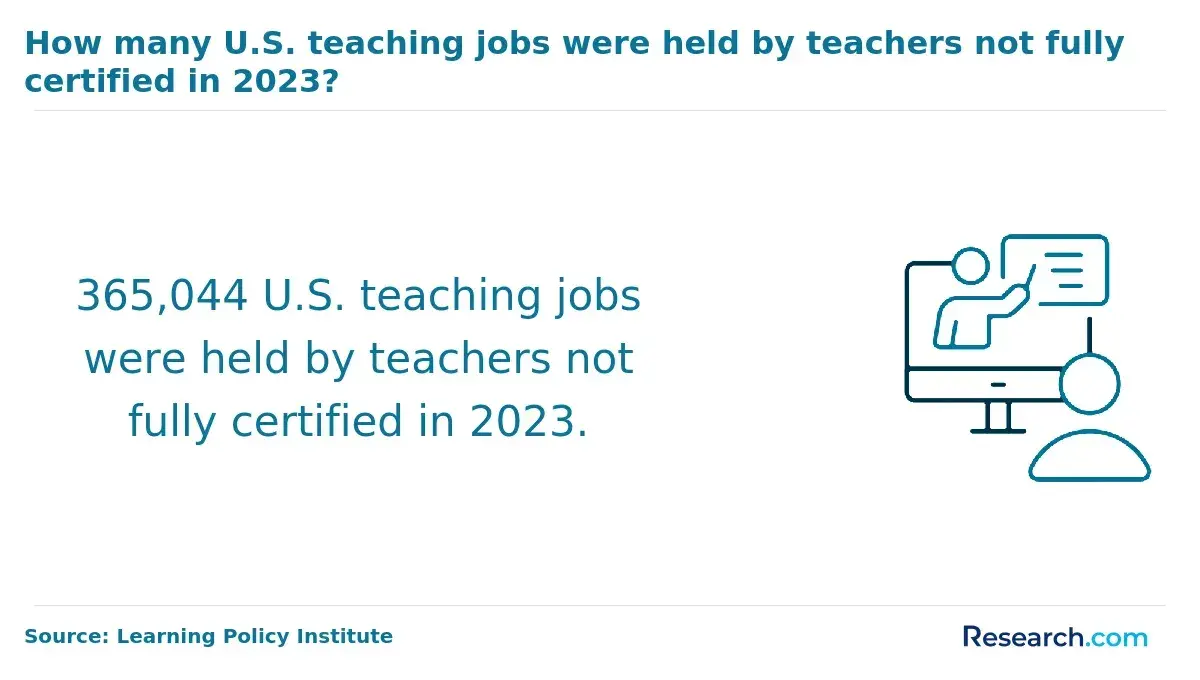
These benefits show why certification matters not only for employment compliance but also for long-term teaching effectiveness. The image below provides a broader view of certified teachers serving in classrooms across the U.S.
Questions to Ask Before Choosing a Georgia Certification Pathway
- Is the program GaPSC-approved for the exact subject and grade level I want to teach? Do not assume approval based on the school’s name or general education offerings.
- Will I graduate with eligibility for initial certification, an endorsement, or only academic credit? These outcomes are different and affect hiring.
- What are the total costs beyond tuition? Include GACE fees, application fees, background checks, books, transportation, and possible unpaid student teaching time.
- How are student teaching or internship placements arranged? Ask whether placements are guaranteed, local, daytime, or tied to employment with a district.
- What GACE pass-rate support does the program provide? Look for advising, practice exams, content review, and retake planning.
- Can transfer credits shorten the program? Policies vary, especially for career changers and students with prior college coursework.
- Does the program fit my work schedule? Online coursework can help, but fieldwork and student teaching often require in-person school hours.
- What happens if I move out of Georgia? Ask how the credential may be viewed under reciprocity rules and what additional requirements other states may impose.
Related Articles for Nearby States
- 2027 Teacher Certification Types & Requirements in South Carolina
- 2027 Teacher Certification Types & Requirements in Florida
- 2027 Teacher Certification Types & Requirements in Alabama
- 2027 Teacher Certification Types & Requirements in Tennessee
- 2027 Teacher Certification Types & Requirements in North Carolina
- 2027 Teacher Certification Types & Requirements in Mississippi
- 2027 Teacher Certification Types & Requirements in Kentucky
- 2027 Teacher Certification Types & Requirements in Virginia
- 2027 Teacher Certification Types & Requirements in Louisiana
- 2027 Teacher Certification Types & Requirements in West Virginia
Key Insights
- Georgia teacher certification usually requires a bachelor’s degree, an approved educator preparation program, supervised classroom experience, ethics testing, and the correct GACE content assessment.
- The best pathway depends on your starting point: traditional bachelor’s programs fit first-time college students, graduate or post-baccalaureate routes fit degree holders, and GaTAPP-style options fit qualified career changers ready to teach while completing requirements.
- Costs vary widely. In-state public undergraduate tuition generally ranges from $5,000 to $10,000 per year, private colleges may exceed $20,000 annually, graduate routes often cost $7,000 and $15,000 per year, and GaTAPP-style programs usually cost $4,000 and $6,000 for the full program.
- Do not choose a program based only on convenience or ranking. Confirm GaPSC approval, certificate-field alignment, testing requirements, placement support, and total cost before enrolling.
- Certification can improve access to Georgia public school roles, specialized teaching fields, advancement opportunities, and renewal-based professional development, but salary and hiring outcomes still depend on district, experience, credentials, and labor market conditions.
- Reciprocity can make moving between states easier, but Georgia certification is not automatically transferable. Always check the destination state’s licensing agency before relocating.
References:
- All Education Schools. (n.d.). Georgia teacher certification guide. https://www.alleducationschools.com/teacher-certification/georgia
- Brenau University. (n.d.). Georgia Assessments for the Certification of Educators. https://www.brenau.edu/academics/education/gace
- Educational Testing Service. (n.d.). GACE home. https://www.gace.ets.org
- Georgia Assessments for the Certification of Educators. (n.d.). Georgia Assessments for the Certification of Educators. https://www.gace.nesinc.com
- Georgia Assessments for the Certification of Educators. (n.d.). Georgia Assessments for the Certification of Educators® (GACE®). https://www.gace.es.pearson.com
- Georgia Professional Standards Commission. (n.d.). GaPSC. https://www.gapsc.com
- Georgia Charter Schools Association. (n.d.). Teacher certification. https://gacharters.org/teacher-certification
- Indeed. (2025). Teacher salary in Georgia. https://www.indeed.com/career/teacher/salaries/GA
- Moreland University. (n.d.). How to become a teacher in Georgia: Requirements & qualification. https://moreland.edu/teacher-certification-program-online/georgia/teacher-certification-requirements
- Study.com. (n.d.). What is the GACE test? https://study.com/academy/popular/what-is-the-gace-test.html
- Teach in the Peach. (n.d.). Changing careers to become a teacher in Georgia. https://teachinthepeach.org/plan/changing-careers
- Tyton Partners. (2023). Time for Class 2023: Bridging student and faculty Perspectives on Digital Learning. https://tytonpartners.com/time-for-class-2023-bridging-student-and-faculty-perspectives-on-digital-learning
- Zippia. (2025). Teacher Demographics and Statistics [2025]: Number of teachers in the US. https://www.zippia.com/teacher-jobs/demographics Additional source links: Tyton Partners digital learning report, Teach in the Peach career-change guidance, and All Education Schools Georgia certification guide.
Other Things You Should Know About Teacher Certification Types and Requirements in Georgia
To obtain teacher certification in Georgia in 2027, candidates must pass the GACE assessments specific to their teaching field. These exams evaluate general and content-specific knowledge, ensuring educators meet state educational standards and contribute effectively to Georgia's academic environment.
In 2027, renewing a Georgia teaching certificate typically requires five years of teaching experience and at least six semester hours of college credit, or 10 Professional Learning Units (PLUs), aligned with the educator's performance goals or subject area.
Yes. Georgia offers a Teacher Retirement System retiree certification pathway that lets retired educators teach under limited conditions. The school system must request the certificate, and the retiree must meet state background-check rules and any specific content-area or grade-level qualifications required by the assignment.