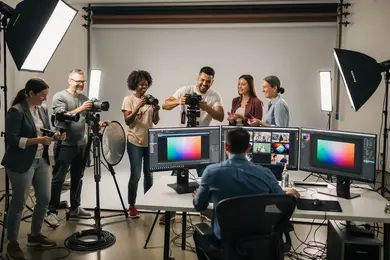
2027 Digital Photography Career Paths With the Best Advancement Potential

Co-Founder and Chief Data Scientist
Choosing a digital photography career is no longer just about taking strong images; it is about picking a niche where visual skills, business judgment, and technology can compound over time. The U.S. Bureau of Labor Statistics reports that photographers had a median annual wage of $42,520 in May 2024, but income varies widely by industry, specialization, and client base.
This guide is for students, career changers, veterans, and working creatives comparing photography paths. You will learn which roles offer stronger advancement potential, what training is worth considering, and how to choose a program or portfolio strategy wisely.
Key Things You Should Know
- Commercial, product, real estate, healthcare, forensic, and visual content leadership roles generally offer stronger advancement potential than general portrait or event photography because they connect photography to measurable business, legal, medical, or media needs.
- The BLS reported a $42,520 median annual wage for photographers in May 2024 and projected 4% employment growth for photographers from 2024 to 2034, so advancement often depends more on specialization, portfolio strength, and client acquisition than on overall occupation growth alone.
- A certificate or associate degree can be enough for entry-level freelance or studio work, while a bachelor's degree is usually more useful for art direction, media production, teaching-adjacent roles, management tracks, and competitive institutional employers.
What are the main digital photography career paths with the strongest advancement potential?
The strongest digital photography career paths are the ones that move beyond "taking pictures" and into business problem-solving. Digital photography includes image capture, lighting, editing, color correction, asset management, licensing, and visual storytelling across digital platforms. Advancement potential improves when a photographer can manage clients, direct shoots, lead teams, specialize in a high-value subject area, or combine photography with video, marketing, data, or design.
The table below compares major career paths by the kind of work they involve and the type of advancement they can realistically support. Use it to match your interests with the settings where photographers can grow into higher-responsibility roles.
| Career path | Typical responsibilities | Advancement potential | Best fit | Key caution |
| Commercial and advertising photographer | Creates images for campaigns, products, brands, agencies, and e-commerce. | Strong, especially for photographers who can direct shoots, manage clients, and understand brand strategy. | Students interested in business, lighting, studio production, and creative direction. | Competition is high, and portfolio quality matters more than credentials alone. |
| Product and e-commerce photographer | Produces clean, consistent images for online stores, catalogs, marketplaces, and social commerce. | Strong when paired with retouching, workflow automation, and studio management skills. | Detail-oriented photographers who like controlled lighting and repeatable systems. | Lower-end work can be commoditized, so specialization and efficiency matter. |
| Real estate and architectural photographer | Photographs homes, commercial spaces, interiors, exteriors, and sometimes drone or virtual-tour content. | Moderate to strong in active property markets and for photographers who add video, drone, and 3D tour services. | Photographers interested in composition, space, design, and local business development. | Demand may fluctuate with real estate cycles and regional housing activity. |
| Photojournalist or documentary photographer | Covers news, communities, events, conflict, social issues, and long-form visual stories. | Moderate, with stronger growth for those who add video, writing, editing, or multimedia production. | Story-driven photographers comfortable with deadlines and ethical decision-making. | Staff roles can be limited, and freelance income may be inconsistent. |
| Medical, scientific, or forensic photographer | Documents clinical procedures, evidence, research, specimens, injuries, or technical subjects. | Strong in specialized institutions because accuracy, protocols, and confidentiality raise the skill barrier. | Students who are careful, process-oriented, and comfortable in technical environments. | Some roles require employer-specific training, background checks, or knowledge of legal and medical standards. |
| Visual content producer | Combines photography, short-form video, editing, social media assets, and content calendars. | Strong because employers increasingly want multi-format creators rather than single-medium photographers. | Creatives who want in-house marketing, nonprofit, sports, higher education, or agency roles. | The role can blur into marketing, so business communication skills are essential. |
| Studio owner or photography entrepreneur | Runs a portrait, wedding, commercial, or niche photography business. | Strong for business-minded photographers who can price, market, sell, and manage operations. | Self-directed learners who want independence and are comfortable with risk. | Technical skill alone is not enough; weak pricing and contracts can undermine income. |
A practical way to evaluate these options is to ask where your images create economic value. If the work helps a client sell a product, document evidence, attract buyers, publish media, protect records, or maintain a brand, the path usually has more room for advancement than work based only on one-time consumer demand.
What education and training do you need to launch a digital photography career?
You can launch a digital photography career through several routes: self-directed practice, workshops, certificates, associate degrees, bachelor's degrees, apprenticeships, or military and employer training. The right route depends on whether you want freelance work, studio employment, agency work, institutional roles, or leadership positions in visual media.
Most beginners should think in stages rather than assuming one credential will settle the decision. The sequence below shows a practical progression from first skills to employable work.
- Build technical foundations in exposure, lighting, composition, file formats, editing software, color management, and image delivery.
- Choose a target market such as commercial product photography, portraits, sports media, real estate, documentary work, or healthcare documentation.
- Create a focused portfolio that shows repeatable quality in that market instead of a random collection of favorite images.
- Learn business basics, including pricing, client communication, contracts, copyright, licensing, taxes, and invoicing.
- Add complementary skills such as video editing, drone operations, motion lighting, digital asset management, or social content production.
- Seek critique, internships, assistant work, apprenticeships, student publications, campus media roles, or freelance test projects to gain real feedback.
Formal education is most valuable when it gives you structured critique, access to studio equipment, portfolio development, industry connections, and a broader visual education. It may be less necessary if your goal is a narrow freelance niche and you can already build a strong portfolio, but even freelancers benefit from business, legal, and marketing training.
Which digital photography specializations offer the highest salaries and long-term growth?
The highest-upside digital photography specializations tend to be those where clients pay for consistency, technical control, rights management, confidentiality, or measurable business outcomes. The BLS median annual wage for photographers was $42,520 in May 2024, which is a useful baseline, but it does not capture the full range of self-employed income, commercial contracts, or hybrid creative roles.
The following comparison is designed to help you evaluate salary potential without assuming that any niche guarantees a specific income. In photography, specialization can raise earning potential only when it is paired with strong client access, pricing discipline, and portfolio proof.
| Specialization | Why it can pay more | Long-term growth factor | Best advancement move |
| Commercial product photography | Brands need consistent images for websites, ads, catalogs, and marketplaces. | E-commerce, social selling, and frequent product refresh cycles support recurring work. | Develop studio lighting, retouching, batch workflow, and art-direction skills. |
| Real estate, architecture, and interiors | High-quality visuals can affect buyer interest, leasing, hospitality marketing, and design portfolios. | Drone, virtual tour, and short-form video services can expand each client engagement. | Build packages that combine stills, video, floor-plan coordination, and fast delivery. |
| Healthcare, forensic, and scientific imaging | Specialized documentation requires accuracy, procedure awareness, and confidentiality. | Institutions value consistent documentation for records, research, training, and legal use. | Learn protocols, metadata standards, chain-of-custody concepts, and technical lighting. |
| Sports and action photography | Teams, schools, media outlets, athletes, brands, and families need fast, compelling images. | Hybrid photo-video coverage and social distribution increase demand for rapid content. | Add captioning, metadata, remote editing, and highlight-reel support. |
| Corporate and executive branding | Companies need headshots, team images, recruiting visuals, event coverage, and web assets. | Recurring internal communications and employer branding can create repeat clients. | Create retainer-style service packages and reliable on-location lighting workflows. |
| Visual content strategy and creative direction | The work expands from producing images to planning campaigns, managing contributors, and shaping brand visuals. | AI tools make image production faster, increasing the value of human judgment, style direction, and brand consistency. | Build leadership, project management, budgeting, and cross-platform storytelling skills. |
For long-term advancement, the safest approach is to avoid being only a "camera operator." Aim to become the person who can plan a shoot, solve lighting and production problems, understand the client's objective, manage files professionally, and deliver assets that are ready for use.
How do certificates, associate, bachelor's, and master's degrees in digital photography compare?
Certificates, associate degrees, bachelor's degrees, and master's degrees serve different goals. A certificate may help you enter the field quickly, while a bachelor's degree may make more sense if you want broader creative leadership, teaching-related preparation, or access to employers that prefer a four-year credential. Students comparing visual-spatial careers sometimes also explore an online bachelor of architecture if their interests lean more toward built environments, design systems, and licensed professional practice than image production alone.
The table below compares credential levels by time, purpose, and best-fit career outcomes. It can help you avoid overpaying for a credential that does not match your target role.
| Credential | Typical length | Best for | Common outcomes | When it may not be worth it |
| Certificate | Several months to about one year | Fast skill-building in camera operation, lighting, editing, or a niche specialty. | Freelance starter work, portfolio development, assistant roles, upskilling for media jobs. | If you need a broad liberal arts foundation, transfer credits, or employers that prefer degrees. |
| Associate degree | About two years full time | Students who want structured training at a lower cost before entering work or transferring. | Studio assistant, freelance photographer, photo editor assistant, transfer to bachelor's study. | If the program has weak portfolio review, limited equipment access, or poor transfer pathways. |
| Bachelor's degree | About four years full time | Students seeking deeper critique, visual culture, business preparation, internships, and leadership potential. | Commercial photography, media production, visual content roles, art department support, graduate study. | If you already have strong clients and only need a narrow technical skill upgrade. |
| Master's degree | Usually one to three years | Advanced artists, educators, researchers, and professionals seeking conceptual depth or teaching preparation. | Fine art practice, college-level teaching pathways, curatorial work, advanced creative leadership. | If your main goal is basic client photography or local freelance work. |
The main decision is not "degree or no degree." It is whether the credential gives you access to better equipment, stronger critique, internships, transfer options, portfolio outcomes, and professional networks than you could build independently.
What should you look for in an accredited digital photography program in the U.S.?
An accredited digital photography program should meet institutional quality standards and help you produce a portfolio that aligns with your intended market. In the U.S., the most important accreditation check is institutional accreditation from an agency recognized by the U.S. Department of Education or the Council for Higher Education Accreditation. Programmatic accreditation, such as art and design accreditation, can be a plus, but it is not always required for photography employment.
Before enrolling, compare programs using evidence rather than marketing language. These checks reduce the risk of choosing a school that looks creative but does not support your career goal.
- Verify institutional accreditation through official accreditation databases, not only the school's website.
- Review student portfolios and recent alumni work to see whether the program produces the quality and style you want to build.
- Ask how often students receive critique from faculty and working professionals.
- Confirm access to lighting studios, printers, camera kits, color-managed labs, editing software, and digital asset systems.
- Check internship options, local employer relationships, gallery or publication opportunities, and student media access.
- Ask whether credits transfer to bachelor's programs if you are starting with a certificate or associate degree.
- Review total cost, including fees, equipment, software, printing, travel, and portfolio materials.
- Look for business training in contracts, copyright, licensing, pricing, client communication, and entrepreneurship.
Common red flags include vague job-placement claims, no clear equipment policy, limited portfolio review, outdated software, unclear transfer agreements, and programs that emphasize gear over visual problem-solving. A strong program should make your work better, not just give you access to cameras.
How do online digital photography programs differ from campus-based options?
Online digital photography programs can be a strong fit for working adults, military-affiliated students, parents, and learners who already have access to a camera and shooting environments. Campus-based programs are often stronger for students who need studio access, in-person critique, darkroom or print facilities, lighting labs, and local production networks. Veterans comparing flexible options can start by reviewing the best military-friendly online photography degrees to understand how support services, transfer credit, and benefits may differ by school.
The table below summarizes the main differences between online and campus-based photography programs. Use it to decide which format supports your schedule, learning style, and portfolio needs.
| Factor | Online programs | Campus-based programs | Decision tip |
| Flexibility | Often better for students balancing work, family, military service, or freelance schedules. | Requires scheduled attendance and commuting or relocation. | Choose online if time flexibility is your main barrier. |
| Equipment access | Students may need their own camera, lighting, computer, and software. | May provide studios, labs, printers, lighting kits, and equipment checkout. | Choose campus if you cannot afford or access production equipment independently. |
| Critique | Can be effective through recorded reviews, discussion boards, and live video critiques. | Offers immediate in-person feedback and peer interaction. | Ask how often critiques occur and whether faculty give detailed feedback. |
| Networking | May rely on virtual alumni networks and local self-directed projects. | Often offers local internships, gallery events, campus publications, and studio connections. | Choose the format with stronger connections to your target market. |
| Portfolio production | Works well for self-motivated students with access to subjects and locations. | Can be better for students who need structured shoots, studio sets, and collaboration. | Review graduate portfolios from both formats before deciding. |
Online programs are not automatically easier. They require self-direction, reliable equipment, disciplined file management, and the ability to create assignments in your own environment. Campus programs are not automatically better either; they must justify their cost through facilities, critique, internships, and portfolio outcomes.
What core courses and technical skills do digital photography students typically learn?
Digital photography students typically learn both creative and technical skills. The strongest programs teach students how to make intentional images, manage digital files professionally, adapt to client needs, and use technology without losing visual judgment.
The table below outlines common course areas and the practical skills they should produce. This can help you read a curriculum and decide whether it is broad enough for career advancement.
| Course or skill area | What students learn | Why it matters professionally |
| Camera operation and exposure | Aperture, shutter speed, ISO, lens choice, depth of field, motion, and file formats. | Creates technical consistency across changing lighting and client conditions. |
| Lighting | Natural light, flash, strobes, modifiers, studio setups, location lighting, and mixed light. | Lighting control separates professional work from casual image capture. |
| Digital editing and retouching | RAW processing, color correction, skin retouching, compositing, masking, and export settings. | Clients expect polished files delivered in formats suited to web, print, and social use. |
| Color management and printing | Monitor calibration, color profiles, proofing, paper choice, and print workflows. | Important for commercial, fine art, product, and publication work where accuracy matters. |
| Visual storytelling | Sequencing, narrative, documentary ethics, captions, editing selects, and audience awareness. | Helps photographers move into editorial, documentary, brand, and multimedia roles. |
| Business and legal foundations | Contracts, copyright, licensing, model releases, pricing, invoices, taxes, and client communication. | Protects income and reduces common freelance risks. |
| Digital asset management | Metadata, keywording, backups, file naming, archiving, and delivery systems. | Essential for agencies, institutions, teams, and repeat clients with large image libraries. |
| AI-aware workflow | AI-assisted culling, noise reduction, masking, generative editing limits, disclosure, and ethics. | Employers value speed, but clients still need authenticity, rights clarity, and consistent style. |
Students should leave a program with more than attractive images. A career-ready graduate should be able to plan a shoot, handle releases, back up files, edit efficiently, explain creative decisions, price work, and deliver assets that meet a real client brief.
Readers comparing sports media careers may also research sports analyst salary expectations.
What are the typical admissions requirements, program length, and costs for photography degrees?
Admission requirements, length, and costs vary by school and credential level. Most photography programs care about creative potential and technical readiness, but competitive programs may require a portfolio, artist statement, interview, prior art coursework, or transfer credit review.
Cost should be evaluated as the total cost of attendance, not tuition alone. College Board's 2024-25 data reported average published tuition and fees of $4,050 for public two-year in-district colleges, $11,610 for public four-year in-state institutions, and $43,350 for private nonprofit four-year institutions; this means the least expensive advertised option is not always the best value, but sticker price can heavily affect ROI.
The table below summarizes common expectations by credential level. Use it as a starting point, then confirm details with each school because requirements differ widely.
| Program type | Typical admissions requirements | Typical length | Major cost factors |
| Certificate | Application, high school diploma or equivalent, sometimes a basic portfolio or placement review. | Several months to about one year. | Tuition, camera access, editing software, lighting gear, printing, and portfolio materials. |
| Associate degree | Application, transcripts, placement testing or test-optional review, and sometimes a portfolio for selective programs. | About two years full time. | Tuition, fees, equipment, software, transportation, and transfer-credit policies. |
| Bachelor's degree | High school transcripts, application materials, portfolio, personal statement, and possible interview or prerequisite art courses. | About four years full time. | Tuition, housing, equipment, software, studio fees, study travel, internships, and lost work time. |
| Master's degree | Bachelor's degree, advanced portfolio, statement of purpose, recommendations, and sometimes professional experience. | Usually one to three years. | Graduate tuition, thesis production, exhibition costs, assistantship availability, and opportunity cost. |
Before enrolling, ask admissions and financial aid staff specific questions that reveal the real investment. Focus on policies and outcomes rather than general promises.
- What equipment must I personally own, and what can I borrow from the school?
- Are Adobe Creative Cloud or other editing tools included in fees, discounted, or billed separately?
- How many credits transfer into or out of the program?
- How often do students complete internships, exhibitions, publications, or client-based projects?
- What percentage of required courses are taught by faculty with current professional photography or visual media experience?
- What happens if I need to study part time, pause enrollment, or change from online to campus-based study?
- Can the school show recent student portfolios that match my intended specialization?
A common mistake is choosing the most expensive program. After all, it feels more prestigious or the cheapest program because it looks safer. The better approach is to compare cost against portfolio quality, facilities, transfer options, faculty feedback, and access to the market you want to enter.
What is the job outlook for digital photographers across different industries and niches?
The job outlook for digital photographers is mixed: the occupation is not disappearing, but the easiest forms of basic image-making face heavy competition. The BLS projected 4% employment growth for photographers from 2024 to 2034, which suggests steady but not explosive demand. For readers, the key takeaway is that job growth is more favorable for photographers who combine image-making with video, editing, content strategy, technical documentation, or business development.
Different industries hire photographers for different reasons. Understanding the buyer's motivation helps you choose a niche with better advancement prospects.
| Industry or niche | Demand driver | Outlook considerations | Smart entry point |
| Advertising and marketing | Brands need campaign, product, lifestyle, and social media images. | Strong portfolios and speed matter; AI may reduce some routine tasks but increase the need for creative direction. | Assist commercial photographers, build spec campaigns, and learn retouching workflows. |
| E-commerce | Online sellers need consistent product images and fast turnaround. | Volume can be high, but lower-end work may be price-sensitive. | Start with controlled product lighting and efficient batch editing. |
| Real estate and hospitality | Properties, rentals, hotels, and venues compete visually online. | Local market cycles affect demand; video and drone skills improve competitiveness. | Build local packages for agents, property managers, and designers. |
| Healthcare, legal, and forensic settings | Organizations need accurate visual documentation. | Specialized protocols create higher barriers to entry and may support stable institutional work. | Develop documentation discipline, confidentiality awareness, and technical lighting skills. |
| Sports media | Teams, schools, athletes, families, brands, and news outlets need fast action coverage. | Hybrid photo, video, statistics, and media roles can overlap. | Cover local games, learn metadata and captions, and deliver quickly under deadline pressure. |
| Higher education, nonprofits, and institutions | Organizations need visual storytelling for recruitment, fundraising, events, and communications. | Stable roles may favor candidates who can handle photography, video, archiving, and brand guidelines. | Work for campus media, communications offices, or nonprofit campaigns. |
AI and automation are changing the field, but they are not a simple replacement for professional photographers. AI can speed culling, masking, noise reduction, background extension, and concepting, while clients still need original capture, human direction, legal clarity, consent, brand fit, and trustworthy documentation. The best career strategy is to use AI as a workflow tool while building strengths that are harder to automate: taste, access, lighting, ethics, client trust, and situational judgment.
Which certifications, portfolios, and professional strategies best support career advancement?
Certifications can support advancement, but they rarely replace a strong portfolio. In photography, employers and clients usually judge your ability by finished work, consistency, professionalism, and referrals. Certifications are most useful when they validate a specific tool, workflow, safety requirement, or technical specialty.
The options below can strengthen your credibility when they match your target market. Choose credentials that solve a real career problem rather than collecting badges with little client value.
- Adobe software training can help demonstrate proficiency in Lightroom, Photoshop, color correction, retouching, and production workflows.
- Certified Professional Photographer preparation through professional photography organizations may help portrait, wedding, and studio photographers benchmark technical competence.
- Drone certification may be relevant for real estate, construction, inspection-adjacent, event, and landscape work when aerial services are part of the business model.
- Digital asset management training can support institutional, museum, agency, corporate, and media roles that require metadata and archiving discipline.
- Safety, confidentiality, or employer-specific training may be necessary in healthcare, forensic, industrial, or laboratory environments.
Your portfolio should be built for the job you want, not for general admiration. A commercial product portfolio should show consistency and controlled lighting; a documentary portfolio should show narrative and ethics; a real estate portfolio should show space accurately; a sports portfolio should show peak action, captions, and fast delivery. Bilingual communication can also expand client access in some markets, and students who want to pair visual storytelling with language skills may compare Spanish degrees online as a complementary education path.
For practical career advancement, focus on a repeatable professional system. These steps are especially important for freelancers and early-career photographers trying to move into better-paid work.
- Pick one primary niche for your public portfolio so clients immediately understand what you do well.
- Create three to five complete project stories instead of relying only on single images.
- Write short captions that explain the client problem, production constraints, lighting approach, and final use of the images.
- Track usage rights, model releases, contracts, invoices, and licensing terms for every paid project.
- Build a referral system by following up with clients, vendors, editors, stylists, agents, and marketing teams.
- Review your pricing every year against costs, time, usage, editing labor, taxes, and business goals.
- Update your portfolio by removing weaker older work, not just adding new images.
The biggest advancement mistake is waiting to be "discovered." Photography careers grow through visible work, reliable delivery, clear positioning, and professional relationships. A strong credential can help, but consistent execution is what turns skills into opportunities.
Other Things You Should Know About Digital Photography
Adobe Certified Professional in Photoshop and Lightroom shows advanced editing skill, while Certified Professional Photographer from PPA signals technical competence. PPA’s exam includes a written test and image submission, and photographers often renew memberships yearly to stay current with industry standards and judging criteria.
Many freelancers should consider it, especially if they shoot events, work on client property, rent studios, use assistants, or carry expensive gear. Common policies include general liability, equipment coverage, and professional liability. Requirements vary by client, venue, and contract, so photographers should confirm expectations before accepting work.
A smartphone can help you learn composition, storytelling, editing, and social publishing, but most paid professional niches eventually require dedicated cameras, lenses, lighting, reliable backups, and color-managed workflows. Smartphone work may be enough for some social content roles, but not for every commercial, editorial, or technical assignment.
Review it at least twice a year and whenever your target niche changes. Remove images that no longer match your current skill level or desired clients. A smaller, focused portfolio is usually stronger than a large collection that mixes unrelated styles, subjects, and quality levels.
References
- Is Photography a Good Career in 2026? Scope, Jobs & Salary Guide https://www.hamstech.com/hamstech-blog/is-photography-good-career-in-2026
- Photography Course Toronto: Online Training vs In-Person School Comparison https://www.canadianphotographyschool.ca/blog/photography-course-toronto-online-vs-inperson-comparison/
- 7 Good Certifications for Jobs to Boost Your Career in 2025 | Mindmesh Academy https://www.mindmeshacademy.com/blog/articles/good-certifications-for-jobs
- Online Photography Classes, Photography Courses https://www.sessions.edu/online-classes/photography-courses/
- 7 Career Advancement Strategies for Employees: How To Implement Them https://www.aihr.com/blog/career-advancement-strategies/
- Digital Photography https://pcad.edu/certificate_programs/digital-photography/
- Photography: Bachelor of Fine Arts Degree (BFA) | EducationPlannerBC https://www.educationplannerbc.ca/institutions/emily-carr-university-of-art-and-design/b3fdf911-0056-49f3-be88-4f371bd3d64f/programs/ECUAD-photography-major-fine-arts-bachelors-degree
- How to become a professional photographer - The Complete Guide https://thephotoacademyni.co.uk/how-to-become-a-professional-photographer/
- What careers can you do with a Photography degree? | University for the Creative Arts https://www.uca.ac.uk/blogs/careers-with-a-photography-degree/
- College Mentor https://www.collegementor.com/blogs/photography-as-a-career