
2027 State-Approved Online Communication Disorders Degree Master's Programs

Co-Founder and Chief Data Scientist

Reviewed by Rhea Paul, PhD
SLP Education & Research Expert
Choosing an online master’s in communication disorders is not just a question of convenience. For future speech-language pathologists and related professionals, the larger issue is whether the program can support licensure, certification, supervised clinical training, and employment in the state where they plan to practice. A program may be online, reputable, and academically challenging, but if it is not authorized for your state or aligned with your licensing board’s expectations, it can create costly delays after graduation.
This guide explains how state approval works for online communication disorders master’s programs, how it differs from accreditation, and what students should verify before enrolling. It is especially useful for working adults, career changers, and applicants comparing online programs across state lines. Enrollment in state-approved online communication disorders master’s programs has grown by 35% over the past five years, reflecting demand for flexible pathways that still meet professional standards.
Use this article to understand what to ask admissions offices, how to check approval status, what coursework and clinical requirements to expect, and how program choice may affect licensing, salary potential, and employer confidence.
Key Benefits of State-Approved Online Communication Disorders Degree Master's Programs
- State-approved online communication disorders master's programs ensure adherence to rigorous academic standards, reflecting quality and compliance with state regulatory bodies.
- Graduates from approved programs typically meet essential criteria for professional licensure, increasing career advancement opportunities in clinical and educational settings.
- Employers and industry organizations favor candidates from accredited programs, enhancing credibility and trust in graduates' qualifications and skillsets.
What Does "State-Approved" Mean for an Online Communication Disorders Master's Degree Program?
A state-approved online communication disorders master’s program has permission from a state education agency, higher education authority, or relevant regulatory body to operate and enroll students under that state’s rules. For online students, this matters because a school’s home state authorization does not always mean the program is approved or appropriate for every state where students live or plan to seek licensure.
State approval is mainly about legal authorization and regulatory compliance. It may address whether the institution can offer distance education, whether required disclosures are provided, whether faculty and curriculum meet state expectations, and whether students are informed about licensure limitations. Approximately 85% of states have established approval processes to monitor these programs and uphold educational standards.
State approval is not the same as national or programmatic accreditation. A state can authorize a program to operate, while an accreditor evaluates educational quality, student outcomes, curriculum depth, and professional preparation. For communication disorders students, both issues matter: state authorization helps confirm that the school can legally serve you, while accreditation and licensure alignment help determine whether the degree will support your professional goals.
Students should treat “state-approved” as a starting point, not a final guarantee. Before enrolling, confirm three things in writing: the program is authorized to enroll students from your state, the curriculum and clinical experiences align with your intended licensing board, and the school can explain any state-specific restrictions. If you are comparing affordability across graduate fields, Research.com also maintains resources such as affordable online MSW program options, but communication disorders students should prioritize licensure fit over price alone.
How Can I Check If an Online Communication Disorders Master's Program Is State-Approved?
The safest way to verify state approval is to check both the school’s disclosures and your state’s official regulatory sources. Do not rely only on marketing language such as “online,” “nationally recognized,” or “licensure-track.” With online graduate education expanding rapidly—enrollment increasing by more than 5% annually nationwide—students need to confirm program legitimacy before paying application fees or accepting admission.
Use this verification checklist before enrolling
- Search your state education agency database: Most states publish lists of authorized institutions, approved distance education providers, or schools permitted to enroll residents. Confirm the institution and, when available, the specific program.
- Read the school’s state authorization disclosures: Legitimate online programs usually maintain a state authorization or professional licensure disclosure page. Look for language that names your state and explains whether the program meets, does not meet, or has not determined licensure requirements there.
- Check your state licensing board: For communication disorders, approval to enroll is not enough. Your licensing board may have separate expectations for degree level, supervised clinical hours, practicum setting, accreditation, exams, and post-graduate experience.
- Ask about reciprocity or interstate agreements: Some states participate in reciprocity arrangements that affect distance education authorization. These arrangements can help with institutional approval, but they do not automatically replace professional licensing requirements.
- Request written confirmation from the program: Ask the admissions office or program director to confirm whether the program is designed to meet licensure requirements in your state. Save the response with your application records.
- Review approval documentation: Some programs can provide authorization letters, approval notices, or links to official state listings. Documentation is stronger than a verbal assurance.
Common mistakes include assuming that a program approved in one state is valid everywhere, confusing institutional accreditation with licensure approval, and overlooking clinical placement rules. Online students should also ask whether the school helps secure supervised placements in their state or whether students must arrange them independently.
Applicants building a broader professional development plan may also compare online credentials outside the degree itself, such as Research.com’s overview of online certifications that may support career growth. For communication disorders licensure, however, certifications should supplement—not replace—a qualifying graduate degree.
When evaluating online communication disorders degrees, verify regional and state-specific approval early. The best time to discover a licensing limitation is before enrollment, not during the final clinical placement or after graduation.
Do Online Communication Disorders Master's Programs Meet State Licensing Board Standards?
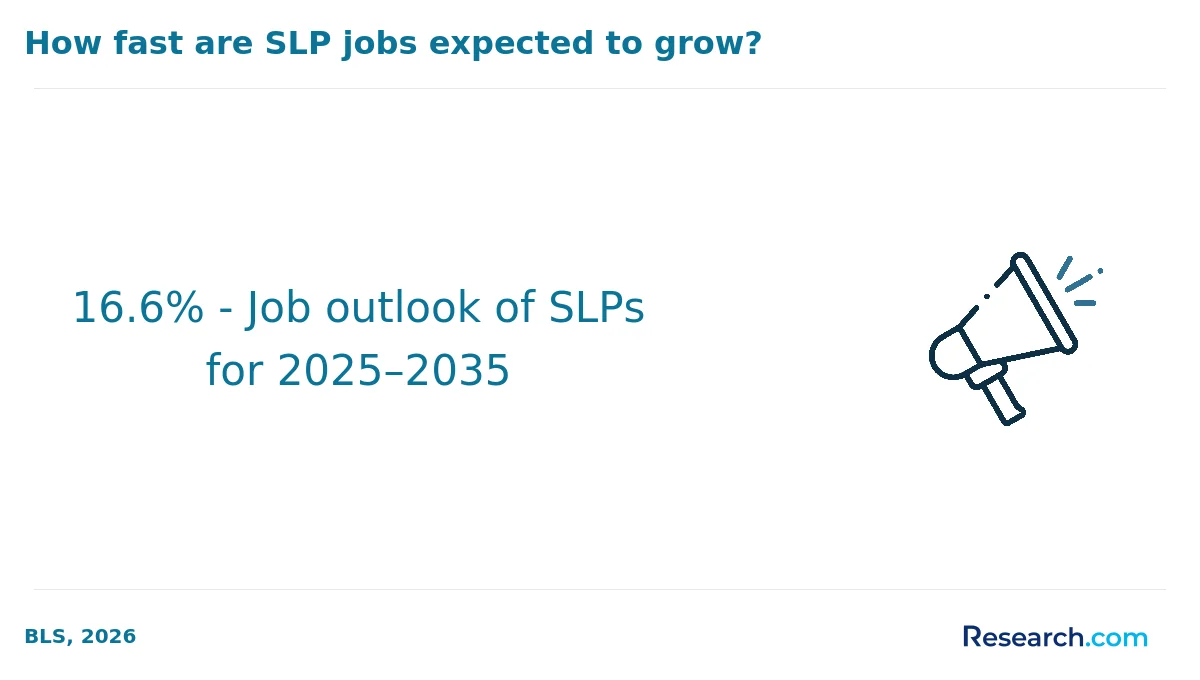
Many online communication disorders master’s programs are designed to meet state licensing board standards, but students should not assume that all of them do. Research shows that roughly 75% of online allied health graduate programs, including those in communication disorders, adhere to state licensure and certification criteria. The remaining risk is significant enough that every applicant should verify requirements state by state.
Licensing boards typically look beyond the diploma. They may evaluate whether the degree came from an acceptable institution, whether the curriculum covered required competencies, whether the student completed supervised clinical training, and whether the graduate is eligible for any required exams or certifications. Online delivery is usually not the issue by itself; the issue is whether the online program provides the same licensure-aligned preparation as an approved campus-based pathway.
Licensing factors to confirm
- Curriculum alignment: Coursework should match the knowledge and skills required for professional practice, including speech-language development, assessment, intervention, ethics, and clinical decision-making.
- Faculty qualifications: Licensing-aligned programs should use instructors and supervisors with appropriate credentials and experience in communication disorders or closely related clinical fields.
- Supervised clinical training: Practicums, internships, or other supervised experiences are often essential for licensure eligibility. Ask where placements occur, who approves them, and how supervision is documented.
- Institutional authorization: The school must be authorized to enroll students in your state, especially if you are completing the degree online from outside the institution’s home state.
- Ongoing regulatory review: Program requirements can change when state boards update rules. Strong programs monitor these changes and publish clear licensure disclosures.
A graduate of a state-approved online communication disorders master’s program described the verification process as time-consuming but worthwhile: “I had to cross-check state board approvals carefully, and it felt overwhelming to ensure my online program met all clinical hour and curriculum criteria.” He said the process became manageable once the school provided clear documentation and state-specific guidance. His advice to applicants was direct: do not enroll until you understand how the program’s coursework and clinical requirements map to the state where you intend to practice.
Are There Nationally Recognized Communication Disorders Programs Accepted by Most States?
Yes, some communication disorders master’s programs have broad recognition because they align with national academic, accreditation, and professional standards. However, “accepted by most states” does not mean “automatically accepted by every state.” Students who expect to move or practice across state lines should choose programs with strong national recognition and still verify each state’s licensing rules.
Over the past decade, interstate participation in online graduate education programs has increased by more than 40%, fueled by the rise of nationally accredited options. This has made it easier for students to compare online programs outside their home state, but licensure remains a state-level decision.
Features that support broader state acceptance
- National accreditation: Programs accredited by reputable organizations such as the Council on Academic Accreditation in Audiology and Speech-Language Pathology (CAA) are more likely to be recognized by state licensing boards.
- Standardized curriculum: Programs built around widely accepted professional competencies help graduates demonstrate consistent preparation across states.
- Interstate authorization agreements: Participation in distance education authorization arrangements can make it easier for institutions to enroll online students across state lines, though this is separate from professional licensure.
- Professional association alignment: Programs that align with standards set by the American Speech-Language-Hearing Association (ASHA) may offer clearer pathways toward recognized professional preparation.
- Consistent practicum expectations: State boards often scrutinize clinical hours, supervision, and placement quality. Programs with strong clinical documentation are easier for graduates to defend during licensing review.
If you are seeking mobility, ask each program where recent graduates have obtained licenses and whether the school has a state-by-state licensure disclosure. Students comparing adjacent helping professions may also review Research.com’s guide to online counseling master’s programs, which face similar issues around accreditation, clinical training, and state licensure.
Is Accreditation Required for State-Approved Communication Disorders Master's Programs?
Accreditation may not be identical to state approval, but it is often essential for students who want the degree to support licensure, certification, employment, and financial aid eligibility. State approval tells you whether a program or institution may operate under state rules. Accreditation tells you whether an external accrediting body has reviewed the school or program against defined quality standards. Around 70% of U.S. higher education institutions hold accreditation, underscoring its role as a key indicator of quality.
For communication disorders students, the most important question is not simply “Is the program state-approved?” but “Is the program approved, accredited, and accepted for the credential I need?” A state-authorized program without the right accreditation or licensure alignment may still leave graduates unable to meet professional requirements.
How state approval and accreditation differ
- State authorization: Confirms that an institution has legal permission to operate or enroll students in a state. It does not, by itself, prove that the curriculum meets professional licensing standards.
- Institutional accreditation: Reviews the college or university as a whole and is often tied to federal financial aid eligibility.
- Programmatic accreditation: Evaluates a specific professional program, which can be especially important in fields tied to clinical practice and licensure.
- Quality assurance: Accreditation requires periodic review of curriculum, faculty qualifications, student learning, policies, and outcomes.
- Professional recognition: Employers and licensing boards may view accredited programs as stronger evidence of acceptable preparation.
One graduate of an online communication disorders master’s program said the distinction shaped her entire application strategy: “It wasn’t just about getting a certificate; I wanted a program that challenged me and prepared me for real-world practice.” State approval allowed the program to serve students where she lived, but accreditation gave her greater confidence that the degree would be recognized when she pursued clinical licensure.
The practical takeaway is simple: do not choose between state approval and accreditation if your career goal requires both. Verify authorization, institutional accreditation, programmatic accreditation where relevant, and state licensing alignment before committing to a program.
What Courses Are Required in State-Approved Communication Disorders Master's Programs?
State-approved online communication disorders master’s programs typically combine advanced coursework, clinical skill development, research training, and supervised practice. Many programs require around 60 graduate credits, consistent with the average master’s degree credit load in the United States. Exact requirements vary by institution and state licensing expectations, so students should compare the curriculum against their intended licensing board’s checklist.
Common course and training areas
- Foundational principles of communication disorders: Students study core terminology, typical and atypical communication development, and the theoretical basis for assessment and intervention.
- Speech science: Coursework may cover acoustic phonetics, speech production, speech perception, and the biological processes involved in spoken communication.
- Language development and disorders: Programs often examine language acquisition, developmental language disorders, and intervention planning across age groups.
- Assessment and diagnosis: Students learn how to select assessment tools, interpret findings, document results, and connect diagnoses to treatment plans.
- Research methods: Graduate research training helps students evaluate evidence, understand study design, and apply current findings to clinical decision-making.
- Clinical practicum: Supervised hands-on training allows students to apply assessment and intervention skills with real clients under qualified supervision.
- Capstone or thesis: A culminating project or thesis may require students to synthesize research, clinical reasoning, and professional standards.
Applicants should look beyond course titles. A course called “Clinical Practicum,” for example, may differ widely in placement support, supervision structure, and documentation. Ask whether online students receive help finding approved practicum sites, whether placements can be completed near home, and how the program verifies that clinical experiences satisfy state requirements.
The strongest curricula prepare students for more than graduation. They build the academic record, clinical documentation, and professional readiness needed for licensing review and early-career practice.
How Much Does a State-Approved Online Communication Disorders Master's Degree Cost?
The cost of a state-approved online communication disorders master’s degree depends on tuition structure, required credits, fees, clinical placement expenses, and whether the institution charges different rates by residency. Nationwide, online master’s programs typically charge between $400 and $1,200 per credit hour, with degree completion requiring anywhere from 30 to 60 credits. Because communication disorders programs may include substantial clinical components, students should budget for more than tuition.
Major cost drivers to compare
- Per-credit tuition rates: Tuition is usually the largest expense. Some online programs charge one rate for all students, while others separate in-state and out-of-state tuition.
- Total credit requirements: A lower per-credit rate may not mean a lower total cost if the program requires more credits. Compare full program cost, not only advertised tuition.
- Online learning and technology fees: Schools may charge fees for learning platforms, software, remote proctoring, digital materials, or student services.
- Clinical placement expenses: Students may need to pay for background checks, immunizations, travel, liability coverage, site requirements, or placement-related documentation.
- Books, assessments, and professional costs: Textbooks, clinical tools, exam preparation, certification costs, and licensing fees can add to the final price.
- Time-to-completion: Part-time study may help working adults manage cash flow, while full-time study may reduce the time spent out of higher-paying roles.
Students comparing affordable pathways should review total program cost alongside accreditation and licensure fit. A low-cost program that does not meet your state’s licensing standards can become expensive if it requires extra coursework, delayed employment, or a second credential. For a focused affordability comparison in this field, see Research.com’s guide to the cheapest online slp master's programs.
Before accepting admission, request an estimated full cost of attendance and ask which expenses are mandatory. Also confirm whether the program qualifies for federal financial aid, employer tuition assistance, scholarships, or payment plans.
Do State-Approved Communication Disorders Master's Programs Require the GRE or GMAT?
Some state-approved communication disorders master’s programs still require standardized test scores, but many have moved toward test-optional or test-waiver admissions. Nearly 60% of graduate programs nationwide have adopted test-optional or test-waiver policies to enhance admissions fairness and accessibility. For applicants, this means the GRE or GMAT is no longer always the deciding factor, especially in online programs that use holistic review.
Common admissions testing policies
- Test-optional admission: Applicants may submit GRE or GMAT scores if they believe the scores strengthen the file, but they are not required.
- GPA-based waivers: Some programs waive testing for applicants with strong undergraduate records or high grades in prerequisite coursework.
- Experience-based waivers: Relevant work, volunteer, research, or clinical exposure may help offset the absence of test scores.
- Holistic review: Programs may weigh recommendation letters, personal statements, prerequisite completion, interviews, and demonstrated commitment to the field.
- Required testing: A smaller number of programs still require GRE or GMAT scores, often as one part of a broader evaluation rather than the sole admissions measure.
If your academic record is strong, a test-optional policy can save time and money. If your GPA is weaker, a competitive GRE score may still help demonstrate readiness. Applicants should ask whether submitting scores can improve scholarship consideration or whether the program truly ignores scores when they are not required.
Students comparing flexible graduate admissions models across helping professions may also review Research.com’s resource on online master’s in marriage and family therapy programs. As with communication disorders, admissions flexibility should be evaluated alongside accreditation, clinical requirements, and state licensing outcomes.
Do Employers Require Graduates to Come from State-Approved Programs?
Employers may not always use the phrase “state-approved program,” but they often require the outcomes that state-approved and properly accredited programs are designed to support: licensure eligibility, recognized clinical preparation, and a degree from an acceptable institution. A 2023 survey by the Council of Academic Programs in Communication Sciences and Disorders found that about 68% of employers prefer candidates with degrees from state-approved or accredited programs.
In schools, hospitals, rehabilitation centers, clinics, and other regulated environments, hiring decisions are closely tied to whether the candidate can legally practice and meet credentialing requirements. An online degree is not necessarily a disadvantage, but an unclear licensing pathway can be.
What employers typically evaluate
- Recognized credentials: Employers want assurance that a graduate’s degree supports required licenses, certifications, or school-based credentials.
- Program reputation: A well-regarded program can signal rigorous training, reliable supervision, and strong professional preparation.
- Curriculum relevance: Employers may look for evidence that graduates are prepared for current assessment methods, intervention practices, documentation standards, and ethical expectations.
- Licensing eligibility: In roles where licensure is mandatory, program approval and accreditation can directly affect whether a candidate can be hired.
- Clinical experience: Supervised practica and internships help employers judge readiness for client-facing responsibilities.
- Professional communication: Strong applicants can explain their training, clinical hours, populations served, and supervision history clearly.
The impact of a state-approved communication disorders degree on job prospects depends on the employer, state, and role. Before enrolling, review job postings in your target state and note which credentials are repeatedly requested. Students comparing the broader landscape of online professional degrees may also explore Research.com’s guide to online data science master’s programs, but communication disorders students should give special weight to licensure and clinical placement requirements.
Does a State-Approved Communication Disorders Master's Degree Increase Salary?
A state-approved communication disorders master’s degree can support higher earning potential when it helps graduates qualify for licensed, clinical, supervisory, or specialized roles. Speech-language pathologists with a state-approved master’s degree generally earn between $62,900 and $134,160 annually. Actual pay varies by location, employer type, experience, specialization, work setting, and whether the graduate holds required credentials.
The degree itself does not guarantee a specific salary. Its value comes from what it enables: eligibility for licensure, access to regulated positions, credibility with employers, and preparation for advanced clinical responsibilities.
Factors that influence salary outcomes
- Licensure and certification eligibility: Graduates who meet licensing requirements can pursue roles that are closed to applicants without qualifying credentials.
- Work setting: Compensation may differ across schools, hospitals, private practices, rehabilitation facilities, early intervention programs, and telepractice settings.
- Experience level: Early-career professionals and experienced clinicians often have different salary ranges, even with the same degree.
- Specialized clinical skills: Employers may value expertise in high-need populations, complex disorders, assistive communication, swallowing, or bilingual services.
- Leadership opportunities: A master’s degree may support advancement into supervisory, administrative, training, or program coordination roles.
- Geographic location: Local demand, cost of living, school district budgets, healthcare systems, and state reimbursement structures can affect pay.
For salary planning, compare the full cost of the degree with expected job opportunities in your target market. A lower-cost program with strong licensing alignment may produce a better return than a more expensive program with unclear clinical placement support.
What Graduates Say About State-Approved Online Communication Disorders Degree Master's Programs
- : "Choosing a state-approved online communication disorders master’s program made it possible for me to keep working while preparing for a more focused clinical career. The flexibility mattered, but the real value was knowing the program had a structure I could connect to my state’s requirements. The coursework was demanding, and I had to manage my schedule carefully, but graduating from a recognized program helped me move forward with more confidence. — Iker"
- : "The program challenged me more than I expected. Online learning required discipline, but faculty support and clear expectations helped me stay on track. I appreciated that the clinical components were taken seriously because that is where the classroom material started to feel real. By graduation, I felt better prepared for professional settings and more confident explaining the credibility of my degree to employers. — Hayden"
- : "I chose a state-approved online communication disorders master’s program because I wanted a credential that would be respected beyond the convenience of online study. The remote format worked for my life, but I still had to be organized, proactive, and careful about requirements. State approval gave me reassurance that the program was built around professional standards, and that made a difference when discussing my training with colleagues in healthcare. — Caleb"
Other Things You Should Know About Communication Disorders Degrees
After completing a 2027 state-approved online communication disorders master’s program, graduates must pass the Praxis Examination in Speech-Language Pathology and fulfill supervised clinical experience hours, as specified by the American Speech-Language-Hearing Association, to qualify for licensure.
Most state-approved online communication disorders master's programs are designed to be completed in two to three years. Completion time may vary based on full-time or part-time enrollment and the specific program structure.
Yes. State-approved programs require supervised clinical practicum, even when coursework is online. Many programs follow Council for Clinical Certification standards and require at least 375 supervised clinical hours for the degree, with placements arranged in approved schools, clinics, or healthcare settings.
References
- U.S. Bureau of Labor Statistics - Speech-Language Pathologists https://www.bls.gov/ooh/healthcare/speech-language-pathologists.htm
- ASHA EdFind - Accredited Speech-Language Pathology Programs https://find.asha.org/ed/
- Audiology and Speech-Language Pathology Interstate Compact https://aslpcompact.com/compact-map/
- University of Wisconsin-Eau Claire - Master of Science in Speech-Language Pathology (Online) https://www.uwec.edu/speech-language-and-hearing-sciences-department/graduate-program/speech-language-pathology-online
- Baylor University - Master of Science in Speech-Language Pathology (Online) https://csd.robbins.baylor.edu/graduate/online-csd-graduate-program
- Abilene Christian University - Master of Science in Speech-Language Pathology (Online) https://acu.edu/academics/graduate/master-of-science-in-speech-language-pathology/
- California State University-East Bay - Online Master of Science in Speech-Language Pathology https://ce.csueastbay.edu/programs/speech-language-pathology/
- New England Institute of Technology - Master of Science in Speech Language Pathology https://www.neit.edu/academics/graduate-degrees/speech-language-pathology-ms


