2027 Online Communication Disorders Degree Master's Programs with No GRE or GMAT Requirements

Co-Founder and Chief Data Scientist

Reviewed by Rhea Paul, PhD
SLP Education & Research Expert
Choosing an online master’s program in communication disorders is not only about finding a school that will admit you. It is about finding a program that can prepare you for clinical, educational, or related professional work without adding unnecessary barriers at the application stage. For many applicants, the GRE or GMAT is one of those barriers: it can add cost, delay application timelines, and shift attention away from stronger indicators such as academic preparation, clinical exposure, work history, and recommendations.
This guide is for prospective graduate students who want an online communication disorders master’s pathway without a standardized test requirement. Recent data shows that over 45% of communication disorders graduate applicants seek programs without GRE/GMAT prerequisites to ease admissions. Below, you will learn why programs waive these exams, what still matters in admissions, how to evaluate quality, what to expect from curriculum and timelines, and how no-test programs are viewed by employers.
Key Benefits of Online Communication Disorders Degree Master's Programs with No GRE or GMAT Requirement
- Eliminating GRE or GMAT requirements streamlines admissions, allowing applicants to focus on relevant experience and academic records instead of standardized tests.
- Applicants save on testing fees and preparation costs, reducing the financial burden associated with graduate program applications.
- Programs increase accessibility for working professionals and nontraditional students by minimizing entry barriers and accommodating diverse schedules.
Why Do Some Online Communication Disorders Master's Programs Waive the GRE or GMAT?
Online communication disorders master’s programs waive the GRE or GMAT because many schools now view standardized tests as optional evidence rather than essential proof of graduate readiness. About 60% now offer test-optional admissions, reflecting a broader shift toward reviewing the applicant’s full academic and professional record.
In this field, admissions committees often care more about whether an applicant can handle rigorous coursework, communicate clearly, work ethically with clients, and complete supervised clinical expectations. A test score may offer one data point, but it does not show how someone performs in a classroom, clinic, school, hospital, or community setting.
- Holistic review is a better fit for applied fields: Programs may weigh undergraduate performance, prerequisite coursework, essays, recommendations, and relevant experience because these materials show patterns of preparation rather than one exam result.
- Professional experience can be more meaningful: Many online applicants are working adults. Their employment, volunteer experience, or exposure to communication disorders can help demonstrate maturity, persistence, and practical awareness.
- Test requirements can limit access: GRE and GMAT preparation requires time and money. Removing the requirement can help applicants who are balancing work, caregiving, military service, or other responsibilities.
- Online programs compete for geographically diverse students: Test-optional admissions can simplify the application process for students who are applying from different states or who need a more flexible admissions timeline.
A waived test requirement should not be confused with relaxed academic standards. Strong programs still expect applicants to show they can succeed in graduate-level communication disorders coursework and clinical preparation. If you are comparing flexible graduate admissions models across fields, Research.com also covers AI degree programs, but the standards and career outcomes should always be evaluated within the specific discipline.
What Are the Best No GRE or GMAT Online Communication Disorders Master's Programs?
The best no GRE or GMAT online communication disorders master’s programs are not simply the easiest programs to enter. They are programs that remove the test requirement while still offering credible academics, supervised learning opportunities, student support, and career-relevant preparation.
When comparing programs, treat “no GRE” as an admissions feature, not as the main quality signal. A strong program should be clear about accreditation, curriculum expectations, clinical or fieldwork requirements, faculty qualifications, online learning format, and graduate support. Students comparing slp masters programs online should pay particular attention to whether the degree aligns with their intended credentialing and employment goals.
- Accreditation and institutional credibility: Regionally accredited programs provide an important baseline for academic recognition. For students seeking licensure-sensitive careers, program-level standards and professional alignment matter even more.
- Clinical and applied preparation: Communication disorders is not a purely theoretical field. Look for coursework and supervised experiences that build assessment, intervention, documentation, ethics, and client-centered communication skills.
- Online flexibility without weak structure: Working professionals often benefit from asynchronous coursework, evening requirements, and predictable deadlines. However, flexibility should not mean limited faculty access or unclear clinical placement expectations.
- Student services for online learners: Advising, placement support, library access, tutoring, technology support, and career guidance can make a major difference in whether students finish on time.
- Fit with your career path: Some programs are better suited for students pursuing speech-language pathology preparation, while others may support broader communication disorders, research, education, or related professional goals.
Applicants who are still exploring graduate pathways can compare admissions flexibility more broadly through resources on the easiest masters degree options, but program fit should always come before convenience. In communication disorders, the right choice is the program that supports your intended professional outcome, not merely the one with the fewest application steps.
What Are the Admission Requirements for No GRE or GMAT Online Communication Disorders Master's Programs?
No GRE or GMAT does not mean no standards. Online communication disorders master’s programs that waive standardized tests still review whether applicants have the academic background, communication ability, professional maturity, and motivation needed for graduate study.
Requirements vary by institution, so applicants should read each program’s admissions page carefully. Most programs use a combination of academic records and qualitative materials to decide whether a student is ready for the workload and professional expectations of the field.
- Academic transcripts: Programs usually review undergraduate performance and relevant coursework to determine whether the applicant has enough academic preparation for graduate-level study.
- Professional or related experience: Work, volunteer service, shadowing, or clinical exposure can help show that the applicant understands the field and has realistic career goals.
- Letters of recommendation: Strong letters from faculty members, supervisors, or professional mentors can speak to dependability, communication skills, academic readiness, and ethical judgment.
- Personal statement or essay: This is often the applicant’s best chance to explain career goals, preparation, interest in communication disorders, and reasons for choosing the specific program.
- Resume or portfolio: A resume can highlight employment, certifications, service, research experience, presentations, leadership, and other activities that may not be obvious from transcripts alone.
Applicants should avoid treating the personal statement as a generic autobiography. A stronger essay connects past preparation to future goals, explains why the online format is a good fit, and shows awareness of the responsibilities involved in communication disorders work.
Students comparing helping-profession graduate programs may also find useful context in Research.com’s guide to CACREP accredited counseling programs, especially when thinking about accreditation, supervised practice, and professional preparation across related fields.
Graduate GPA expectations for online communication disorders master’s programs without GRE or GMAT continue to rely on holistic assessment, balancing academic achievement with experience, recommendations, writing quality, and demonstrated commitment.
What GPA Is Needed for a No GRE or GMAT Online Communication Disorders Master's Degree?
The GPA needed for a no GRE or GMAT online communication disorders master’s degree depends on the school and program. Some programs publish a minimum GPA, while others review GPA as one part of a broader application. Because test scores are not used, the transcript often becomes more important, especially in courses related to communication sciences, language development, anatomy, statistics, psychology, education, or health sciences.
About 70% of graduate programs nationwide now adopt holistic admissions practices that emphasize diverse qualifications over test scores. That does not mean GPA becomes irrelevant. It means admissions committees may look at GPA in context: course difficulty, improvement over time, major GPA, prerequisite performance, and evidence that the applicant can handle graduate-level reading, writing, and clinical reasoning.
- If your GPA is strong: Use your application to reinforce consistency. Choose recommenders who can confirm your academic discipline, writing ability, and readiness for advanced study.
- If your GPA is mixed: Address the issue carefully and briefly if the application allows. Focus on upward trends, stronger recent coursework, relevant experience, and what has changed since earlier academic challenges.
- If prerequisite grades are weak: Ask the program whether additional coursework, retaking a class, or showing recent academic success could strengthen your application.
- If you have substantial professional experience: Make sure your resume and recommendations clearly connect that experience to graduate readiness. Experience helps most when it is specific and relevant.
A graduate of an online communication disorders master’s program that did not require GRE or GMAT scores described the process this way: the absence of a test requirement reduced pressure, but it also made the rest of the application more important. He said he spent extra time on essays and recommendation requests because the review focused more on his academic story, practical experience, and professional motivation.
The practical takeaway is simple: a no-test program may give you more ways to prove readiness, but it does not remove the need to prove readiness. Applicants with uneven grades should apply strategically, communicate clearly, and choose programs where holistic review is genuinely part of the process.
Is the Curriculum Different in No GRE Online Communication Disorders Master's Programs?
In most cases, the curriculum is not different simply because a program does not require the GRE. Admissions policy and curriculum design are separate issues. Data shows that about 90% of accredited online communication disorders master's programs offer the same curriculum as their on-campus equivalents, maintaining consistent quality and learning objectives.
The main difference is usually how students enter the program, not what they study after enrollment. Once admitted, no-GRE students are generally expected to complete the same readings, assignments, clinical preparation, assessments, and culminating requirements as students in test-required programs.
- Core coursework remains central: Students can expect foundational study in areas such as speech science, language development, audiology, and clinical methods.
- Applied learning still matters: Programs should help students connect theory to assessment, intervention planning, documentation, ethics, and professional communication.
- Electives may support specialization: Depending on the program, students may be able to choose topics related to pediatric speech therapy, adult rehabilitation, or other focused areas.
- Capstone or thesis expectations may apply: Many programs require a culminating project, thesis, or comparable assessment to demonstrate research understanding or applied competence.
- Learning outcomes should be transparent: A credible program should explain what graduates are expected to know and be able to do by completion.
Applicants should be cautious of any program that markets “no GRE” more heavily than academic quality. A stronger sign is a program that clearly explains its curriculum, student expectations, faculty support, and professional preparation. Accessibility in admissions is valuable only when it leads to a rigorous and useful degree.
How Long Does It Take to Complete a No GRE or GMAT Communication Disorders Master's Degree Online?
The absence of a GRE or GMAT requirement usually does not change the time needed to complete an online master’s degree in communication disorders. Most students finish these programs within two to three years, similar to programs that require standardized tests.
Your actual timeline depends less on the admissions policy and more on enrollment intensity, course sequencing, clinical or fieldwork requirements, and how much time you can realistically devote to graduate study each week.
- Full-time enrollment: Students attending full-time generally complete their degree in about two years, assuming they can follow the planned course sequence and meet all required academic and applied milestones.
- Part-time enrollment: Part-time students may extend their studies to three years or more, which can be a better fit for those balancing work, family, and other responsibilities.
- Accelerated formats: Some universities use faster-paced courses or intensive sessions. These can shorten the timeline, but they may also increase weekly workload.
- Transfer credits: Prior graduate-level coursework may reduce required credits if the program accepts it. Policies vary, so students should confirm transfer rules before enrolling.
- Capstone or thesis requirements: A thesis or capstone can affect completion time, especially if the project requires research planning, approvals, data collection, revisions, or faculty review.
A professional admitted to a no GRE or GMAT online master’s in communication disorders described the schedule as manageable but demanding. She said that working full time while completing coursework required careful planning, especially when deadlines overlapped with job and family responsibilities. Flexible course scheduling and supportive faculty helped her stay on track without extending beyond three years.
The key planning question is not only “How fast can I finish?” but “Can I complete this program well while meeting my current responsibilities?” A slightly longer timeline may be the better choice if it protects your academic performance and prevents burnout.
Are No GRE or GMAT Online Communication Disorders Master's Programs More Affordable?
No GRE or GMAT online communication disorders master’s programs are not automatically more affordable. The biggest savings usually come at the application stage, not from tuition. Taking the GRE or GMAT usually costs between $200 and $250, excluding preparation materials. By contrast, typical tuition for online master’s programs in communication disorders ranges from $15,000 to $45,000, depending on the institution and program duration.
That means a no-test policy can reduce upfront costs and stress, but it should not be treated as proof that the degree itself is inexpensive. Applicants should compare the full cost of attendance, not just the admissions process.
- Tuition structure: Review the per-credit cost, total required credits, and whether tuition differs for in-state, out-of-state, or online students.
- Fees beyond tuition: Online students may still pay technology fees, course material costs, proctoring fees, or other required charges.
- Clinical or fieldwork-related expenses: Depending on the program, students may need to account for travel, background checks, insurance, required documentation, or placement-related costs.
- Application savings: Avoiding the GRE or GMAT can save exam fees and test-prep costs, especially for applicants applying to multiple programs.
- Financial aid eligibility: Scholarships, grants, employer tuition benefits, and loans may be available regardless of whether the program requires standardized tests.
Students seeking affordable online communication disorders master’s programs should build a side-by-side cost comparison. Include tuition, fees, books, technology, travel, lost work time, and the expected timeline to graduation. A lower sticker price may not be the best value if the program has limited support or unclear clinical planning.
For applicants comparing flexible professional graduate options, Research.com’s overview of 1 year MSW programs online no BSW shows how admissions design, program length, and cost can interact. The same kind of careful cost review is useful when evaluating communication disorders master’s degrees without GRE or GMAT requirements.
Do Employers Respect No GRE or GMAT Communication Disorders Master's Degrees?
Employers generally care far more about the quality and relevance of the degree than whether the applicant submitted GRE or GMAT scores. According to a 2023 survey by the National Association of Colleges and Employers (NACE), 68% of employers regard program accreditation and reputation as more important than GRE or GMAT scores.
For communication disorders roles, employer confidence usually depends on whether the graduate can apply knowledge in real settings, communicate professionally, meet documentation standards, collaborate with teams, and satisfy any credentialing or licensure-related requirements tied to the role.
- Accreditation: Degrees from accredited programs, particularly those recognized by the Council on Academic Accreditation in Audiology and Speech-Language Pathology, are highly valued. Accreditation helps signal that the program meets recognized academic and professional standards.
- Program rigor: Employers look for evidence that graduates completed meaningful coursework, assessments, and applied learning rather than a simplified degree path.
- Clinical and practical experience: Internships, practicums, supervised hours, and field-based learning can be more persuasive than standardized test history.
- Professional skills: Clear communication, ethical judgment, problem-solving, cultural responsiveness, and documentation ability matter in daily practice.
- Licensure and credential alignment: If the target job requires a credential or license, the employer will care whether the degree supports that pathway. Applicants should confirm this before enrolling.
The phrase “no GRE” usually does not appear on a diploma or transcript in a way that defines the degree’s value. What matters is whether the school is credible, the program is rigorous, and the graduate can demonstrate competence. Applicants who want a broader view of institutional credibility can review Research.com’s list of the best online accredited universities while still verifying the specific communication disorders program details.
What Is the Salary Outlook After Completing a No GRE or GMAT Communication Disorders Master's Program?
The salary outlook after completing a no GRE or GMAT communication disorders master’s program depends on the career path, work setting, location, experience, credentials, and employer. The absence of a GRE or GMAT requirement does not determine salary. The degree’s quality, professional preparation, and credential alignment matter much more.
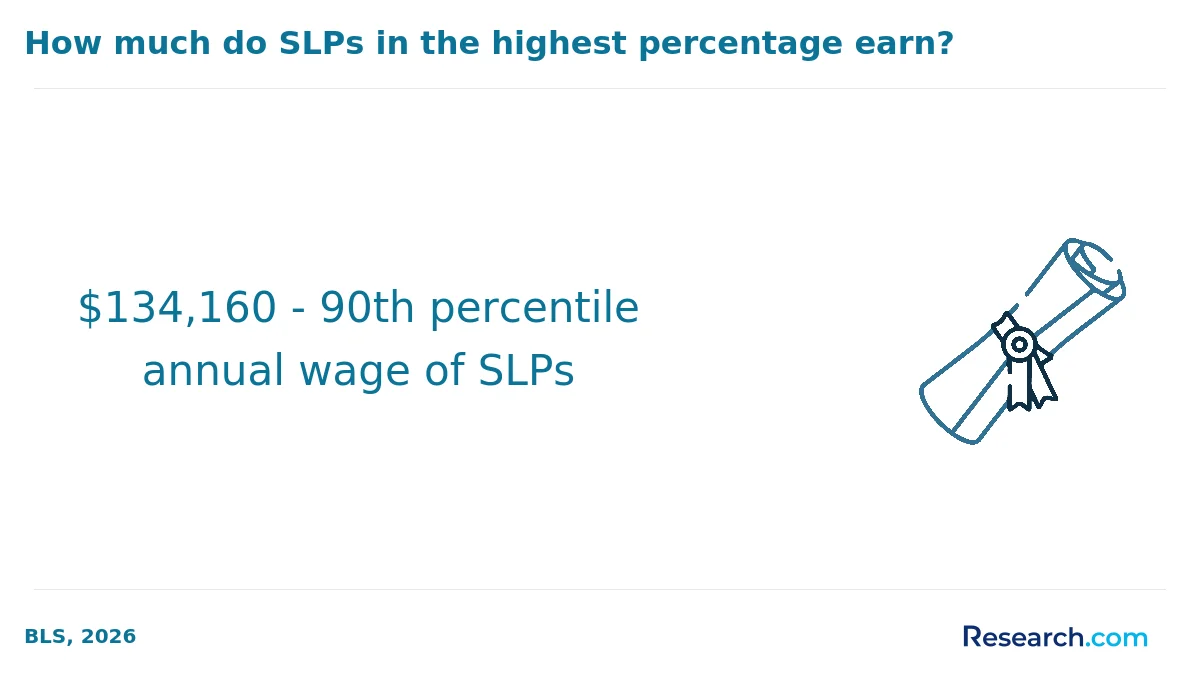
According to data from the U.S. Bureau of Labor Statistics, the median annual salary for speech-language pathologists—a frequent career path after graduation—is approximately $79,000. Graduates typically earn near the national median for speech-language pathologists, with salaries ranging from $62,900 to $134,160 depending on geographic location and job role.
- Work setting affects pay: Healthcare roles may offer different compensation than school-based, educational, private practice, or community-based positions.
- Experience changes earning power: Entry-level salaries are typically lower, while experienced professionals may qualify for higher pay, leadership duties, specialized roles, or supervisory responsibilities.
- Credentials matter: Professional licensure, certification, and supervised experience can affect eligibility for certain jobs and salary levels.
- Geography matters: Demand, cost of living, employer budgets, and state or local requirements can all influence compensation.
- Program quality matters indirectly: A strong program can support better clinical preparation, stronger references, and a smoother transition into employment.
Students should be cautious about any program that implies a no-test admissions policy directly increases earnings. The better question is whether the program prepares graduates for the roles they want and supports the credentials employers require.
What Are the Pros and Cons of Applying to No GRE Communication Disorders Master's Programs?
Applying to no GRE communication disorders master’s programs can be a smart choice, especially for students whose strengths are better shown through coursework, experience, recommendations, and writing. However, test-optional admissions also shift more weight onto the rest of the application.
Pros
- Lower application burden: Applicants avoid test registration, preparation time, and exam-related stress.
- Reduced upfront cost: Not taking the GRE or GMAT can lower expenses before enrollment, especially for students applying to multiple schools.
- Better fit for working adults: Applicants balancing full-time jobs, caregiving, or other responsibilities may be able to apply sooner.
- More holistic evaluation: Admissions committees can focus on GPA, experience, writing, recommendations, and fit with the program.
- Potentially wider access: Removing standardized testing can help applicants who might otherwise delay or avoid graduate study because of testing barriers.
Cons
- Other materials carry more weight: Without a test score, weak essays, vague recommendations, or an unfocused resume can hurt the application more.
- GPA may become more important: Applicants with uneven academic records need to provide context and evidence of readiness.
- Not all no-GRE programs are equal: Some programs may be strong and well-supported, while others may have limited transparency or weaker student services.
- Competitive opportunities may still consider tests: Some assistantships, scholarships, or future academic pathways may value standardized scores, depending on the institution.
- Applicants may apply too broadly: Because the process feels easier, some students submit applications without checking accreditation, clinical requirements, licensure alignment, or total cost.
The best strategy is to use no-GRE admissions as an opportunity, not a shortcut. Build a strong application, verify program quality, and make sure the degree supports your intended professional path.
What Graduates Say About Online Communication Disorders Degree Master's Programs with No GRE or GMAT Requirement
- : "Choosing an online communication disorders master's program that did not require the GRE or GMAT was a game changer for me financially. The reduced application barriers meant I could focus more on managing tuition costs and less on expensive test prep. Graduating from this flexible program opened doors in my field without the extra stress of standardized testing. — Iker"
- : "Getting into an online communication disorders program with no GRE or GMAT requirement felt like a breath of fresh air. It made the admissions process more about my experience and passion than just test scores. That helped me feel confident that my background and skills mattered, and it shaped the way I approach my career in the profession. — Hayden"
- : "The professional impact of completing my communication disorders master's degree online without needing GRE or GMAT was profound. Employers appreciated the practical knowledge and dedication over standardized test results, which boosted my credibility and advanced my career path. It also showed me that multiple routes can lead to success in this field. — Caleb"
Other Things You Should Know About Communication Disorders Degrees
In 2027, many online communication disorders master's programs provide flexible scheduling options such as asynchronous classes and part-time enrollment, allowing working professionals to balance their studies with full-time jobs.
Yes, accreditation is crucial for communication disorders programs regardless of GRE or GMAT requirements. Prospective students should ensure the program is accredited by organizations like the Council on Academic Accreditation in Audiology and Speech-Language Pathology (CAA). Accreditation ensures the program meets professional standards and qualifies graduates for certification and licensure.
Many online communication disorders master's programs without GRE or GMAT requirements still provide access to federal financial aid, scholarships, and employer tuition reimbursement plans. Financial support varies depending on the institution and student circumstances, so it is advisable to contact program financial offices early in the application process.
References
- U.S. Bureau of Labor Statistics - Speech-Language Pathologists https://www.bls.gov/ooh/healthcare/speech-language-pathologists.htm
- ASHA EdFind - Accredited Speech-Language Pathology Programs https://find.asha.org/ed/
- Audiology and Speech-Language Pathology Interstate Compact https://aslpcompact.com/compact-map/
- Abilene Christian University - Master of Science in Speech-Language Pathology (Online) https://acu.edu/academics/graduate/master-of-science-in-speech-language-pathology/
- University of North Carolina at Greensboro - Speech-Language Pathology, M.A. (Online) https://csd.uncg.edu/graduate/masters-of-arts-online/
- Nova Southeastern University - SLP Program - Master of Science in Speech-Language Pathology https://osteopathic.nova.edu/degrees/masters/speech-language-pathology/index.html
- Idaho State University - Master of Science in Speech-Language Pathology (Online/Distance Education) https://www.isu.edu/slp/programs-offered/slp-graduate-program/
- James Madison University - Master of Science (M.S.) in Speech-Language Pathology (Distance Education / Online) https://www.jmu.edu/chbs/csd/online_ms/index.shtml