
2027 Online Communication Disorders Degree Master's Programs That Accept FAFSA

Co-Founder and Chief Data Scientist

Reviewed by Rhea Paul, PhD
SLP Education & Research Expert
Choosing an online master’s in communication disorders is usually a three-part decision: whether the program can prepare you for speech-language pathology or related clinical work, whether the online format fits your life, and whether the school can accept federal financial aid through FAFSA. The last point matters because graduate tuition, clinical placement costs, technology fees, and travel for in-person requirements can add up quickly.
The workforce case is strong: the U.S. Bureau of Labor Statistics projects a 17% growth in speech-language pathology careers through 2035. Still, demand alone does not make every program a smart investment. Applicants need to verify accreditation, understand federal loan options, compare total cost of attendance, and confirm that online coursework includes the supervised clinical experiences required for licensure or certification goals.
This guide explains how FAFSA applies to online communication disorders master’s programs, what federal aid graduate students can typically use, what admissions committees look for, and how to evaluate program length, tuition, curriculum, technology requirements, and career outcomes before enrolling.
Key Things to Know About Online Communication Disorders Degree Master's Programs That Accept FAFSA
- Admission to online communication disorders master's programs often requires a bachelor's degree in a related field, minimum GPA, and prerequisite coursework; FAFSA eligibility depends on enrollment status and accredited institutional participation.
- Application procedures typically involve submitting transcripts, letters of recommendation, and personal statements; financial aid packages may include federal loans, grants, and work-study options for eligible students.
- Compare programs by evaluating total cost, flexibility in course scheduling, accreditation status, and graduate employment rates to ensure alignment with career goals and financial capacity.
How Does FAFSA Work for Graduate Students Enrolling in an Online Communication Disorders Master's Program?
FAFSA is the application graduate students use to be considered for federal student aid at eligible institutions. Online delivery does not automatically disqualify a program. What matters is whether the school participates in federal student aid programs and whether the student meets federal and institutional eligibility rules.
For communication disorders students, accreditation deserves extra attention. Institutional accreditation is a critical prerequisite for FAFSA eligibility because only programs accredited by agencies recognized by the U.S. Department of Education qualify for federal financial aid. For students pursuing speech-language pathology licensure or certification, programmatic accreditation may also affect whether the degree meets professional requirements.
The demand for speech-language pathologists, graduates of communication disorders programs, is expected to grow 17% between 2025 and 2035, signaling strong career opportunities. Below is an overview of regionally accredited universities offering online communication disorders master's degrees that participate in federal financial aid programs:
- University of Wisconsin-Madison: The program spans roughly 2 years with 60 credit hours, delivered fully online with some clinical practicum components; the university is federally aid eligible.
- Florida State University: Offers a 2-year, 54-credit hour online program featuring both synchronous and asynchronous courses, approved for FAFSA funding.
- University of North Carolina at Greensboro: Approximately 2 years and 60 credit hours, primarily online with required in-person clinical experiences; participates in federal aid.
- James Madison University: A 2-year, 62-credit hour online program with hybrid practicums; federal financial aid is available.
- University of Texas at Dallas: The 2-year, 56-credit hour online program includes telepractice components and is fully eligible for FAFSA.
Before applying, confirm three things directly with the school: its federal school code, whether the specific graduate program is eligible for aid, and whether your planned enrollment pace qualifies for the aid you expect. Students should also confirm FAFSA eligibility for their chosen school using the Federal Student Aid school search tool at studentaid.gov. For those comparing accelerated graduate options, some institutions also appear in rankings of one year online masters programs.
What Types of Federal Financial Aid Are Available to Online Communication Disorders Master's Students Through FAFSA?
Graduate financial aid is more loan-focused than undergraduate aid. After submitting FAFSA, eligible online communication disorders master’s students may be considered for federal loans and, in more limited cases, grants or work-study. The award letter from each school shows what you can borrow or receive, but it is not a recommendation to borrow the full amount.
The field expects strong growth, with the Bureau of Labor Statistics projecting a 21% job increase for speech-language pathologists from 2022 to 2032. That outlook can support the case for graduate study, but students should still compare debt against expected career requirements, licensure timelines, and local salary conditions.
- Federal Direct Unsubsidized Loans: Federal Direct Unsubsidized Loans permit borrowing up to $20,500 per academic year at a fixed 7.05% interest rate. Interest begins accruing while the student is in school, so borrowing only what is needed can reduce long-term cost.
- Grad PLUS Loans: The Grad PLUS Loan covers the full cost of attendance but charges 7.54% interest. This option can help fill gaps after unsubsidized loans, scholarships, employer support, or savings, but it can also increase repayment pressure after graduation.
- Grant Opportunities: Graduate grants like the TEACH Grant are scarce and require enrollment in eligible education-related programs with service commitments. Communication disorders students must verify if their program qualifies before counting on grant aid.
- Federal Work-Study: Federal work-study is less common for graduate students and varies by institution, but it can provide additional earnings if awarded. Ask whether online students can access remote or local work-study placements.
- Repayment Plans: Income-driven repayment plans cap monthly payments based on income, easing financial burdens post-graduation. These plans may be useful during clinical fellowship periods or early-career years.
- Loan Forgiveness: Public Service Loan Forgiveness (PSLF) offers debt forgiveness after 10 years of qualifying public service employment, benefiting many graduates who work in eligible schools, hospitals, or public service settings.
When comparing aid offers, look beyond the maximum loan amount. Review tuition, fees, estimated clinical placement costs, travel, required technology, and whether the program’s schedule allows part-time work. For applicants considering other graduate paths as a point of comparison, this guide on what is the easiest masters degree may help clarify how workload and outcomes differ across fields.
What Are the General Admission Requirements for an Online Communication Disorders Master's Program?
Admission to an online communication disorders master’s program is usually competitive because programs must balance academic capacity with available clinical placements. Recent data shows that about 65% of these programs have adopted more flexible testing policies since 2020, reflecting a broader shift in graduate admissions. Even when testing is optional, applicants still need to show strong academic preparation, communication skills, and readiness for supervised clinical training.
- Bachelor's Degree from an Accredited Institution: Nearly every program requires a completed undergraduate degree, often in communication disorders, psychology, linguistics, education, health sciences, or a related area. Career changers may be considered but may need prerequisite coursework.
- Official Transcripts: Programs review transcripts to verify degree completion, GPA, academic trends, and prerequisite courses. Common prerequisites may include anatomy, physiology, phonetics, language development, speech and hearing science, or statistics.
- Letters of Recommendation: Most programs request two to three letters. Strong letters come from faculty, supervisors, clinicians, or employers who can discuss the applicant’s writing, professionalism, reliability, interpersonal skills, and preparation for graduate-level work.
- Personal Statement or Statement of Purpose: This essay should explain why the applicant is pursuing communication disorders, what populations or settings interest them, and how the program fits their goals. A generic statement is a missed opportunity.
- Standardized Test Scores: Some schools still require GRE or GMAT scores, while many have made these optional or eliminated them entirely to improve access. If scores are optional, applicants should submit them only if they strengthen the application.
- Prerequisite Coursework and Experience: Some programs require prior specialized coursework, observation hours, clinical exposure, or relevant professional experience. Advanced or specialized tracks may also ask for licensure, certification, or documented work in a related field.
Applicants should review each program’s admissions page before starting the application. Pay close attention to whether prerequisites must be completed before applying, before enrollment, or during the first part of the program. If your background is outside communication disorders, ask whether the school offers bridge courses or accepts post-baccalaureate coursework from other institutions.
A strong application does more than meet minimum requirements. It connects academic preparation, service experience, career goals, and readiness for clinical training into one coherent case for admission.
What Are the Steps to Apply for FAFSA and Enroll in an Online Communication Disorders Master's Program?
The FAFSA and graduate admissions process should run at the same time. Waiting for an admission decision before thinking about aid can leave too little time to compare award letters, resolve document issues, or plan for enrollment deposits and clinical requirements.
- Create a StudentAid.gov Account: Start by setting up an account at the official Federal Student Aid website. This account is used to complete FAFSA, review federal loan information, and manage aid-related tasks.
- Gather Financial Documents: Collect tax returns, W-2s, bank statements, and other required financial records before starting the FAFSA. Accurate information helps prevent processing delays and reduces the chance of follow-up documentation requests.
- Complete the FAFSA Application: Follow the FAFSA instructions carefully and list every school you are seriously considering. Schools use this information to prepare financial aid offers after admission or enrollment review.
- Request Transcripts Early: Order official transcripts from every college or university attended. Do this early, especially if you completed prerequisites at multiple institutions.
- Secure Letters of Recommendation: Ask recommenders well before the deadline. Provide your resume, statement draft, target programs, and deadline list so they can write specific and useful letters.
- Draft the Statement of Purpose: Tailor the essay to each program. Address your motivation for communication disorders, relevant experience, populations you hope to serve, and why the online format is a good academic fit.
- Prepare Supplemental Materials: Some programs may request writing samples, prerequisite verification forms, resumes, interviews, or documentation of observation or clinical exposure.
- Coordinate Deadlines: Track FAFSA deadlines, institutional aid deadlines, application deadlines, interview dates, and enrollment confirmation dates in one calendar. Submit early when possible.
- Compare Admission and Aid Offers: Once offers arrive, compare total cost of attendance, loan amounts, scholarships, clinical placement support, residency requirements, and time to completion before committing.
Use official sources throughout the process, including studentaid.gov, CHEA's accreditation directory, program catalogs, and the BLS Occupational Outlook Handbook. If you are comparing affordability across graduate formats, reviewing resources such as the best online EMBA programs can also show how tuition, fees, and flexibility vary across professional master’s degrees.
What Is the Minimum GPA Requirement for a Communication Disorders Master's Program?
Many communication disorders master’s programs use a minimum GPA near 3.0 on a 4.0 scale, but the minimum is not the same as the competitive standard. A 3.0 may qualify an applicant for review, while admission may depend on prerequisite grades, recent academic performance, recommendations, clinical exposure, and the overall strength of the applicant pool.
- Minimum GPA Threshold: Most accredited institutions expect at least a 3.0 GPA. Competitive programs may look for stronger academic records, especially in prerequisite science, language, and communication disorders courses.
- Conditional Admission Opportunities: Some schools allow provisional or conditional admission for applicants with slightly lower GPAs who show strength in other areas, such as recent coursework, professional experience, or strong recommendations.
- Applicant Background Considerations: Career changers may be evaluated differently from applicants who majored in communication disorders. Strong grades in post-baccalaureate prerequisites can help demonstrate current readiness.
- Addressing a Low GPA: Applicants with weaker academic records should not ignore the issue. Use the personal statement or optional addendum to explain relevant context, show what changed, and point to stronger recent evidence of academic ability.
- Program Research for Alternative Pathways: Look for programs with bridge courses, leveling coursework, or conditional acceptance policies. These options can create a realistic path for applicants who do not match the traditional profile.
If your GPA is below the stated minimum, contact admissions before applying. Ask whether the program reviews applicants holistically, whether prerequisite retakes are accepted, and whether recent graduate or post-baccalaureate coursework can offset earlier grades. This can prevent wasted application fees and help you build a stronger plan.
How Long Does It Take to Complete an Online Communication Disorders Master's Degree?
Online master's degree programs in communication disorders usually take between 18 months and 3 years to complete. The timeline depends on enrollment status, prerequisite needs, clinical placement scheduling, and whether the program requires a thesis, capstone, or other culminating project.
Full-time students often graduate within 18 to 24 months by taking heavier course loads. Part-time students may extend the program up to three years to balance school with work, caregiving, or clinical placement logistics. Flexibility can be valuable, but a longer timeline may affect total living expenses and the pace at which a student reaches licensure-related milestones.
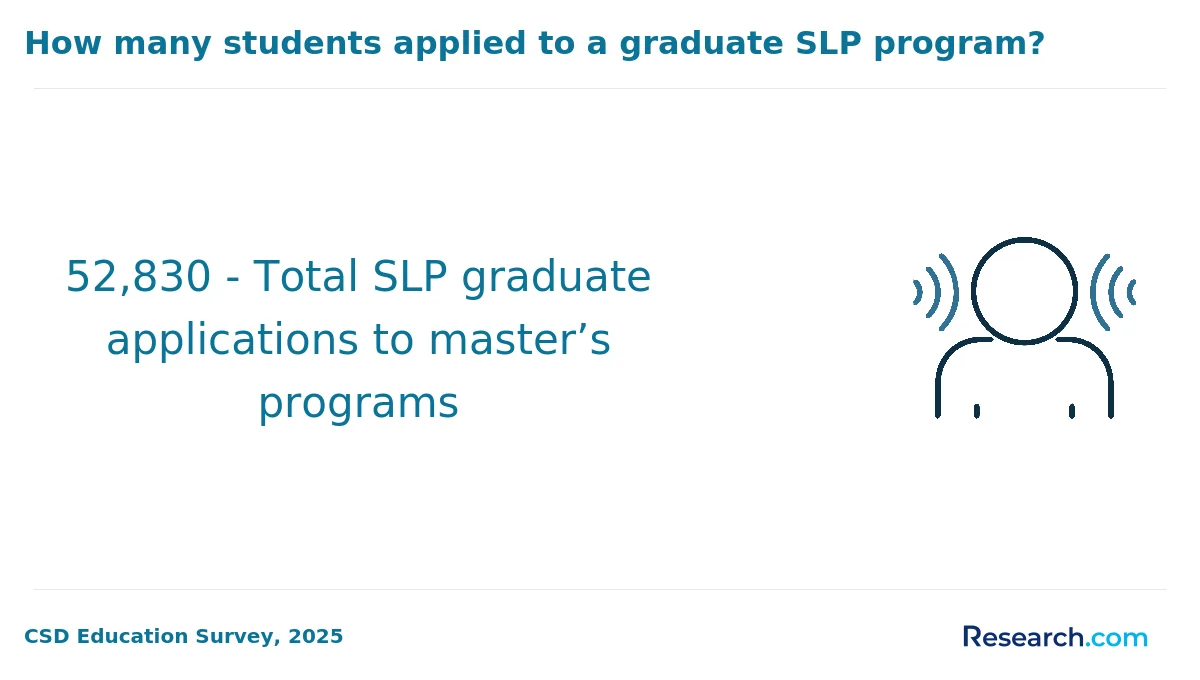
Recent data from the American Speech-Language-Hearing Association reveals steady growth in enrollment for communication disorders graduate programs, highlighting greater demand and competition for clinical placements. Key timing factors include:
- Enrollment Status: Full-time students typically take 9 to 12 credits per semester, while part-time students often take 6 or fewer credits. A lighter load may be more manageable but delays completion.
- Accelerated Tracks: Some programs use condensed terms, year-round enrollment, or fewer breaks to help students finish faster. These formats require strong time management and may be difficult for students working full time.
- Thesis and Capstone Projects: Research projects, capstones, or major clinical projects can add time if approvals, data collection, or faculty review extend beyond the planned term.
- Practicum and Internships: Clinical experiences are essential but can be the most schedule-sensitive part of the degree. Students may need weekday availability, background checks, health documentation, or placement approval.
- Prerequisite Coursework: Students without a relevant undergraduate background may need leveling courses before beginning the core graduate curriculum, increasing total time to degree.
- Financial Aid Considerations: FAFSA eligibility depends on enrollment and satisfactory academic progress. Part-time students should confirm that their credit load supports the aid package they expect.
What Core Courses and Specializations Are Typically Offered in an Online Communication Disorders Master's Program?
Online communication disorders master’s programs usually combine science-based coursework, assessment and intervention training, supervised clinical practice, and a final capstone, thesis, or practicum requirement. The best curriculum for you depends on your target role, state requirements, and the populations you want to serve.
According to the American Speech-Language-Hearing Association (ASHA), demand for speech-language pathologists is expected to grow 17% from 2025 to 2035, reflecting promising career prospects for graduates. A typical curriculum may include:
- Speech and Hearing Anatomy and Physiology: Covers the biological systems involved in speech, language, hearing, swallowing, and voice production.
- Language Development and Disorders: Examines typical and atypical language development across age groups and prepares students to recognize developmental, acquired, and language-based communication challenges.
- Phonetics and Speech Sound Disorders: Builds skill in transcription, sound analysis, articulation, and intervention planning.
- Assessment Methods: Teaches students how to select, administer, interpret, and report formal and informal assessments.
- Intervention and Treatment Planning: Focuses on evidence-based strategies for speech, language, fluency, voice, cognitive-communication, and swallowing needs.
- Clinical Practicum: Provides supervised experience with clients in approved settings. This requirement is often central to licensure and certification preparation.
- Research Methods or Evidence-Based Practice: Helps students evaluate clinical research and apply findings responsibly in practice.
Common specialization areas include pediatric communication disorders, neurogenic communication disorders, swallowing disorders, school-based practice, early intervention, adult rehabilitation, and telepractice. Not every program offers every specialization, so applicants should compare elective availability, faculty expertise, clinical site options, and whether online students have equal access to specialized placements.
Financial considerations also matter. Students comparing slp programs online should verify that the institution is accredited, FAFSA-eligible, and transparent about clinical requirements before enrolling. Those considering adjacent graduate fields may also want to review options such as masters in library science to compare cost, flexibility, and career direction across disciplines.
What Is the Average Tuition Cost of an Online Communication Disorders Master's Program That Accepts FAFSA?
Tuition for online communication disorders master’s programs that accept FAFSA varies widely. The final cost depends on whether the school is public or private, whether online students pay in-state or flat-rate tuition, how many credits the program requires, and whether clinical or residency expenses are included in the published estimate.
- Tuition Rates Vary by Institution Type: Public universities often charge lower tuition, especially for in-state students. Private institutions generally charge more, although some online programs use one tuition rate for all distance learners.
- Per-Credit Costs and Total Program Expenses: Tuition typically ranges from about $400 to over $1,200 per credit hour. Since program credit requirements usually fall between 30 and 65 credits, total tuition can range anywhere from $12,000 to upwards of $70,000.
- Program Length Affects Cost: A program with a lower per-credit rate may still cost more overall if it requires more credits. Always calculate total tuition, not just the advertised per-credit price.
- Specialization and Reputation Can Raise Costs: Programs with extensive clinical networks, specialized coursework, or highly recognized faculty may charge more. Higher cost is not automatically a better value unless it supports your career and licensure goals.
- Additional Fees and Hidden Costs: Budget for technology fees, online course fees, textbooks, assessment materials, clinical software, background checks, health requirements, graduation fees, and possible travel for residencies or clinical placements.
- FAFSA and Total Cost of Attendance: Federal financial aid can help cover tuition and certain education-related costs, but students should borrow based on a realistic budget. Compare net cost after scholarships, assistantships, employer support, and out-of-pocket expenses.
Before enrolling, ask each program for a full cost estimate for the entire degree. The most useful estimate includes tuition, mandatory fees, clinical expenses, residency travel, equipment, and expected annual increases if disclosed by the institution.
What Technology, Tools, or Clinical Requirements Are Expected of Online Communication Disorders Master's Students?
Online communication disorders students need more than a laptop and internet access. Because these programs include live instruction, recorded coursework, assessment training, telepractice activities, and supervised clinical experiences, technology and placement requirements can affect both cost and schedule.
- Reliable High-Speed Internet: Stable broadband access is necessary for live lectures, video meetings, assignment uploads, and virtual clinical activities. Universities generally recommend internet speeds of 10 Mbps or higher to support real-time participation.
- Computer, Webcam, and Microphone: Students usually need a current computer with a reliable webcam and microphone. A quiet, private space is also important for class participation and clinical simulations.
- Required Software: Programs may require Microsoft Office, Adobe Acrobat, video conferencing tools, secure testing software, and discipline-specific platforms. Some tools may involve licensing or subscription costs.
- Learning Management Systems: Students should be prepared to use platforms such as Canvas, Blackboard, or Moodle for readings, quizzes, discussions, assignments, grades, and announcements.
- Discipline-Specific Tools and Simulations: Some programs use simulation software like VSim® for speech-language pathology and other digital labs to practice clinical decision-making before in-person placements.
- In-Person Clinical Requirements: Many programs require practicums, internships, or clinical placements in approved settings such as schools, hospitals, rehabilitation centers, private clinics, or community agencies. Online students may still need daytime availability for these experiences.
- Compliance Requirements: Clinical sites may require background checks, immunization records, liability insurance, CPR training, drug screening, or other documentation before placement.
- Additional Costs: Plan for clinical placement fees, software licenses, certification preparation materials, transportation, lodging for any required campus visits, and lost work hours during clinical rotations.
Ask programs how placements are arranged before you enroll. Some schools place students directly, while others expect students to help identify local sites. That difference can significantly affect stress, timing, and whether the program is practical in your location.
What Career Outcomes and Salary Expectations Follow an Online Communication Disorders Master's Degree?
An online master’s in communication disorders can lead to clinical, educational, rehabilitation, and related service roles, depending on the program’s accreditation, the graduate’s state licensure path, and any required certification. The online format itself is usually less important than whether the program meets professional standards and includes appropriate supervised clinical training.
- Common Career Paths: Graduates typically pursue roles such as speech-language pathologist, audiologist assistant, or rehabilitation specialist. Speech-language pathologists work with children and adults who have speech, language, voice, fluency, cognitive-communication, or swallowing needs.
- Work Settings: Graduates may work in schools, hospitals, outpatient clinics, rehabilitation facilities, skilled nursing facilities, early intervention programs, telepractice settings, or private practice environments.
- Salary Expectations: According to the U.S. Bureau of Labor Statistics, speech-language pathologists earn a median annual wage near $97,870. Actual earnings vary by location, setting, experience, licensure status, and employer type.
- Licensure and Certification: Professional practice generally requires state licensure. Many graduates also pursue certification from the American Speech-Language-Hearing Association (ASHA). Students should confirm that the program supports the education and clinical experience requirements for their target state.
- Accreditation and FAFSA Eligibility: Choosing an accredited online program is important for both federal financial aid access and professional credibility. FAFSA can help with financing, but accreditation and licensure alignment determine whether the degree supports your career plan.
- Job Growth Outlook: The BLS projects a 17% growth in speech-language pathologist jobs through 2035, faster than average, fueled by an aging population and increased communication healthcare needs.
Students who want to compare broader distance-learning options can review popular online colleges, but communication disorders applicants should prioritize programs that clearly meet clinical and licensing expectations.
How Do Employers and Licensing Boards View an Online Communication Disorders Master's Degree Compared to an On-Campus One?
Employers and licensing boards generally focus on accreditation, curriculum quality, supervised clinical experience, and licensure eligibility rather than whether coursework was completed online or on campus. A well-designed online degree from an accredited institution can be viewed as comparable to an on-campus degree when it meets the same academic and clinical standards.
- Employer Acceptance Trends: Recent research and employer surveys reveal growing recognition of online degrees from regionally accredited institutions. The COVID-19 pandemic played a pivotal role in this shift, with many employers now acknowledging the quality and rigor of online education within fields like Communication Disorders.
- Licensing Board Requirements: Licensing authorities generally prioritize the accreditation of both the institution and the specific program over the delivery format. Most state boards overseeing Communication Disorders assess online degrees on par with campus-based credentials, provided the program holds proper programmatic accreditation such as that from the Council on Academic Accreditation (CAA).
- Clinical Training Matters: Employers want graduates who can assess, document, communicate, and treat effectively. Strong clinical placements, supervision quality, and client diversity can influence job readiness more than the course delivery method.
- Institutional Reputation and Transparency: Programs that clearly publish accreditation status, clinical outcomes, licensure disclosures, faculty credentials, and student support services are easier for employers and boards to evaluate.
- State-by-State Verification: Prospective students should confirm requirements directly with the relevant state licensing board before enrolling, especially if they plan to move or complete clinical placements outside the school’s home state.
The safest approach is to choose a program that publishes licensure alignment information and will confirm in writing whether its curriculum is designed to meet requirements in your state.
What Graduates Say About Getting Accepted in Online Communication Disorders Degree Master's Programs That Accept FAFSA
- : "Applying to a communication disorders master's program that accepted FAFSA made the process feel more realistic. I still had to compare accreditation, prerequisites, and clinical requirements carefully, but narrowing my search to eligible online programs helped me focus on schools I could actually afford. — Maya"
- : "The biggest lesson for me was to verify everything with official sources. I reviewed academic catalogs, accreditation information, and financial aid details before applying. That extra work gave me confidence that the program was credible and that the curriculum matched my goals. — Isabelle"
- : "I treated the search like a checklist: FAFSA eligibility, accreditation, prerequisite fit, clinical placement support, and total cost. Using federal education resources alongside program catalogs helped me avoid surprises and choose a path that felt practical. — Suzy"
Other Things You Should Know About Communication Disorders Degrees
In 2027, communication disorders master's students can explore scholarships, grants, and assistantships in addition to FAFSA. Many universities offer department-specific scholarships, while organizations such as the American Speech-Language-Hearing Association provide grants and resources aimed at assisting students in related fields.
Accreditation is key for online communication disorders master's programs to ensure academic quality and eligibility for certification exams. Most programs seek accreditation from bodies like the Council on Academic Accreditation in Audiology and Speech-Language Pathology (CAA). Accreditation requires rigorous curriculum standards, qualified faculty, clinical practicum opportunities, and outcomes assessment to maintain quality comparable to on-campus programs.
Students should compare programs based on factors like accreditation status, tuition cost, clinical placement options, program length, and flexibility. It is important to verify that the program accepts FAFSA to maximize financial aid. Additionally, reviewing faculty expertise, student support services, graduation rates, and certification pass rates can help identify a program that fits professional goals and personal circumstances.
References
- U.S. Bureau of Labor Statistics - Speech-Language Pathologists https://www.bls.gov/ooh/healthcare/speech-language-pathologists.htm
- ASHA EdFind - Accredited Speech-Language Pathology Programs https://find.asha.org/ed/
- O*NET OnLine - Speech-Language Pathologists https://www.onetonline.org/link/summary/29-1127.00
- New England Institute of Technology - Master of Science in Speech Language Pathology https://www.neit.edu/academics/graduate-degrees/speech-language-pathology-ms
- University of Nebraska at Kearney - Speech-Language Pathology, Master of Science in Education (Online Track) https://www.unk.edu/online/degrees-programs/speech-language-pathology-online.php
- University of Scranton - Master of Science (M.S.) in Speech-Language Pathology https://www.scranton.edu/academics/pcps/health-and-human-performance/programs/speech-language-pathology/index.shtml
- California State University-Northridge - Master of Science in Communicative Disorders (Online) https://tsengcollege.csun.edu/programs/CDS
- California State University-East Bay - Online Master of Science in Speech-Language Pathology https://ce.csueastbay.edu/programs/speech-language-pathology/




