2027 Best Online Digital Photography Degrees for Social Media Content Careers

Co-Founder and Chief Data Scientist
Choosing an online digital photography degree is really a career decision: you are investing in visual skills for platforms where brands compete for attention every day. Pew Research Center reported in 2024 that 83% of U.S. adults use YouTube and 68% use Facebook, making visual storytelling central to marketing, journalism, ecommerce, and creator work.
This guide is for students, career changers, and working creatives who want social media-focused photography training. You will learn which degree paths fit different goals, what they cost, and how to compare programs without overpaying.
Key Things You Should Know
- The best online digital photography degree for social media careers is usually an accredited bachelor's or degree-completion program that combines photography, video, editing, branding, analytics, and portfolio development.
- Cost varies widely. College Board's 2024 pricing data lists average published tuition and fees at $11,610 for in-state public four-year colleges and $43,350 for private nonprofit four-year colleges.
- Pay depends more on role and portfolio than the degree title alone; BLS May 2024 data reports a $42,520 median annual wage for photographers, while related visual media roles can pay more with editing, design, or marketing skills.
What are the best online digital photography degrees for social media careers?
The best online digital photography degrees for social media content careers are not simply the programs with the most camera courses. They are programs that help you build a professional portfolio for Instagram, TikTok, YouTube, ecommerce, brand campaigns, and paid content production while also teaching the business side of creative work.
For most students, the strongest options fall into a few categories. The right choice depends on whether you need a full degree, want to transfer credits, or already have creative experience and mainly need credentials and portfolio structure.
| Program type | Best for | Social media career value | Main trade-off |
| Associate degree in digital photography | Beginners who want a lower-cost entry point | Builds camera, lighting, editing, and portfolio fundamentals | May be less competitive for brand strategy or management roles without additional experience |
| Bachelor's degree in photography, digital photography, or visual media | Students seeking a broad creative credential | Adds concept development, visual storytelling, art direction, business, and capstone portfolio work | Usually costs more and takes longer than a certificate or associate degree |
| BFA in photography or visual arts | Students aiming for high-end commercial, editorial, or fine-art-influenced work | Emphasizes critique, creative direction, and polished portfolio development | May include fewer marketing or analytics courses unless electives are chosen carefully |
| Degree-completion program | Students with prior credits or an associate degree | Can shorten time to a bachelor's while focusing upper-division work on portfolio and career goals | Transfer policies vary, so not all prior credits may apply |
| Related visual communication, digital media, or marketing degree | Students who want broader content roles beyond photography | Pairs image-making with social media strategy, branding, analytics, and campaigns | May offer fewer advanced photography studios than a dedicated photography degree |
The best program for a social media content career should include more than technical image capture. Look for evidence that students complete projects similar to the work employers and clients actually request.
- Review the curriculum for photography, short-form video, Adobe Creative Cloud, mobile content production, branding, and digital marketing electives.
- Ask whether the final portfolio includes campaign-based work, not just isolated images.
- Check whether instructors have recent commercial, editorial, ecommerce, agency, or social media production experience.
- Compare internship, freelance business, and career support options before focusing on rankings.
- Confirm that online students receive critique, file review, and portfolio feedback from faculty, not only prerecorded lessons.
A common mistake is choosing the most visually appealing program website without checking whether the degree builds employable content skills. A beautiful gallery does not automatically mean the curriculum covers client briefs, brand voice, usage rights, analytics, or campaign deliverables.
How do online and campus photography programs compare?
Online and campus photography programs can both prepare students for social media content work, but they develop skills in different ways. Online programs are often stronger for students who need flexibility, while campus programs may offer more structured studio access and face-to-face critique.
This comparison shows the practical differences that matter most when your goal is a photography-related content career rather than a traditional fine arts path.
| Factor | Online digital photography degree | Campus photography degree | Best choice when |
| Schedule | More flexible, often asynchronous | Set class and studio times | Online is better for working students or caregivers |
| Equipment access | Students may need their own camera, lighting, and software | Campus studios, labs, and equipment checkout may be available | Campus is better if you need access to expensive facilities |
| Critique | Delivered through video, discussion boards, file review, and live sessions | Often in-person and immediate | Either can work if feedback is frequent and specific |
| Portfolio relevance | Can be strong for real-world, location-based, ecommerce, and social media projects | Can be strong for studio, gallery, and collaborative production | Choose based on the type of portfolio you want to build |
| Networking | Requires more intentional outreach online | More organic peer and faculty interaction | Campus may help students who rely on local creative networks |
Online programs make sense if you already have access to a camera, editing software, and shooting locations. They can be especially practical for social media because much of the work happens in the same digital environment where clients review, publish, and measure content.
Campus programs may be better if you want studio-heavy training, access to lighting labs, or close collaboration with models, stylists, product designers, or other creatives. Students comparing hands-on online creative majors may also find useful parallels in guides to the best online architecture schools, where studio critique, technology access, and portfolio structure are also major decision factors.
Do not assume online automatically means easier. A strong online photography degree still requires weekly shooting, reshooting, editing, critique participation, file management, and deadlines that mirror client work.
Is digital photography accreditation important for online degrees?
Accreditation is important because it affects financial aid eligibility, credit transfer, graduate school options, and how employers or clients perceive the school behind your credential. For online digital photography degrees, the most important baseline is institutional accreditation from an agency recognized by the U.S. Department of Education or the Council for Higher Education Accreditation.
Programmatic accreditation can also matter, but it is not always required for photography careers. Some art and design programs may hold accreditation from the National Association of Schools of Art and Design, which can signal that the curriculum, faculty qualifications, facilities, and student work have gone through an external review process.
Use this table to separate accreditation signals that are essential from those that are helpful but not always necessary.
| Accreditation or approval type | What it means | Why it matters to online photography students |
| Institutional accreditation | The school has been reviewed as a whole institution | Usually required for federal financial aid, credit transfer, and broad academic legitimacy |
| Art and design program accreditation | A specific creative program has met field-based standards | Can strengthen confidence in curriculum quality, critique culture, and portfolio expectations |
| State authorization for online learning | The school is allowed to enroll online students in specific states | Important if you study from a state different from the school's location |
| Industry certificates embedded in courses | Courses may prepare students for software or platform credentials | Helpful for skills signaling, but not a substitute for institutional accreditation |
Before enrolling, verify accreditation on the school's official website and through federal or recognized accreditation databases. Red flags include vague claims such as "fully recognized," no accreditor name, pressure to enroll immediately, or promises that credits will transfer anywhere.
What courses are in an online digital photography degree?
An online digital photography degree usually blends technical image-making, visual communication, editing, and professional practice. For social media careers, the strongest curricula also include video, branding, audience behavior, and campaign-based portfolio projects.
The courses below are common in photography and digital media programs. Their value comes from how they connect to real deliverables, such as product shoots, creator kits, brand campaigns, reels, thumbnails, and image libraries.
| Course area | What students learn | Why it matters for social media content |
| Digital photography fundamentals | Exposure, composition, camera settings, lenses, and file formats | Builds reliable image quality across changing environments |
| Lighting and studio techniques | Natural light, flash, continuous lighting, product setups, and portraits | Supports brand, ecommerce, influencer, and event content |
| Photo editing and retouching | Color correction, masking, retouching, workflow, and export settings | Helps create consistent visuals across platforms and campaigns |
| Short-form video production | Shooting, sequencing, audio basics, captions, and editing | Expands employability because many social media roles require both photo and video |
| Visual storytelling | Narrative structure, mood boards, sequencing, and audience intent | Turns single images into campaign assets with a clear message |
| Digital marketing or social media strategy | Brand positioning, content calendars, metrics, and platform behavior | Connects creative choices to business goals |
| Professional practice | Contracts, pricing, copyright, client communication, and portfolio presentation | Prepares students for freelance, agency, and in-house production work |
AI tools are also changing course expectations. Students should expect to learn where AI-assisted editing, culling, upscaling, background cleanup, and generative tools can improve workflow, as well as where disclosure, originality, copyright, and brand trust create limits.
When reviewing a curriculum, avoid programs that treat photography as only a fine arts discipline if your goal is social media content. Fine art training can be valuable, but content careers usually require faster production cycles, platform-native formats, and business communication skills.
What admission requirements do photography degree programs usually ask for?
Admission requirements for online photography degree programs vary by school and degree level. Open-admission or community college pathways may ask for only a high school diploma or GED, while bachelor's and BFA programs may request transcripts, a portfolio, a statement of purpose, or transfer credit documentation.
Most applicants should prepare for a few common requirements. Checking these early can prevent delays, especially if you are applying as a transfer, adult learner, military-affiliated student, or career changer.
- High school diploma, GED, or equivalent documentation for undergraduate admission
- Official transcripts from high school and any colleges previously attended
- Minimum GPA requirement, which varies by institution and may be flexible for some adult learners
- Portfolio or sample images, especially for selective bachelor's or BFA programs
- Personal statement explaining creative goals and interest in photography or digital media
- Proof of English proficiency for applicants whose prior education was not in English
- Technology requirements, such as access to a camera, computer, storage, and editing software
If you are a veteran or active-duty learner, ask about transfer credit for military training, deployment-friendly attendance policies, and VA benefit processing. Even when comparing a different field, resources such as military-friendly online electrical engineering degree programs can show the kinds of support questions military-affiliated students should ask before choosing an online school.
A major mistake is submitting a portfolio that only shows favorite images rather than range. A stronger admissions portfolio usually demonstrates composition, lighting, editing consistency, storytelling, and the ability to revise work based on a goal.
How long does an online digital photography degree take?
An online digital photography degree can take from less than two years to about four years, depending on the credential, transfer credits, enrollment intensity, and course availability. The timeline matters because it affects tuition, opportunity cost, portfolio readiness, and how quickly you can pursue paid work.
This table summarizes typical completion timelines. Actual time can vary by school calendar, transfer policy, and whether the program uses semesters, terms, or accelerated sessions.
| Credential | Typical full-time length | Typical part-time length | Best fit |
| Undergraduate certificate | Several months to 1 year | 1 to 2 years | Students who need focused skills without a full degree |
| Associate degree | About 2 years | 3 to 4 years | Beginners seeking a lower-cost foundation or transfer path |
| Bachelor's degree | About 4 years | 5 to 6 years or more | Students seeking broad creative, business, and portfolio preparation |
| Bachelor's completion program | 1 to 2 years after transfer | 2 to 4 years | Students with substantial prior college credit |
Accelerated programs can be useful if you already have experience and want to formalize your skills quickly. However, faster is not always better in photography because portfolio quality depends on practice, feedback, revision, and varied shooting conditions.
Students who need scheduling flexibility should ask whether courses are available every term or only once a year. If start dates are a priority, comparing online schools with multiple start dates can help you understand how flexible academic calendars work before you commit.
To shorten your timeline without weakening your education, request a transfer evaluation, ask about credit for prior learning, and map required courses term by term. Avoid enrolling before you know whether upper-level photography courses are offered often enough for your target graduation date.
How much do online digital photography degrees cost?
Online digital photography degree costs include more than tuition. Students may also need a camera body, lenses, lighting, storage drives, editing software, printing, portfolio hosting, and travel for shoots or internships. These costs can change the real price of a program even when tuition looks affordable.
College Board's 2024 pricing data gives a useful benchmark for published tuition and fees at U.S. institutions. These figures are not photography-specific, but they help you compare whether a program's tuition is above or below the broader market.
- Public two-year college, in-district average published tuition and fees: $4,050
- Public four-year college, in-state average published tuition and fees: $11,610
- Public four-year college, out-of-state average published tuition and fees: $30,780
- Private nonprofit four-year college average published tuition and fees: $43,350
Online students should calculate the total cost before comparing programs. A lower tuition rate may not be the cheapest option if the school has high technology fees, limited transfer credit acceptance, or expensive required equipment.
| Cost factor | Why it matters | Question to ask |
| Tuition rate | Usually the largest direct cost | Is tuition charged per credit, per term, or as a flat rate? |
| Transfer credits | Accepted credits can reduce both cost and time | How many prior credits apply to the major, not just electives? |
| Equipment | Photography programs may require specific gear | Can I use equipment I already own, or must I buy a specific kit? |
| Software | Editing tools may require subscriptions | Is software included in tuition or billed separately? |
| Portfolio expenses | Professional presentation can require hosting, prints, or review fees | What portfolio deliverables are required for graduation? |
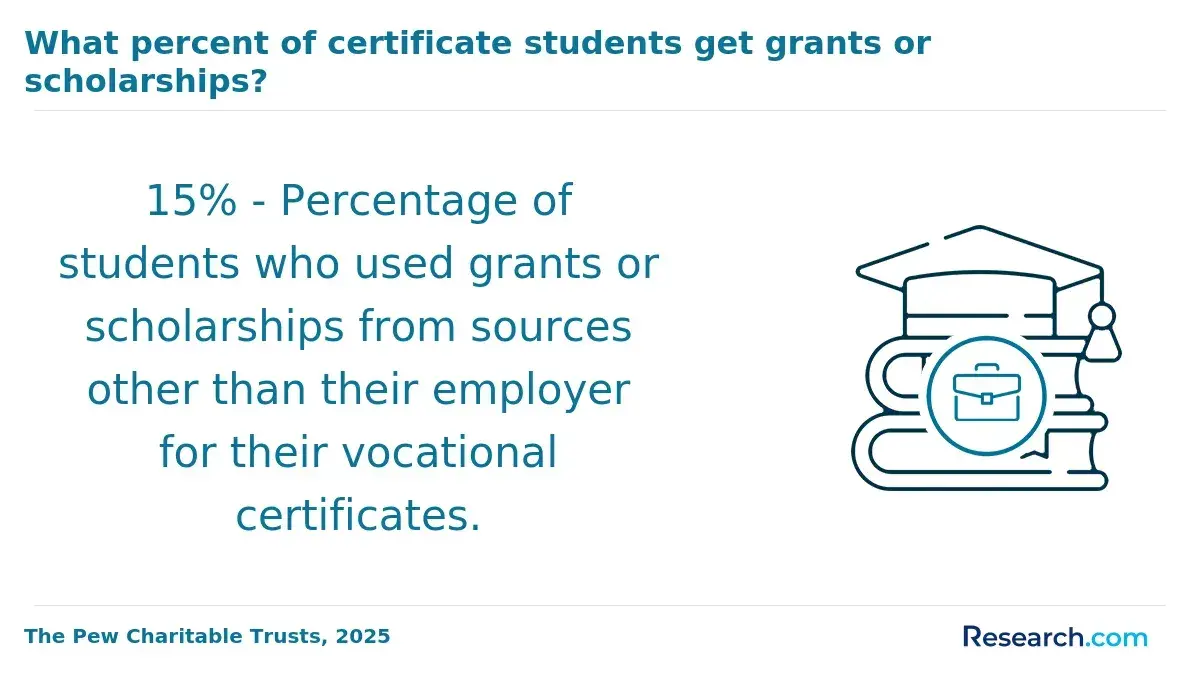
| Financial aid | Accredited programs may qualify for federal aid | What is the average net price after grants and scholarships? |
If affordability is the main constraint, start with accredited public colleges, transfer-friendly associate degrees, and degree-completion options. You can also compare the cheapest online photography degree list, but do not choose on tuition alone; verify accreditation, portfolio quality, and course fit.
What jobs can you get with a digital photography degree?
A digital photography degree can lead to several social media-adjacent careers, but job titles vary by employer. Some roles focus on shooting images, while others combine photography with video, editing, design, campaign planning, analytics, or brand management.
The best job target depends on whether you want to be a specialist, a hybrid content creator, or a strategist who supervises creative work. The table below compares common paths and what each role usually requires.
| Job title | Typical responsibilities | Degree relevance | Portfolio focus |
| Social media photographer | Create images for brand feeds, campaigns, events, products, and creator partnerships | Directly relevant | Platform-ready images, consistent style, campaign sets |
| Content creator | Produce photos, short videos, captions, and platform-native assets | Relevant when paired with video and marketing courses | Reels, thumbnails, product demos, lifestyle images |
| Digital content specialist | Plan, publish, and optimize visual content across channels | Strong fit for photography plus digital marketing training | Campaign examples, content calendars, performance summaries |
| Ecommerce photographer | Photograph products for online stores, ads, and marketplace listings | Strong fit if lighting and product courses are included | Clean product images, detail shots, lifestyle product sets |
| Photo editor or retoucher | Edit, color-correct, retouch, organize, and export image libraries | Relevant if the program includes advanced editing workflow | Before-and-after edits, batch consistency, brand style samples |
| Visual content coordinator | Coordinate shoots, manage assets, support campaigns, and communicate with vendors | Relevant for students with business and project management coursework | Organized campaign projects and production planning samples |
Entry-level candidates often start with internships, freelance projects, campus media, small business work, or assistant roles. Advancement usually comes from proving that your visuals can support measurable goals such as engagement, product clarity, brand consistency, or campaign speed.
A common mistake is assuming a degree alone will secure creative work. Employers and clients usually want to see a portfolio, editing judgment, reliability, communication skills, and the ability to produce content in the formats they actually use.
How much do social media photography careers pay?
Social media photography pay varies because workers may be employees, freelancers, contractors, creators, or hybrid marketing staff. Location, industry, client base, editing skills, video ability, and business development all affect income.
BLS May 2024 wage data is useful for grounding expectations, but it does not isolate every social media-specific job title. Use these figures as labor market benchmarks, not as promised outcomes.
| Related occupation | May 2024 median annual wage | How it connects to social media photography |
| Photographers | $42,520 | Closest federal benchmark for still image production roles |
| Graphic designers | $61,300 | Relevant when photography is combined with layout, branding, and campaign assets |
| Film and video editors | $70,980 | Relevant because short-form video is now central to many content roles |
| Public relations specialists | $69,780 | Relevant for visual storytelling roles tied to brand communication and media strategy |
The salary pattern is clear: photography alone can be a viable skill, but combining photography with video editing, design, campaign strategy, or communications can open doors to broader roles. For students comparing return on investment, the key question is not only "What does a photographer earn?" but "Which mix of visual and marketing skills will my program help me prove?"
Freelance income is harder to benchmark because rates depend on client type, licensing, deliverables, usage rights, turnaround time, and local competition. Before relying on freelance work, students should learn contracts, invoicing, copyright basics, and how to price beyond hourly shooting time.
Do photography careers require certifications or licenses?
Most photography careers do not require a state license in the way nursing, teaching, or accounting careers often do. However, specific activities, employers, or business models may require certifications, permits, or compliance knowledge.
The most important requirement to know is drone work. If you use a drone commercially in the U.S., the Federal Aviation Administration generally requires a Remote Pilot Certificate under Part 107. That applies even if the drone footage is for social media, real estate content, events, tourism, or brand campaigns.
Certifications can help demonstrate software or technical skills, but they are usually optional. They work best when paired with a portfolio that shows applied ability.
| Credential or requirement | Required or optional | When it matters |
| FAA Remote Pilot Certificate | Required for many commercial drone operations | Drone photography, aerial video, real estate, tourism, events, and brand content |
| Adobe software certifications | Optional | Photo editing, retouching, design, and content production roles |
| Business license or local permit | Varies by location | Freelancers operating as a business, shooting in public spaces, or selling services locally |
| Copyright and model release knowledge | Not usually a formal license, but professionally important | Client work, influencer campaigns, commercial portraits, and product advertising |
Students should also learn the difference between owning a photo and licensing its use. Social media clients may want broad usage rights, paid ads, whitelisting, exclusivity, or influencer-style deliverables, and those terms can affect pricing and legal risk.
A red flag is any program that promises certification as a replacement for a professional portfolio. Certifications can support your resume, but social media photography careers are still judged heavily on visible work, consistency, and client-ready execution.
Other Things You Should Know About Digital Photography
No, internships are not usually required for graduation, but many online programs strongly recommend a supervised practicum or internship for 120 to 180 hours. Employers in social media content roles often expect proof of real-world shooting, editing, and content planning experience.
Choose photography if you want to create visual assets yourself. Choose digital marketing if you prefer strategy, analytics, paid campaigns, and content planning. For many social media careers, the strongest path combines photography skills with marketing electives or experience.
Build campaign-based samples instead of only single images. Include product photos, portraits, short-form video stills or clips, platform-specific crops, captions or creative briefs, and a short explanation of the audience and goal behind each project.
References
- How Much Do Photographers Make | Full Frame Insurance https://www.fullframeinsurance.com/blog/how-much-do-photographers-make
- Online Photography Degree | Associate Degree (AOS) https://www.sessions.edu/online-degrees/digital-photography/
- How To Get A Photography License - Learn How to Sell Art Online - Art Storefronts Blog https://blog.artstorefronts.com/how-to-get-a-photography-license/
- Photography Course Toronto: Online Training vs In-Person School Comparison https://www.canadianphotographyschool.ca/blog/photography-course-toronto-online-vs-inperson-comparison/
- Do Professional Photographers Need to Be Certified? https://www.nyip.edu/photo-articles/business/do-professional-photographers-need-to-be-certified
- What careers can you do with a Photography degree? | University for the Creative Arts https://www.uca.ac.uk/blogs/careers-with-a-photography-degree/
- College Certificate vs Online Photography School | Cameraderie https://cameraderie.org/threads/college-certificate-vs-online-photography-school.56322/
- Credentials | Professional Photographers of America https://www.ppa.com/credentials/cpp
- Accredited Online Photography Degree Programs https://www.accreditedonlinecolleges.org/photography/
- Diploma in Digital Photography and Photoshop | Free Course | Alison https://alison.com/course/diploma-in-digital-photography