2027 Online Digital Photography Degrees With Portfolio Development Coursework

Co-Founder and Chief Data Scientist
Choosing an online digital photography degree is really a portfolio decision: will the program help you create work strong enough for clients, employers, galleries, or graduate study? The U. S. Bureau of Labor Statistics reported a May 2024 median annual wage of $42,520 for photographers, but income varies widely by niche, market, and business skill. This guide is for students comparing associate and bachelor's options, career changers, veterans, and working creatives. You will learn how online programs work, what portfolio coursework should include, what they cost, and how to choose a program with better career fit.
Key Things You Should Know
- Portfolio quality matters as much as the credential: strong programs require sequenced critique, editing, lighting, visual storytelling, and a final portfolio or capstone rather than only software tutorials.
- Cost varies by institution type and residency; College Board's 2024-25 published averages were $4,050 for in-district public two-year tuition and fees, $11,610 for in-state public four-year tuition and fees, and $43,350 for private nonprofit four-year tuition and fees.
- The U.S. median photographer wage was $42,520 in May 2024, so students should compare total program cost, transfer credit, equipment requirements, freelance-readiness, and local career opportunities before enrolling.
What are online digital photography degrees with portfolio development and who are they best for?
An online digital photography degree is an associate or bachelor's program that teaches camera operation, lighting, digital editing, visual communication, image ethics, and professional portfolio development through a distance-learning format. Portfolio development coursework is the part of the curriculum where students select, refine, sequence, critique, and present a cohesive body of work for a defined audience, such as commercial clients, editorial employers, art directors, graduate admissions committees, or exhibition reviewers.
These degrees are best for students who want structured feedback and a recognized credential, not just isolated photography lessons. They can be a good fit for aspiring portrait photographers, commercial shooters, content creators, photo editors, visual storytellers, social media producers, and working adults who need flexibility. They are also useful for students who already shoot regularly but need stronger lighting, editing, business, and critique skills.
Students with military benefits or deployment-related scheduling needs may want to compare photography-specific veteran support, transfer policies, and online advising through resources on online photography degrees for veterans.
However, this path is not ideal for everyone. If you already have a strong client base and only need one technical skill, a certificate, workshop, or mentorship may be more efficient. If your goal is cinematography, animation, UX design, architecture, or graphic design leadership, a broader visual arts or design degree may align better. If you want a heavily studio-based experience with access to large lighting bays, print labs, and in-person exhibitions, a campus program may offer advantages that are difficult to replicate online.
The table below compares common degree routes. Use it to match the credential level to your timeline, budget, and career goal rather than assuming the longest program is automatically the best choice.
| Program type | Typical focus | Best fit | Potential limitation |
| Certificate | Targeted camera, editing, lighting, or business skills | Working adults who need a fast skill upgrade | May not carry the same transfer value as a degree |
| Associate degree | Foundational photography, general education, digital workflow, basic portfolio | Students seeking lower-cost entry or transfer preparation | May not go deep enough for competitive art direction or advanced commercial work |
| Bachelor's degree | Advanced image-making, visual culture, professional practice, capstone portfolio | Students seeking a fuller credential, broader creative training, or graduate school preparation | Higher cost and longer time commitment |
How do online digital photography programs compare to campus-based options for aspiring photographers?
Online and campus-based photography programs can both lead to strong portfolios, but they create different learning environments. The best choice depends on how you learn, what equipment you can access, how much scheduling flexibility you need, and whether you value in-person studio culture.
Online programs typically deliver lectures, demonstrations, assignments, critiques, and portfolio reviews through a learning management system. Students upload images, receive instructor feedback, join discussion critiques, and may attend live video sessions. Campus programs often provide direct access to studio lighting rooms, print labs, exhibition spaces, and in-person peer communities.
The table below shows the practical trade-offs. It is especially useful if you are deciding whether flexibility is worth giving up some on-campus facilities.
| Factor | Online digital photography degree | Campus-based photography degree |
| Schedule | Often better for working adults, caregivers, and students outside commuting range | More fixed class times and studio schedules |
| Critique | Usually written, recorded, or video-based; can be thoughtful and revisitable | Immediate in-person feedback and peer discussion |
| Equipment access | Student may need to own or rent more gear | May include access to lighting studios, printers, scanners, and checkout equipment |
| Networking | Requires intentional outreach, online communities, internships, and local shoots | Built-in peer, faculty, gallery, and campus event networks |
| Portfolio development | Can work well when assignments require revision, sequencing, and final presentation | Often supported by exhibitions, studio reviews, and live portfolio events |
Online learning can be a strong choice if you are self-directed and can create shooting opportunities in your own community. It can be weaker if you need constant in-person accountability or cannot access basic tools such as a camera, computer, editing software, reliable internet, and appropriate shooting locations.
Students comparing online creative degrees should also think beyond format. For example, someone who wants bilingual communications, travel media, or cultural content may find that online degrees in Spanish pair more directly with their long-term career plan than a photography-only credential.
Which accreditation and institutional quality standards matter for online digital photography degrees?
Accreditation matters because it affects financial aid eligibility, credit transfer, employer confidence, and whether the school meets recognized institutional standards. For most students, the first checkpoint is institutional accreditation from an agency recognized by the U.S. Department of Education or the Council for Higher Education Accreditation. Programmatic art accreditation can add credibility, but it is not always required for photography careers.
A reputable online digital photography program should also demonstrate quality in the way it teaches creative work. Photography is not learned only by watching videos; students need critique, revision, instructor access, and clear technical standards. Look for evidence that the program evaluates both concept and craft.
Before applying, students should verify several quality signals. These checks help reduce the risk of enrolling in a program that is attractive online but weak in academic or career value.
- Confirm institutional accreditation directly through recognized accreditation databases, not only through the school's marketing pages.
- Review faculty portfolios to see whether instructors have current professional, editorial, commercial, fine art, or academic experience.
- Ask how critiques work, including whether students receive individualized feedback on lighting, composition, editing, sequencing, and concept development.
- Check whether the curriculum includes professional practice, copyright, client communication, estimates, licensing, and portfolio presentation.
- Look for transparent policies on transfer credits, residency requirements, technology fees, software access, camera requirements, and refund rules.
Red flags include vague accreditation language, pressure-heavy admissions calls, no visible student work, no clear portfolio expectations, and claims that a degree alone will produce a specific income. In photography, employers and clients usually care about demonstrated visual ability, reliability, and business professionalism in addition to education.
What portfolio development coursework is typically included in online digital photography programs?
Portfolio development is the central value of a strong online digital photography degree. It should teach students how to move from individual "good images" to a coherent body of work that communicates a point of view, solves a visual problem, or serves a client brief. A strong portfolio course also helps students edit out weaker work, not just collect more images.
Most portfolio sequences include multiple stages. The list below outlines the types of coursework that matter most because they directly affect whether a graduate can present work professionally.
- Portfolio planning: defining audience, niche, visual goals, subject matter, and technical requirements before shooting.
- Image critique: receiving structured feedback on composition, lighting, color, focus, storytelling, editing choices, and consistency.
- Reshooting and revision: improving work based on critique instead of treating assignments as one-time submissions.
- Sequencing and curation: arranging images so the portfolio has rhythm, variety, and a clear professional identity.
- Digital editing workflow: using nondestructive editing, color management, metadata, file naming, backups, and export settings.
- Professional presentation: building a web portfolio, PDF portfolio, social portfolio, print book, or client-facing gallery.
- Capstone review: presenting a finished body of work to faculty, peers, or outside reviewers for final evaluation.
Good portfolio coursework should also address ethics. Students need to understand consent, image manipulation, AI-assisted editing disclosure, representation of subjects, copyright, licensing, and model releases. These topics are especially important now because generative AI tools can alter images quickly, but professional trust still depends on transparency and consistent standards.
A common mistake is choosing a program that treats the portfolio as a final upload rather than a guided process. Ask to see a sample course sequence. If portfolio development appears only in the final term, students may not receive enough time to develop a mature, cohesive body of work.
What core curriculum, electives, and technical skills do digital photography majors study online?
Online digital photography majors usually combine studio-style photography courses, digital production training, visual arts foundations, art history or media studies, and general education. The exact balance depends on whether the degree is housed in a fine arts, communications, design, or media production department.
The curriculum should help students build both creative judgment and technical control. The table below summarizes common areas of study and why each matters for career readiness.
| Curriculum area | Typical topics | Why it matters |
| Camera and exposure | Manual exposure, lenses, focus, motion, depth of field, RAW capture | Builds technical reliability in varied shooting conditions |
| Lighting | Natural light, studio strobes, flash, modifiers, product lighting, portrait lighting | Separates casual image-making from controlled professional work |
| Digital editing | Color correction, retouching, compositing, asset management, export workflows | Supports consistent delivery for clients, publications, and portfolios |
| Visual communication | Composition, narrative, audience, symbolism, sequence, visual research | Helps images communicate meaning rather than only technical skill |
| Professional practice | Contracts, pricing concepts, copyright, licensing, client communication, marketing | Prepares students for freelance and small-business realities |
| Electives | Photojournalism, fashion, food, sports, documentary, drone imaging, video, social media | Allows students to build a niche and targeted portfolio |
Technical expectations have expanded. Many photography roles now overlap with video, short-form content, content management systems, e-commerce, brand storytelling, and AI-assisted editing. Students do not need to become experts in every tool, but they should graduate with a repeatable workflow and the ability to learn new platforms without losing sight of image quality and ethics.
Electives are most valuable when they support a clear goal. A student interested in weddings and portraits may prioritize lighting, client management, retouching, and small-business marketing. A student interested in editorial or documentary work may prioritize storytelling, ethics, captioning, and photo essays. A student targeting e-commerce may need product lighting, color accuracy, batch editing, and file delivery standards.
What are typical admission requirements for online bachelor's and associate digital photography degrees?
Admission requirements for online digital photography degrees vary by school and degree level. Associate programs are often open-access or broadly accessible, while bachelor's programs may require stronger academic records, transfer documentation, or a creative sample. Some bachelor's completion programs are designed for students who already hold an associate degree or a substantial number of college credits.
The table below compares typical admissions expectations. Use it to prepare documents early and avoid delays in transfer evaluation or financial aid processing.
| Requirement | Associate degree | Bachelor's degree |
| Education history | High school diploma, GED, or equivalent | High school diploma or transfer college credits; some completion programs require prior credits |
| Transcripts | High school and any prior college transcripts | High school and all prior college transcripts |
| Portfolio or creative sample | Often optional, especially for entry-level programs | May be required or recommended for selective art programs |
| Placement or prerequisites | May include writing or math placement | May require general education completion or prior foundational art courses |
| Technology readiness | Camera access, computer access, internet, basic software readiness | More advanced camera, editing, storage, and workflow expectations may apply |
Applicants should not assume that an online program has lighter standards. Creative work requires time, revision, and technical setup. If a school requires a portfolio for admission, submit a concise selection that shows range without padding. Five strong images are usually better than a large group with inconsistent quality, unless the school specifies otherwise.
Before enrolling, follow a practical admissions checklist. These steps can help you avoid common mistakes that affect cost and completion time.
- Request an unofficial transfer credit review before committing if you have prior college coursework.
- Ask whether photography, art, or media courses must be taken in sequence and whether they are offered every term.
- Confirm camera, lens, lighting, computer, storage, and software requirements in writing.
- Check whether the program has live class requirements that could conflict with work or military schedules.
- Ask whether portfolio review is required for progression, graduation, or internship placement.
How long do online digital photography degrees take, and what do they cost to complete?
Most online associate degrees in digital photography take about two years of full-time study, while bachelor's degrees usually take about four years for first-time students. Transfer students, part-time students, and students in accelerated terms may finish on different timelines. The biggest timeline variables are transfer credits, course sequencing, capstone availability, and how often required photography courses are offered.
Cost is more complicated than tuition. Photography students may also need a camera body, lenses, memory cards, external storage, backup drives, calibration tools, lighting equipment, printing, portfolio hosting, and software subscriptions. Some programs bundle software or equipment access into fees, while others require students to purchase everything separately.
College Board's 2024-25 published tuition and fee averages provide a useful national benchmark, although actual online program prices vary by school, residency, and aid. The table below helps frame what "affordable" may mean when comparing degree types.
| Institution category | 2024-25 published tuition and fees benchmark | How to interpret it |
| Public two-year, in-district | $4,050 | Often the lowest-cost starting point for an associate degree or transfer pathway |
| Public four-year, in-state | $11,610 | Can be cost-effective for bachelor's students who qualify for resident tuition |
| Private nonprofit four-year | $43,350 | May offer specialized art instruction but requires careful net-price comparison |
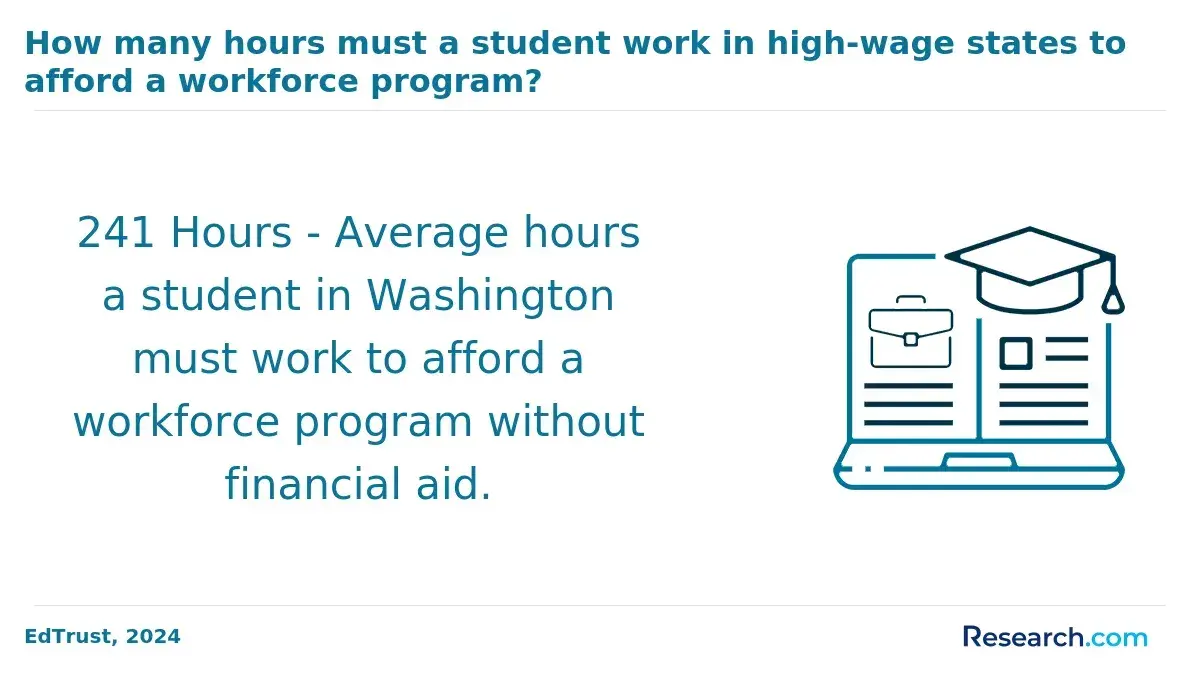
The federal Pell Grant maximum for the 2024-25 award year was $7,395, which can significantly reduce out-of-pocket cost for eligible students. However, aid eligibility depends on enrollment status, financial need, school participation, and federal rules, so students should compare net price rather than sticker price.
Program length differs across design fields, so avoid assuming all online creative degrees follow the same timeline; students comparing broader design paths may find it useful to review discussions of how long does it take to study architecture as a reminder that credit load, studio sequencing, and accreditation expectations can change completion time.
To reduce total cost, prioritize transfer-friendly programs, public options with online tuition discounts, used or rented gear when appropriate, and schools that include software access. Do not choose solely by lowest tuition if the program lacks critique, portfolio development, or career support; a cheap program that does not improve your work may have poor value.
What careers can graduates of online digital photography programs pursue with a strong portfolio?
Graduates of online digital photography programs can pursue several creative and media-related paths, but a strong portfolio is usually the deciding factor. The degree can signal training and persistence, while the portfolio shows what the graduate can actually produce.
The table below summarizes common career directions. It focuses on responsibilities and portfolio evidence because employers and clients often evaluate photographers through samples, not transcripts alone.
| Career path | Typical responsibilities | Portfolio evidence that helps |
| Portrait or wedding photographer | Client communication, posing, lighting, editing, delivery galleries, event coverage | Consistent portraits, low-light examples, full event stories, polished retouching |
| Commercial or product photographer | Studio lighting, product styling, brand-aligned imagery, e-commerce files | Clean product images, lighting control, color accuracy, campaign-style sets |
| Editorial or documentary photographer | Story research, field shooting, captions, ethical representation, publication deadlines | Photo essays, captions, environmental portraits, narrative sequencing |
| Photo editor or digital asset coordinator | Selecting images, metadata, rights tracking, editing workflow, archive organization | Before-and-after edits, organized projects, captioning and metadata examples |
| Content creator or social media visual producer | Short-form visual campaigns, platform-specific assets, brand storytelling | Integrated photo and video samples, campaign mockups, analytics-aware presentation |
| Fine art photographer | Developing conceptual projects, exhibitions, artist statements, grant or residency applications | Cohesive bodies of work, exhibition-ready sequencing, artist statement |
Freelance photography is common, so students should evaluate whether a program teaches business fundamentals. Client acquisition, contracts, licensing, taxes, invoicing, and usage rights can affect income as much as camera skill. Graduates who prefer stable employment may want to look for in-house content, university communications, healthcare marketing, real estate media, e-commerce, publishing, or museum support roles.
AI is changing parts of the field, especially retouching, background cleanup, image tagging, and rapid concept generation. This does not remove the need for photographers, but it raises expectations. Professionals increasingly need to explain what was captured, what was edited, and how image rights are managed.
What salary ranges and job outlook can digital photography graduates expect in the U.S.?
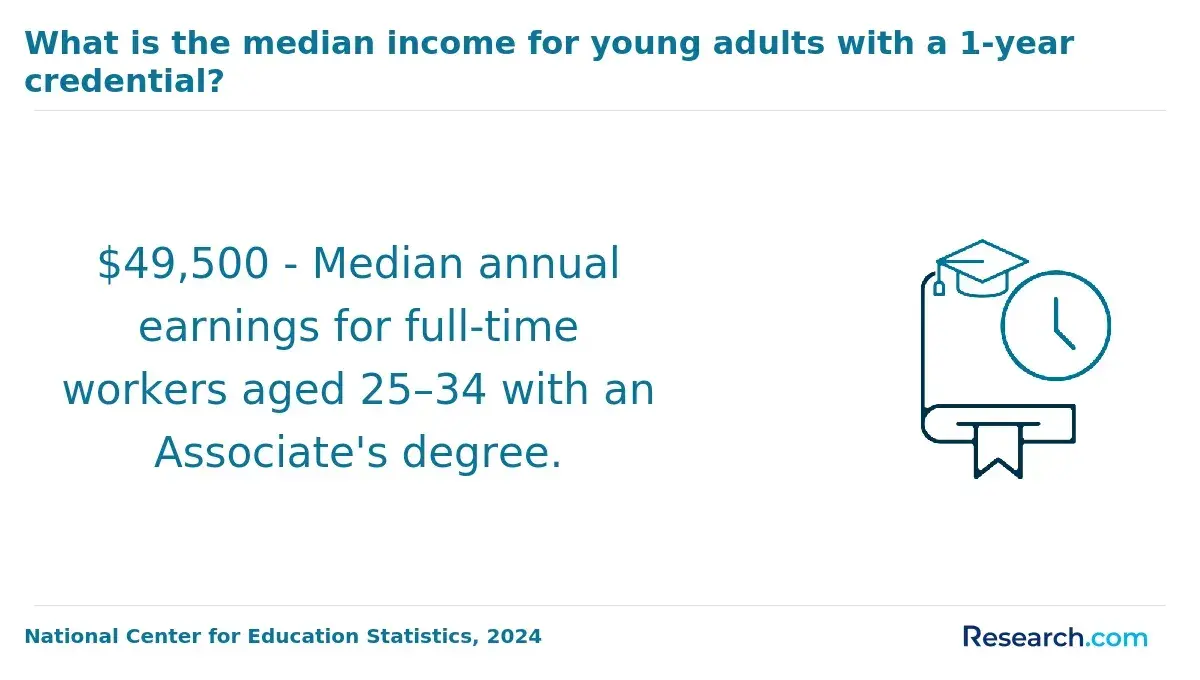
Salary expectations for digital photography graduates should be realistic. The U.S. Bureau of Labor Statistics reported a May 2024 median annual wage of $42,520 for photographers. That figure is a national midpoint, not a promise for new graduates, and it includes workers across different regions, industries, experience levels, and employment arrangements.
Photography income can vary because many professionals are self-employed, work seasonally, combine photography with video or design, or build income through multiple services. A graduate's earning potential may depend on niche, portfolio quality, local market, marketing skill, client relationships, equipment investment, and whether they pursue salaried or freelance work.
The table below explains how to read salary context without overinterpreting one national number. Use it to think about the factors that can move compensation up or down.
| Compensation factor | Why it affects earnings | What students should evaluate |
| Market location | Large metro areas may have more commercial clients but also more competition and higher operating costs | Compare local employers, client demand, studio rental costs, and regional wage data |
| Niche | Weddings, products, editorial, real estate, sports, and fine art have different pricing models | Build a portfolio for a specific buyer rather than a general collection |
| Employment type | Salaried roles may provide steadier income; freelance work can be flexible but uneven | Consider benefits, taxes, insurance, equipment replacement, and unpaid marketing time |
| Technical range | Photo-only skills may be enough in some niches, while others expect video, retouching, or content strategy | Choose electives that support the job postings or clients you want |
| Business skill | Pricing, licensing, negotiation, and client management affect take-home income | Look for programs with professional practice coursework |
The job outlook is mixed rather than universally strong or weak. Demand for visual content remains high across websites, social platforms, advertising, events, and e-commerce, but competition is intense because entry barriers for basic image-making are lower than they used to be. Graduates with a clear niche, strong portfolio, reliable workflow, and business discipline are generally better positioned than those relying on the degree alone.
Students should also compare photography with adjacent careers if income stability is a top priority. Graphic design, marketing content production, UX content, video editing, communications, and digital asset management may use photography skills while offering different employment structures.
How can students choose a reputable online digital photography program that fits their goals?
Choosing a reputable online digital photography program starts with your goal, not the school's marketing language. Decide whether you want freelance clients, a salaried media role, transfer preparation, graduate school readiness, or a personal creative practice. Then evaluate each program against that goal.
Use the following steps to compare programs in a practical order. This sequence helps prevent common errors such as choosing by tuition alone, ignoring portfolio quality, or enrolling before confirming equipment requirements.
- Define your target outcome -- portrait business, commercial work, editorial storytelling, content creation, photo editing, fine art, or transfer to a bachelor's program.
- Verify institutional accreditation and confirm that the school participates in federal financial aid if you plan to use aid.
- Review the curriculum map to make sure portfolio development, critique, lighting, editing workflow, and professional practice are required, not optional.
- Ask for examples of student portfolios, capstone projects, graduate exhibitions, or public showcases.
- Compare total cost, including tuition, fees, software, equipment, printing, travel, portfolio hosting, and graduation requirements.
- Confirm transfer credit policies, especially if you have prior college credits or plan to move from an associate to a bachelor's degree.
- Ask how instructors provide feedback and how quickly students usually receive critique on image assignments.
- Check career support, including internship help, portfolio reviews, alumni networks, freelance business resources, and job-search advising.
Veterans or service members comparing multiple online career paths should look carefully at benefit use, credit for prior learning, and long-term employment goals; those leaning toward a more math-intensive technical route may also want to compare electrical engineering programs online for veterans before committing to a creative degree.
Ask admissions advisors direct questions and request written answers. Important questions include: What camera and software are required? Are live sessions mandatory? How many portfolio critiques are built into the program? Who teaches advanced courses? Are students required to complete internships? What percentage of the degree can be transferred in? What happens if a required course is not offered in the term you need it?
The strongest choice is usually the program that gives you enough structure to improve, enough flexibility to finish, enough critique to build a portfolio, and a total cost that makes sense for the career path you are pursuing.
Other Things You Should Know About Digital Photography
Some instructors may allow smartphone images for concept development or certain assignments, but degree programs usually expect students to demonstrate control over exposure, lenses, lighting, file quality, and editing workflow. Ask whether smartphone work is acceptable for admissions, coursework, or final portfolio review.
Most online digital photography programs ask for JPEGs or TIFFs, with sRGB color space and a 72–300 dpi export for web or review portals. Many schools also set a file-size cap, often 2–10 MB per image, and require 10–20 finished images arranged in a PDF or gallery.
No, you don't need an expensive camera to start an online digital photography degree. Many programs in 2027 focus on teaching fundamental photography techniques and may offer equipment recommendations, but they emphasize skills that can be developed with a range of camera types, including more affordable options.
References
- Online Photography Courses | All Levels | OCAD https://artcoursework.com/photography/
- What can you do with a Photography degree? https://www.falmouth.ac.uk/study/undergraduate/what-can-you-do-photography-degree
- Learn Photography: Resources, Career Advice & Programs https://www.sessions.edu/digital-photography/
- Photographers: Salary, career path, job outlook, education and more - RaiseMe https://www.raise.me/careers/media-and-communication/photographers/
- Digital Photography Program https://coned.georgebrown.ca/courses-and-programs/digital-photography-program
- Accredited Online Photography Degree Programs https://www.accreditedonlinecolleges.org/photography/
- Best Online Photography Degrees https://www.onlineu.com/degrees/photography
- Which one is more beneficial online photography courses or offline photography courses? https://www.careers360.com/question-which-one-is-more-beneficial-online-photography-courses-or-offline-photography-courses
- Photography Course Toronto: Online Training vs In-Person School Comparison https://www.canadianphotographyschool.ca/blog/photography-course-toronto-online-vs-inperson-comparison/
- Digital Photography - The International College of Creative Arts (ICCA) https://collegeofartslagos.com/certificates/course-digital-photography/