2027 How to Choose an Online Sociology Degree for Community Services Careers

Co-Founder and Chief Data Scientist
Choosing an online sociology degree is really a career decision: will the program prepare you for real community services work, not just award credits? The need is clear. The U. S. Bureau of Labor Statistics reports that community and social service occupations had a median annual wage of $52,000 in 2024, with many roles tied to public health, family support, reentry, housing, and behavioral services. This guide is for prospective students comparing online programs, costs, accreditation, career paths, and practical next steps before enrolling.
Key Things You Should Know
- An online sociology bachelor's degree can support entry-level community services roles, but clinical counseling, social work licensure, school counseling, and psychology practice usually require a specialized graduate degree and state approval.
- For value, compare total program cost, transfer credit acceptance, internship options, and regional or institutional accreditation; National Center for Education Statistics data released in 2024 shows tuition and fees remain a major driver of undergraduate borrowing decisions.
- Community services outcomes vary by role. BLS 2024 wage data places social and human service assistants below many case management and probation-related roles, so the smartest program is one aligned with your target job, not simply the cheapest option.
What is an online sociology degree for community services careers?
An online sociology degree for community services careers is usually a Bachelor of Arts or Bachelor of Science in Sociology delivered fully or mostly online. It studies how groups, institutions, inequality, culture, family systems, crime, health, race, class, gender, and policy shape people's lives. For community services work, the degree is valuable because it teaches students to understand social problems at both the individual and systems level.
Community services careers often involve helping people access resources, comply with service plans, navigate public agencies, respond to crises, or improve community conditions.
A sociology degree is not the same as a Bachelor of Social Work, counseling degree, or psychology licensure pathway, but it can be a strong foundation for nonclinical roles in nonprofits, local government, corrections, public health programs, youth services, housing organizations, and advocacy groups.
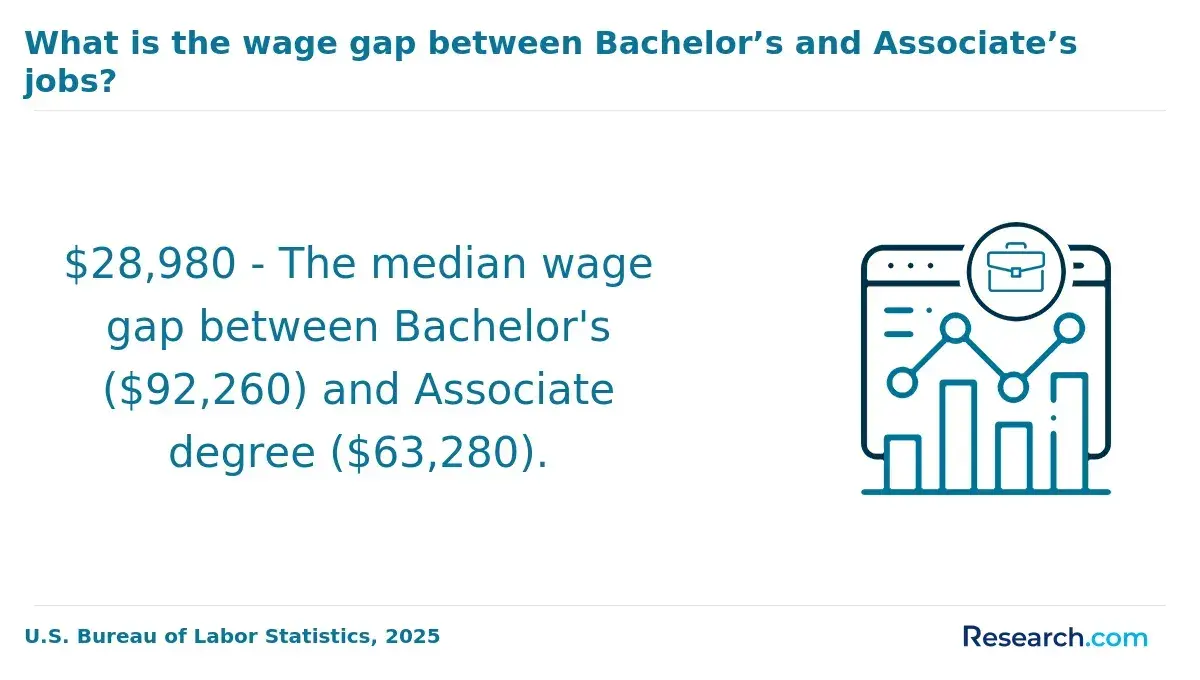
The table below shows how common sociology degree levels connect to community services goals. Use it to avoid choosing a program that is either too general or more advanced than your current target job requires.
| Degree option | Best fit | Community services use | Limitations to check |
| Associate degree in sociology or human services | Students seeking a lower-cost start or transfer pathway | May support assistant-level roles or transfer into a bachelor's program | Often not enough for case manager, probation, policy, or program coordinator roles |
| Bachelor's degree in sociology | Students seeking broad preparation for entry-level community services work | Common foundation for case coordination, nonprofit support, advocacy, outreach, and corrections roles | Does not by itself qualify graduates for licensed clinical roles |
| Master's degree in sociology, social work, public administration, or counseling | Students targeting leadership, research, policy, or licensed helping professions | Can support advancement into program management, policy analysis, or specialized practice | Licensure and field placement rules vary by discipline and state |
| Doctoral or professional degree | Students seeking advanced leadership, teaching, research, or clinical specialization | May support executive, academic, research, or advanced practice goals | Requires a larger time and cost commitment |
A sociology degree is a strong fit if you want to work with communities, understand social inequality, analyze public problems, and support service delivery. It may be a poor fit if your main goal is to become a licensed therapist, psychologist, or clinical social worker as quickly as possible; those paths require different degree planning.
How do you choose an accredited online sociology program?
Accreditation is the first filter when choosing an online sociology program. In the U.S., most sociology degrees do not need a separate programmatic accreditor, so the key requirement is institutional accreditation from an agency recognized by the U.S. Department of Education or the Council for Higher Education Accreditation. This matters because accreditation can affect transfer credits, graduate school eligibility, employer recognition, and access to federal financial aid.
After confirming accreditation, compare programs based on fit rather than marketing claims. A strong online sociology program for community services should connect classroom theory to applied settings, data interpretation, ethics, cultural competence, and supervised experience where possible.
Use this step-by-step process before applying. It will help you identify programs that are legitimate, affordable, and aligned with your target community services role.
- Confirm institutional accreditation through the school's accreditation page and an official accreditation database, not only through advertising copy.
- Check whether the sociology curriculum includes social inequality, social problems, criminology, research methods, statistics, family, health, organizations, or policy-related electives.
- Ask whether online students can complete internships, service learning, capstones, or applied research projects in their own communities.
- Review transfer credit limits, prior learning credit, residency requirements, and whether lower-division general education courses can be completed elsewhere.
- Compare total cost, including technology fees, books, proctoring, graduation fees, and the number of credits required after transfer evaluation.
- Ask for career outcome examples by role type, not just broad claims that graduates work in social services.
- Verify whether the program supports graduate school prerequisites if you may later pursue social work, counseling, public administration, law, public health, or psychology.
Some students discover that their career goals are closer to social work than sociology. If your long-term plan involves advanced social work leadership, policy implementation, or doctoral-level practice preparation, comparing a future DSW program can help you understand how undergraduate choices may fit into a longer professional pathway.
Common red flags include unclear accreditation, no faculty information, pressure-heavy admissions calls, unusually vague transfer policies, and career promises that sound guaranteed. A reputable school should be willing to explain costs, credit transfer, internship access, and realistic employment pathways in plain language.
Which community services jobs can a sociology degree prepare you for?
A sociology degree can prepare you for several community services roles, especially when you combine it with internships, volunteer experience, bilingual skills, data skills, or specialized electives. The degree is strongest for roles that require understanding social systems, client needs, program rules, and community conditions rather than roles requiring clinical diagnosis or therapy.
The table below summarizes common career directions. It does not guarantee eligibility, because employers may require experience, a related major, background checks, state credentials, or a graduate degree.
| Career path | Typical responsibilities | Why sociology helps | What may also be required |
| Social and human service assistant | Help clients access benefits, services, transportation, housing, or care referrals | Builds understanding of poverty, inequality, family systems, and institutions | On-the-job training, documentation skills, and sometimes an associate or bachelor's degree |
| Case manager or case coordinator | Assess needs, track service plans, coordinate referrals, and document progress | Supports client interviewing, systems thinking, and cultural awareness | Employer-specific experience; some roles prefer social work or human services degrees |
| Community outreach specialist | Connect agencies with residents, run education campaigns, and build trust | Applies knowledge of communities, communication, and social barriers | Local knowledge, public speaking ability, and sometimes bilingual skills |
| Probation, parole, or correctional case support | Monitor compliance, connect people to services, and support reentry plans | Criminology and deviance coursework can be directly relevant | Background checks, agency training, and sometimes academy requirements |
| Nonprofit program coordinator | Support grant-funded services, scheduling, reporting, volunteers, and client programs | Strengthens program evaluation, social problem analysis, and data interpretation | Experience with spreadsheets, databases, grants, or volunteer coordination |
| Public health or community health program assistant | Support prevention, education, screening, outreach, and referral programs | Connects health outcomes to social determinants and community conditions | Public health coursework, CHW certification, or employer training may help |
If you are deciding between sociology and a neighboring field, think about the daily work you want. Sociology fits broad social analysis and community support.
Psychology fits behavior and mental processes; students wanting a faster psychology pathway may compare an accelerated psychology bachelor's degree online. Social work fits direct service with a clearer licensure ladder. Public health fits population health, prevention, and program planning.
What classes are in an online sociology degree?
Online sociology programs usually combine general education, core sociology courses, research methods, statistics, electives, and a capstone or applied project. For community services careers, the most useful programs include both theory and practical assignments, such as needs assessments, policy analysis, community profiles, or program evaluation projects.
The table below explains the course areas you are likely to see and why they matter for service-oriented work.
| Course area | What students study | Community services value |
| Introduction to sociology | Social institutions, culture, identity, groups, and inequality | Builds the vocabulary used to understand client and community conditions |
| Social problems | Poverty, housing, crime, family stress, health disparities, and education gaps | Helps students connect individual needs to broader systems |
| Research methods | Surveys, interviews, ethics, sampling, qualitative analysis, and quantitative design | Supports program evaluation and evidence-informed decision-making |
| Statistics for social sciences | Data interpretation, descriptive statistics, correlation, and basic inference | Helps graduates read reports, track outcomes, and communicate findings |
| Criminology or juvenile justice | Crime, courts, corrections, youth justice, and reentry | Relevant for corrections, diversion, victim services, and reentry programs |
| Family, gender, race, and class | How social identities and institutions shape opportunity and risk | Improves cultural humility and client-centered service planning |
| Health, aging, or disability | Social determinants, caregiving, aging systems, and access barriers | Useful for health outreach, aging services, disability support, and care coordination |
| Internship, practicum, or capstone | Applied project, supervised experience, or research-based final assignment | Creates work samples and gives students a clearer employment story |
When comparing curricula, do not focus only on course titles. Read descriptions and ask whether assignments use real community scenarios, public datasets, agency reports, or applied case studies. A program with strong research and writing requirements may be more valuable than one with many broad electives but little applied work.
How do online and campus sociology degrees compare?
Online and campus sociology degrees can lead to similar academic credentials when they come from accredited institutions, but the learning experience can be very different. The right format depends on your schedule, budget, need for structure, access to local internships, and comfort with independent learning.
The table below compares the main decision factors. Use it to decide which format supports your life circumstances and career goals, rather than assuming one format is automatically better.
| Factor | Online sociology degree | Campus sociology degree | Best choice when |
| Schedule | Often asynchronous or evening-friendly | Usually tied to class meeting times | Online works well for working adults or caregivers; campus works well for students who want daily structure |
| Networking | Requires more intentional outreach to faculty, classmates, and local agencies | More spontaneous interaction through campus events and departments | Campus may help students who need built-in community; online can work if you actively network |
| Internships | May be completed locally if the program allows it | May use established regional agency partners | Check placement support before choosing either format |
| Cost | May reduce relocation and commuting costs | May include campus fees, housing, and transportation | Compare total cost, not just tuition per credit |
| Learning style | Requires time management, writing, and self-direction | Provides more face-to-face reminders and in-person discussion | Choose the format that matches how you stay accountable |
Online education has become a normal part of U.S. higher education. National Center for Education Statistics data released in 2024 shows that distance education remains widely used by undergraduates, which means employers are increasingly familiar with online credentials from accredited schools. The key issue is not whether the degree is online; it is whether the school is credible and the program gives you practical experience.
Students with interdisciplinary interests should also consider how sociology connects to workplace safety, environmental justice, housing, and public health. For example, those interested in neighborhood conditions, disaster resilience, or workplace risk may find it useful to compare online environmental health and safety programs accredited alongside sociology options.
What admission requirements do online sociology programs usually have?
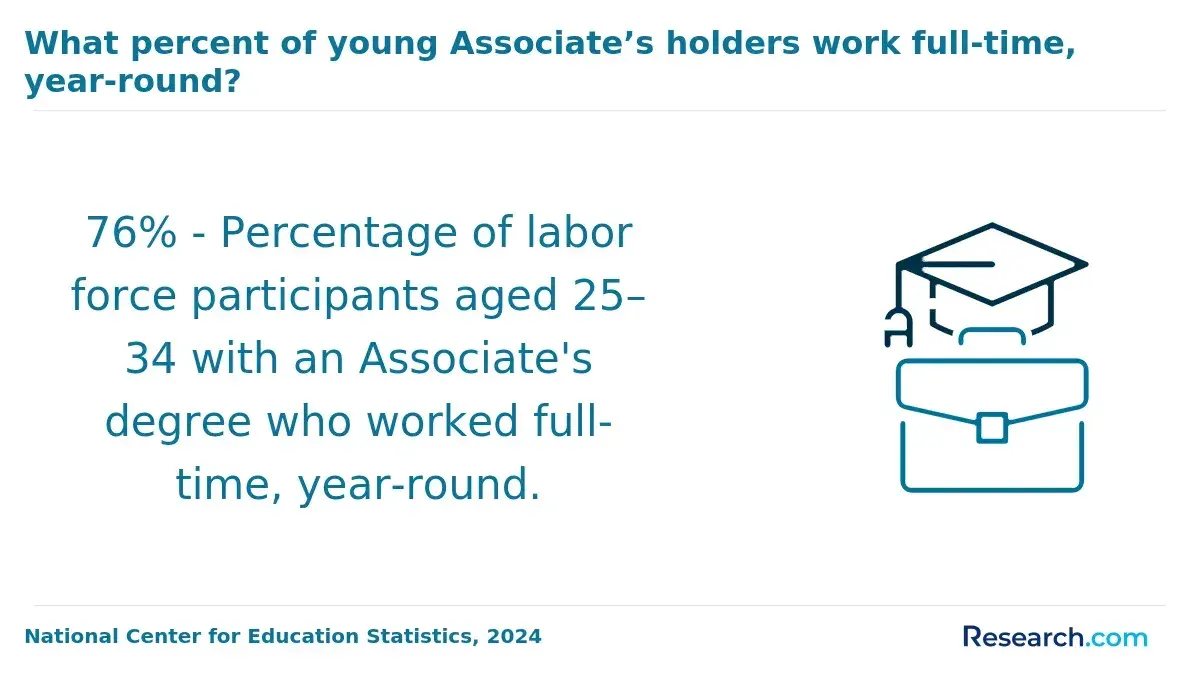
Admission requirements for online sociology programs vary by school and degree level, but bachelor's programs are usually designed to be accessible. First-year applicants typically need a high school diploma or equivalent, transcripts, an application form, and sometimes a personal statement. Transfer applicants usually submit college transcripts and may need a minimum GPA.
Before applying, gather the materials schools commonly request. Having these ready can speed up admission and financial aid review.
- Official high school, GED, military, or college transcripts, depending on your background.
- Application form and application fee or fee waiver request.
- Government-issued identification and residency documentation if required for tuition classification.
- Personal statement or short essay, especially for degree-completion or adult learner programs.
- Transfer credit evaluation request if you have previous college, AP, CLEP, International Baccalaureate, military, or workforce training credits.
- FAFSA submission if you plan to use federal grants, loans, or work-study.
Test-optional policies are common, but placement tests may still be used for math or writing course placement. If you have been out of school for several years, ask whether the program offers orientation, tutoring, library access, writing support, and success coaching for online students.
A common mistake is applying before understanding transfer rules. Two programs with similar tuition can have very different costs if one accepts 60 prior credits and another accepts only 30. Always request a formal transfer evaluation before committing, especially if you are comparing degree-completion programs.
Employer Confidence Share in Online vs. In-Person Degree Skills, Global 2024

How long does an online sociology degree take and what does it cost?
A full online bachelor's degree in sociology usually requires about 120 credits. First-time students often take about four years of full-time study, while part-time students may take longer. Transfer students with an associate degree or substantial prior credits may finish in about one to two years, depending on how many credits apply to major, general education, and residency requirements.
Cost varies widely by institution, residency status, transfer credits, and fees. National Center for Education Statistics data released in 2024 shows that average published undergraduate tuition and fees differ substantially between public, private nonprofit, and private for-profit institutions, so students should compare the net price after grants and scholarships rather than relying only on sticker price.
The table below outlines the main cost drivers. These are the items that most often change the real price of an online sociology degree.
| Cost factor | Why it matters | What to ask |
| Tuition per credit | Small per-credit differences add up across a 120-credit degree | Is tuition the same for online, in-state, and out-of-state students? |
| Transfer credits | Accepted credits can reduce both time and tuition | How many credits will apply to the degree after official evaluation? |
| Fees | Technology, online course, proctoring, graduation, and transcript fees can raise total cost | What is the full cost per term after all required fees? |
| Books and materials | Some programs use open educational resources while others require expensive texts | Are textbooks included, optional, digital, or low-cost? |
| Internship requirements | Unpaid fieldwork can affect work hours and transportation costs | Can placements be completed near where I live? |
| Financial aid | Grants, scholarships, employer tuition benefits, and loans change out-of-pocket cost | What is my estimated net price after aid? |
To reduce cost without weakening your career preparation, prioritize accredited public universities, community college transfer pathways, employer tuition assistance, scholarships for adult learners, and programs with generous but legitimate transfer policies. Avoid choosing only by speed; an accelerated format can be helpful, but not if it prevents you from completing internships, building references, or mastering research and writing skills.
What skills do sociology programs build for community services work?
Sociology programs build skills that are useful in community services because they train students to see both people and systems. Employers often value graduates who can communicate clearly, document accurately, understand diverse communities, use basic data, and work ethically with sensitive information.
The most career-relevant skills usually come from a mix of coursework, applied projects, internships, volunteering, and part-time work. Focus on building evidence of these abilities before graduation.
- Client and community communication: interviewing, active listening, public speaking, plain-language writing, and cross-cultural communication.
- Systems thinking: understanding how housing, health care, schools, courts, labor markets, and public benefits interact in people's lives.
- Research and data literacy: reading reports, interpreting survey findings, organizing information, and identifying patterns without overstating conclusions.
- Documentation and case support: writing concise notes, tracking referrals, respecting confidentiality, and following agency procedures.
- Ethical judgment: recognizing power dynamics, bias, privacy concerns, mandated reporting boundaries, and professional limits.
- Program awareness: understanding how nonprofits, public agencies, grants, eligibility rules, and community partnerships operate.
Technology is also changing community services work. Many agencies use case management software, telehealth referral systems, dashboards, digital intake forms, and AI-assisted administrative tools. Sociology students do not need to become software engineers, but they should be comfortable with spreadsheets, databases, virtual communication, and responsible data use.
One practical way to stand out is to graduate with a portfolio. Include a needs assessment, policy brief, research paper, data visualization, internship reflection, or program evaluation sample with confidential information removed. This gives employers concrete proof that you can turn sociology coursework into workplace-ready analysis.
What salary and job outlook can sociology graduates expect?
Salary and job outlook depend heavily on the role, location, employer, experience, and whether the position requires a license or graduate degree. Sociology graduates entering community services should view wage data as a planning tool, not a promise. The same degree may lead to very different outcomes in a rural nonprofit, county agency, hospital system, correctional department, or large metropolitan public health organization.
BLS 2024 wage data provides a useful benchmark: community and social service occupations had a median annual wage of $52,000. That figure shows the field can offer stable professional pathways, but it also masks wide variation between assistant-level roles and specialized or supervisory positions.
The table below summarizes several occupations that may connect to sociology and community services. Some roles require additional education, experience, state credentials, or employer-specific training.
| Occupation | How sociology may connect | Salary and outlook context | Important limitation |
| Social and human service assistant | Entry-level client support, referrals, intake, and service coordination | Often accessible earlier in a career but typically lower paid than roles requiring a bachelor's or graduate degree | Advancement may require experience or more education |
| Community health worker | Outreach, education, navigation, and trust-building in underserved communities | Demand is influenced by public health funding, local programs, and healthcare partnerships | Some states or employers require CHW certification |
| Probation officer or correctional treatment specialist | Criminology, deviance, inequality, and reentry coursework can be relevant | Often offers a more structured public-sector career ladder | Hiring may require background checks, physical standards, academy training, or agency exams |
| Social and community service manager | Program planning, staff coordination, budgets, grants, and outcome reporting | Usually a later-career path after direct service or program experience | Many employers prefer supervisory experience or a graduate degree |
| Market, survey, or social research assistant | Research methods and statistics support applied data work | Can be a good fit for students who prefer analysis over direct service | Stronger quantitative skills may be needed |
Students considering graduate study should decide whether they want direct clinical practice, research, administration, or psychology-related roles. If doctoral psychology practice is the goal, reviewing the prerequisites and structure of the best PsyD programs can clarify why a general sociology degree alone is not a psychology licensure pathway.
To improve return on investment, choose internships strategically. A placement in a county agency, domestic violence organization, reentry program, housing nonprofit, aging services office, or public health initiative can lead to references, job leads, and clearer specialization than coursework alone.
What certifications or licenses may community services roles require?
Many community services jobs are not licensed, but some roles require certifications, background checks, state registration, or graduate credentials. Requirements vary by state and employer, so you should check job postings and licensing board rules in the state where you plan to work before enrolling.
The table below explains common credentials that may come up in community services careers. Use it to separate helpful add-ons from credentials that are legally required for a specific role.
| Credential or requirement | Who may need it | What to verify |
| Community Health Worker certification | Students targeting outreach, prevention, navigation, or health education roles | State approval rules, training hours, renewal requirements, and employer preferences |
| Substance use disorder credential | Students working in addiction recovery, prevention, or treatment support settings | Whether the role is peer support, counselor trainee, certified counselor, or licensed clinician |
| Peer support specialist certification | People with lived experience supporting mental health or recovery programs | State training, supervision, ethics, and continuing education rules |
| Probation, corrections, or law enforcement academy training | Applicants to justice-system agencies | Agency exams, background standards, age rules, physical requirements, and academy obligations |
| Licensed social worker credential | Students who want regulated social work roles | Whether a CSWE-accredited social work degree is required in your state |
| Counseling, marriage and family therapy, or psychology license | Students who want to diagnose or treat mental health conditions | Graduate degree type, supervised hours, exams, and state board approval |
Before enrolling, review several real job postings in your target city or state. Look for repeated requirements such as "bachelor's in sociology, social work, psychology, criminal justice, or related field," "case management experience," "valid driver's license," "bilingual preferred," or "state certification required." These details tell you what employers actually value.
The biggest mistake is assuming a sociology degree automatically meets licensure requirements. It often supports entry into community services, but regulated practice areas have separate rules. If licensure matters to your goal, contact the relevant state board and ask the school to explain, in writing, whether its program is designed to meet that requirement.
Other Things You Should Know About Sociology
Yes, many online sociology programs are designed for working adults. Asynchronous courses offer the most flexibility, but you still need weekly study time, reliable internet, and a plan for group work, exams, and any internship or capstone requirements.
Deciding between sociology and human services depends on your career goals. A sociology degree offers a broad understanding of social systems, which is valuable in policy-making or research. A human services degree focuses on practical skills for direct client work. Consider job roles you are interested in when choosing.
Not always, but an internship is highly useful for community services careers. If a program does not require one, consider volunteering or completing an applied capstone with a nonprofit, public agency, school program, or advocacy organization.
Yes. Sociology graduates often pursue graduate study in social work, sociology, public administration, public health, law, counseling, education, or criminal justice. Check prerequisites early because some graduate programs require specific statistics, research, psychology, or field experience courses.
References
- 20 Great Value Online Colleges for a Sociology Degree (Bachelor’s) https://www.greatvaluecolleges.net/online-colleges-sociology-bachelors/
- How to Start a Community Services Career in WA: Your 2026 Guide - Insight Training https://insight.edu.au/blog/how-to-start-a-career-in-community-services/
- Careers & Income Opportunities https://www.frc.edu/sociology/careers-income-opportunities
- Training and skills to work in community services https://www.vic.gov.au/training-and-skills-community-services
- Do I Need a Certification to Work in Community Services? - Industry Skills Training https://ist.edu.au/resources/do-i-need-a-certification-to-work-in-community-services/
- Careers & Outcomes Sociology and Social Work | Calvin University https://calvin.edu/sociology-and-social-work/careers-outcomes
- Top 10 Skills Employers Look for in Community Services Professionals https://www.dptraining.com.au/top-10-skills-employers-look-for-in-community-services-professionals/
- Sociology Career in Social Planning https://sociologyatwork.org/2025/08/02/sociology-career-in-social-planning/
- Community service Courses https://skillsrecognition.edu.au/course-cat/community-services/
- Social Work vs. Sociology https://socialworklicensemap.com/social-work-careers/social-work-vs-sociology/