2027 Online Sociology Degrees That Help Build Community Outreach Skills

Co-Founder and Chief Data Scientist
Choosing an online sociology degree is really a question about impact: will the program help you understand communities, organize resources, and qualify for outreach-focused work? The need is practical. The U.S. Bureau of Labor Statistics reported a May 2024 median wage of $58,380 for community and social service occupations, above the median for all occupations, showing that these roles are established parts of the labor market.
This guide is for students comparing flexible sociology programs, costs, career paths, and alternatives so they can choose a degree that fits their community-service goals.
Key Things You Should Know
- Online sociology degrees are strongest for community outreach when they include applied courses in social inequality, research methods, program evaluation, social policy, community development, and field-based capstone work.
- Costs vary widely: College Board's 2024-25 data lists average published tuition and fees of $11,610 for in-state public four-year colleges and $43,350 for private nonprofit four-year colleges, so transfer credits and residency status can strongly affect ROI.
- Common sociology-aligned roles include social and human service assistant, community health worker, case management aide, outreach coordinator, and social and community service manager; BLS May 2024 median wages range from $44,240 for social and human service assistants to $78,240 for social and community service managers.
What is an online sociology degree and how can it strengthen community outreach skills?
An online sociology degree is a college program that studies how people, groups, institutions, and social systems interact. In a community outreach context, sociology helps students understand why problems such as poverty, housing instability, health inequity, discrimination, family stress, and neighborhood disinvestment happen at both individual and structural levels.
At the undergraduate level, students usually earn a BA or BS in sociology. A BA may emphasize social theory, culture, inequality, and qualitative research, while a BS may include more statistics, data analysis, or applied social science. At the graduate level, a master's in sociology or applied sociology can support research, program evaluation, policy analysis, nonprofit leadership, and advancement into supervisory roles.
Community outreach is the practice of connecting people with information, services, resources, and organizations that can improve well-being. Sociology strengthens outreach work because it trains students to look beyond one-person explanations and ask better questions: Who is being left out? Which institutions shape access? What barriers prevent participation? Which data show whether a program is working?
The strongest online sociology programs build both analytical and people-centered skills. Students should look for opportunities to practice the following competencies because they translate directly into outreach, advocacy, and human services work:
- Community assessment: using surveys, interviews, public data, and stakeholder input to understand local needs.
- Cultural humility: working respectfully with communities whose experiences, identities, languages, and histories differ from one's own.
- Resource navigation: helping individuals and families understand eligibility, referrals, public benefits, nonprofit services, and support networks.
- Program evaluation: measuring whether outreach initiatives are reaching the intended population and producing useful outcomes.
- Communication and organizing: preparing outreach materials, facilitating meetings, building trust, and coordinating volunteers or partner agencies.
Technology is also changing this field. Outreach teams increasingly use client relationship management systems, telehealth referral tools, digital intake forms, GIS mapping, dashboards, and AI-assisted data summaries. A sociology program does not need to be a technology degree, but it should help students interpret data ethically and avoid reducing communities to numbers alone.
How do online sociology programs compare with campus-based options for community-focused study?
Online and campus-based sociology degrees can both prepare students for community-focused work, but they fit different learners. The right choice depends on schedule flexibility, fieldwork access, cost, learning style, and how much in-person networking the student wants.
The comparison below summarizes the most important practical differences. Use it to decide which format supports your current responsibilities and your long-term outreach goals.
| Factor | Online sociology degree | Campus-based sociology degree | Best fit |
| Schedule | Often asynchronous or evening-friendly, with fewer commuting demands | More fixed class times and in-person attendance expectations | Online works well for working adults, parents, and transfer students |
| Community practice | May allow local internships, remote research projects, or service-learning near the student's home | May provide easier access to campus-based service centers, faculty labs, and local agency partnerships | Campus can be better for students who want structured local placements through the school |
| Networking | Requires more intentional participation in virtual events, faculty office hours, and local professional groups | Informal networking may happen more naturally through campus organizations and local events | Either works if the student actively builds relationships |
| Cost control | Can reduce commuting, relocation, and housing costs; tuition varies by residency and school | May include more campus fees, housing costs, or transportation costs | Online can be more affordable when tuition is competitive and transfer credits are accepted |
| Learning experience | Requires self-direction, writing discipline, and comfort with digital platforms | Offers face-to-face discussion, easier peer interaction, and immediate classroom feedback | Online is best for independent learners; campus is best for students who need more structure |
Online study is not automatically easier. It can be more convenient, but community-focused sociology still requires reading, writing, research projects, group collaboration, and sometimes field hours. Students who need accountability should ask whether the program offers live sessions, advisor check-ins, cohort models, tutoring, and career support.
Campus-based study can be valuable for students who want direct access to local agencies, student activism groups, research centers, or faculty-led community projects. However, students should not assume a campus program is more applied simply because it is in person. A campus program without internships or applied coursework may be less career-aligned than an online program with strong community partnerships.
Which accredited online sociology degrees best prepare students for community outreach careers?
The best online sociology degree for community outreach is usually not the one with the most general course catalog. It is the accredited program that combines sociology foundations with applied learning, community-based projects, research methods, and electives in human services, public policy, health, criminology, social justice, or nonprofit work.
There is no single programmatic accreditor required for sociology in the way that some health or counseling fields require specialized accreditation. For U.S. students, the baseline is institutional accreditation from an agency recognized by the U.S. Department of Education or the Council for Higher Education Accreditation. This matters for federal financial aid, credit transfer, graduate school eligibility, and employer trust.
The table below compares degree types that can lead toward community outreach. It is not a ranking of schools; it is a decision guide for matching degree level and curriculum design to career goals.
| Degree option | Typical student goal | Community outreach strengths | Limitations to check |
| Online associate degree with sociology emphasis | Start college affordably and transfer into a bachelor's program | Builds introductory knowledge of society, culture, inequality, and human behavior | Usually not enough for many coordinator or analyst roles without additional experience |
| Online BA in sociology | Enter human services, outreach, advocacy, case support, or nonprofit roles | Strong fit for social theory, inequality, community studies, and qualitative research | Students may need internships or certificates to show applied skills |
| Online BS in sociology | Combine social science with data, statistics, or applied research | Useful for program evaluation, community needs assessment, and research assistant work | May be less focused on direct service unless electives include human services or advocacy |
| Online bachelor's in applied sociology | Prepare for practice-oriented roles in agencies, nonprofits, or public programs | Often includes applied research, policy, organizations, and community problem-solving | Availability varies, and students should verify fieldwork options before enrolling |
| Online master's in sociology or applied sociology | Advance into research, management, policy, evaluation, or teaching-adjacent roles | Strengthens advanced analysis, grant support, evaluation design, and leadership skills | Not a substitute for licensed clinical counseling or social work credentials |
A strong program should also make room for experience. For outreach careers, a student with a solid sociology degree plus a local internship, volunteer leadership, bilingual communication skills, or data-analysis experience may be more competitive than a student with coursework alone.
Students who already know they want clinical social work, therapy, or state-regulated counseling should compare sociology with professional degrees before committing. Sociology is excellent for understanding communities and systems, but it does not automatically meet clinical licensure requirements.
What courses and concentrations build community organizing and outreach skills in sociology?
Community outreach requires more than good intentions. Students need courses that connect social theory with practical tools for listening, organizing, analyzing, and communicating across communities.
The most valuable courses usually fall into several clusters. When comparing programs, look for a curriculum that includes more than one of these areas rather than a single "community" elective.
- Social inequality and stratification: helps students understand how class, race, gender, disability, immigration status, and geography shape access to resources.
- Urban sociology or rural sociology: explains how place affects housing, employment, transportation, schools, safety, and social support.
- Research methods and statistics: prepares students to collect, interpret, and present data used in needs assessments and program evaluation.
- Social policy: connects community problems to public programs, eligibility rules, advocacy strategies, and institutional decision-making.
- Community development or community organizing: introduces coalition-building, resident engagement, leadership development, and participatory approaches.
- Medical sociology or public health-related sociology: supports outreach work around health access, prevention, behavioral health, and health disparities.
- Criminology and justice studies: can support reentry, youth outreach, victim services, violence prevention, and restorative justice programs.
- Capstone, internship, or service-learning course: gives students evidence of applied work that can be discussed in job interviews.
Useful concentrations include social services, community development, health and society, inequality and social justice, criminology, family studies, public policy, nonprofit leadership, or data analytics for social science. A concentration is most valuable when it appears on the transcript and includes applied projects, not just a loose group of electives.
Students interested in human behavior but not sure whether sociology is the best path may also compare related fields. For example, accelerated psychology programs online may appeal to learners who want a faster route through a behavior-focused bachelor's degree, while sociology may be the better fit for students who want to study systems, institutions, and communities.
A common mistake is choosing a sociology program with interesting course titles but no applied assignments. Before enrolling, ask for sample syllabi and look for projects such as community asset maps, policy briefs, interview-based research, grant-style proposals, outreach plans, or evaluation reports.
What are typical admission requirements for online sociology programs with a community focus?
Admission requirements depend on degree level, selectivity, and whether the student is entering as a first-year, transfer, adult learner, or graduate student. Online sociology programs are often transfer-friendly, but requirements can still vary significantly by school.
Most undergraduate programs ask for standard academic materials. Graduate programs usually expect stronger writing, a clear academic purpose, and evidence that the applicant can handle research-heavy coursework.
| Program level | Common admission requirements | What community-focused applicants should emphasize |
| Associate degree | High school diploma or equivalent, placement information, application form | Interest in transfer, service work, local volunteering, or human services exposure |
| Bachelor's degree for first-year students | High school transcript, application, possible essay, optional or required test scores depending on school policy | Writing ability, civic engagement, leadership, advocacy, or community involvement |
| Bachelor's degree for transfer students | College transcripts, minimum GPA, transferable credits, general education completion status | Prior social science courses, human services work, AmeriCorps experience, nonprofit volunteering, or related employment |
| Master's degree | Bachelor's degree, transcripts, statement of purpose, recommendations, resume, writing sample in some programs | Research interests, professional goals, applied community experience, and fit with faculty or program strengths |
Applicants can strengthen their file by showing that they understand the field. Outreach-focused programs want students who can write clearly, work ethically with communities, and connect social issues to evidence.
Before applying, students should take the following steps to avoid delays and missed transfer opportunities:
- Request unofficial transcript reviews before applying if you have prior college credits.
- Ask whether community college sociology, psychology, social work, statistics, or public speaking courses will satisfy major or general education requirements.
- Confirm whether the program requires an internship, practicum, or capstone and whether online students can complete it locally.
- Prepare a short statement explaining your community interests, such as youth outreach, public health, reentry services, housing support, immigrant services, or nonprofit advocacy.
- Check whether the school awards credit for military training, prior learning, professional certifications, or standardized exams.
Students with lower GPAs should not assume they are out of options. Some schools offer conditional admission, degree-completion pathways, or open-admission associate programs. The better question is whether the program provides enough academic support to help the student finish.
How long do online sociology degrees take and what do they usually cost?
Time to completion depends on degree level, transfer credits, course load, and whether the program uses traditional semesters or accelerated terms. A full-time bachelor's degree typically takes about four years from the start, but transfer students with an associate degree may finish in about two years if credits apply cleanly to the major and general education requirements.
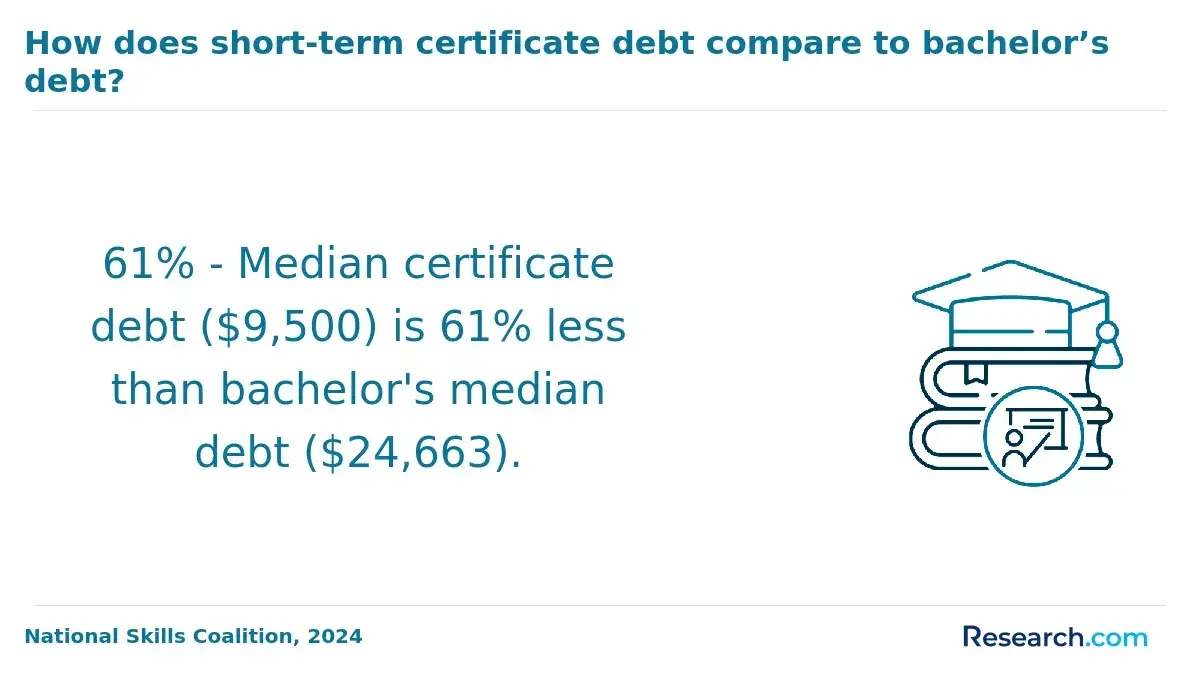
Cost is one of the biggest decision points. College Board's 2024-25 figures show average published tuition and fees of $11,610 for in-state students at public four-year institutions and $43,350 at private nonprofit four-year institutions. These are sticker prices, not net prices, so students should compare aid, transfer credit, and fees before deciding that one school is cheaper than another.
Common cost ranges and cost drivers include the following. These figures should be treated as planning categories because each school sets its own tuition, fees, and residency rules:
- Public in-state online bachelor's programs may be closer to public college tuition levels, especially when online students receive in-state or special e-tuition rates.
- Public out-of-state tuition can be much higher unless the school offers a flat online rate or participates in a tuition-discount arrangement.
- Private nonprofit online programs may have higher published tuition but can sometimes reduce net cost through institutional grants or generous transfer policies.
- Books, technology fees, graduation fees, background checks for field placements, and travel to internship sites can add to the total cost.
- Lost work time matters: a cheaper full-time program may be less affordable if it forces a student to reduce employment substantially.
The table below shows typical timelines. Use it to compare speed against workload because the fastest option is not always the most sustainable option.
| Path | Typical completion time | Best for | Trade-off |
| Part-time associate degree | About three years or more | Working students starting with limited time | Lower term-by-term workload but slower progress |
| Full-time associate degree | About two years | Students planning to transfer affordably | Requires careful transfer planning |
| Full bachelor's degree from the start | About four years full time | First-time students who want one continuous program | Higher total cost if transfer or community college options are ignored |
| Bachelor's degree-completion program | About one to two years after substantial transfer credit | Students with prior college credits or an associate degree | Only works well if credits apply to requirements |
| Master's degree | About one to three years | Students seeking advanced research, policy, evaluation, or leadership roles | May not lead to clinical licensure by itself |
To reduce costs, prioritize accredited programs with transparent tuition, generous transfer policies, no unnecessary campus fees, and clear degree maps. Students should also complete the FAFSA, ask about employer tuition assistance, and compare net price rather than relying only on advertised tuition per credit.
What community outreach and human services careers can sociology graduates pursue?
Sociology graduates can pursue community-facing roles in nonprofits, public agencies, healthcare organizations, schools, advocacy groups, reentry programs, shelters, youth organizations, and research or policy offices. The degree is most useful when paired with internships, volunteer leadership, case documentation skills, data skills, or knowledge of a specific service area.
Common entry-level and mid-level paths include roles that involve connecting people to services, coordinating programs, collecting community data, or supporting advocacy. The table below summarizes options and how sociology helps in each role.
| Career path | Typical responsibilities | How sociology helps | Common preparation beyond coursework |
| Community outreach coordinator | Plan events, build partnerships, distribute information, follow up with residents or clients | Supports cultural awareness, needs assessment, and communication strategy | Internship, volunteer coordination, bilingual skills, public speaking |
| Social and human service assistant | Help clients access benefits, referrals, transportation, housing resources, or support programs | Builds understanding of inequality, institutions, and social barriers | Case notes, crisis response basics, local resource knowledge |
| Community health worker | Provide health education, connect residents to care, support prevention programs | Connects health behavior to social determinants and community trust | State or employer training, health education experience, language skills |
| Program assistant or program coordinator | Support nonprofit programs, track participation, coordinate logistics, prepare reports | Helps with program evaluation, data interpretation, and stakeholder communication | Spreadsheet skills, grant support exposure, project management basics |
| Reentry or youth services specialist | Support people leaving correctional settings or young people involved in prevention programs | Provides context on institutions, deviance, inequality, family systems, and community networks | Trauma-informed training, boundary setting, justice studies electives |
| Social and community service manager | Supervise programs, manage staff, evaluate services, coordinate funding or partnerships | Strengthens systems thinking, organizational analysis, and evaluation | Experience, leadership training, graduate study in some cases |
A bachelor's degree can be enough for many entry-level outreach and program roles, but advancement often depends on experience and the type of organization. Supervisory positions may prefer a master's degree in sociology, public administration, public health, social work, nonprofit management, or a related field.
Students who want to provide licensed social work services should compare sociology with an online social work master's degree. Sociology can be excellent preparation for community practice, but professional social work licensure usually requires a social work degree from an appropriately accredited program and state-specific supervised experience.
Students should also be realistic about emotional demands. Outreach professionals may work with people experiencing grief, housing instability, substance use, violence, unemployment, or health crises. The work can be meaningful, but burnout risk is real, so supportive supervision and healthy boundaries matter.
What salary ranges and job outlook can sociology-trained community outreach professionals expect?
Salary depends on role, degree level, region, employer type, funding source, union status, and experience. Sociology is a flexible degree, so the clearest salary picture comes from the occupations graduates commonly enter rather than from the major alone.
The BLS May 2024 wage data below provides a useful benchmark. These figures are national medians, so they should not be treated as starting salaries or guaranteed outcomes for any individual graduate.
| Occupation | May 2024 median annual wage | Projected employment growth | How to interpret the data |
| Social and human service assistants | $44,240 | 8% through 2033 | Common entry point for students building direct-service experience |
| Community health workers | $48,200 | Growth varies within the broader health education and community health field | Strong fit for students interested in health equity and local resource navigation |
| Substance abuse, behavioral disorder, and mental health counselors | $59,190 | 19% through 2033 | Often requires additional counseling-specific education, certification, or licensure |
| Social workers | $61,330 | 7% through 2033 | Typically requires a social work degree for licensed roles |
| Social and community service managers | $78,240 | 8% through 2033 | Usually requires experience and may favor graduate education for advancement |
The strongest outlook appears in roles tied to behavioral health, aging populations, health access, nonprofit services, and public-sector community programs. However, many outreach jobs depend on grants or public funding, so openings can vary by region and budget cycle.
Students can improve their employment prospects by combining sociology with practical evidence of skill. Employers often look for experience with case notes, referral systems, community presentations, data entry, spreadsheets, outreach events, crisis de-escalation, and culturally responsive communication.
AI and automation are unlikely to replace the human trust-building part of outreach, but they are changing administrative work. Graduates who can use digital tools responsibly, protect client privacy, summarize data, and evaluate program results may be better positioned for coordinator or analyst-adjacent roles.
Do community outreach roles require licensing or certification, and how does sociology help?
Many community outreach roles do not require a professional license, especially entry-level positions in nonprofit outreach, program coordination, volunteer management, advocacy, and social service support. However, licensing and certification become more important when a role involves counseling, clinical assessment, substance use treatment, healthcare navigation, school-based services, or state-regulated case management.
Sociology helps by building the social context and research foundation that supports ethical practice. It can prepare students to understand structural inequality, stigma, family and community systems, institutional barriers, and the importance of evidence-based programs. It is not, by itself, a license to provide therapy or clinical treatment.
Students should understand the difference between optional credentials and legally required credentials. The following examples show where extra preparation may matter:
- Community health worker certification: Some states, employers, or Medicaid-related programs may prefer or require specific training for community health worker roles.
- Substance use counseling credentials: Addiction counseling roles often require state-specific education hours, supervised experience, exams, or certification beyond a sociology degree.
- Licensed social work: Clinical or protected-title social work roles usually require a social work degree and state licensure.
- Case management certifications: Some healthcare or social service employers may prefer credentials after a worker gains experience.
- Mandated reporter, trauma-informed care, CPR, mental health first aid, or crisis response training: These may be required or strongly preferred depending on the population served.
Students interested in substance use services should compare sociology with an addiction counseling online degree, especially if their target role requires counseling-specific coursework. The smartest path is to check the state board or employer requirements before choosing electives, internships, or graduate programs.
A common mistake is assuming that "community outreach" and "counseling" are interchangeable. Outreach may involve listening, referral, education, and support, but clinical counseling involves assessment and treatment under legal and ethical rules. Students who want therapy authority should choose a licensure-aligned pathway from the beginning.
How can students evaluate and choose a reputable online sociology program in the U.S.?
A reputable online sociology program should be accredited, transparent, student-supportive, and aligned with the careers the student actually wants. Rankings can be useful starting points, but they should never replace a careful review of curriculum, cost, outcomes, transfer policies, and applied learning.
Before applying, students should use a structured checklist. This helps prevent expensive mistakes such as enrolling in a program that does not accept transfer credits, lacks career support, or does not match the student's intended path.
- Verify institutional accreditation through the school's official accreditation page and recognized accreditor databases.
- Review the sociology curriculum and confirm that it includes research methods, statistics, inequality, policy, and applied or community-based electives.
- Ask whether online students can complete internships, service-learning, or capstones in their own communities.
- Compare total cost, including tuition, fees, books, technology charges, travel, and the number of credits required after transfer evaluation.
- Request job and graduate-school outcome information specific to sociology or social science graduates when available.
- Check faculty expertise for community sociology, public policy, health disparities, criminology, family studies, inequality, or applied research.
- Ask about student support, including online tutoring, writing help, library access, disability services, career coaching, and alumni networking.
- Confirm whether the program is authorized to enroll students in your state, especially if field placements are involved.
The table below highlights common red flags and better alternatives. It can help students move from general interest to a safer enrollment decision.
| Red flag | Why it matters | Better alternative |
| The school is vague about accreditation | Credits, financial aid, and employer recognition may be at risk | Choose a school with clearly stated recognized institutional accreditation |
| The program has no applied project, internship, or capstone | Students may graduate with limited evidence of practical outreach ability | Look for local fieldwork, service-learning, or portfolio-based assignments |
| Admissions staff cannot explain transfer credit rules | Students may pay for credits that do not shorten the degree | Request a written transfer evaluation before enrolling |
| Tuition is advertised but fees are hard to find | Total cost may be higher than expected | Ask for a full program cost estimate through graduation |
| The degree is marketed as a direct path to licensed counseling | Sociology alone usually does not satisfy clinical licensure requirements | Compare licensure-aligned degrees if therapy or counseling is the goal |
Students considering family therapy, couples counseling, or clinical mental health work should compare sociology with online marriage and family therapy master's programs. Sociology can support community understanding, but therapy licensure requires a much more specific educational and supervised-practice pathway.
The best choice is usually the program that balances affordability, accreditation, flexibility, applied experience, and career fit. If two programs look similar, choose the one that gives you clearer advising, stronger transfer value, and more opportunities to produce work samples connected to real community problems.
Other Things You Should Know About Sociology
Either can work. A BA is often stronger for social theory, inequality, culture, and qualitative research, while a BS may offer more statistics or applied data work. For outreach careers, the best choice is the program with applied projects, internships, and community-focused electives.
Some programs require an internship, practicum, service-learning course, or capstone, while others make it optional. Students who want outreach jobs should strongly prefer programs that include field-based or portfolio-building work, even when it is not required.
Minors that complement a sociology degree for community outreach include Social Work, Communication, Psychology, and Public Health. These areas provide additional skills and perspectives that enhance one's ability to design and implement effective community engagement and support programs.
References
- Social Work Jobs That Don’t Require A License | Pacific Oaks https://www.pacificoaks.edu/voices/social-work/social-work-degree-careers-dont-require-license/
- 10 Job Opportunities for Sociology Majors (and How to Land One) | The Muse https://www.themuse.com/advice/sociology-degree-major-jobs-careers
- Community Outreach Specialist: Job, Salary & Requirements https://www.appliedbehavioranalysisedu.org/jobs-related-to-applied-behavior-analysis/what-is-a-community-outreach-specialist/
- Best Sociology Degree Jobs: 12+ Career Paths for 2026 | Extern https://www.extern.com/post/sociology-degree-jobs-career-guide
- 2025 Most Affordable Online Sociology Degrees https://www.onlineu.com/most-affordable-colleges/sociology-degrees
- Revitalizing a Sociology Program through ... https://cdiijournal.com/index.php/cdiij/article/download/6/6
- Online Sociology Major - Crucial Skills for a Diverse Global Society https://www.msudenver.edu/online/sociology-ba/
- Bachelor of Arts in Sociology https://online.mountsaintvincent.edu/degrees/undergraduate/bachelor-sociology/
- Community Engagement Credentials | NeighborWorks America https://www.neighborworks.org/Training-Services/Training-Professional-Development/Courses-Certifications/Community-Engagement
- Justice, Community and Leadership: Activism & Organizing Concentration, BA https://www.stmarys-ca.edu/academics/liberal-arts/jcl/justice-community-and-leadership-activism-organizing-concentration-ba