2027 Best Online Master's in Sociology for Aspiring Social Researchers

Co-Founder and Chief Data Scientist
Choosing an online master's in sociology is really a decision about research training, career flexibility, and return on investment. The U.S. Bureau of Labor Statistics reported a 2024 median wage of $101,770 for sociologists, but outcomes vary widely by role, sector, location, and research skill level.
This guide is for students who want to study society, inequality, policy, organizations, or communities without pausing work or relocating. You will learn how online programs compare, what accredited options offer, what they cost, and how to choose a program that supports social research careers.
Key Things You Should Know
- Accredited online sociology master's programs are best for students seeking applied research, policy analysis, data interpretation, evaluation, or doctoral preparation rather than clinical licensure.
- Recent U.S. labor data show strong earning variation: the 2024 median wage was $101,770 for sociologists, while market research analysts had a 2024 median wage of $76,950.
- The strongest programs combine theory, quantitative methods, qualitative methods, statistics, and a thesis or applied capstone, with total cost shaped by credit load, residency status, fees, and transfer policies.
What is an online master's in sociology and how does it prepare social researchers?
An online master's in sociology is a graduate degree focused on how social institutions, groups, communities, identities, and systems shape human behavior. For aspiring social researchers, the most valuable programs do more than teach theory; they train students to ask researchable questions, collect reliable data, analyze patterns, and communicate findings to decision-makers.
Most programs award a Master of Arts or Master of Science in Sociology, Applied Sociology, or a closely related title. The difference is not always decisive, so students should look at the curriculum rather than the label. A research-focused program should include sociological theory, research design, statistics, qualitative methods, quantitative methods, ethics, and a final thesis, capstone, or applied project.
This degree is a strong fit for students who want to work in research organizations, public agencies, nonprofits, higher education administration, policy institutes, community development, survey research, or people analytics. It may also support doctoral preparation for students who plan to pursue a PhD in sociology or a related social science.
It is not the right degree for every helping-profession goal. Students who want to become licensed clinical social workers should compare sociology with the best online master's of social work programs, because MSW programs are designed around supervised practice and state licensure pathways in a way sociology programs usually are not.
The table below summarizes common sociology master's formats. Use it to identify which type of program best matches your intended research or career direction.
| Program type | Best fit | Typical research emphasis | Potential limitation |
| MA in Sociology | Students interested in theory, social inequality, education, culture, family, gender, race, or doctoral study | Strong theory and methods foundation, often with a thesis option | May be less explicitly career-applied than professional programs |
| MS in Sociology | Students seeking data-focused or analytical roles | Statistics, research design, quantitative analysis, and applied projects | Availability is more limited than MA options |
| Applied Sociology | Students targeting program evaluation, community research, policy, or organizational analysis | Practical research methods, evaluation, needs assessment, and capstone work | May offer less preparation for theory-heavy doctoral programs |
| Interdisciplinary social science degree with sociology concentration | Students who want sociology plus public administration, criminal justice, or human services coursework | Varies by concentration and electives | May not be viewed as a pure sociology degree by some PhD programs or employers |
Which accredited universities offer the best online master's in sociology programs?
The best online master's in sociology program is the one that matches your research goals, budget, schedule, and need for faculty mentoring. Because sociology is a research discipline, a good program should show clear evidence of graduate-level methods training, faculty expertise, library access, statistics support, and a culminating research experience.
The following universities are examples of accredited U.S. institutions offering online or substantially online graduate study in sociology or closely related sociology-focused formats. Program availability, tuition, and delivery format can change, so verify details directly with each university before applying.
| University | Program | Institutional accreditation | Why it may fit aspiring social researchers |
| Arizona State University | Online MA in Sociology | Higher Learning Commission | Large research university environment with broad sociological coursework and an online format built for working adults |
| Sam Houston State University | Online MA in Sociology | Southern Association of Colleges and Schools Commission on Colleges | Useful for students interested in applied sociology, social problems, institutions, and research-oriented graduate study |
| New Mexico State University | Online MA in Sociology | Higher Learning Commission | Offers graduate sociology study with attention to social inequality, communities, and research methods |
| Texas Woman's University | Online MA in Sociology | Southern Association of Colleges and Schools Commission on Colleges | May appeal to students interested in families, gender, social institutions, and applied research questions |
| Morehead State University | Online graduate sociology-related options | Southern Association of Colleges and Schools Commission on Colleges | Can be worth reviewing for students seeking flexible graduate social science coursework with sociology relevance |
When comparing these and similar programs, do not rely only on a school's general reputation. For social research careers, the better question is whether the program gives you enough supervised practice with research design, statistics, data collection, and research writing to build a portfolio or continue into doctoral work.
Before shortlisting a program, confirm the following items with the department or graduate admissions office:
- Whether the program is fully online, hybrid, or online with occasional campus requirements.
- Whether students can complete a thesis, applied capstone, or independent research project.
- Which statistical software, qualitative analysis tools, or data platforms are used in coursework.
- Whether online students receive the same faculty advising, library access, and research support as campus students.
- Whether graduate assistantships, scholarships, or tuition discounts are available to online students.
How do online sociology master's programs compare to on-campus options for research training?
Online sociology programs can provide strong research preparation when they are intentionally designed for graduate-level interaction, feedback, and applied research. The main trade-off is not academic quality by default; it is access. Online students should examine how the program delivers mentoring, collaborative research, statistical support, and opportunities to present or publish work.
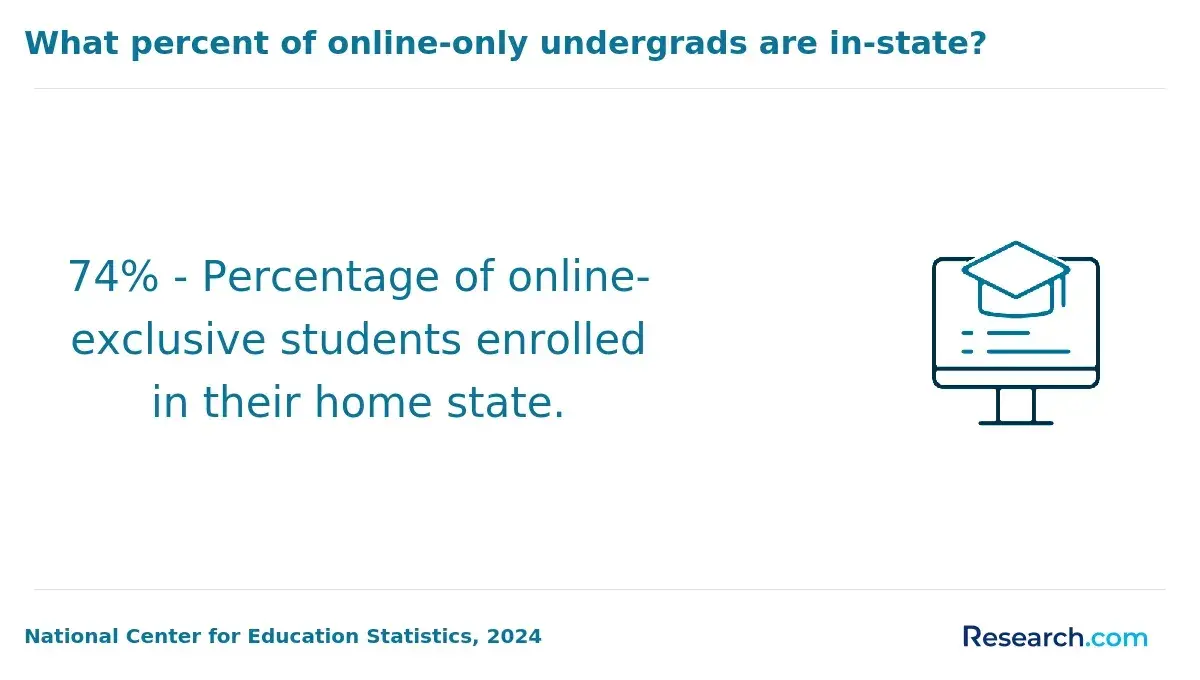
The National Center for Education Statistics reported in 2024 that distance education remains a major part of U.S. higher education enrollment, especially at the graduate level. For sociology students, that means online learning is no longer unusual, but program design still matters more than delivery mode.
The comparison below can help you decide whether online or campus-based study is the better fit for your research goals and schedule.
| Factor | Online master's in sociology | On-campus master's in sociology | Best choice when |
| Flexibility | Often designed for working adults, caregivers, and students outside commuting range | Usually follows fixed class times and campus schedules | Online is stronger if you need to keep working full time |
| Faculty interaction | Can be strong through video meetings, discussion boards, and virtual advising | More informal access before and after class, office hours, and department events | Campus is stronger if you want daily academic immersion |
| Research collaboration | Depends heavily on whether faculty include online students in projects | May offer easier access to labs, research centers, and assistantships | Campus may be better for students targeting research-intensive PhD programs |
| Cost control | Can reduce relocation, commuting, and lost income costs | May provide more assistantship opportunities that offset tuition | Compare total net cost, not sticker tuition alone |
| Networking | Often relies on intentional virtual participation | More frequent in-person networking with faculty and peers | Online works if you are proactive; campus helps if you need structured community |
Online programs make the most sense for students who are self-directed, comfortable with asynchronous work, and able to schedule time for reading, analysis, and writing. Campus programs may be better for students who want intensive faculty apprenticeship, teaching assistant experience, or direct access to research centers.
A common mistake is assuming that "online" means either easier or weaker. A rigorous online sociology master's should still require advanced reading, research papers, statistical analysis, discussion participation, and a substantial final project.
What admission requirements and prerequisites do online sociology master's programs have?
Admission requirements vary by university, but most online master's in sociology programs evaluate whether applicants can handle graduate-level reading, theory, writing, and research methods. A bachelor's degree is required, but it does not always have to be in sociology if the applicant has relevant coursework or experience.
Most applicants should be prepared to submit a combination of academic records, writing materials, and professional statements. The list below explains the most common requirements and why each matters.
- Bachelor's degree from an accredited institution, usually with a minimum GPA set by the graduate school or department.
- Official transcripts showing prior coursework in sociology, statistics, social science, or related fields.
- Statement of purpose explaining research interests, career goals, and why the program is a good fit.
- Letters of recommendation from faculty, supervisors, or professionals who can assess writing, analysis, and persistence.
- Academic writing sample, especially for programs with a thesis or doctoral-preparation track.
- Resume or CV showing research, nonprofit, public sector, education, business, or community experience.
- GRE scores only if required; many programs have reduced or eliminated standardized testing requirements.
Prerequisites are especially important for students coming from fields such as criminal justice, psychology, public health, business, education, or human services. If you lack sociology coursework, some departments may admit you conditionally and require bridge courses in sociological theory, statistics, or research methods.
Students interested in organizational research, workforce analytics, or employee behavior may also compare sociology with human resources pathways. For example, a student focused mainly on recruitment, compensation, or employee relations may find a cheapest online human resources degree more directly aligned with HR management roles than a sociology master's.
To strengthen an application, take at least one statistics course, develop a clear research question, and choose recommenders who can speak to your analytical writing. Admissions committees often look for focus: applicants who can explain what social issue they want to study tend to be more persuasive than those who only say they are interested in "helping people."
How long does an online master's in sociology take, and what does it cost?
Most online master's in sociology programs require about 30 to 36 graduate credits, though some applied or thesis-based programs may require more. Full-time students may finish in about two years, while part-time students often need longer depending on course sequencing, thesis progress, and work obligations.
Cost depends on tuition rate, credit requirement, residency classification, institutional fees, books, technology needs, and whether the program charges online students a flat rate. Because graduate tuition changes frequently, the most reliable approach is to calculate total program cost directly from the current tuition schedule.
When you compare costs, look beyond tuition per credit. These are the price-related items that most often affect what students actually pay:
- Tuition per credit multiplied by total required credits.
- Online learning, technology, graduate, library, and student service fees.
- Books, statistical software, qualitative analysis tools, and required subscriptions.
- Travel costs if the program includes orientation, intensives, exams, or thesis defenses on campus.
- Lost income if you reduce work hours to finish faster.
- Interest costs if you use federal or private graduate loans.
Recent federal student aid policy is especially relevant for graduate students because graduate borrowing is often less subsidized than undergraduate borrowing. Before enrolling, estimate your monthly loan payment under available federal repayment options and compare it with realistic early-career salaries in your target role.
The table below summarizes common timeline and cost trade-offs. Use it to think through what you are optimizing for: speed, affordability, research depth, or schedule stability.
| Enrollment path | Typical pace | Cost implications | Best fit |
| Full-time online | Often about two years when courses are available every term | May reduce time in school but can make full-time work difficult | Students who can prioritize school and want faster completion |
| Part-time online | Often more than two years | May make tuition easier to spread out but can extend fees and delay career advancement | Working adults, caregivers, and students balancing multiple responsibilities |
| Accelerated online | Shorter terms or heavier course loads | Can reduce opportunity cost but may leave less time for research mentoring | Students with strong writing, statistics, and time-management skills |
| Thesis track | May take longer if research approval, data collection, or revisions are extensive | Additional semesters can increase total cost | Students considering doctoral study or research-intensive roles |
| Capstone track | Often more predictable than a thesis | May help control time to completion | Students targeting applied research, nonprofit, policy, or organizational roles |
Avoid choosing the cheapest program automatically. A lower-cost program can be a smart investment if it has strong methods training and advising, but a weak curriculum may leave you with a credential and too little research experience to compete for analyst roles.
What core courses and research methods are taught in online sociology master's curricula?
A strong online sociology master's curriculum builds three layers of competence: sociological theory, research methods, and applied interpretation. For aspiring social researchers, methods coursework is the most important part of the degree because employers and doctoral programs need evidence that you can work with data responsibly.
Most programs combine required core courses with electives that let students specialize in topics such as inequality, family, criminology, health, education, race and ethnicity, gender, migration, aging, organizations, or community development. The specific elective mix matters because it can shape your research portfolio.
The table below shows the courses and skills that are most relevant for social research preparation.
| Curriculum area | Common course examples | Research skills developed |
| Sociological theory | Classical theory, contemporary theory, social stratification | Building frameworks for explaining social patterns and institutions |
| Quantitative methods | Statistics, regression, survey research, demographic methods | Analyzing numerical data, interpreting results, identifying limitations |
| Qualitative methods | Interviewing, ethnography, focus groups, content analysis | Collecting and coding narratives, observations, and social meanings |
| Research design | Methods seminar, evaluation research, proposal development | Turning a social problem into a testable or answerable research question |
| Ethics | Human subjects research, data privacy, professional ethics | Protecting participants and using data responsibly |
| Culminating experience | Thesis, capstone, applied project, portfolio | Demonstrating independent research ability to employers or PhD committees |
Technology is also changing what social researchers need to know. Employers increasingly value graduates who can work with large datasets, visualize results, use statistical software, and understand the limits of AI-assisted analysis. AI can help with literature searches, coding support, transcription review, or data cleaning, but it does not replace human judgment about sampling, bias, ethics, and interpretation.
Students should ask whether the program teaches or supports tools such as SPSS, Stata, R, Python, NVivo, Dedoose, Qualtrics, Tableau, or GIS. The exact tool matters less than the ability to explain a method, defend a design, and communicate findings clearly to non-specialists.
What careers can graduates of online sociology master's programs pursue in social research?
An online master's in sociology can lead to roles that involve studying social patterns, evaluating programs, interpreting data, and advising organizations. It is especially useful when paired with a research portfolio, statistical skills, writing samples, internships, or experience in a specific sector.
Graduates often work in settings such as government agencies, universities, nonprofits, research firms, healthcare organizations, advocacy groups, community development organizations, education systems, and businesses. Job titles vary because many employers do not use the word "sociologist" even when the work is sociological.
The table below connects common roles with the kind of work they typically involve. Use it to identify which skills to prioritize while enrolled.
| Career path | Typical responsibilities | Skills to build during the degree |
| Social researcher | Designing studies, reviewing literature, collecting data, writing reports | Research design, statistics, qualitative methods, academic and applied writing |
| Program evaluator | Measuring whether social, education, health, or nonprofit programs are effective | Evaluation methods, survey design, interviewing, data visualization |
| Policy analyst | Interpreting social data to support policy recommendations | Policy writing, quantitative analysis, demographic research, issue expertise |
| Survey researcher | Designing questionnaires, sampling populations, analyzing responses | Survey methodology, statistics, sampling, questionnaire design |
| Market or consumer insights analyst | Studying consumer behavior, communities, and audience segments | Mixed methods, segmentation, reporting, data visualization |
| Research coordinator | Managing research timelines, participant communication, compliance, and data files | Project management, ethics, documentation, communication |
| Community development analyst | Studying local needs, resources, inequality, housing, or service access | Community research, GIS basics, interviews, needs assessment |
Some students use sociology as a bridge to adjacent helping professions, but the fit depends on the role. For example, students focused on substance use treatment should compare sociology with an addiction counseling online degree, because counseling programs may align more directly with certification or licensure requirements.
To improve employability, students should graduate with more than completed coursework. Practical evidence matters. Aim to leave the program with a polished research paper, a data analysis sample, a survey or interview protocol, a visualization, and a concise writing sample that translates findings for a general audience.
What salary ranges and earning potential exist for sociologists and social researchers?
Sociology master's graduates can enter several labor markets, so salary expectations should be tied to specific job titles rather than the degree alone. The U.S. Bureau of Labor Statistics reported a 2024 median annual wage of $101,770 for sociologists, but many sociology graduates work under different titles such as analyst, evaluator, coordinator, or researcher.
The table below provides a grounded salary context using 2024 U.S. wage data from federal occupational statistics. Treat these figures as role-level benchmarks, not promises for individual graduates.
| Occupation | 2024 median annual wage | How sociology training may apply |
| Sociologists | $101,770 | Research design, social theory, data interpretation, policy or institutional analysis |
| Market research analysts | $76,950 | Survey research, audience analysis, consumer behavior, quantitative and qualitative methods |
| Survey researchers | $62,400 | Questionnaire design, sampling, response analysis, reporting |
| Social and community service managers | $78,240 | Program evaluation, needs assessment, community research, grant reporting |
Earning potential depends on sector, geography, technical skill level, and whether the role requires a master's degree. Students with strong quantitative skills, data visualization ability, and experience translating findings for executives or policymakers may have access to a broader set of analyst roles.
Students considering human behavior research should also understand the difference between research and clinical practice. Sociology can prepare graduates to study social behavior, but students who want doctoral-level clinical training should compare it with online PsyD clinical psychology programs, which are designed for a different professional pathway and may involve licensure considerations.
A useful ROI test is to identify three target job titles before applying, then compare the program's total cost with realistic starting roles, not only senior-level salaries. Also consider non-salary value: schedule flexibility, doctoral preparation, mission-driven work, and access to research careers that may not be available with a bachelor's degree alone.
How is program accreditation verified and why does it matter for sociology degrees?
Accreditation is one of the most important checks before enrolling in an online sociology master's program. In the United States, sociology programs usually do not have a required field-specific accreditor like some clinical, education, or health programs. Instead, students should verify institutional accreditation from an agency recognized by the U.S. Department of Education or the Council for Higher Education Accreditation.
Accreditation matters because it can affect federal financial aid eligibility, credit transfer, employer recognition, doctoral admissions, and the basic credibility of the degree. It does not guarantee quality in every department, but a lack of recognized accreditation is a major red flag.
Use the following verification steps before submitting an application or deposit:
- Search the institution in the U.S. Department of Education's Database of Accredited Postsecondary Institutions and Programs.
- Confirm the accreditor listed on the university website matches the federal database record.
- Check whether the online campus, branch campus, or distance education modality is included under the institution's accreditation.
- Review the graduate catalog to confirm the exact degree title, credit requirements, delivery format, and academic department.
- Ask admissions whether credits from the program have transferred to doctoral programs or other universities.
- Be cautious if a school pressures you to enroll quickly, avoids accreditation questions, or advertises unrealistic career outcomes.
Students should also distinguish accreditation from rankings, marketing badges, and professional memberships. A program can be accredited and still be a poor fit if it lacks strong research methods, faculty advising, or relevant electives. Conversely, a less famous public university may be a strong choice if the curriculum aligns tightly with your career goals.
Common red flags include unclear tuition pages, vague faculty listings, no graduate handbook, no thesis or capstone description, and limited evidence that online students receive research support. These issues do not always mean the program is unacceptable, but they should prompt deeper questions before you commit.
How can prospective students choose a reputable, high-quality online sociology program?
To choose a high-quality online sociology master's program, start with your career goal and work backward. A student targeting doctoral study should prioritize faculty research fit and thesis options. A student targeting applied research should prioritize methods courses, capstone quality, statistics training, and examples of graduate projects.
The best program for you should meet four tests: it is accredited, affordable enough for your expected career path, rigorous in research methods, and realistic for your schedule. If one of those areas is weak, ask whether the trade-off is acceptable before enrolling.
Use this decision process to compare programs in a practical way:
- Define your target outcome, such as PhD preparation, program evaluation, survey research, policy analysis, nonprofit leadership, or community research.
- Confirm institutional accreditation and the exact degree title in the graduate catalog.
- Map required courses against the skills employers or doctoral programs expect, especially statistics, research design, and qualitative methods.
- Compare total program cost, including fees, books, software, travel, and possible extra semesters for thesis work.
- Ask whether online students can work with faculty on research, attend virtual colloquia, or present capstone findings.
- Review faculty interests to see whether at least two professors study topics related to your goals.
- Request examples of thesis titles, capstone projects, internship placements, or graduate outcomes.
- Check student support services, including writing help, library access, statistics tutoring, career advising, and disability accommodations.
The table below highlights common selection mistakes and better alternatives. It can help you avoid expensive decisions based on incomplete information.
| Common mistake | Why it can hurt | Better alternative |
| Choosing only by ranking | Rankings may not reflect online support, methods depth, or faculty fit | Compare curriculum, advising, cost, and research opportunities directly |
| Ignoring total cost | Fees, software, books, and extra semesters can change affordability | Create a full cost estimate before applying |
| Skipping accreditation checks | Unrecognized accreditation can affect aid, transfer, and employer acceptance | Verify accreditation through official databases |
| Assuming all sociology degrees lead to the same jobs | Career outcomes depend on skills, projects, sector, and experience | Build a portfolio tied to target roles |
| Choosing no-thesis without considering PhD goals | Some doctoral programs may value independent research experience | Ask faculty whether a thesis, capstone, or publishable paper is best for your path |
Before you enroll, speak with at least one faculty member, one admissions representative, and, if possible, a current or former online student. Ask direct questions about workload, research expectations, faculty responsiveness, and what successful graduates typically do next.
Other Things You Should Know About Sociology
While some online master's in sociology programs require a thesis as a demonstration of research skills, others offer a non-thesis option. This may involve completing a capstone project or additional coursework. Always check individual program requirements for specific details.
You do not usually need advanced calculus, but you should be comfortable learning statistics, research logic, and data interpretation. Students who feel rusty can prepare by taking an introductory statistics course before starting.
Many students do, especially in part-time programs. However, graduate sociology requires substantial reading, writing, and research work, so full-time workers should ask about weekly workload, course sequencing, and whether the program allows slower pacing.
References
- Sociology (MA/MS) https://www.etamu.edu/programs/sociology-ms/
- Best Online Master’s Programs in Sociology for 2025 https://www.onlinemastersdegrees.org/best-programs/sociology/
- Online MA Sociology (Master of Arts in Sociology) https://www.lpuonline.com/ma-sociology-course-online
- Online Master’s in Sociology Degree Programs (Master of Arts, Master of Science) https://www.onlineeducation.com/liberal-arts/masters-in-sociology-programs
- Social Sciences Degree Careers and Salary in Europe - StudyinEurope.eu https://www.studyineurope.eu/zh/social-sciences/social-sciences-degree-careers-salary-europe/
- How to Choose an Online College in 10 Easy Steps https://www.straighterline.com/blog/choose-accredited-online-college-10-easy-steps
- The Commission on the Accreditation of Programs in Applied and Clinical Sociology https://www.sociologycommission.org/about_accr.shtml
- Applied Sociology Careers and Pay https://sociologyatwork.org/2025/07/05/applied-sociology-careers-pay/