2027 Sociology Degree Salary Guide

Co-Founder and Chief Data Scientist
Choosing a sociology degree means weighing curiosity about society against practical career outcomes. The good news: sociology can lead to roles in research, human services, policy, HR, analytics, counseling-adjacent fields, and nonprofit leadership. The U. S. Bureau of Labor Statistics reported a $101,770 median annual wage for sociologists in its May 2024 data, but most graduates work in broader occupations with wider pay ranges. This guide helps prospective students, current majors, and career changers compare salaries, degree levels, costs, job outlook, and program choices before investing time and tuition.
Key Things You Should Know
- Sociology salary outcomes depend more on occupation, skills, sector, and graduate training than on the major alone; BLS May 2024 medians for common sociology-related roles range from $44,240 for social and human service assistants to $101,770 for sociologists.
- A bachelor's degree can support entry into human services, research support, HR, community programs, and market research, while master's and PhD paths are usually stronger for research, policy, teaching, advanced analytics, and leadership roles.
- ROI is strongest when students control tuition, build quantitative or applied skills, complete internships, and choose an accredited program aligned with a specific career path rather than enrolling based only on rankings or convenience.
What is the typical salary range for sociology degree graduates in the United States?
The typical salary range for sociology degree graduates is broad because "sociology degree salary" usually refers to many occupations, not one standardized job. A graduate working in direct human services may start in a lower-paid role, while someone who builds research, data, management, or policy expertise can move into higher-paying positions.
Using BLS May 2024 wage data as a practical benchmark, many sociology-related careers fall between the mid-$40,000s and low six figures. This does not mean every sociology graduate will earn within that range; it means these are median wages for occupations that commonly value sociology training, social research skills, or human behavior expertise.
The table below compares common sociology-related roles by their national median wages. Use it to identify which career tracks require additional skills, graduate study, or field experience before assuming a degree alone will lead to that pay level.
| Occupation | Typical sociology connection | Median annual wage, May 2024 | Salary interpretation |
| Social and human service assistants | Direct service, case support, community programs | $44,240 | Common early-career path, often lower pay but useful experience |
| Community health workers | Public health outreach, social determinants of health | $48,200 | Good fit for students interested in health equity and community work |
| Survey researchers | Survey design, public opinion, program evaluation | $63,380 | Stronger prospects with statistics and research software skills |
| Human resources specialists | Workplace behavior, employee relations, hiring systems | $72,910 | Often accessible with a bachelor's degree plus HR experience |
| Market research analysts | Consumer behavior, social trends, data interpretation | $76,950 | Higher upside for sociology majors who add analytics training |
| Social and community service managers | Program leadership, nonprofit management, service delivery | $78,240 | Usually requires experience beyond entry level |
| Sociologists | Advanced social research, policy, academic or applied research | $101,770 | Often requires a master's degree or PhD for full professional access |
A practical way to read these numbers is to treat the bachelor's degree as a foundation, not the final salary driver. Students who pair sociology with statistics, GIS, data visualization, grant writing, program evaluation, or supervised field experience usually have more flexible options than students who graduate with only classroom exposure.
How do sociology salaries compare by degree level, from bachelor's to PhD?
Sociology salaries generally rise with advanced education, but not automatically. Degree level matters most when it unlocks access to research authority, clinical-adjacent leadership, policy analysis, university teaching, or senior program management.
The table below summarizes how salary potential tends to change by credential. The pay examples are based on BLS May 2024 median wages for occupations that often align with each level, not guaranteed outcomes for every graduate.
| Degree level | Common career direction | Relevant salary benchmark | Best fit |
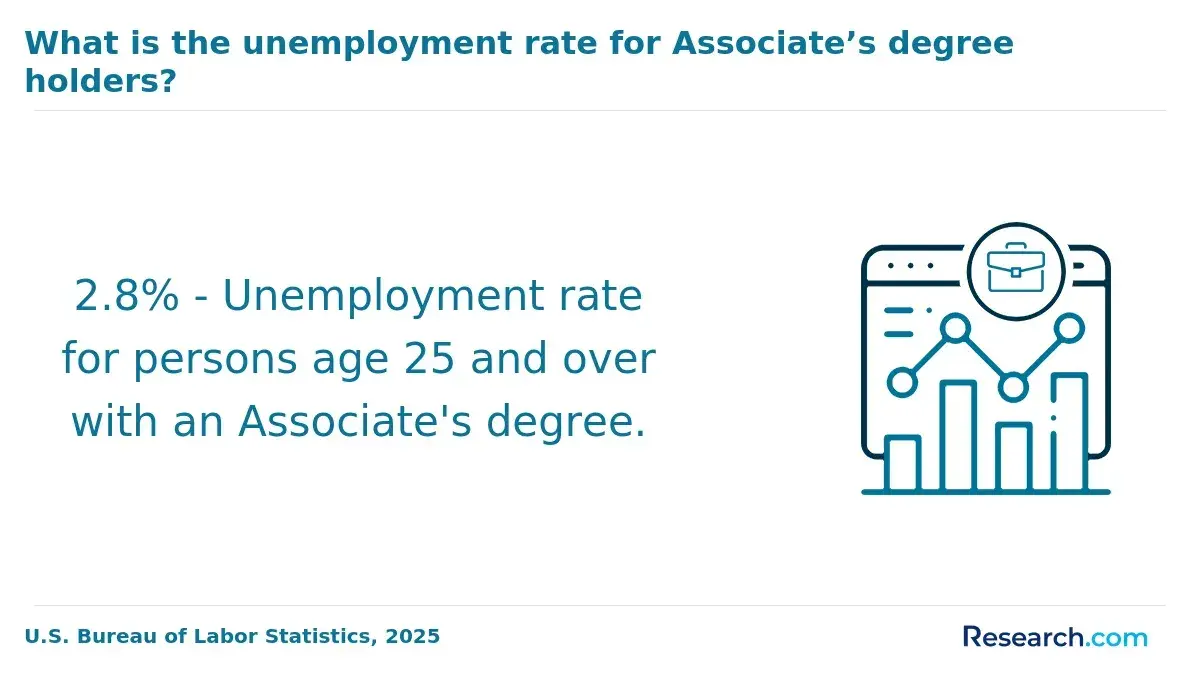
| Associate degree or transfer pathway | Human services support, community outreach, transfer to bachelor's program | Social and human service assistants: $44,240 | Students minimizing cost before completing a four-year degree |
| Bachelor's in sociology | Case coordination, HR, research assistant roles, market research, nonprofit work | Market research analysts: $76,950 | Students who add internships and applied data or communications skills |
| Master's in sociology or applied social research | Program evaluation, policy analysis, survey research, nonprofit leadership | Social and community service managers: $78,240 | Professionals seeking applied research or management roles |
| PhD in sociology | Advanced research, postsecondary teaching, think tanks, government research | Sociologists: $101,770 | Students committed to long research training and competitive academic or research markets |
A bachelor's degree is often enough for entry into many sociology-related fields, but it may not be enough for jobs with the title "sociologist." Those roles commonly require graduate-level research methods, statistics, theory, and independent research experience.
Students comparing sociology with counseling-related graduate paths should also note that counseling careers often involve state licensure rules. If your long-term goal is direct counseling practice rather than social research or policy, comparing options such as a PhD in counseling online may help clarify whether a sociology doctorate or a counseling doctorate fits your intended role.
The main mistake to avoid is assuming the highest degree always creates the best ROI. A master's degree can be the smarter choice if it leads to a specific applied role faster, while a PhD may make sense for students who want research-intensive careers and understand the time commitment.
What entry-level jobs can you get with a sociology degree and what do they pay?
Entry-level sociology jobs are usually found in human services, research support, HR, public programs, nonprofit operations, criminal justice-adjacent services, and community outreach. These roles value skills in interviewing, documentation, cultural awareness, data interpretation, and understanding group behavior.
The table below highlights realistic first jobs for sociology graduates. Some roles may require additional screening, state requirements, training, or employer-specific credentials, especially when the job involves vulnerable populations.
| Entry-level role | What you may do | Median annual wage benchmark, May 2024 | How to improve competitiveness |
| Social and human service assistant | Help clients access benefits, services, housing, or treatment referrals | $44,240 | Complete an internship with a community agency |
| Community health worker | Support outreach, education, and care navigation in local communities | $48,200 | Add public health, bilingual, or case documentation experience |
| Probation officer or correctional treatment specialist | Monitor clients, prepare reports, and connect people with services | $64,520 | Study criminology, interviewing, and court system procedures |
| Survey research assistant | Help collect, clean, or summarize survey data | $63,380 for survey researchers | Build skills in statistics, survey tools, and data quality control |
| Human resources assistant or specialist track | Support recruiting, onboarding, employee records, or workplace programs | $72,910 for HR specialists | Learn HR information systems and employment law basics |
| Market research assistant or analyst track | Study customer behavior, trends, or audience segments | $76,950 for market research analysts | Use coursework or projects to show Excel, SQL, R, Python, or visualization skills |
Students interested in substance use services should be careful about licensure and credential rules. A sociology degree may help with case management or prevention roles, but counseling titles often have state-specific requirements; if that is your target, review how to become a drug counselor online before choosing electives or graduate programs.
To improve entry-level outcomes, focus on evidence that employers can verify. Useful steps include building a portfolio of research projects, completing at least one internship, asking supervisors for measurable accomplishments, and learning software used in your target field.
Which mid-career and senior roles offer the highest salaries for sociology graduates?
The highest salaries for sociology graduates usually appear after they move beyond generalist roles into management, analytics, policy, HR leadership, health administration, or advanced research. At this stage, employers are paying for decision-making ability, budget responsibility, data fluency, and domain expertise-not just the degree title.
The table below shows higher-paying career directions where sociology training can be useful. These roles typically require several years of experience, graduate education, specialized technical skills, or a track record of leading projects.
| Mid-career or senior role | Why sociology can fit | Median annual wage benchmark, May 2024 | Typical advancement requirement |
| Sociologist | Advanced study of social behavior, institutions, inequality, organizations, or populations | $101,770 | Master's degree or PhD, strong methods training |
| Management analyst | Organizational research, process improvement, stakeholder interviews | $101,190 | Consulting, operations, or evaluation experience |
| Medical and health services manager | Community health, patient populations, program operations | $117,960 | Healthcare administration experience and compliance knowledge |
| Public relations or fundraising manager | Audience analysis, messaging, donor behavior, community relations | $138,520 | Campaign results, communications leadership, budget ownership |
| Human resources manager | Workplace behavior, organizational culture, employee relations | $140,030 | HR experience, employment law knowledge, leadership record |
These roles are possible for sociology graduates, but they are not automatic sociology jobs. A student who wants high salary growth should choose electives, internships, and early jobs that point toward one of these tracks instead of waiting until graduation to define a career direction.
For example, a student targeting HR leadership should prioritize labor relations, organizational sociology, statistics, employment law exposure, and HR internships. A student targeting policy or research should prioritize methods, regression, program evaluation, writing samples, and experience with public datasets.
How does job outlook for sociology-related careers vary across major U.S. industries?
Job outlook varies sharply across sociology-related industries because demand is driven by different forces: healthcare access, population aging, public funding, employer demand for workforce analytics, and the growing use of data in policy and marketing. The safest strategy is to evaluate the occupation you want, not just the major.
The table below uses BLS 2024-2034 employment projections for selected occupations that commonly overlap with sociology training. Treat these projections as directional labor-market signals, not promises of local hiring conditions.
| Industry or career area | Related occupation | Projected employment growth, 2024-2034 | What it means for sociology students |
| Behavioral health and social services | Substance abuse, behavioral disorder, and mental health counselors | 17% | Strong demand, but counseling roles usually require specific education and licensure |
| Healthcare administration | Medical and health services managers | 29% | High-growth path for students who combine sociology with healthcare operations |
| Market and consumer research | Market research analysts | 8% | Good outlook for graduates with data analysis and business communication skills |
| Human services leadership | Social and community service managers | 8% | Promising for graduates who gain program, grant, and supervisory experience |
| Social work and public support systems | Social workers | 6% | Related but often requires a BSW or MSW for licensed social work roles |
| Social science research | Sociologists | 4% | Moderate growth with limited openings; graduate research training is important |
Technology is also changing sociology-related work. AI tools can speed up literature reviews, transcription, coding, and dashboard creation, but they do not replace the need to ask sound research questions, protect privacy, interpret social context, and explain findings responsibly.
Students can respond to this trend by learning both human-centered and technical skills. Strong combinations include qualitative interviewing plus coding software, survey design plus statistics, community outreach plus program evaluation, or HR knowledge plus people analytics.
How do online sociology degree salaries compare with campus-based program outcomes?
Employers generally do not pay different salaries simply because a sociology degree was completed online or on campus. Salary outcomes are more closely tied to accreditation, school reputation, internship access, career services, local employer networks, student initiative, and whether the transcript or diploma comes from a recognized institution.
The most important difference is opportunity structure. Campus programs may offer easier access to local research labs, faculty relationships, and internships, while online programs may help working adults keep earning income and avoid relocation costs.
The table below compares online and campus-based sociology programs from an outcomes perspective. Use it to decide which format supports your actual career path rather than assuming one format is always better.
| Factor | Online sociology degree | Campus-based sociology degree | Salary relevance |
| Accreditation | Should be institutionally accredited | Should be institutionally accredited | Essential for employer trust, transfer, and graduate study |
| Internships | May require students to find local placements | Often easier to coordinate through campus networks | Internships can matter more than format for first jobs |
| Flexibility | Stronger for working adults and caregivers | Stronger for students who want in-person structure | Working while studying can reduce borrowing and improve ROI |
| Research experience | Possible if faculty offer remote projects | Often easier through labs, centers, or honors programs | Important for graduate school and research jobs |
| Networking | Requires intentional outreach | More built-in events and peer contact | Can affect internships, references, and job leads |
Students who want a broader behavioral science background may also compare sociology with a psychology degree online. Psychology may be a better fit for students focused on individual behavior and mental processes, while sociology may be better for students focused on groups, institutions, inequality, culture, and social systems.
A common mistake is choosing the cheapest online option without checking internship support, transfer rules, faculty access, and graduate school compatibility. A low tuition price can still produce weak ROI if the program does not help you build marketable experience.
What factors most affect sociology salary growth, such as location, sector, and experience?
The biggest sociology salary drivers are occupation, location, sector, experience, technical skills, and whether the role is funded by public budgets, grants, private employers, or fee-based services. Two graduates with the same degree can have very different outcomes if one enters a local nonprofit assistant role and the other moves into analytics or healthcare administration.
Location matters because wages and job availability reflect local employer mix and cost of living. Large metro areas may offer more research, policy, HR, and healthcare administration jobs, while rural areas may have fewer specialized roles but strong demand for community service workers.
Sector also changes pay expectations. Private employers often pay more for analytics, HR, consulting, and market research, while nonprofits and public agencies may offer mission fit, benefits, loan forgiveness eligibility, or stable career ladders but lower starting pay in some roles.
To grow salary over time, sociology majors should build a career plan around skills employers reward. The following steps are especially useful because they convert a broad liberal arts degree into visible workplace value.
- Choose a target lane by the sophomore or junior year, such as research, HR, public health, criminal justice, nonprofit management, policy, or market analytics.
- Complete internships or field placements that produce concrete accomplishments, such as reports written, clients served, surveys analyzed, or programs evaluated.
- Add quantitative skills through statistics, research methods, Excel, SQL, R, Python, GIS, or data visualization coursework.
- Build writing samples that show you can turn messy social information into clear recommendations for decision-makers.
- Track job postings in your target region to identify recurring requirements before selecting electives or graduate programs.
Experience has a compounding effect. Early jobs may not be highly paid, but they can become valuable if they lead to supervisory duties, budget exposure, grant work, data reporting, compliance tasks, or cross-functional projects.
Which certifications or graduate specializations can boost earnings for sociology majors?
Certifications and graduate specializations can raise earning potential when they match a specific occupation. They are less useful when collected randomly, so students should start with the job they want and work backward to the credential employers request.
The table below outlines credentials and specializations that can complement sociology. Requirements vary by state, employer, and role, so always verify current rules before enrolling or paying exam fees.
| Credential or specialization | Best for | How it may support earnings | Important caution |
| Applied statistics or data analytics certificate | Research, market analysis, program evaluation | Signals ability to work with data, not just theory | Choose programs with hands-on projects, not only lectures |
| GIS certificate | Urban studies, public policy, demography, planning | Adds spatial analysis skills useful in government and planning | Best when paired with policy or community research experience |
| HR certification preparation | Human resources and people operations | Can support movement from assistant roles into specialist or manager tracks | Some certifications require professional experience |
| Program evaluation specialization | Nonprofits, public agencies, foundations | Builds skills in outcomes measurement and grant-funded reporting | Look for real evaluation projects with community partners |
| Public health or health administration specialization | Community health, healthcare management, health equity | Aligns sociology with high-demand healthcare systems work | Administrative roles may require healthcare compliance knowledge |
| Criminology or criminal justice specialization | Corrections, reentry programs, policy, victim services | Supports work in justice-related agencies and nonprofits | Some roles involve background checks or agency-specific standards |
Students drawn to counseling-adjacent work should distinguish sociology from licensed mental health preparation. If the goal is therapy or clinical counseling, an online mental health counseling masters may align more directly with licensure pathways than a sociology master's, depending on the state and program.
The best credential strategy is targeted and evidence-based. Before choosing a certificate, review 20 to 30 job postings for your desired role, list the repeated skills or credentials, and choose the option that closes the clearest gap.
What are typical tuition costs for sociology degrees and how do they impact ROI?
Sociology degree ROI depends on total cost, borrowing, completion time, transfer credits, work opportunities, and the career path selected after graduation. Because many sociology-related entry roles are modest-paying, keeping tuition manageable is especially important.
College Board's 2024 pricing data reported average published tuition and fees of $11,610 for in-state students at public four-year institutions and $43,350 at private nonprofit four-year institutions for the 2024-25 academic year. This gap matters because two students can earn similar early-career salaries while carrying very different debt loads.
The table below summarizes major cost categories that affect ROI. It is not enough to compare tuition alone; students should estimate the total price of finishing the degree.
| Cost factor | Why it affects ROI | What to check before enrolling |
| Tuition and fees | Largest direct academic cost for most students | Net price after grants, scholarships, and employer aid |
| Transfer credits | Can shorten time to degree and reduce total cost | Written transfer evaluation before committing |
| Time to completion | Extra semesters add tuition and delay earnings | Course rotation, prerequisites, and graduation requirements |
| Living and transportation costs | Can exceed tuition for some students | Housing, commuting, childcare, and relocation needs |
| Lost income | Full-time study may reduce work hours | Evening, online, hybrid, or part-time options |
| Graduate school plans | Some sociology careers require advanced credentials | Whether the bachelor's program prepares you for funded or affordable graduate options |
Students can improve ROI by using a community college transfer pathway, choosing an in-state public option, applying for need-based aid, working part time in a related field, and avoiding unnecessary graduate debt unless the advanced degree is tied to a defined career outcome.
A sociology degree may be worth it if you want work involving people, systems, research, policy, advocacy, or organizational behavior and you build practical skills along the way. It may be a weaker investment if you want a high starting salary but do not plan to pursue analytics, healthcare administration, HR, research, public policy, or graduate training.
How can prospective students choose a reputable sociology program that supports strong salary outcomes?
A reputable sociology program should help students connect social theory with applied skills, research experience, internships, and career planning. Accreditation is the starting point, but career alignment is what turns the degree into a stronger investment.
Before enrolling, students should evaluate whether the program supports their target outcome. The following checklist can help you compare schools in a practical, salary-aware way.
- Confirm institutional accreditation through a recognized accreditor so credits, financial aid, and graduate school applications are less likely to face problems.
- Review the sociology curriculum for research methods, statistics, inequality, organizations, criminology, health, demography, policy, or other tracks tied to your goals.
- Ask how students secure internships, field placements, research assistantships, or community-based projects.
- Request career outcome information by major when available, including common employers and graduate school placements.
- Compare net price, not sticker price, and include fees, living costs, transfer credits, and time to completion.
- Check whether online students receive the same advising, library access, faculty support, and career services as campus students.
- Ask whether faculty mentor undergraduate research or help students prepare writing samples, conference posters, or graduate applications.
Several red flags deserve attention. Be cautious if a program makes salary promises, cannot explain transfer policies, lacks clear advising, offers few applied courses, provides no internship guidance, or pressures you to enroll before you understand total cost.
The best program is not always the most famous or the cheapest. It is the one that fits your career direction, lets you graduate with manageable debt, and gives you proof of skills employers can evaluate.
Other Things You Should Know About Sociology
No, sociology is not considered a STEM major. STEM encompasses fields in science, technology, engineering, and mathematics. Sociology is categorized under social sciences, focusing on the study of societies, patterns of social relationships, and culture.
Yes. Sociology can be useful for pre-law students because it builds reading, writing, research, and social systems analysis skills. Law school admission still depends on GPA, LSAT or admissions requirements, essays, recommendations, and the applicant's overall profile.
Strong resume skills include research design, interviewing, survey methods, statistical analysis, report writing, policy analysis, community outreach, case documentation, data visualization, and cross-cultural communication. Add tools such as Excel, SPSS, R, Python, SQL, Tableau, or GIS if you can use them competently.
Most sociology roles do not require licensure. Licensure becomes important when a graduate moves into regulated fields such as counseling, clinical social work, teaching, or certain public service roles, where rules vary by state and occupation.
References
- The Impact of Tuition Increases at an Ontario University https://www.cjhe-rces.ca/cjhe/index.php/cjhe/article/download/183420/183374/184793
- Can Online Colleges Offer Competitive Career Outcomes? https://www.onlineu.com/magazine/popular-online-schools-career-outcomes
- Top Research Opportunities for Students Interested in Sociology https://riseglobaleducation.com/blogs/top-research-opportunities-for-students-interested-in-sociology
- Sociology Career Information https://www.sinclair.edu/academics/divisions/lcs/soc/sociology-career-information/
- Best Sociology Degree Jobs: 12+ Career Paths for 2026 | Extern https://www.extern.com/post/sociology-degree-jobs-career-guide
- Master vs. PhD: Salary, Jobs & Time, The Big Differences https://www.applykite.com/blog/phd-guide-master-vs-phd
- Is College Worth it? | Return on Investment Analysis of College Degree https://educationdata.org/college-degree-roi
- Does College Pay Off? A Comprehensive Return On Investment Analysis - FREOPP https://freopp.org/whitepapers/does-college-pay-off-a-comprehensive-return-on-investment-analysis/