2027 Online Sociology Degrees With Social Policy Coursework

Co-Founder and Chief Data Scientist
Choosing an online sociology degree becomes more strategic when you want to study how public systems affect housing, inequality, health, education, and community services. The field matters because social and community service managers had a May 2024 median wage of $78,240, according to the U.S. Bureau of Labor Statistics, showing that policy-related leadership roles can offer real career mobility.
This guide is for prospective students comparing flexible sociology programs with social policy coursework, and it explains costs, admissions, curriculum, career outcomes, accreditation, and red flags so you can decide whether this degree fits your goals.
Key Things You Should Know
- An online sociology degree with social policy coursework is best for students who want to analyze social problems, evaluate programs, interpret data, and work in public agencies, nonprofits, advocacy groups, research offices, or graduate study rather than pursue a licensed clinical role directly.
- Costs vary widely: College Board's 2024-25 data lists average published tuition and fees at $11,610 for in-state public four-year colleges and $43,350 for private nonprofit four-year colleges, so transfer credit, residency status, and online fees can strongly affect ROI.
- Career outcomes depend on role and credential level: BLS May 2024 data reports median wages of $45,120 for social and human service assistants, $78,240 for social and community service managers, and $101,770 for sociologists, with many higher-level research and policy jobs requiring a master's degree.
What is an online sociology degree with a social policy focus, and who is it best for?
An online sociology degree with a social policy focus is a bachelor's or master's program that studies human groups, institutions, inequality, and social change while adding coursework in policy analysis, welfare systems, community programs, research methods, and public problem-solving. "Social policy" usually refers to laws, programs, funding choices, and institutional practices that shape areas such as poverty, education, health access, criminal justice, family services, housing, aging, and immigration.
This degree is strongest for students who want to understand both the causes of social problems and the systems designed to address them. It is not the same as social work, counseling, public administration, or law, although it can overlap with all of those paths. Sociology tends to emphasize research, theory, data, social structures, and evidence-based analysis; social policy coursework makes that training more applied.
The program is usually a good fit if you want one or more of the following outcomes:
- Work in nonprofit, public-sector, advocacy, program coordination, community outreach, or policy support roles.
- Prepare for graduate study in sociology, public policy, social work, law, urban planning, public health, education policy, or public administration.
- Build research and data skills that help you evaluate whether programs are working for specific populations.
- Study inequality, social justice, institutions, and public systems through a structured academic lens.
You may want a different route if your main goal is direct case management, rapid workforce entry, or licensure in a helping profession. For example, a human services online program may be a more practical match if you want shorter, career-focused preparation for community support roles.
How do online sociology programs with social policy coursework compare to on-campus options?
Online and on-campus sociology programs often cover the same academic material, especially when both are offered by regionally accredited institutions. The main differences are usually delivery format, scheduling flexibility, access to campus-based research opportunities, and how students complete experiential learning.
The table below compares the practical trade-offs that matter most when deciding between online and campus-based sociology study.
| Factor | Online sociology program | On-campus sociology program | Best fit |
| Schedule | Often asynchronous or evening-friendly | Usually fixed class meeting times | Online is better for working adults and caregivers |
| Research access | May use remote research projects, data labs, or virtual faculty supervision | May provide easier access to campus research centers and in-person faculty projects | Campus may help students seeking intensive research mentorship |
| Internships | Often completed locally with approved agencies | Often tied to nearby campus partners | Online works well if you live near relevant agencies |
| Networking | Depends on virtual events, discussion boards, alumni platforms, and field placements | More spontaneous interaction with peers and faculty | Campus may suit students who learn best through in-person communities |
| Total cost | May reduce relocation, commuting, and housing costs | May include more campus fees or living expenses | Online may lower indirect costs, but tuition still needs careful comparison |
Online study makes the most sense when the program is accredited, the curriculum includes real methods training, and the school supports remote students with advising, tutoring, library access, internship coordination, and career services. Campus study may be better if you want face-to-face faculty mentoring, a residential college experience, or easier access to local policy labs and student organizations.
Which types of accredited schools offer online sociology degrees emphasizing social policy?
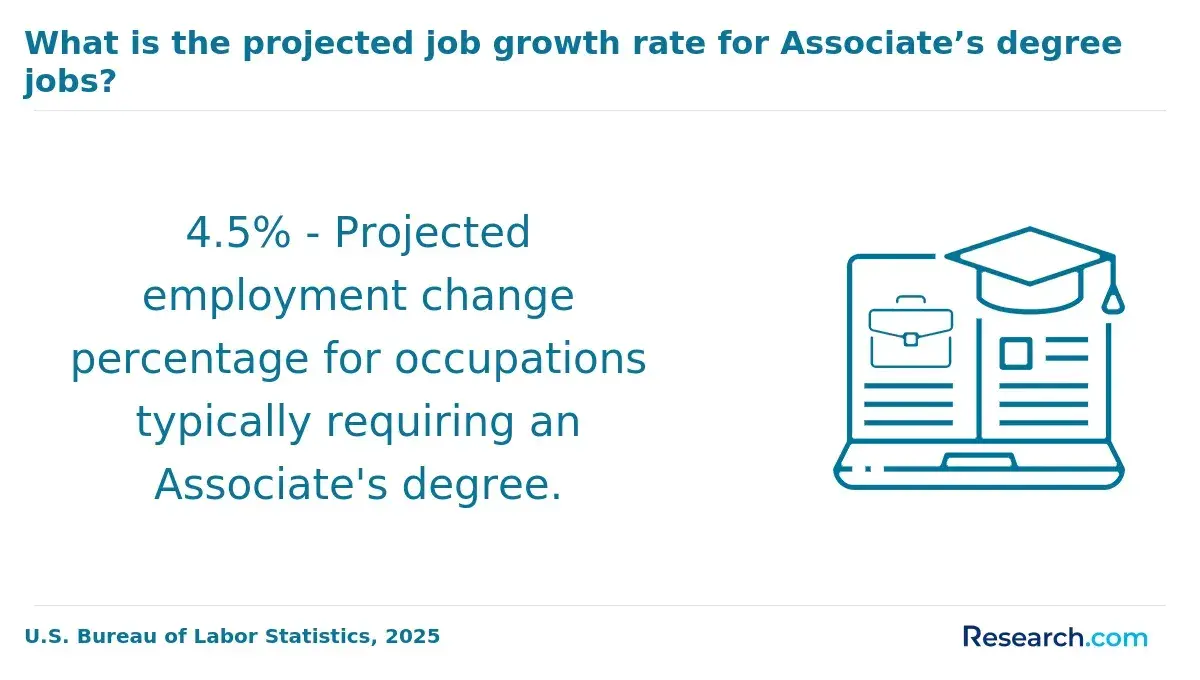
Accredited online sociology programs are offered by public universities, private nonprofit colleges, and some private for-profit institutions. Institution type alone does not determine quality or return on investment; accreditation, curriculum depth, transfer policy, student support, faculty expertise, graduation outcomes, and total cost matter more.
The table below summarizes the most common types of schools offering online sociology degrees and what to examine before applying.
| School type | Typical strengths | What to verify |
| Public universities | Often lower in-state tuition, broad course catalogs, established sociology departments | Whether online students qualify for in-state rates and whether policy electives are available online |
| Private nonprofit colleges | May offer smaller classes, adult-friendly advising, mission-driven social justice curricula | Total tuition, institutional aid, faculty credentials, and whether the sociology major is fully online |
| Community colleges with transfer pathways | Affordable general education and lower-division sociology courses | Guaranteed transfer agreements and whether credits apply to the major, not just electives |
| Private for-profit institutions | Often flexible calendars and frequent start dates | Accreditation status, completion rates, debt outcomes, transfer acceptance, and employer recognition |
The most important baseline is institutional accreditation from an accreditor recognized by the U.S. Department of Education or the Council for Higher Education Accreditation. Sociology itself usually does not require a specialized programmatic accreditor, so students should focus on whether the school is institutionally accredited and whether the department offers credible research methods, statistics, policy, and field-learning options.
What social policy courses and concentrations can you expect in an online sociology curriculum?
Social policy coursework usually builds on a core sociology foundation. Students first learn how societies are organized, how inequality is produced, and how sociologists collect evidence; then they apply those tools to policy questions involving institutions, public programs, and communities.
The table below shows common curriculum areas and why each one matters for students aiming at social policy, advocacy, research, or graduate study.
| Curriculum area | Common course examples | Why it matters |
| Sociology core | Introduction to sociology, social theory, social stratification, race and ethnicity, gender and society | Builds the conceptual foundation for understanding social institutions and inequality |
| Research and data | Research methods, statistics for social science, survey design, qualitative methods, data analysis | Prepares students to evaluate programs, read evidence, and support policy recommendations |
| Policy and institutions | Social welfare policy, education policy, health disparities, criminal justice policy, housing and urban inequality | Connects sociological analysis to real public systems and policy debates |
| Applied learning | Internship, capstone, community-based research, policy memo project, program evaluation | Helps students translate coursework into workplace-ready evidence and writing samples |
| Technology and society | Digital inequality, data ethics, AI and society, social media and social movements | Addresses how automation, platforms, and data systems affect public policy and social outcomes |
Common concentrations include social inequality, community development, criminal justice, public health, family policy, aging, urban studies, and social justice. A strong program should require more than discussion-based courses; it should teach students how to interpret data, assess evidence quality, write policy-focused arguments, and communicate findings to nonacademic audiences.
What are the typical admission requirements for online sociology programs with social policy?
Admissions requirements vary by degree level and institution, but online sociology programs are generally accessible compared with highly selective professional programs. Still, applicants should not assume "online" means lower academic expectations. Accredited schools usually apply the same degree standards to online and campus students.
For a bachelor's program, schools commonly ask for the following materials:
- High school diploma, GED, or equivalent credential for first-year admission.
- Official transcripts from high school and any prior colleges.
- Minimum GPA, often with conditional options for students below the standard threshold.
- Application form and fee, although some schools offer fee waivers.
- Placement information or prior college credit for math and writing readiness.
- Optional or test-free SAT or ACT policies at many institutions.
For a master's program in sociology, applied sociology, or social policy, requirements often include a bachelor's degree, undergraduate transcripts, statement of purpose, writing sample, resume, and letters of recommendation. Some programs prefer prior coursework in sociology, statistics, or research methods, but many accept students from related majors such as psychology, political science, social work, public health, or criminal justice.
Students should be especially careful about licensure assumptions. A sociology degree can support policy, research, advocacy, and nonprofit roles, but it typically does not qualify graduates for licensed counseling practice by itself. If your intended path is counseling, compare options such as an easy to get counseling degree only after checking whether the program meets your state's licensing requirements.
How long do online sociology degrees take and what do they typically cost?
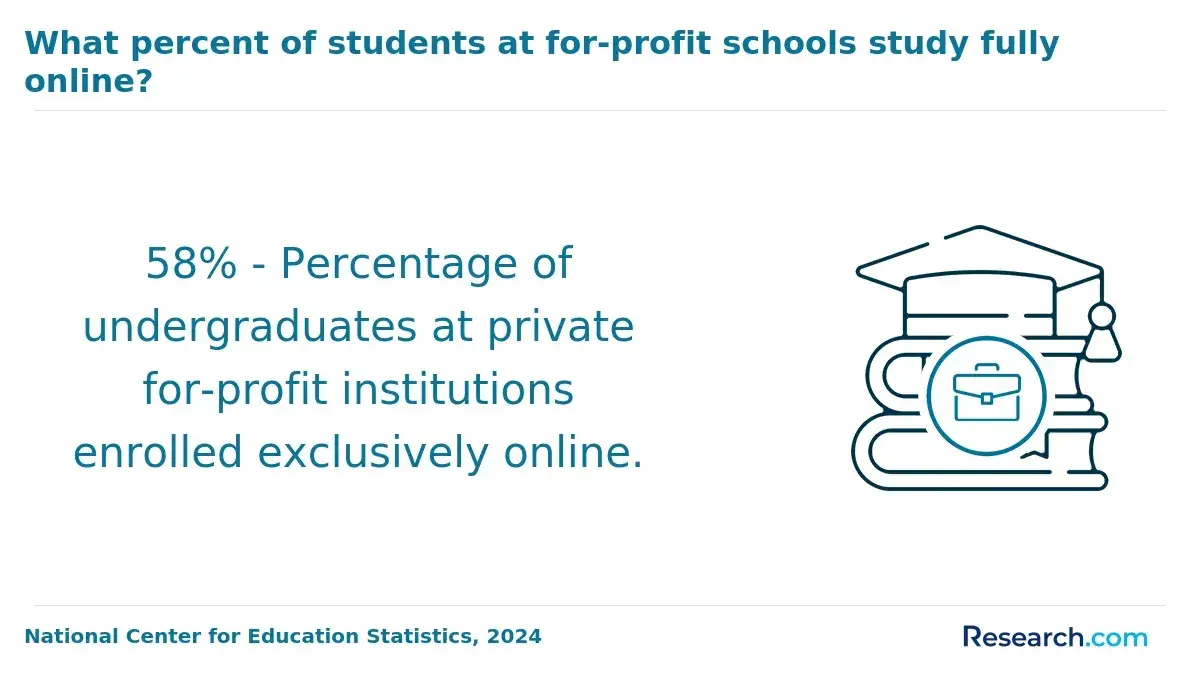
Most online bachelor's degrees in sociology require about 120 credits, while master's programs often require 30 to 36 credits. The actual timeline depends on transfer credits, course load, term structure, and whether the program offers accelerated sessions.
College Board's 2024-25 tuition data gives useful national context for comparing sticker prices before financial aid, grants, and institutional discounts:
- Average published tuition and fees for in-state students at public four-year colleges: $11,610.
- Average published tuition and fees for out-of-state students at public four-year colleges: $30,780.
- Average published tuition and fees at private nonprofit four-year colleges: $43,350.
These figures are not sociology-specific, but they help frame the range you may see. Online programs can reduce commuting and relocation costs, yet they may still include technology fees, proctoring fees, textbook costs, internship travel, and graduation fees.
The table below summarizes common timelines and cost considerations by program type.
| Program type | Typical length | Cost factors to compare | Best for |
| Associate-to-bachelor's transfer path | About 4 years total, often 2 years at each institution | Community college tuition, transfer agreement, upper-division tuition | Students trying to reduce total undergraduate cost |
| Full bachelor's degree online | About 4 years full time; longer part time | Per-credit tuition, transfer credits, residency rate, online fees | First-time or returning students who need a complete degree path |
| Degree completion program | About 1 to 3 years depending on transfer credits | Maximum accepted credits, major residency requirement, prior learning credit | Adults with previous college credits |
| Online master's degree | About 1 to 3 years | Graduate tuition, assistantship availability, capstone or thesis costs | Students seeking advanced research, policy, or academic preparation |
To control cost, ask schools for a full program estimate rather than a per-credit quote. The most affordable option is not always the lowest advertised tuition; it is the program that accepts the right transfer credits, offers sufficient aid, has manageable fees, and aligns with the career or graduate-school outcome you actually want.
What careers can you pursue with an online sociology degree focused on social policy?
An online sociology degree with social policy coursework can lead to roles in community programs, nonprofit administration, public agencies, research support, advocacy, education services, and policy-adjacent communications. Entry-level roles often emphasize coordination, client outreach, data collection, reporting, and program support; advancement typically requires experience, strong writing, data skills, and sometimes a graduate degree.
The table below connects common career directions with responsibilities and the education level employers often prefer.
| Career direction | Common responsibilities | Typical education signal |
| Program coordinator | Organize services, track participation, support grants, prepare reports | Bachelor's degree and nonprofit or agency experience |
| Community outreach specialist | Build community partnerships, communicate services, gather local needs data | Bachelor's degree plus communication and cultural competency skills |
| Policy assistant or legislative aide | Summarize research, draft briefs, monitor policy proposals, support stakeholder communication | Bachelor's degree; internships and writing samples are valuable |
| Research assistant | Collect data, code interviews, clean datasets, support surveys, prepare findings | Bachelor's degree with methods and statistics coursework |
| Program evaluator | Assess whether services meet goals, interpret outcomes, recommend improvements | Often master's degree or strong applied research experience |
| Sociologist or applied researcher | Design studies, analyze social patterns, publish or present findings | Often master's or doctoral degree |
Students can strengthen employment prospects by pairing sociology with concrete evidence of workplace skills. Useful add-ons include internships, public data projects, grant writing experience, GIS or statistics coursework, Spanish or another community-relevant language, and a capstone that produces a policy memo or evaluation report.
If your interest is more specialized, compare adjacent credentials carefully. Students drawn to behavioral intervention or autism services may need to research BCBA online programs, while students focused on public awareness campaigns may need stronger training in digital strategy.
What salary ranges and advancement opportunities exist for sociology graduates in social policy roles?
Salary outcomes for sociology graduates vary because the degree feeds into several labor markets rather than one licensed occupation. Job title, degree level, location, employer type, union coverage, grant funding, and data skills can all change compensation. The safest way to use salary data is to compare related occupational categories, then check local job postings for requirements.
The table below uses BLS May 2024 median wage data for occupations that commonly overlap with sociology, social policy, social services, or applied social research.
| Related occupation | May 2024 median wage | How it relates to sociology and social policy |
| Social and human service assistants | $45,120 | Entry-level support roles in community agencies, nonprofits, and public service programs |
| Social workers | $61,330 | Related helping profession; licensed roles usually require social work degrees and state-specific credentials |
| Social and community service managers | $78,240 | Program leadership, nonprofit management, community services administration, and grant-supported work |
| Sociologists | $101,770 | Research-focused roles, often requiring graduate education and advanced methods training |
| Political scientists | $139,380 | Policy research and analysis roles, commonly requiring graduate-level preparation |
Advancement usually comes from moving from service support into coordination, then management, research, or policy analysis. A bachelor's degree may be enough for entry-level program and outreach roles, but master's training can become important for evaluation, research design, teaching at some colleges, or competitive policy positions.
Technology is also changing the skill mix. AI tools can summarize documents, code text, and support data cleaning, but employers still need people who understand research ethics, community context, bias, privacy, and policy implications. Sociology graduates who can combine social theory with practical data literacy are better positioned than those who avoid quantitative work altogether.
How is an online sociology degree with social policy viewed by employers and graduate schools?
Employers and graduate schools generally view an online sociology degree through the same lens as other degrees: institutional accreditation, curriculum rigor, reputation of the school, evidence of skills, and relevance to the role matter more than delivery format alone. Many employers are now familiar with online education, especially when the transcript comes from an accredited college that also offers campus programs.
To make an online degree more credible, students should graduate with proof of applied ability. Strong evidence includes a research paper using real data, a program evaluation project, an internship supervisor reference, a policy brief, a grant proposal sample, or experience with tools such as Excel, R, SPSS, Stata, NVivo, Tableau, or GIS.
Graduate schools may look more closely at methods preparation than delivery format. If you plan to apply to master's or doctoral programs, prioritize courses in statistics, research design, theory, and academic writing. Ask whether online students can complete an honors thesis, independent study, or faculty-supervised research project.
One common mistake is assuming any sociology degree will automatically prepare you for every people-centered career. If you want communications, advocacy campaigns, or audience analytics more than policy research, it may also be worth comparing colleges for social media marketing to see whether a marketing-focused curriculum better matches your target roles.
How can you choose a reputable online sociology program with strong social policy training?
Choosing a reputable online sociology program requires more than scanning rankings or picking the lowest tuition. The right program should match your career target, budget, schedule, learning style, and graduate-school plans while giving you enough research and policy training to compete for applied roles.
Use the following steps to compare programs before enrolling:
- Verify institutional accreditation through the school's accreditor and a recognized accreditation database.
- Confirm that the sociology major or concentration can be completed fully online, including upper-division electives.
- Review the course catalog for social policy, inequality, research methods, statistics, and applied capstone options.
- Ask how online students complete internships, service learning, or community-based research in their local area.
- Request a full cost estimate that includes tuition, fees, books, technology charges, transfer credit limits, and expected time to graduation.
- Check whether faculty have expertise in policy-relevant areas such as poverty, health, education, race, gender, criminal justice, housing, or migration.
- Ask career services for examples of recent internship sites, graduate school placements, and employer partnerships.
- Compare transfer policies carefully, especially whether prior credits count toward the major or only general electives.
Red flags deserve serious attention because they can affect debt, transferability, and employer confidence. Be cautious if a school is vague about accreditation, advertises unrealistic career outcomes, refuses to provide total cost information, lacks upper-division sociology electives online, has no methods or statistics requirement, or cannot explain how online students receive advising and internship support.
The best choice is usually a program that gives you both flexibility and evidence of competence. For social policy work, that means graduating with strong writing, data interpretation, ethical reasoning, and a portfolio that shows you can analyze real social problems rather than only discuss them in general terms.
Other Things You Should Know About Sociology
It can be. Sociology helps students study institutions, inequality, social behavior, and evidence, which can support legal interests in civil rights, family law, criminal justice, housing, immigration, or public interest work. Law school admission still depends heavily on GPA, LSAT or other accepted test policies, writing ability, recommendations, and application strength.
Useful minors include statistics, data analytics, public health, political science, criminal justice, nonprofit management, economics, urban studies, communications, or a language relevant to the communities you hope to serve. The best minor is the one that adds a concrete skill or subject-area specialty to your sociology training.
Yes, some sociology graduates pursue DEI, employee engagement, community relations, or organizational culture roles. Employers often look for experience with training, data analysis, policy review, conflict resolution, compliance awareness, and communication, so internships and applied projects can be important.
In 2027, sociology students focusing on online degrees with social policy coursework should prioritize research skills, critical thinking, and data analysis. Familiarity with policy development processes and proficiency in using statistical software are also important, but advanced math skills are not typically required.
References
- Entry requirements https://sociology.ceu.edu/entry-requirements
- Online Sociology Major - Crucial Skills for a Diverse Global Society https://www.msudenver.edu/online/sociology-ba/
- Program Details https://digicromeuniversity.com/program/ma-in-sociology-online
- 2025 Most Affordable Online Sociology Degrees https://www.onlineu.com/most-affordable-colleges/sociology-degrees
- Contemporary Social Policy | Online Course | learndirect https://www.learndirect.com/course/contemporary-social-policy
- Graduate careers advice: you and your sociology degree https://gradireland.com/careers-advice/graduate-careers-advice-you-and-your-sociology-degree
- Studying Social Policy - Social Policy Association https://social-policy.org.uk/studying-social-policy/