2027 Business Analyst vs. Data Analyst: Explaining the Difference

Co-Founder and Chief Data Scientist
Choosing between a business analyst and a data analyst career is not just a question of which job “uses data.” Both roles support better business decisions, but they do so from different starting points. Business analysts focus on problems, processes, stakeholders, and requirements. Data analysts focus on datasets, patterns, reports, and evidence.
The distinction matters because the right fit affects the tools you learn, the projects you pursue, the work environment you prefer, and the career paths available to you. Students, career changers, and early-career professionals often compare these roles because they overlap in analytics, communication, and business impact. However, a person who enjoys mapping workflows and negotiating priorities may thrive as a business analyst, while someone who prefers SQL queries, dashboards, and statistical interpretation may be better suited to data analytics.
Demand is also strong in both areas. The Bureau of Labor Statistics projects growth rates of 11% for Business Analysts and 20% for Data Analysts through 2031. This guide explains what each role does, the skills required, salary expectations, job outlook, career progression, transition options, stress factors, and how to decide which path fits your strengths.
Key Points About Pursuing a Career as a Business Analyst vs a Data Analyst
- Business analysts typically earn median salaries around $85,000, with a projected job growth of 11% through 2031, focusing on improving business processes and strategy alignment.
- Data analysts earn median salaries near $75,000, with faster job growth at 20%, emphasizing data visualization, interpretation, and supporting data-driven decisions.
- Business analysts impact organizational change broadly, while data analysts provide crucial insights to optimize decisions and operational efficiency through data analysis.
What does a business analyst do?
A business analyst studies how an organization works and identifies ways to improve processes, systems, products, services, or decision-making. The role sits between business teams and technical teams. Instead of simply analyzing numbers, business analysts clarify what the organization needs, why it needs it, and how a proposed solution should work in practice.
Typical responsibilities include gathering requirements from stakeholders, documenting workflows, identifying process gaps, defining project scope, supporting system changes, and helping teams agree on priorities. A business analyst may interview department leaders, run workshops, create process maps, write user stories, review business rules, and test whether a new system meets the agreed requirements.
The role is especially valuable when a company is implementing new software, redesigning a workflow, improving customer experience, reducing costs, or responding to regulatory or market changes. Business analysts are common in finance, healthcare, technology, consulting, manufacturing, government, and insurance because these industries depend on clear requirements and efficient operations.
| Business analyst focus | What it means in practice |
| Business needs | Clarifies the problem the organization is trying to solve and the outcome stakeholders expect. |
| Requirements | Documents what a system, process, or project must include to be useful and accepted. |
| Process improvement | Maps current workflows and recommends better ways to complete work. |
| Stakeholder alignment | Helps business leaders, users, developers, and project teams stay on the same page. |
| Change support | Assists with implementation, testing, training, and adoption of new processes or systems. |
In simple terms, a business analyst helps an organization decide what should change and how that change should be translated into practical requirements.
What does a data analyst do?
A data analyst turns raw data into useful information for decision-makers. The work usually begins with collecting or extracting data, checking its quality, cleaning errors, organizing it into usable formats, and analyzing it to find trends, patterns, exceptions, or performance changes.
Data analysts commonly write SQL queries, build dashboards, create reports, prepare visualizations, and explain what the numbers suggest. They may work with spreadsheets, databases, business intelligence platforms, and programming languages depending on the organization and the complexity of the work. Tools such as Tableau and Power BI are often used to make findings easier for nontechnical audiences to understand.
The role is practical and evidence-focused. A data analyst might help a retail company understand customer behavior, a healthcare organization evaluate treatment patterns, a marketing team measure campaign performance, or a finance department monitor revenue trends. The goal is not only to show what happened but also to help leaders make better next steps based on reliable information.
| Data analyst focus | What it means in practice |
| Data collection | Pulls information from databases, spreadsheets, business systems, or other sources. |
| Data cleaning | Fixes missing, duplicate, inconsistent, or inaccurate records before analysis. |
| Analysis | Uses statistics, queries, and business context to identify meaningful patterns. |
| Visualization | Builds charts, dashboards, and reports that make results easier to interpret. |
| Decision support | Explains findings so teams can act on data rather than assumptions. |
In simple terms, a data analyst helps an organization understand what the data says and how those insights can guide decisions.
What skills do you need to become a business analyst vs. a data analyst?
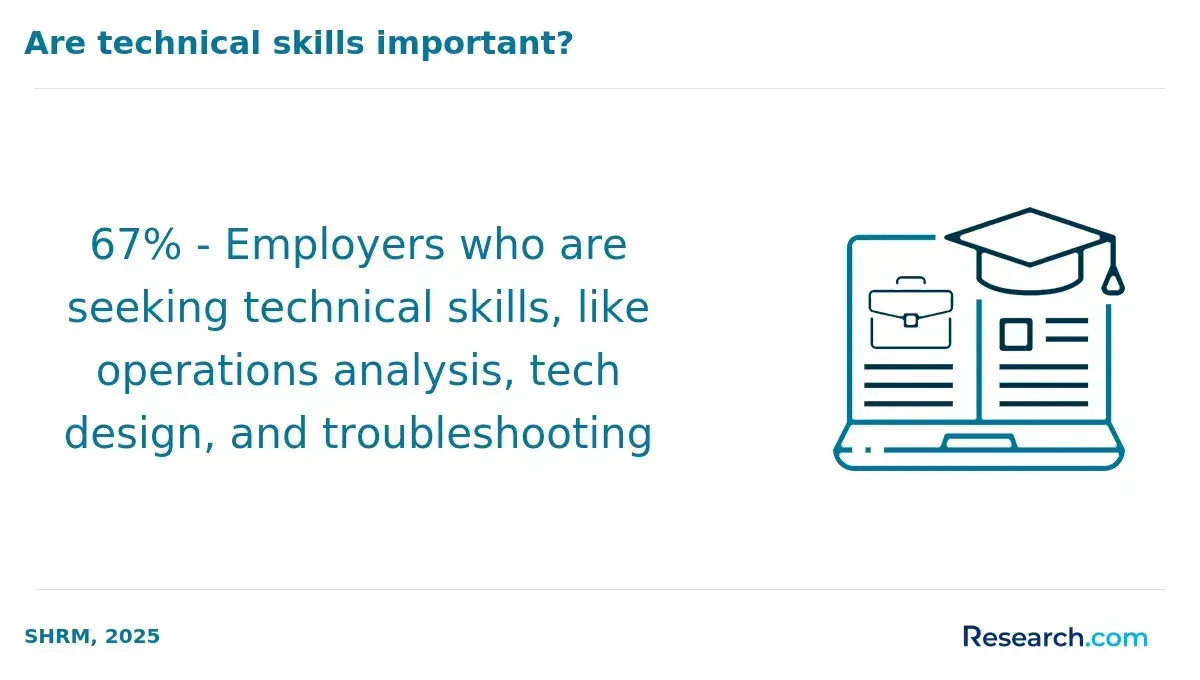
Business analysts and data analysts both need analytical thinking, business curiosity, and communication skills. The difference is emphasis. Business analysts spend more time defining problems, managing stakeholders, and translating business needs into requirements. Data analysts spend more time working directly with data, using technical tools, and presenting evidence through reports and dashboards.
Skills a Business Analyst Needs
- Communication: Explains requirements, trade-offs, risks, and recommendations clearly to both business and technical audiences.
- Requirement Analysis: Identifies, organizes, and documents what stakeholders need from a process, product, system, or project.
- Problem-Solving: Breaks down business problems and evaluates practical solutions that fit organizational goals and technical limits.
- Stakeholder Management: Builds trust, manages expectations, resolves conflicting priorities, and keeps cross-functional teams aligned.
- Process Modeling: Maps current and future workflows to find inefficiencies, handoff issues, bottlenecks, and opportunities for improvement.
Skills a Data Analyst Needs
- Data Manipulation: Uses tools and languages such as SQL and Python to collect, clean, join, organize, and prepare datasets.
- Statistical Analysis: Applies statistical methods to interpret patterns, validate results, and avoid misleading conclusions.
- Data Visualization: Creates charts, dashboards, and reports that make findings understandable and useful to decision-makers.
- Attention to Detail: Checks data quality, logic, calculations, and assumptions because small errors can lead to poor decisions.
- Critical Thinking: Questions the data, tests explanations, considers context, and turns findings into actionable insights.
| Skill area | Business analyst emphasis | Data analyst emphasis |
| Primary question | What does the business need to change? | What does the data show? |
| Technical depth | Moderate; enough to work with systems and technical teams | Higher; frequent use of data tools, queries, and analysis methods |
| Communication style | Facilitation, negotiation, requirements workshops, stakeholder updates | Reports, dashboards, data storytelling, analytical recommendations |
| Core output | Requirements, process maps, business cases, user stories, project documentation | Clean datasets, analyses, visualizations, dashboards, reports |
| Best fit for | People who enjoy strategy, systems thinking, and cross-team collaboration | People who enjoy technical analysis, pattern recognition, and evidence-based problem solving |
How much can you earn as a business analyst vs. a data analyst?
Salary comparisons between business analysts and data analysts depend heavily on job title, industry, location, experience, technical specialization, and how an employer classifies the role. In general, business analysts often show higher median and average salary figures, while data analysts can see strong earnings growth as they specialize in technical tools, analytics engineering, business intelligence, finance, IT, or scientific services.
A business analyst in the United States earns a median annual salary of around $98,000, with the national average closer to $109,000. Entry-level positions typically pay between $65,000 and $78,000, while senior analysts, especially in industries like technology or finance, can command $138,000 or more.
Top earners in major metropolitan areas or high-demand sectors often make over $150,000 annually. Healthcare and consulting can also be competitive areas for business analysts, particularly when the role involves complex systems, regulatory requirements, digital transformation, or enterprise-level projects.
Data analysts earn slightly less, with median annual salaries ranging from $82,640 to $86,531. Entry-level data analysts start at about $62,500, while those experienced in finance, IT, or scientific services may reach up to $119,000. The top 10% of data analysts can earn as much as $120,500.
Higher compensation is often seen in urban centers like San Francisco and New York due to living costs and talent competition. Professionals aiming to increase earning potential should focus on skills that employers pay a premium for, such as SQL, dashboard development, process improvement, stakeholder leadership, Python, business intelligence, or domain knowledge. For some learners, cheap one year master's programs online may provide a structured way to strengthen credentials without committing to a longer program.
| Salary factor | Business analyst | Data analyst |
| Typical advantage | Often higher median and average salary figures | Strong growth potential with technical specialization |
| Entry-level pay | Typically between $65,000 and $78,000 | About $62,500 |
| Senior-level potential | $138,000 or more, with top earners over $150,000 annually | May reach up to $119,000, with the top 10% earning as much as $120,500 |
| High-paying contexts | Technology, finance, healthcare, consulting, large transformation projects | Finance, IT, scientific services, business intelligence, advanced analytics |
What is the job outlook for a business analyst vs. a data analyst?
The job outlook is positive for both business analysts and data analysts because organizations continue to invest in digital systems, automation, reporting, and data-driven decision-making. The difference is that business analyst demand is tied closely to process improvement, technology implementation, and organizational change, while data analyst demand is tied more directly to the rapid growth of data volume, analytics platforms, artificial intelligence, and cloud-based operations.
Business Analysts, classified under management analysts by the U.S. Bureau of Labor Statistics, are expected to see an 11% job growth from 2019 to 2029. This rate surpasses the average for all occupations and reflects the ongoing demand for professionals who can drive strategic initiatives, streamline processes, and support digital transformation.
Employers continue to need people who can connect business goals with practical execution. As companies adopt new platforms, redesign workflows, and respond to changing customer expectations, business analysts help reduce confusion, define requirements, and improve project outcomes.
Data analysts face a notably faster job growth rate, with a projected 23% increase in opportunities through 2032. This growth is driven by the expansion of data in healthcare, retail, finance, marketing, operations, and other areas where leaders need timely insights. The rise of artificial intelligence and cloud computing also increases the need for professionals who can prepare, interpret, validate, and communicate data.
For data analyst candidates, employability often depends on demonstrable skills. Employers value SQL, data visualization, data cleaning, business context, and the ability to explain findings clearly. The market remains accessible for qualified applicants, but “qualified” increasingly means more than completing a course; candidates should be able to show projects, dashboards, analyses, or work examples that prove they can solve real problems.
| Outlook factor | Business analyst | Data analyst |
| Projected growth cited | 11% job growth from 2019 to 2029 | 23% increase in opportunities through 2032 |
| Main demand drivers | Digital transformation, process improvement, systems implementation, strategic initiatives | Data growth, AI, cloud computing, business intelligence, reporting needs |
| Employer priorities | Requirements, stakeholder communication, business process knowledge, project support | SQL, visualization, data quality, analytics tools, business interpretation |
| Competition factor | Strong candidates can manage ambiguity and cross-functional priorities | Strong candidates can prove technical ability with practical projects |
What is the career progression like for a business analyst vs. a data analyst?
Both careers offer advancement, but they usually move in different directions. Business analysts often progress toward product, project, operations, consulting, strategy, or management roles. Data analysts often progress toward senior analytics, business intelligence, data science, analytics engineering, data management, or analytics leadership roles.
Typical Career Progression for a Business Analyst
- Entry-Level Business Analyst: Learns requirements gathering, meeting documentation, process mapping, basic systems analysis, and stakeholder communication.
- Mid-Career Business Analyst: Owns larger workstreams, manages complex requirements, supports implementation, and helps coordinate cross-functional teams.
- Senior Business Analyst: Leads analysis on high-impact initiatives and may move into roles such as Product Manager, Strategy Consultant, or IT Project Manager.
- Executive Roles: With 5-10 years of experience, may advance toward senior leadership positions such as Chief Operating Officer (COO), especially when paired with strong industry knowledge and management experience.
Typical Career Progression for a Data Analyst
- Junior Data Analyst: Builds core skills in SQL, Python, spreadsheets, reporting, dashboard development, and data cleaning.
- Senior Data Analyst: Handles more complex analysis, improves reporting systems, mentors junior staff, and may explore predictive modeling or machine learning.
- Analytics Manager: Leads analysts, prioritizes analytics projects, manages stakeholder requests, and aligns data work with organizational strategy.
- Top-Level Roles: May move into positions such as Director of Data Analytics or Chief Data Officer (CDO), particularly with leadership experience and strong data governance or strategy expertise.
Employment growth also differs: management analysts, including Business Analysts, have an 11% projected growth from 2023 to 2033, while data science careers are expanding rapidly with a 36% growth rate during the same period.
Education can support either path, but the best choice depends on the target role. Business analyst candidates may benefit from coursework in business, information systems, project management, or operations. Data analyst candidates usually need stronger preparation in statistics, databases, visualization, and programming. Some learners compare programs from open enrollment universities when they want flexible access to foundational credentials.
| Career direction | Business analyst path | Data analyst path |
| Common next step | Senior Business Analyst, Product Manager, Project Manager, Consultant | Senior Data Analyst, BI Analyst, Analytics Engineer, Data Scientist |
| Leadership route | Operations, product, strategy, transformation, consulting | Analytics management, data strategy, business intelligence, data governance |
| Skill to build for advancement | Influence, facilitation, business architecture, change management | SQL depth, Python, modeling, visualization, data pipelines, statistics |
Can you transition from being a business analyst to a data analyst (and vice versa)?
Yes. Moving between business analyst and data analyst roles is realistic because both careers involve problem-solving, business context, communication, and evidence-based recommendations. The transition is easiest when you deliberately fill the skill gaps between the two roles instead of assuming that general analytical ability is enough.
How to move from business analyst to data analyst
Business analysts already bring useful strengths: they understand stakeholders, business processes, requirements, and decision context. To become competitive for data analyst roles, they usually need to add stronger hands-on technical skills.
- Learn SQL: SQL is one of the most important tools for retrieving, filtering, joining, and summarizing data from databases.
- Build visualization skills: Tableau and Power BI are common tools for dashboards and business reporting.
- Develop Python or R ability: Programming can help with data cleaning, analysis, automation, and more advanced analytics work.
- Create a project portfolio: Employers often want evidence that you can clean data, analyze it, visualize it, and explain the business takeaway.
- Target hybrid roles first: Business intelligence analyst, reporting analyst, product analyst, or operations analyst roles can bridge the gap.
Certifications in data analytics or business intelligence can help demonstrate commitment, especially when paired with practical projects. A fast track master's degree online may also appeal to learners who want a more formal path to technical and analytical training.
How to move from data analyst to business analyst
Data analysts already know how to work with evidence and communicate findings. To move into business analysis, they need to deepen their understanding of business processes, requirements, stakeholder management, and solution design.
- Practice requirements gathering: Learn how to interview stakeholders, define needs, and separate must-have requirements from preferences.
- Study process modeling: Become comfortable mapping workflows, identifying handoffs, and documenting current and future states.
- Strengthen facilitation skills: Business analysts often lead meetings where stakeholders disagree on priorities or definitions of success.
- Learn business analysis methods: Familiarity with user stories, use cases, acceptance criteria, and change management can make the transition smoother.
- Consider a credential: A Certified Business Analysis Professional (CBAP) credential may support the move, depending on experience and eligibility.
According to the US Bureau of Labor Statistics, demand for data-related roles is expected to grow by 23% until 2033, highlighting robust opportunities for both data and business analyst career paths.
What are the common challenges that you can face as a business analyst vs. a data analyst?
Business analysts and data analysts both work under pressure because their work influences decisions, budgets, systems, and performance. The challenges differ, however. Business analysts often face ambiguity, politics, and changing stakeholder expectations. Data analysts often face messy data, technical limitations, and pressure to produce accurate insights quickly.
Challenges for a Business Analyst
- Managing stakeholder expectations: Business analysts often work with leaders, users, developers, vendors, and project managers who may define success differently.
- Handling unclear or changing requirements: Stakeholders may not know exactly what they need at the beginning of a project, and priorities can shift during implementation.
- Justifying business value: Recommendations may require budget, time, or process changes, so business analysts often need to explain expected value and trade-offs.
- Balancing business and technical constraints: A solution that users want may not be practical, affordable, secure, or feasible within the project timeline.
- Relying heavily on soft skills: Communication, negotiation, facilitation, and conflict resolution are central to the role and can be demanding in complex organizations.
Challenges for a Data Analyst
- Handling complex data: Cleaning and processing large datasets can be time-consuming, especially when sources are inconsistent or poorly documented.
- Protecting accuracy: Small errors in joins, filters, formulas, or assumptions can change the conclusion of an analysis.
- Working in isolation: Data analysts may spend long periods independently troubleshooting data problems, which can make stakeholder alignment harder.
- Explaining uncertainty: Business leaders may want a simple answer, but data may be incomplete, noisy, or open to multiple interpretations.
- Keeping up with technology: Analysts must continuously learn tools and methods such as Python, R, AI-driven platforms, and evolving visualization systems.
These business analyst data analyst challenges 2025 show how automation and AI affect the roles differently. Data analysts face more direct pressure to adapt to technical tools and automated analytics. Business analysts face pressure to guide organizations through changing processes, new systems, and more complex cross-functional work.
Ongoing learning is essential in both careers. For learners who need a flexible and lower-cost path to build relevant skills, a cheap online college may provide access to degrees, certificates, or courses that support entry or advancement.
Is it more stressful to be a business analyst vs. a data analyst?
Neither role is automatically more stressful for everyone. Stress depends on the organization, workload, manager, industry, project complexity, and the type of work you personally find draining. A highly collaborative person may find business analysis energizing and data analysis isolating. A highly technical person may feel the opposite.
Business analysts often experience stress from stakeholder management. They may need to reconcile conflicting priorities, clarify vague requirements, manage scope changes, and communicate with both technical and nontechnical teams. When a project is delayed or misunderstood, the business analyst can be caught between leadership expectations and implementation realities.
This pressure can be especially high in technology, consulting, finance, healthcare, and other environments where projects move quickly and mistakes can affect budgets, operations, compliance, or customer experience. Strong facilitation, documentation, and expectation-setting skills can reduce stress substantially.
Data analysts often experience stress from accuracy, deadlines, and technical troubleshooting. They may need to produce a report quickly even when the data is incomplete, inconsistent, or difficult to access. They also face pressure to use the right methodology and communicate results without overstating what the data proves.
Industries such as finance and healthcare can add pressure because precision matters and decisions may have significant consequences. Junior data analysts may feel stress from learning tools and proving technical competence, while senior analysts may feel stress from advising strategy or managing high-visibility reporting.
| Stress factor | Business analyst | Data analyst |
| Main source of pressure | Stakeholders, changing requirements, project ambiguity | Data quality, technical complexity, accuracy expectations |
| High-stress moments | Conflicting priorities, scope changes, implementation issues | Broken reports, missing data, urgent executive requests |
| Best stress-reducing strengths | Communication, facilitation, organization, negotiation | Technical troubleshooting, attention to detail, time management |
| Better fit if you prefer | Collaborative problem-solving and business influence | Focused technical work and evidence-based analysis |
How to Choose Between Becoming a Business Analyst vs. a Data Analyst
The best choice depends on what type of problems you want to solve every day. If you are drawn to people, processes, systems, and business change, business analysis may be the stronger fit. If you are drawn to datasets, tools, trends, and quantitative evidence, data analysis may be the better path.
- Daily Work Focus: Business analysts solve business problems and interact with stakeholders, while data analysts focus more on data collection, cleaning, analysis, and reporting.
- Education & Skills: Both roles typically require a bachelor's degree; data analysts need stronger technical skills in SQL, Python, or R, whereas business analysts benefit from business certifications and moderate data knowledge.
- Salary & Growth: Business analysts earn a median salary near $98,662, with slower growth; data analysts earn about $82,640 but have faster job growth projected at 36% through 2033.
- Work Environment: Business analysts work collaboratively, facilitating communication across teams; data analysts often perform more independent, technical work such as coding and reporting.
- Career Progression: Business analysts often advance into roles like Product Manager or Consultant, while data analysts typically move toward data science or analytics engineering positions.
Choose business analyst if you prefer:
- Talking with stakeholders and translating needs into clear requirements
- Improving processes, systems, workflows, and project outcomes
- Working across departments and influencing business decisions
- Balancing technical possibilities with business priorities
- Moving toward product, project, operations, consulting, or strategy roles
Choose data analyst if you prefer:
- Working hands-on with data, queries, dashboards, and reports
- Finding patterns, testing assumptions, and explaining what the numbers mean
- Learning technical tools such as SQL, Python, R, Tableau, or Power BI
- Producing evidence that guides decisions
- Moving toward business intelligence, analytics engineering, data science, or analytics leadership
If you are still unsure, try a small project from each field. For business analysis, document a process, identify inefficiencies, and write requirements for an improved workflow. For data analysis, download a dataset, clean it, analyze it, and build a simple dashboard. The work you enjoy more is often the clearer signal than the job title itself.
Both careers reward continuous learning. Short courses and credentials can help you test interest before committing to a degree or career switch. Exploring online certifications that pay well can be a practical way to strengthen qualifications in either direction.
What Professionals Say About Being a Business Analyst vs. a Data Analyst
- Pierce: "Choosing a career as a business analyst has provided me with exceptional job stability and competitive salary growth. The demand across industries like finance and healthcare ensures continual opportunities, and the role's strategic nature keeps daily tasks engaging and meaningful. I highly recommend this path for anyone seeking both security and challenge."
- Aryan: "Working as a data analyst has exposed me to diverse industry challenges, from managing big data to uncovering actionable insights that directly influence business decisions. The fast-paced environment pushes me to constantly learn new tools and techniques, making every project an exciting journey of discovery and growth."
- Jonathan: "The career development potential in business analysis is remarkable, offering clear paths toward management and consultancy roles. Through rigorous training and real-world problem solving, I've honed skills that support both personal and organizational growth in dynamic settings. This profession truly cultivates a mindset geared toward continuous improvement and strategic thinking."
Other Things You Should Know About a Business Analyst & a Data Analyst
In 2027, business analysts emphasize strategic thinking, business acumen, and communication skills for translating business needs into actionable solutions. Data analysts, however, focus on technical skills like data manipulation, statistical analysis, and proficiency with data tools and software. Both roles require problem-solving abilities, but their approaches differ.
The job outlook for business analysts is expected to be slightly stronger than for data analysts in 2027, as businesses increasingly seek experts who can translate data into strategic business insights. The U.S. Bureau of Labor Statistics forecasts higher growth rates for business analyst roles.
References
- Is Data Analyst a Stressful Job? An In-Depth Look | Jessup University https://jessup.edu/blog/engineering-technology/is-data-analyst-a-stressful-job/
- Business Analyst vs Data Analyst: Which Career is Right for You? https://www.careersmarter.com/business-analyst-vs-data-analyst-which-career-is-right-for-you/
- The role of a Business Analyst: what does the person in this position do? | ITDS https://itds.pl/news/the-role-of-a-business-analyst-what-does-the-person-in-this-position-do/
- Data Analyst vs Business Analyst: What’s the Difference? https://studyonline.unsw.edu.au/blog/data-analyst-vs-business-analyst
- Data Analysts Vs. Business Analysts: How They Differ And Why It Matters https://innovatureinc.com/data-analysts-vs-business-analysts/
- Differences Between Data Analyst and Business Analyst Roles https://agilemania.com/business-analyst-vs-data-analyst
- Business analyst https://ddat-capability-framework.service.gov.uk/business-analyst.html
- Moving from BA to Business Data Analyst - Techcanvass https://techcanvass.com/blogs/moving-from-ba-to-business-data-analyst.aspx
- How to Transition from Business Analyst to Data Analyst? - GeeksforGeeks https://www.geeksforgeeks.org/gfg-academy/how-to-transition-from-business-analyst-to-data-analyst/
- The Difference Between a Business Analyst and a Data Analyst https://www.cambridgespark.com/blog/difference-business-analyst-data-analyst