
2027 Most Affordable Online Education Specialist Degrees in Leadership

Co-Founder and Chief Data Scientist
Choosing an online education specialist degree in leadership is usually a practical career decision, not just an academic one. Most applicants already work in education, already hold a master’s degree, and are trying to decide whether an EdS can help them move into school leadership, district administration, curriculum supervision, or higher education management without the longer commitment of a doctorate.
Cost matters because advanced education credentials can be expensive, and leadership roles may also involve state certification rules, field experiences, and employer-specific requirements. This guide focuses on affordable online education specialist degrees in leadership for 2027 and explains how to compare programs by tuition, accreditation, delivery format, certification fit, career outcomes, and return on investment.
Quick answer: Is an online education specialist degree in leadership worth it?
An online education specialist degree in leadership can be worth it for experienced educators who already have a master’s degree and want a shorter, career-focused path toward advanced leadership roles. It is especially useful for professionals targeting principal, assistant principal, superintendent, curriculum director, instructional leadership, student services, or postsecondary administration positions.
- In 2023, more than 216,000 postsecondary education administrators and more than 316,000 school principals were employed, showing that education leadership remains a large professional field.
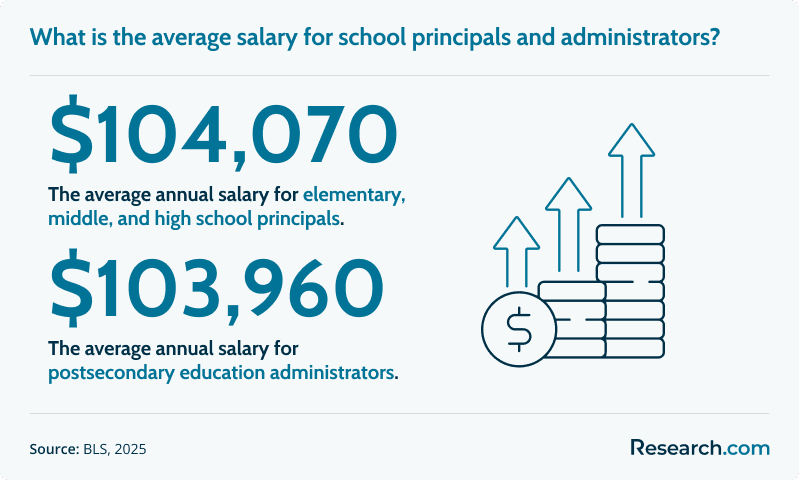
- According to the US Bureau of Labor Statistics (BLS), the May 2024 median annual salary was $103,960 for postsecondary education administrators and $104,070 for elementary, middle, and high school principals.
- Online EdS programs are often designed for working educators, typically offering flexible scheduling, asynchronous coursework, and field-based assignments that can connect to a student’s current school or district.
- The strongest programs are accredited, aligned with relevant state leadership requirements, transparent about total cost, and clear about whether the degree leads to licensure, certification, or a non-licensure leadership credential.
What is an online education specialist degree in leadership?
An online education specialist degree in leadership, often called an EdS, is a post-master’s credential for educators who want advanced leadership preparation without enrolling in a full doctoral program. It sits between a master’s degree and a doctorate in academic level and is usually more applied than research-heavy.
Programs commonly cover school leadership, educational policy, organizational decision-making, school law, budgeting, instructional improvement, personnel supervision, data use, and strategic planning. Many also require a practicum, internship, leadership portfolio, or capstone project so students can demonstrate administrative skills in a real educational setting.
The online format is designed for teachers, instructional coaches, department chairs, counselors, principals, and other education professionals who cannot pause their careers to attend campus full time. Depending on the institution, coursework may be fully asynchronous, cohort-based, or blended with occasional synchronous meetings.
Who is this degree best for?
- Licensed teachers who want to qualify for school administrator or principal roles.
- Current assistant principals or principals preparing for district-level leadership.
- Curriculum specialists, instructional coaches, and teacher leaders seeking formal leadership training.
- Higher education professionals working toward administrative roles in student affairs, enrollment, academic operations, or program management.
- Educators who want a practical post-master’s credential but are not ready to commit to an EdD or PhD.
Who should consider a different path?
- Students who do not yet have a master’s degree, since most EdS programs require one before admission.
- Career changers with little or no education experience, unless the program explicitly supports nontraditional applicants.
- Professionals whose target role requires a doctorate rather than an EdS.
- Applicants seeking licensure in another state without confirming that the online program meets that state’s requirements.
Where can you work with an education specialist degree in leadership?
Graduates may work in public schools, private schools, charter school networks, school districts, education service agencies, state education departments, higher education institutions, nonprofits, and consulting organizations. The right setting depends heavily on the program concentration, state rules, and the student’s prior credentials.
| Work setting | Possible roles | Best-fit EdS focus |
| K-12 schools | Assistant principal, principal, instructional leader, teacher leader | Educational leadership, principalship, teacher leadership, K-12 leadership |
| School districts | Curriculum director, assessment coordinator, superintendent, professional development director | Superintendency, district leadership, curriculum and instruction leadership |
| Colleges and universities | Academic program director, student affairs administrator, enrollment manager | Higher education administration, organizational leadership |
| Government and agencies | Program administrator, compliance specialist, policy or operations leader | Education policy, administration, special education leadership |
| Nonprofits and consulting firms | Education consultant, training leader, school improvement strategist | Innovation and leadership, curriculum leadership, organizational development |
Some graduates also use the degree to strengthen an educational consultant career path, especially if they have deep experience in curriculum, school improvement, assessment, or leadership coaching.
How much can you make with an education specialist degree in leadership?
Salary depends on role, state, district size, institutional budget, years of experience, and whether the position is K-12, higher education, nonprofit, or consulting-based. The EdS itself does not guarantee a specific salary, but it may help educators qualify for roles with greater administrative responsibility.
| Role category | May 2024 median annual salary | Source |
| Elementary, middle, and high school principals | $104,070 | BLS |
| Postsecondary education administrators | $103,960 | BLS |
Leadership compensation can vary widely. A school principal in a large urban district may face different pay structures and responsibilities than a principal in a small rural school. Similarly, higher education administrators in enrollment, academic affairs, or student services may see different salary ranges based on institution type and department size.
- Most affordable online education specialist degrees in leadership for 2027
- How long does an online education specialist degree in leadership take?
- Online vs. on-campus education specialist programs in leadership
- Average cost of an online education specialist degree in leadership
- Financial aid for online education specialist students
- Admission requirements for online education specialist leadership programs
- Common courses in an online education specialist degree in leadership
- Common specializations in online education specialist leadership programs
- EdS vs. EdD and other advanced education degrees
- Current trends affecting online education leadership programs
- Challenges of earning an online education specialist degree
- Faculty quality, accreditation, and institutional reputation
- How programs are responding to new education leadership demands
- How to choose the most affordable online education specialist degree in leadership
- Career paths for online education specialist graduates
- Job market for education leadership graduates
Most affordable online education specialist degrees in leadership for 2027
How Research.com ranked these programs
Affordability is important, but a low price alone does not make an education specialist program a strong choice. Students also need to consider accreditation, credit requirements, online flexibility, leadership focus, and whether the curriculum fits their certification or career goals.
Research.com’s education experts developed this list using institutional data and national education databases. The full ranking process is available in our Research.com methodology. Data sources include the IPEDS database from the US Department of Education, Peterson’s database and its Distance Learning Licensed Data Set, College Scorecard, and the National Center for Education Statistics.
| Rank | School | Leadership focus | Cost per credit | Credits | Accreditation |
| 1 | University of North Georgia | Educational Leadership | $236 | 36 | CAEP |
| 2 | Georgia College & State University | Teacher Leadership | $247 | 30 | CAEP |
| 3 | Fort Hays State University | Education Administration; Innovation and Leadership | $298 | 30 | CAEP |
| 4 | Valdosta State University | Teacher Leadership; Educational Leadership | $252 | 30 | CAEP |
| 5 | University of Central Arkansas | Educational Leadership | $325 | 30 | CAEP |
| 6 | University of the Cumberlands | Director of Pupil Personnel | $315 civilian; $277 military | 30 | CAEP |
| 7 | Arkansas State University | Principalship; Gifted and Talented Director; Special Education Director; Superintendency | $334 | 30 | CAEP |
| 8 | East Carolina University | Educational Administration & Supervision | $290 in-state; $1,020 out-of-state | 36 | CAEP |
| 9 | University of Montana | Educational Leadership | $293 in-state; $805 out-of-state | 36 | CAEP |
| 10 | Indiana State University | School Administration | $303 in-state; $391 out-of-state | 36 | CAEP |
1. University of North Georgia
The University of North Georgia offers an online education specialist in educational leadership for educators preparing for K-12 administrative responsibilities. The CAEP-accredited program is structured for Georgia educators who need a flexible route that can support leadership certification goals. Coursework is delivered online, and the cohort structure helps students progress with peers while continuing to work. The program emphasizes applied leadership through practicum work and collaboration connected to real school and district settings.
- Program Length: Two years
- Tracks/concentrations: Educational Leadership
- Cost per Credit: $236
- Required Credits to Graduate: 36
- Accreditation: CAEP
2. Georgia College & State University
Georgia College & State University provides an online education specialist in teacher leadership for educators who want to lead instructional improvement without necessarily leaving the classroom. The CAEP-accredited program focuses on coaching, curriculum work, professional learning, and applied research. Because it is fully online, it is designed for practicing teachers who need a manageable format while continuing their school responsibilities.
- Program Length: Three years
- Tracks/concentrations: Teacher Leadership
- Cost per Credit: $247
- Required Credits to Graduate: 30
- Accreditation: CAEP
3. Fort Hays State University
Fort Hays State University offers online education specialist options in education administration with a superintendent focus and in education innovation and leadership. These programs are designed for professionals who want either a more traditional administrative pathway or a broader leadership role focused on innovation. FHSU’s online structure supports working educators through flexible coursework that connects leadership theory, policy, and practical administrative decision-making.
- Program Length: Two years
- Tracks/concentrations: Education Administration (Superintendent), Innovation and Leadership
- Cost per Credit: $298
- Required Credits to Graduate: 30
- Accreditation: CAEP
4. Valdosta State University
Valdosta State University offers online education specialist programs in teacher leadership and educational leadership. The CAEP-accredited options serve educators who want to strengthen instructional leadership, mentoring, and school improvement skills. The educational leadership path may be especially relevant for Georgia educators pursuing Tier II leadership certification, while the teacher leadership option can fit experienced teachers who want more influence over curriculum and professional learning.
- Program Length: Two and a half years
- Tracks/concentrations: Teacher Leadership, Educational Leadership
- Cost per Credit: $252
- Required Credits to Graduate: 30
- Accreditation: CAEP
5. University of Central Arkansas
The University of Central Arkansas offers a fully online education specialist in educational leadership for educators preparing for broader administrative responsibilities in K-12 systems. The curriculum includes leadership, organizational development, and community relations. The program can be a practical option for current principals, curriculum leaders, and other education professionals seeking an affordable online pathway with district-level relevance.
- Program Length: Two years
- Tracks/concentrations: Educational Leadership
- Cost per Credit: $325
- Required Credits to Graduate: 30
- Accreditation: CAEP
6. University of the Cumberlands
The University of the Cumberlands offers an education specialist program focused on director of pupil personnel. This leadership concentration centers on student services, discipline, school safety, and related administrative responsibilities. The online format and eight-week terms may appeal to licensed educators who want a focused credential that aligns with Kentucky certification expectations while also building student support leadership skills.
- Program Length: 18 to 24 months
- Tracks/concentrations: Director of Pupil Personnel
- Cost per Credit: $315 (civilian); $277 (military)
- Required Credits to Graduate: 30
- Accreditation: CAEP
7. Arkansas State University
Arkansas State University provides multiple online education specialist tracks for educators with specific leadership goals. Options include principalship, gifted and talented direction, special education direction, and superintendency. These are non-licensure pathways, so applicants should confirm whether the program fits their state and employer requirements before enrolling. The online format and multiple start dates can be useful for professionals who need scheduling flexibility.
- Program Length: One and a half to two years
- Tracks/concentrations: Principalship, Gifted and Talented Director, Special Education Director, Superintendency (All Non-Licensure)
- Cost per Credit: $334
- Required Credits to Graduate: 30
- Accreditation: CAEP
8. East Carolina University
East Carolina University offers an online education specialist in educational administration and supervision for educators seeking advanced school or district leadership preparation. Coursework includes topics such as school law, human resources, and instructional leadership. The program may fit professionals pursuing superintendent, central office, or administrative coaching roles, but out-of-state applicants should carefully review the tuition difference before deciding.
- Program Length: Two years
- Tracks/concentrations: Educational Administration & Supervision
- Cost per Credit: $290 (in-state); $1,020 (out-of-state)
- Required Credits to Graduate: 36
- Accreditation: CAEP
9. University of Montana
The University of Montana offers an online education specialist in educational leadership for experienced educators preparing for principalship or superintendent certification. The program combines research-informed coursework, practical field experiences, mentorship, and advising. In-state students may find the pricing especially attractive, while out-of-state students should compare the tuition against similar programs before committing.
- Program Length: Two to three years
- Tracks/concentrations: Educational Leadership
- Cost per Credit: $293 (in-state); $805 (out-of-state)
- Required Credits to Graduate: 36
- Accreditation: CAEP
10. Indiana State University
Indiana State University offers an online Educational Specialist in School Administration for K-12 educators preparing for senior administrative roles, including central office and superintendent positions. The curriculum includes organizational leadership, education law, and public school finance. The online delivery model serves both in-state and out-of-state learners and provides a research-based foundation for advanced school leadership work.
- Program Length: Two years
- Tracks/concentrations: School Administration
- Cost per Credit: $303 (in-state); $391 (out-of-state)
- Required Credits to Graduate: 36
- Accreditation: CAEP
How long does an online education specialist degree in leadership take?
Most online education specialist degrees in leadership take 18 to 24 months to complete, especially when designed for part-time working educators. Some programs may take longer if students enroll at a lighter pace, need additional certification-related fieldwork, or choose a cohort schedule with fixed course sequencing.
A few accelerated formats may be completed in 12 to 16 months, depending on transfer policies, course availability, and the student’s ability to handle a heavier graduate workload. In most cases, EdS programs require 30 to 36 credits, which makes them shorter than many doctoral programs.
| Timeline option | Typical student profile | Important trade-off |
| 12 to 16 months | Students who can take heavier course loads and have strong support at work and home | Faster completion may mean less flexibility and more weekly workload |
| 18 to 24 months | Working educators balancing full-time jobs with graduate study | Often the most realistic pace for professionals in school roles |
| Two to three years | Students in cohort programs, certification-focused tracks, or part-time schedules | Longer duration may reduce stress but can extend total time to career advancement |
For many educators, the EdS works as a midpoint between a master’s degree and a doctorate. It can provide advanced leadership preparation without the longer research expectations of a PhD or EdD.
Online vs. on-campus education specialist programs in leadership
Online and campus-based education specialist programs may lead to similar academic outcomes when they share the same accreditation, curriculum standards, faculty qualifications, and fieldwork expectations. The biggest differences are usually scheduling, networking style, access to local partnerships, and total cost.
| Factor | Online EdS in leadership | On-campus EdS in leadership |
| Best for | Working educators who need schedule flexibility | Students who prefer in-person interaction and campus-based services |
| Course delivery | Often asynchronous, sometimes with live sessions or cohort meetings | Scheduled classroom meetings, campus events, and face-to-face advising |
| Field experience | Often completed in the student’s local school, district, or agency | May be tied more closely to university partner sites |
| Networking | Virtual cohorts, discussion boards, live webinars, online faculty access | In-person relationships with classmates, faculty, and local education leaders |
| Cost considerations | May reduce commuting, relocation, and campus fees; some schools offer online tuition rates | May provide access to local assistantships, campus resources, and regional networks |
Curriculum and career preparation
Both formats generally include school leadership, policy, finance, legal issues, supervision, research use, and practical leadership work. If a program is designed for licensure, the delivery format is less important than whether it satisfies the specific requirements of the state where the student plans to work.
Flexibility and access
Online programs are often more accessible for educators who cannot commute or relocate. Asynchronous courses can be especially helpful for teachers and administrators whose workdays extend beyond normal school hours.
Cost differences
Online study can be less expensive when it lowers travel costs or provides special distance-learning tuition. Students comparing broader education affordability options may also find useful context in Research.com’s guide to the most affordable online education degrees.
Community and professional connections
Campus programs may provide stronger local networking, but online programs increasingly use cohorts, video meetings, virtual practicums, and group projects to build professional relationships. Before enrolling, ask whether online students receive the same advising, career support, and field placement help as campus students.
Average cost of an online education specialist degree in leadership
The cost of an online EdS in leadership varies by school type, residency status, credit requirement, and fee structure. According to Data USA, the median tuition for in-state students at public universities pursuing education degrees is $7,387, while out-of-state tuition at private institutions averages $33,670. These figures refer to education degrees broadly, not only education specialist programs.
Based on those figures and the pricing patterns in this ranking, the estimated median cost of an online education specialist degree in leadership is:
- Around $12,000 to $15,000 for out-of-state public university students
- Around $20,000 to $25,000 for in-state students at private universities
Because EdS programs usually require 30 to 36 credits, they can cost less than longer doctoral routes. Students comparing advanced leadership credentials may want to review affordable online doctorate programs in organizational leadership to understand the cost and scope differences between specialist and doctoral study.
| Cost factor | Why it matters | Question to ask |
| Per-credit tuition | This is the largest visible cost, but not the only one | Is the listed rate the same for online, in-state, and out-of-state students? |
| Required credits | A lower per-credit price can still be costly if the program requires more credits | How many credits are required to graduate? |
| Fees | Technology, distance learning, graduation, and program fees can add up | Can the school provide a full cost sheet? |
| Residency or campus visits | Travel can raise the real price of an online program | Are any on-campus sessions required? |
| Certification expenses | Leadership licensure may involve exams, background checks, or application fees | What additional costs are tied to state certification? |
For broader comparisons across education-related online programs, students can also review affordable options such as online early childhood development degree programs. These are different credentials, but they can help applicants understand how cost, credit load, and career goals vary across education fields.
Financial aid for online education specialist students
Online education specialist students may qualify for many of the same financial aid options as campus-based graduate students, provided the institution and program meet eligibility requirements. The most important step is to confirm aid eligibility with the school before enrolling.
- Federal financial aid: Many accredited institutions participate in federal student aid programs. Students can compare aid-ready institutions through Research.com’s guide to online colleges that accept FAFSA.
- Employer tuition assistance: School districts, universities, and education organizations may help pay for advanced credentials when the degree supports leadership development.
- Institutional scholarships: Some universities offer graduate scholarships, educator awards, diversity scholarships, or program-specific funding.
- State aid and educator programs: Depending on location and service commitments, educators may find support through available grants or loan forgiveness options.
- Military tuition benefits: Some programs provide separate military tuition rates or benefits for eligible students.
How to reduce the cost of an online EdS
- Ask your employer whether tuition reimbursement is available for leadership credentials.
- Compare total program cost instead of only the advertised per-credit rate.
- Check whether online students receive in-state or flat-rate tuition.
- Choose a program with the fewest required credits that still meets your licensure and career goals.
- Apply early for institutional aid, because graduate scholarships may have limited funding.
Admission requirements for online education specialist leadership programs
Most EdS leadership programs are built for experienced educators, so admission standards usually focus on prior graduate study, professional practice, and readiness for administrative work.
- A master’s degree from a regionally accredited institution, commonly in education or a related field
- A current teaching or administrator license in many programs
- Professional experience in an education setting, often at least two to three years
- Letters of recommendation from supervisors, faculty, or education leaders
- A statement of professional goals
- A graduate GPA requirement, often a minimum of 3.0 on a 4.0 scale
Applicants interested in roles connected to special education administration should also review state requirements and compare them with program outcomes. Research.com’s guide to special education teaching certification and requirements may help clarify how certification rules can affect career planning.
According to Zippia, the most common degree for school principals is a bachelor’s degree (46%), followed by master’s degrees (39%) and doctorate (6%). Although a master’s degree is commonly associated with education leadership entry, an EdS can provide additional preparation for advanced administrative duties, certification exams, or district-level roles.
Career changers should be especially careful. Someone coming from a very different field, such as a student comparing affordable online dental assistant associate degree programs, would likely need additional education experience and prerequisite coursework before becoming a realistic EdS leadership applicant.
Common courses in an online education specialist degree in leadership
Course titles vary by university, but most EdS leadership programs combine advanced education theory with practical administrative preparation. Students should look for courses that connect directly to their desired role, especially if they need licensure.
Typical core courses
- Educational Leadership Theory and Practice: Studies leadership models and how administrators apply them in schools, districts, or higher education settings.
- School Law and Ethics: Covers legal responsibilities, student rights, personnel issues, compliance, and ethical decision-making.
- Organizational Management: Focuses on operations, staffing, finance, communication, and institutional planning.
- Curriculum Development and Assessment: Prepares leaders to evaluate academic programs, align instruction with standards, and support instructional improvement.
- Data-Driven Decision Making: Teaches students how to interpret educational data and use evidence to guide leadership decisions.
- Research Methods or Applied Inquiry: Helps students evaluate education research and complete capstone or improvement projects.
- Internship, Practicum, or Field Experience: Provides supervised leadership practice in a school, district, or education organization.
Students who are still choosing between education pathways should make sure the program level and subject area match their goals. Research.com’s comparison of cybersecurity vs. computer science degree programs is in a different field, but it illustrates the same broader decision principle: similar-sounding programs can lead to very different skill sets and career outcomes.
Applied education leadership programs also share some structural similarities with career-focused degrees outside teacher preparation, including the most affordable online applied sciences degree programs, because both emphasize practical problem-solving, workforce relevance, and management skills.
Common specializations in online education specialist leadership programs
Specializations matter because they determine what leadership problems the curriculum prepares you to solve. They may also affect licensure, career options, internship requirements, and employer recognition.
| Specialization | Best for | What to verify before enrolling |
| K-12 School Leadership | Teachers pursuing principal, assistant principal, or school administrator roles | Whether the program meets principal licensure requirements in your state |
| Teacher Leadership | Experienced teachers who want to coach peers, lead curriculum work, or guide professional learning | Whether the path is administrative, instructional, licensure-focused, or non-licensure |
| Curriculum and Instruction Leadership | Instructional coaches, curriculum coordinators, and academic program leaders | Whether coursework includes assessment, standards alignment, and data use |
| Special Education Leadership | Educators managing special education services, compliance, or program supervision | Whether the curriculum addresses federal and state special education requirements |
| Superintendency or District Leadership | Principals and administrators preparing for central office or superintendent roles | Whether prior administrative experience or certification is required |
| Higher Education Administration | College and university professionals in student affairs, enrollment, academic operations, or program management | Whether the program is designed for higher education rather than K-12 leadership |
Skills employers may value in 2027
According to Zippia, common skills listed on school principal resumes for 2027 include:
- Professional Development: Planning, leading, and evaluating training for teachers and staff.
- Curriculum Development: Designing or refining instructional materials and aligning them with standards.
- Student Achievement: Using performance indicators to identify gaps and improve outcomes.
- Professional Growth: Supporting educator learning, coaching, and career development.
- Student Learning: Improving engagement, comprehension, and academic progress.
- School Administration: Managing operations, staffing, communications, and daily school functions.
- Educational Program Oversight: Coordinating programs that support academic, behavioral, and extracurricular goals.
Other useful competencies include budgeting, school climate improvement, family and community engagement, standardized testing oversight, and continuous improvement planning.
EdS vs. EdD and other advanced education degrees: Which offers the better return?
The return on investment of an online education specialist degree depends on your goal. If you want a practical post-master’s credential for leadership advancement, an EdS may be the more efficient option because it usually requires fewer credits and less time than a doctorate. If you want senior executive leadership, university faculty roles, advanced research training, or a doctorate-level credential, an EdD may be a better fit despite the longer commitment.
| Credential | Best for | Typical advantage | Main limitation |
| Education Specialist degree in leadership | Experienced educators seeking advanced administrative or instructional leadership preparation | Shorter and more applied than many doctoral programs | May not satisfy roles that require a doctorate |
| EdD | Education leaders pursuing high-level practice, systems leadership, or doctoral recognition | Doctoral credential with deeper applied research expectations | Usually longer and more expensive than an EdS |
| PhD in Education | Students focused on academic research, policy research, or faculty careers | Strong research preparation | Often less practice-focused for school administrators |
| Second master’s degree | Educators changing specialties or adding a focused credential | May be more accessible for students not ready for post-master’s study | May not provide the same advanced leadership signal as an EdS |
Students comparing doctoral alternatives can review Research.com’s guide to shortest online EdD degree programs for another way to evaluate time, cost, and credential value.
Current trends affecting online education specialist degrees in leadership
Online EdS programs are changing because education leaders now manage more complex problems than scheduling, staffing, and compliance alone. Schools and colleges increasingly expect administrators to understand data systems, digital learning, equity-focused leadership, staff retention, student support, policy changes, and technology-enabled instruction.
- More data-driven leadership: Programs increasingly teach leaders how to use assessment, attendance, climate, and performance data responsibly.
- Technology and AI awareness: Education leaders need to understand how digital tools and AI-supported systems affect instruction, privacy, academic integrity, and decision-making.
- Flexible online delivery: Cohort models, virtual collaboration, and asynchronous modules make advanced study more feasible for full-time educators.
- Micro-credentials and targeted skills: Some institutions are building shorter credentials into graduate pathways so educators can document specific leadership competencies.
- Stronger certification alignment: Programs that prepare school administrators must stay responsive to state standards and licensure expectations.
Educators comparing advanced but cost-conscious options may also want to explore affordable online master’s degrees in teaching, especially if they are earlier in their graduate education pathway.
Challenges of earning an online education specialist degree in leadership
An online EdS can be flexible, but it is not easy. Students often complete demanding graduate work while managing classrooms, school leadership duties, family responsibilities, and certification paperwork.
| Common challenge | Why it matters | Better approach |
| Underestimating weekly workload | Graduate leadership courses often require reading, writing, collaboration, and field assignments | Ask the program how many hours students typically spend each week |
| Choosing a non-licensure program by mistake | A non-licensure EdS may not qualify you for principal or superintendent certification | Confirm licensure alignment with the state education agency before enrolling |
| Ignoring fieldwork requirements | Internships or practicums may require access to approved leadership sites | Ask whether your current school or district can serve as your field placement |
| Feeling isolated online | Limited interaction can reduce motivation and networking | Look for cohorts, live sessions, faculty mentoring, and group projects |
| Focusing only on tuition | Fees, textbooks, certification costs, and travel can change affordability | Request a complete program cost estimate in writing |
Some students ultimately decide that a doctorate fits their ambitions better. If so, comparing affordable online EdD programs can help clarify whether the longer credential is worth the added time and cost.
Faculty quality, accreditation, and institutional reputation
Program quality depends on more than price. A strong online education specialist program should have qualified faculty, appropriate accreditation, relevant leadership experience, responsive advising, and clear alignment with professional standards.
What to look for in faculty
- Experience as principals, superintendents, district leaders, higher education administrators, or policy leaders
- Research or applied work in leadership, curriculum, school improvement, equity, assessment, or education law
- Availability for advising, mentoring, and fieldwork supervision
- Connections with school districts, education agencies, or professional networks
Why accreditation matters
Accreditation helps students evaluate whether a school or program meets recognized quality standards. For educator preparation, students should check whether the program is regionally accredited and whether it is aligned with CAEP or another relevant accreditor. Accreditation can affect financial aid eligibility, transferability, employer recognition, and licensure preparation.
Students comparing institutional reputation across disciplines can also study how Research.com evaluates affordability and program structure in unrelated fields, such as affordable online political science degree programs. The field is different, but the evaluation habits are similar: check accreditation, faculty, curriculum fit, cost transparency, and outcomes.
How online education specialist programs are responding to new education leadership demands
Education leaders now face pressure to improve student outcomes, support teacher development, manage digital learning tools, address staffing challenges, comply with changing policies, and make decisions using complex data. Online EdS programs are adapting by updating coursework, expanding field-based projects, and integrating current administrative scenarios.
- Scenario-based leadership assignments: Students may analyze staffing, budgeting, school climate, instructional improvement, or crisis response problems.
- Digital collaboration: Online platforms allow educators from different regions to discuss shared leadership challenges.
- Applied research projects: Capstones often require students to diagnose a real problem and propose an evidence-informed improvement plan.
- Policy and compliance updates: Programs must keep leadership content current with changing school and higher education expectations.
- Data-informed improvement: Students learn to connect metrics with interventions instead of relying only on intuition or tradition.
Financial planning also requires context. Students comparing graduate costs in other professional education fields may find useful benchmarks in Research.com’s guide to master’s in speech pathology costs.
How to choose the most affordable online education specialist degree in leadership
The cheapest program is not automatically the best value. The right program is affordable, accredited, realistic for your schedule, aligned with your state requirements, and connected to the role you actually want.
Step-by-step program selection checklist
- Define your target role. Decide whether you want school principalship, teacher leadership, district administration, higher education administration, curriculum leadership, or consulting work.
- Confirm licensure requirements. If you need principal, superintendent, or administrator certification, verify requirements with your state education agency before applying.
- Check accreditation. Confirm institutional accreditation and any relevant educator preparation accreditation.
- Compare total cost. Include tuition, fees, books, travel, exam fees, and certification costs.
- Review fieldwork expectations. Ask whether practicum or internship work can be completed in your current school, district, or region.
- Evaluate online support. Look for advising, career services, library access, technology support, and faculty availability.
- Ask about outcomes. Request information about completion rates, licensure exam support, job placement resources, and alumni roles when available.
- Compare program length. A 30-credit program may be more affordable and faster, but only if it meets your professional requirements.
| Question to ask the school | Why it matters |
| Does this program lead to licensure or is it non-licensure? | This determines whether the degree can support principal or superintendent certification. |
| Are online students charged in-state, out-of-state, or separate online tuition? | Residency rules can significantly affect affordability. |
| What fees are not included in the advertised tuition? | Hidden costs can change the real price of the degree. |
| Can I complete field experiences where I currently work? | This affects convenience, scheduling, and travel costs. |
| How often are courses offered? | Limited course availability can delay graduation. |
| Who supervises internships or practicums? | Strong supervision can improve the quality of applied leadership training. |
Career paths for online education specialist graduates
Graduates of online education specialist leadership programs often pursue advanced roles in K-12 systems, higher education, curriculum leadership, student services, and education organizations. Career options depend on prior experience, licensure, state rules, and the program’s specialization.
| Career path | Main responsibilities | What employers may look for |
| Elementary, middle, and high school principal | Lead school operations, supervise staff, manage student outcomes, communicate with families, and implement policy | Administrative certification, school leadership experience, instructional improvement skills |
| Assistant principal | Support school leadership, discipline systems, teacher evaluation, student services, and daily operations | Teaching experience, leadership internship, knowledge of school law and operations |
| District administrator | Oversee curriculum, assessment, professional development, student services, or operations across schools | Specialized leadership experience, data use, project management, policy knowledge |
| Instructional coordinator | Develop curriculum, evaluate instructional materials, train teachers, and analyze academic outcomes | Curriculum expertise, assessment knowledge, coaching skills |
| Postsecondary education administrator | Manage academic affairs, enrollment, student life, advising, or institutional programs | Higher education experience, administrative skills, communication and policy knowledge |
| Education consultant | Advise schools, districts, nonprofits, or agencies on improvement, training, curriculum, or leadership strategy | Deep subject expertise, leadership record, consulting or project experience |
According to BLS, school principals earn a median annual salary of $104,070, while postsecondary education administrators earn $103,960. These positions can offer influence, stability, and broader responsibility, but they also come with accountability for people, budgets, compliance, and institutional results.
Educators who want leadership roles tied to subject-specific instruction may compare this path with specialized graduate options such as affordable online master’s in science education programs.
Job market for education leadership graduates
The job outlook for EdS graduates depends on the specific role. Some leadership positions show modest growth, while others remain competitive because they depend on school budgets, retirements, district restructuring, and turnover.
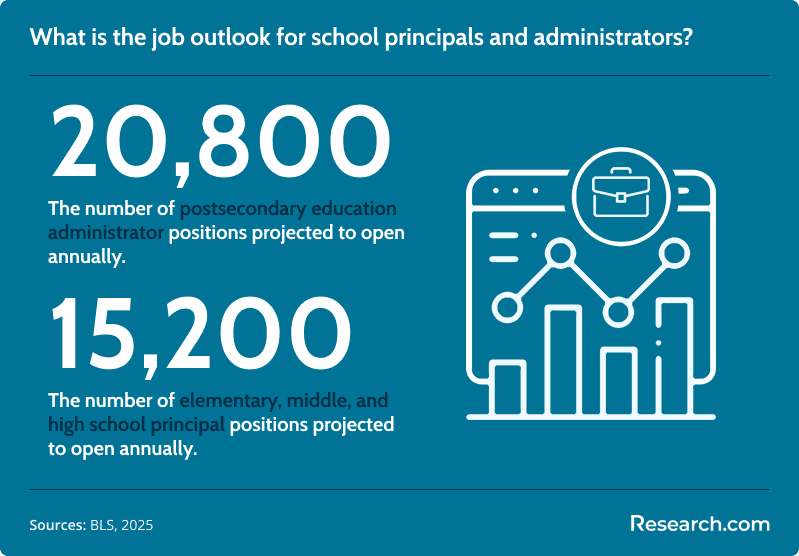
- According to BLS, postsecondary education administrators are projected to see 3% job growth from 2023 to 2033, with about 15,200 openings each year because of retirements and career changes.
- Elementary, middle, and high school principals are projected to see a 1% decline in total employment from 2023 to 2033. Even so, BLS projects about 20,800 openings annually, largely because of workforce turnover.
The principal outlook is not high-growth, but annual openings still matter. Educators with current leadership training, administrative experience, strong references, and appropriate certification may be better positioned when openings arise.
How AI and technology may affect education leadership jobs
AI and digital systems are unlikely to replace education leaders, but they are changing what leaders need to understand. Administrators may be expected to evaluate learning technologies, protect student data, guide responsible AI use, interpret analytics, and support teachers as instructional tools evolve. EdS programs that include data literacy, technology leadership, and ethical decision-making may better prepare graduates for these responsibilities.
What graduates say about earning an online education specialist degree in leadership
-
: "
The online format made it possible to keep working while applying leadership concepts directly to my school role. The coursework was challenging, but the flexibility helped me stay on track, and the discussions with other educators gave me practical ideas I could use immediately. Alex
"
-
: "
As a full-time educator and parent, I needed a program that was structured but not rigid. The assignments connected closely to real school leadership issues, and the online support made the experience manageable. It helped me build confidence for the next stage of my career. Jordan
"
-
: "
I expected convenience, but I also found strong engagement. Faculty feedback, interactive assignments, and collaboration with educators in different settings helped me think more broadly about leadership challenges. The degree strengthened both my skills and my professional network. Taylor
"
Common mistakes to avoid
- Choosing based only on the lowest tuition: A low per-credit rate may not reflect fees, required credits, travel, or certification costs.
- Ignoring accreditation: Accreditation can affect financial aid, licensure, employer recognition, and academic credibility.
- Assuming every EdS leads to licensure: Some programs are non-licensure and may not qualify graduates for principal or superintendent certification.
- Forgetting state requirements: Online programs may be based in one state but enroll students elsewhere. Always confirm whether the curriculum fits your state.
- Overlooking field placement logistics: Practicum requirements can be difficult if your school or district cannot support the required activities.
- Relying only on rankings: Rankings are a starting point. Your final choice should reflect your goals, budget, certification needs, and schedule.
- Assuming salary outcomes are guaranteed: Median salary data describes occupations, not individual outcomes. Experience, location, employer, and role all matter.
Key Insights
- An online education specialist degree in leadership is best for experienced educators with a master’s degree who want advanced, applied leadership preparation without committing to a doctorate.
- Most programs take 18 to 24 months, with many requiring 30 to 36 credits, making the EdS a shorter pathway than many EdD or PhD programs.
- Affordability should be measured by total program cost, not just tuition. Fees, residency rules, fieldwork, certification costs, and course availability can change the real value.
- Licensure alignment is critical. Before enrolling, confirm whether the program is licensure or non-licensure and whether it meets requirements in the state where you plan to work.
- BLS salary data shows strong median pay for related leadership roles: $104,070 for elementary, middle, and high school principals and $103,960 for postsecondary education administrators as of May 2024.
- The job market is mixed. Postsecondary education administrators are projected to grow 3% from 2023 to 2033, while principal employment is projected to decline 1%, though BLS still projects 20,800 principal openings annually because of turnover.
- The best program is the one that matches your target role, state requirements, budget, schedule, and support needs—not necessarily the one with the lowest advertised price.
References:
- BLS. (2025, April 18). Elementary, middle, and high school principals. BLS.
- BLS. (2025, April 18). Postsecondary education administrators. BLS.
- Data USA. (n.d.). Education. Data USA.
- Zippia. (2025, January 8). School Principal Demographics and Statistics [2025]: Number of school principals in the US. Zippia.
Other Things You Should Know About Online Education Specialist Degrees in Leadership
Yes. Many Education Specialist in Leadership programs require a final capstone, portfolio, or dissertation-in-practice, usually worth 3 to 6 credits. Some universities also require an oral defense and a minimum cumulative GPA of 3.0 before graduation.
In 2027, an affordable online education specialist degree in leadership typically requires between 30-36 credit hours. This can vary by program, but most institutions aim for this range to provide a comprehensive curriculum at an accessible price.


