
2027 EdS vs. EdD Degrees: Explaining the Difference

Co-Founder and Chief Data Scientist
Choosing between an Education Specialist (EdS) and a Doctor of Education (EdD) is not just a question of degree title. It is a decision about how much time you want to invest, what kind of leadership role you want, whether you need doctoral-level research training, and how directly the credential supports your next career move.
Both degrees are designed for experienced education professionals who already have graduate training. However, they serve different goals. An EdS is usually a post-master’s specialist credential for educators who want deeper professional expertise without completing a full doctorate. An EdD is a practice-focused doctoral degree for educators who want to lead organizations, evaluate complex problems, and use applied research to improve schools, districts, colleges, or education systems.
This guide explains how EdS and EdD programs differ in purpose, admissions requirements, coursework, cost, completion time, career outcomes, salary outlook, accreditation, financing, and long-term fit. It is written for teachers, school counselors, instructional leaders, administrators, and education professionals who want a practical framework for deciding which path makes the most sense.
Quick Answer: EdS vs. EdD
An EdS is typically the better choice if you want advanced preparation for school-level or district-level practice, such as instructional leadership, school psychology, special education administration, or principal roles, without completing a doctoral dissertation. An EdD is usually the better choice if you want a doctoral credential for executive leadership, applied research, policy work, higher education administration, or system-wide change.
- Choose an EdS if your goal is specialized practice, licensure advancement, or practical leadership within schools and districts.
- Choose an EdD if your goal is doctoral-level leadership, applied research, organizational strategy, or broader policy and administrative influence.
- According to ZipRecruiter (n.d.), EdS degree holders earn an average of $92,340 annually, while EdD graduates see a higher average salary of $114,100 per year.
- What are the key differences between EdS and EdD degrees?
- What master’s degree do you need before applying to EdS or EdD programs?
- What do EdS and EdD professionals do?
- What courses do EdS and EdD students usually take?
- How much do EdS and EdD programs cost?
- How long does it take to complete an EdS or EdD program for 2027?
- How can you verify accreditation and program quality?
- How can you finance an advanced education degree?
- How should you assess online EdD affordability and quality?
- What are the admissions requirements and application strategies for EdS and EdD programs?
- What networking and mentorship opportunities do EdS and EdD programs offer?
- What specializations are available in EdS and EdD programs?
- What is the salary outlook for EdS and EdD graduates?
- What career paths are available after an EdS or EdD?
- EdS vs. EdD: which degree is the better fit?
What are the key differences between EdS and EdD degrees?
The main difference is degree level and purpose. An EdS is a specialist credential beyond the master’s degree, while an EdD is a doctoral degree. Both can support leadership in education, but the EdS is more narrowly focused on advanced professional practice, and the EdD places more emphasis on applied research, organizational leadership, and solving complex education problems.
This distinction matters because the education workforce needs both specialized practitioners and systems-level leaders. UNESCO projects a global demand for 44 million educators by 2030, and that need extends beyond classroom teachers to school leaders, support specialists, administrators, and policy professionals.
If you are still clarifying the credential itself, Research.com’s guide to what an education specialist degree is explains the EdS in more detail. For a fast comparison, use the table below.
| Comparison Point | EdS | EdD |
| Degree level | Post-master’s specialist credential | Doctoral degree in education practice |
| Primary purpose | Develops advanced expertise for school-based or district-based practice | Prepares leaders to use applied research and strategy to address complex education challenges |
| Typical completion time | 2 to 4 years (Alliant International University, 2023) | 3 to 5 years, including a dissertation or capstone (Drexel University, n.d.) |
| Research expectation | Usually applies existing research to practical settings | Requires applied research through a dissertation, capstone, or similar doctoral project |
| Common career direction | Principal, instructional specialist, school psychologist, special education administrator, district administrator | Superintendent, academic dean, chief academic officer, policy advisor, higher education administrator |
| Best fit | Educators who want advanced practice skills without a full doctoral commitment | Educators who want doctoral-level leadership, research, and systems-change preparation |
In practical terms, the EdS is often a targeted advancement credential. The EdD is a broader leadership doctorate. Neither is automatically “better”; the better option depends on the role you want next and the level at which you want to influence education.

What master’s degree do you need before applying to EdS or EdD programs?
Most EdS and EdD programs expect applicants to already hold a relevant master’s degree. The exact acceptable degree depends on the program concentration, licensure track, and institution, so you should always confirm prerequisites before applying.
The strongest master’s degree is usually one that matches your intended specialization. For example, a teacher moving into curriculum leadership may be well served by an M.Ed. or MAT, while an aspiring superintendent may benefit from prior graduate work in educational leadership or administration.
| Master’s Degree Background | Why It Can Fit an EdS | Why It Can Fit an EdD |
| Master of Education (M.Ed.) | Provides a broad foundation for instructional, leadership, counseling, or specialist roles | Supports doctoral study in leadership, curriculum, policy, or professional practice |
| Master of Arts in Teaching (MAT) | Works well for teachers moving into instructional leadership or specialized school roles | Can support an EdD focused on teaching improvement, curriculum, or practitioner research |
| Master of Science in Education (M.S.Ed.) | May prepare students for data-informed practice and specialist functions | Can be useful for EdD programs with a stronger research or evaluation component |
| Master’s in Educational Leadership or Administration | Strong match for principal, district leadership, or school administration tracks | Strong match for superintendent, executive leadership, and policy-oriented EdD tracks |
| Master’s in Counseling or Psychology with a school or education focus | Relevant for school counseling, school psychology, and student support specializations | Relevant for leadership in student services, mental health initiatives, or support systems |
| MPA or MBA | Less common, but may help in programs connected to education management | May be accepted by EdD programs emphasizing organizational leadership, policy, or system administration |
Before applying, review the program’s required prior coursework, professional experience expectations, and licensure rules. Some EdS programs are closely tied to state certification requirements, while some EdD programs are designed for broader leadership and may accept applicants from adjacent fields. Research.com’s overview of EdS degree program requirements can help you understand what to check before committing.
What do EdS and EdD professionals do?
EdS and EdD graduates both work to improve education, but they usually operate at different levels of responsibility. EdS professionals are often closest to daily school operations, student support, instruction, and compliance. EdD professionals are more likely to lead organizations, evaluate programs, design strategy, or influence policy.
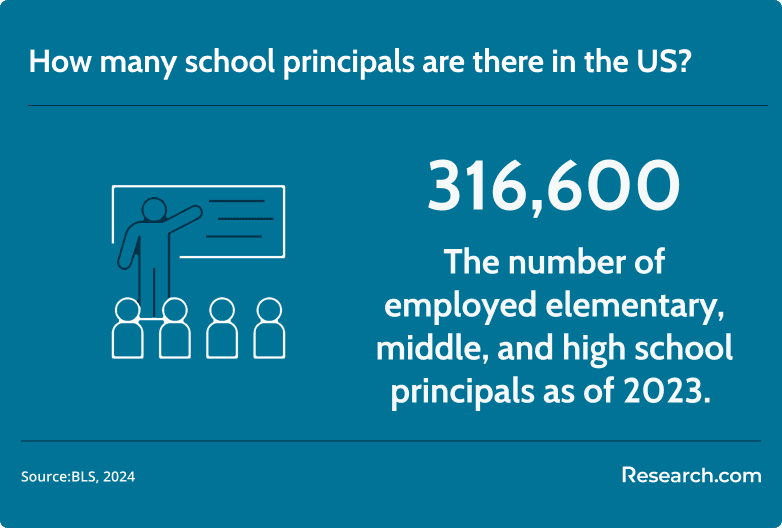
The need for capable education leaders is substantial. The US Bureau of Labor Statistics reports 316,600 employed elementary, middle, and high school principals in the US. Many leadership pathways in schools and districts require or strongly prefer advanced graduate education, although exact requirements vary by state, employer, and role.
| Area of Work | EdS Professionals Often Focus On | EdD Professionals Often Focus On |
| Leadership scope | Schools, departments, programs, or district functions | Districts, colleges, systems, agencies, or large initiatives |
| Instructional improvement | Coaching teachers, improving curriculum implementation, supporting assessments | Designing instructional strategy across institutions or systems |
| Student services | Supporting special education, counseling, behavior interventions, and school psychology functions | Leading student support systems, equity initiatives, or large-scale service models |
| Policy and compliance | Implementing policies and ensuring local compliance | Developing, evaluating, or advising on policies and reform initiatives |
| Research and evidence | Using existing research to improve practice | Conducting applied research and program evaluation to guide decisions |
| Staff development | Mentoring teachers and school staff | Building leadership pipelines, professional learning systems, and strategic capacity |
If you are comparing doctoral pathways more broadly, Research.com’s guide to the difference between EdD and PhD can help you decide whether an applied doctorate or a research-intensive doctorate better fits your goals.
What courses do EdS and EdD students usually take?
Coursework is one of the clearest signals of how the two degrees differ. EdS courses are usually built around advanced professional practice in a defined area, while EdD courses typically combine leadership, applied research, policy, organizational change, and program evaluation.
EdS coursework is often practical and role-specific. Depending on the concentration, students may study instructional leadership, special education law, school finance, behavioral interventions, assessment, counseling practices, school psychology, curriculum design, or district operations.
EdD coursework generally prepares students to diagnose problems across systems and use evidence to guide change. Common subjects include organizational leadership, change management, research methods, policy analysis, ethics and equity, strategic planning, program evaluation, data-informed decision-making, and doctoral capstone or dissertation design.
| Course Area | Common in EdS Programs | Common in EdD Programs |
| Instructional leadership | Focused on improving teaching practice and school-level learning outcomes | Focused on leading instructional improvement across programs, districts, or institutions |
| Assessment and data use | Used to support student achievement, interventions, and school improvement | Used for program evaluation, strategic decisions, and applied research |
| Law and policy | Often tied to special education, school operations, compliance, and student services | Often tied to policy development, analysis, governance, and systemic reform |
| Research methods | May be included, but usually with an emphasis on applying existing evidence | Central to the doctoral project, dissertation, or capstone |
| Leadership scale | School, district, or specialist practice | District, higher education, nonprofit, agency, or policy leadership |
If your interest is special education, licensure rules and classroom requirements matter as much as degree title. Review Research.com’s guide to requirements to teach special education before choosing a specialization connected to student services or special education leadership.
How much do EdS and EdD programs cost?
Cost should be evaluated alongside purpose. An EdS may require fewer credits and less time, while an EdD usually involves a longer doctoral sequence and a final research-based project. Tuition, fees, transfer policies, employer reimbursement, and the ability to continue working while enrolled can all affect the real cost of attendance.
The sample comparison below uses the stated average tuition figures of $10,800 for an EdS and $21,600 for an EdD. These figures are based on William Howard Taft University tuition and fee information and should be treated as one reference point, not a universal price. Program costs vary widely by institution, delivery format, residency requirements, and credit load.
Comparing degree costs across fields can also clarify the difference between a specialist credential and a doctorate. Research.com’s article on the difference between PhD and PsyD in clinical psychology offers a useful parallel: similar-sounding advanced degrees can differ significantly in structure, purpose, and return on investment.
| Cost Item | What It Covers | EdS | EdD |
| Cost per credit | Tuition charged for each credit hour | $360 | $360 |
| Total tuition | Estimated tuition based on required credit hours | $10,800 | $21,600 |
| Graduation application fee | One-time graduation-related charge | $75 | $75 |
| Enrollment fee | Semester-based enrollment charge | $50 | $50 |
| Other fees | May include transfer and portfolio credit evaluation fees, technology and library fee, diploma fee, and related charges | $790 | $790 |
Source: William Howard Taft University, n.d.
How long does it take to complete an EdS or EdD program for 2027?
Time to completion is one of the most important differences between the EdS and EdD. An EdS typically takes 2 to 4 years to complete, depending on whether you study full time or part time, how many credits the program requires, and whether the degree is connected to certification or fieldwork requirements (Alliant International University, 2023).
An EdD usually takes longer. Many programs span 3 to 5 years because students complete doctoral coursework and a dissertation, capstone, or applied research project (Drexel University, n.d.). Some students move faster, especially in structured cohort programs or online formats. Research.com’s guide to accelerated EdD programs explains fast-track options for professionals who want a shorter doctoral timeline.
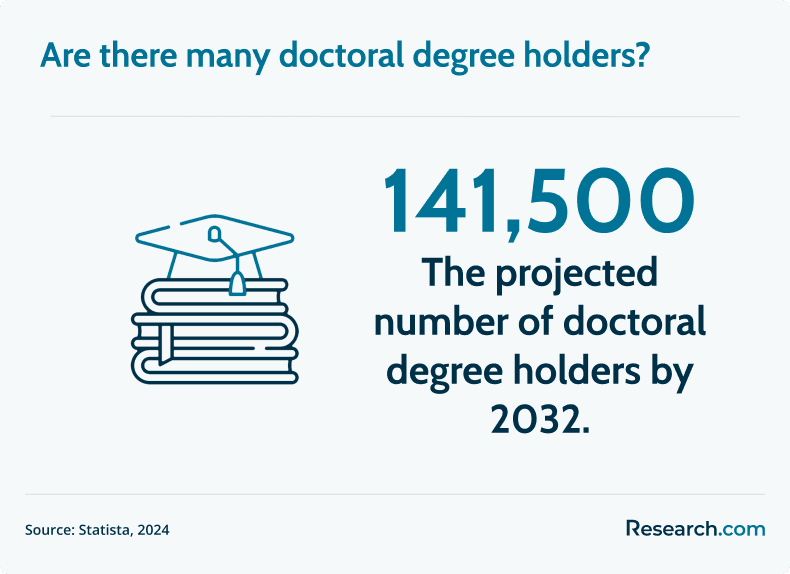
The time commitment should be weighed against your career objective. If you need advanced specialization for your current school or district role, an EdS may be the more efficient path. If you need the doctoral title, doctoral research experience, or preparation for executive-level leadership, the EdD’s longer timeline may be justified. Statista (2024) estimates 141,500 doctoral degrees in the US by 2032, including EdDs, indicating that doctoral-level study remains a serious consideration for professionals seeking advanced credentials.
How can you verify accreditation and program quality?
Accreditation should be one of your first checks. For EdS and EdD programs, accreditation can affect transferability, employer recognition, federal financial aid eligibility, and whether a program supports licensure-related goals. Do not rely only on marketing language or rankings; verify the institution’s accreditation through recognized sources and confirm whether the specific program meets any requirements tied to your state or target role.
Program quality also depends on fit. A highly regarded program may still be the wrong choice if it does not offer your specialization, field placement, dissertation support, licensure alignment, or schedule flexibility.
| Quality Check | Why It Matters | Questions to Ask |
| Institutional accreditation | Helps establish that the college or university meets recognized academic standards | Who accredits the institution, and is that accreditor recognized? |
| Program alignment | Some roles require specific preparation, field experience, or state-approved pathways | Does this EdS or EdD concentration meet my state’s licensure or endorsement expectations? |
| Faculty expertise | Faculty backgrounds shape mentorship, research support, and professional relevance | Do faculty have experience in my intended field, such as K–12 leadership, higher education, policy, or special education? |
| Applied learning | Practicums, internships, field projects, and capstones can improve career relevance | Will I complete projects connected to real education problems or my workplace? |
| Student support | Advanced programs require advising, research guidance, technology support, and career resources | What support is available for online students, working professionals, and dissertation or capstone completion? |
| Career outcomes | Outcomes help you evaluate whether graduates move into roles similar to your goals | What roles do graduates enter, and what evidence does the program provide? |
Some education professionals also compare EdD options with adjacent leadership degrees. For example, a doctor of management in organizational leadership may appeal to professionals whose goals extend beyond traditional school or higher education settings.
How can you finance an advanced education degree?
Financing an EdS or EdD requires more than checking tuition. You need to estimate total cost, understand how long you will be enrolled, and identify funding that does not create unnecessary debt. Because many EdS and EdD students are working educators, employer support and flexible enrollment can be especially important.
- Start with the total cost of attendance. Include tuition, fees, books, technology costs, travel or residency costs, graduation fees, and any additional certification expenses.
- Ask your employer about tuition reimbursement. School districts, colleges, and education organizations may support employees pursuing advanced credentials that align with workforce needs.
- Check scholarships and grants. Look for funding through universities, professional associations, state education agencies, and foundations that support educators.
- Use federal and state aid carefully. Loans can expand access, but they should be evaluated against realistic salary expectations and repayment obligations.
- Compare part-time and full-time enrollment. A slower timeline can preserve income, while a faster timeline may reduce the number of terms in which fees are charged.
- Review transfer and portfolio credit policies. Some programs may reduce required credits if prior graduate work is accepted, but policies vary.
Looking at affordability across different graduate fields can help you build a comparison framework. Research.com’s guide to affordable online English master's degrees offers another example of how students can evaluate cost, flexibility, and program value.
How should you assess online EdD affordability and quality?
Online EdD programs can make doctoral study more accessible for working professionals, but online format alone does not guarantee affordability or quality. The best program is one that fits your career goal, provides strong doctoral support, is properly accredited, and has a cost structure you can sustain.
When comparing online EdD programs, look beyond headline tuition. Ask whether tuition is charged by credit or term, whether residencies are required, how dissertation or capstone support is structured, and whether online students receive the same advising and library access as campus students.
| Online EdD Factor | Why It Affects Value | What to Confirm Before Enrolling |
| Accreditation | Protects the credibility of the credential and may affect aid or employment recognition | Institutional accreditation and any program-specific requirements relevant to your goal |
| Total program cost | Tuition is only one part of the financial commitment | Fees, books, technology charges, travel, residency costs, and graduation costs |
| Dissertation or capstone support | Weak support can delay completion | Advisor availability, milestone structure, research support, and completion expectations |
| Flexibility | Working professionals need a schedule that matches employment and family responsibilities | Asynchronous options, cohort requirements, course load expectations, and time limits |
| Career fit | An affordable program is not valuable if it does not support your intended role | Specialization options, practicum expectations, leadership projects, and graduate outcomes |
For a cost-focused starting point, see Research.com’s guide to the cheapest EdD programs, then compare each option against accreditation, support, specialization, and career alignment.
What are the admissions requirements and application strategies for EdS and EdD programs?
Admissions expectations vary, but EdS and EdD programs commonly look for a relevant master’s degree, professional experience in education or a related field, academic readiness, recommendations, and a clear statement of goals. Competitive applicants do more than list experience; they explain how the degree connects to a specific leadership problem or career objective.
| Application Component | How to Strengthen It |
| Statement of purpose | Explain the education problem you want to address, why the degree fits, and how the specialization supports your goal |
| Resume or CV | Highlight leadership, teaching, student support, curriculum work, assessment, policy experience, or organizational impact |
| Recommendations | Choose recommenders who can speak to your professional judgment, leadership ability, and readiness for advanced study |
| Writing sample or research interest | For EdD programs, show that you can analyze problems and use evidence; for EdS programs, show strong professional practice |
| Licensure documentation | If the program leads to certification or endorsement, confirm whether your current credentials meet entry requirements |
| Interview | Be ready to discuss your career direction, time management plan, and why the program is a better fit than alternatives |
Applicants from adjacent education fields should be especially clear about fit. For example, professionals researching what you can do with a masters in library science may find some EdD concentrations relevant if their experience connects to learning systems, information access, academic leadership, or educational technology.
What networking and mentorship opportunities do EdS and EdD programs offer?
Networking looks different in EdS and EdD programs. EdS programs often connect students to local practitioners, district leaders, school administrators, counselors, psychologists, and instructional specialists. These relationships can be especially valuable when the degree is tied to licensure, promotion, or leadership roles within a regional school system.
EdD programs usually provide broader leadership networks. Students may interact with superintendents, higher education administrators, policy professionals, nonprofit leaders, researchers, and executives across education sectors. Because many EdD programs use cohorts, applied projects, and doctoral advising, the quality of mentorship can strongly influence the student experience.
- For an EdS, ask: Does the program have partnerships with districts or schools where I want to work?
- For an EdD, ask: Will I have access to faculty mentors who understand my research or leadership focus?
- For both degrees, ask: Are alumni active in the roles I want, and does the program help students build professional connections?
Some students also broaden their academic foundation through interdisciplinary study. Research.com’s resource on an online bachelor degree interdisciplinary studies illustrates how cross-field learning can support flexible career planning, although advanced education applicants should still prioritize graduate-level fit and professional goals.
What specializations are available in EdS and EdD programs?
Specialization should be one of your main decision points. The degree title matters, but the concentration often determines the roles you are actually prepared to pursue. EdS specializations tend to be tied to direct school practice or district operations. EdD specializations usually focus on leadership, policy, innovation, higher education, or system-wide improvement.
| Specialization Area | Common EdS Direction | Common EdD Direction |
| School and district management | Prepares educators for school administration, district operations, supervision, budgeting, and implementation | Prepares leaders for system-level strategy, district transformation, and executive decision-making |
| Special education | Focuses on IEP leadership, compliance, inclusive practices, and support for students with disabilities | May focus on policy, program evaluation, equity, and system-wide special education improvement |
| School psychology or student support | Often tied to counseling, assessment, interventions, and student well-being in schools | May focus on mental health systems, student support leadership, or large-scale service design |
| Curriculum and instruction | Emphasizes curriculum design, instructional coaching, and assessment practice | Emphasizes district-wide or institutional instructional strategy, innovation, and evaluation |
| Higher education leadership | Less common as a primary EdS focus | Prepares professionals for administration in colleges and universities, including academic affairs, student services, and institutional policy |
| Equity and social justice in education | May appear through school improvement or student services concentrations | Often addresses systemic inequities, policy design, access, and institutional change |
| Educational policy | Usually connected to implementing school or district policy | Prepares graduates to analyze, influence, and create policy at local, national, or global levels |
| Instructional technology and innovation | May focus on classroom technology integration or instructional design | Often focuses on large-scale digital learning strategy, technology leadership, and research-informed implementation |
Students considering school psychology or student support roles should review state requirements carefully. Helping students can be one of the meaningful advantages of a psychology career, but roles involving psychological services, counseling, or assessments often require specific licensure or certification.
It can help to think about the EdS and EdD as different credential types rather than interchangeable upgrades. In that sense, choosing between them is similar to comparing medical billing and coding diploma vs certificate: the better option depends on the credential’s purpose, employer expectations, cost, and long-term use.
What is the salary outlook for EdS and EdD graduates?
Salary outcomes depend on role, location, employer type, licensure, years of experience, and leadership scope. A degree can improve qualifications for certain positions, but it does not guarantee a specific salary. You should compare expected earnings against total program cost, time away from other opportunities, and your likelihood of moving into a role that requires or rewards the credential.
According to ZipRecruiter (n.d.), EdS degree holders earn an average of $92,340 annually, while EdD graduates earn an average of $114,100 annually. The same salary discussion in the original data notes top-tier professionals making up to $116,500 with an EdS and $153,000 with an EdD. These figures should be used as general salary benchmarks rather than promises of individual outcomes.
What career paths are available after an EdS or EdD?
The EdS usually supports career movement into specialized practice and school or district leadership. The EdD usually supports movement into higher-level administration, policy, applied research, and executive leadership. Some roles may be open to both degree holders, but the preferred credential often depends on employer expectations and the scale of responsibility.
| Career Path | Degree That Often Fits Best | Typical Focus |
| School principal | EdS | Leads daily school operations, staff supervision, student performance, and school improvement |
| Assistant principal | EdS | Supports discipline, instructional programs, operations, and administrative duties |
| Curriculum specialist | EdS | Designs, reviews, and improves instructional materials and teaching strategies |
| Special education administrator | EdS | Oversees special education services, compliance, staff support, and student programming |
| School psychologist | EdS | Conducts student assessments and supports mental health or behavioral interventions; licensure is required |
| Superintendent | EdD | Leads an entire school district and sets system-wide strategy, priorities, and policy direction |
| Chief academic officer | EdD | Guides academic quality, curriculum strategy, and instructional improvement across an organization |
| Director of curriculum and instruction | EdS or EdD | Shapes teaching frameworks and instructional priorities at the district or state level |
| Higher education administrator | EdD | Manages academic affairs, departments, student services, or institutional initiatives in colleges and universities |
| Education policy analyst | EdD | Studies education laws, reforms, public programs, and policy outcomes |
Online doctoral options can be useful for working professionals who cannot pause their careers. Research.com’s guide to EdD online programs can help you compare formats if the EdD is the right direction but time is your biggest constraint.
Current trends affecting EdS and EdD decisions
Advanced education degrees are being evaluated in a changing professional environment. Schools and colleges are under pressure to improve outcomes, support diverse learners, use data responsibly, adopt education technology, and address staffing and leadership challenges. These shifts can make advanced preparation valuable, but they also make program choice more important.
- AI and education technology are changing leadership expectations. Administrators increasingly need to understand digital learning tools, data privacy, instructional technology, and ethical AI use in schools.
- Employers are looking for evidence-based decision-makers. Both EdS and EdD programs can build data skills, but EdD programs usually go deeper into research design and evaluation.
- Licensure alignment remains critical. A program that sounds relevant may not meet requirements for principal, superintendent, school psychologist, or other regulated roles in your state.
- Online and hybrid programs are expanding access. Flexibility helps working educators, but students should still evaluate support, completion structure, and accreditation carefully.
- Cost and return on investment are under closer scrutiny. Advanced credentials can support leadership opportunities, but students should avoid assuming that a higher degree automatically produces a higher salary.
Common mistakes to avoid when choosing between an EdS and EdD
| Mistake | Why It Can Hurt You | Better Approach |
| Choosing based only on the degree title | The title does not tell you whether the program matches your career goal, licensure need, or preferred role | Start with the job you want, then identify which credential is commonly expected |
| Ignoring accreditation | An unrecognized credential may create problems with employment, transfer credit, aid, or licensure | Verify institutional accreditation and any program-specific approval before applying |
| Assuming all online programs meet state requirements | Licensure and certification rules can vary by state | Ask the program and your state agency whether the curriculum meets your intended credential requirements |
| Looking only at tuition | Fees, residencies, technology costs, books, and delayed completion can increase total cost | Calculate full cost of attendance and compare it with realistic career outcomes |
| Choosing an EdD when you only need a specialist credential | You may spend extra time and money on doctoral research that does not support your immediate goal | Consider an EdS if your target role is school-based specialization or district-level practice |
| Choosing an EdS when your goal requires a doctorate | The credential may not be enough for executive leadership, higher education administration, or research-oriented roles | Consider an EdD if doctoral status, applied research, or system-wide leadership is important |
| Relying only on rankings | A highly ranked program may not offer your specialization or support your schedule | Use rankings as one input, then evaluate accreditation, curriculum, faculty, cost, and outcomes |
EdS vs. EdD: which degree is the better fit?
The better degree is the one that matches your next role, not the one that sounds more advanced. If you want a focused post-master’s credential for school leadership, instructional improvement, student support, or a specialist function, the EdS may be the stronger choice. If you want doctoral preparation for executive leadership, applied research, policy, higher education administration, or system-wide reform, the EdD is more likely to fit.
Understanding prerequisites also matters. If you are still planning your graduate pathway, Research.com’s article on the requirements for masters in education can help you see how master’s-level preparation connects to later EdS or EdD options.
| Choose an EdS If... | Choose an EdD If... |
| You want advanced expertise without completing a full doctorate | You want a doctoral credential in education practice |
| Your target role is principal, assistant principal, curriculum specialist, special education administrator, or school psychologist | Your target role is superintendent, dean, chief academic officer, policy advisor, or senior education executive |
| You want to improve school-level or district-level practice directly | You want to lead change across systems, organizations, or policy environments |
| You prefer a shorter program and usually no dissertation requirement | You are prepared for doctoral coursework and a dissertation or capstone |
| You need a credential connected to a specific professional specialization or licensure pathway | You need advanced research, evaluation, and strategic leadership skills |
| You want a practical credential that may fit your current career path | You want to expand into broader leadership, consulting, higher education, or policy roles |
Questions to ask before you enroll
- What exact job do I want after graduation, and which credential do employers prefer for that role?
- Does the program meet licensure, endorsement, or certification requirements in my state?
- Is the institution properly accredited?
- How much will the full program cost, including fees and required travel?
- Can I complete the program while working full time?
- Does the curriculum match my intended specialization?
- What applied projects, internships, practicums, or research experiences are required?
- What support is available for dissertation, capstone, or fieldwork completion?
- What roles do graduates typically obtain?
- Will this degree create career options I could not access with my current credentials?
Key Insights
- An EdS is a post-master’s specialist credential, while an EdD is a practice-based doctoral degree.
- An EdS typically takes 2 to 4 years to complete; an EdD often takes 3 to 5 years and includes a dissertation or capstone.
- The EdS is usually best for educators seeking advanced school-based or district-based roles, such as principal, curriculum specialist, special education administrator, or school psychologist.
- The EdD is usually best for professionals aiming for executive leadership, higher education administration, policy work, applied research, or system-wide reform.
- There are over 316,600 employed elementary, middle, and high school principals in the US, making school leadership a major employment area for advanced education professionals.
- According to ZipRecruiter (n.d.), EdS degree holders earn an average of $92,340 annually, while EdD graduates earn an average of $114,100 annually.
- The stated tuition comparison shows EdS tuition at $10,800 and EdD tuition at $21,600, but students should verify total cost at each institution before enrolling.
- With an estimated 141,500 doctoral degrees expected in the US by 2032, including EdDs, doctoral education remains part of the long-term advancement strategy for many professionals.
- Accreditation, licensure alignment, specialization, faculty support, and total cost should carry more weight than degree title alone.
- The simplest decision rule is this: choose the EdS for focused advanced practice; choose the EdD for doctoral-level leadership and applied research.
References:
- Alliant International University. (2023). What is an EdS degree? Alliant.edu. Retrieved 7 May 2025.
- Drexel University. (n.d.). EdD vs. PhD: Understanding the difference. Drexel.edu. Retrieved 7 May 2025.
- Statista. (2024). Number of doctoral degrees earned in the U.S. from 1950 to 2032. Statista.com. Retrieved 7 May 2025.
- Taft University System. (n.d.). Tuition & fees. Taft.edu. Retrieved 7 May 2025.
- UNESCO. (n.d.). The projected demand for educators worldwide by 2030. Unesdoc.unesco.org. Retrieved 7 May 2025.
- US Bureau of Labor Statistics. (2024). Elementary, middle, and high school principals. Bls.gov. Retrieved 7 May 2025.
- ZipRecruiter. (n.d.). Doctorate degree salary. Ziprecruiter.com. Retrieved 7 May 2025.
- ZipRecruiter. (n.d.). Education Specialist salary. Ziprecruiter.com. Retrieved 7 May 2025.
Other Things You Should Know About EdS vs. EdD Degrees
Most school psychology EdS programs require about 60 graduate credits, including supervised practicum and a yearlong internship. Programs aligned with National Association of School Psychologists standards often specify at least 1,200 internship hours before graduation.
In 2027, EdS graduates often pursue roles in educational leadership, school psychology, or curriculum supervision, while EdD graduates typically aim for higher education administration, policy-making positions, or academic faculty roles, reflecting their advanced theoretical and research training.





