2027 Master’s in Teaching vs. Master’s in Education: Explaining the Difference

Co-Founder and Chief Data Scientist
Choosing between a Master of Arts in Teaching (MAT) and a Master of Education (MEd) is not just a question of degree titles. It is a career decision. One path is usually built for people who want to teach more effectively or become licensed classroom teachers; the other is often better for educators who want to move into leadership, curriculum, policy, administration, or specialized education roles. The distinction matters because coursework, fieldwork, licensure preparation, job options, and return on investment can differ significantly.
The demand for advanced education credentials remains substantial. In 2022, 151,707 master’s degrees were awarded in education, and 2,185,498 U.S. workers held a master’s in education. This guide explains how MAT and MEd programs differ, what each degree is best for, how to compare online and campus options, what costs and licensure issues to check, and how to decide which path fits your goals.
Quick Answer: MAT vs. MEd
A master’s in teaching is usually the better fit if you want to become a classroom teacher, improve instructional practice, or qualify for teacher certification. A master’s in education is usually the better fit if you want to move into educational leadership, curriculum design, instructional coordination, higher education administration, consulting, or other roles beyond direct classroom teaching.
| Decision Point | Master’s in Teaching | Master’s in Education |
| Best for | Current or aspiring classroom teachers | Educators pursuing leadership, curriculum, policy, or administration |
| Main focus | Instruction, pedagogy, classroom management, student teaching | Systems, leadership, curriculum, research, program design |
| Typical outcome | K-12 teacher, special education teacher, ESL teacher, CTE teacher | Principal, instructional coordinator, education consultant, higher education administrator |
| Licensure relevance | Often directly connected to teacher certification | May support advanced roles, but licensure requirements vary by state and role |
| Best question to ask | “Do I want to teach students directly?” | “Do I want to lead, design, evaluate, or manage education programs?” |
Key Things You Should Know About Master’s in Teaching vs. Master’s in Education
- Advanced education degrees are common in the field. In 2022, 151,707 education master’s degrees were awarded, showing how widely these credentials are used for professional growth.
- Role choice affects earning potential. Postsecondary teachers earned $84,380 in 2023, while preschool teachers earned $37,130. Salary expectations should be tied to the specific job you want, not the degree title alone.
- Many education professionals already hold graduate credentials. In 2022, 2,185,498 U.S. workers had a master’s in education, so choosing the right type of program matters for differentiation and career fit.
- Specialization can shape both duties and compensation. Special education teachers earned $65,910 in 2023, while career/technical education teachers earned $63,580.
- Cost and format deserve close review. A master’s in education costs around $44,640 in 2024, and students should compare tuition, fees, fieldwork requirements, accreditation, and licensure alignment before enrolling.
- MAT vs. MEd: What is the main difference?
- How do MAT and MEd programs differ in coursework?
- What specializations are available in MAT and MEd programs?
- What are the admission requirements for MAT and MEd programs?
- How long does a MAT or MEd take?
- Can you earn a MAT or MEd online?
- How much do MAT and MEd programs cost?
- How should you evaluate an online teacher master’s program?
- Why do state teacher certification rules matter?
- What jobs can you get with a MAT?
- How do accreditation and quality standards affect program value?
- Can a fast-track online EdD support career advancement?
- What jobs can you get with a MEd?
- Can an online PhD in Organizational Leadership advance an education career?
- What is the job outlook for MAT and MEd careers?
- Which degree should you choose?
- Should you pursue a doctorate after a MAT or MEd?
- How can historical knowledge strengthen education strategy?
- How can networking and mentorship help education professionals?
- How can interdisciplinary expertise expand education careers?
- What alternative careers exist beyond traditional education roles?
MAT vs. MEd: What is the main difference?
The central difference is purpose. A master’s in teaching is generally practice-centered and classroom-focused. It is designed to help educators plan lessons, manage classrooms, teach specific subjects, assess student learning, and meet certification expectations when applicable.
A master’s in education is broader. It may include teaching-related content, but it often prepares graduates to work at the program, school, district, college, or policy level. Common areas include curriculum and instruction, educational leadership, instructional technology, special education administration, higher education, and research-based improvement.
If your goal is to become a licensed classroom teacher or improve your effectiveness with students, an MAT is often the more direct route. If your goal is to lead teachers, design programs, coordinate curriculum, manage academic services, or move into administration, an MEd may offer a better match. Educators comparing master’s degree options for teachers should begin by defining the role they want after graduation.
| Goal | Degree That Usually Fits Better | Why |
| Become a classroom teacher | MAT | Programs often emphasize pedagogy, fieldwork, student teaching, and certification preparation. |
| Improve teaching practice while staying in the classroom | MAT | The curriculum is typically built around instructional methods and student learning. |
| Move into school leadership | MEd | Educational leadership and administration tracks usually align more closely with management roles. |
| Design curriculum or support teacher development | MEd | Curriculum and instruction tracks focus on program design, assessment, and instructional improvement. |
| Work in higher education administration | MEd | Higher education tracks address student affairs, institutional operations, and academic administration. |
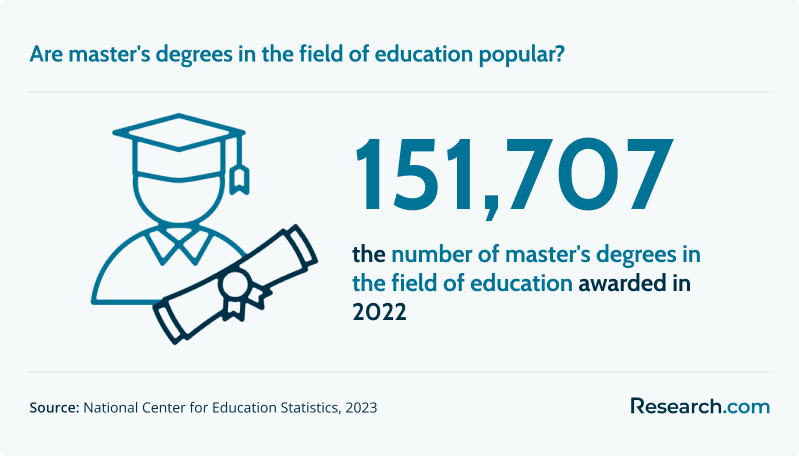
More than 151,000 master’s degrees in education were awarded in 2022, but the best option depends on how you want to use the credential.
How do MAT and MEd programs differ in coursework?
MAT and MEd programs may share some foundations, such as learning theory, assessment, educational equity, and research literacy. The difference is how those ideas are applied. MAT coursework usually asks, “How do I teach this group of students effectively?” MEd coursework often asks, “How do I improve an educational system, program, curriculum, or institution?”
Common courses in a master’s in teaching program
A MAT curriculum is usually built around instructional practice. Students often study how to plan lessons, adapt instruction, measure learning, and work with diverse learners in real classroom settings.
- Classroom management: Strategies for building productive learning environments and responding to student behavior.
- Pedagogy: Teaching methods, learning theories, and instructional planning for different grade levels and subjects.
- Subject-specific instruction: Methods courses in areas such as English, mathematics, science, social studies, or other content fields.
- Field experience or student teaching: Supervised classroom practice that connects graduate coursework with direct teaching responsibilities.
Common courses in a master’s in education program
An MEd curriculum is usually broader and may focus on leadership, systems improvement, policy, curriculum, technology, or specialized services. It can be classroom-adjacent or leadership-oriented depending on the concentration.
- Curriculum design: Planning, evaluating, and improving instructional programs for different learners and settings.
- Educational leadership: School administration, leadership theory, organizational decision-making, education law, and management.
- Instructional technology: Digital tools, online learning design, and technology-supported instruction.
- Education research: Methods for evaluating evidence, using data, and improving programs or practices.
| Coursework Area | MAT Emphasis | MEd Emphasis |
| Instruction | How to teach effectively in a classroom | How instruction fits into broader curriculum and program goals |
| Assessment | Measuring student learning and adapting lessons | Evaluating programs, outcomes, and instructional systems |
| Fieldwork | Often central, especially for certification pathways | May include projects, internships, leadership practice, or research |
| Leadership | Usually secondary to teaching practice | Often a major component, especially in administration tracks |
| Research | Applied to classroom improvement | Applied to policy, curriculum, institutional improvement, or program evaluation |
The practical distinction is simple: MAT programs prepare you to improve what happens inside the classroom; MEd programs often prepare you to shape what happens around the classroom.
What specializations are available in MAT and MEd programs?
Specialization is one of the most important parts of the MAT vs. MEd decision. It determines the students you serve, the settings where you work, the credentials you may need, and the jobs for which you are most competitive.
Common master’s in teaching specializations
- Elementary education: Preparation for teaching younger learners, often across multiple subjects in grades K-6.
- Secondary education: Preparation for teaching middle or high school students in a specific subject area such as math, science, English, or social studies.
- ESL: Training for educators who teach English language learners and support language development in academic settings.
- Special education: Preparation for teaching students with disabilities and implementing inclusive instructional strategies.
Common master’s in education specializations
- Educational leadership and administration: Designed for educators interested in school or district leadership, principal roles, or policy-related positions.
- Curriculum and instruction: Focused on curriculum planning, instructional improvement, assessment, and teacher support.
- Instructional technology: Built for educators who design technology-supported learning environments or digital instructional materials.
- Higher education administration: Intended for professionals who want to work in college or university admissions, student affairs, academic affairs, or institutional operations.
How to choose a specialization
Start with the role, not the course catalog. For example, an aspiring ESL classroom teacher may prefer an MAT with an ESL concentration, while someone who wants to coordinate language support programs across a district may find an MEd more relevant. The same logic applies to special education: direct teaching roles often align with MAT programs, while leadership, compliance, program design, and district-level responsibilities may align better with MEd programs.
Cost can also influence specialization choice. Students comparing special education graduate programs often look for the most affordable online master’s in special education options because tuition can affect the long-term value of either degree.
| If You Want To... | Consider This Degree | Look For This Specialization |
| Teach elementary students | MAT | Elementary education |
| Teach a high school subject | MAT | Secondary education or subject-area teaching |
| Teach English language learners | MAT or MEd | ESL, bilingual education, or language education |
| Teach students with disabilities | MAT | Special education |
| Lead special education programs | MEd | Special education leadership or administration |
| Design curriculum across classrooms | MEd | Curriculum and instruction |
| Move into school administration | MEd | Educational leadership or administration |
Salary should be evaluated by job title rather than degree name alone. Instructional coordinators earned a median annual salary of $74,620 in 2023, while special education teachers earned a median annual salary of $65,910 in the same year.
What are the admission requirements for MAT and MEd programs?
Admissions requirements vary by institution, state, and concentration. The most important distinction is whether the program is designed for new teachers, licensed teachers, or experienced educators pursuing leadership roles.
Typical MAT prerequisites
MAT programs generally require a bachelor’s degree. Some applicants already have an education background, while others enter from another field and use the MAT as a pathway into teaching. Programs may ask for transcripts, recommendation letters, a statement of purpose, background checks for field placements, and evidence of interest or experience working with learners.
If you do not already hold teacher certification, check whether the MAT includes certification preparation or whether you need a separate route. Some students compare accredited online teacher certification programs before applying to make sure they understand licensure requirements.
Typical MEd prerequisites
MEd programs also usually require a bachelor’s degree, but expectations depend heavily on the concentration. Leadership tracks may prefer or require teaching experience. Some administrative pathways may expect a valid teaching license. Curriculum, instructional technology, higher education, or adult learning tracks may accept applicants with broader education-related experience.
Before applying, confirm whether the program is intended for licensed teachers, aspiring administrators, higher education professionals, or career changers. This matters because an MEd does not automatically qualify graduates for every education leadership role.
| Requirement to Check | Why It Matters | Questions to Ask |
| Teaching license | Some programs require it; others help students earn it. | Does this program lead to initial licensure, advanced licensure, or neither? |
| Field experience | Classroom placements may be required for certification-oriented programs. | Can I complete fieldwork in my local area? |
| Professional experience | Leadership tracks may expect prior teaching or education work. | Is teaching experience required for admission or only preferred? |
| State alignment | Licensure rules are state-specific. | Does this program meet the requirements in the state where I plan to work? |
| Specialization fit | Concentration determines career preparation. | Are graduates prepared for the exact role I want? |
How long does a MAT or MEd take?
Many full-time MAT and MEd programs take one to two years to complete. Part-time students may need three years or longer, especially if they continue working while enrolled. Certification requirements, field placements, internships, capstone projects, and state-specific exams can also affect the timeline.
A certification-focused MAT can be more time-intensive because it may include student teaching or supervised clinical practice. An MEd may be more flexible when it is designed for working educators, but leadership or administrative tracks may still include internships, applied projects, or practicum requirements.
| Program Format | Typical Timeline | Best For |
| Full-time MAT | One to two years | Students who want to enter or advance in classroom teaching quickly |
| Part-time MAT | Three years or longer may be possible | Working adults balancing coursework with employment |
| Full-time MEd | One to two years | Educators ready to focus on leadership, curriculum, or specialized study |
| Part-time MEd | Three years or longer may be possible | Teachers or education professionals who want to keep working while studying |
Can you earn a MAT or MEd online?
Yes. Many institutions offer online MAT and MEd programs, and online formats can be especially helpful for working teachers, paraprofessionals, career changers, and adults with family responsibilities. Students comparing online education degree programs should look beyond convenience and verify accreditation, licensure alignment, fieldwork logistics, and student support.
Online MAT programs may deliver coursework remotely but still require in-person classroom experiences, student teaching, or local placements. Online MEd programs may be easier to complete fully online depending on the concentration, but leadership tracks can still require internships or applied projects in approved education settings.
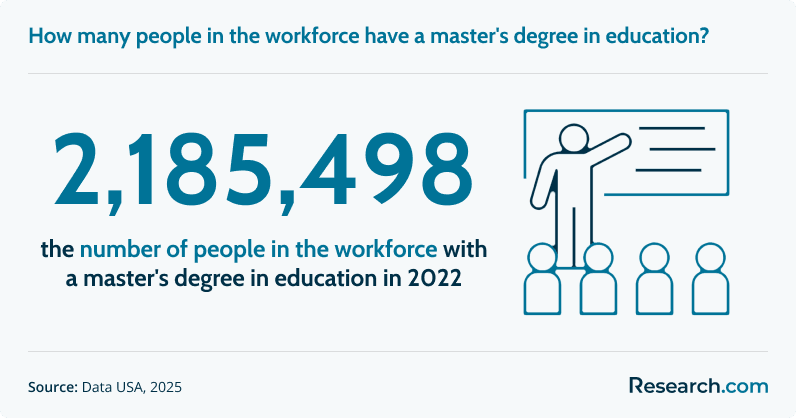
In 2022, more two million people in the US workforce had a master's degree in the field of education.
How much do MAT and MEd programs cost?
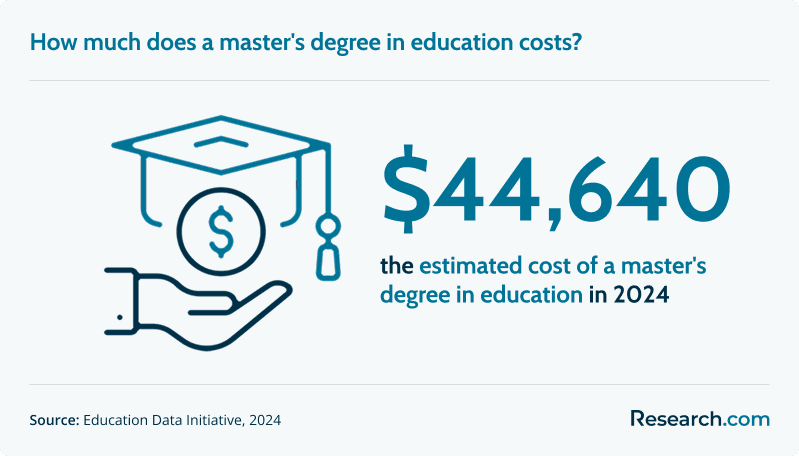
Program cost depends on the school, residency status, delivery format, program length, fees, and whether the institution is public or private. A master’s degree in the field of education costs around $44,640 in 2024. Students should treat that figure as a planning benchmark, not a guaranteed price for every program.
Online programs may reduce commuting or housing expenses, but they can still include technology fees, placement fees, graduation fees, and other charges. Students in specialized fields such as early childhood education may compare the most affordable online master’s in early childhood education programs to control total cost while maintaining program quality.
Financial aid options for MAT and MEd students
Graduate students may be able to use federal student loans, private loans, scholarships, grants, assistantships, district partnerships, or employer tuition reimbursement. The Free Application for Federal Student Aid (FAFSA) is an important starting point for eligible students because it can determine access to federal aid and may also be used by schools or states to award other funding.
| Cost Factor | Why It Matters | What to Check Before Enrolling |
| Tuition | Usually the largest direct cost | Per-credit cost, total credits, and in-state versus out-of-state pricing |
| Fees | Can raise the real cost beyond advertised tuition | Technology, placement, graduation, testing, and online course fees |
| Fieldwork requirements | May affect travel, scheduling, and employment | Whether placements can be completed near your home |
| Licensure exams | May add time and cost for certification pathways | Which exams are required in your state |
| Employer support | Can reduce out-of-pocket cost | District reimbursement, tuition benefits, or salary-lane policies |
How should you evaluate an online teacher master’s program?
Do not choose an online program based only on flexibility. A strong program should be accredited, transparent about outcomes, aligned with your state requirements, and realistic about fieldwork. Review curriculum, faculty experience, student support, placement assistance, completion expectations, and total cost. Cost-conscious students can compare affordable online teacher master’s degree programs while still checking quality indicators.
| Evaluation Area | What Strong Programs Provide | Warning Sign |
| Accreditation | Clear institutional accreditation and, when relevant, program-level approval | Vague claims about recognition or no clear accreditation details |
| Licensure alignment | Public information about which state requirements the program supports | No guidance for students who plan to teach in a specific state |
| Field placements | Clear process for student teaching, practicum, or internship placement | Students are left to arrange placements without support |
| Student services | Advising, technical support, career support, and access to faculty | Limited support outside course delivery |
| Total cost | Transparent tuition, fees, and financial aid information | Low advertised tuition with unclear additional costs |
Why do state teacher certification rules matter?
Teacher certification is regulated at the state level, so a program that works well for one student may not meet another student’s requirements. This is especially important for online learners enrolling in a school outside the state where they plan to teach. Before committing, review the teacher certification requirements by state and ask the program to confirm whether its coursework, fieldwork, and exams align with your target state.
Licensure considerations are not limited to first-time teachers. Administrative roles, special education endorsements, ESL credentials, and principal pathways may also have state-specific requirements.
What jobs can you get with a MAT?
A master’s in teaching is most closely tied to classroom instruction. It can support new teachers, career changers, and current educators who want stronger instructional skills or a specialized teaching area. Some students can become certified teachers with a bachelor’s degree by meeting state requirements, but an MAT may combine graduate study with certification preparation, depending on the program.
K-12 teacher
K-12 teaching is the most direct MAT outcome. Graduates may teach elementary, middle, or high school students depending on preparation area, state certification, and subject specialization.
Special education teacher
MAT graduates with special education preparation may work with students who have physical, cognitive, emotional, or learning disabilities. The work often includes individualized instruction, collaboration with families and specialists, and compliance with student support plans.
ESL teacher
ESL teachers support students whose first language is not English. They help learners develop reading, writing, speaking, listening, and academic language skills in school or community settings.
Career and technical education teacher
Career and technical education teachers prepare students in applied fields such as information technology, carpentry, automotive repair, culinary arts, and health sciences. Requirements can vary based on subject area and state rules.
Curriculum designer
Although curriculum design is more commonly associated with MEd programs, MAT graduates with strong content knowledge and instructional design experience may contribute to lesson development, assessment materials, or classroom resources.
| MAT Career | Typical Work Focus | Who It Fits |
| K-12 teacher | Lesson planning, instruction, assessment, classroom management | People who want daily student interaction |
| Special education teacher | Individualized instruction and student support | Educators committed to inclusive learning |
| ESL teacher | Language development and academic support | Teachers interested in multilingual education |
| Career and technical education teacher | Applied career skills and workforce preparation | Professionals with technical expertise and teaching interest |
| Curriculum designer | Instructional materials and learning resources | Teachers who enjoy planning and content development |
Teaching occupations have median salaries ranging from $37,000 to more than $84,000. See the chart below for more detail.
How do accreditation and quality standards affect program value?
Accreditation helps protect the value of your degree. It signals that an institution has been reviewed for academic quality, faculty qualifications, student services, and operational standards. For education students, accreditation and state approval can also affect licensure eligibility, credit transfer, employer recognition, and doctoral admission.
Quality review should go beyond accreditation. Ask about graduation outcomes, field placement support, licensure exam preparation, faculty experience, and how the curriculum is updated for current classroom and leadership challenges. Educators interested in information access, research support, or school media roles may also compare adjacent options such as an online library science degree.
Can a fast-track online EdD support career advancement?
An accelerated Doctor of Education may make sense for experienced educators who already know they want senior leadership, policy, consulting, or executive-level roles. A fast-track format can reduce time in school, but it may also require intensive scheduling and strong research readiness. Before applying, compare workload, dissertation or capstone expectations, accreditation, cost, and the kinds of roles graduates pursue. If speed is a priority, review options for the fastest EdD online program.
What jobs can you get with a MEd?
A master’s in education can prepare graduates for leadership, administrative, curriculum, consulting, and specialized education positions. Unlike the MAT, which is typically centered on direct instruction, the MEd often helps educators influence how schools, districts, colleges, or programs operate.
School principal
Principals oversee school operations, staff, budgets, academic programs, student services, and compliance responsibilities. An MEd in educational leadership or administration may support preparation for this path, although state requirements should be checked carefully.
Instructional coordinator
Instructional coordinators evaluate curricula, support teachers, analyze instructional practices, and help improve learning materials. An MEd in curriculum and instruction is often relevant for this role.
Educational consultant
Educational consultants advise schools, districts, nonprofits, companies, or education organizations on curriculum, assessment, training, policy, or program improvement.
Higher education administrator
Higher education administrators may work in admissions, student affairs, academic affairs, financial aid, advising, or institutional operations. An MEd in higher education administration can help build knowledge of college systems and student support.
Director of special education
Directors of special education manage programs for students with disabilities, oversee services, coordinate resources, and help ensure legal and educational requirements are met.
| MEd Career | Typical Work Focus | Who It Fits |
| School principal | School leadership, operations, staff supervision, academic goals | Educators ready for management responsibility |
| Instructional coordinator | Curriculum improvement, teacher support, assessment review | Teachers interested in systemwide instructional quality |
| Educational consultant | Program improvement, training, policy, curriculum advice | Professionals who want flexible or advisory roles |
| Higher education administrator | College services, admissions, student affairs, academic operations | Professionals interested in postsecondary institutions |
| Director of special education | Program leadership, compliance, service coordination | Educators interested in specialized program management |
Some MEd-related roles can lead to higher median wages than classroom-focused roles. See the chart below for median annual wages of selected jobs often associated with MEd graduates.
Can an online PhD in Organizational Leadership advance an education career?
An online PhD in Organizational Leadership may be useful for educators who want to study institutional change, leadership strategy, organizational behavior, and evidence-based decision-making at an advanced research level. It can be relevant for professionals pursuing senior administration, consulting, nonprofit leadership, organizational development, or policy-focused roles in education. To compare affordability and program direction, review options for an online PhD in leadership.
What is the job outlook for MAT and MEd careers?
Job outlook depends on the exact occupation. MAT graduates often enter K-12 teaching, special education, ESL, or career and technical education. MEd graduates may pursue instructional coordination, school administration, postsecondary administration, or other leadership roles. Openings may come from growth, retirements, or workers moving into other occupations.
According to the Bureau of Labor Statistics overview of education, training, and library occupations, employment patterns vary across teaching and education roles. Postsecondary teaching roles are projected to grow by 8%, while instructional coordinators have a projected 2% increase and postsecondary education administrators have a projected 3% rise. Some principal and school teaching roles may experience slight declines, but openings can still occur because of retirements and transitions.
For educators who want senior leadership in higher education, an online PhD in higher education may support advancement beyond the master’s level.
See the chart below for the job outlook for teaching occupations.
Which degree should you choose?
Choose the degree that matches the work you want to do most days. If you want your primary professional identity to be “teacher,” the MAT is usually the clearer choice. If you want your work to center on leadership, curriculum, systems, programs, or administration, the MEd is usually more appropriate.
| Choose a MAT If... | Choose a MEd If... |
| You want to teach in a K-12 classroom. | You want to lead schools, programs, or departments. |
| You need or want teacher certification preparation. | You already teach and want to move into leadership or curriculum. |
| You prefer applied coursework tied to lesson delivery and student learning. | You prefer broader study of systems, policy, assessment, and improvement. |
| You want fieldwork or student teaching as part of preparation. | You want internships, research projects, or leadership-focused applied work. |
| You are a career changer entering teaching. | You want roles such as instructional coordinator, principal, or higher education administrator. |
Who should consider a different path?
- If you only need initial licensure: A certification-only pathway may be faster or less expensive than a full master’s degree.
- If you want senior executive leadership: A doctorate may eventually be more relevant than a second master’s degree.
- If you want corporate training or instructional design: Compare MEd programs with instructional design, learning technology, or workforce learning concentrations.
- If salary increase is your only reason: Check your district salary schedule or employer policy first; a master’s degree does not guarantee a raise in every setting.
Questions to ask before applying
- Does this program lead to the license, endorsement, or career outcome I need?
- Is the program approved for the state where I plan to work?
- How are student teaching, internships, or field placements arranged?
- What is the full cost after fees, books, testing, and travel?
- Can I transfer credits or use employer tuition support?
- What jobs do recent graduates actually obtain?
- Will this credential qualify me for salary advancement with my employer?
Should you pursue a doctorate after a MAT or MEd?
A doctorate can make sense if your goals extend beyond classroom teaching or mid-level leadership. An EdD is often practice-oriented and may suit educators interested in institutional improvement, executive leadership, consulting, or applied research. Before enrolling, compare program cost, time commitment, dissertation or capstone requirements, and likely career return. Budget-focused professionals can review affordable online EdD programs.
How can historical knowledge strengthen education strategy?
Historical perspective can help educators understand how curriculum, policy, school access, reform movements, and social conditions have shaped today’s education systems. This can be valuable for teachers, curriculum designers, administrators, and policy professionals who need context for current debates. Educators who want deeper training in historical research may compare options such as the most affordable online master’s degrees in history.
How can networking and mentorship help education professionals?
Networking and mentorship can help educators learn about roles that are not always visible from inside one classroom or school. A mentor can clarify licensure steps, leadership expectations, district hiring patterns, curriculum work, doctoral options, and salary-lane decisions. Students in online educational leadership programs can also use peer networks to connect coursework with real school management challenges.
How can interdisciplinary expertise expand education careers?
Education careers increasingly intersect with data, technology, research, information systems, workforce training, public policy, and community services. Combining education expertise with another field can open roles in instructional design, learning technology, school libraries, academic support, research coordination, nonprofit management, or digital resource strategy. Professionals exploring information-focused roles can review library science degree career paths as one adjacent option.
What alternative careers exist beyond traditional education roles?
MAT and MEd graduates are not limited to classroom teaching or school administration. Depending on specialization and experience, they may work in education technology, curriculum publishing, corporate training, nonprofit education programs, assessment development, academic advising, research support, or learning and development. Those interested in information management and academic services can also explore master’s in library science job opportunities.
Common Mistakes When Choosing Between a MAT and MEd
| Mistake | Why It Can Hurt You | Better Approach |
| Choosing by degree title alone | MAT and MEd programs vary widely by school and concentration. | Compare curriculum, fieldwork, licensure alignment, and graduate outcomes. |
| Ignoring state licensure rules | An online program may not meet requirements where you plan to teach. | Confirm state approval before enrolling. |
| Looking only at tuition | Fees, testing, fieldwork travel, and lost work time can raise total cost. | Calculate full cost of attendance and compare aid options. |
| Assuming online means fully remote | Student teaching, internships, or practicums may require in-person work. | Ask how placements are arranged and approved. |
| Assuming salary outcomes are guaranteed | Pay depends on role, employer, location, contract, and experience. | Check local salary schedules and BLS data for your target occupation. |
| Relying only on rankings | A highly ranked program may not fit your state, schedule, budget, or career goal. | Use rankings as one input, not the final decision factor. |
Current Trends Affecting MAT and MEd Students
- Online graduate education is now common, but fieldwork still matters. Many students can complete coursework remotely, yet teaching and leadership preparation may still require supervised practice in schools or education settings.
- AI and instructional technology are changing educator expectations. Teachers and administrators increasingly need to evaluate digital tools, support academic integrity, personalize instruction responsibly, and use data without replacing professional judgment.
- Licensure portability remains a major issue. Students who study online across state lines must confirm whether their program supports certification in the state where they intend to work.
- Employers value applied skills. Classroom management, curriculum evaluation, data-informed decision-making, special education compliance, and technology integration can matter as much as the degree title.
- Cost pressure makes ROI more important. With a master’s degree in the field of education costing around $44,640 in 2024, students should compare program price with realistic role outcomes.
Key Insights
- Choose a MAT for classroom teaching. It is usually the better fit for aspiring or current teachers who want stronger instructional skills, student teaching experience, or certification preparation.
- Choose a MEd for leadership and systems-level work. It often aligns better with roles in administration, curriculum, higher education, consulting, and program improvement.
- Specialization matters as much as the degree type. ESL, special education, curriculum and instruction, educational leadership, and higher education administration can lead to very different career paths.
- Licensure must be checked before enrollment. State rules can determine whether a program qualifies you for teaching, endorsements, or administrative credentials.
- Online programs can be flexible, but not always fully remote. MAT programs and some MEd tracks may still require student teaching, internships, or approved field placements.
- Cost should be evaluated against the job you want. A master’s in education costs around $44,640 in 2024, so compare total cost with salary schedules, employer reimbursement, and realistic career outcomes.
- Salary varies by role. Postsecondary teachers earned $84,380 in 2023, special education teachers earned $65,910, career/technical education teachers earned $63,580, and preschool teachers earned $37,130.
- Graduate education credentials are widely used in the field. In 2022, 151,707 education master’s degrees were awarded, and 2,185,498 U.S. workers held a master’s in education.
References:
- Bureau of Labor Statistics. (2024). Adult basic and secondary education and ESL teachers. Retrieved January 29, 2025, from BLS.
- Bureau of Labor Statistics. (2024). Career and technical education teachers. Retrieved January 29, 2025, from BLS.
- Bureau of Labor Statistics. (2024). Elementary, middle, and high school principals. Retrieved January 29, 2025, from BLS.
- Bureau of Labor Statistics. (2024). High school teachers. Retrieved January 29, 2025, from BLS.
- Bureau of Labor Statistics. (2024). Instructional coordinators. Retrieved January 29, 2025, from BLS.
- Bureau of Labor Statistics. (2024). Kindergarten and elementary school teachers. Retrieved January 29, 2025, from BLS.
- Bureau of Labor Statistics. (2024). Middle school teachers. Retrieved January 29, 2025, from BLS.
- Bureau of Labor Statistics. (2024). Postsecondary education administrators. Retrieved January 29, 2025, from BLS.
- Bureau of Labor Statistics. (2024). Postsecondary teachers. Retrieved January 29, 2025, from BLS.
- Bureau of Labor Statistics. (2024). Preschool teachers. Retrieved January 29, 2025, from BLS.
- Bureau of Labor Statistics. (2024). Special education teachers. Retrieved January 29, 2025, from BLS.
- Data USA. (2025). Education. Retrieved January 29, 2025, from Data USA.
- National Center for Education Statistics. (2023). Master's degrees conferred by postsecondary institutions, by field of study: Selected academic years, 1970-71 through 2021-22. Retrieved January 29, 2025, from NCES.
Other Things You Should Know About Master’s in Teaching vs. Master’s in Education
A Master’s in Teaching is usually the faster route to initial K-12 licensure because it centers on pedagogy, supervised student teaching, and state certification requirements. A Master’s in Education more often serves already licensed teachers and may not include the practicum hours or licensure exams needed for first-time certification.
Yes, for a Master’s in Teaching, candidates typically need to pass state-specific licensure exams like the Praxis in 2027. A Master’s in Education often focuses on educational leadership roles, which may not require teaching licensure exams. Check state education departments for specific exam requirements.
Master’s in Teaching programs in 2027 may require applicants to have a bachelor's degree in education or a related field, along with a valid teaching license and demonstrated classroom experience. Some programs may also require a passing score on a basic skills assessment.